On wall, on screen, formed, and forming
a selection of ways you can encounter some new works of ours, and some familiar animals too, now and into the bright promise of ’26
WAMA Art Prize
WAMA, 4000 Ararat–Halls Gap Road, Halls Gap, Victoria
Saturday 6th December, 2025 – Sunday 8th of March, 2026
The remaking of things
WAMA, 4000 Ararat–Halls Gap Road, Halls Gap, Victoria
Saturday 6th December, 2025 –
Burning Inside
Library, Level 4, Building 13, Charles Sturt University
Wagga Wagga Campus, Boorooma Street, Wagga Wagga, NSW
Friday 14th November, 2025 – Saturday 14th March, 2026
Power of Print: Works from the Maroondah City Council Art Collection
ArtSpace at Realm, 179 Maroondah Highway, Ringwood
Monday 24th November, 2025 – Sunday 25th January, 2026
Paper Universe
State Library of NSW
1 Shakespeare Place, Sydney, NSW
Monday 11th August, 2025 – Sunday 3rd May, 2026
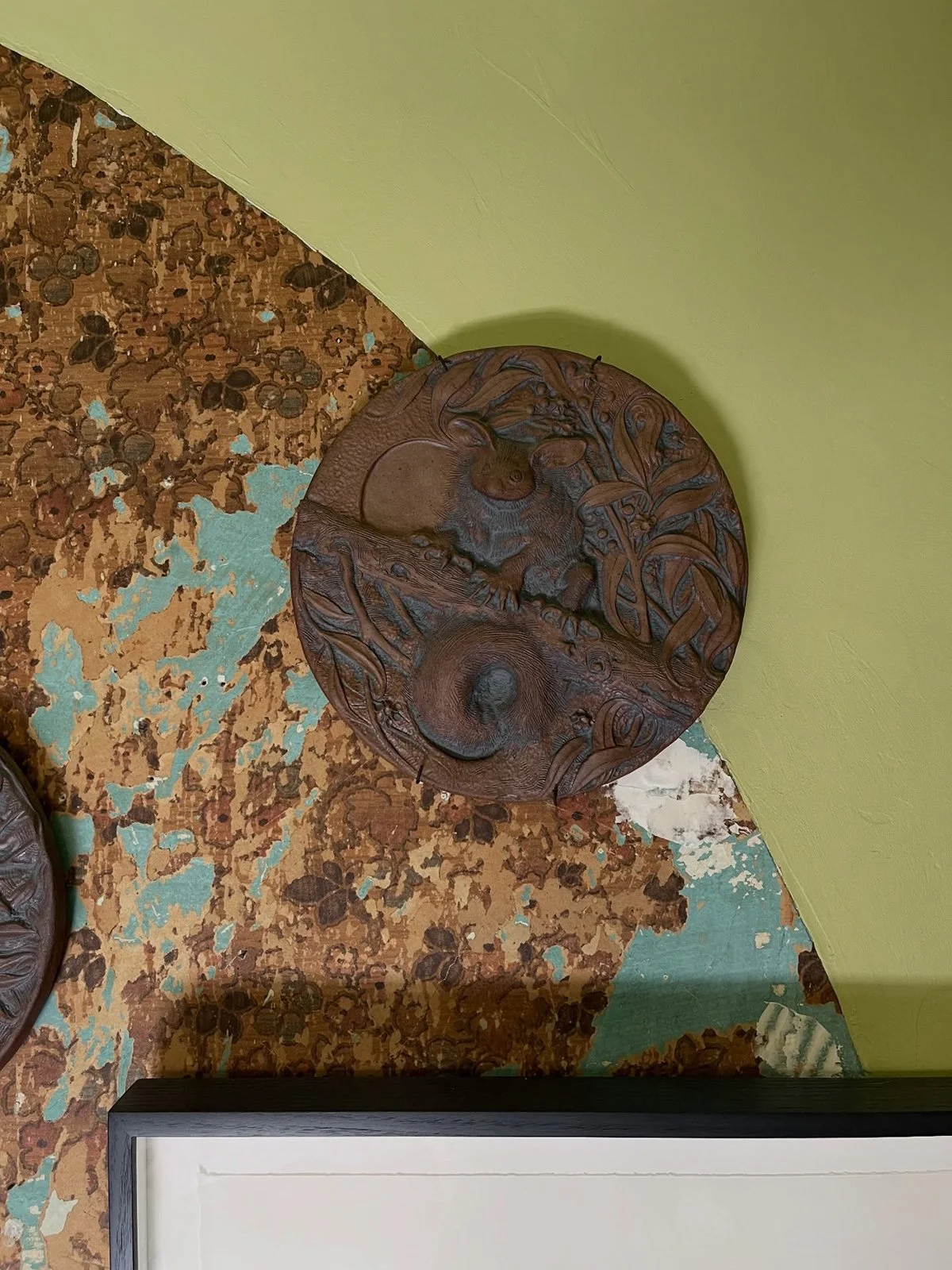
Revisiting earlier works, be it from a couple of years ago or many more besides, has been the theme of late, with habitat for the Grey-headed flying fox, and a kingfisher making an appearance on two different gallery walls.
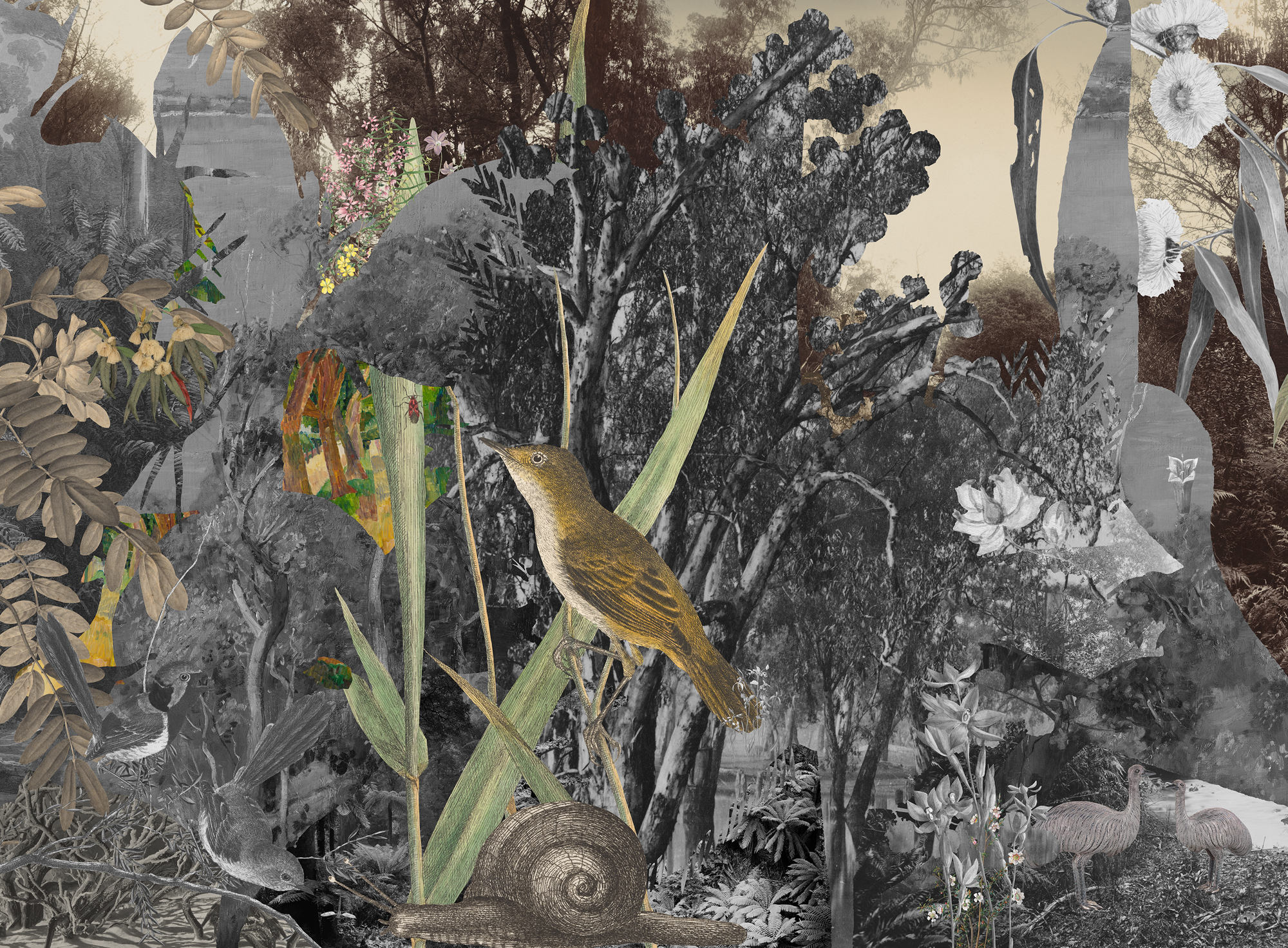
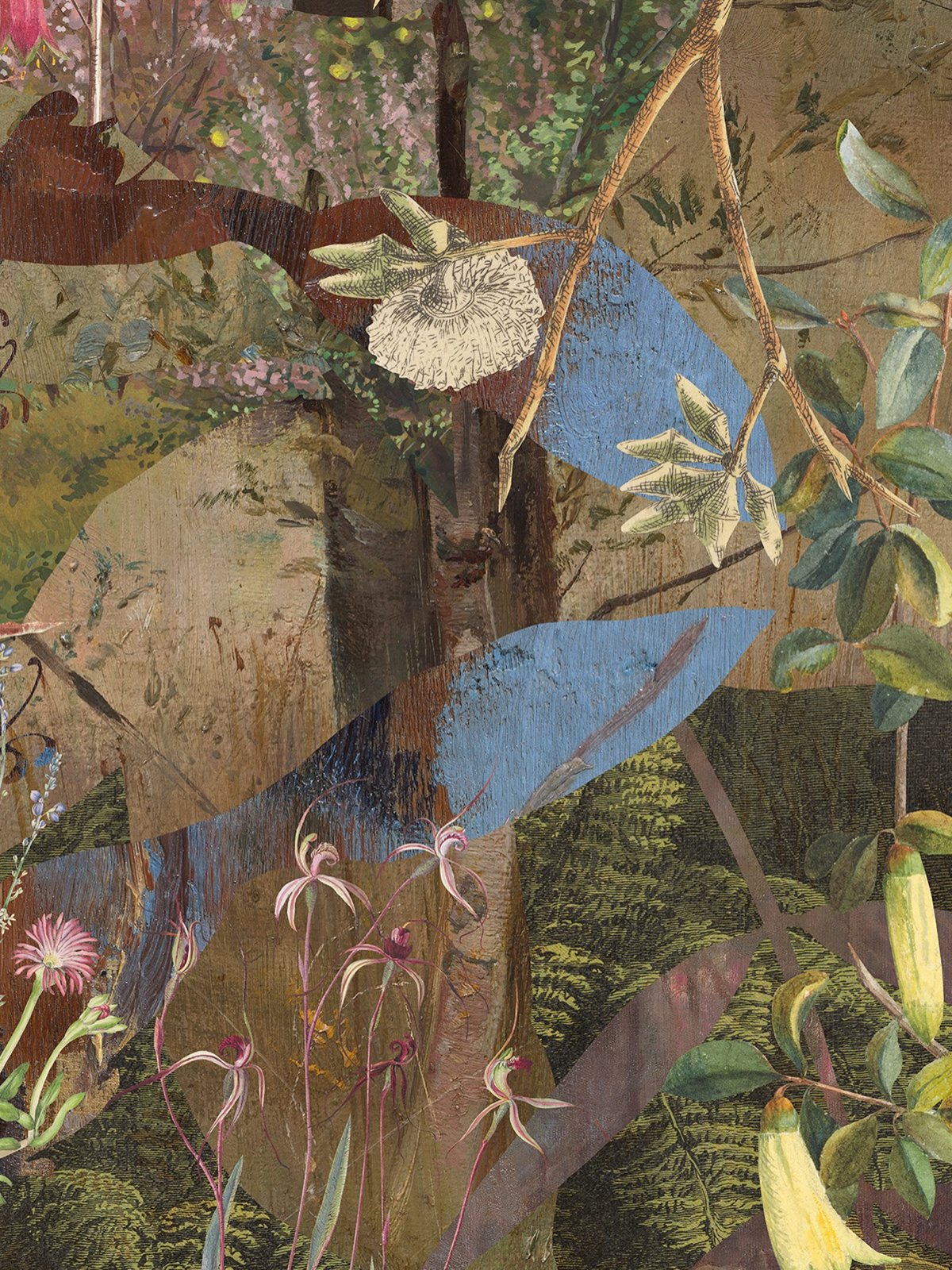
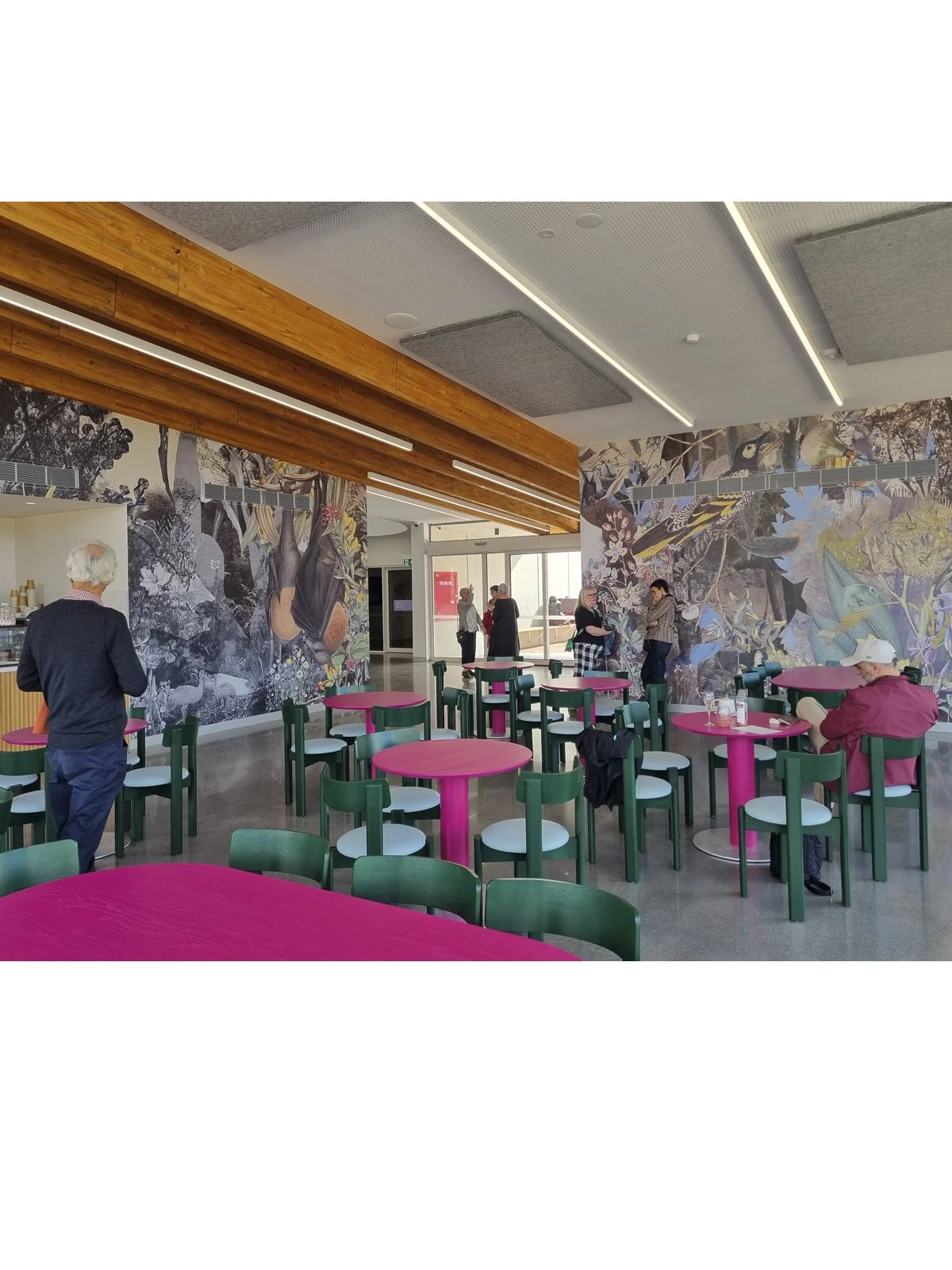
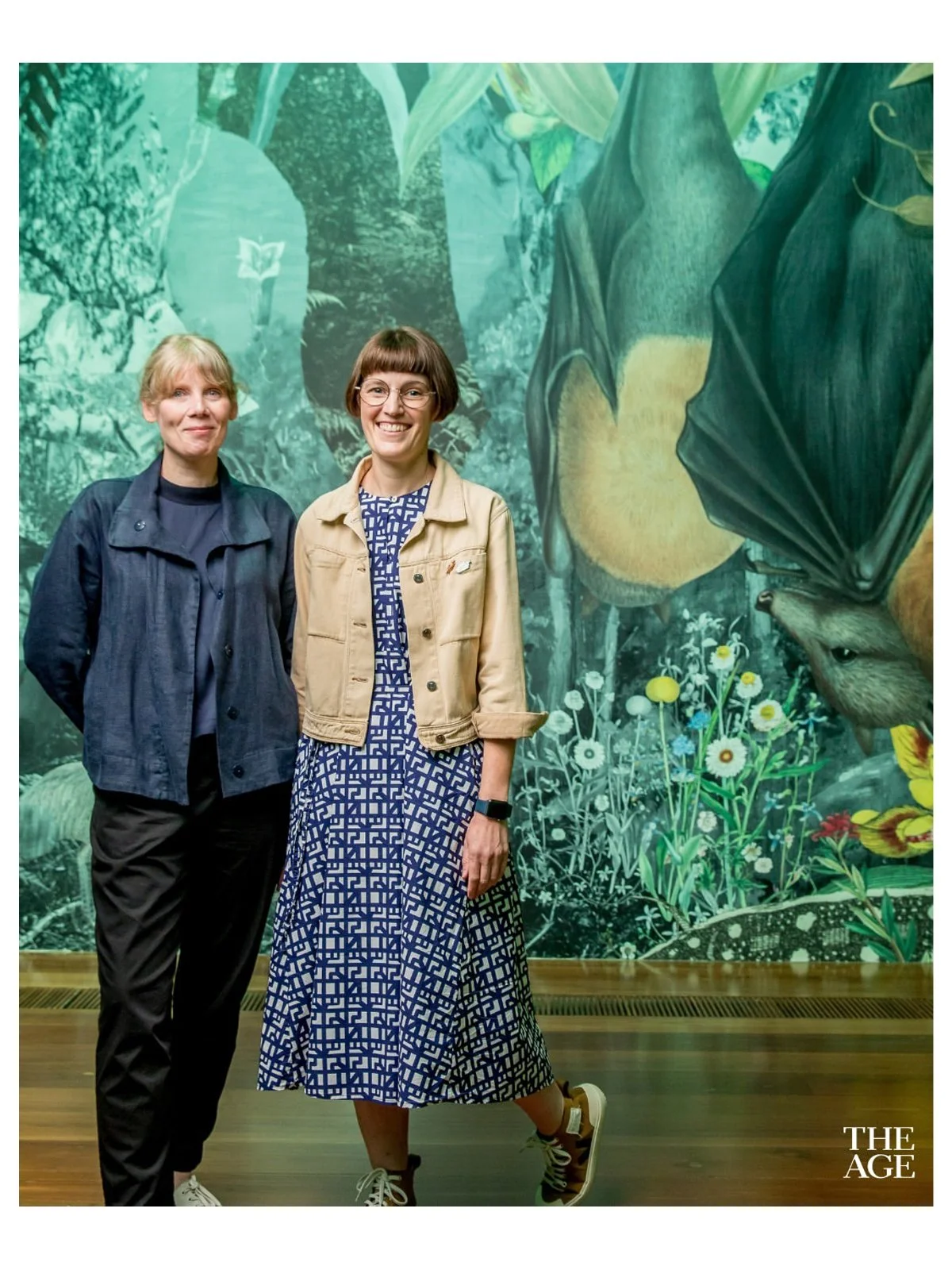
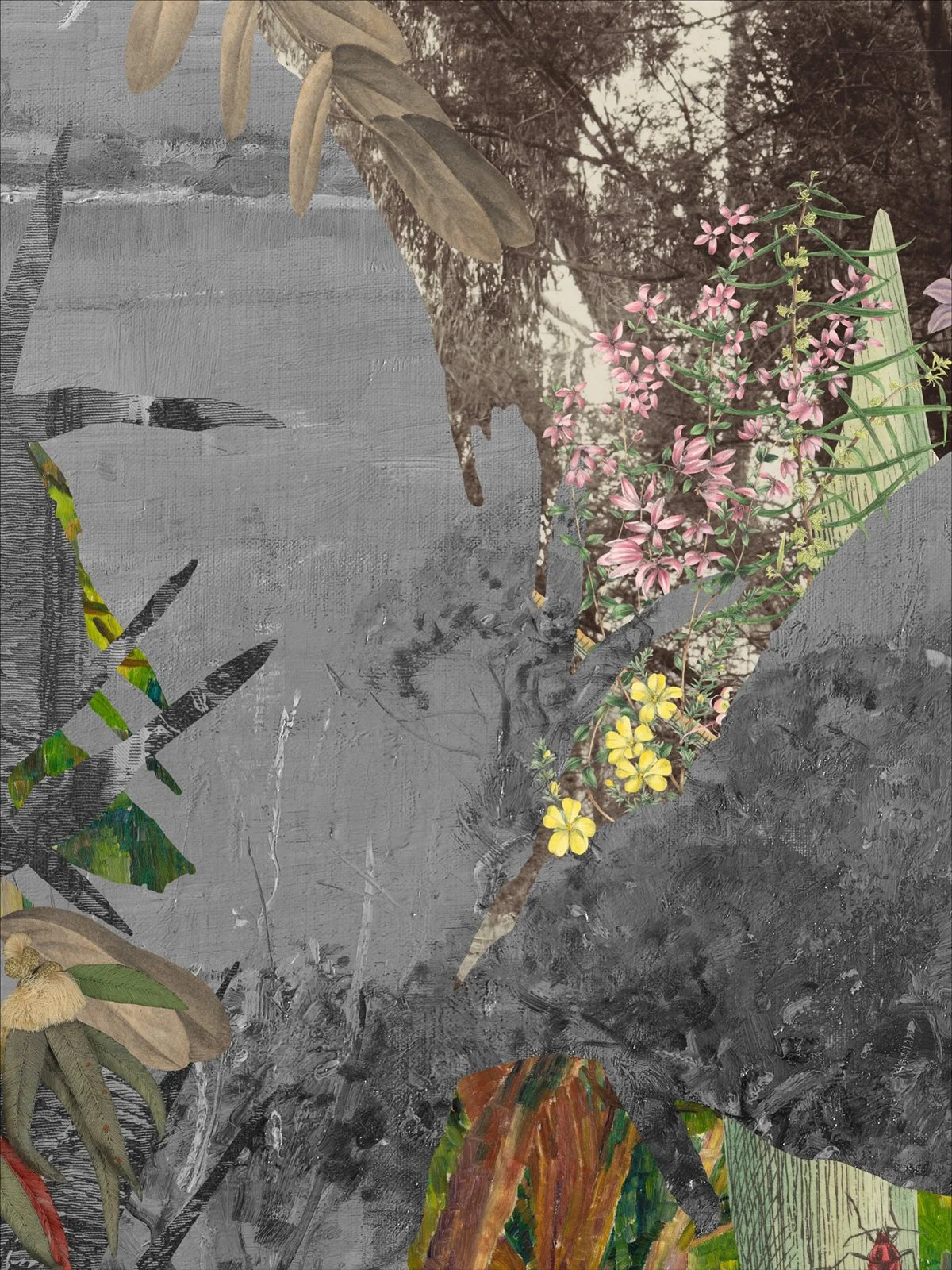
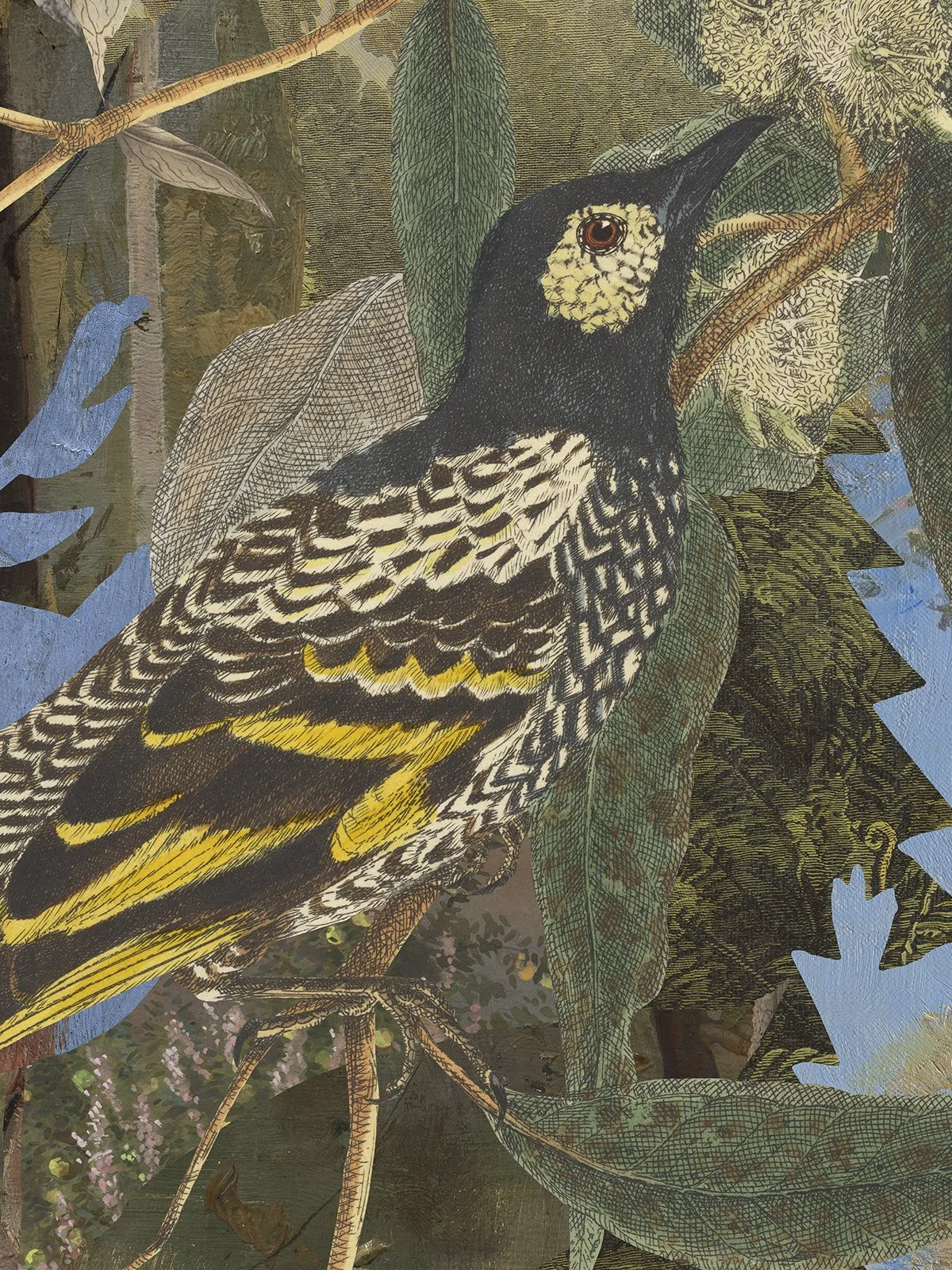
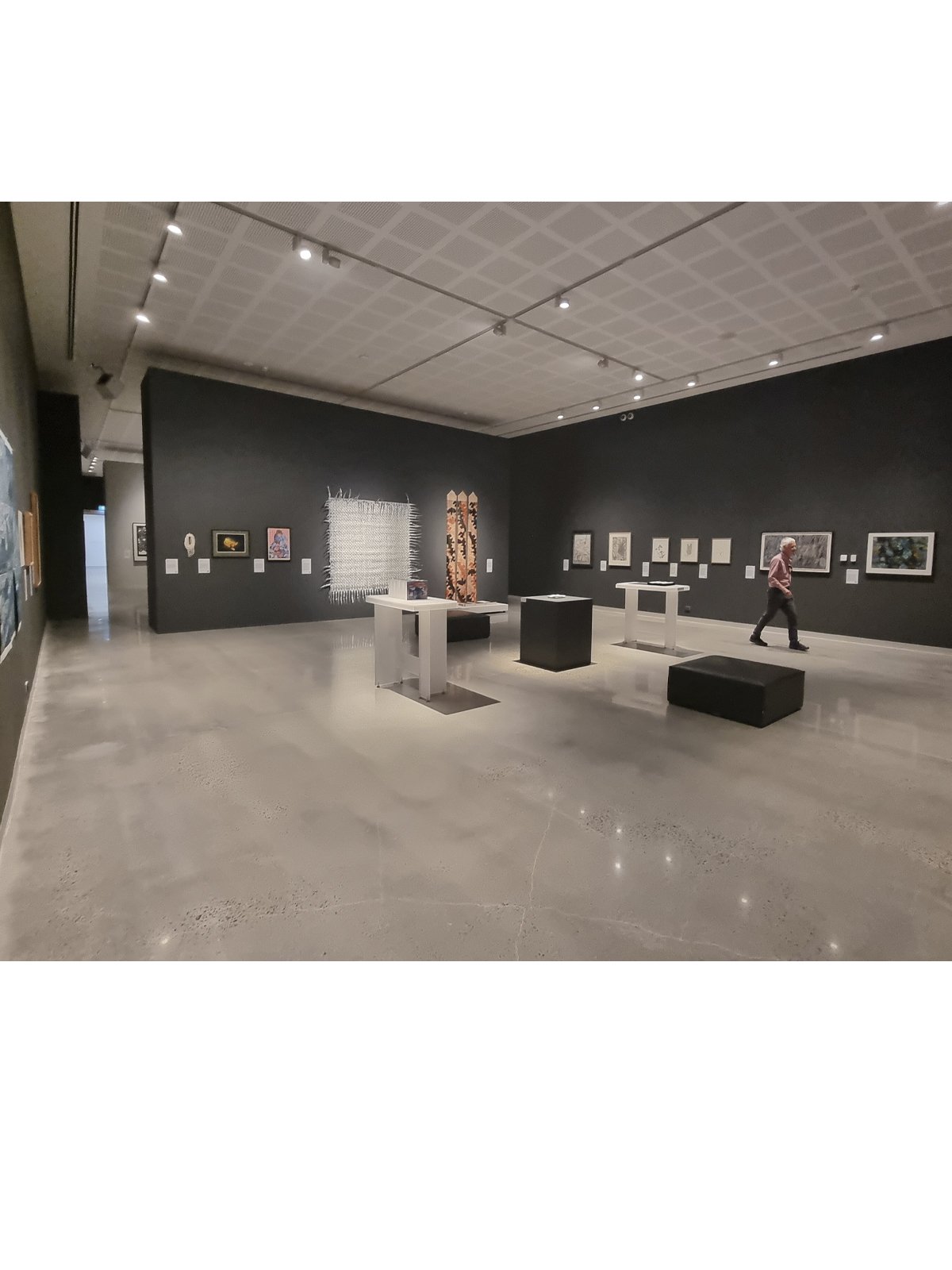
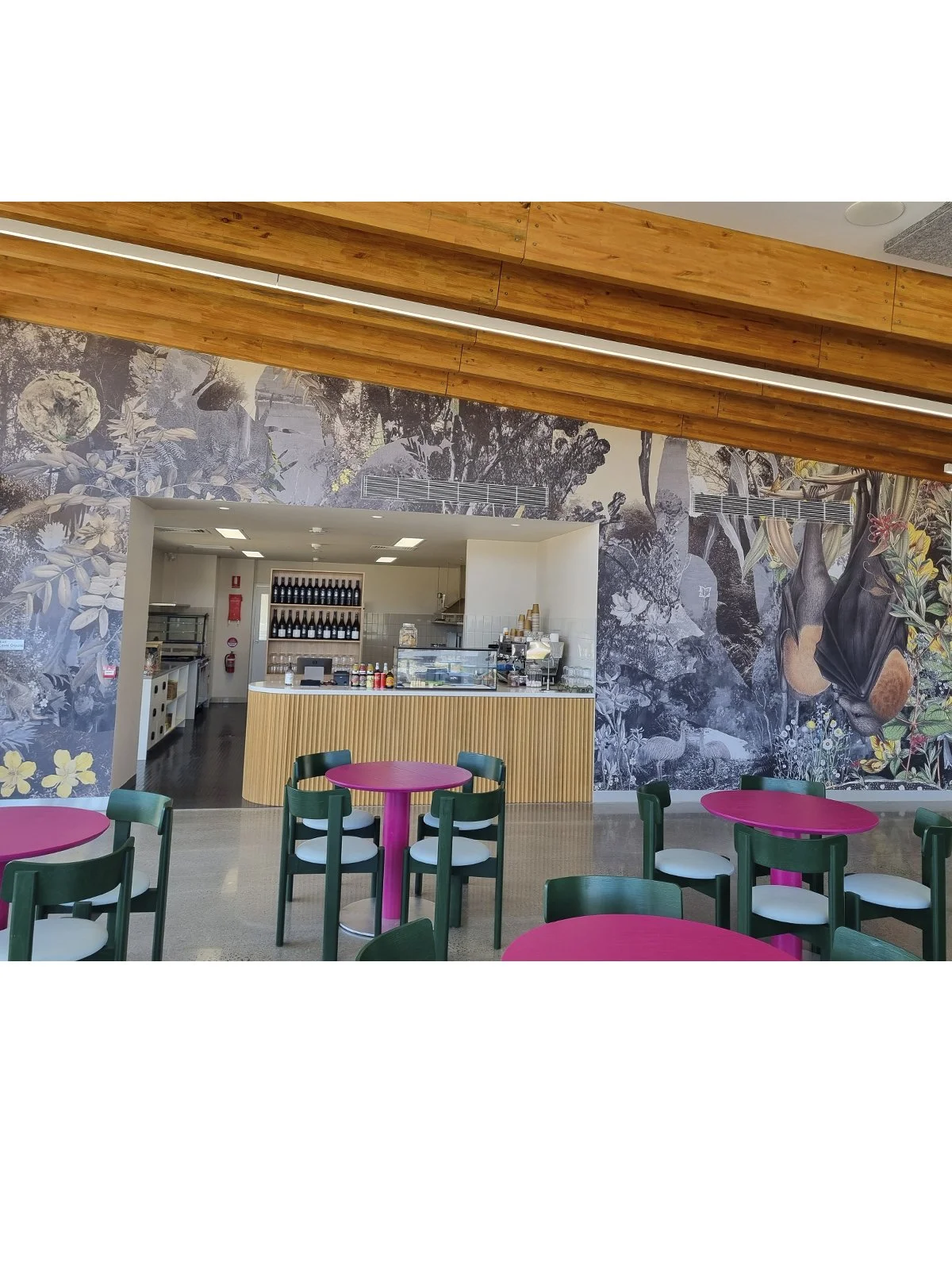
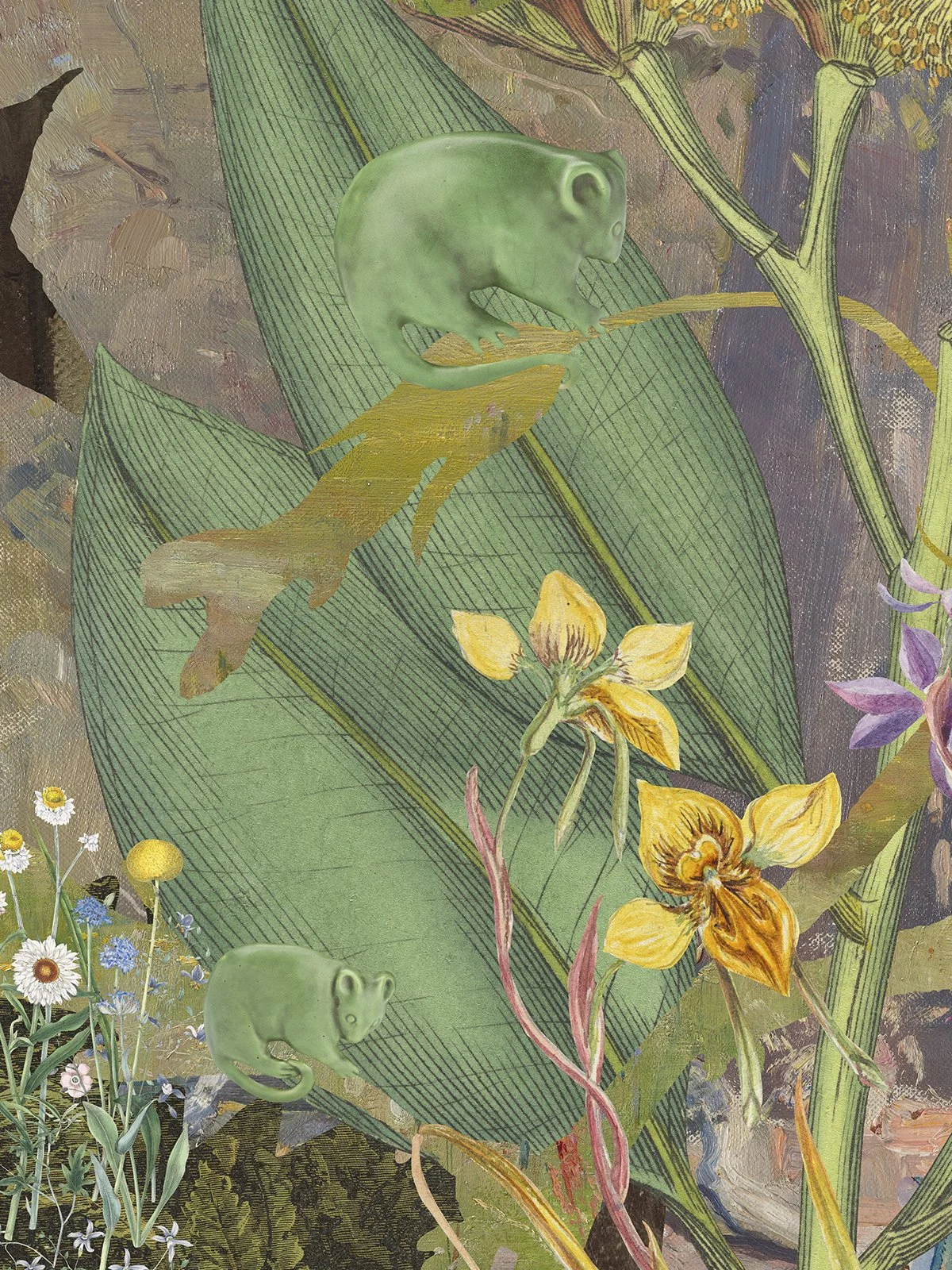
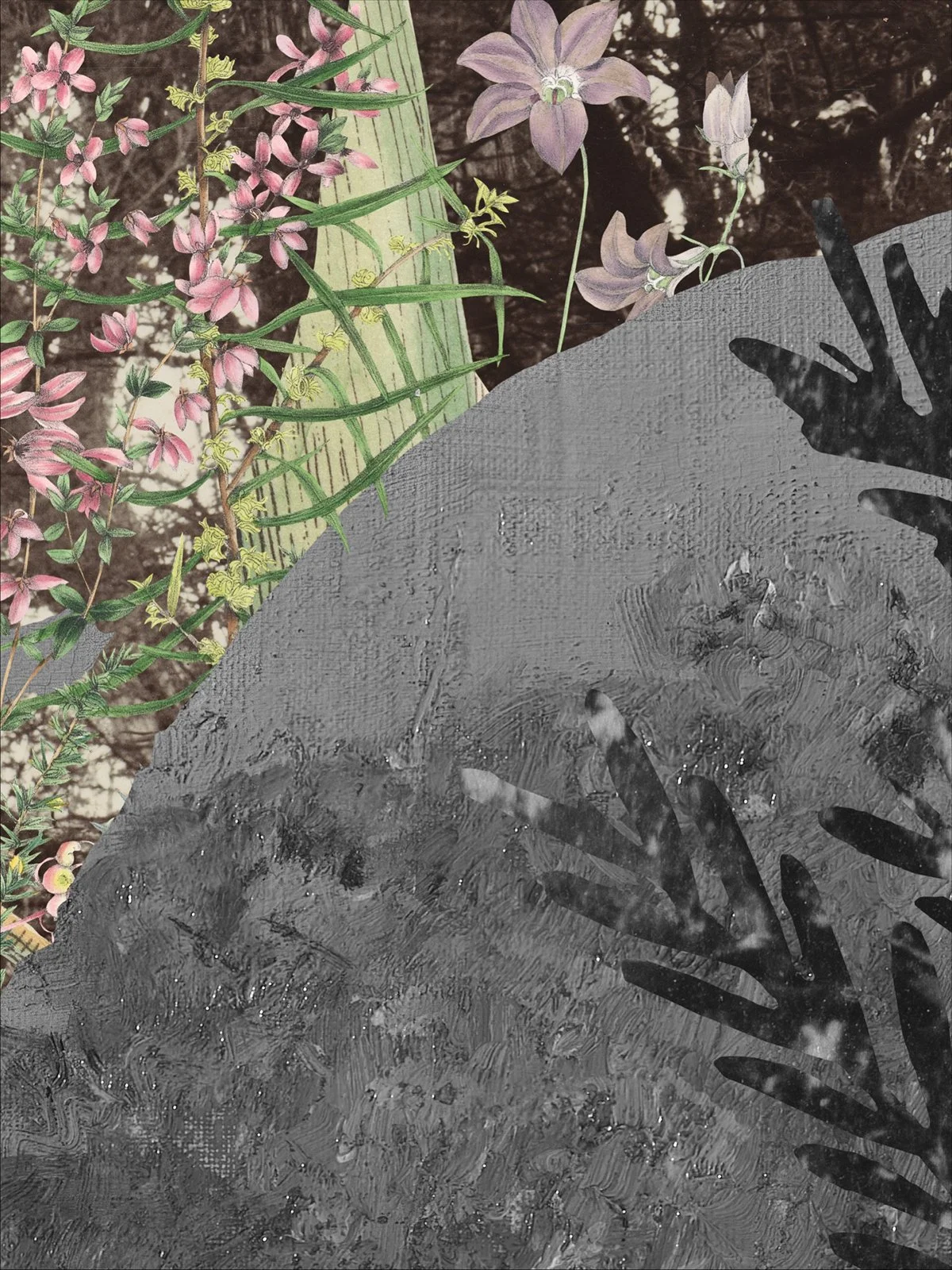
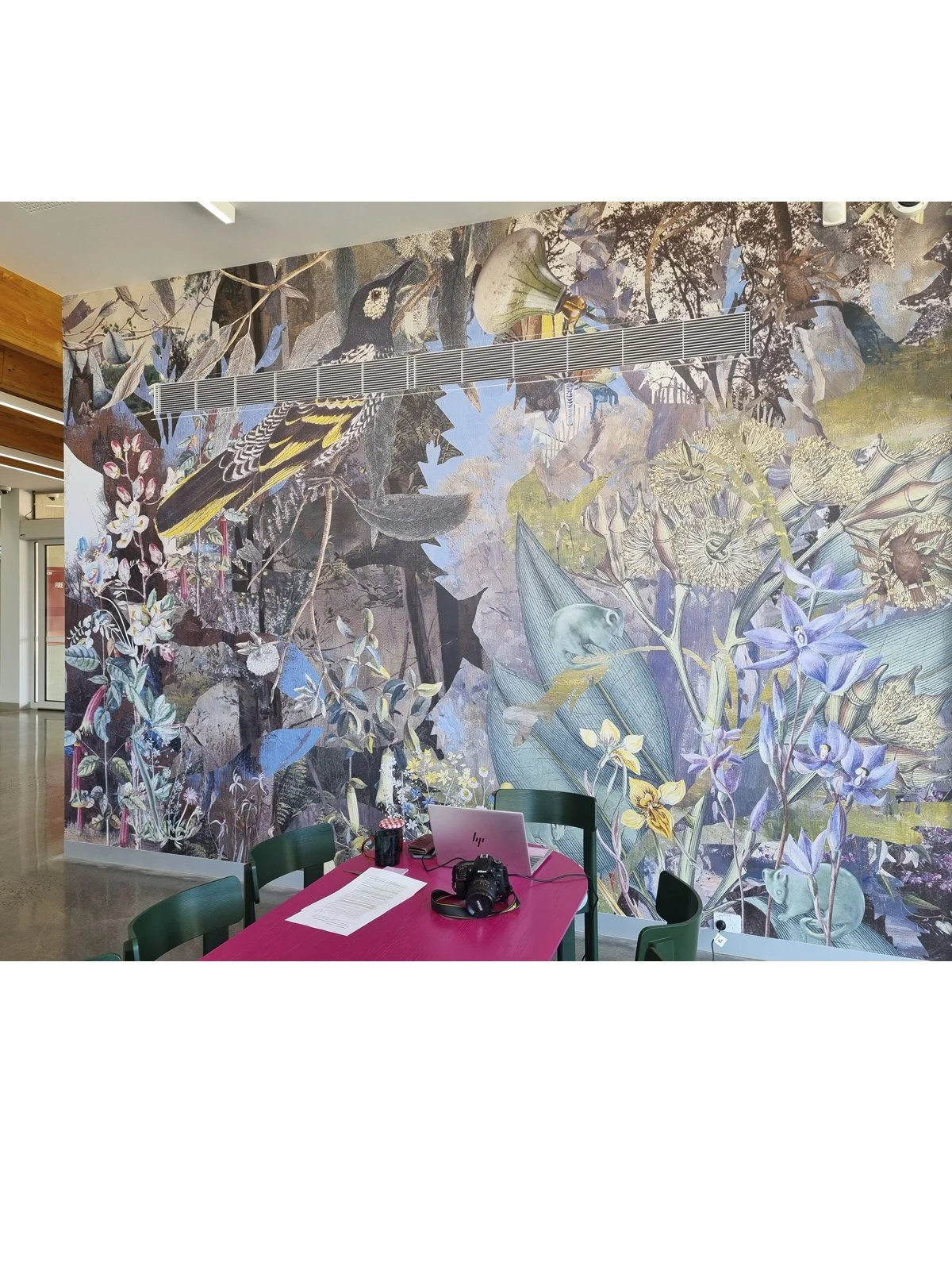
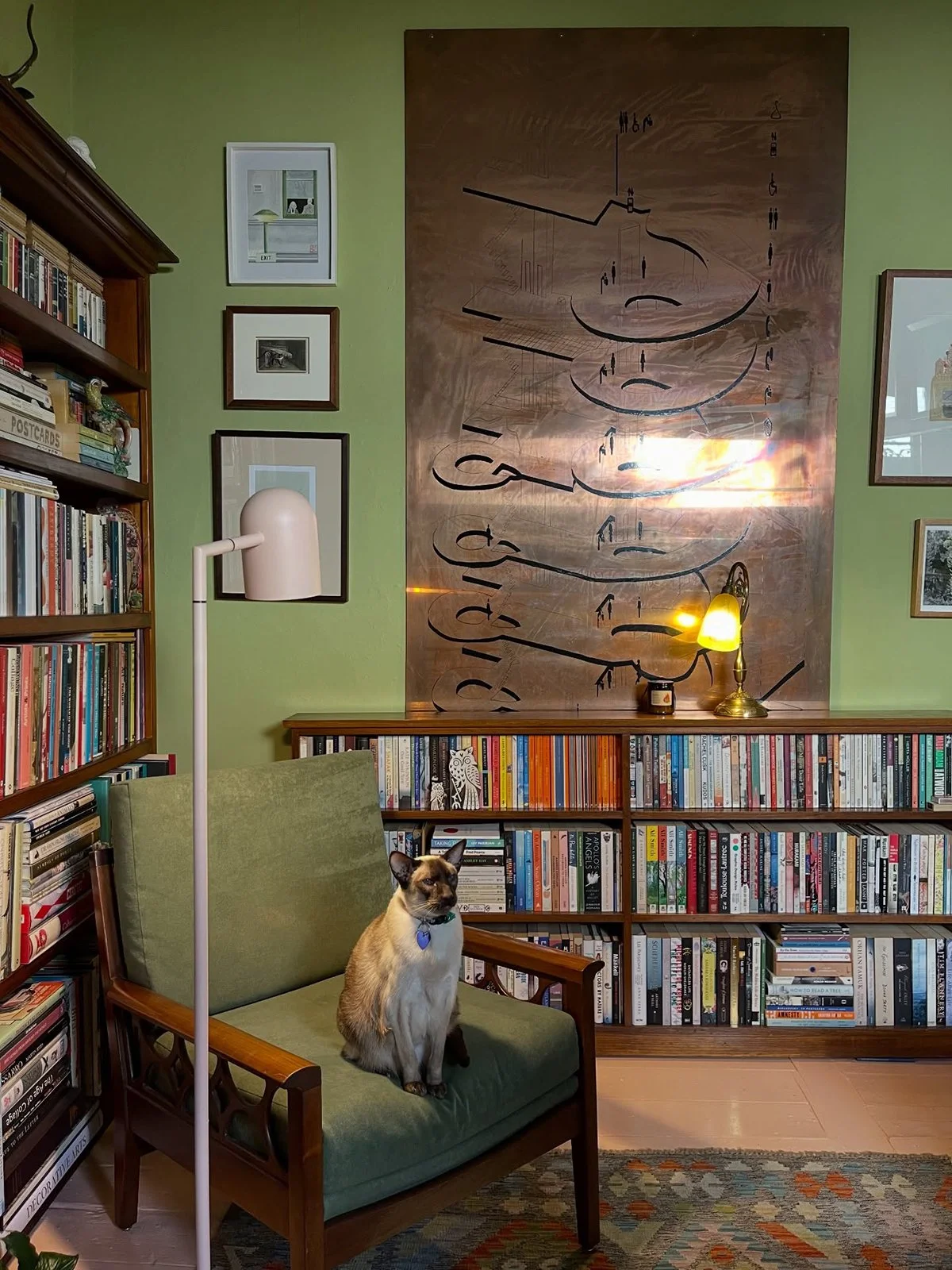
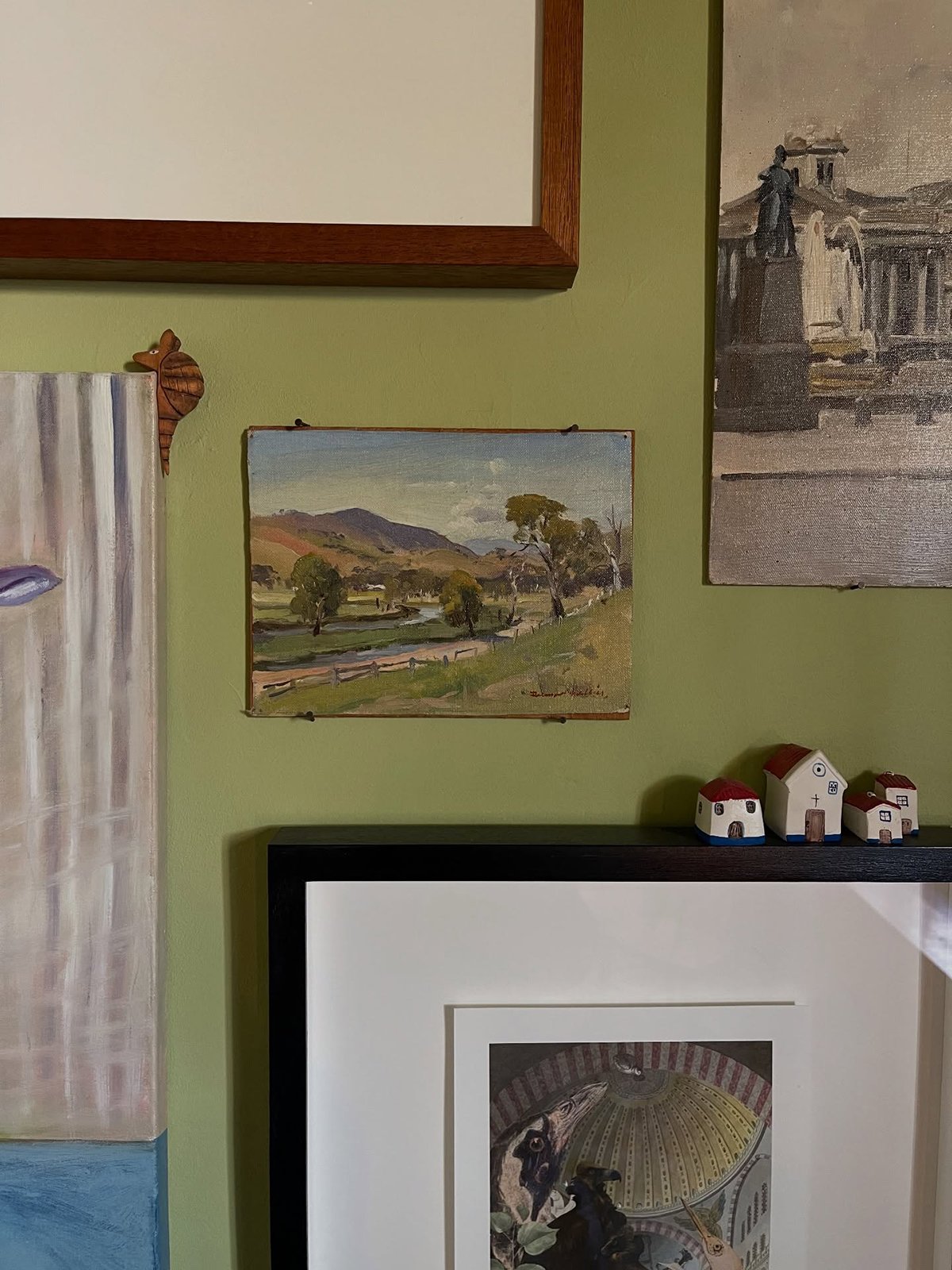
The invitation to grow a second telling of The remaking of things, our collage commissioned by the National Gallery of Victoria (NGV) for Melbourne Now in 2023, especially for the WAMA Foundation, has been a joy. This reworked section of the whole currently grows on the walls at WAMA, the National Centre for Environmental Art. Timed to coincide with their WAMA Art Prize 2025, of which our artists’ book, How will they know there’s no-one left, is a finalist, we are delighted that this work, centred around the Grey-headed flying fox (Pteropus poliocephalus), depicting a eucalypt forest harvested from 100 pieces within the NGV collection, is sprouting in Halls Gap. Revisiting this pocket of restored eucalyptus forest habitat for the Grey-headed flying fox, and all who fall beneath the care and knowledge of their wing, has left us eager to see it in person. (Pictures below courtesy of Felicity Spear, encouraging us to pull up a green chair and settle in.)
Thanks to Francesca Valmorbida and Byron Grant-Preece at WAMA Foundation for the invitation to continue the wingspan of The remaking of things.
Alongside The remaking of things at WAMA, you will find our collage activity made in collaboration with the NGV, which enables you, too, to create habitat for wildlife.
How will they know there’s no-one left, is one of 54 shortlisted works, currently exhibited in the biennial WAMA Art Prize 2025 exhibition. You can vote for it as part of the WAMA Art Prize People’s Choice Award, should you wish.
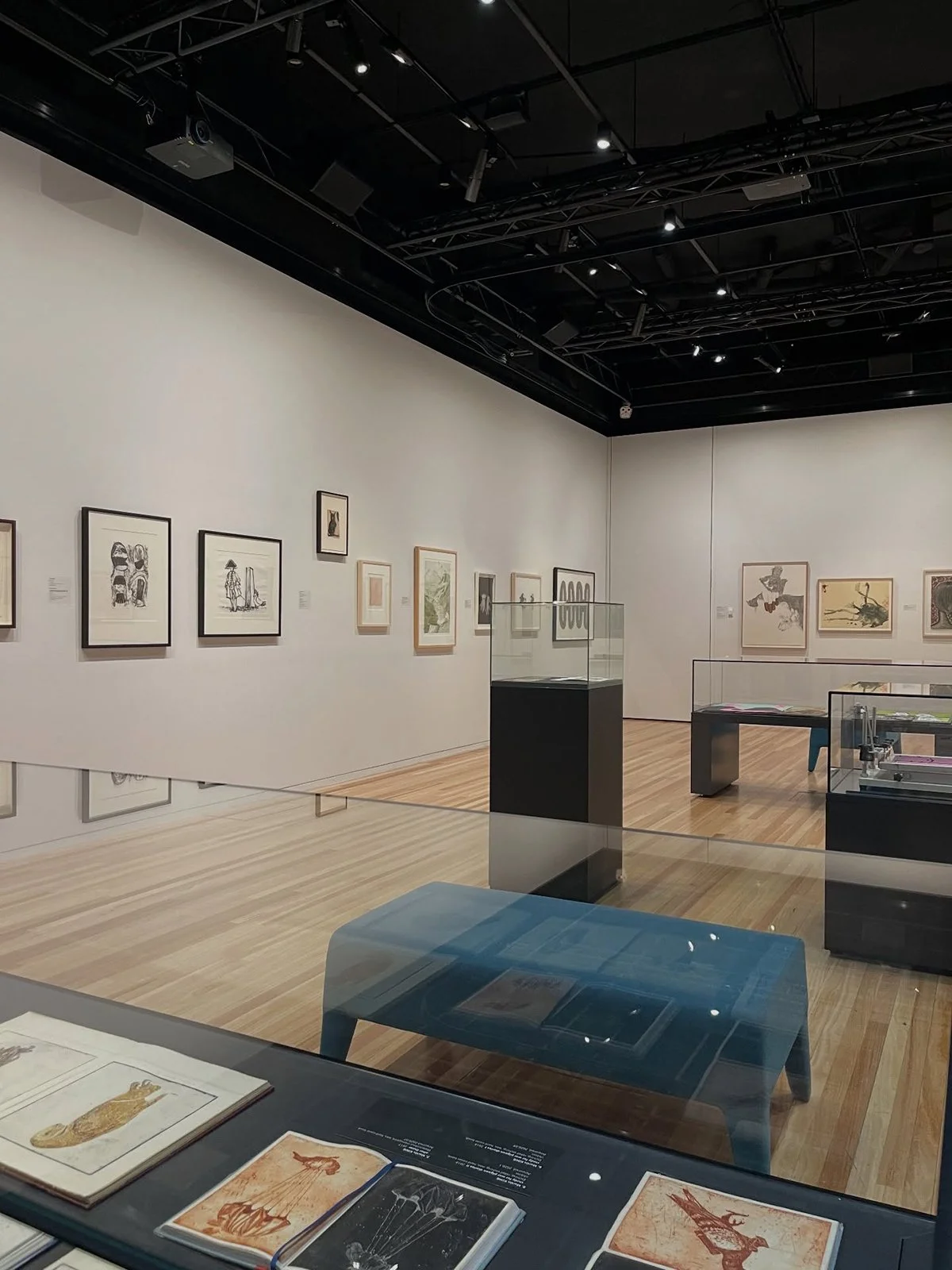
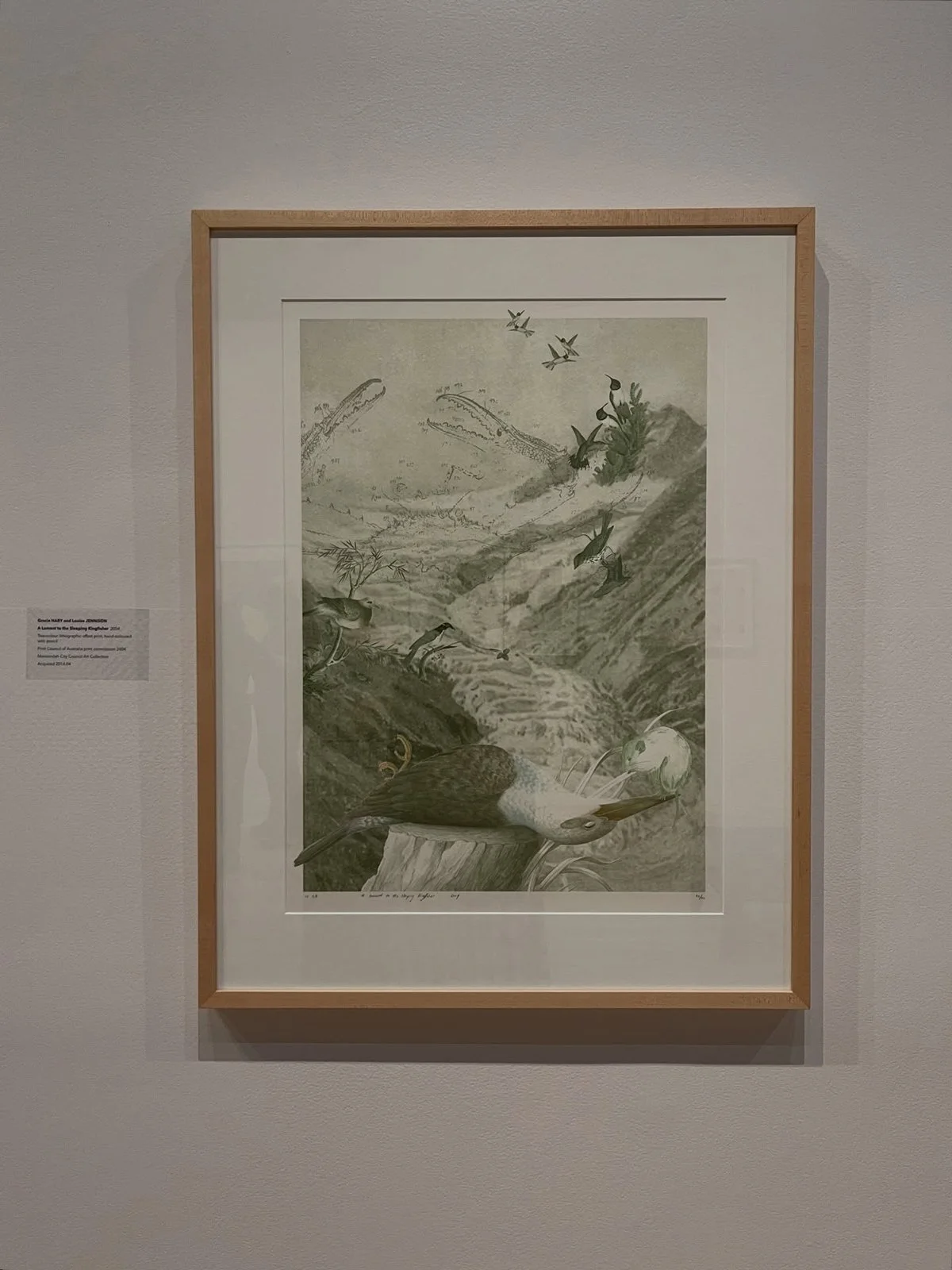
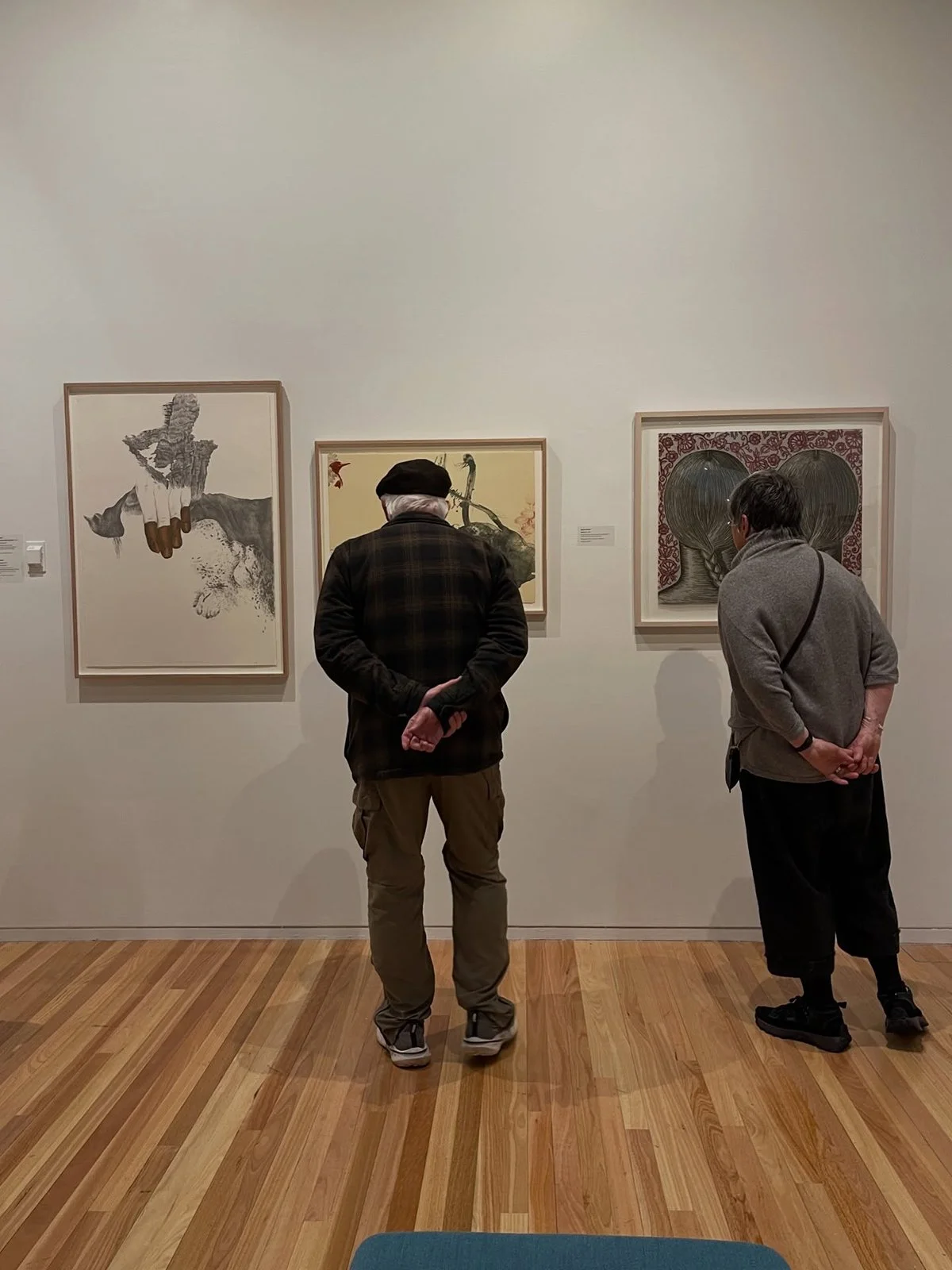
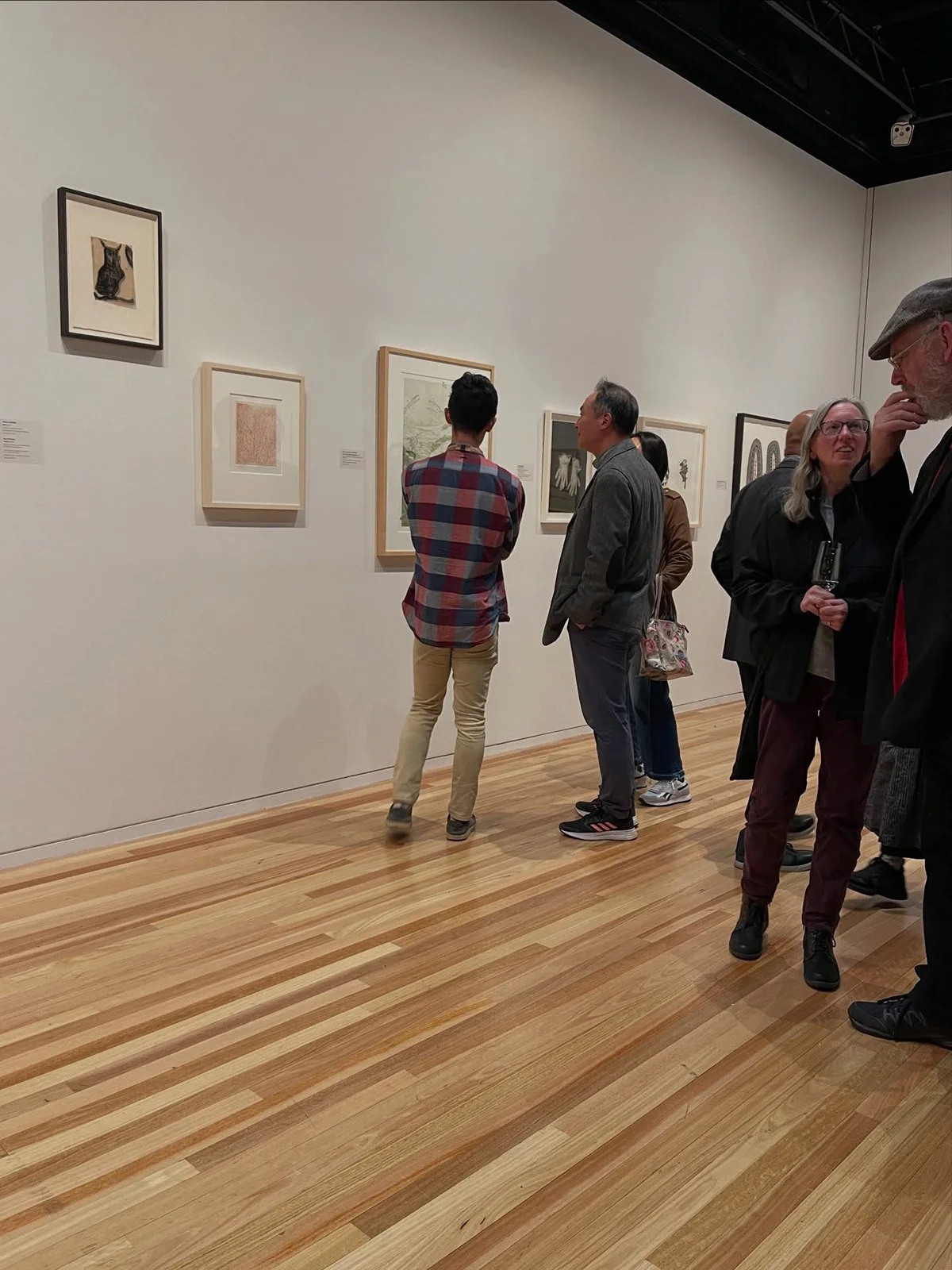
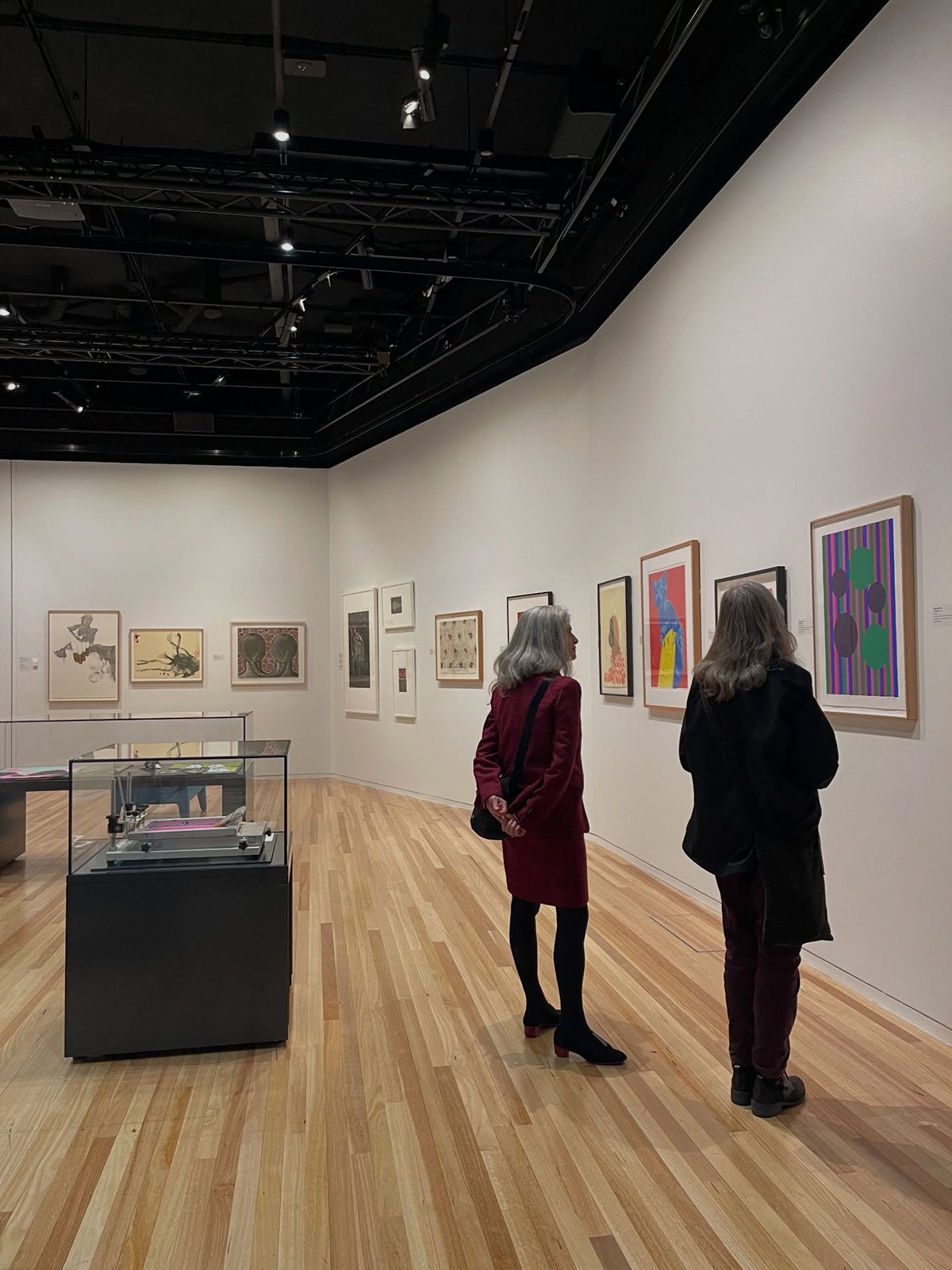
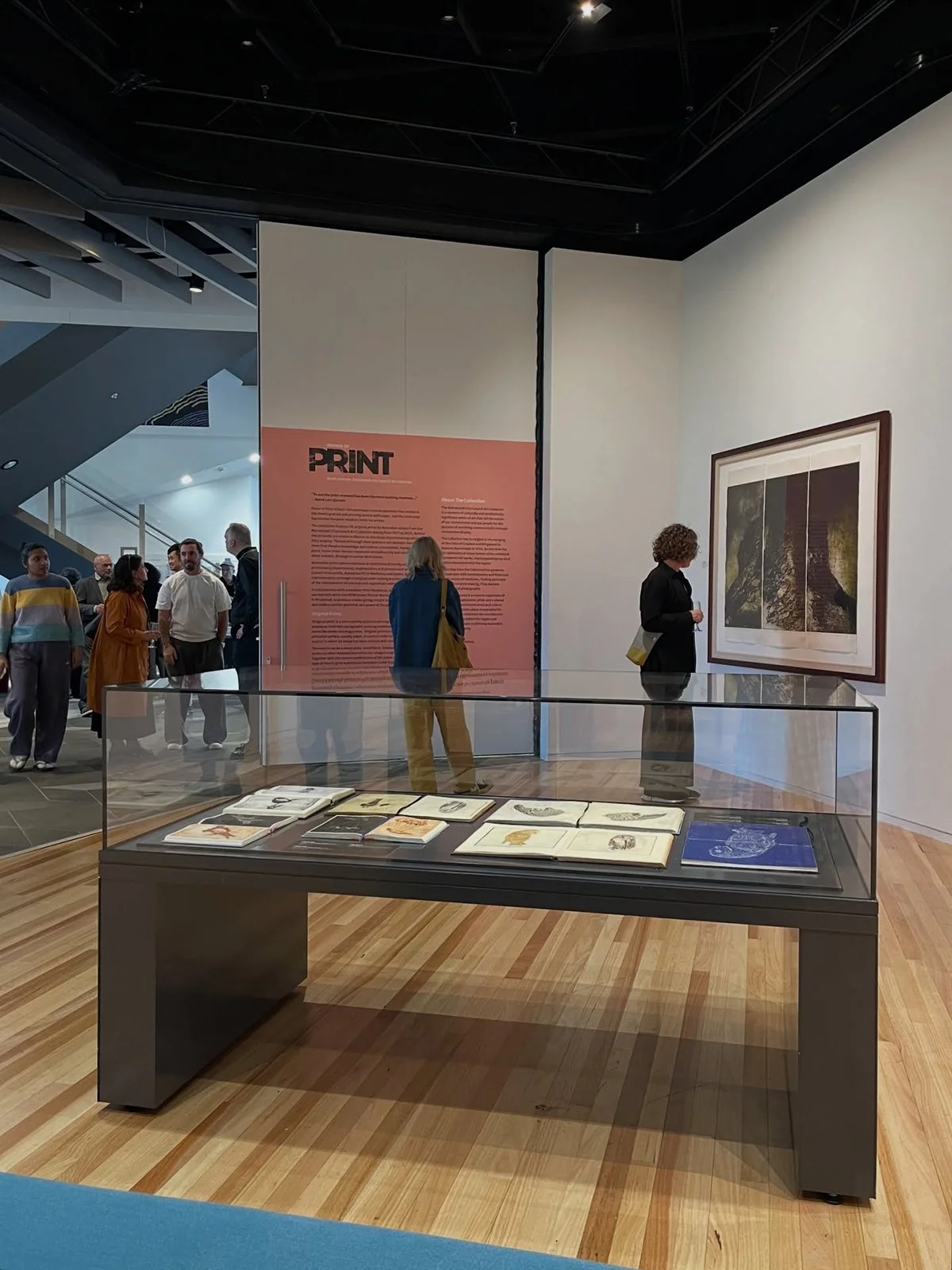
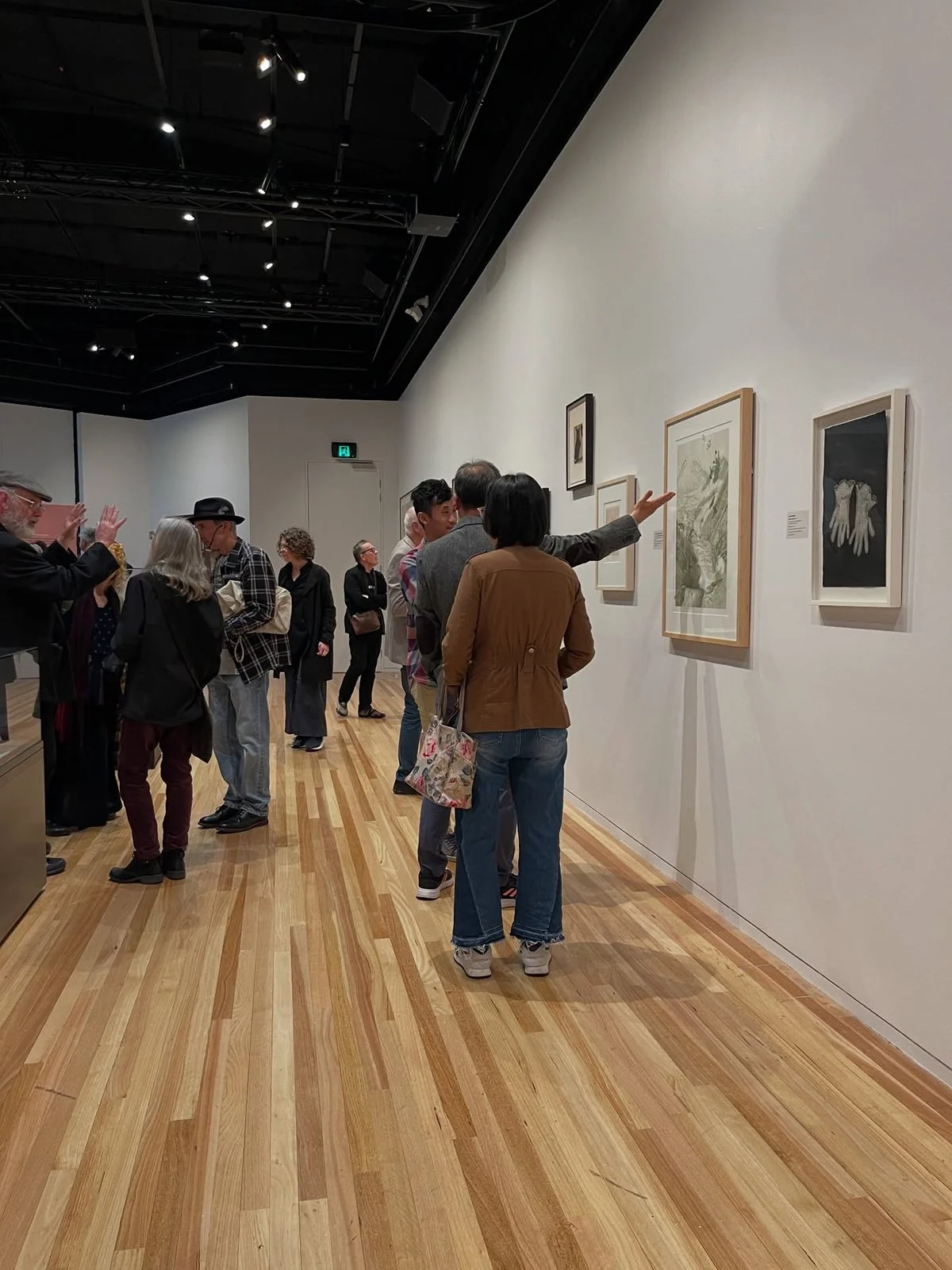
From the Grampians to Ringwood, our print, A lament to the sleeping kingfisher, 2004, is included in the exhibition, Power of Print: Works from the Maroondah City Council Art Collection, alongside works by Martin King, Rona Green, Deborah Klein, Judy Holding, and Clare Humphries, and more besides.
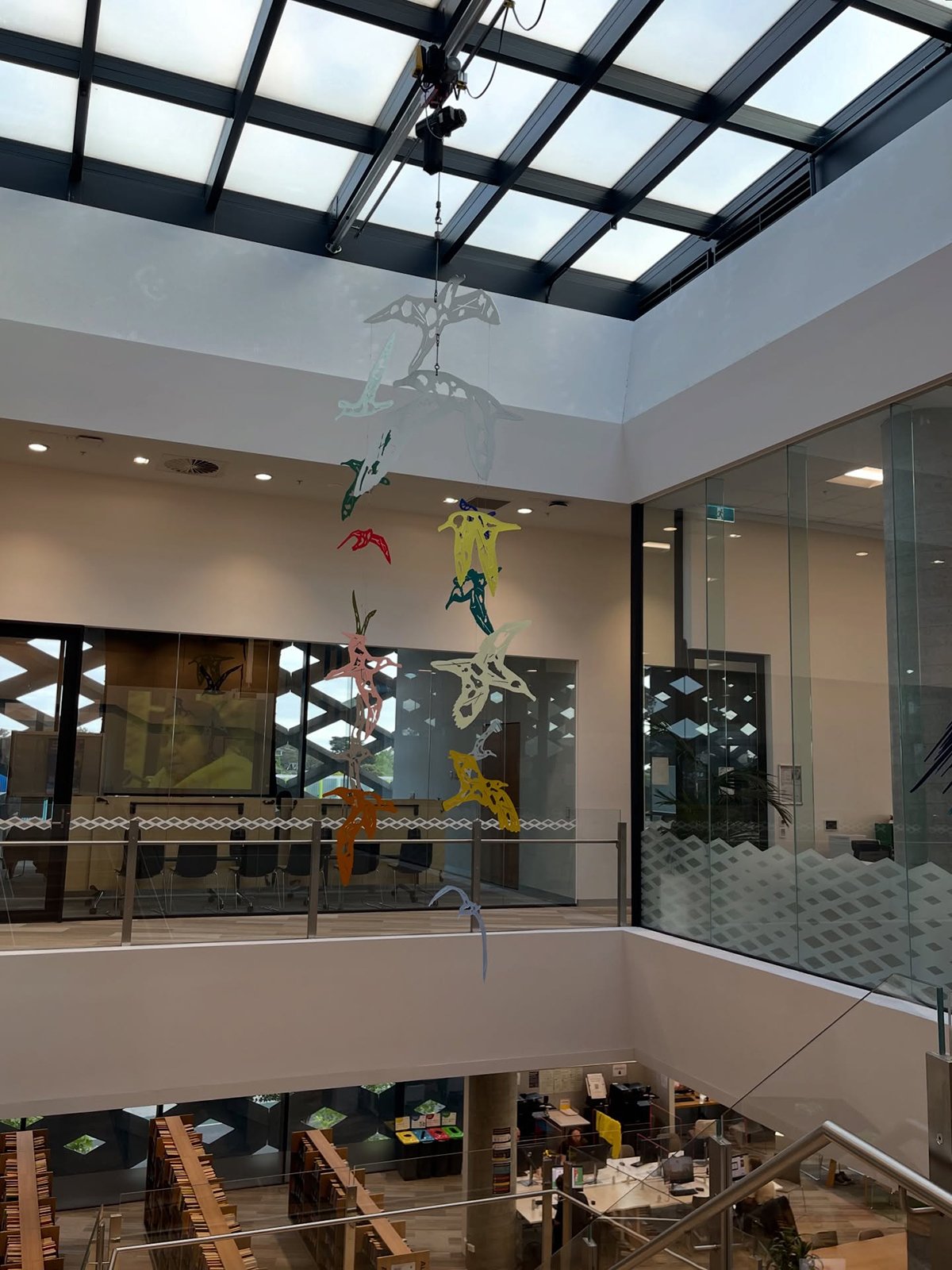
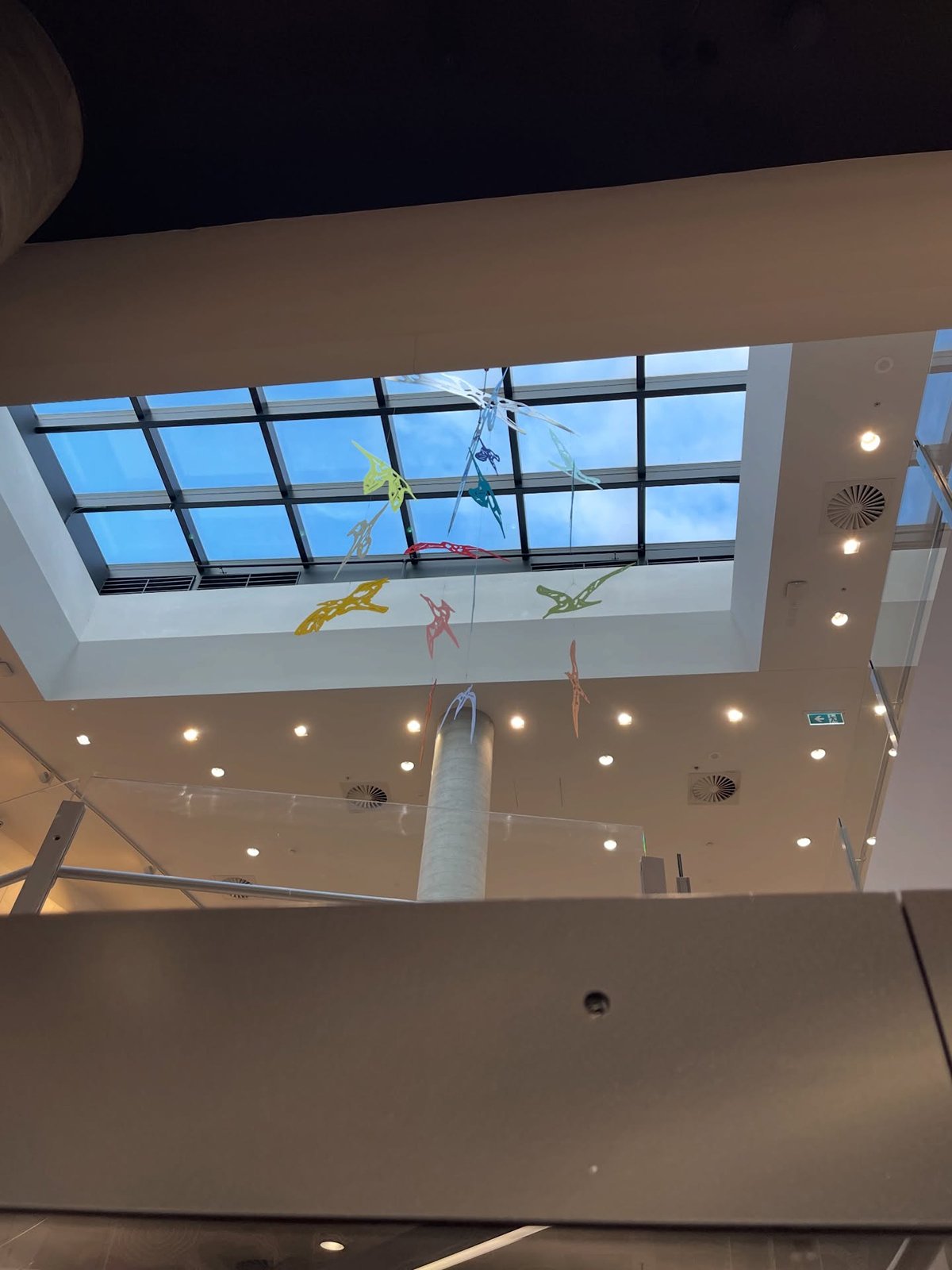
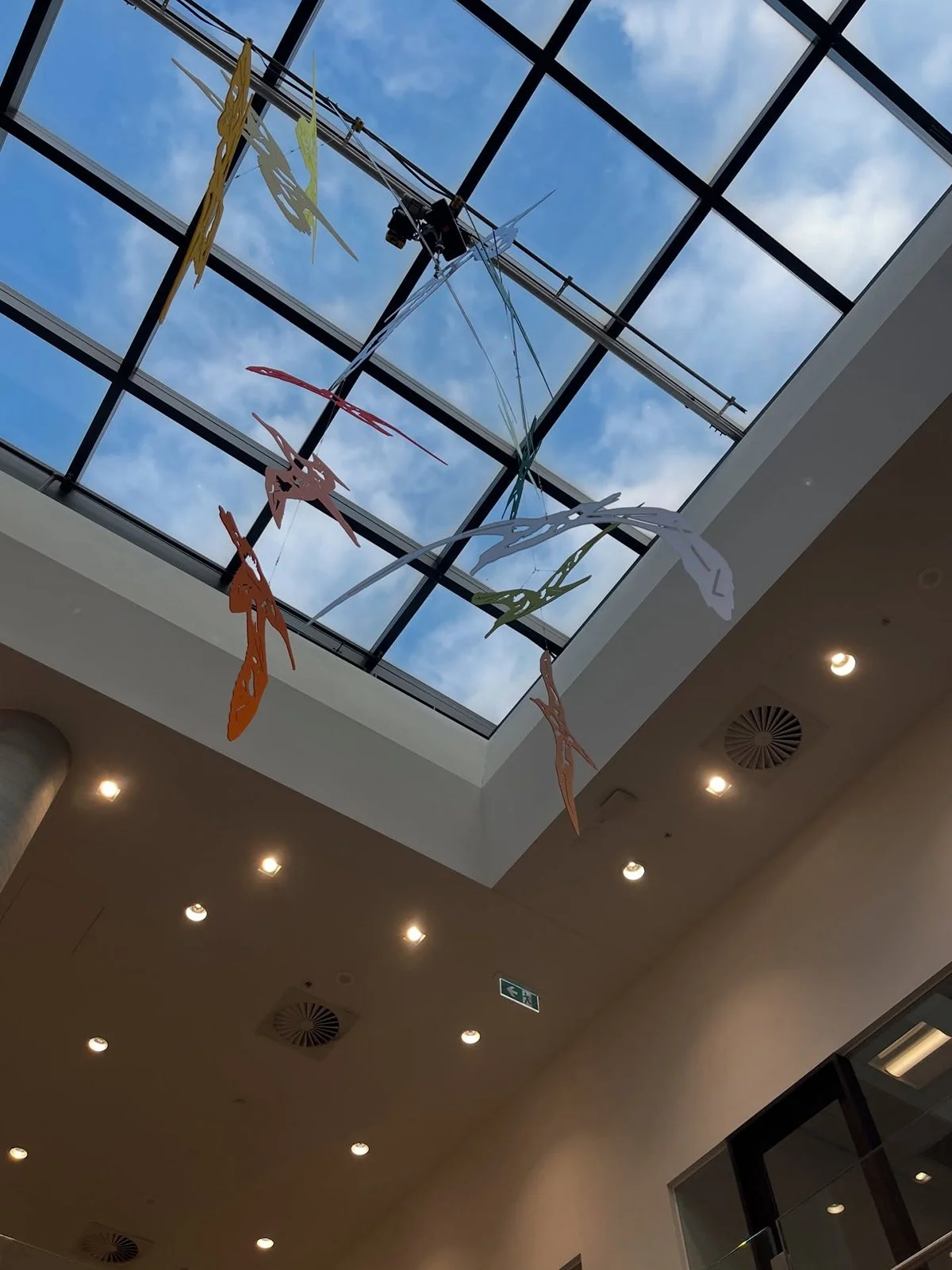
While waving a wing to our print, at ArtSpace Realm, we also checked in our albatross soaring in the library’s atrium. We installed A Weight of Albatross, in 2018, and she looked just as we remembered her, proving a happy reunion indeed.
Finally, our print, Because of our inertia, is currently on display at Charles Sturt University, Wagga Wagga Campus, NSW, as part of Burning Inside, a print exchange folio and exhibition project, curated by Rona Green and Thomas A Middlemost. The exhibition runs until mid-March, for those nearby, and editions of our echidna print are also available through our online store.
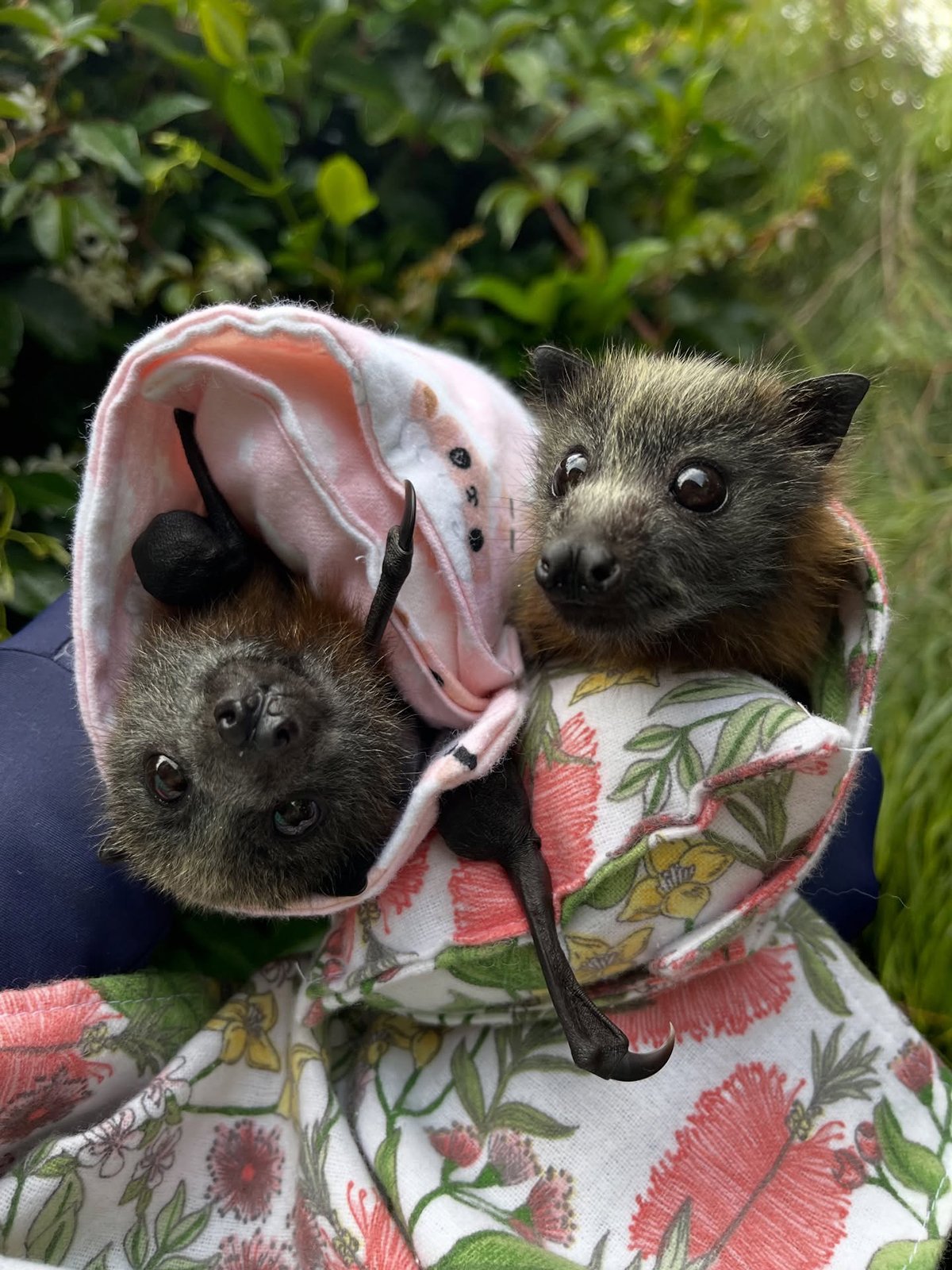
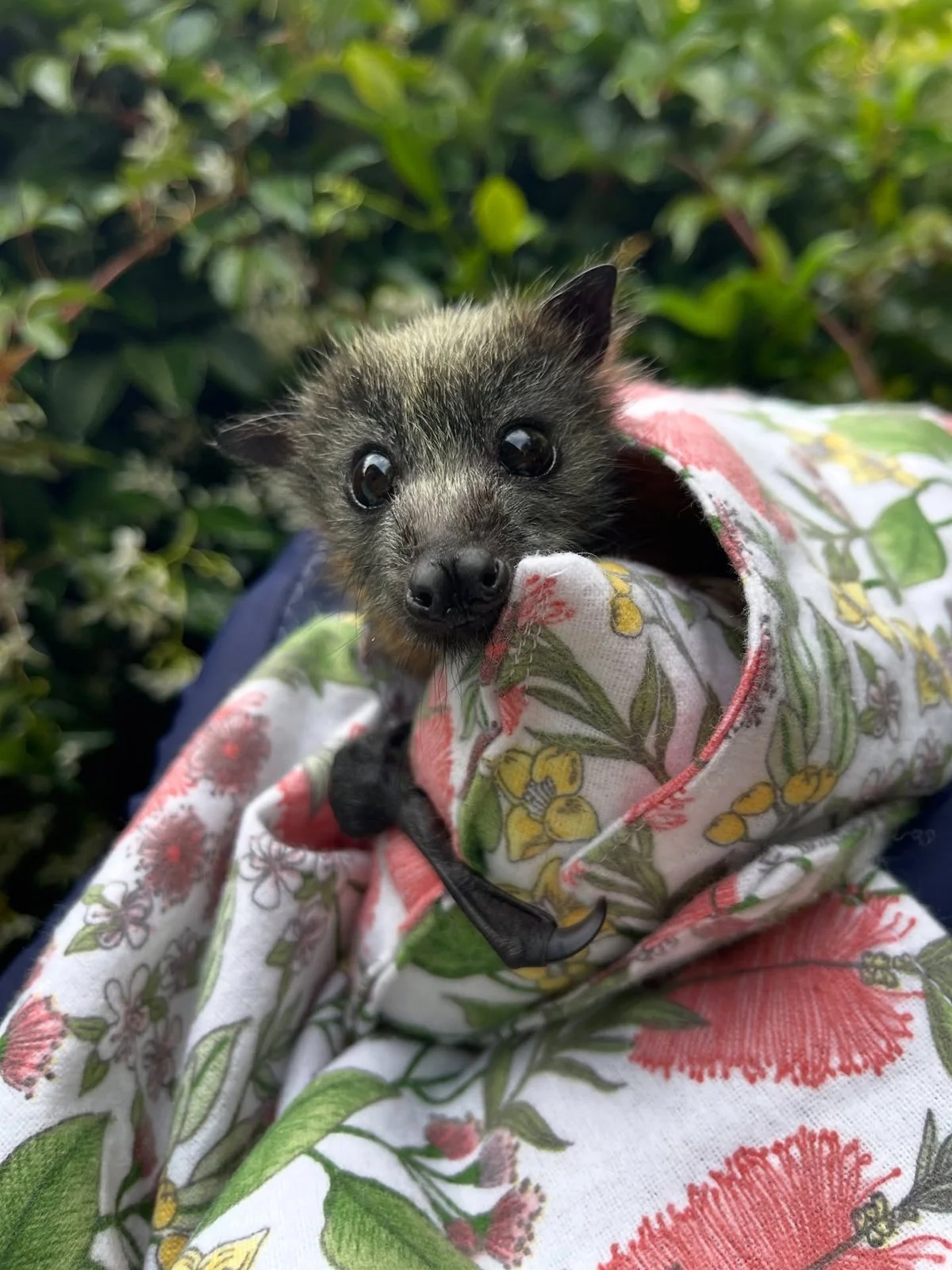
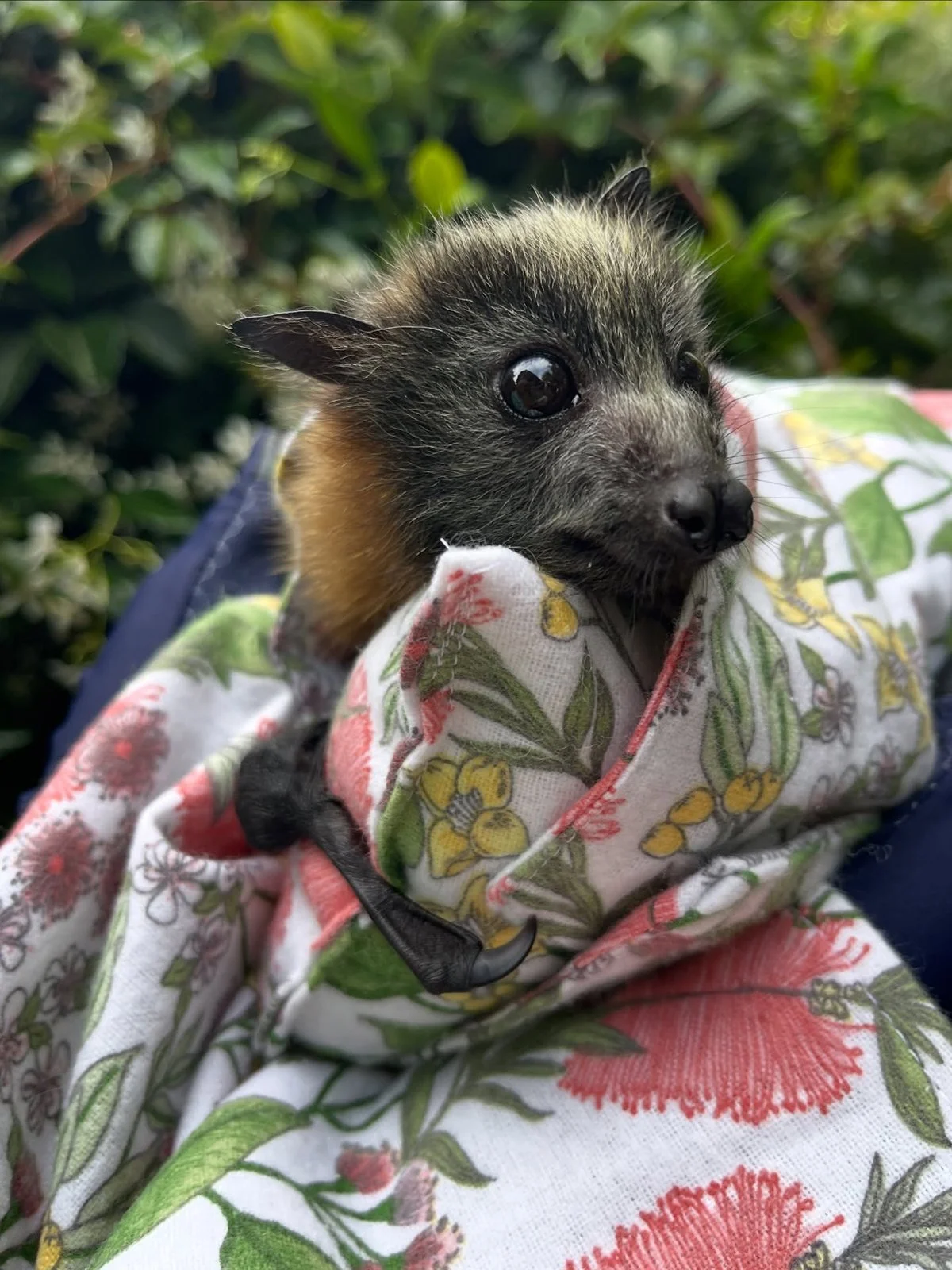
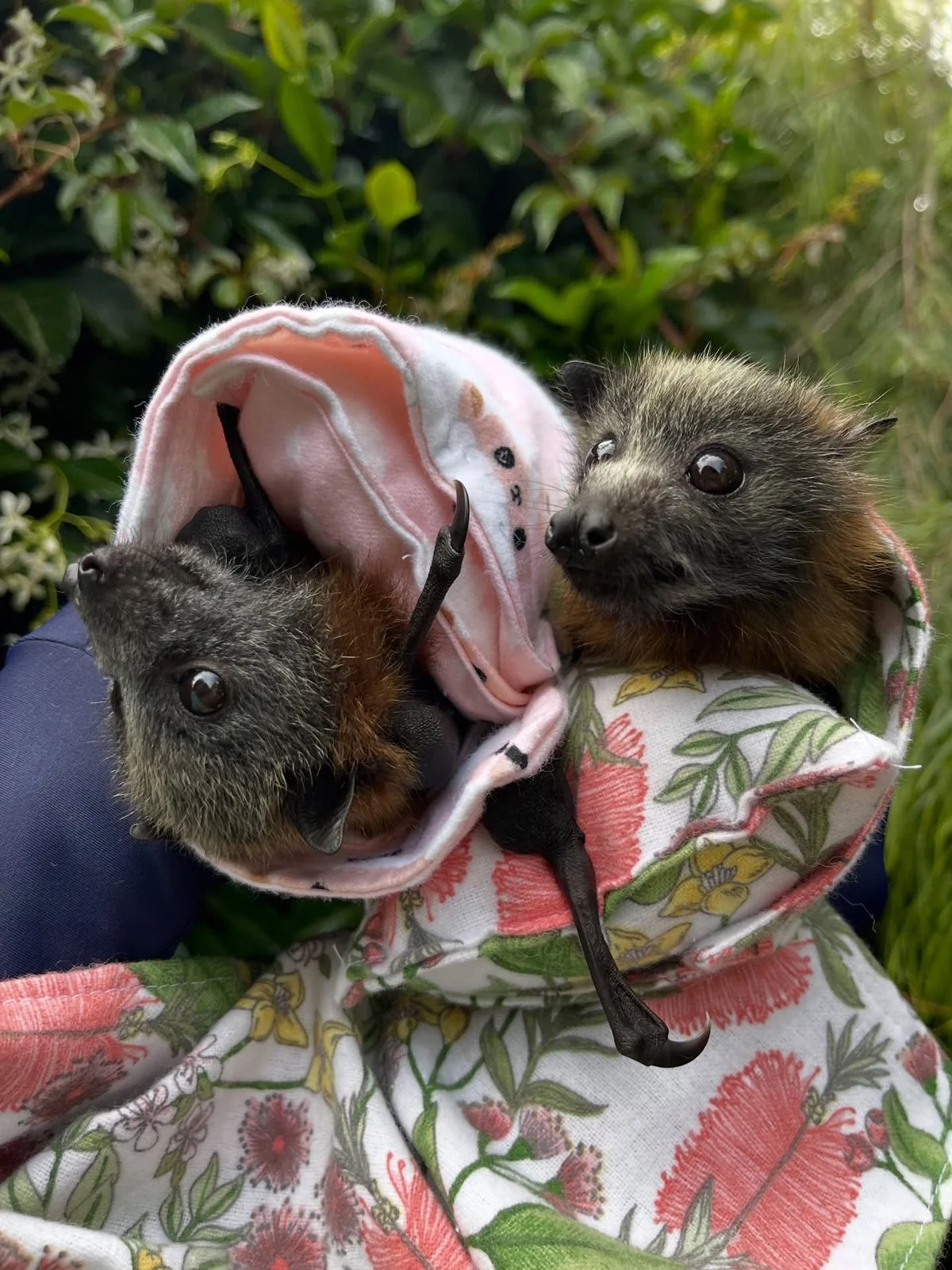
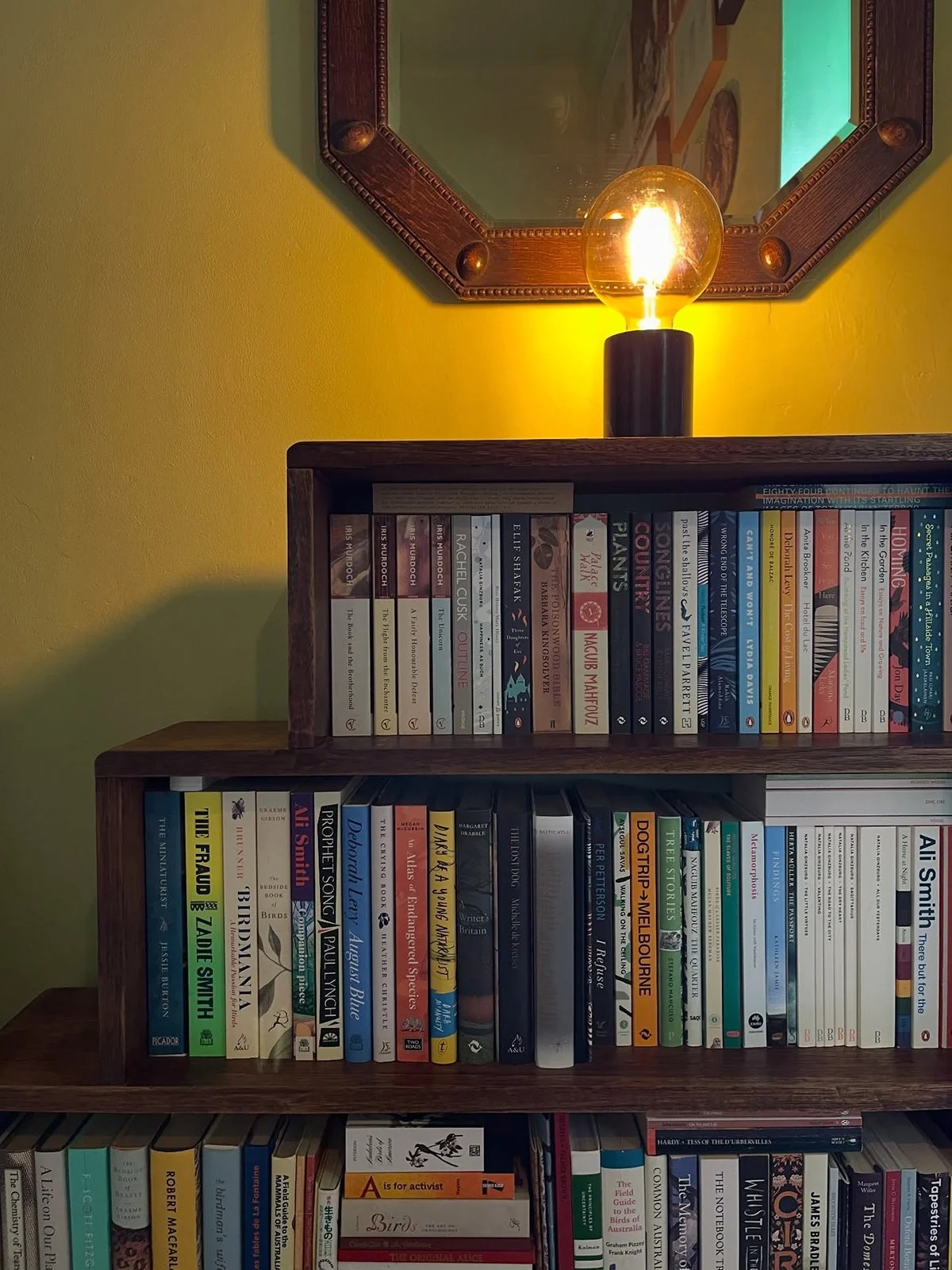
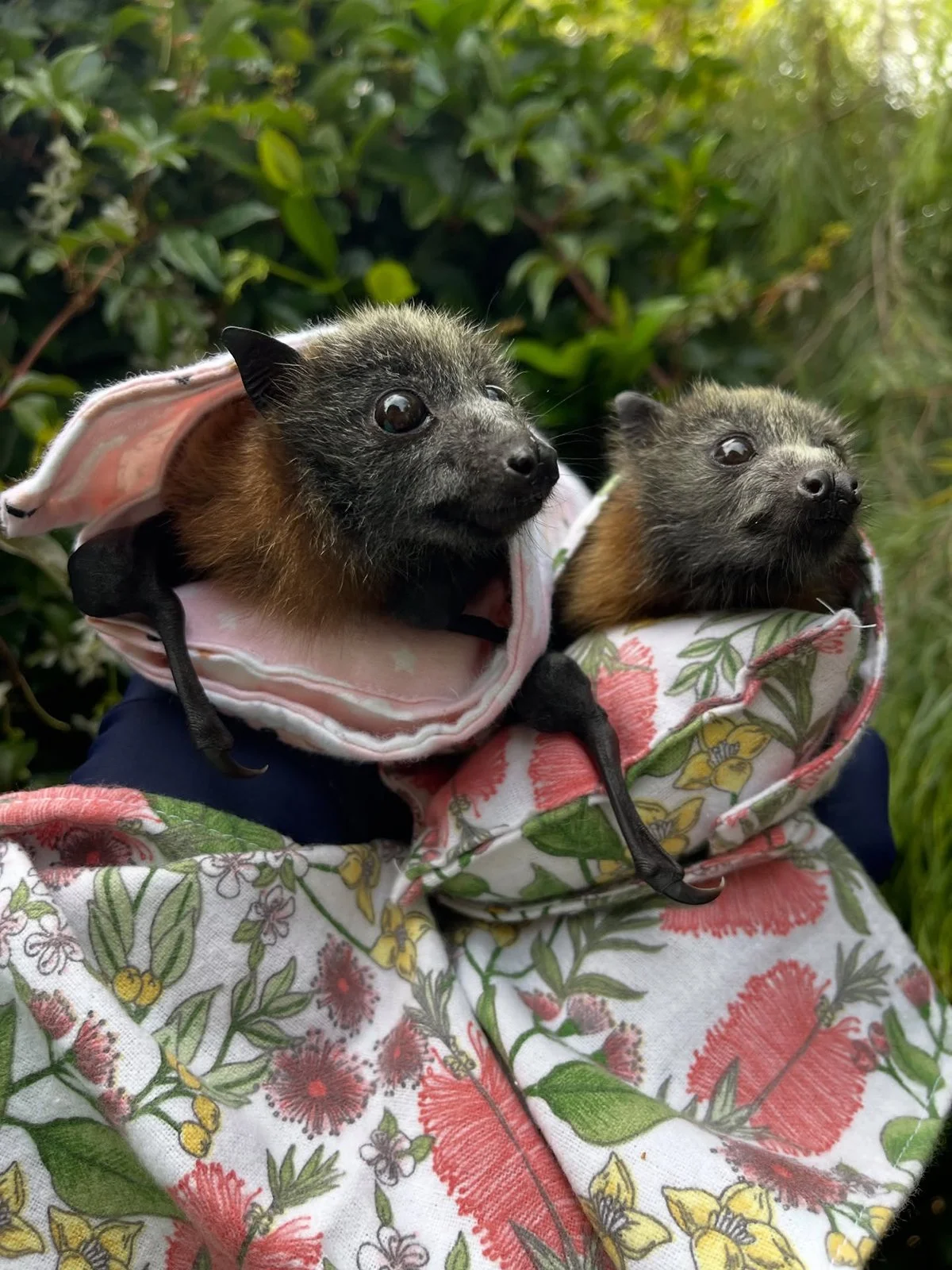
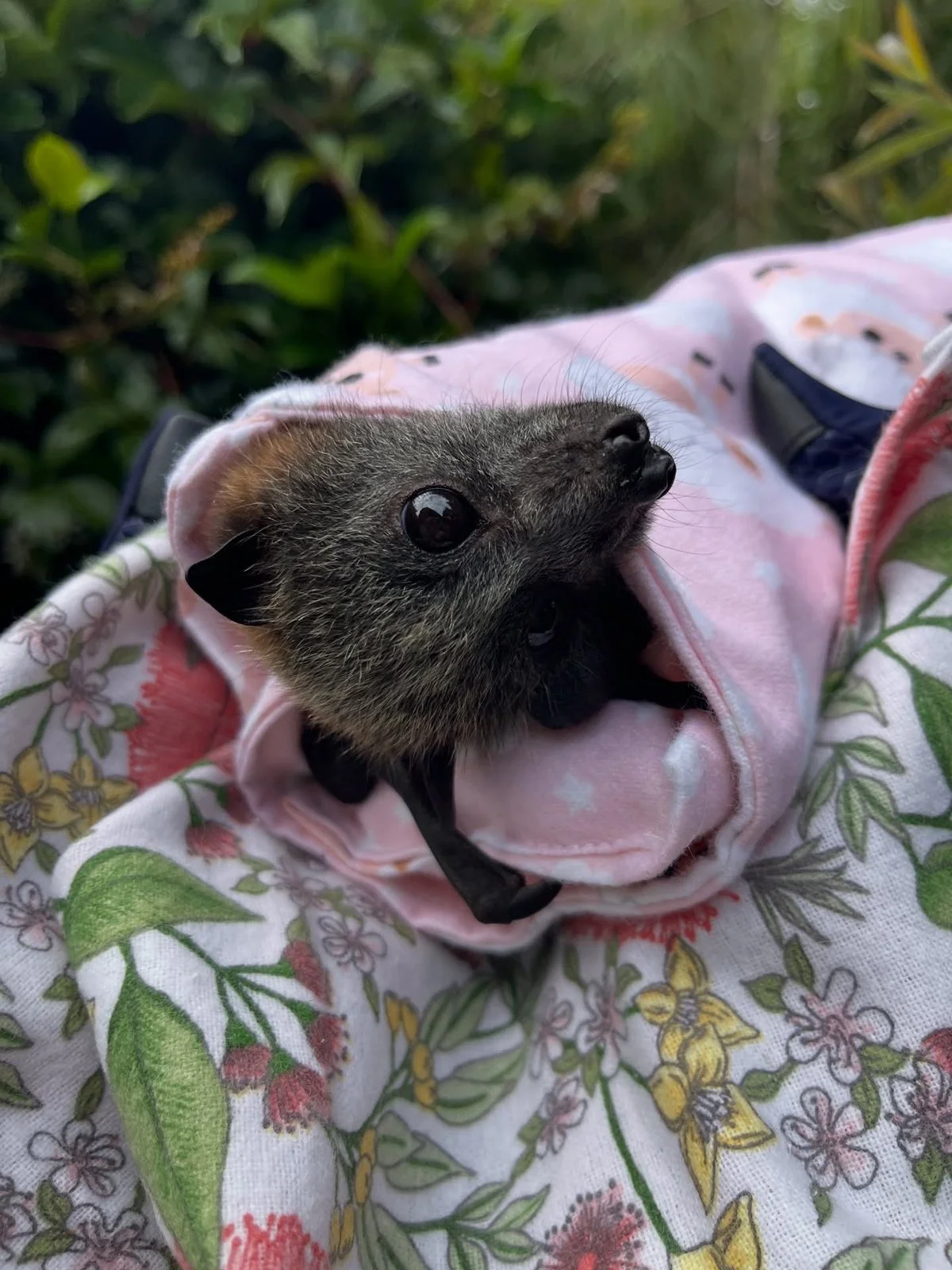
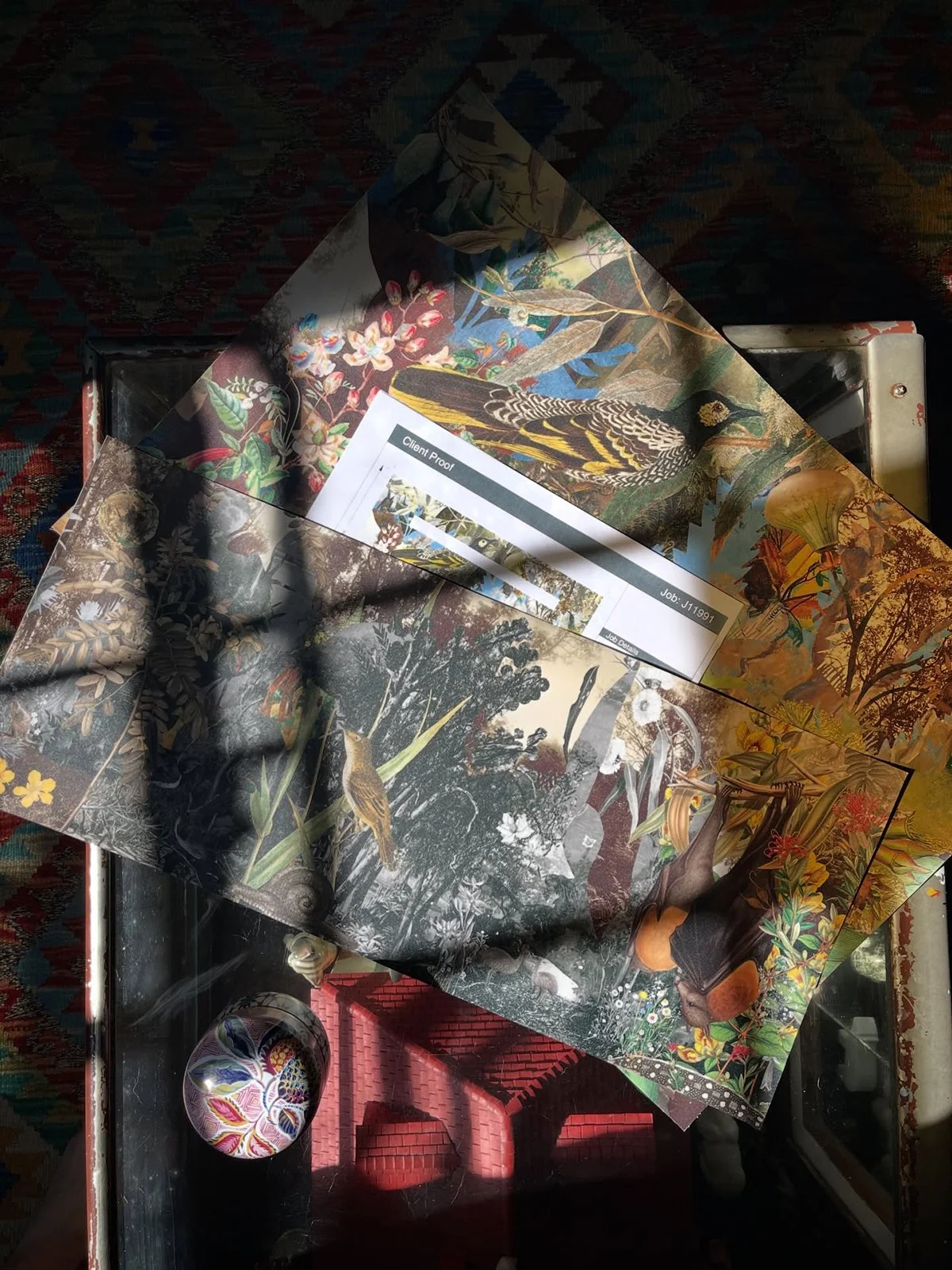
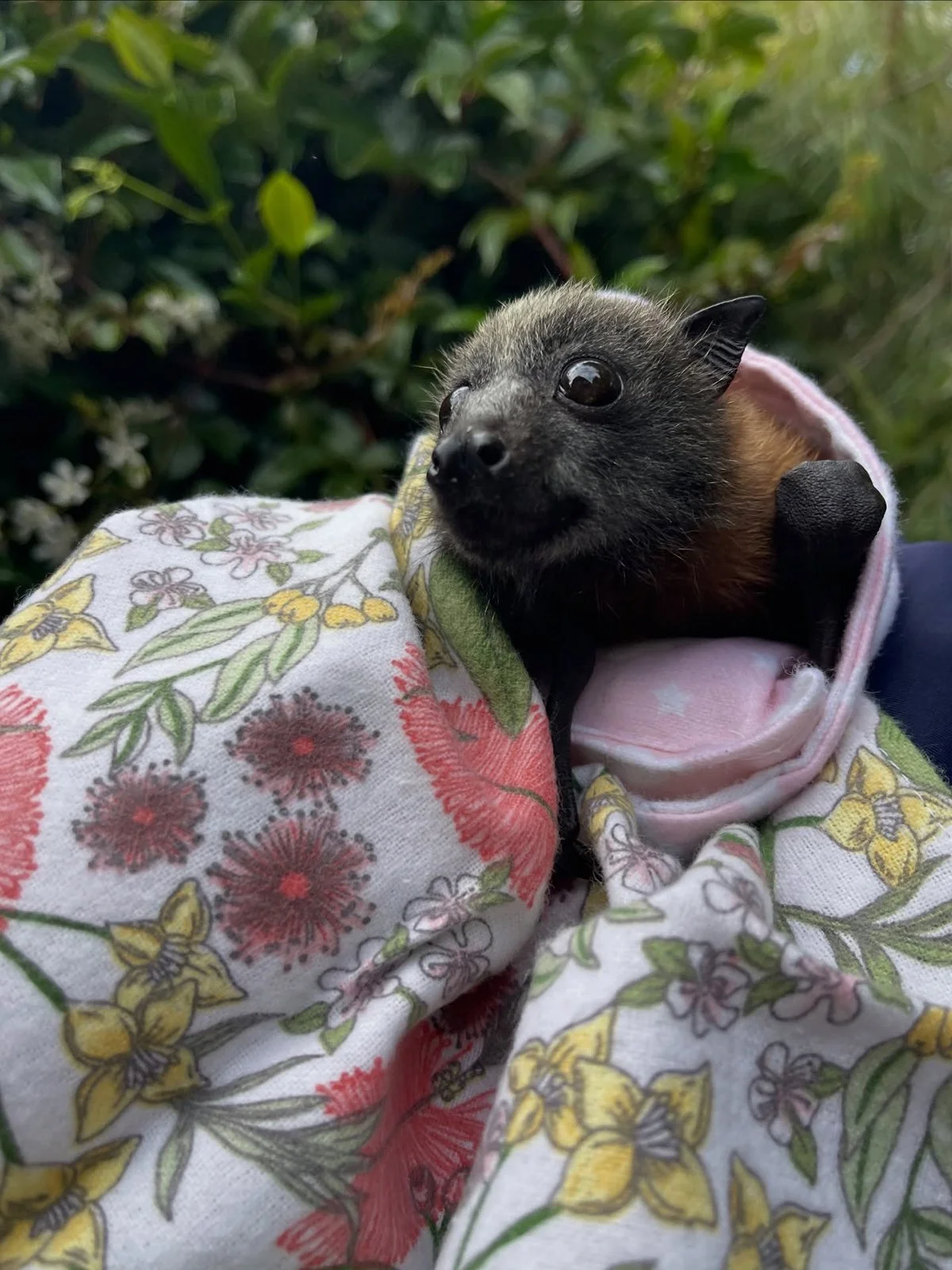
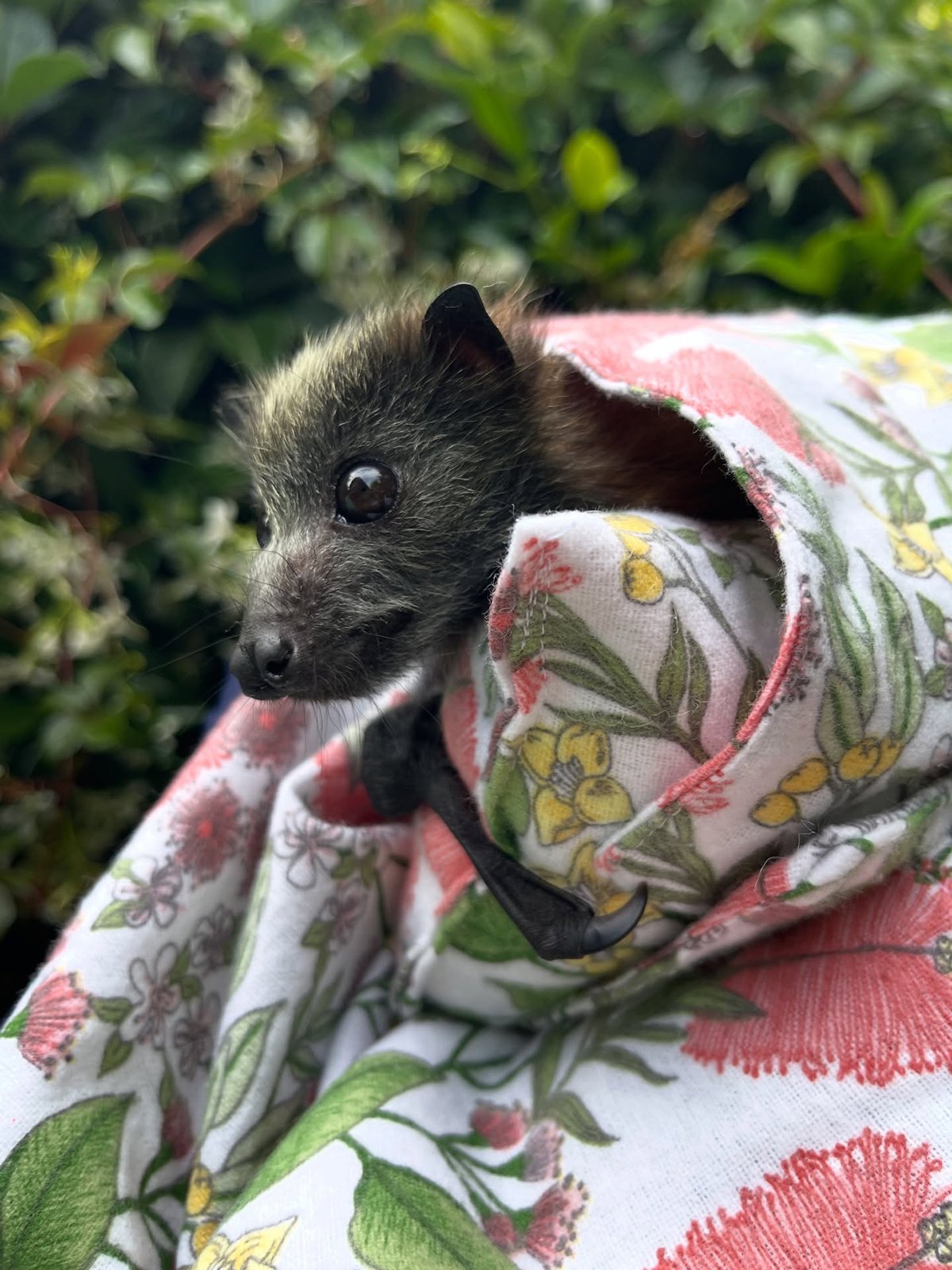
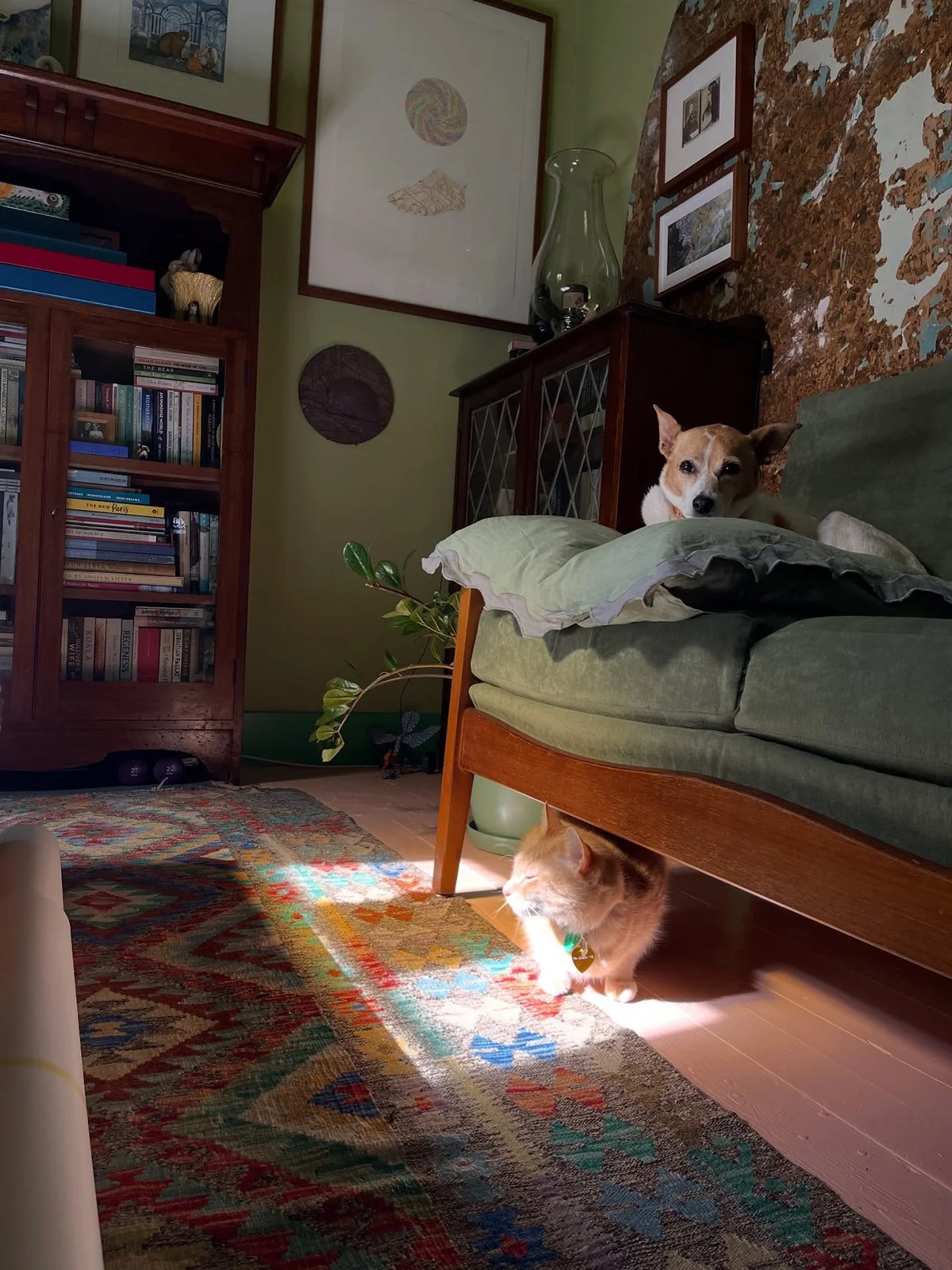
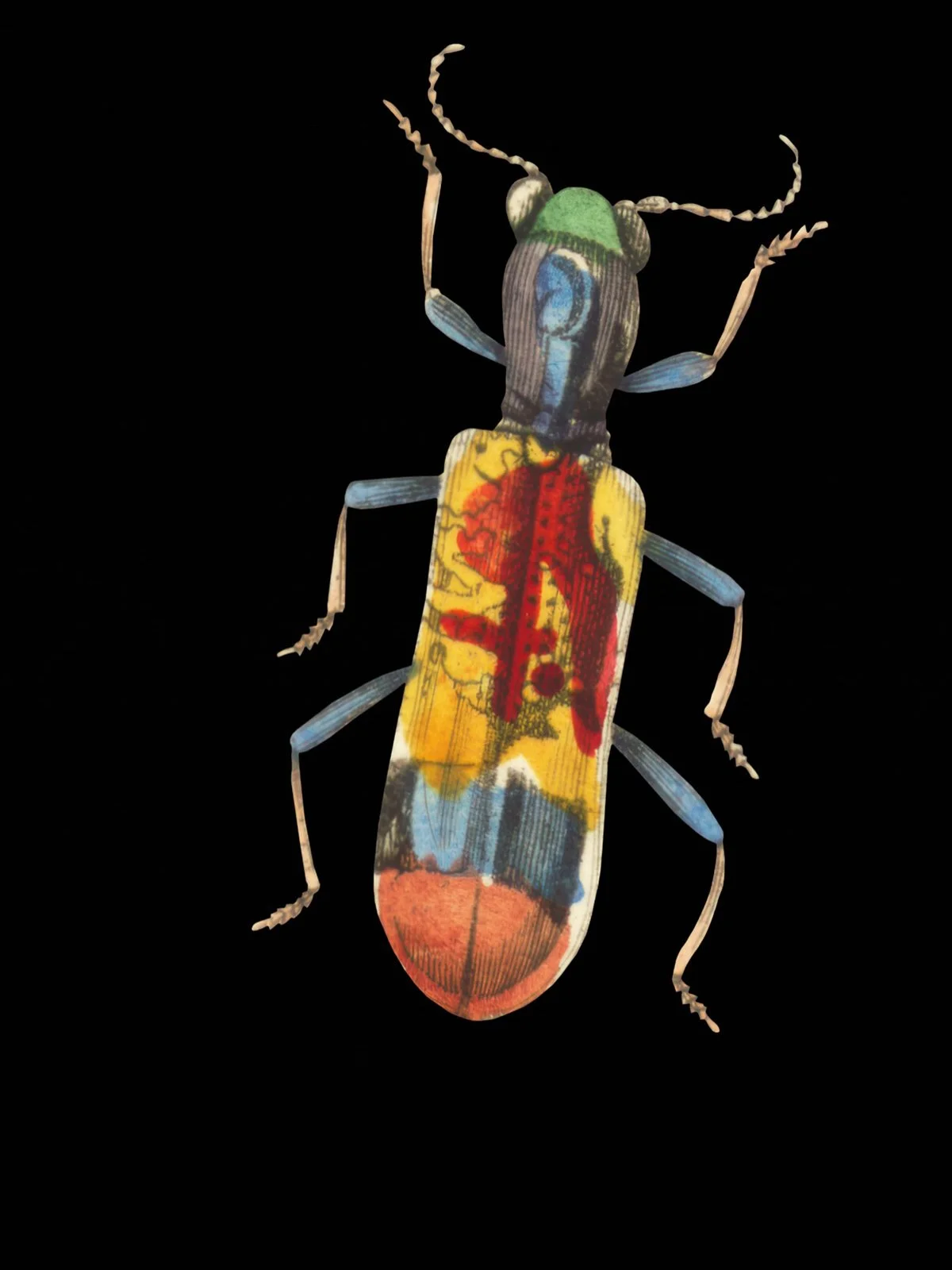
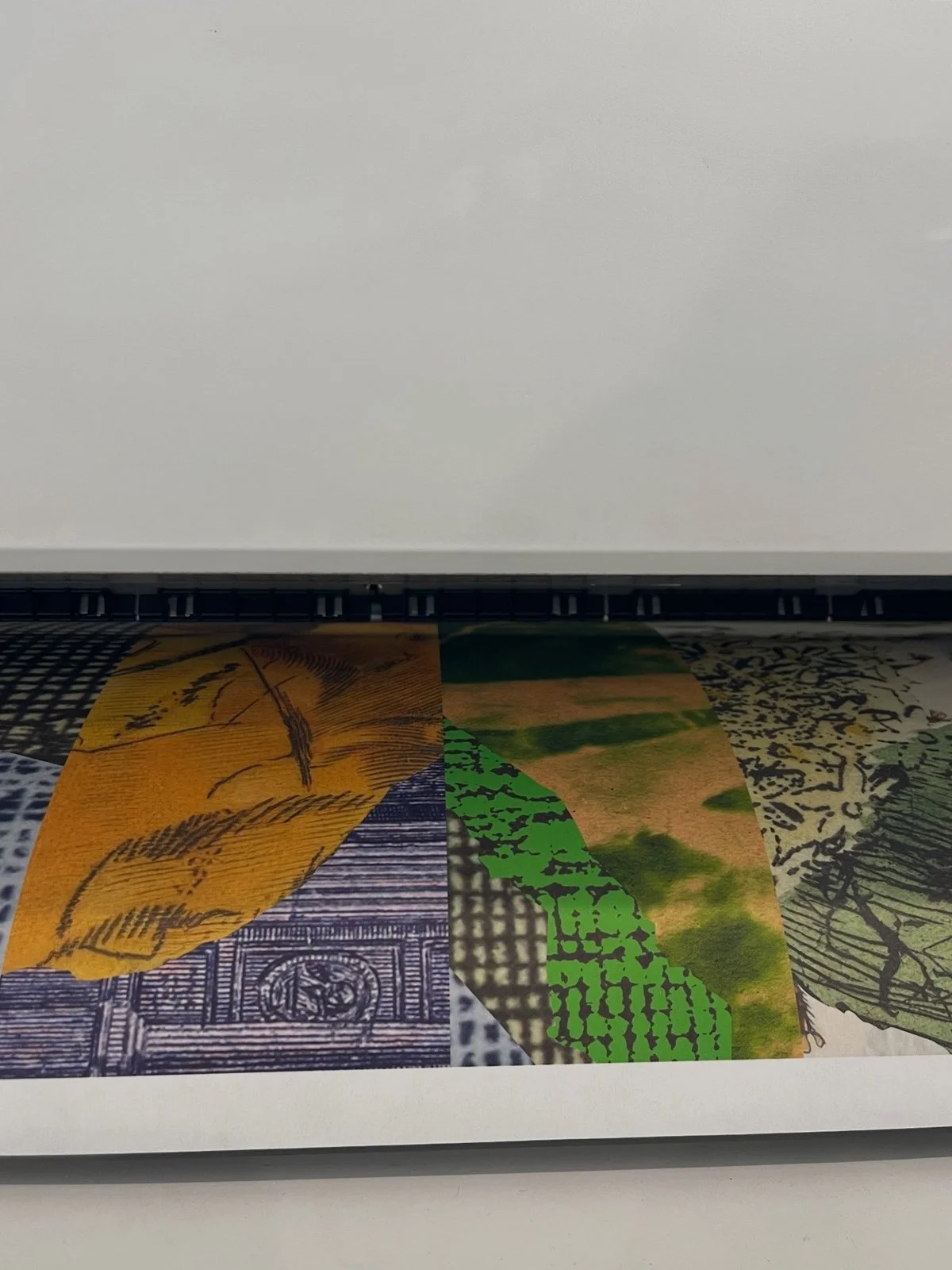
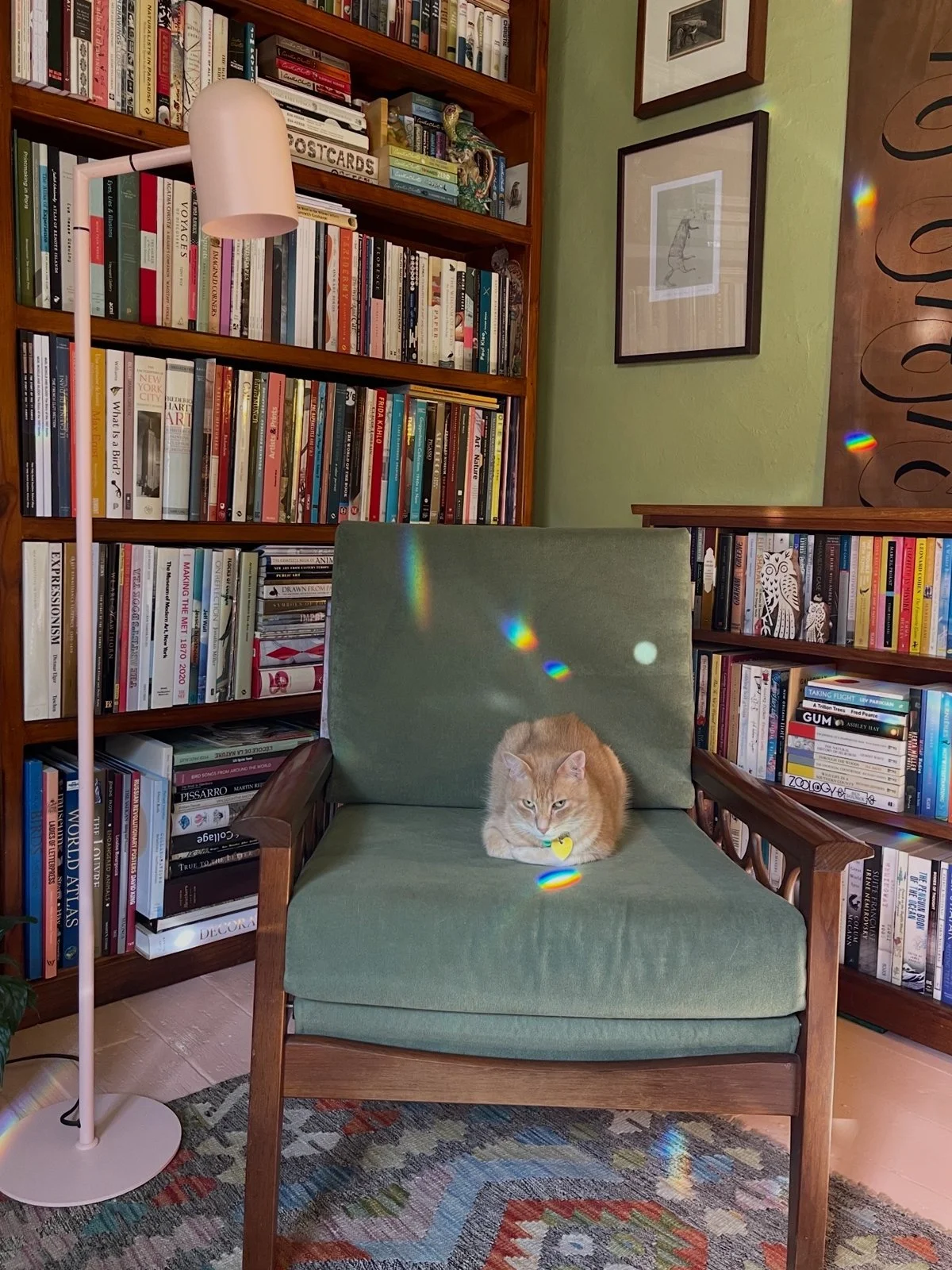
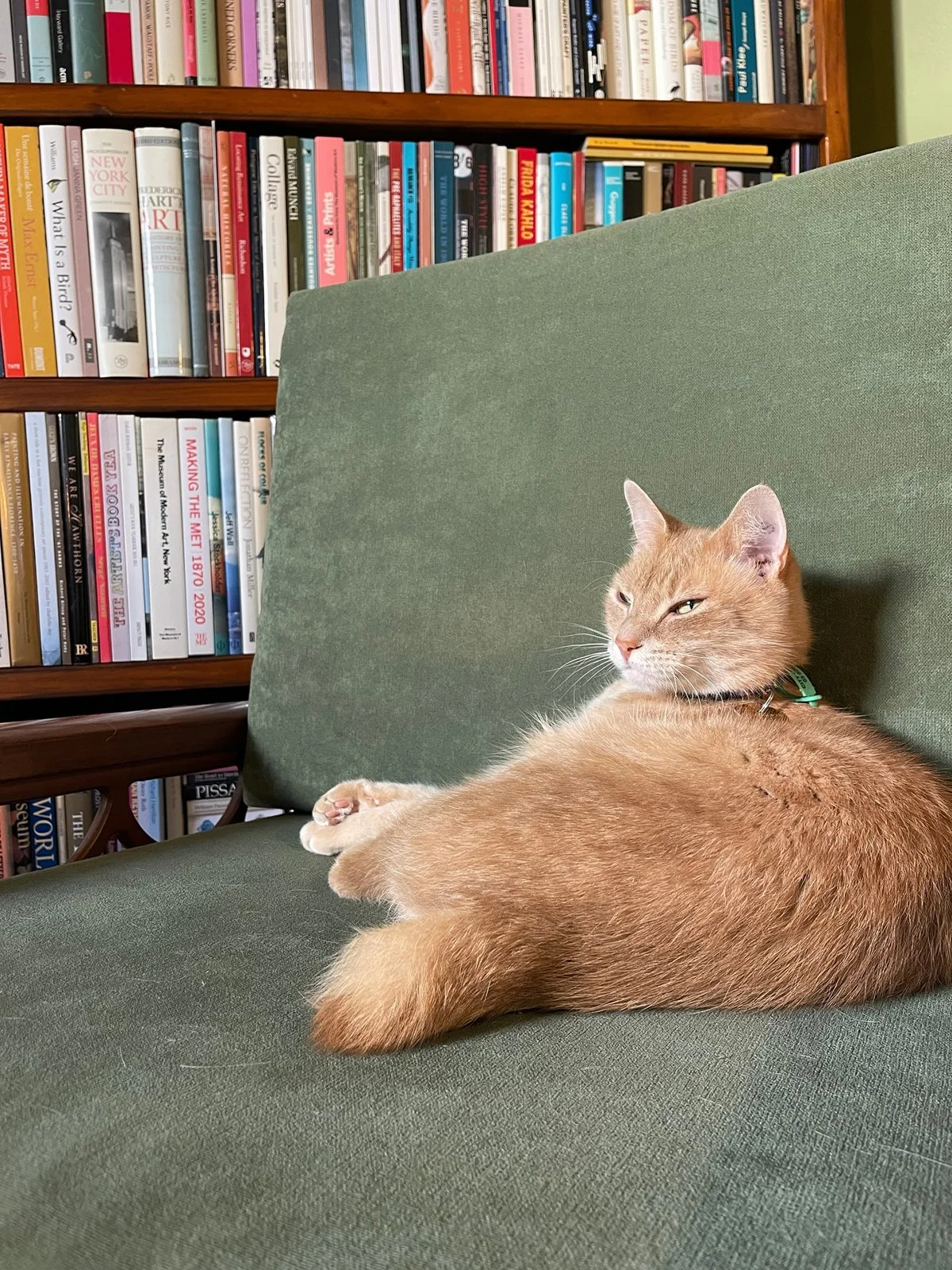
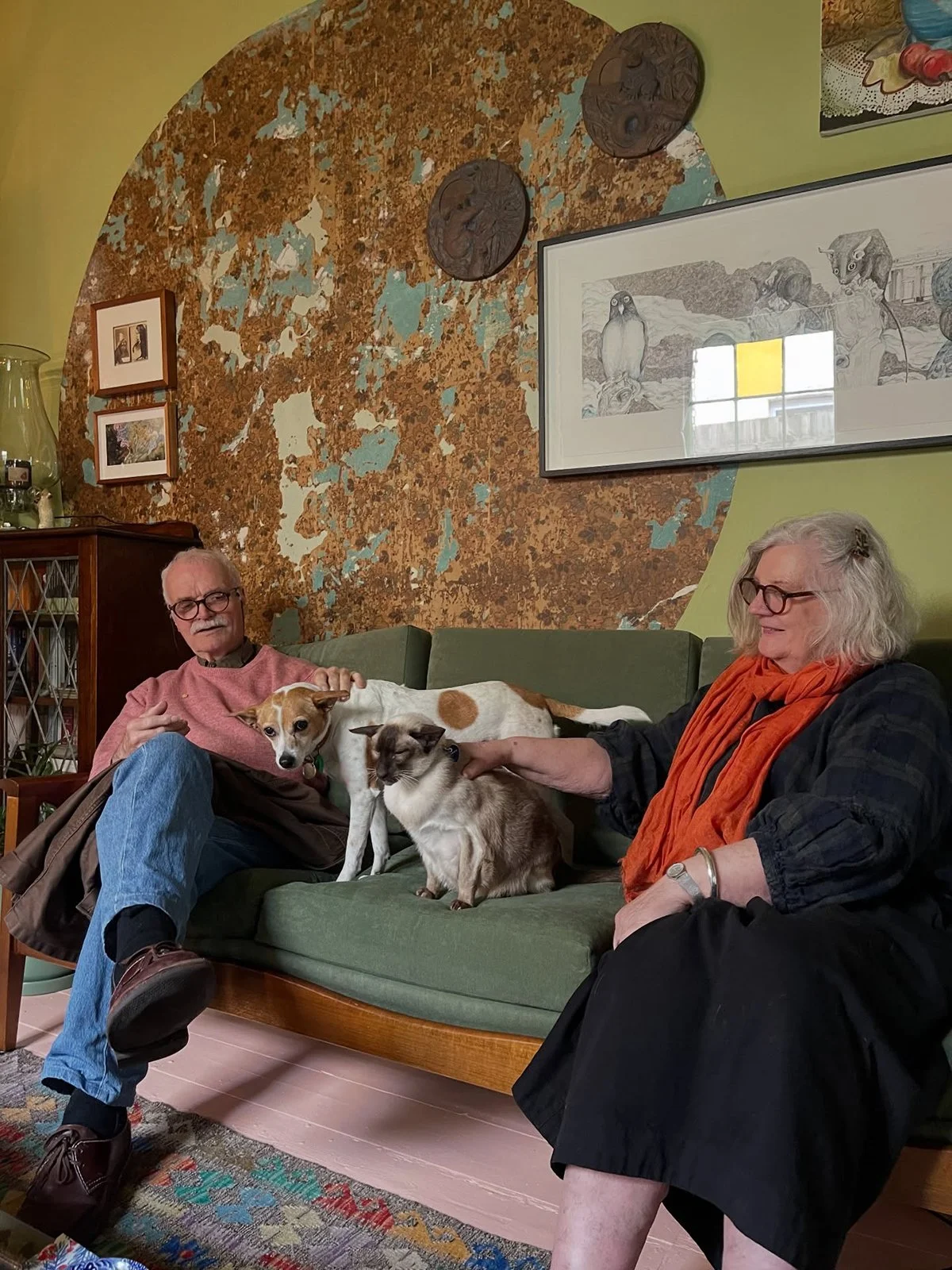
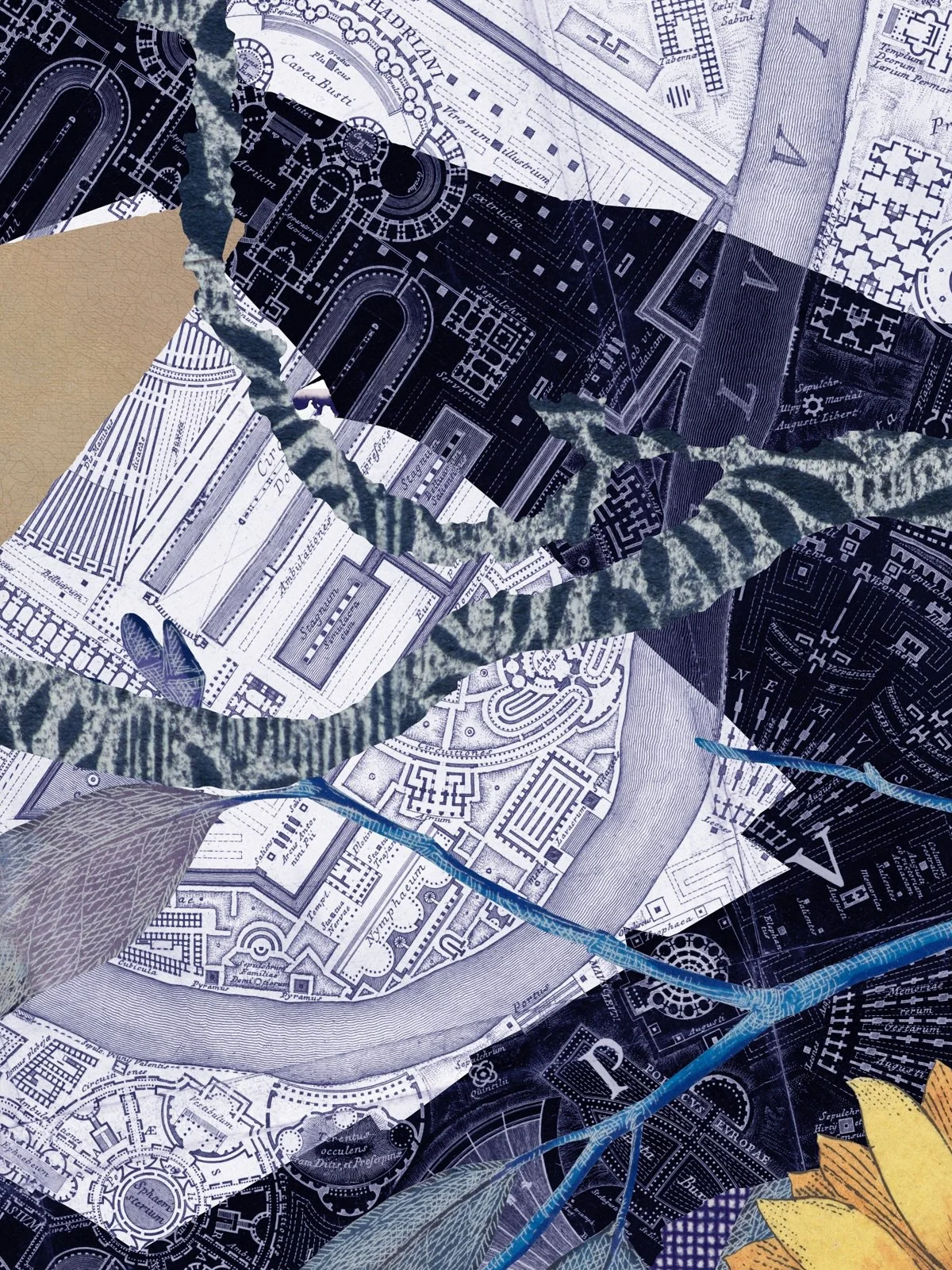
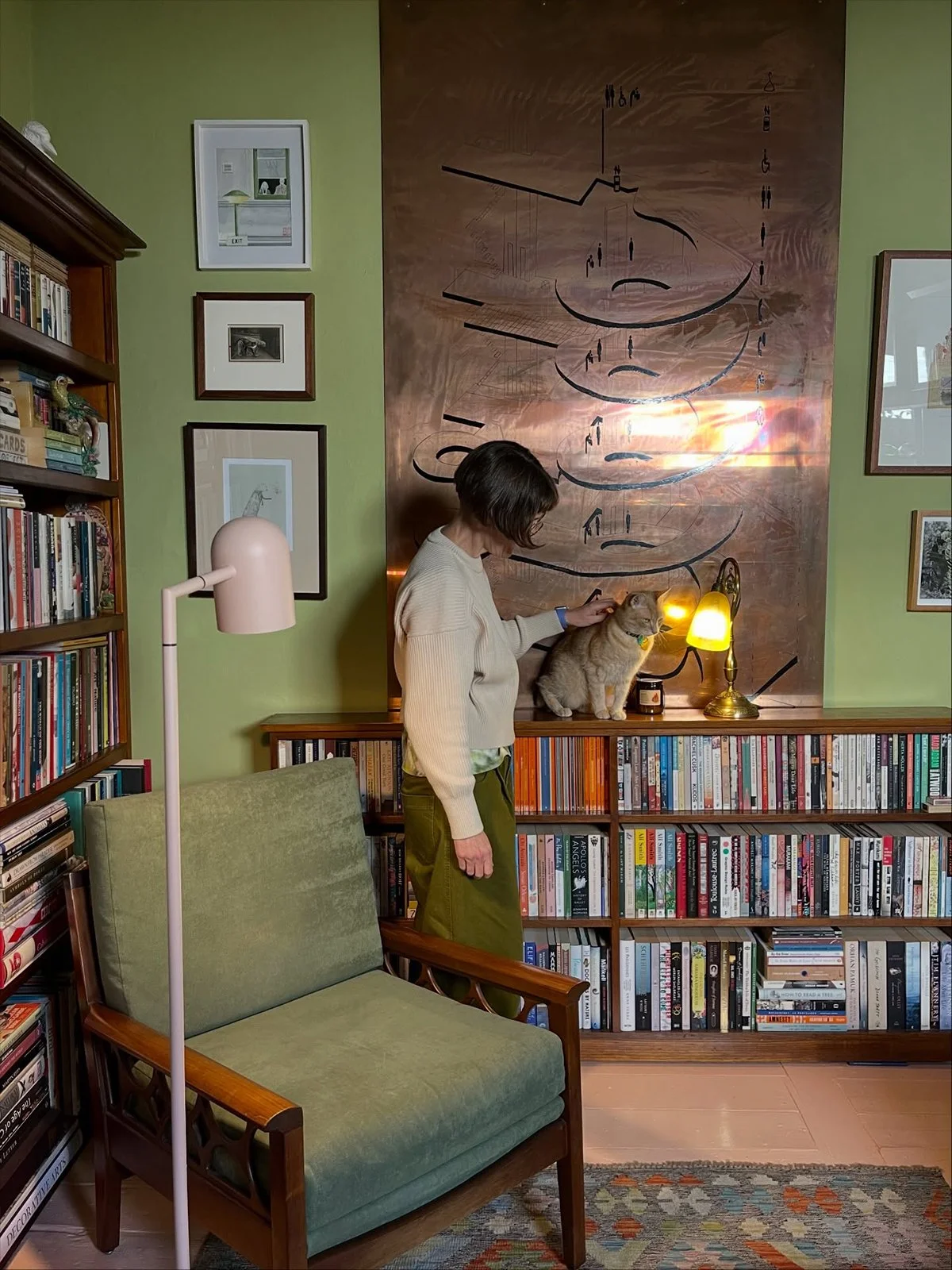
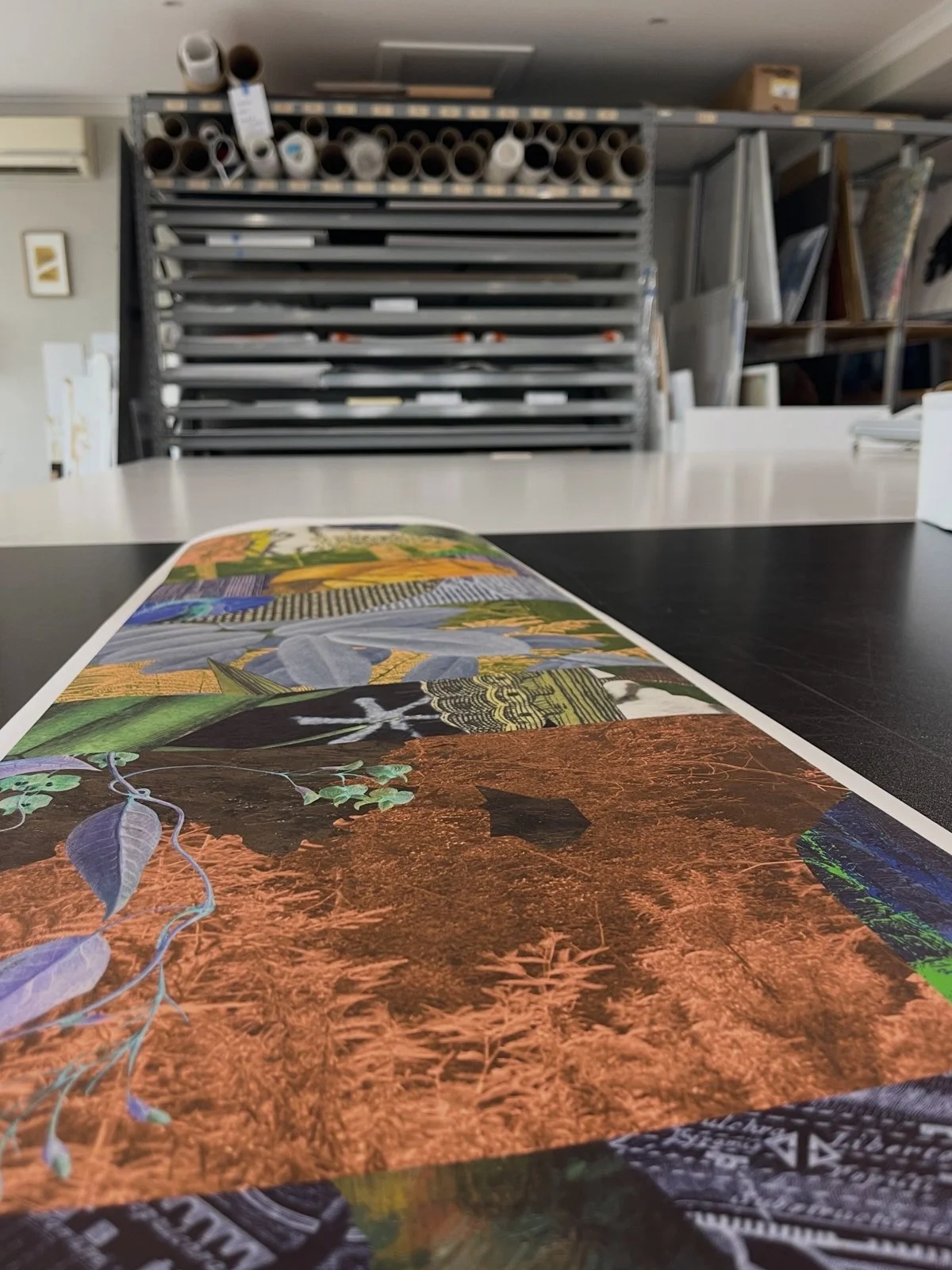
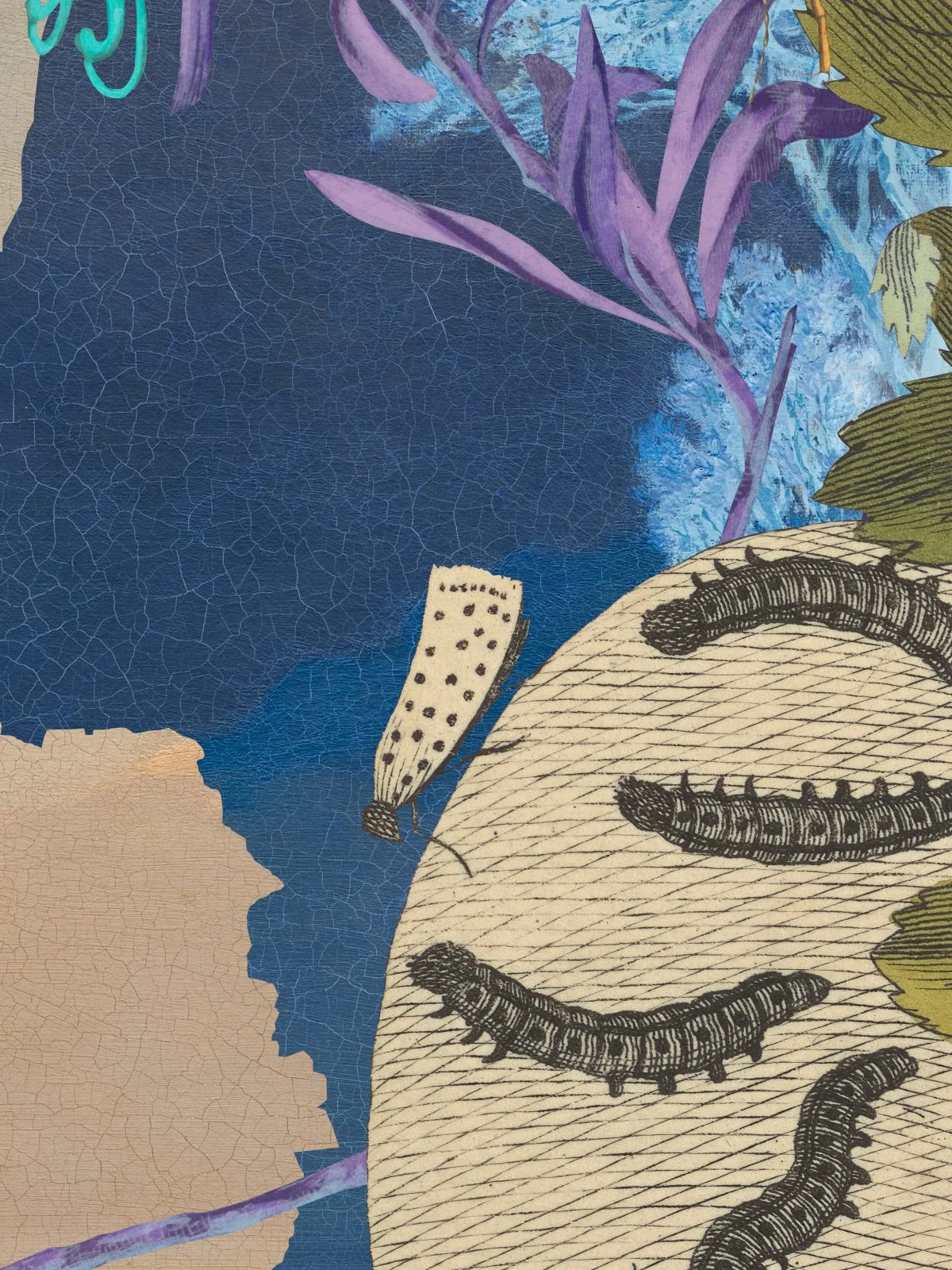
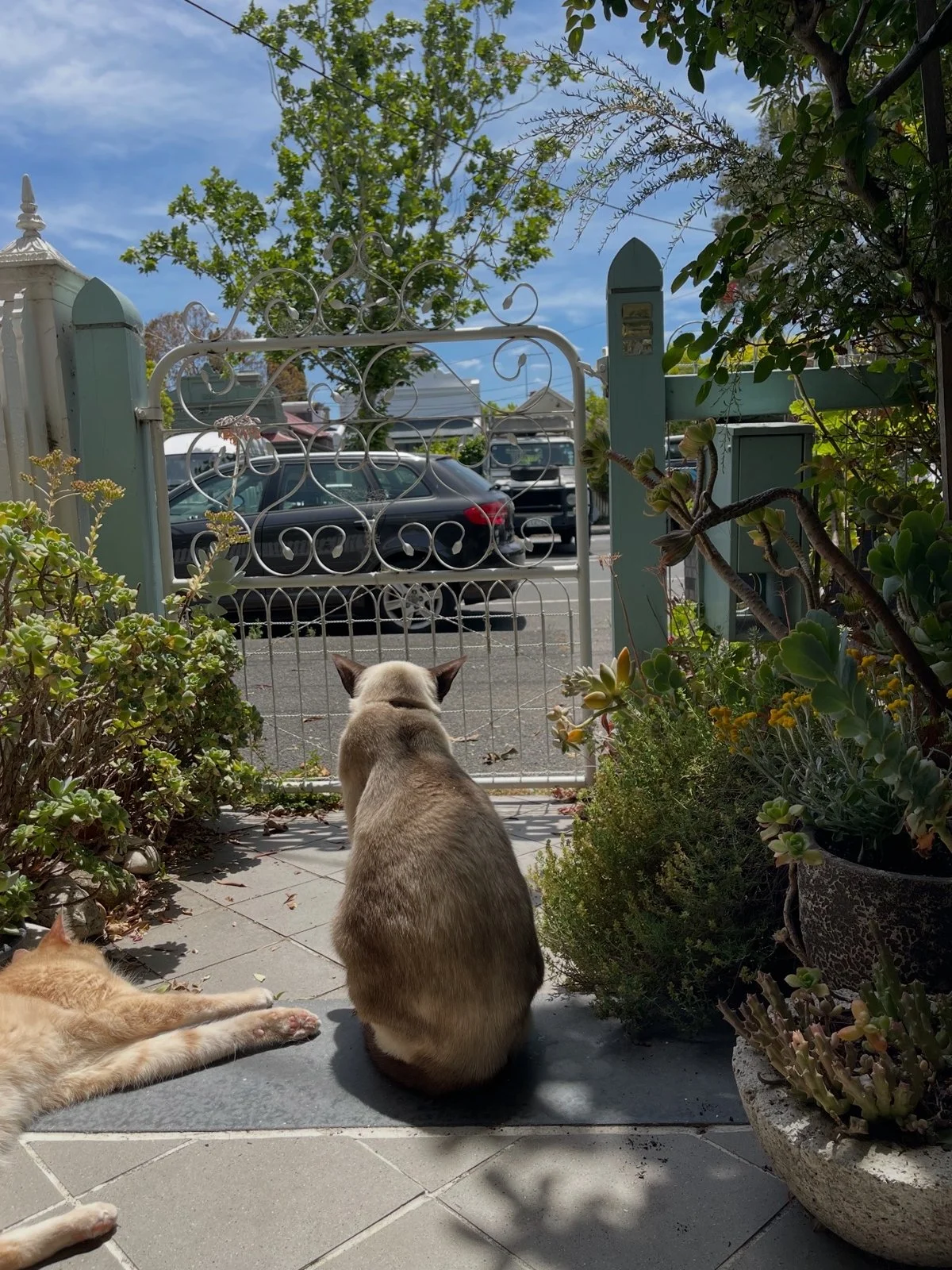
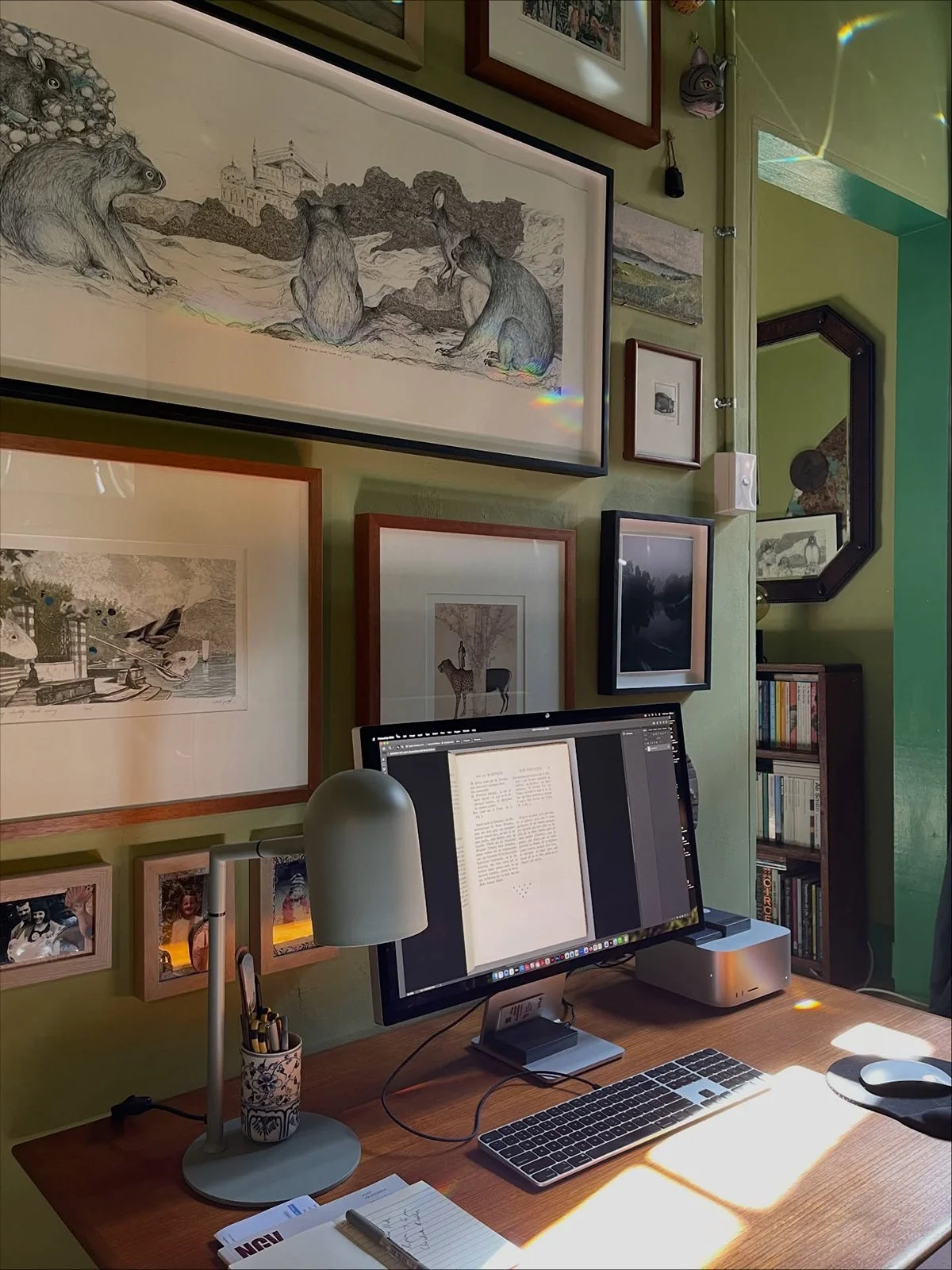
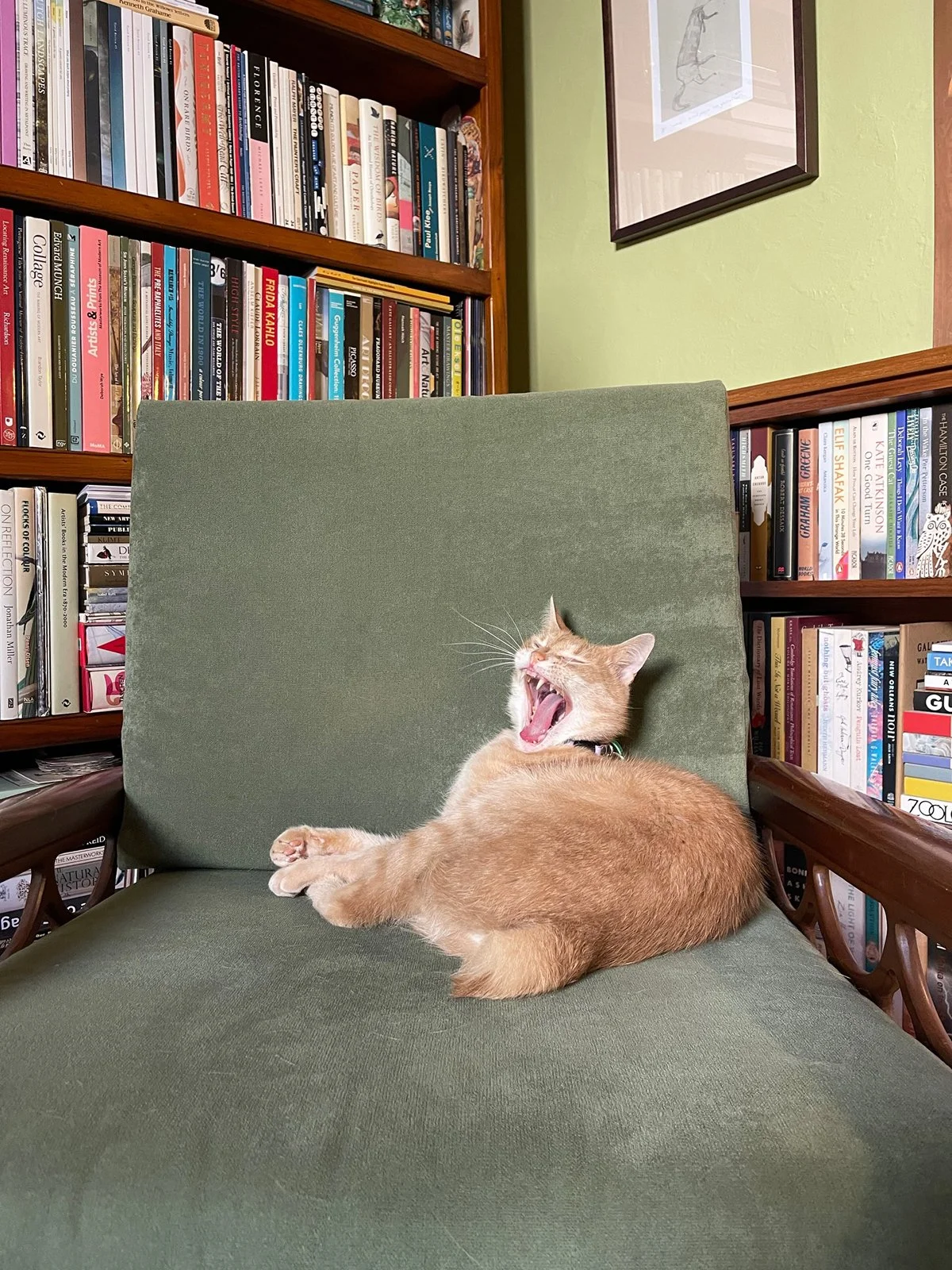
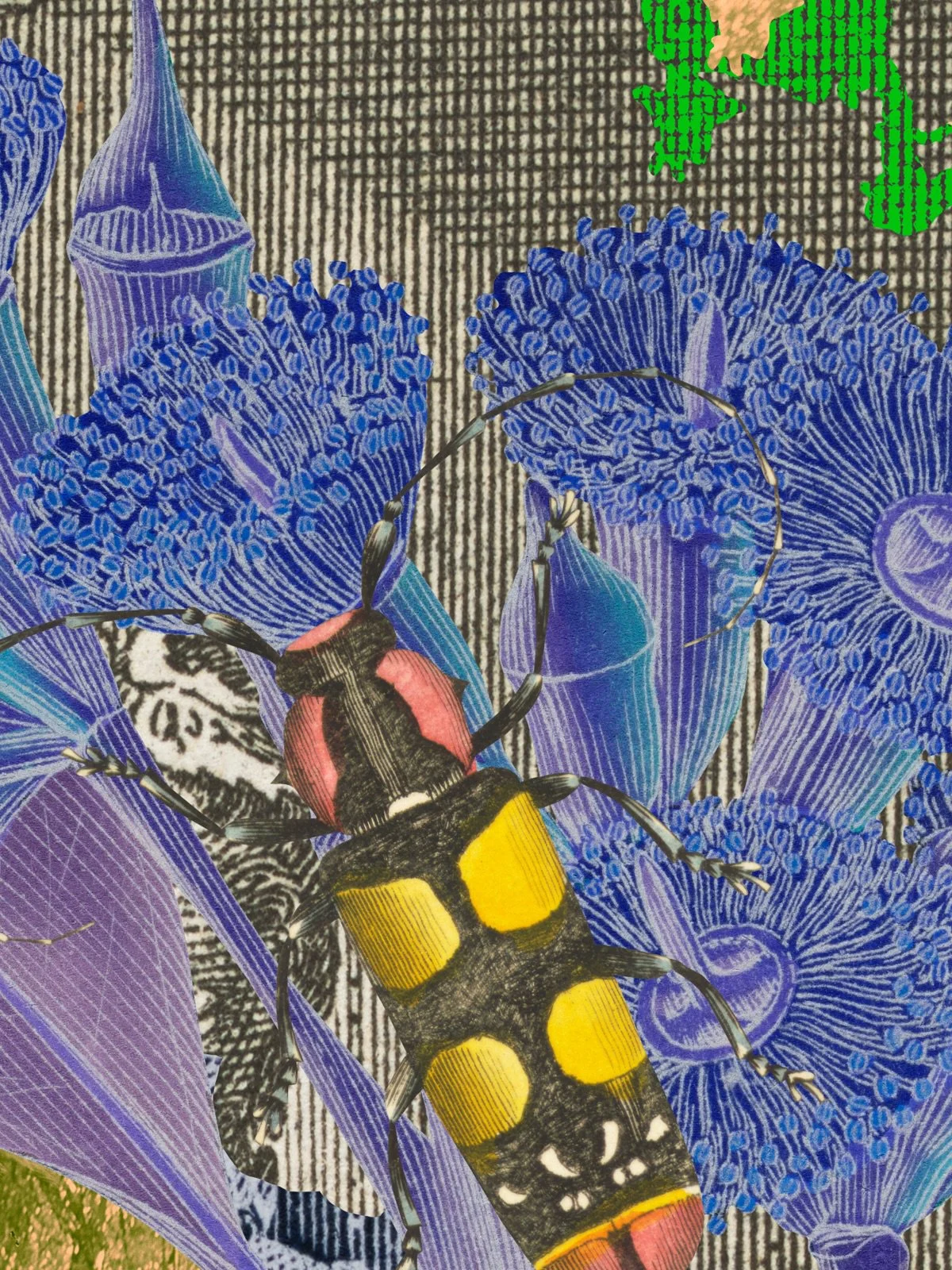
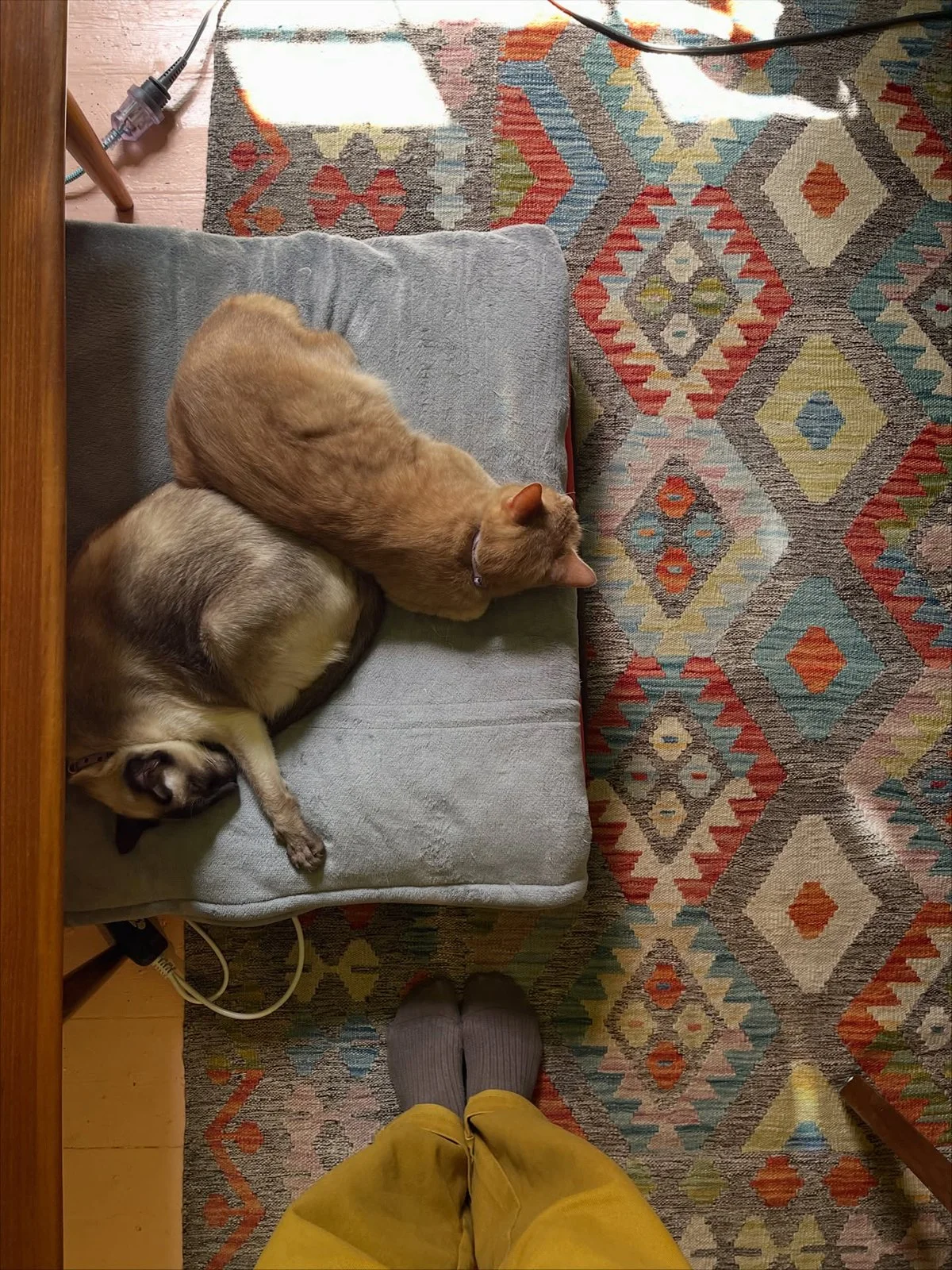
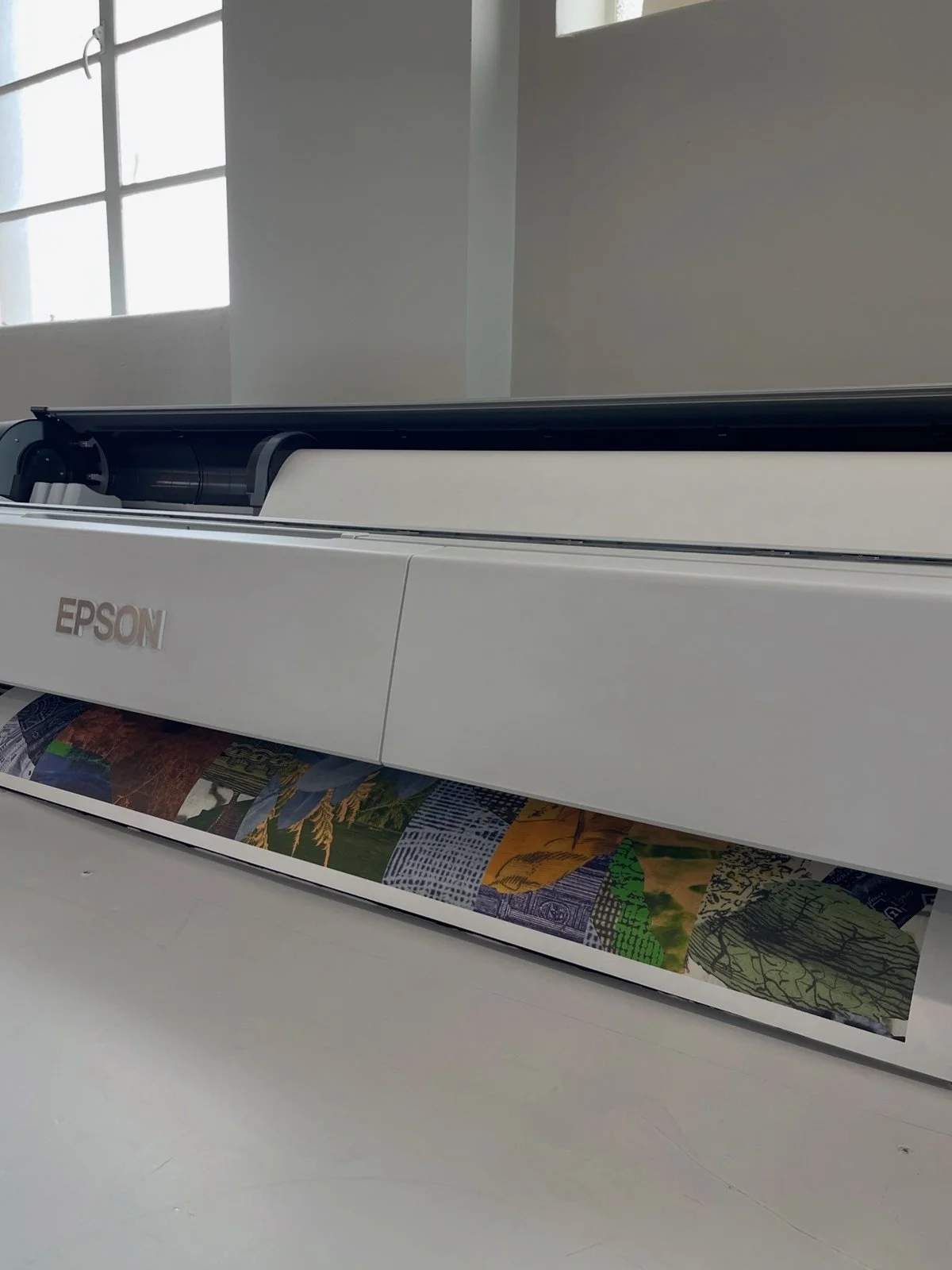
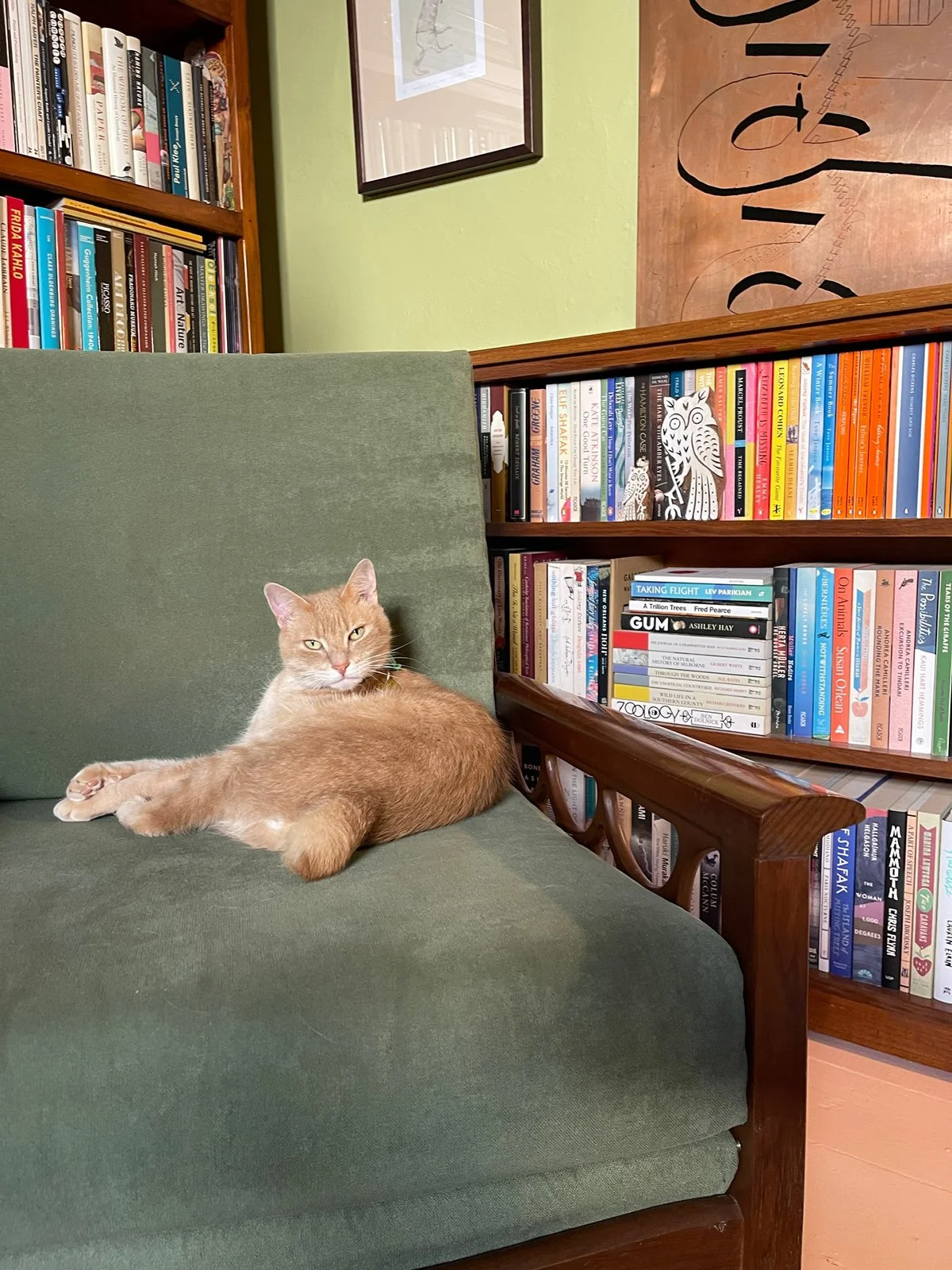
Looking ahead, we are especially delighted to be able to reveal a little more of our commission for the forthcoming exhibition at the Potter Museum of Art, A velvet ant, a flower, and a bird, curated by Chus Martínez, and set to open in February. On the screen, piece by piece, for screen by screen, the nest of a Velvet ant, specifically Specimen 1963, is constructed from the (digitised) pages of rare natural history books. On the nearby bookshelf, a test strip featuring different dark to light and pale to saturated colour on Moenkopi Kozo 110, a Traditional Japanese Washi paper, hangs. Held in place by a book, this physical strip allows us to see how colour might look when not backlit by the computer screen. Behind us, Arthur, Lenni, and Lottie make the most of the seasonal shift to longer, warmer days. And further still, behind the screen, the possum quartet, Homer, Pansy, Albertina, and Humphrey, continue to thrive, munching their way through delicious browse, releasing a gloriously peppery smell as they do. Behind them, in the next enclosure along, the seven Grey-headed flying fox pups practice flapping, supping from drippers, and explore every inch of a bough of flowering gum.
As we continue to imagine the world as viewed through the eyes of a Velvet ant, in such surrounds, we invite you to read a taste of what is to come.
A Velvet ant by name, a wasp by family, so visual and textural is the image conjured. An ant who is a wasp. A wasp who is soft. Who decided this was so? Do the Velvet ants agree?
From a family, worldwide, Mutillidae number in excess of 7,000 species, and that is just the ones that we humans know about and have recorded. The Velvet ant is named after the wingless appearance of the female, who resembles, it was decided, a hairy, velvety ant. But don’t let the velvet part confuse you, like the ant component may. The Velvet ant sports armour. Armour so strong it is known to break the pins of entomologists. It is what is needed, this armour, if you are going to locate the nest of another type of wasp or bee and, once inside, lay your single egg on the pupa of the host wasp. If you were to be intercepted, you’d require armour too; your plans run counter to each other.
As Dr Ken Walker, Senior Curator of Entomology, Museums Victoria Research Institute, revealed to us, the Velvet ant is awe-inspiring. Looking at a single specimen beneath the microscope, she peered back at us, a dimorphic beauty, collected in 1963, but fantastically present. Magnified upon the screen, her striated thorax resembles amber glass. Atop her head, her GPS-like lens, which allows her to see in ultraviolet and polarised light, could be seen, and duly dreamed. And her compound eyes that allow her to see 300-frames-per-second, a level of detail inconceivable for us to fathom. Next to her, we move in slow motion, for wasps, evolutionary speaking, are so far advanced, when compared to ourselves.
Charmed by Jan Swammerdam’s (1637–1680) introduction to his The Book of Nature; (or [extended title], The History of Insects reduced to distinct classes, confirmed by particular instances, displayed in the anatomical analysis of many species, and illustrated with copper-plates), this work is our approximation of a single female Velvet ants umwelt. Her umwelt, ‘Specimen 1963’. Like Swammerdam, “Curious reader, before [we] proceed to lay [our] observations before you, [we] must most humbly request, that you will not be displeased, if in all this work [we] have only made use of [our] own observations”. Where Swammerdam offered this “as a solid and immoveable foundation to build upon,” and from which “deduced certain conclusions, solid theorems, and classes digested in due order”, we offer imaginings to the world as it is experienced by ‘Specimen 1963’.
In that world, there are many potential hosts. There is a central nest, where her one egg rests. There are tunnels to the nest, where she has chewed her way in. Buoyed by the work of Maria Sibylla Merian (1647–1717), together with daughters, Dorothea Maria and Johanna Helena, in which the life cycles of insects, moths and butterflies were depicted on the page, we have followed suit. Where Merian recorded the activities alongside the local flora and fauna — insects with their host plants, interactions between same and different taxa, food chains — and in doing so laid bare the connection of all things, in our work, we invite you to marvel at the ingenuity of her path (Merian, Velvet ant, both). To revel in the translucency of the wings of bumblebees, for though they are drawn, they’re still capable of flight! To shrink your own form, and see the world anew. Inspired by the concept of Charles Frederick Holder’s (1851–1915) Half hours in the tiny world: wonders of insect life, tilt your head to the side and wonder at this ‘tiny world’ writ large.
…
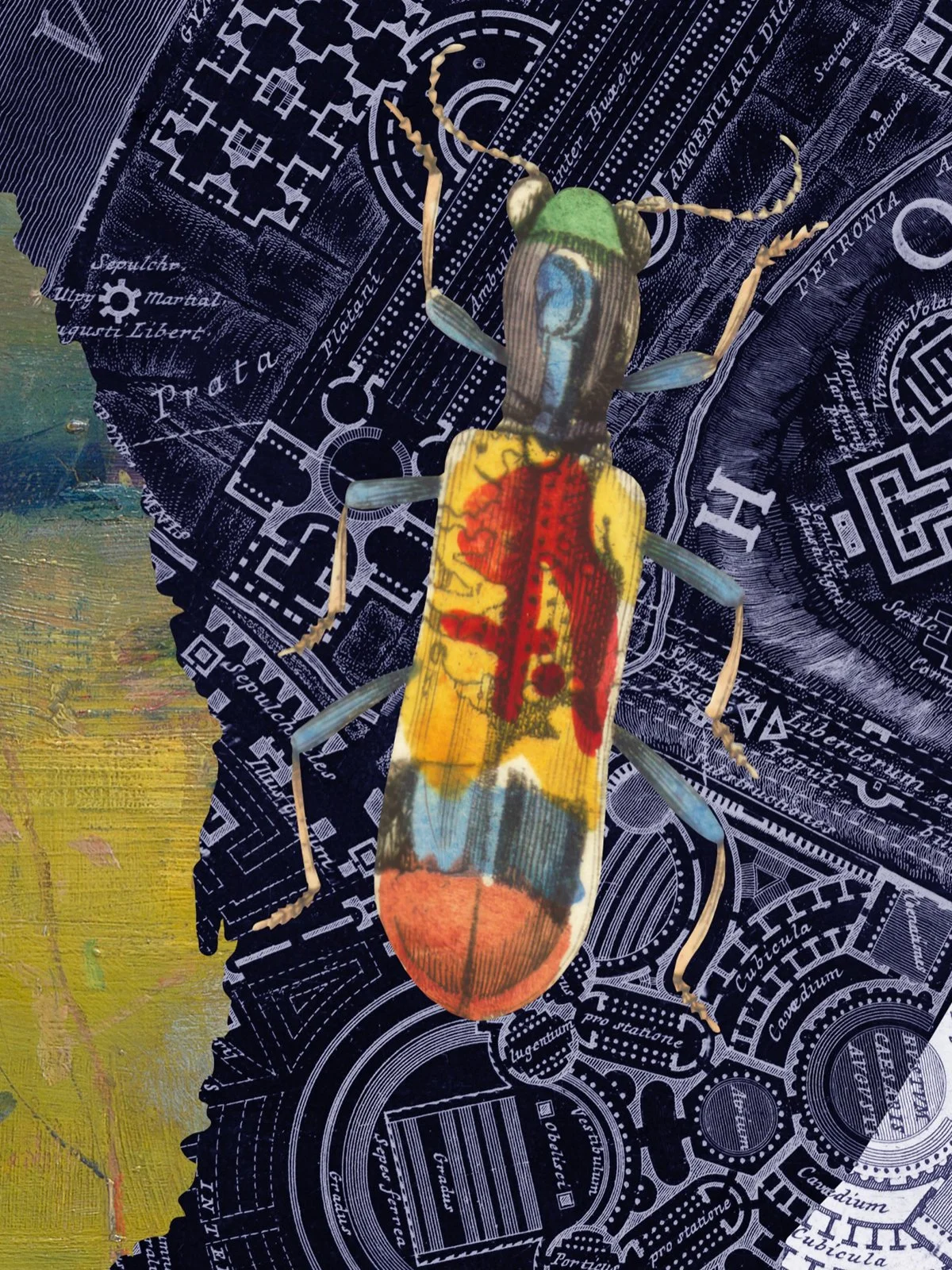
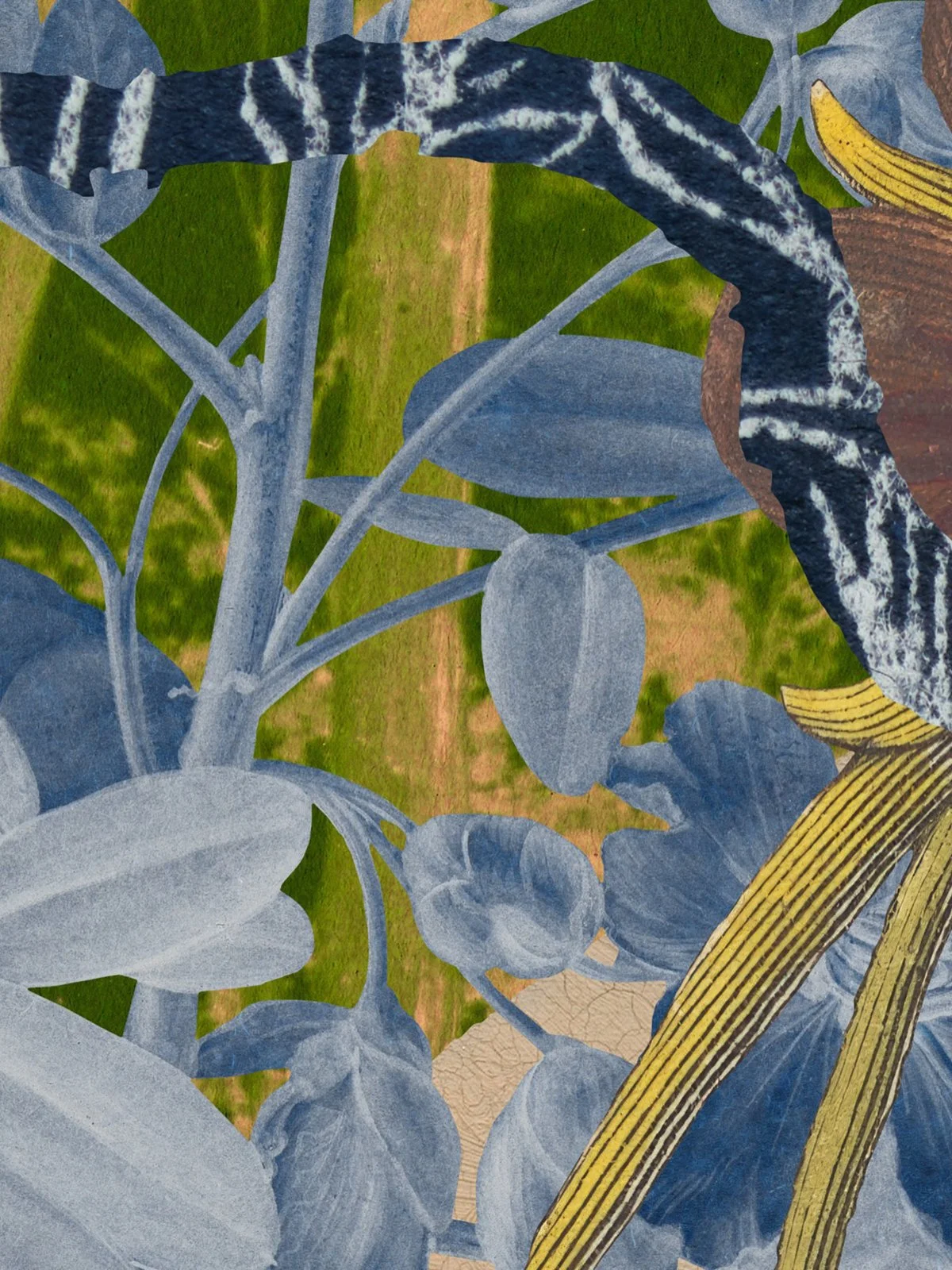
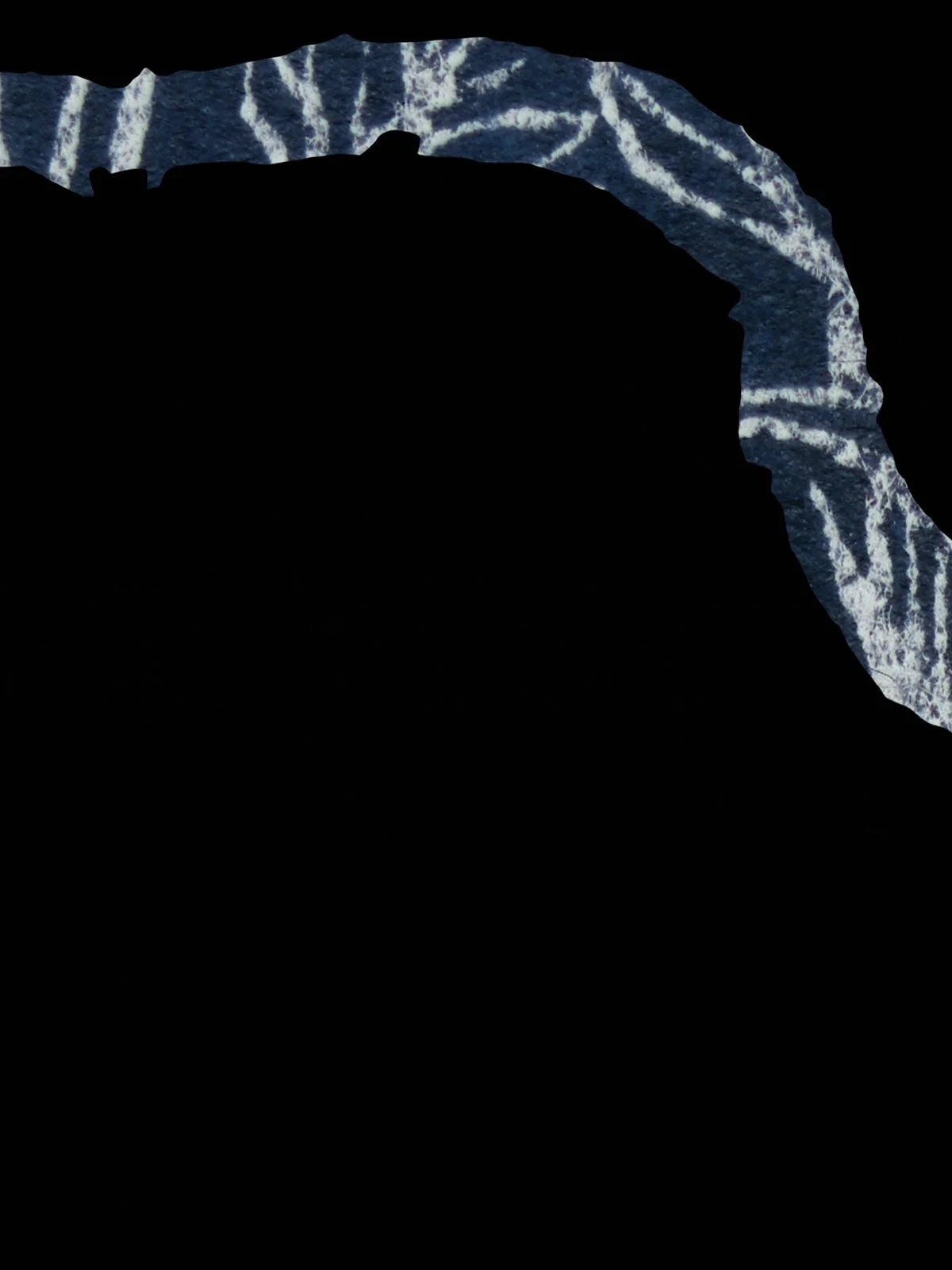
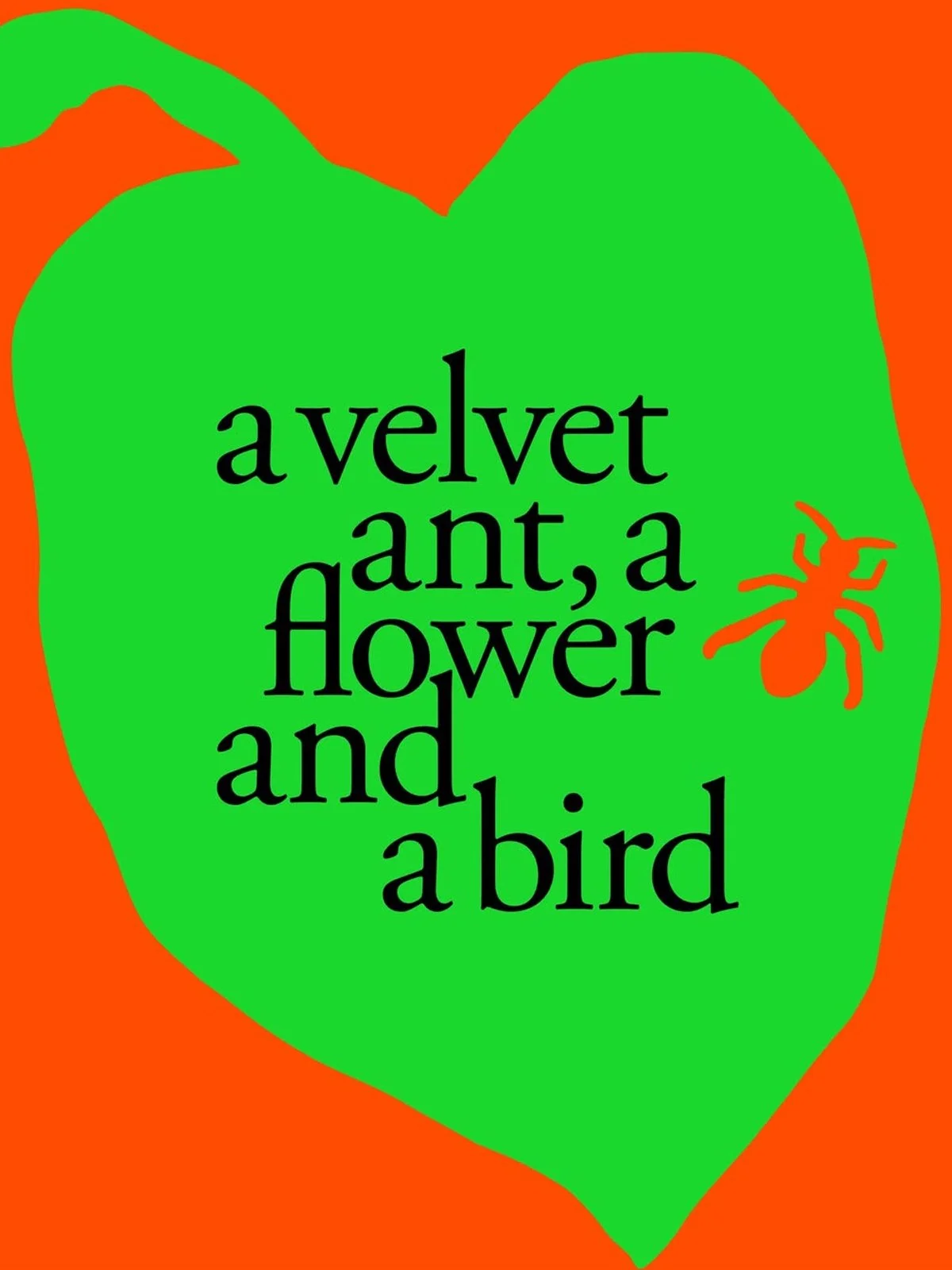
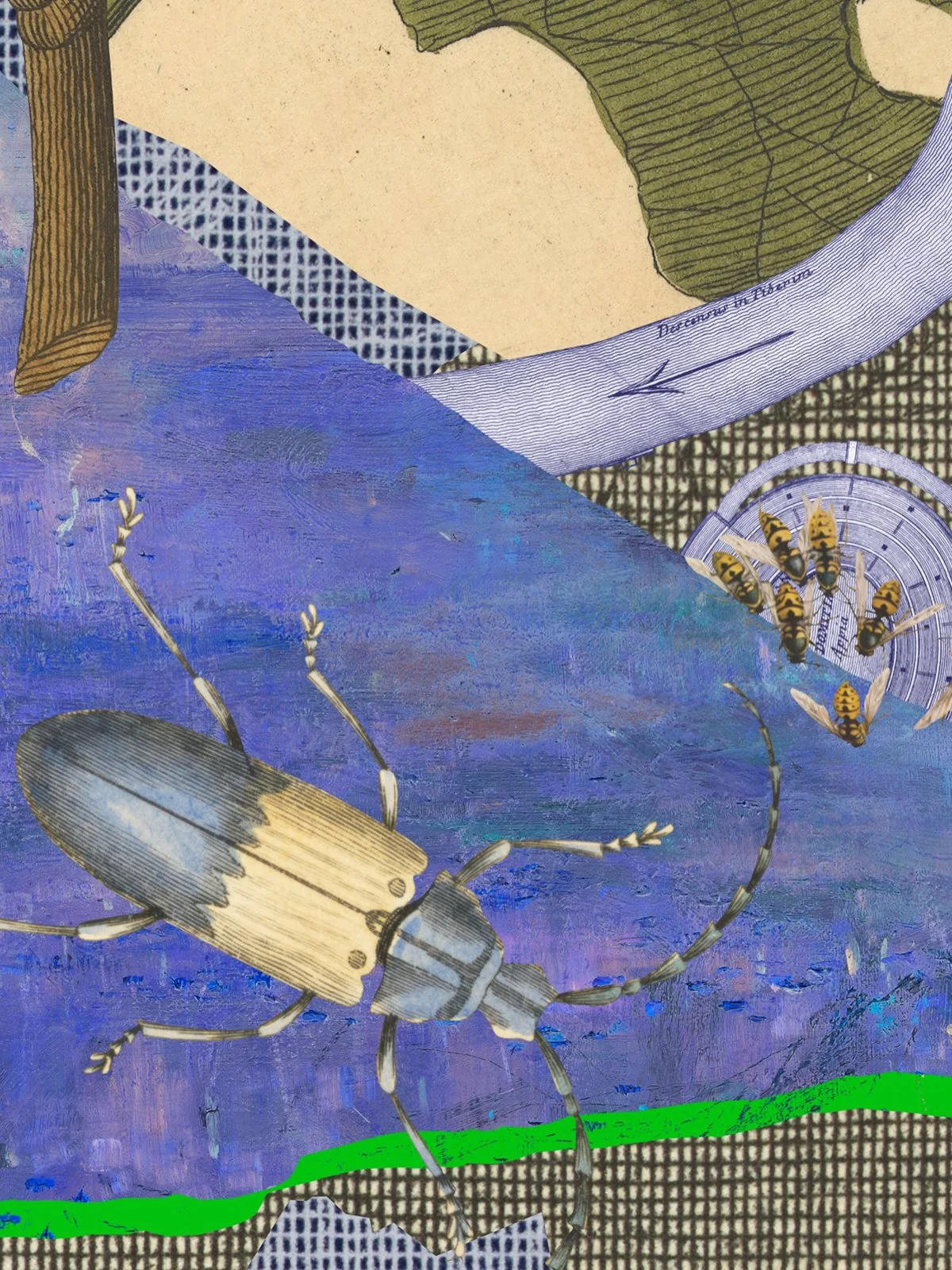
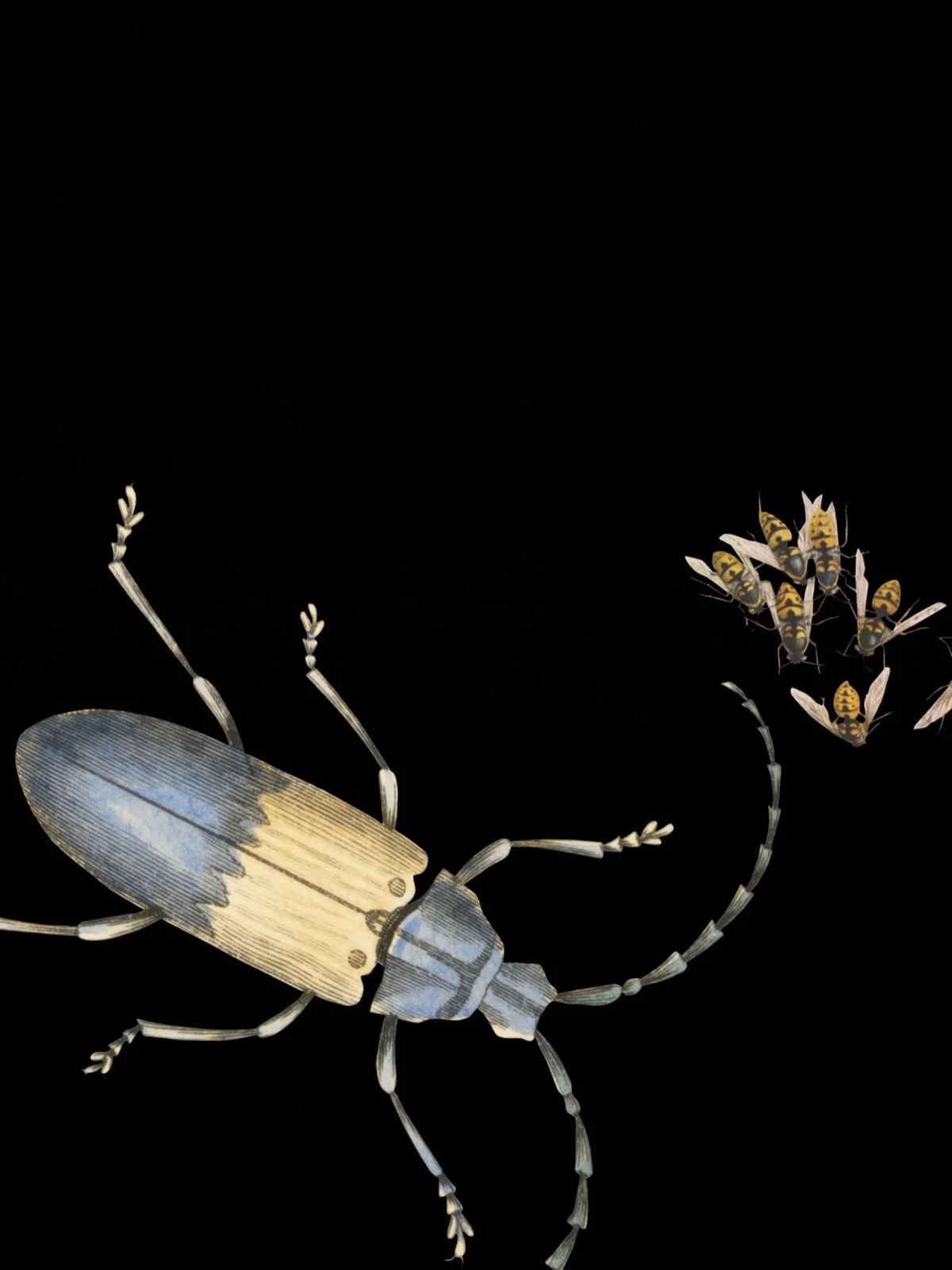
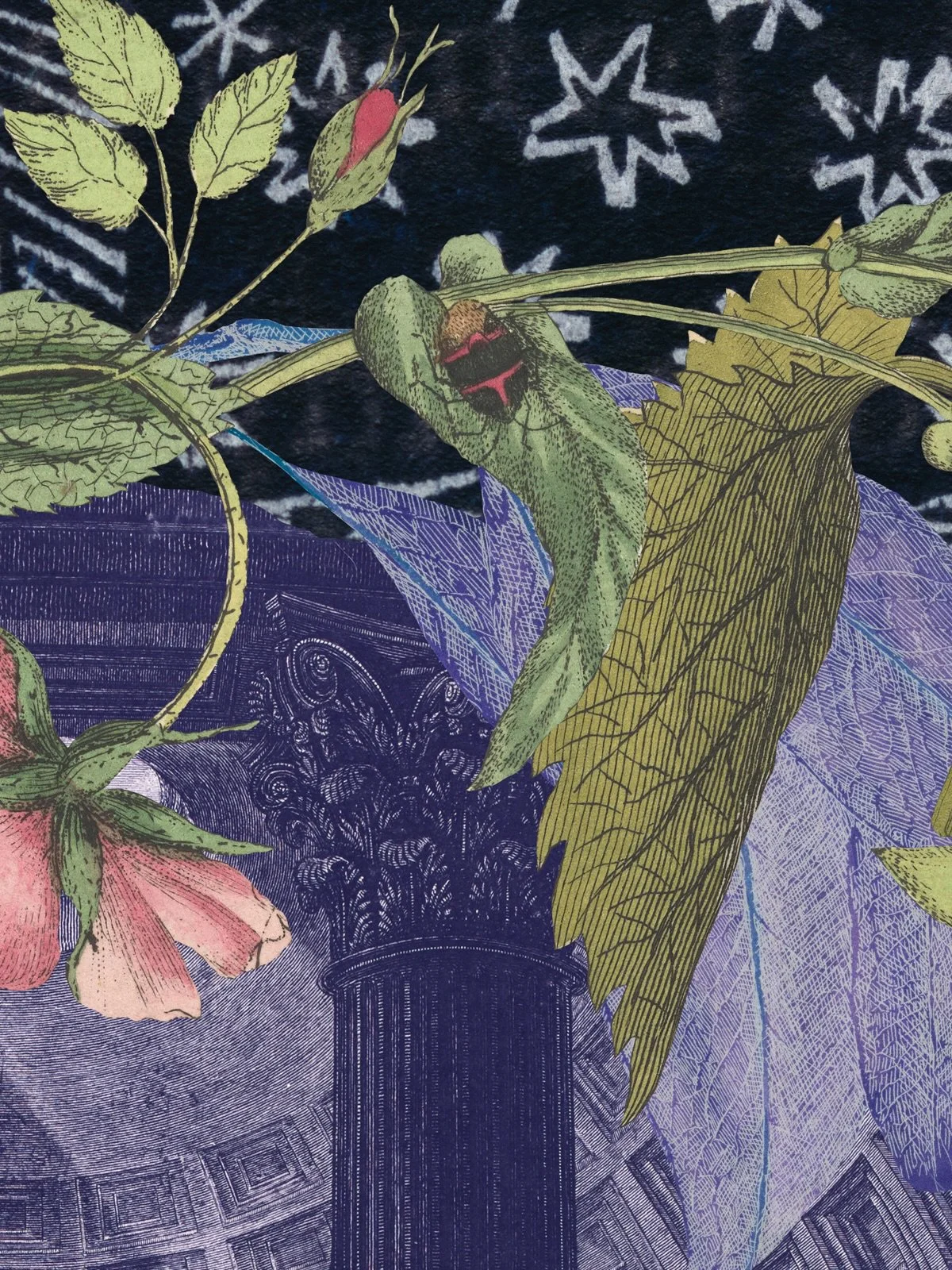
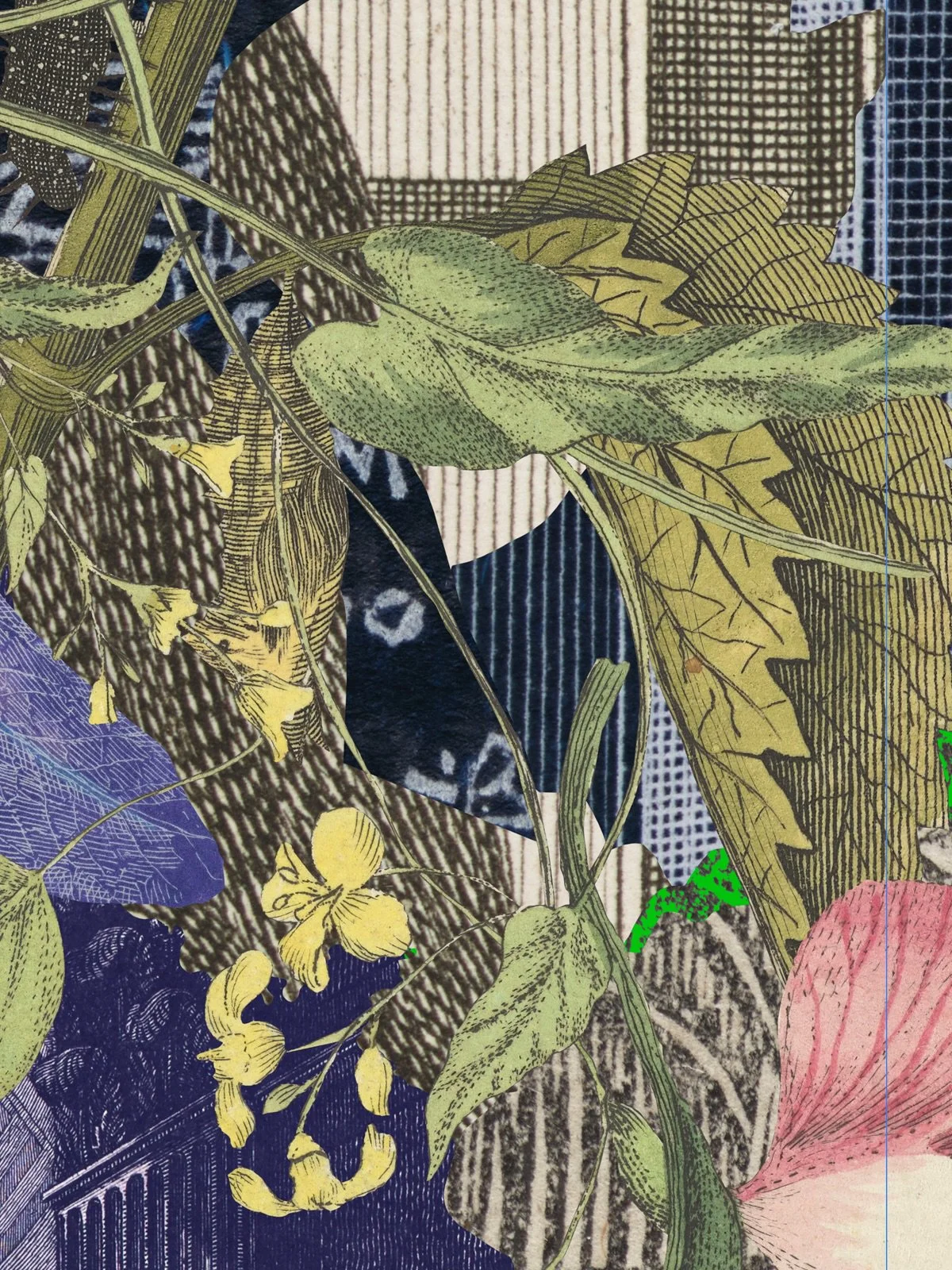
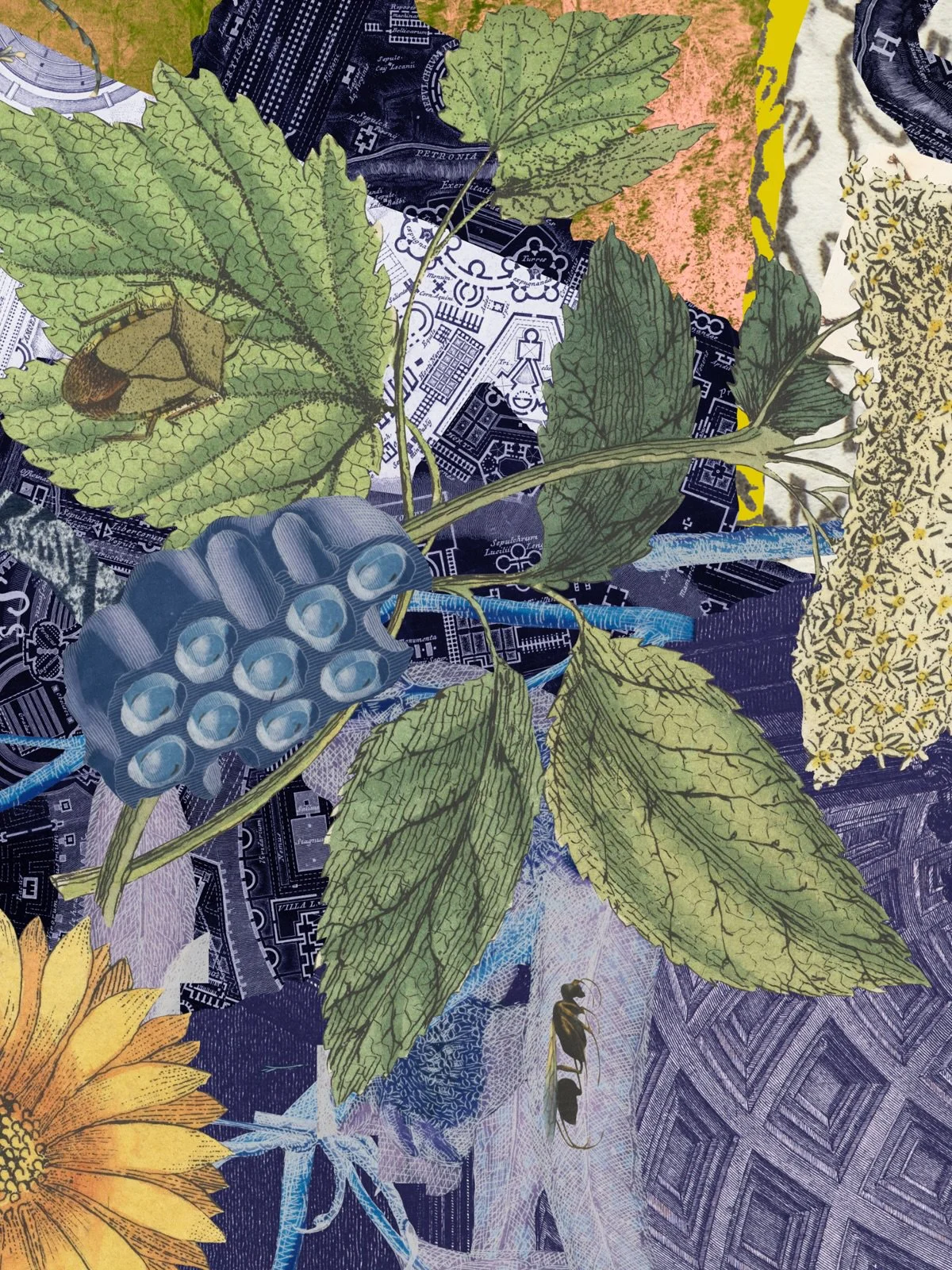
A velvet ant, a flower, and a bird exhibition evokes a garden of knowledge anchored by three familiar figures from nature — a velvet ant, a flower and a bird. These figures represent a parliament of beings, each carrying symbolic and metaphorical weight that encourage us to reimagine what intelligence means.
Each museum floor is presided over by one of these natural entities, creating a kind of garden where there is no pre-established order, but rather an ecosystem in which the analogue and the digital interrelate to give rise to a fantastic mental realm.
Drawing from the University of Melbourne’s Classics, Biology, and Art collections, alongside new commissions and performances; historic and contemporary art co-mingle to envision intelligence as living, continually evolving, interconnected and interdependent.
Guest curated by Chus Martínez, director of the Institute of Art Gender Nature at the FHNW Academy of Arts and Design, Basel, Switzerland.
Participating artists include: Adrian Mauriks, Agnieszka Polska, Alan Craiger-Smith, Alexa Karolinski & Ingo Niermann, Alexandra Copeland, Angela Goh, Ann Lislegaard, Anouk Tschanz, Anthony Romagnano, Barbara A Swarbrick, Benjamin Armstrong, Brent Harris, Carol Murphy, Daphne Mohajer va Pesaran, David Noonan, Derek Tumala, Din Matamoro, Eduardo Navarro, Gracia Haby & Louise Jennison, Harold Munkara, Heather B Swann, Helen Ganalmirriwuy Garrawurra, Helen Maudsley, Ian Wayne Abdullah, Inge King AM, Ingela Ihrman, Jane Jin Kaisen, Joan Jonas, John Pule, Josie Papialuk, Judith Pungkarta Inkamala, Julie Mensch, Kate Daw, Lauren Burrow, Liss Fenwick, Lorraine Jenyns, Malcolm Howie, Margaret Rarru Garrawurra, Marian Tubbs, Mel O’Callaghan, Mia Boe, Miles Howard-Wilks, Nabilah Nordin, Naomi Hobson, Noemi Pfister, Noriko Nakamura, Percy Grainger, Pippin Louise Drysdale, Rivane Neuenschwander & Cao Guimarães, Rosslyn Piggot, Rrikin Burarrwaŋa, Salvador Dalí, Taloi Havini, Tamara Henderson, Teelah George, Tessa Laird, and Tony Warburton.
— Potter Museum of Art
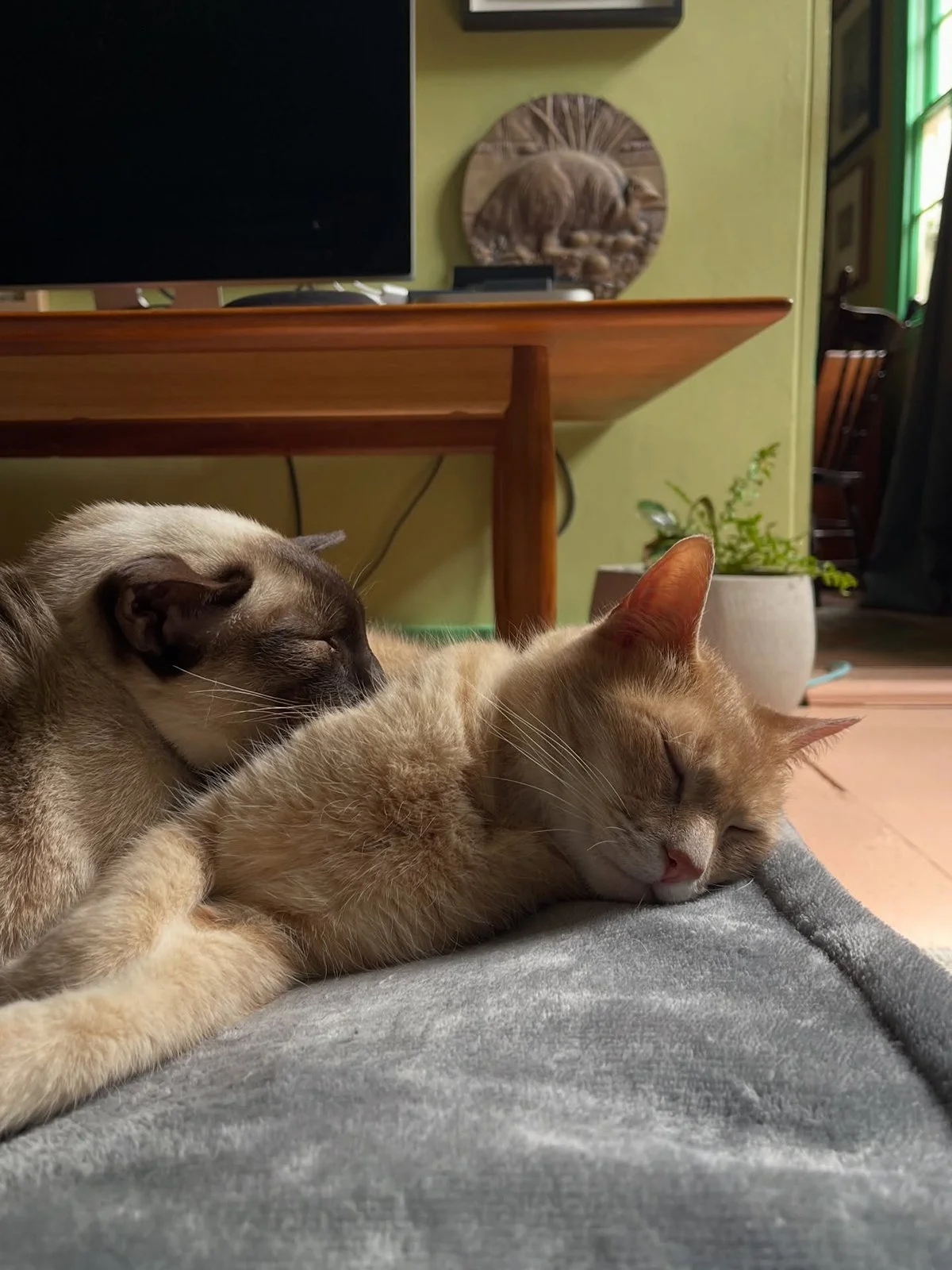
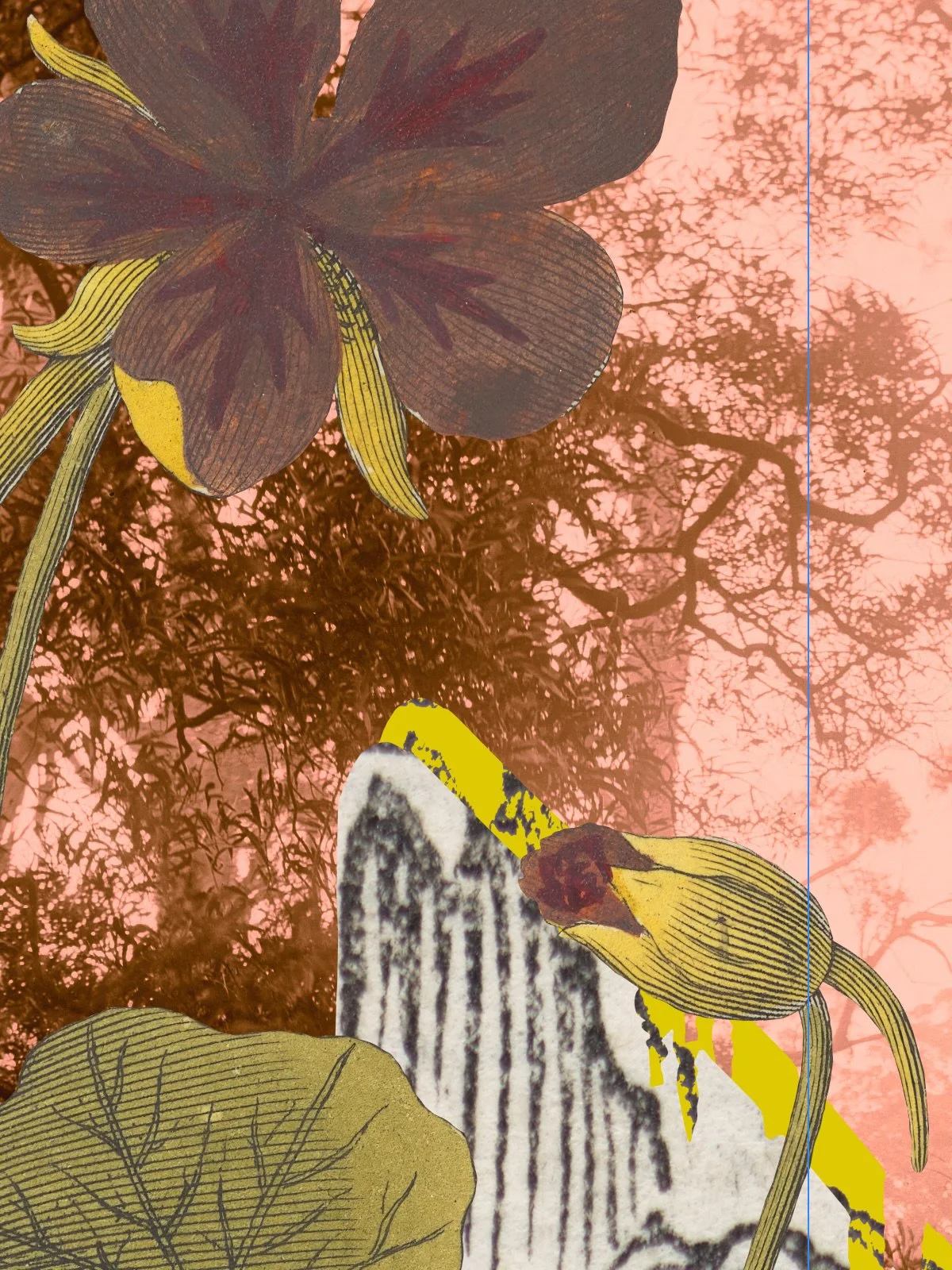
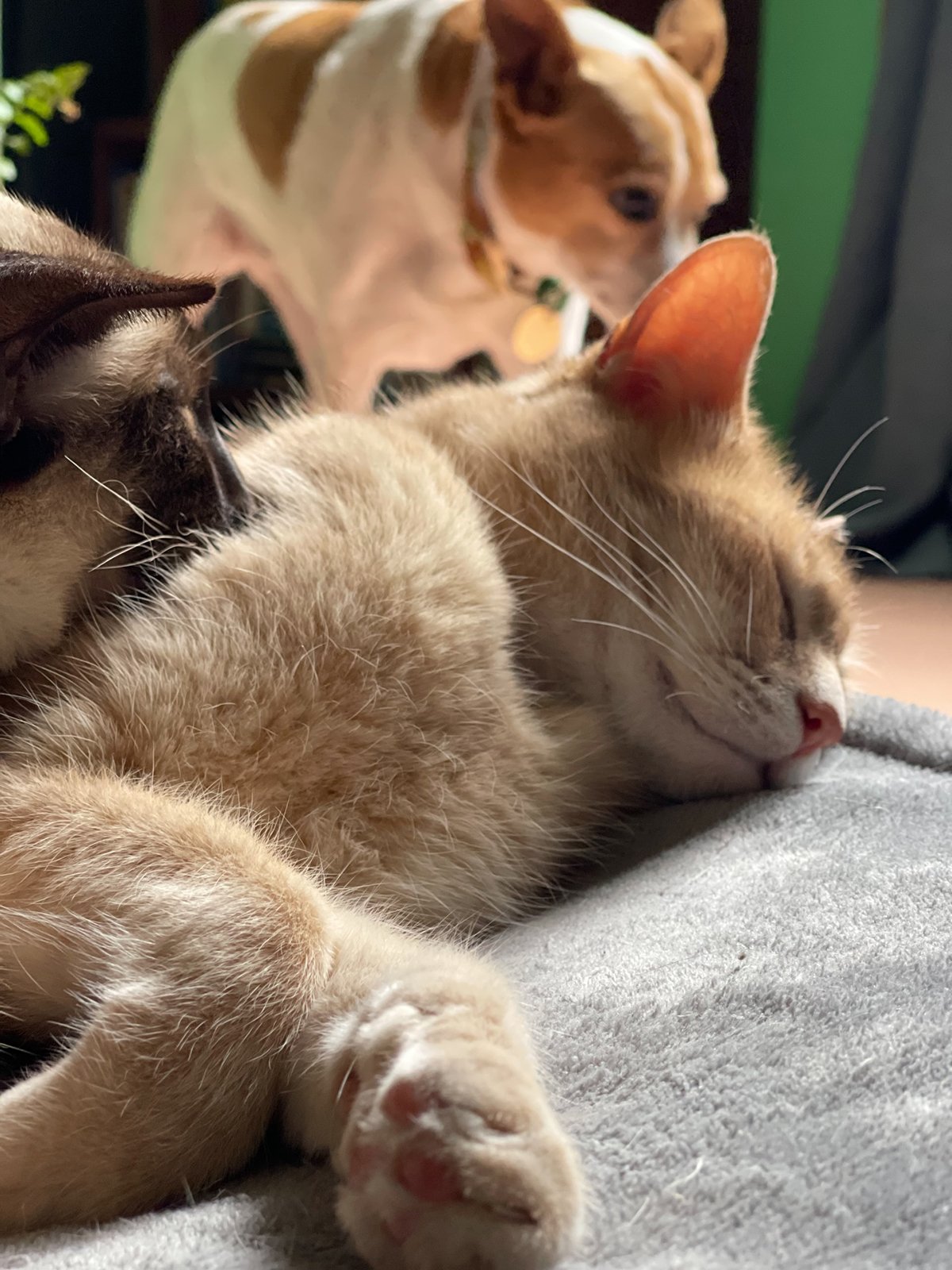
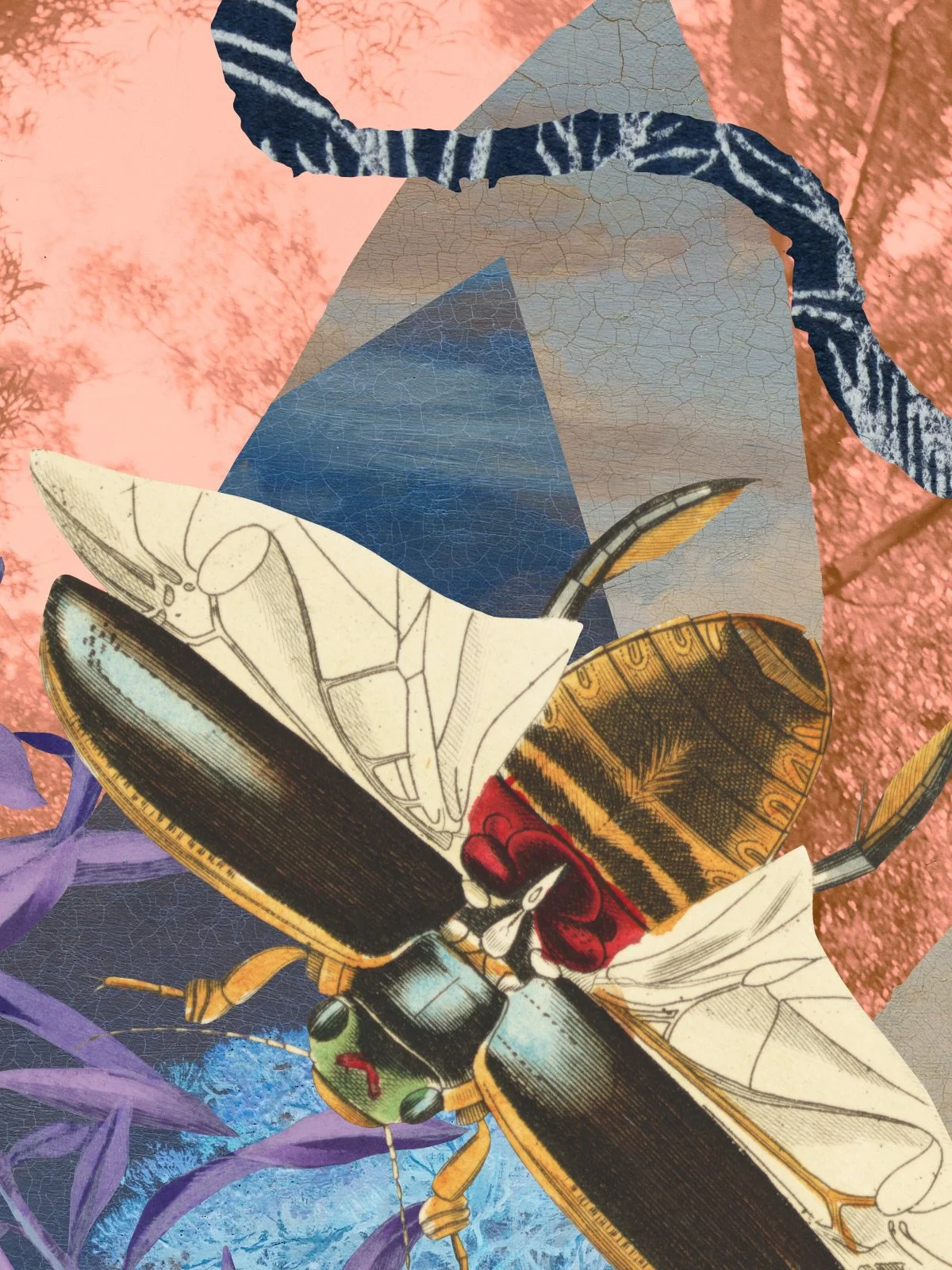
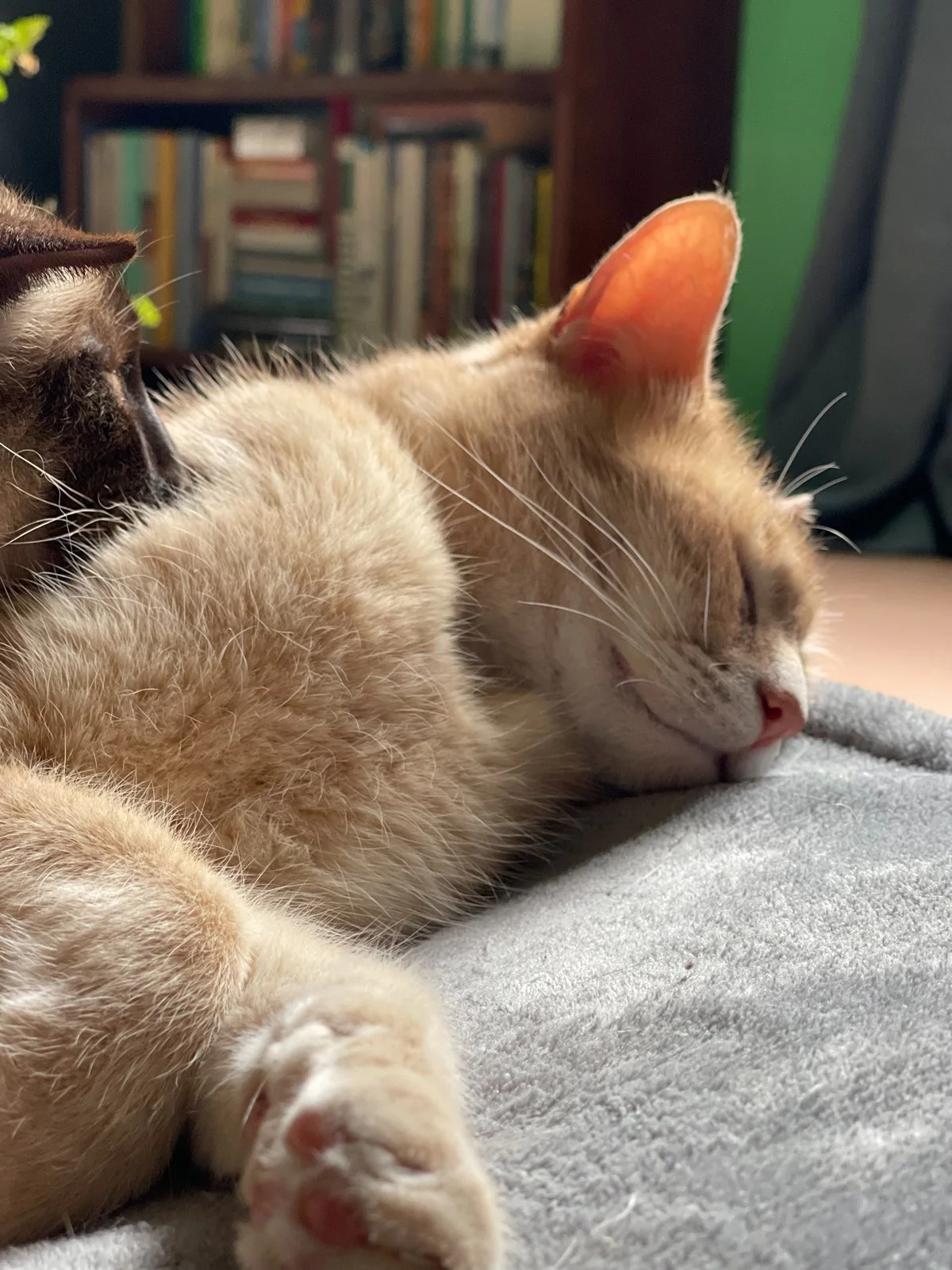
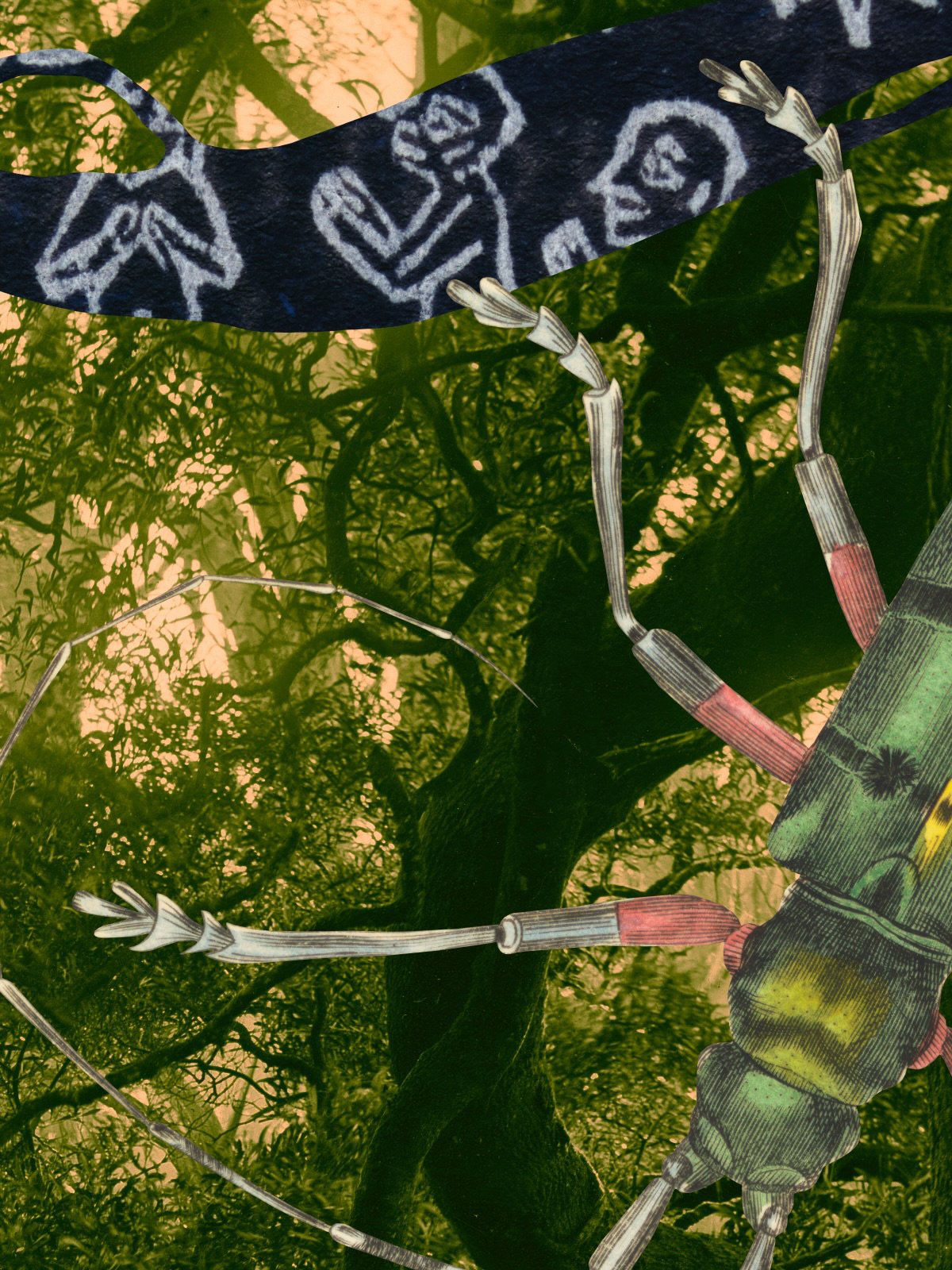
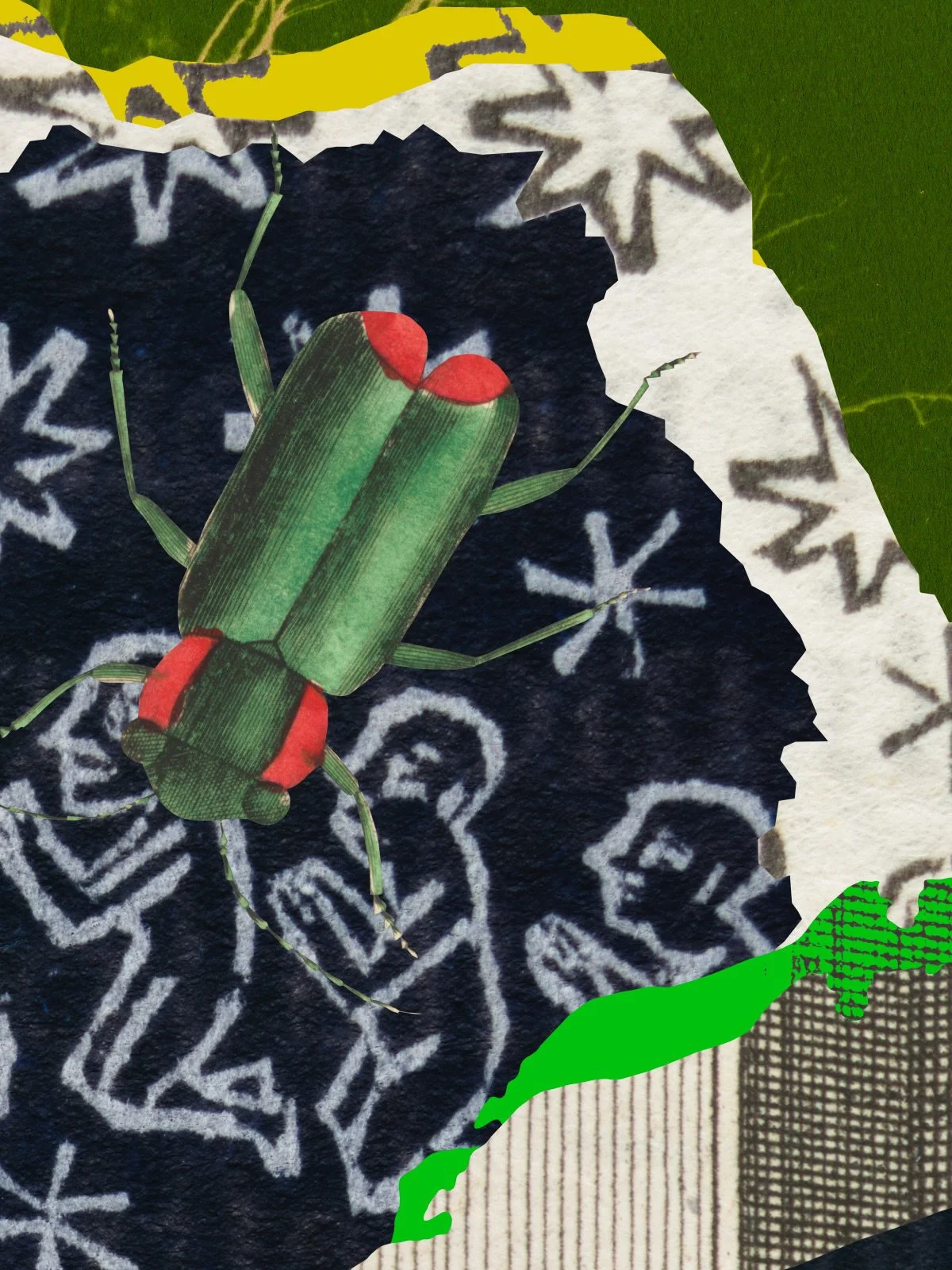
Image credit: The remaking of things is collaged from 100 pieces within the NGV collection. Coinciding with the WAMA Art Prize 2025, this second telling of The remaking of thing falls across two walls, and features reworked scenes from the middle and the tail of the composition.
