Over grooves of yew; over spikes of leaf
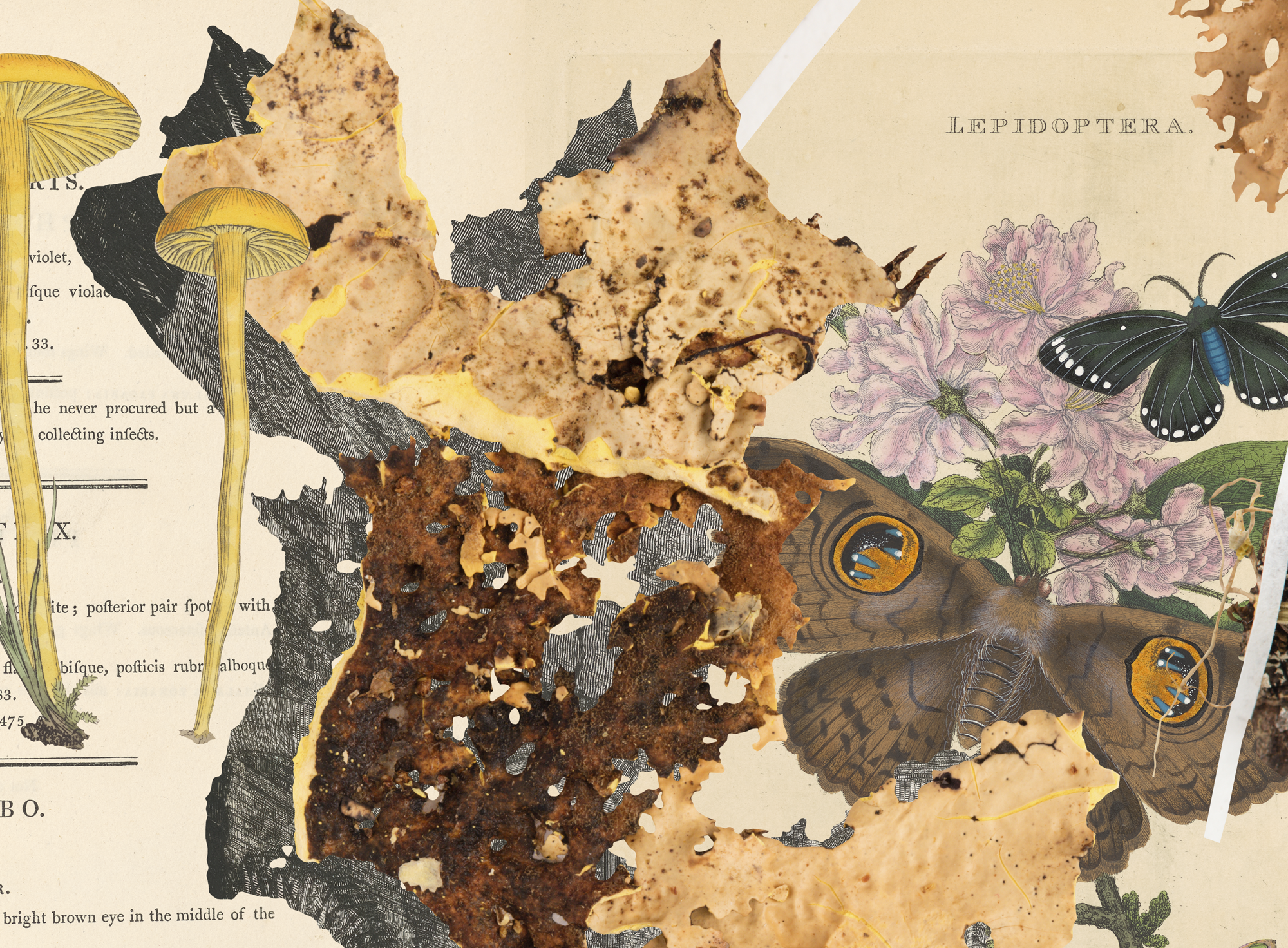
Can we imagine what an edition of Edward Donovan’s An epitome of the natural history of the insects of China (1798) might look like if it were buried beneath the earth, if it were absorbed by the mycorrhizal framework of diverse systems?
Spotlight on: Artists’ books and zines with Gracia and Louise
Leigh Scott Room, Level 1, Baillieu Library
The University of Melbourne, Parkville
Thursday 2nd April, 2026
Entanglements with Fungi: Life, Death and Renewal, group exhibition
The remaking of things, a second telling, commission for WAMA Foundation
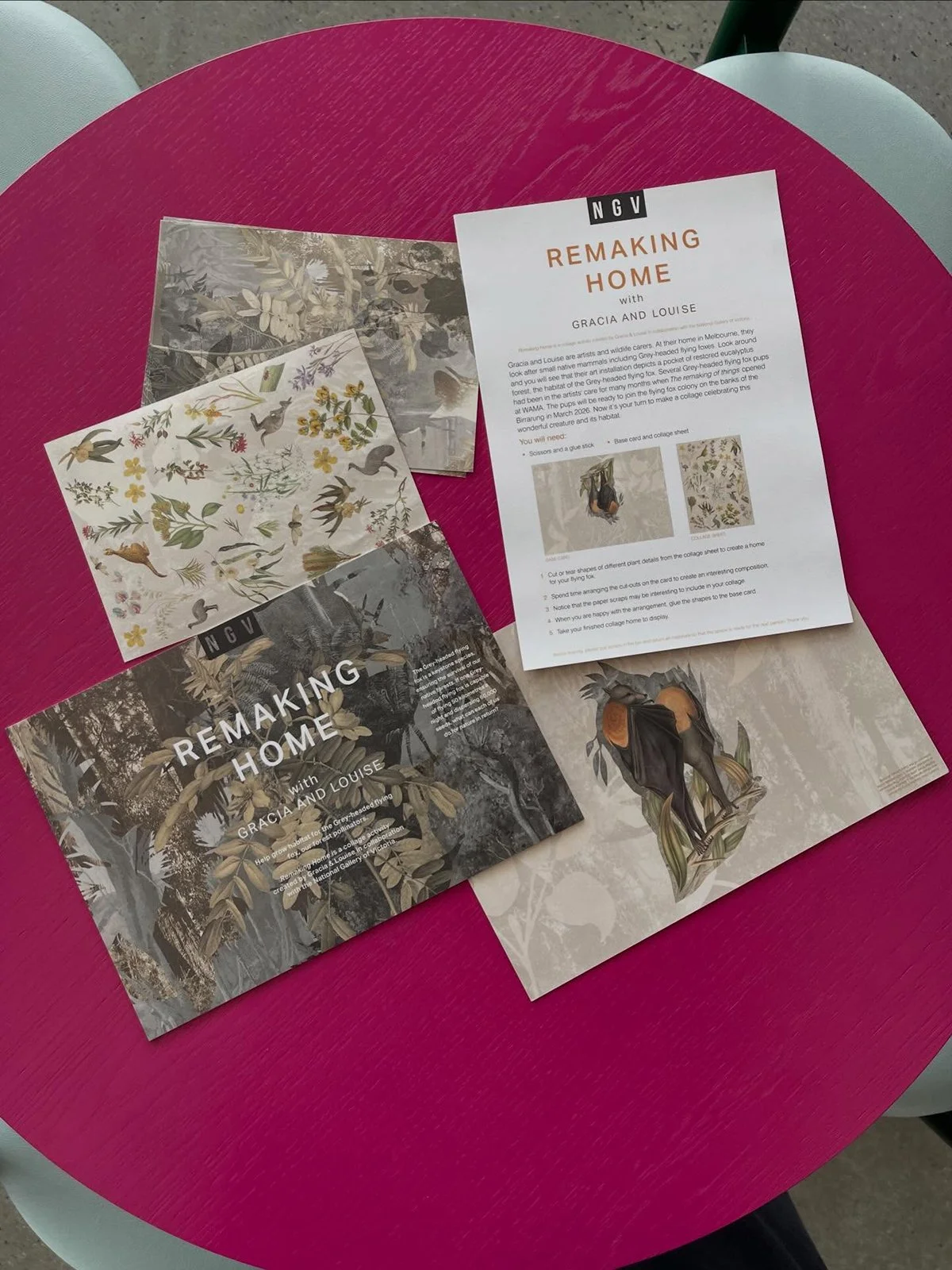
and Remaking Home, collage activity created in collaboration with the National Gallery of Victoria
WAMA Foundation, The National Centre for Environmental Art, 4000 Ararat-Halls Gap Road, Halls Gap, Victoria
Until Sunday 14th June, 2026
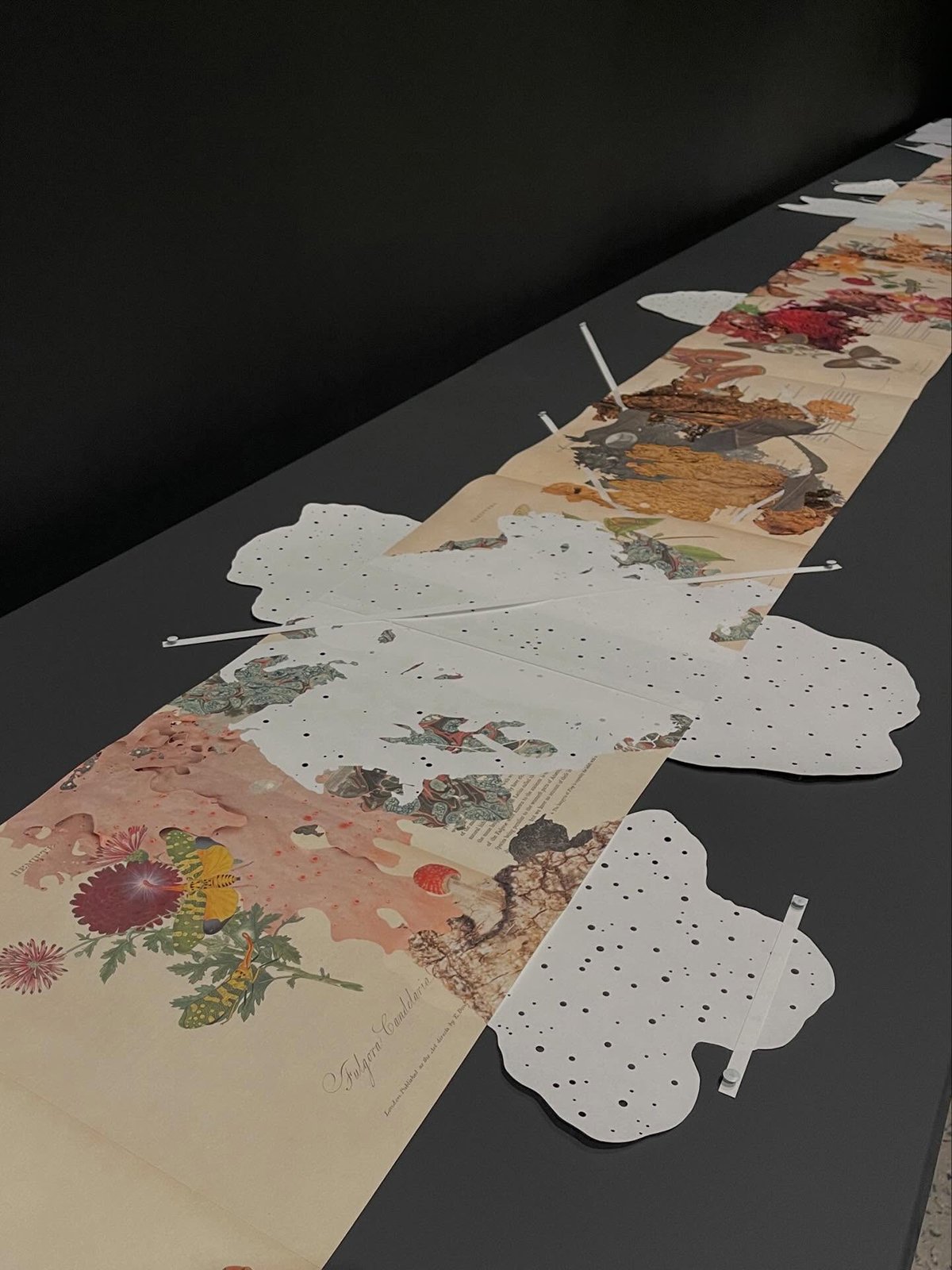
In the blur, the magnificent blur, in which all things collide and in doing so form a new, ever moving shape, our newest artists’ book has been unfurled at WAMA, the National Centre for Environmental Art.
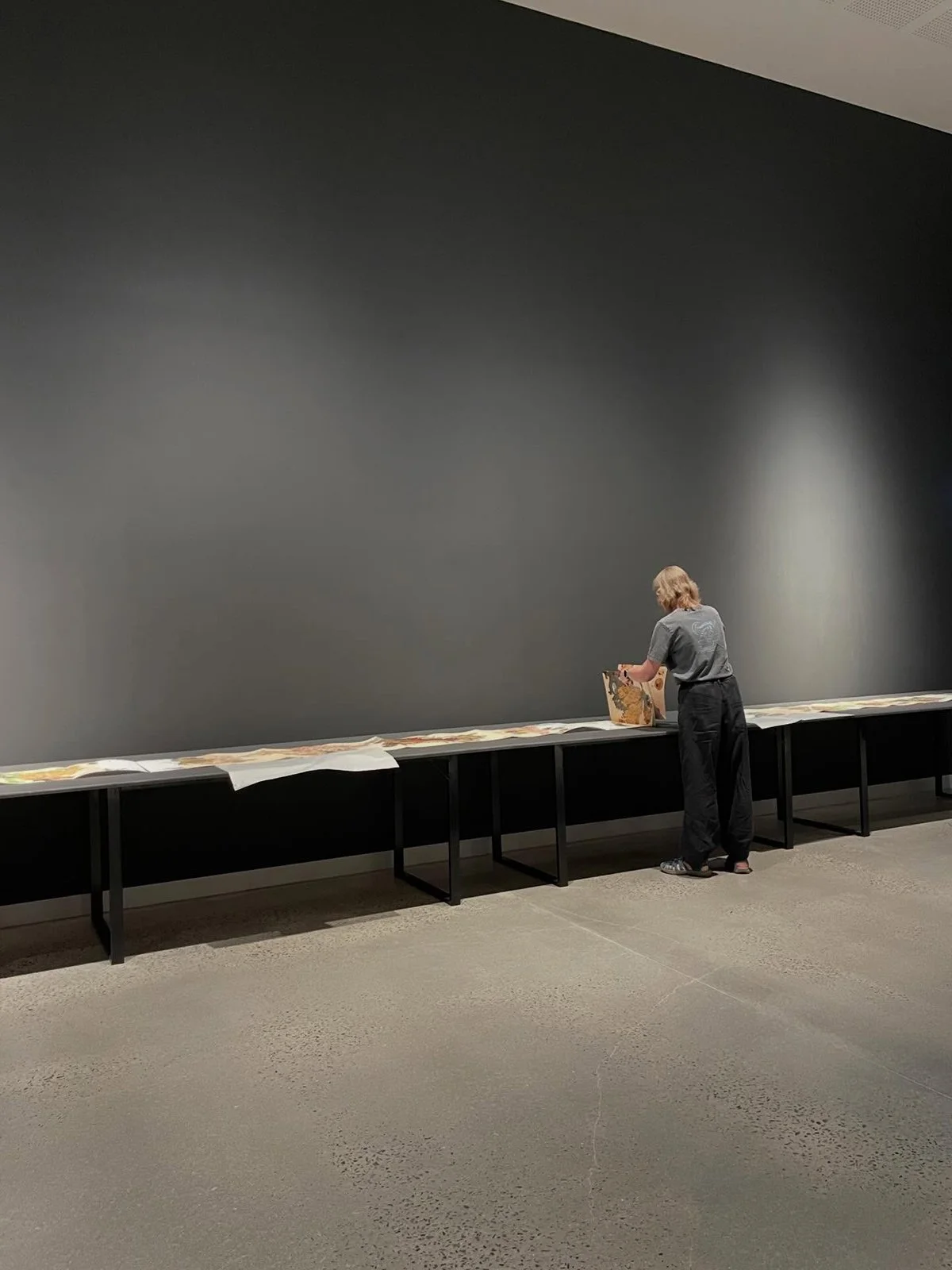
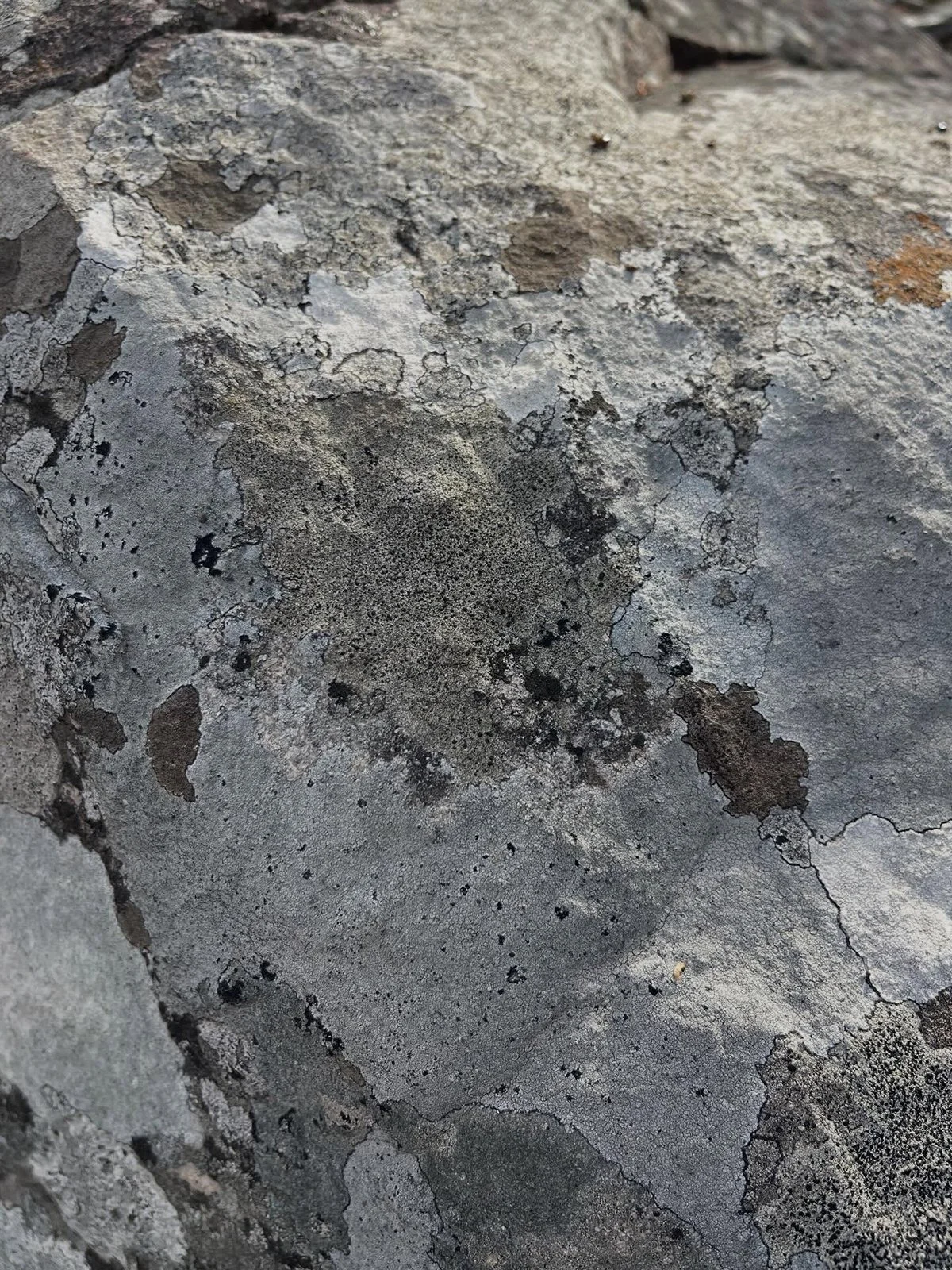
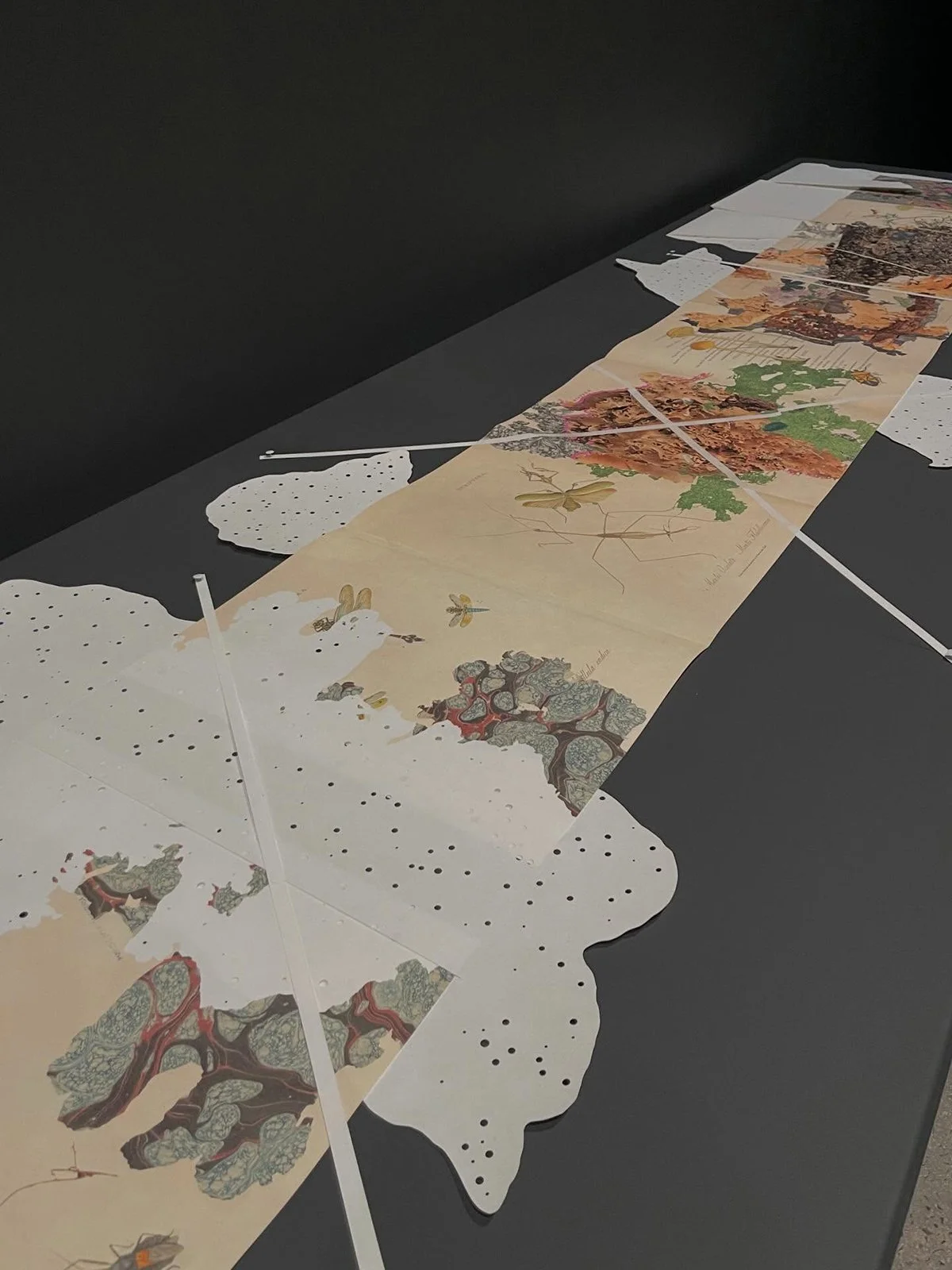
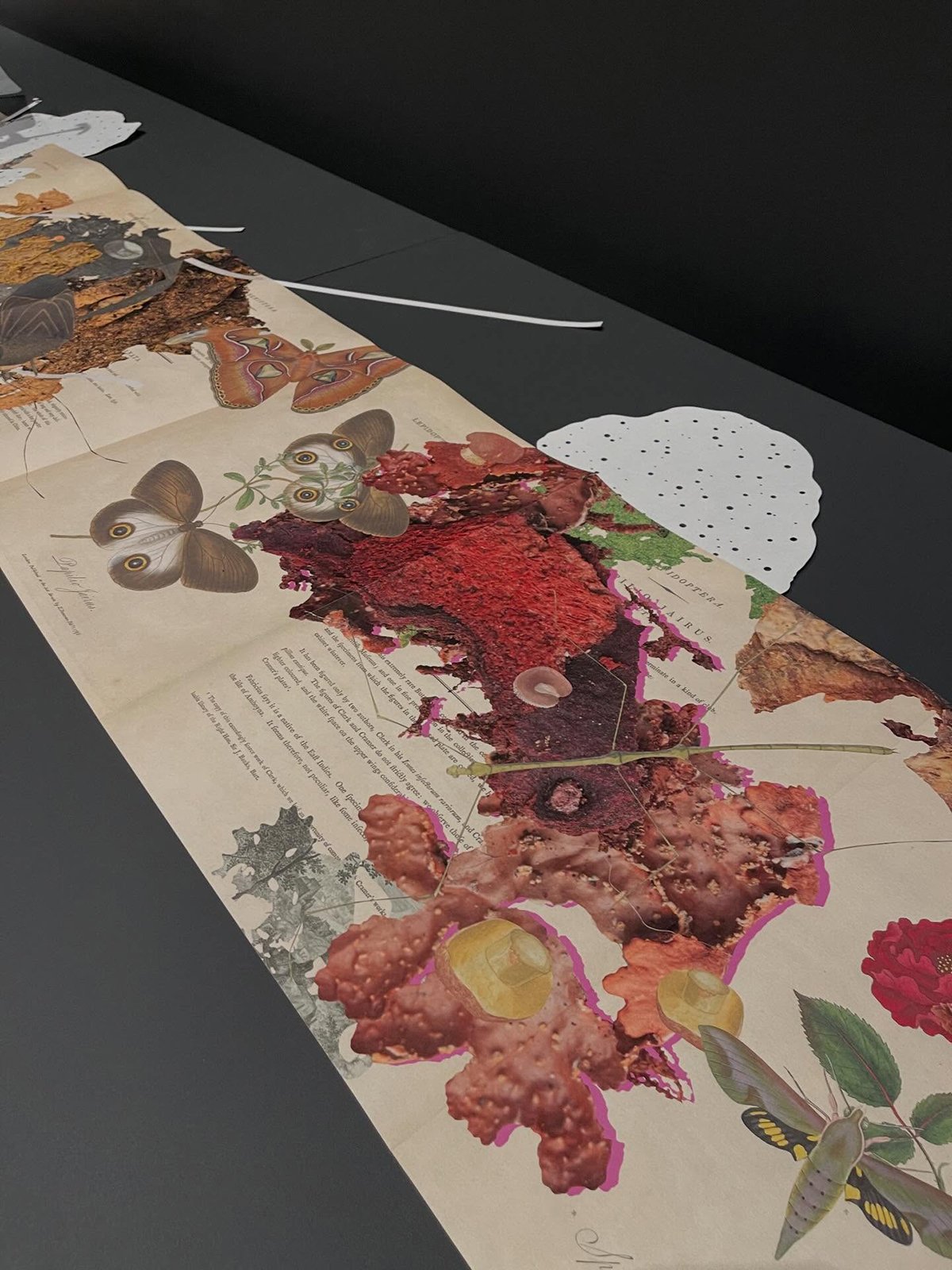
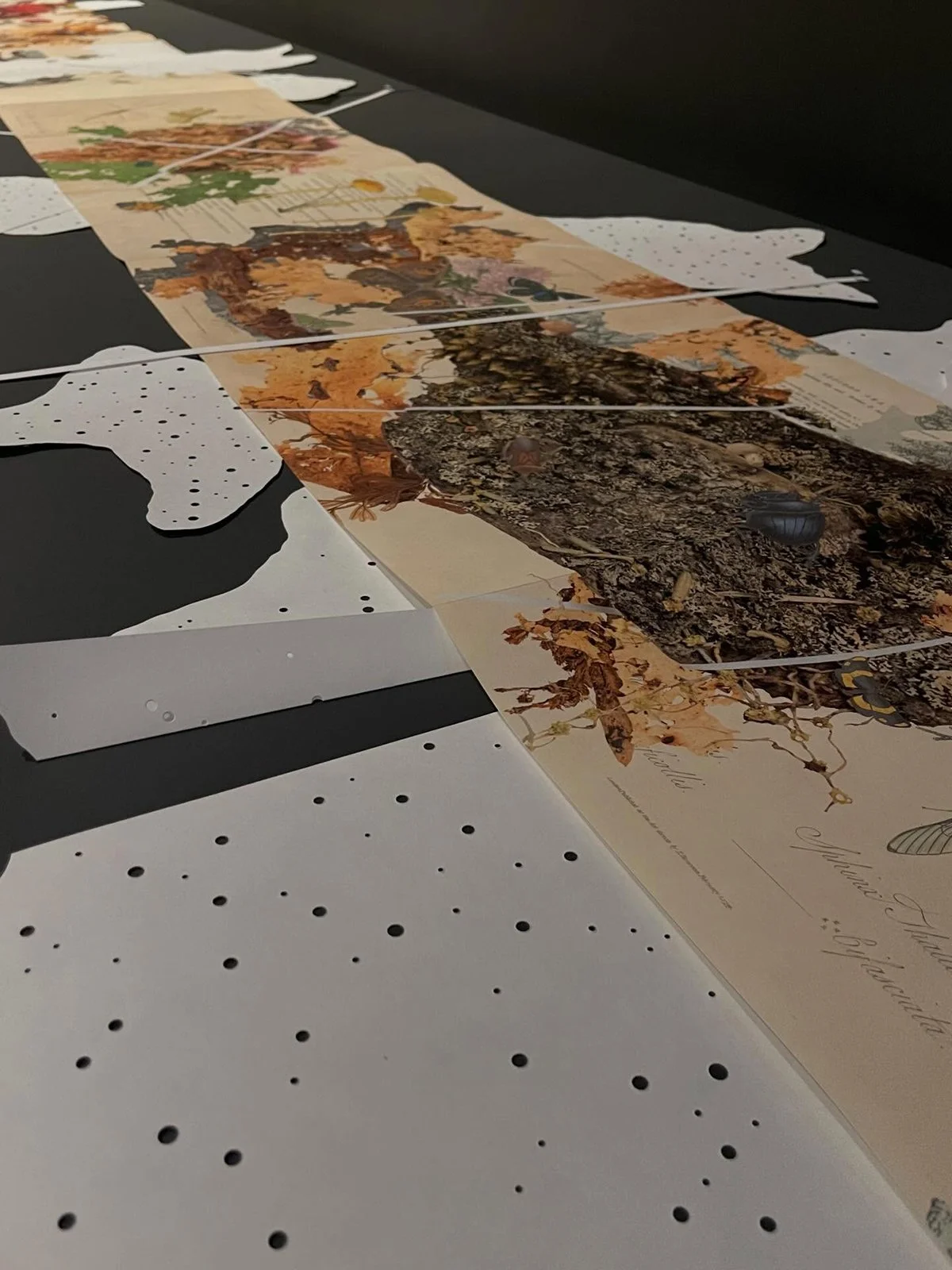
Installed in the gallery last week, Can we dream it?, our unique state artists’ book, is 9.6 metres in length. Beneath the extended pages, we placed the organic elements of exploration, which atop the dark ground made every varied hole a visible portal. Stitched together, these white, irregular panels reveal the togetherness of the book, and its organic nature. It can take on multiple shapes, as it extends, growing into the space provided and possibly beyond. What is it like to be a lichen?
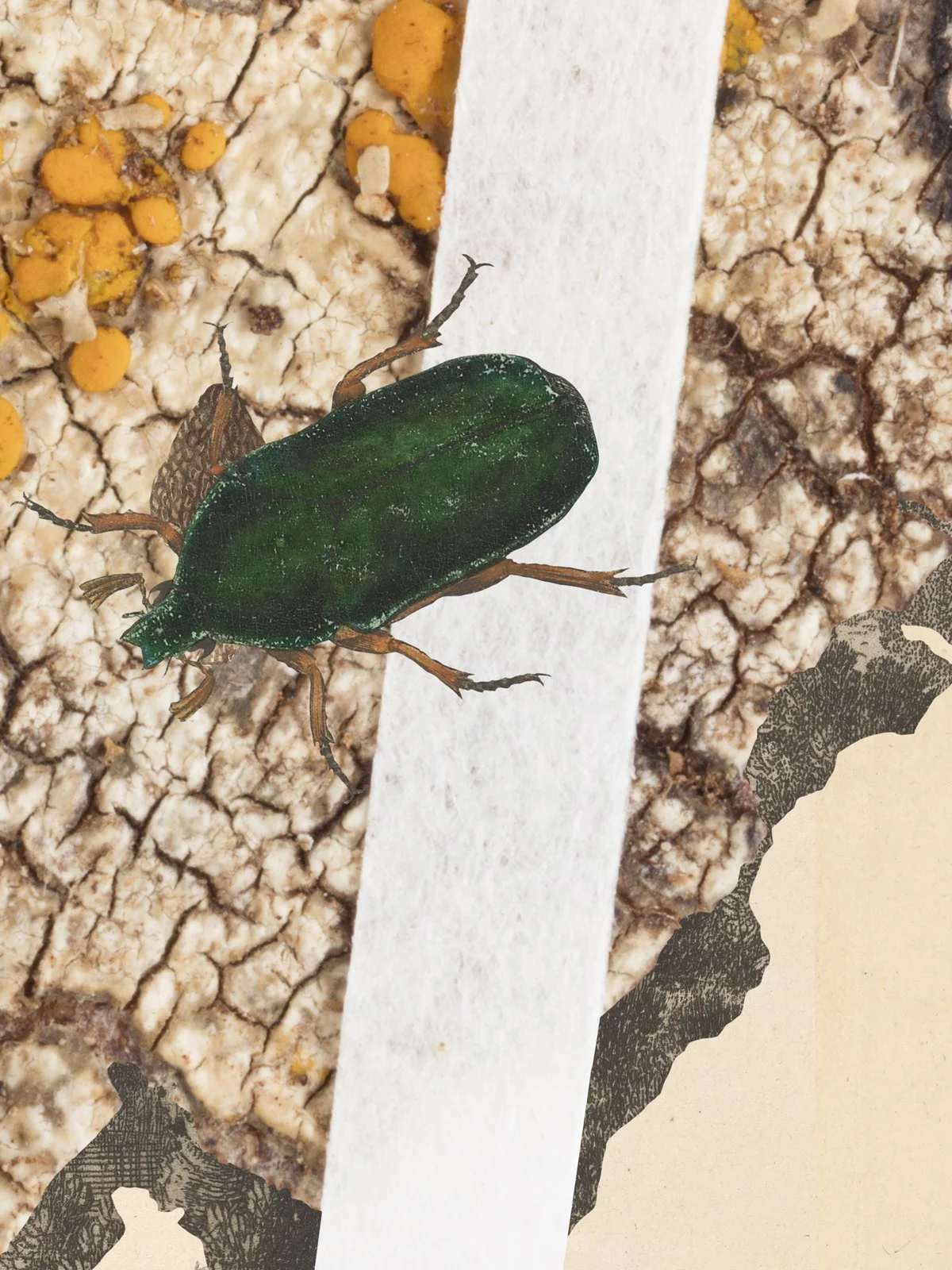
Once positioned, with some 8-metres extended, we tapped in a series of white pins not too dissimilar to small white mushrooms, with a slight dome to the crown, resting atop a spindly neck. We extended out of the framework of the book, the white strips holding specimens of Pseudocvohellaria carooloma (Delise) Vain., Panellus stipticus, and Micarea melaena (Nyl.) Hedl (which were from the Auckland War Memorial Museum, Museum of New Zealand Te Papa Tongarewa, The Royal Botanic Gardens & Domain Trust, and The Royal Botanic Gardens Victoria, thanks to The Australasian Virtual Herbarium).
Where will our book have grown when the time comes to deinstall the exhibition in June? Will the walls be covered? Will the legs of the long table be mossy in appearance?



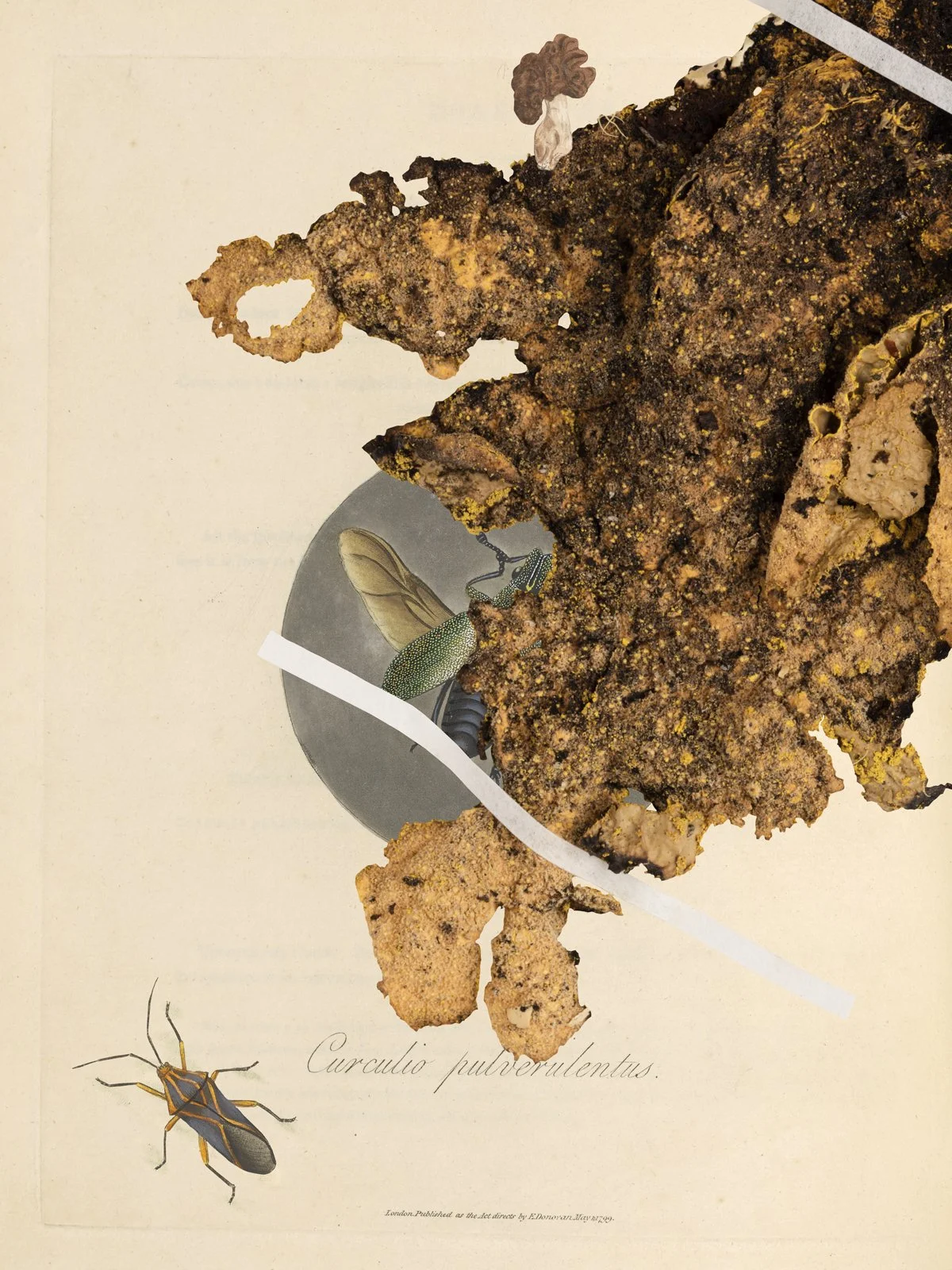


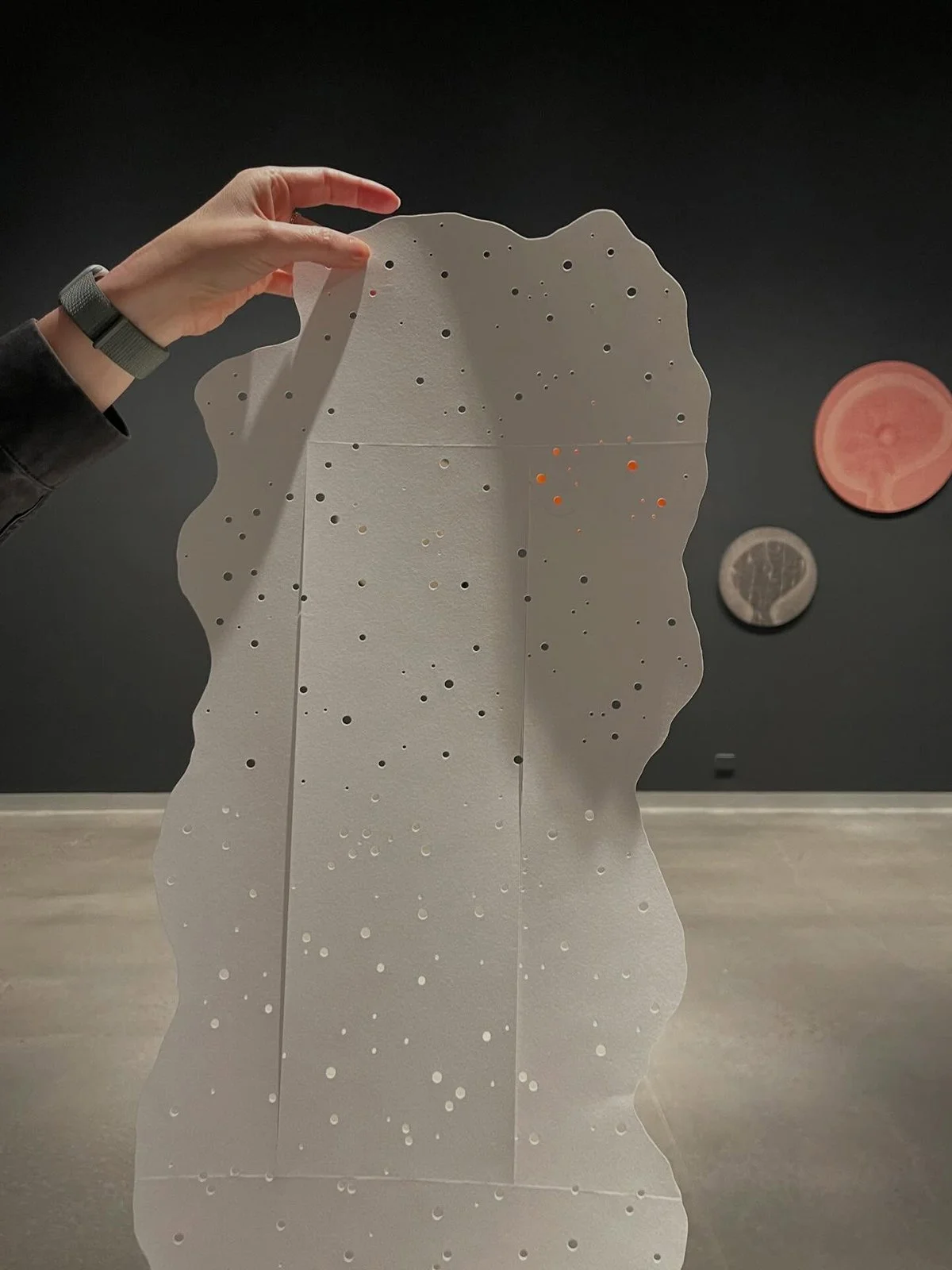



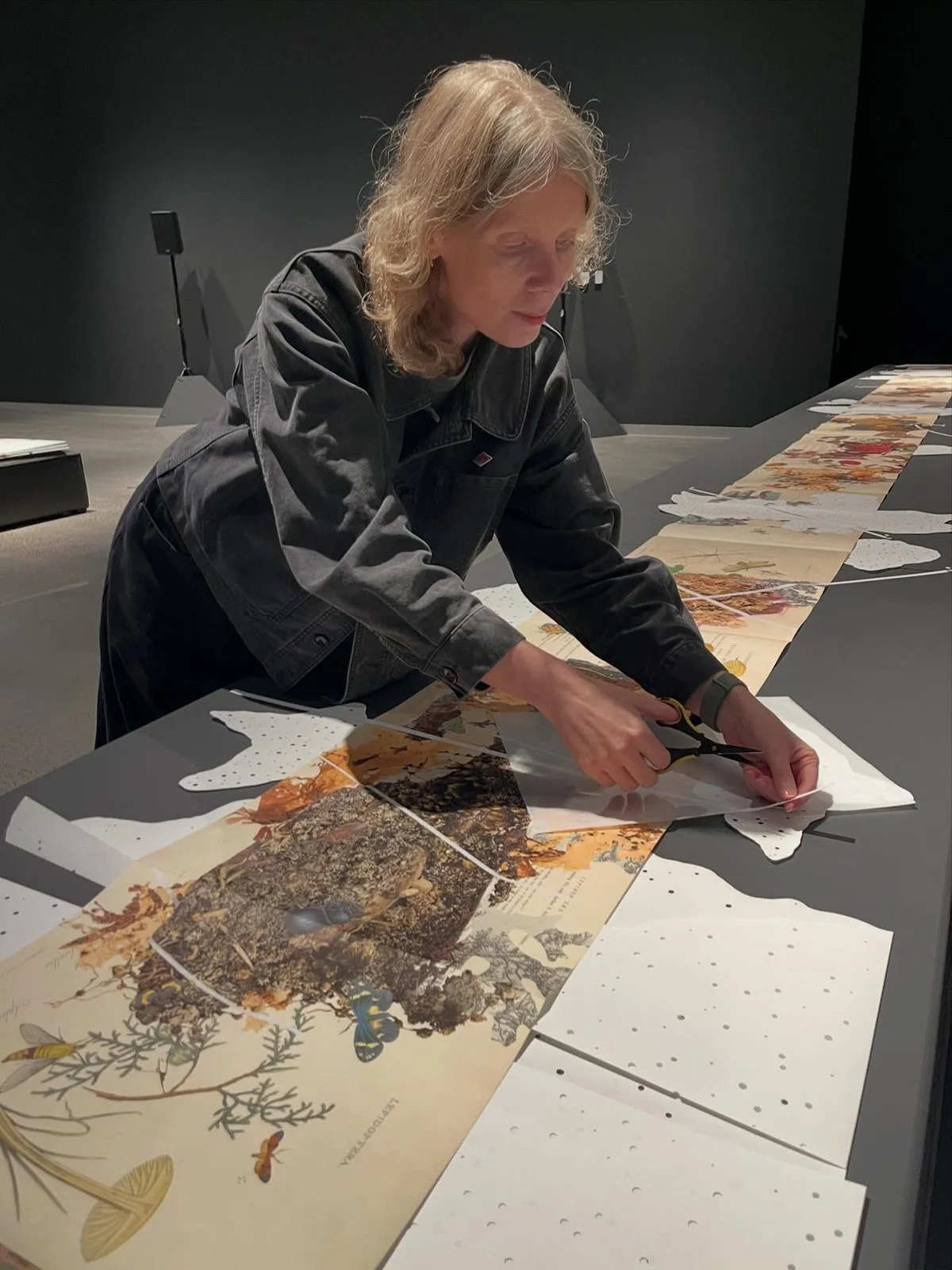

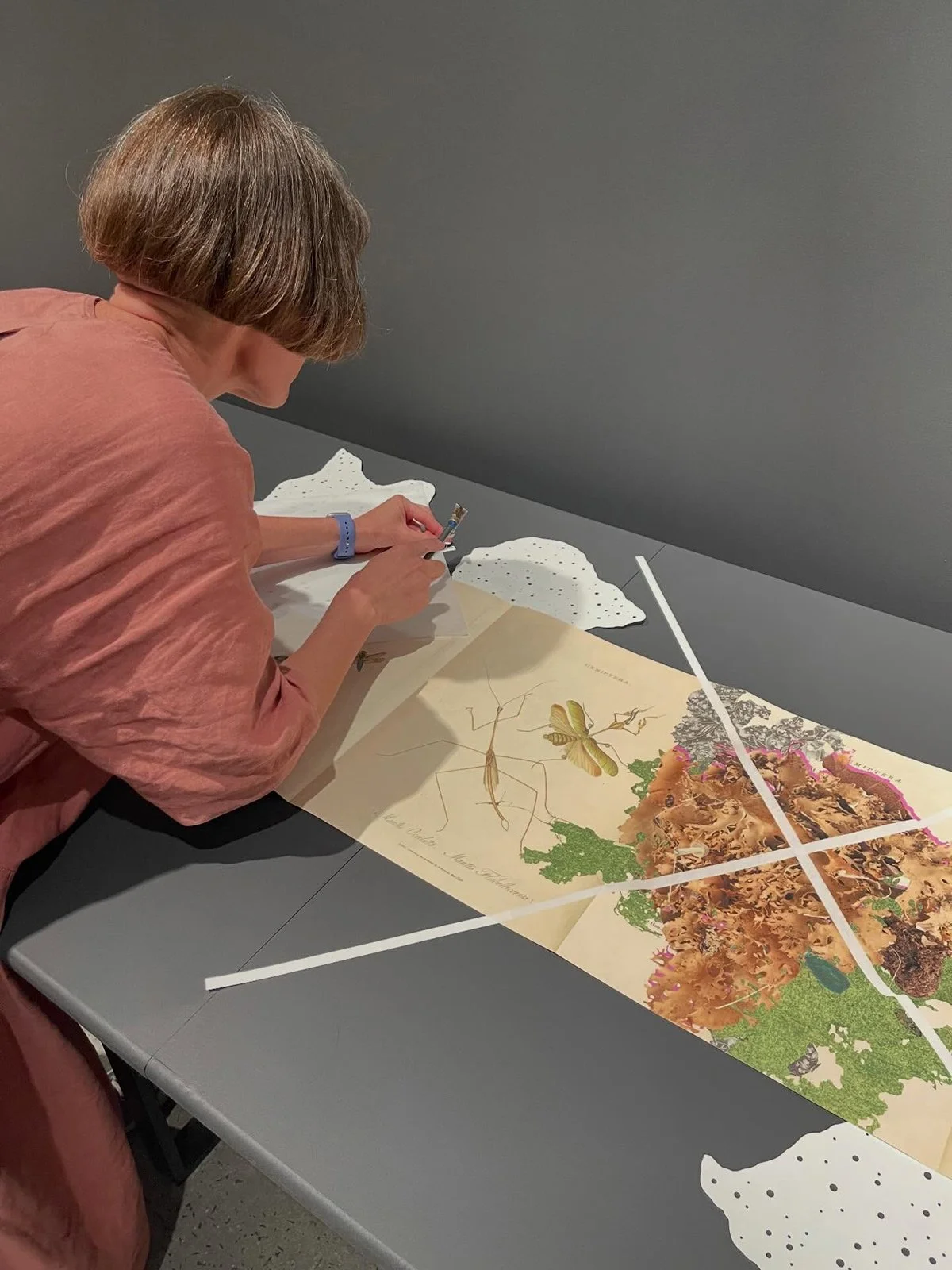

Our single-sided concertina, folded at 300mm intervals, is on display as part of, and was created especially for, Entanglements with Fungi: Life, Death and Renewal, curated by Dr Felicity Spear.
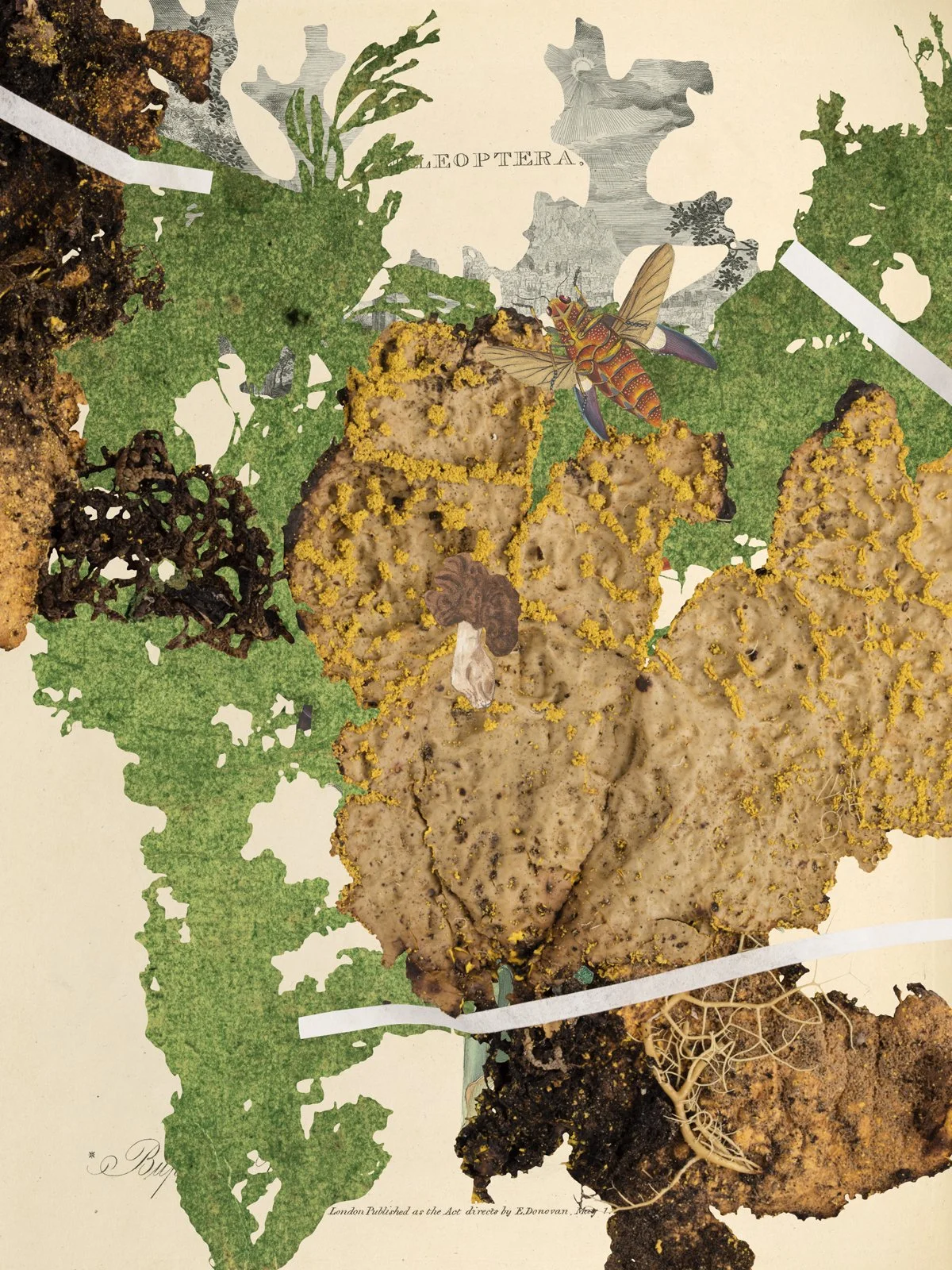
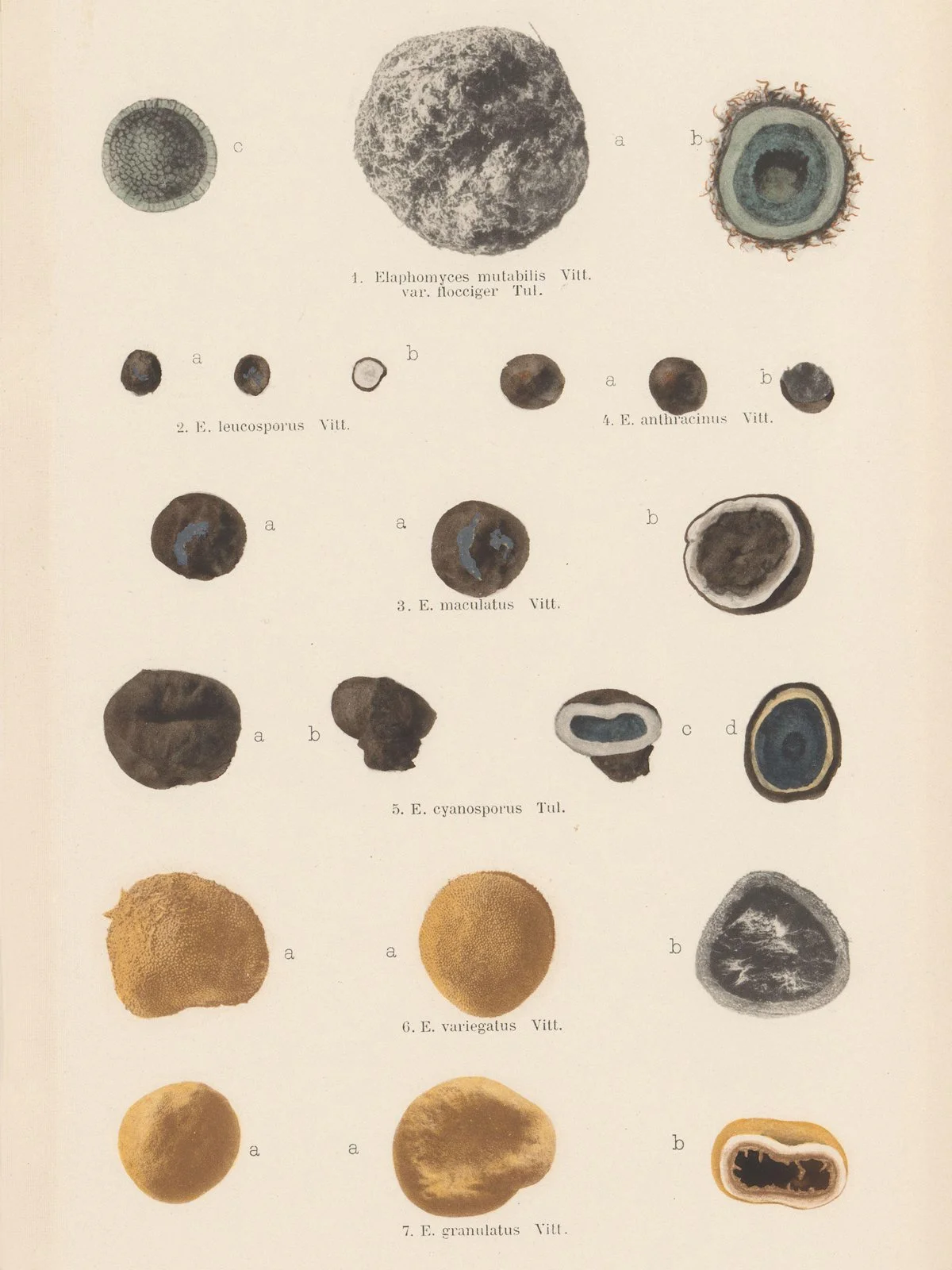
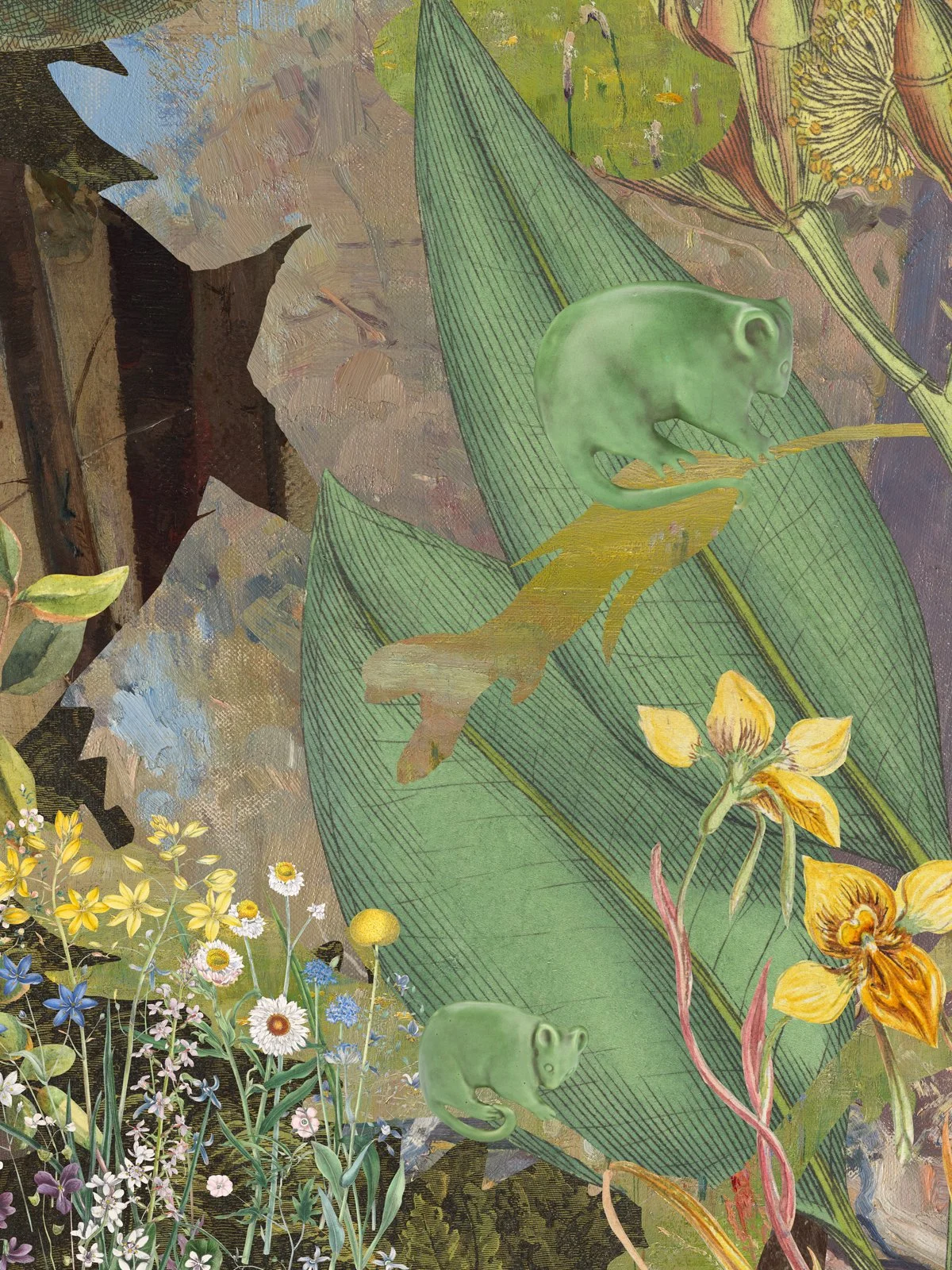
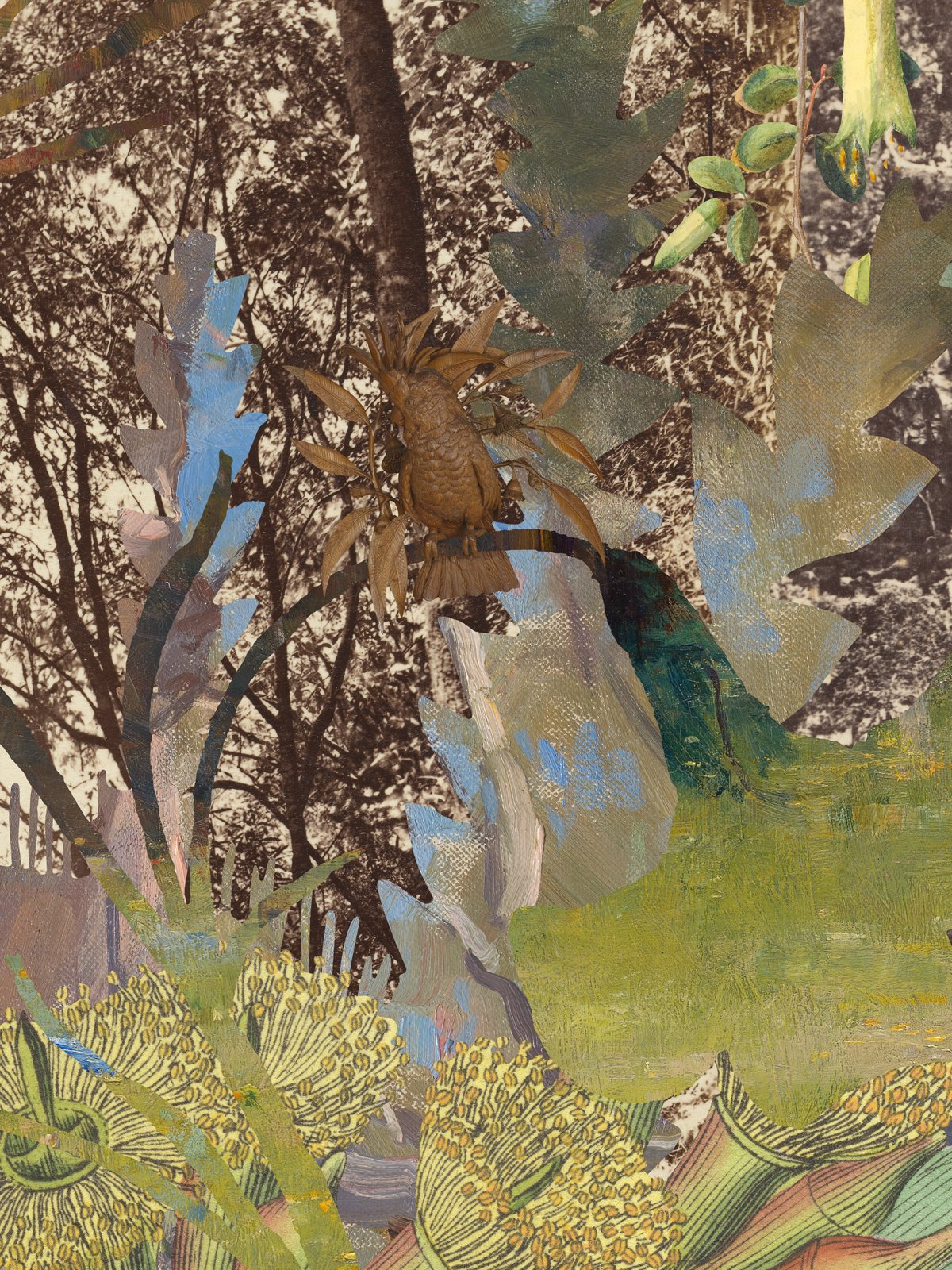
The exhibition opened on Saturday, and within our work you will find details from the unique collection of 750 watercolours of animals, birds and plants, compiled between 1596 and 1610, by Anselmus Boëtius de Boodt from the 12 imperial folio volumes of Natural History. Our tale, printed upon the same washi paper as Specimen 1963. And as with Specimen 1963, Can we dream it? also features a detail from the hand of Giovanni Battista Piranesi. This time, the scene is from Veduta interna del Tempio della Tosse... (Interior view of the Tempio della Tosse...), 1764, which is being vacated by Casper stoll’s Fleeceleg (De Vliespoot).
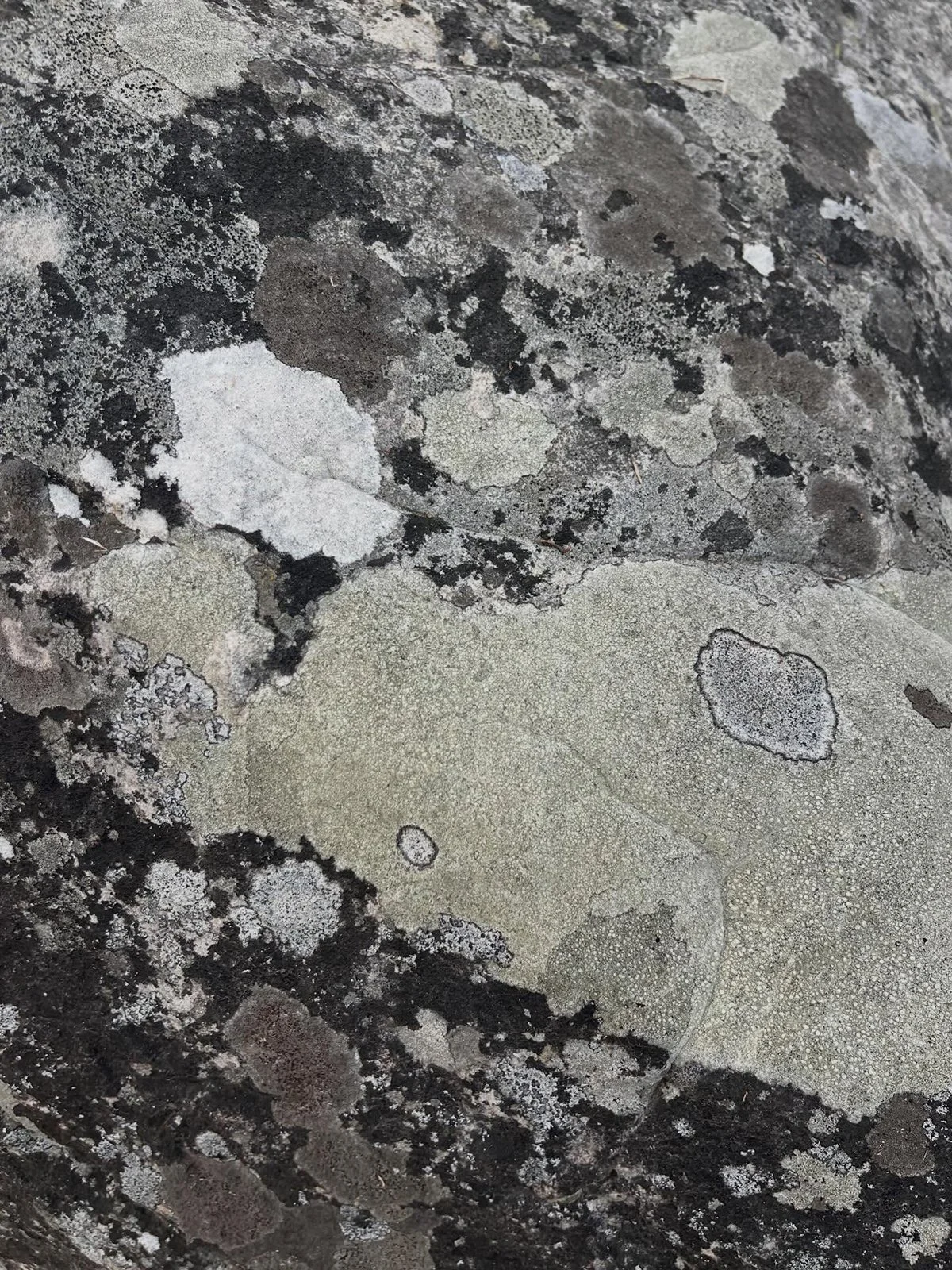
Becoming lichen, becoming other, details from Israhel van Meckenem’s Foliate Ornament with an Amorous Couple, c. 1490–1500, and Jan van Londerseel (after design by David Vinckboons) Landscape with the Healing of the Blind, c. 1601 can be found in the vibration silhouettes of Micarea melaena and Tremellodendropsis. The page details from Edward Donovan are particular to State Library Victoria. So, too, James Sowerby’s yellow Coloured figures of English fungi or mushrooms, 1797–[1809]. And it has been a joy to converse with these images, as a cicada makes a rhythmic buzz.
(Find other selected pieces within the collage.)


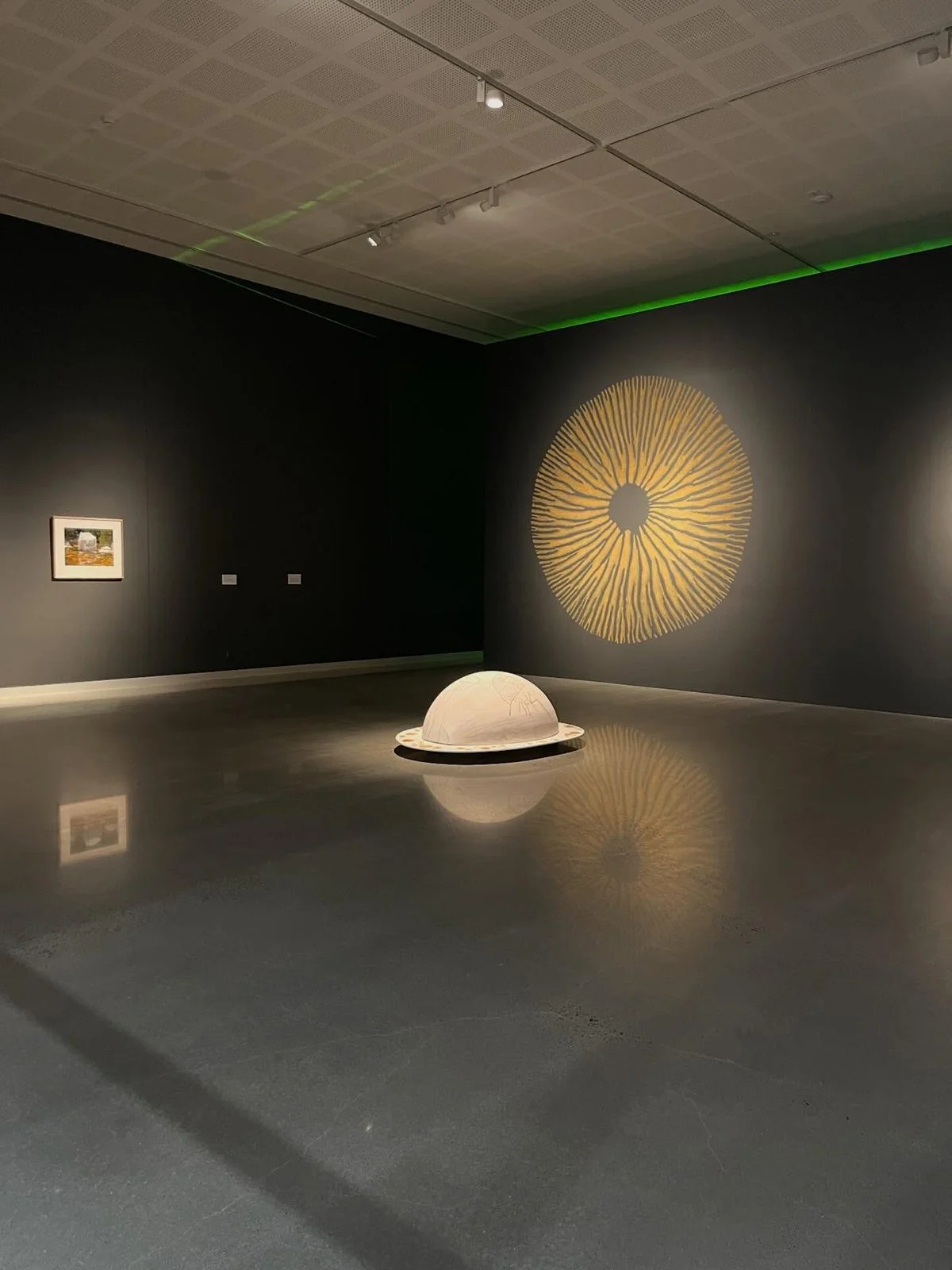

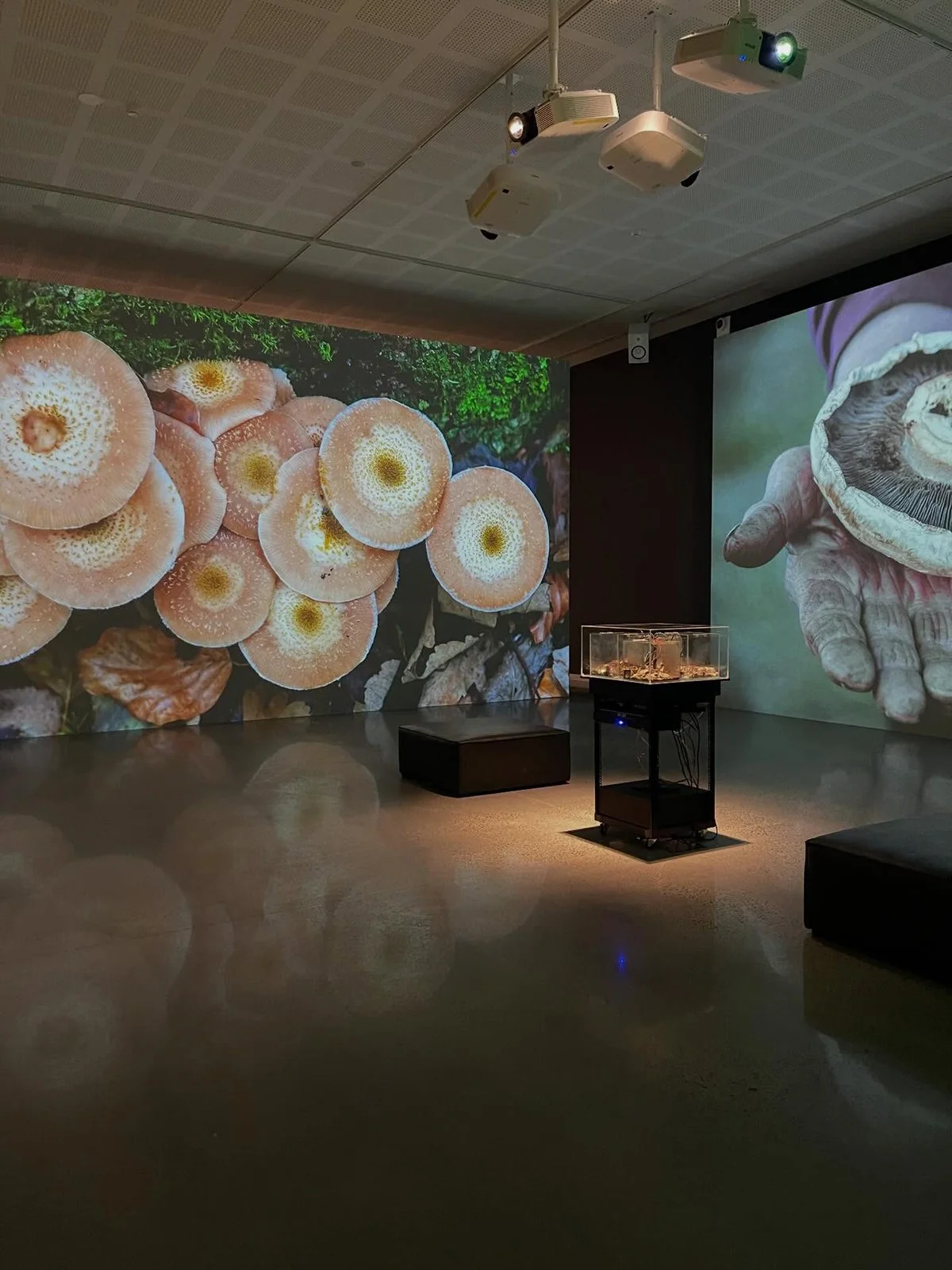




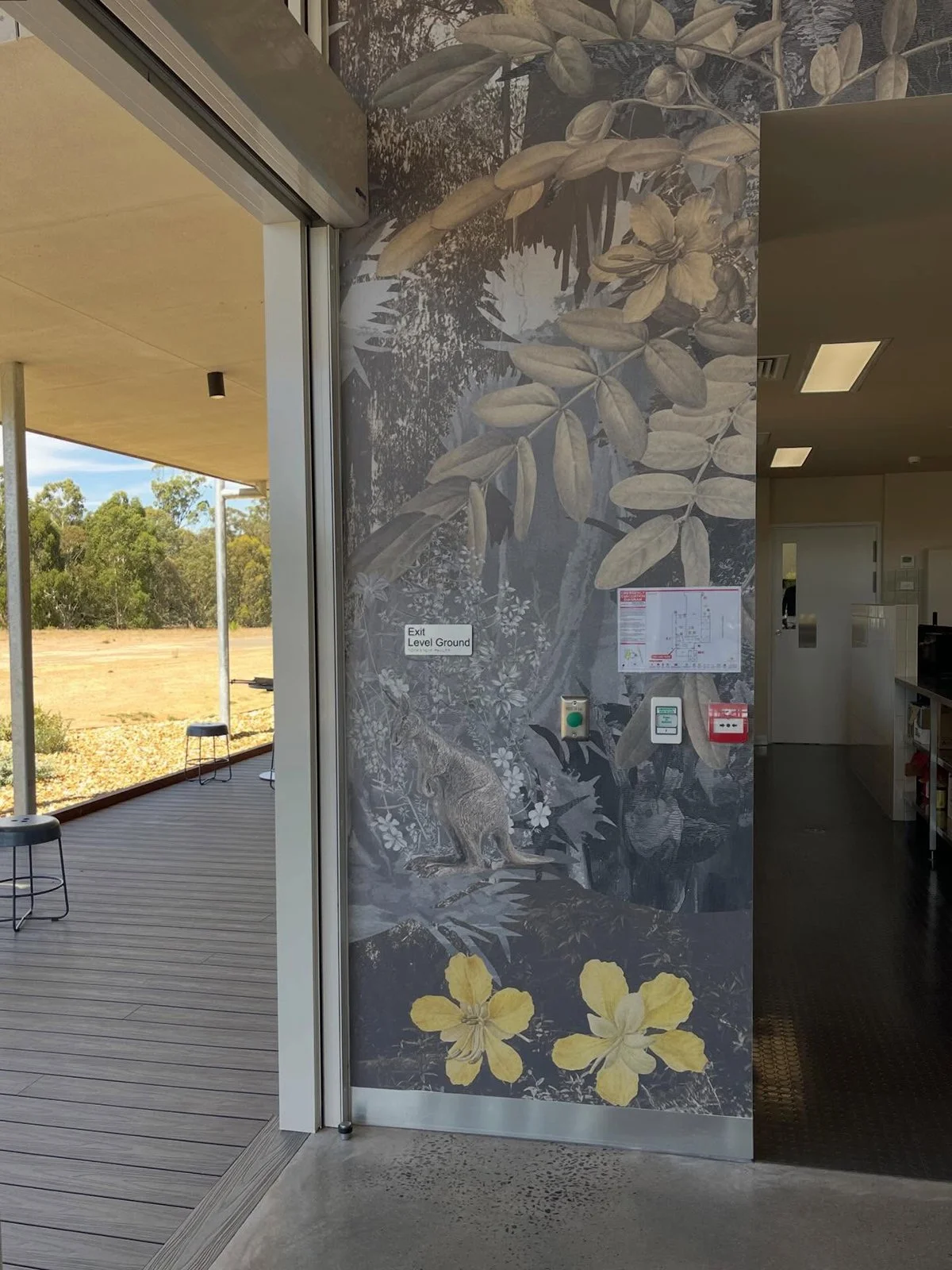
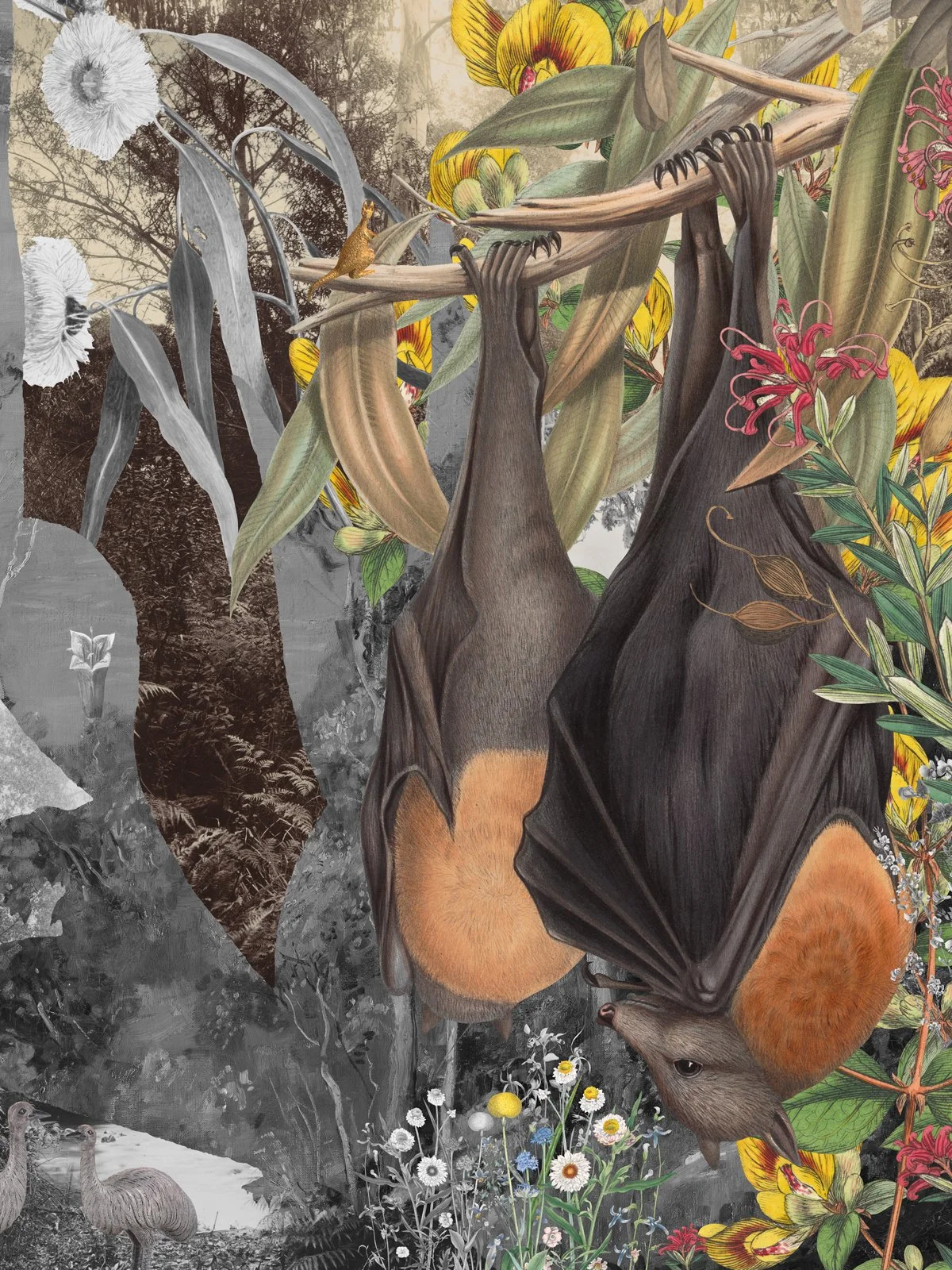
Having unspooled our celebration of fungi and lichen, it was a pleasure to see a second telling of The remaking of things (2023), a reworking of our National Gallery of Victoria (NGV) commission for Melbourne Now, especially for the WAMA Foundation, 2025–2026.
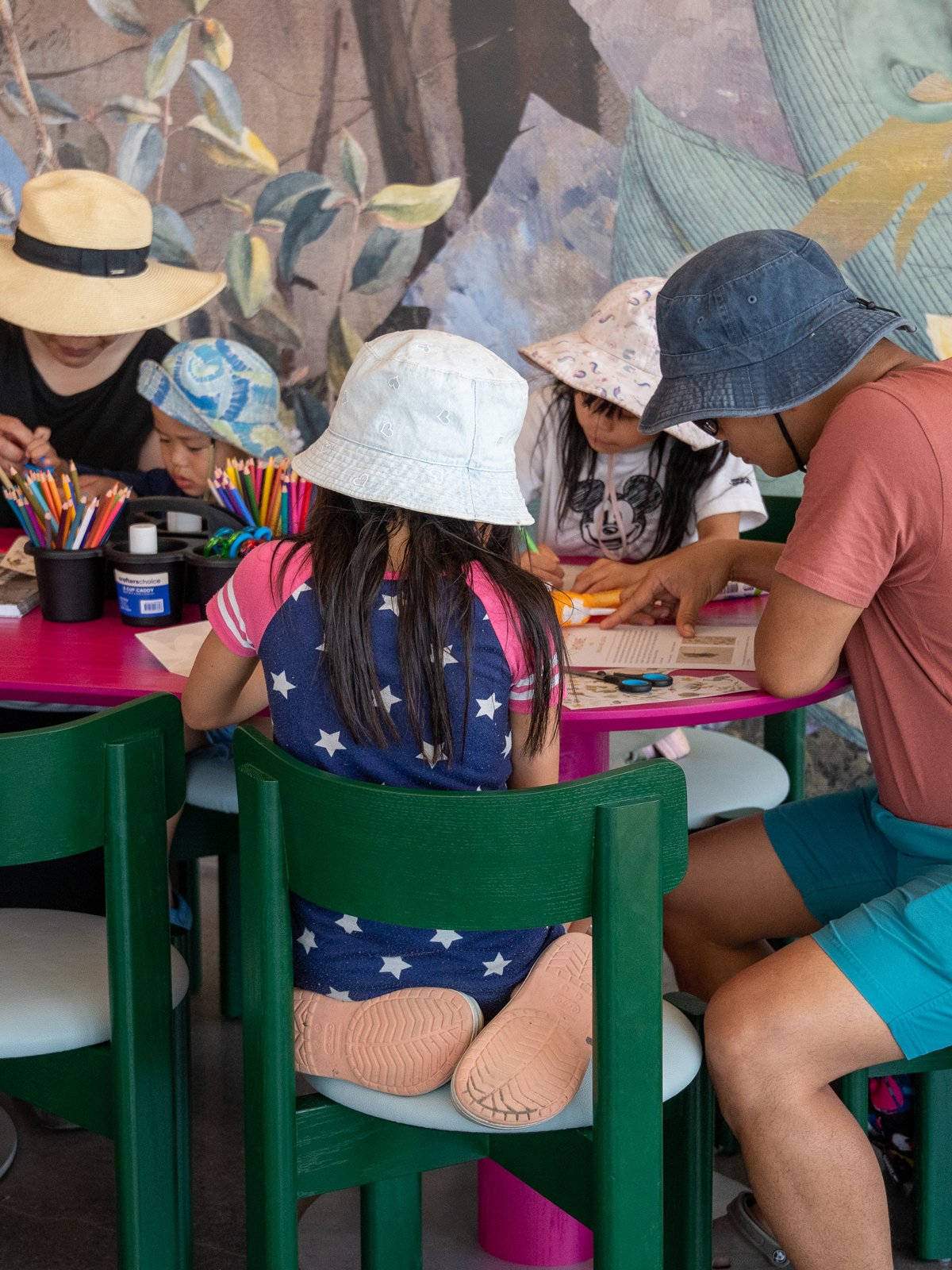
Remaking home, the accompanying activity created with the NGV, is also running, requiring only a glue stick, a pair of scissors, collage material, and your very good self.
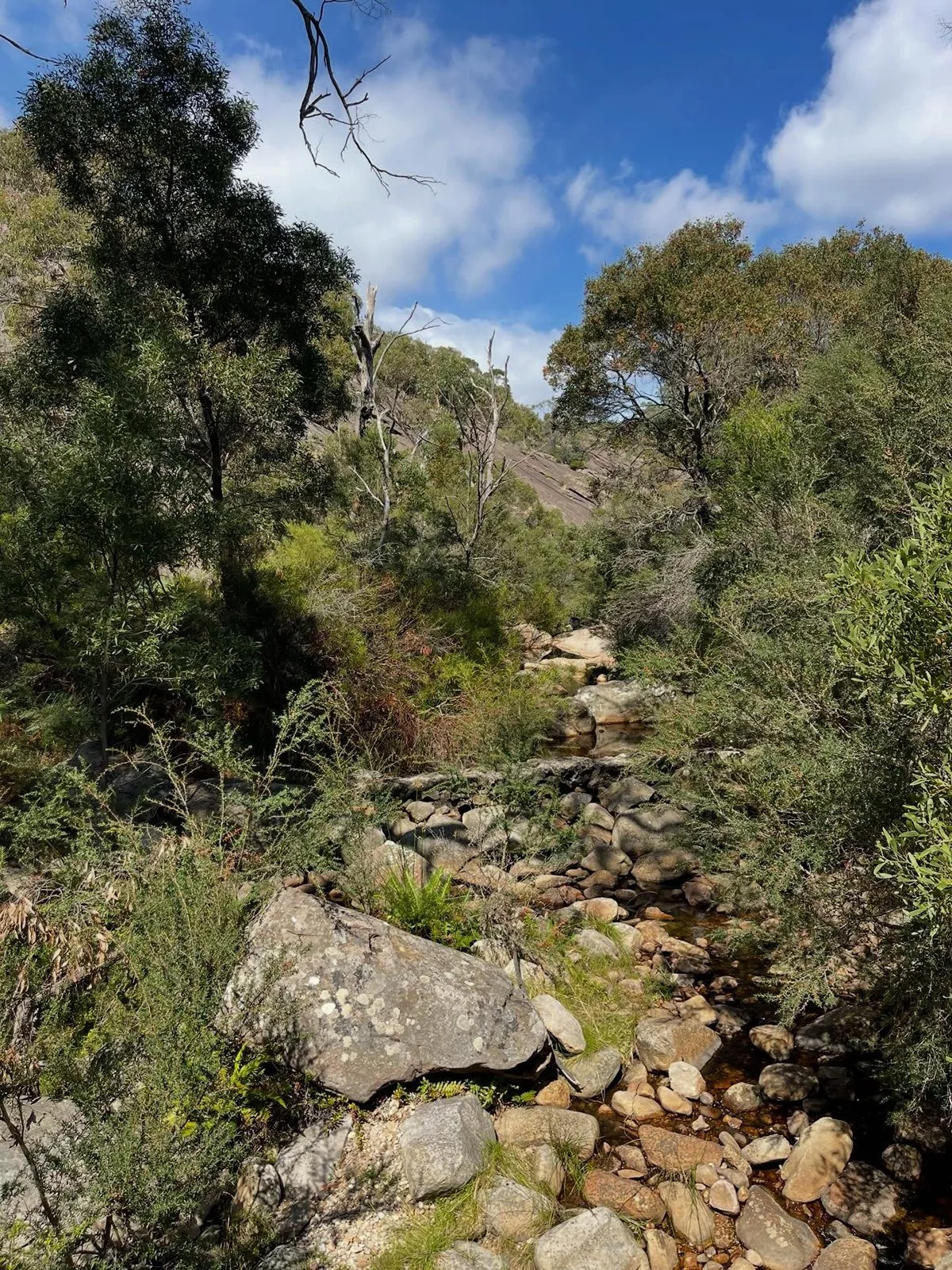
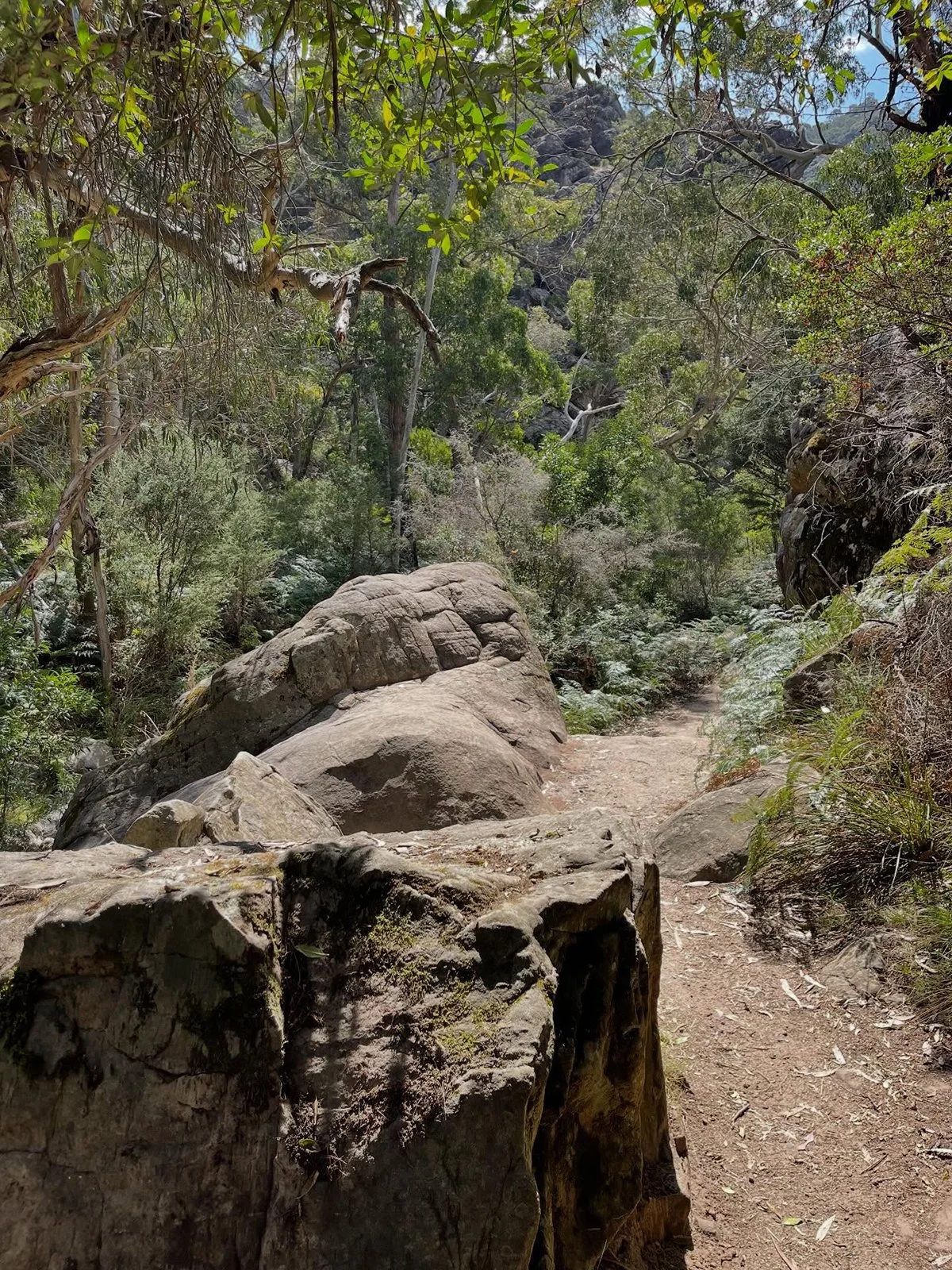
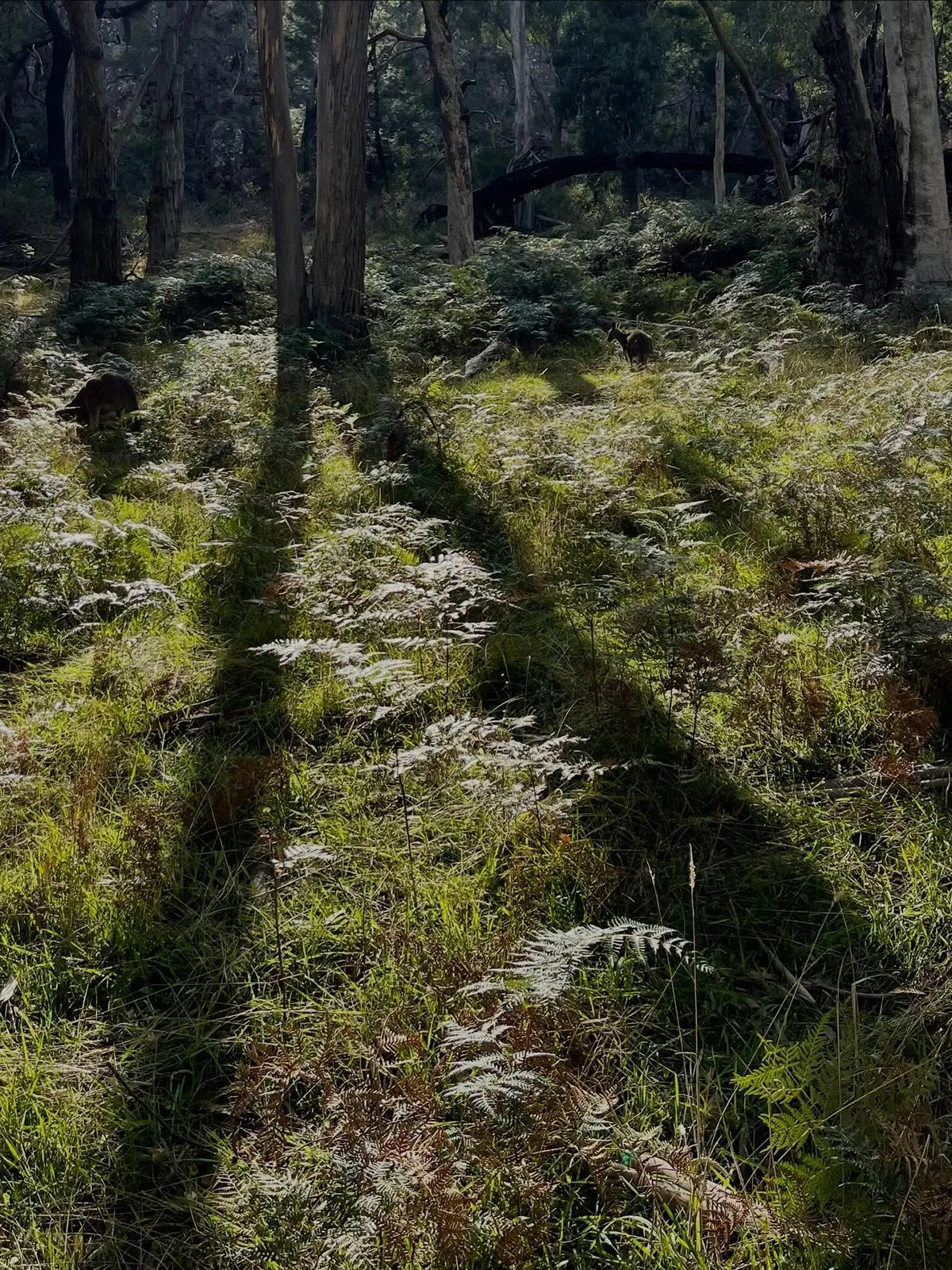
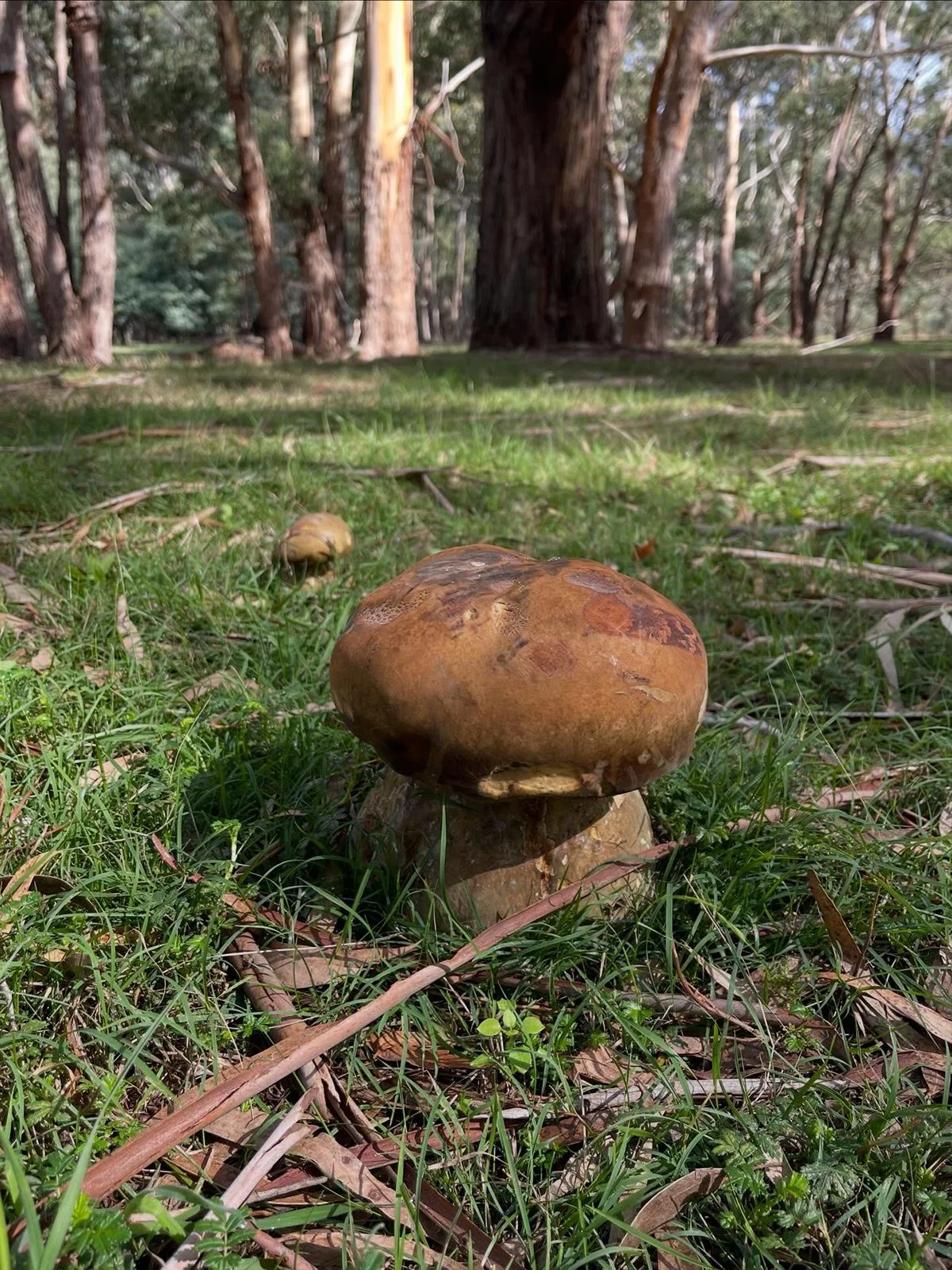
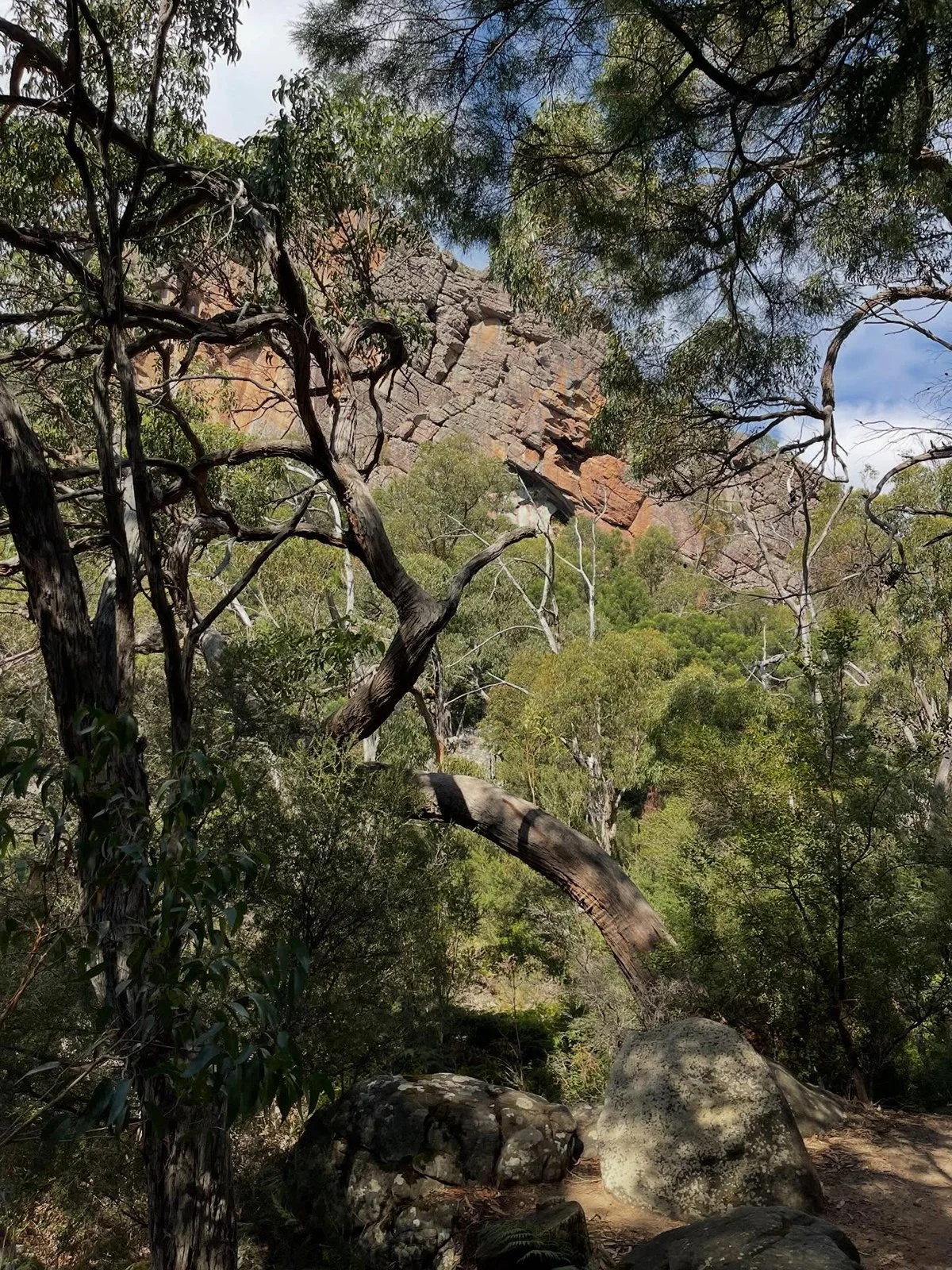
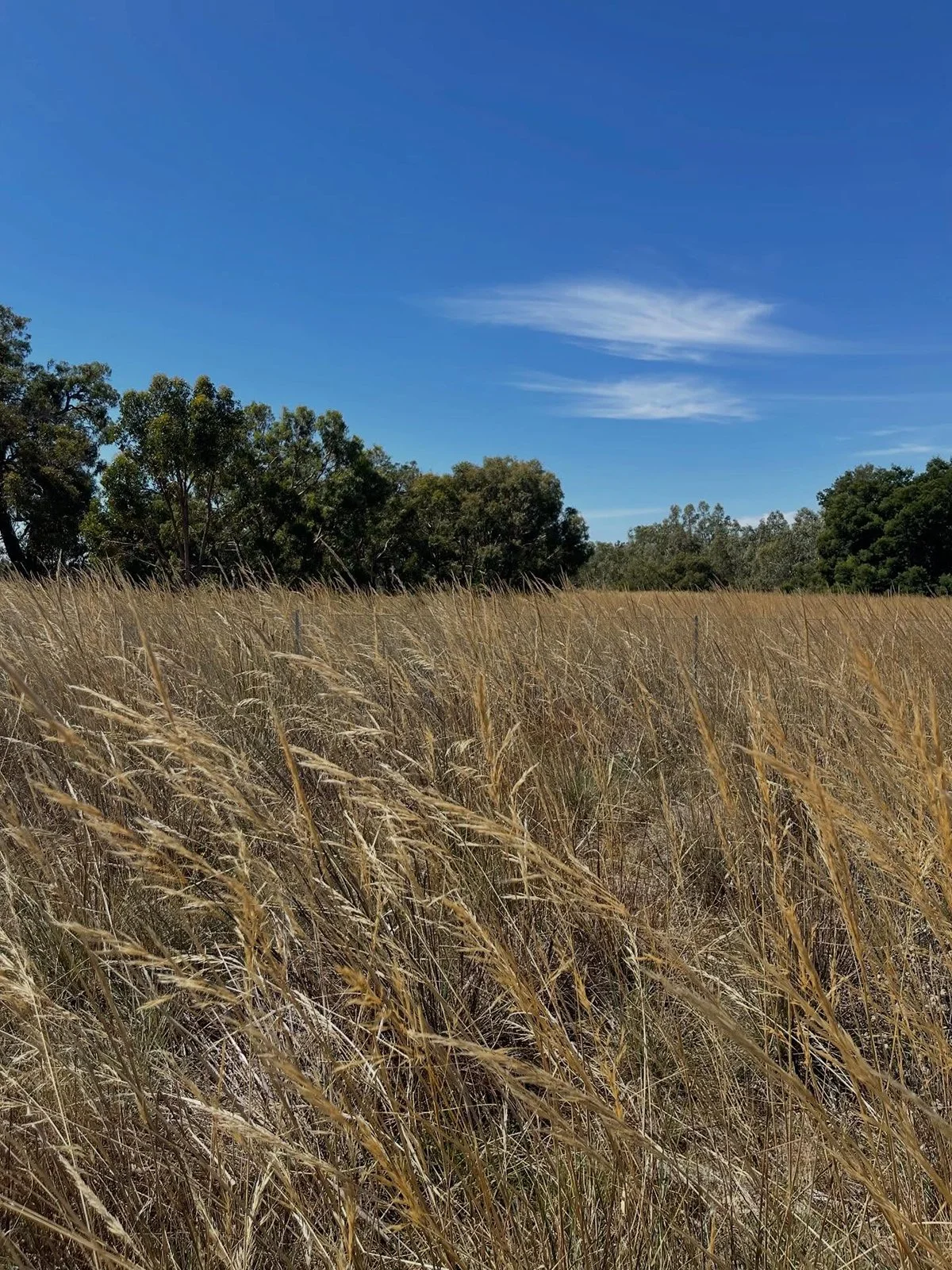
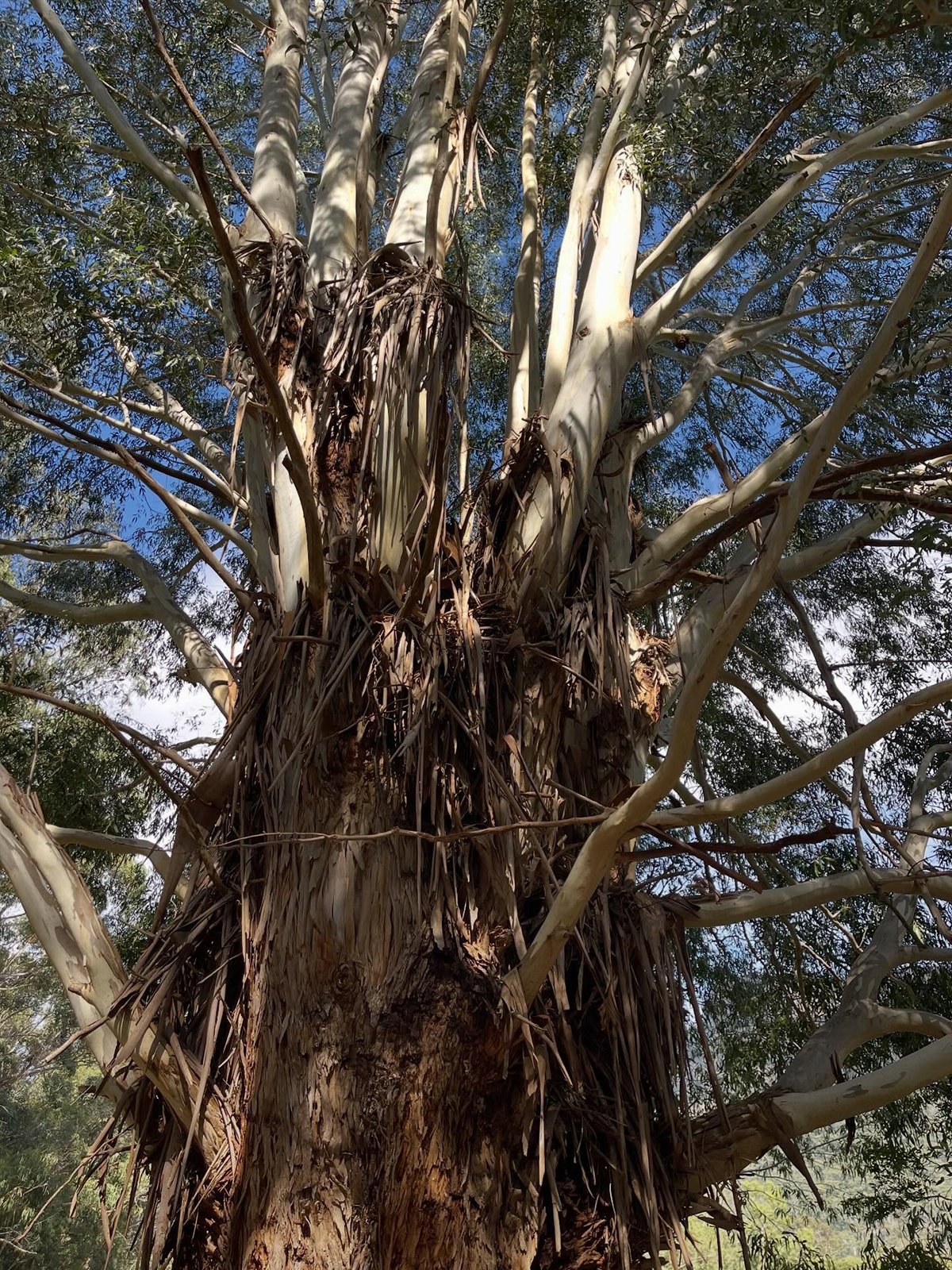
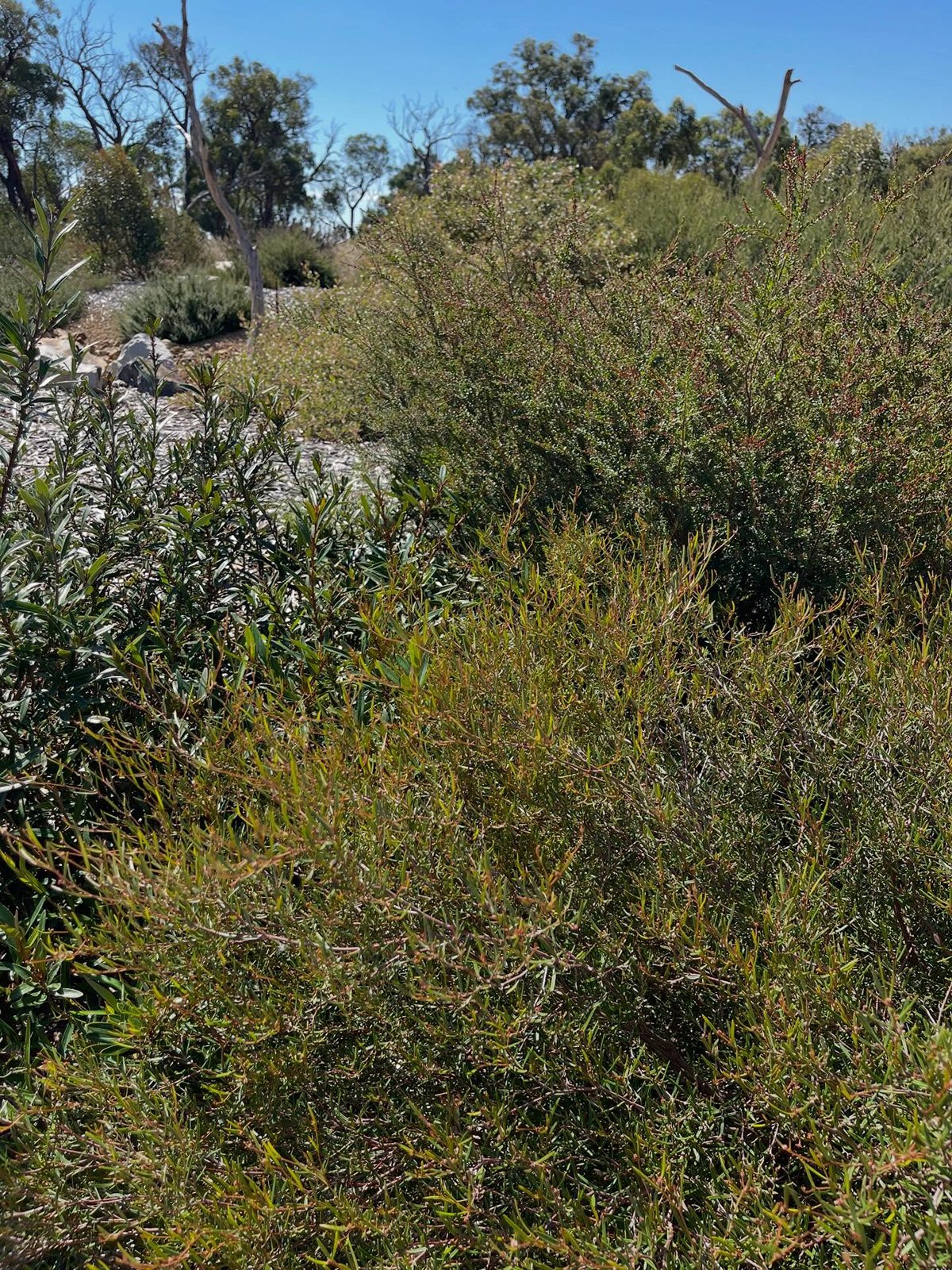
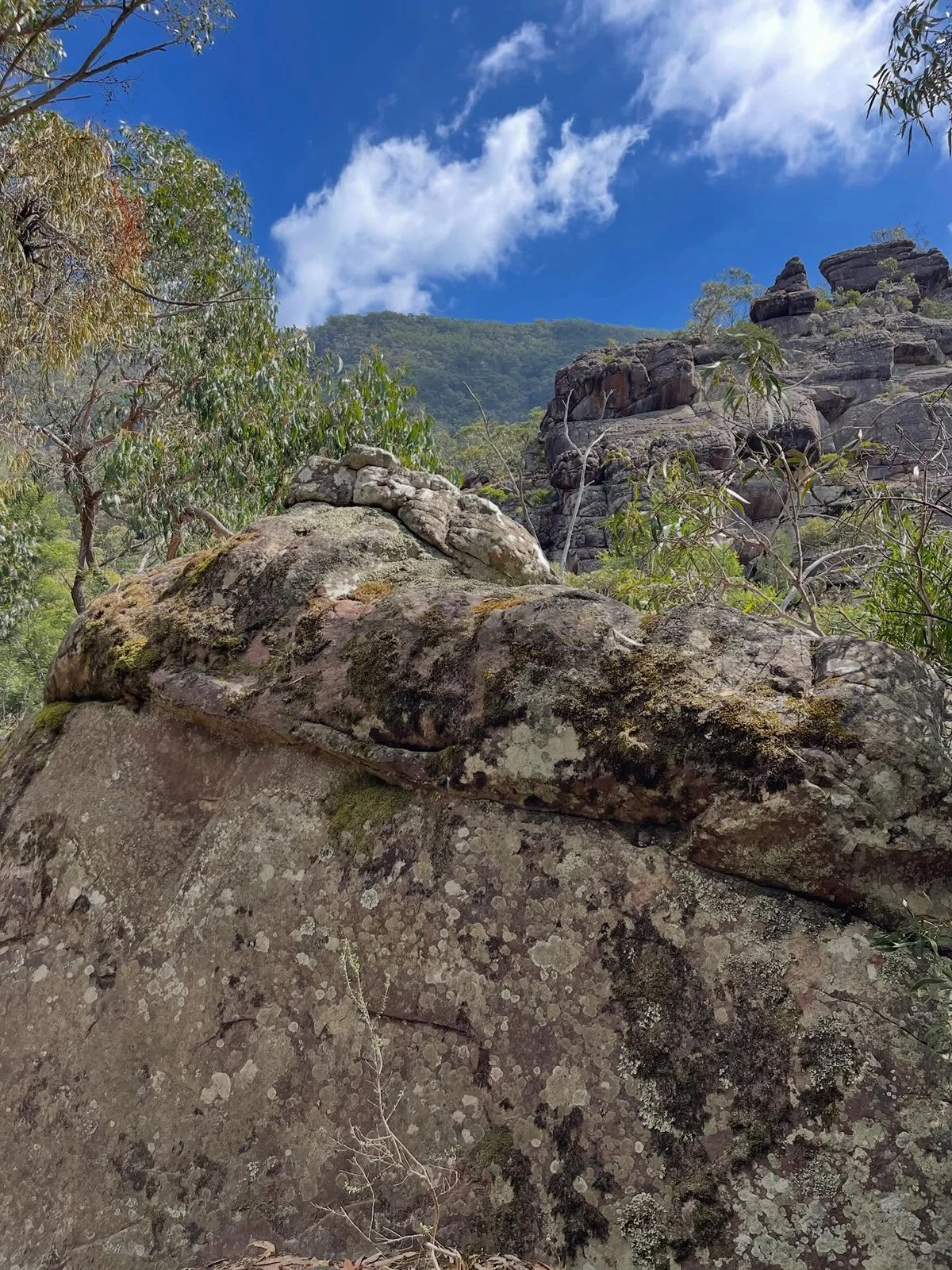
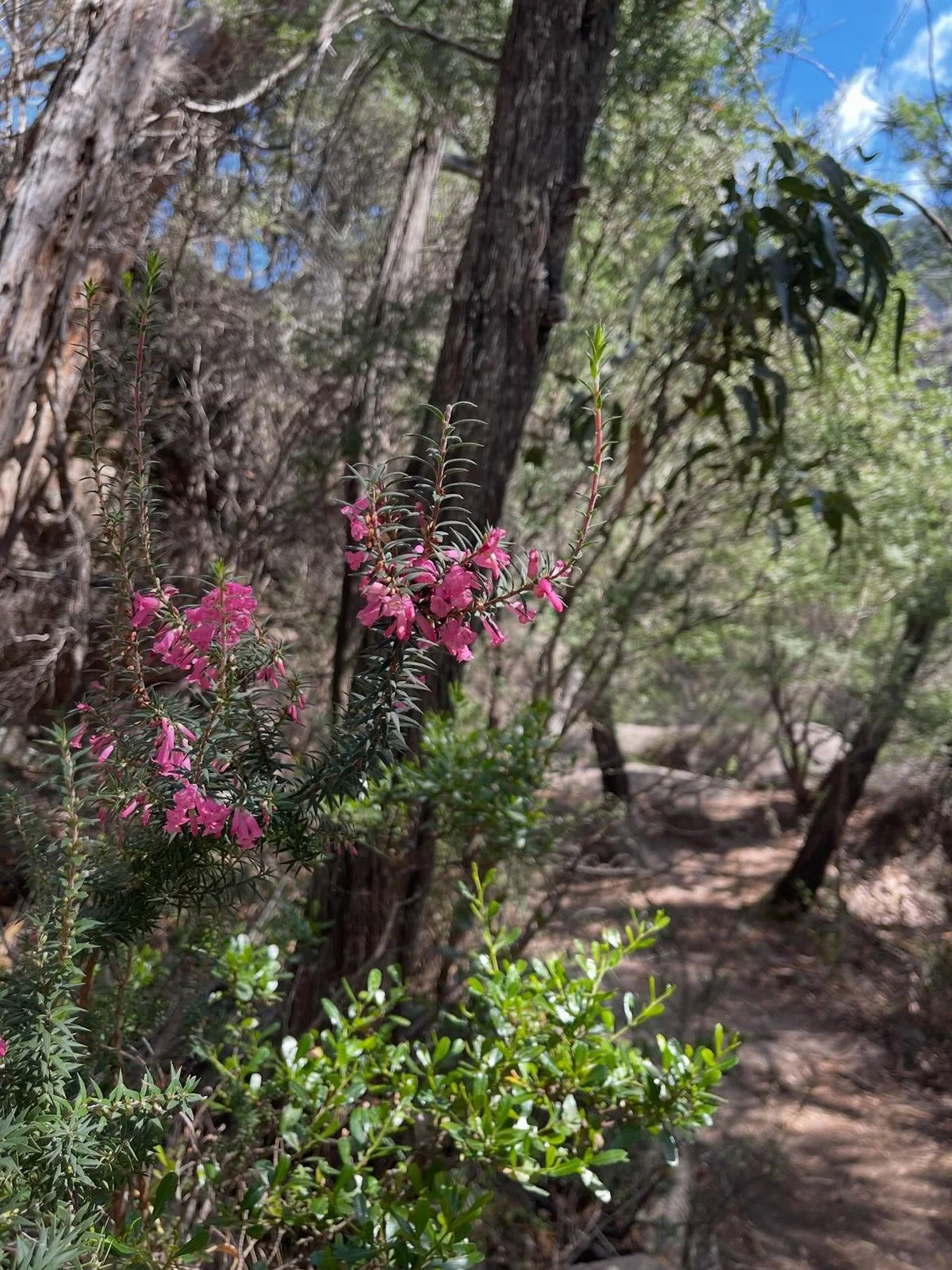
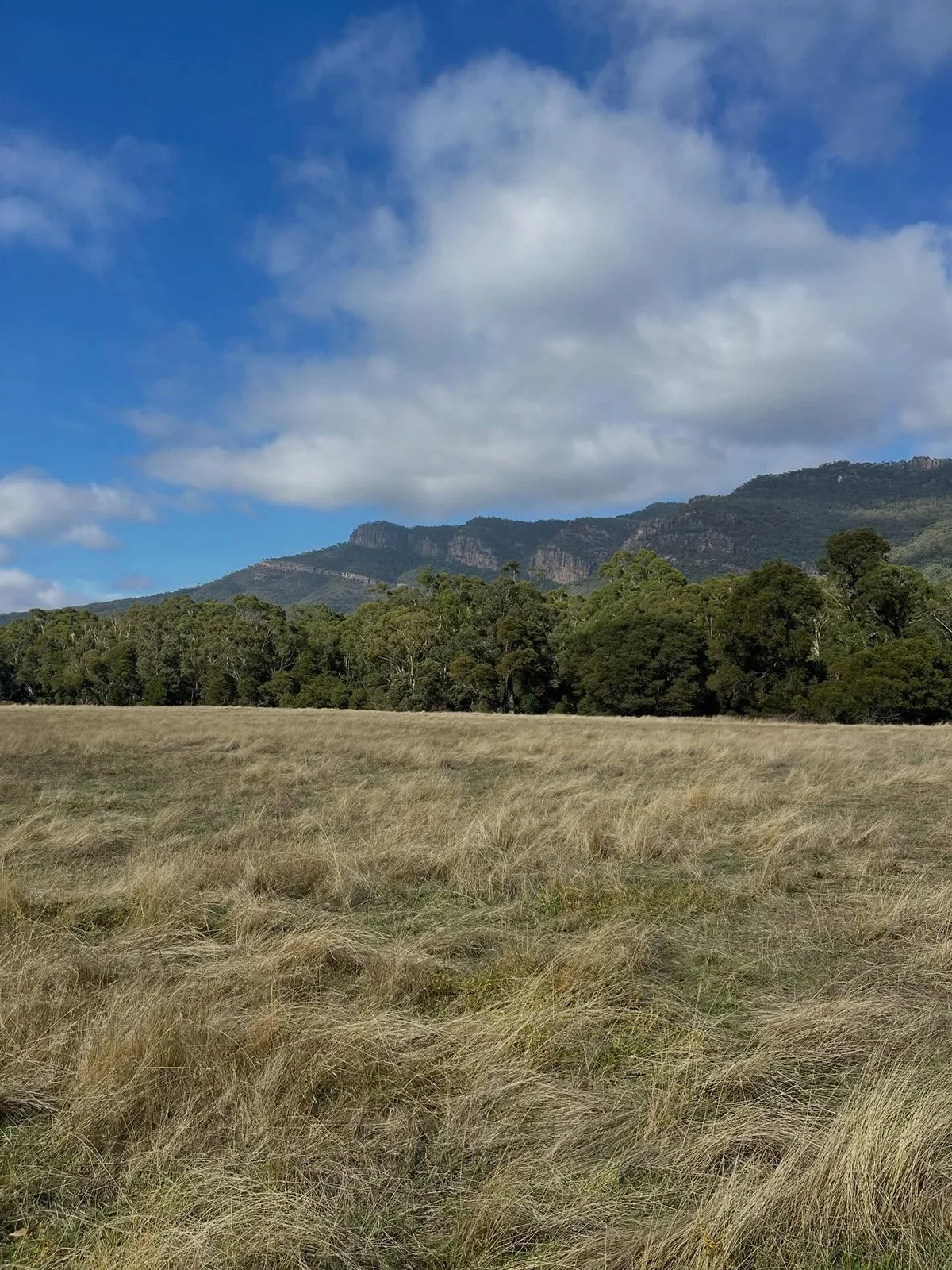
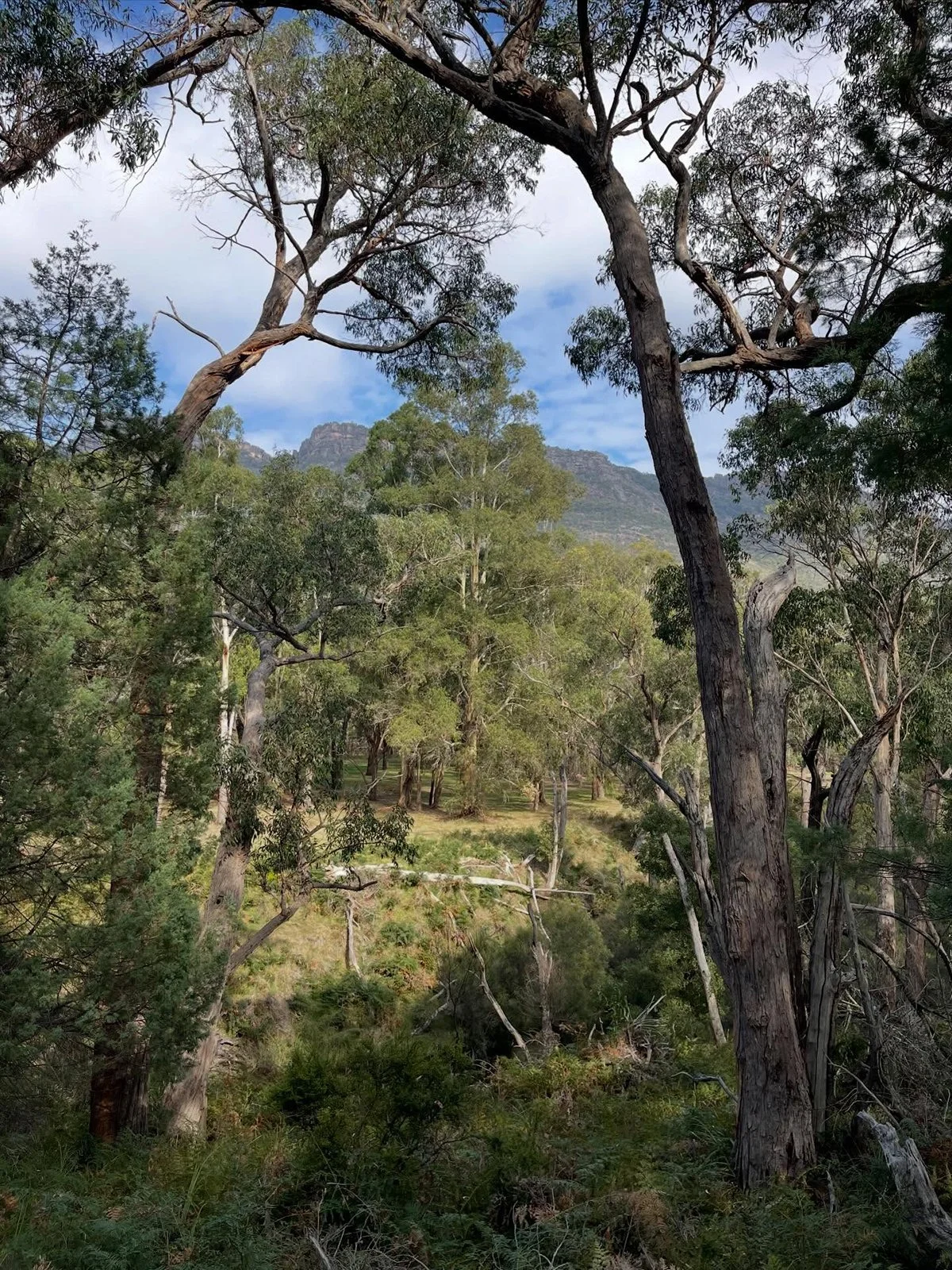
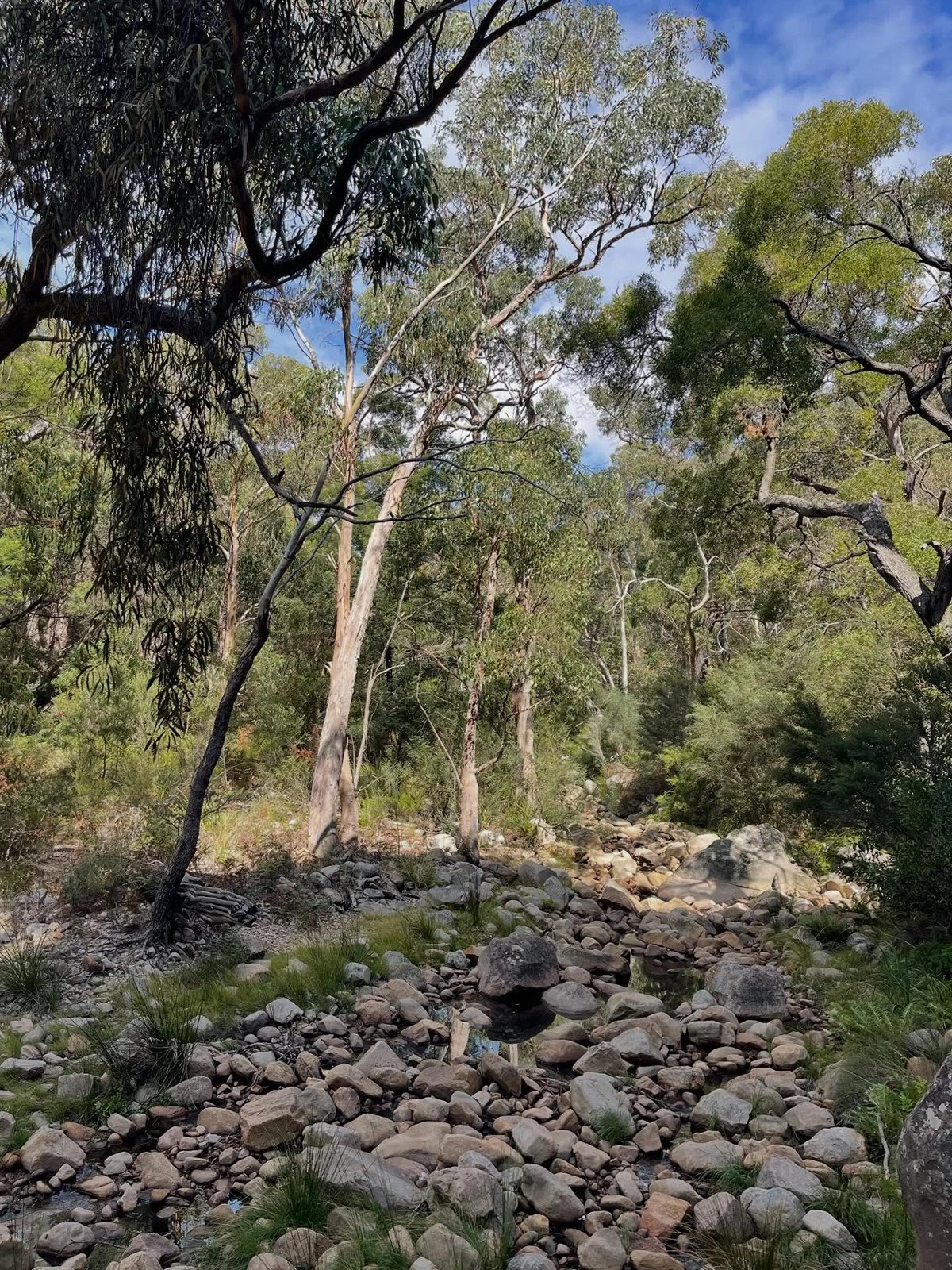
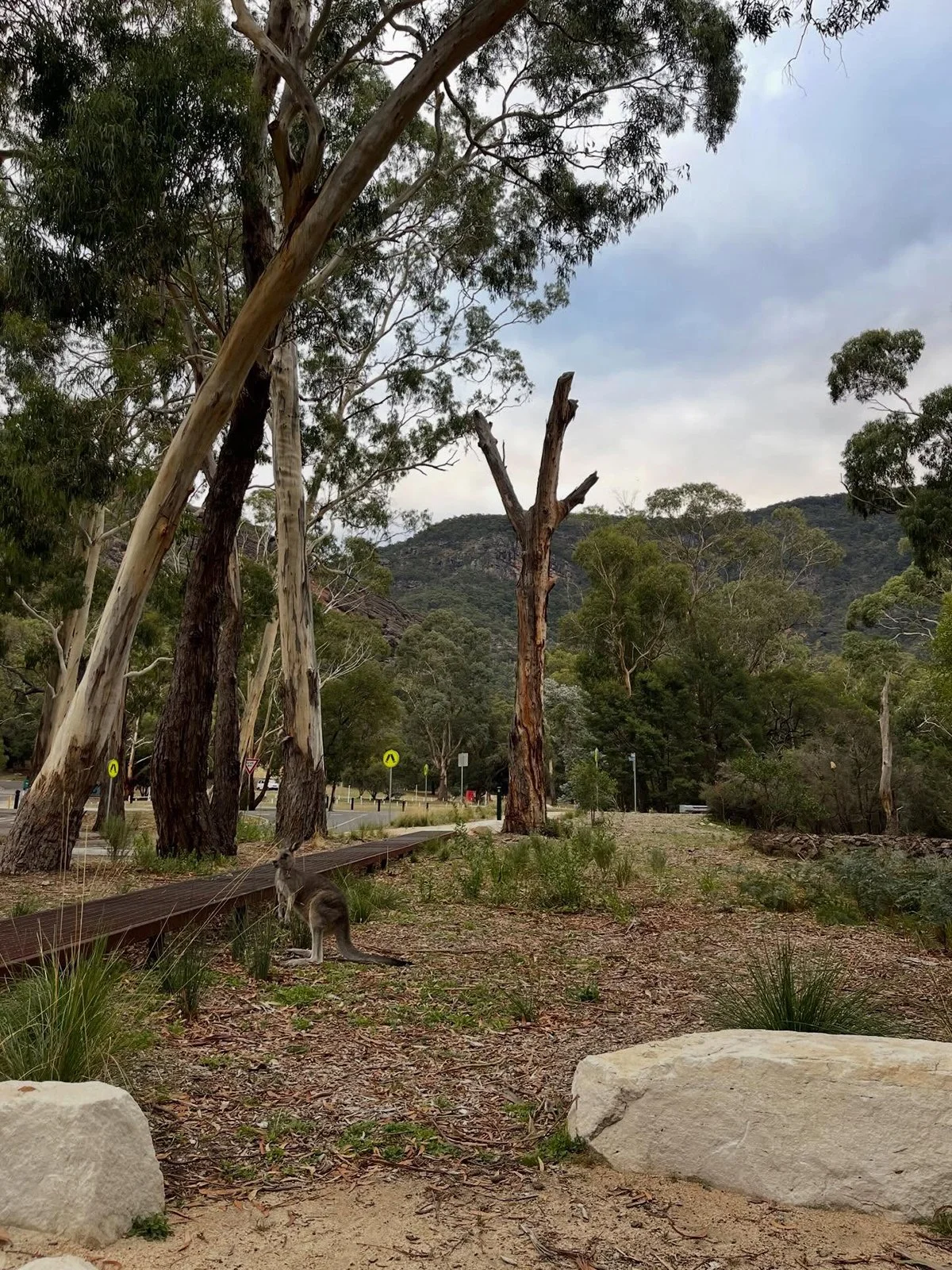
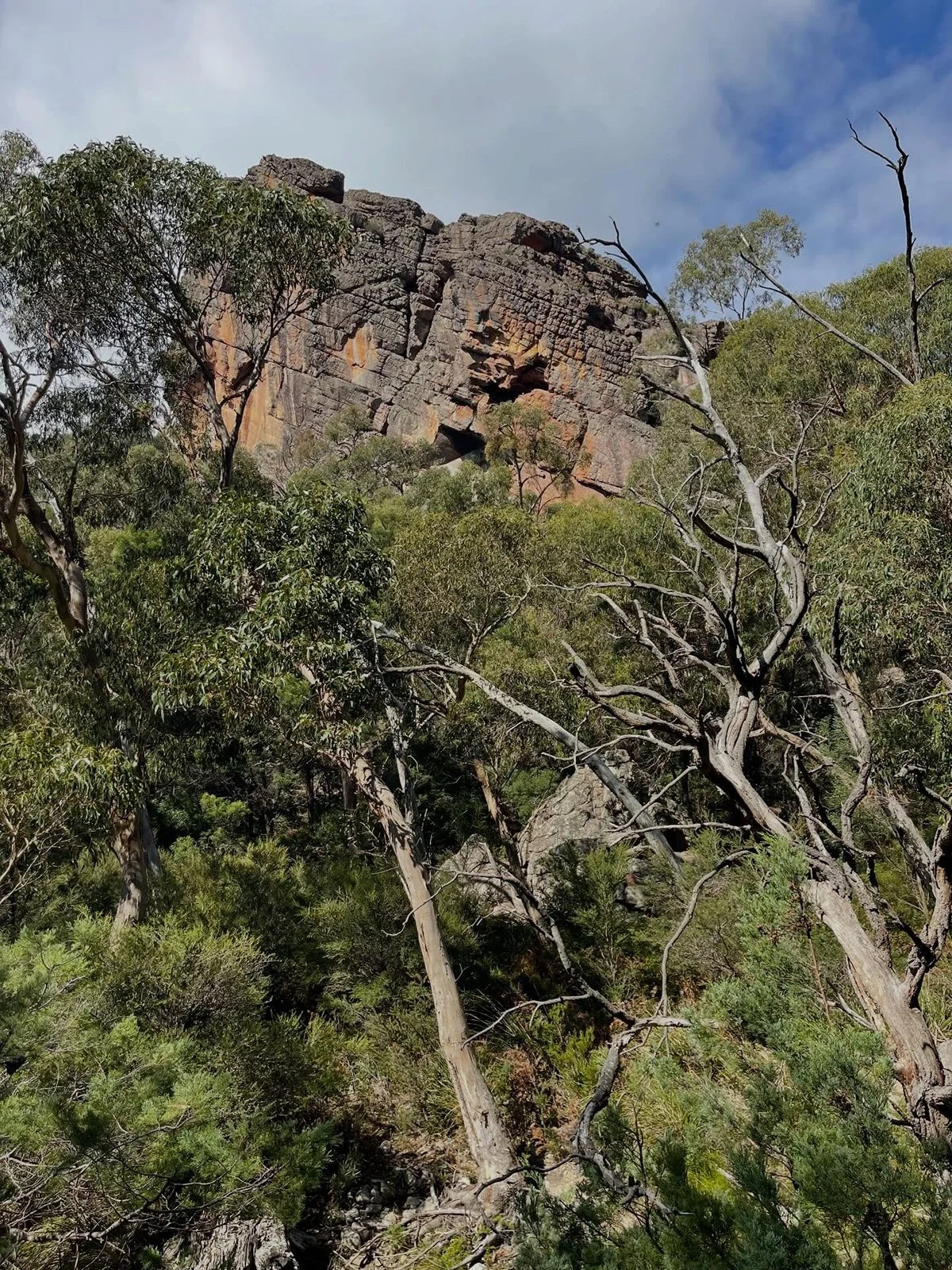
Into the luminous vibrance of the world around us, if only for a brief spell, we walked (the gentle) Fyans Creek Loop and Venus Baths and Wonderland Walk at Halls Gap. Pausing at the caravan park with a mob of kangaroos at dusk, listening to the tug-tug of shoots pulled from the earth as they ate; letting go of our focus and in the blur of movement, out the corner of the eye, seeing ‘leaves’ move, and realising they are actually sun-baking cooper headed skinks, whose sides shimmered a pale mint gum leaf; taking time on a busy tourist path to note the fast twitch movements of an antechinus (in our bewitchment, were they a heath mouse or a smoky mouse?); chittering birds, overhead, and fungi like loaves of bread, in a wide ring at our feet, this ‘break’ in the less broken was restorative.
Thinking about what plants bear witness to, and time spans of knowledge longer than we can conceive. Of symbiotic lichens living on the edge.
In the warm hum of it. Can we dream it still? Yes.
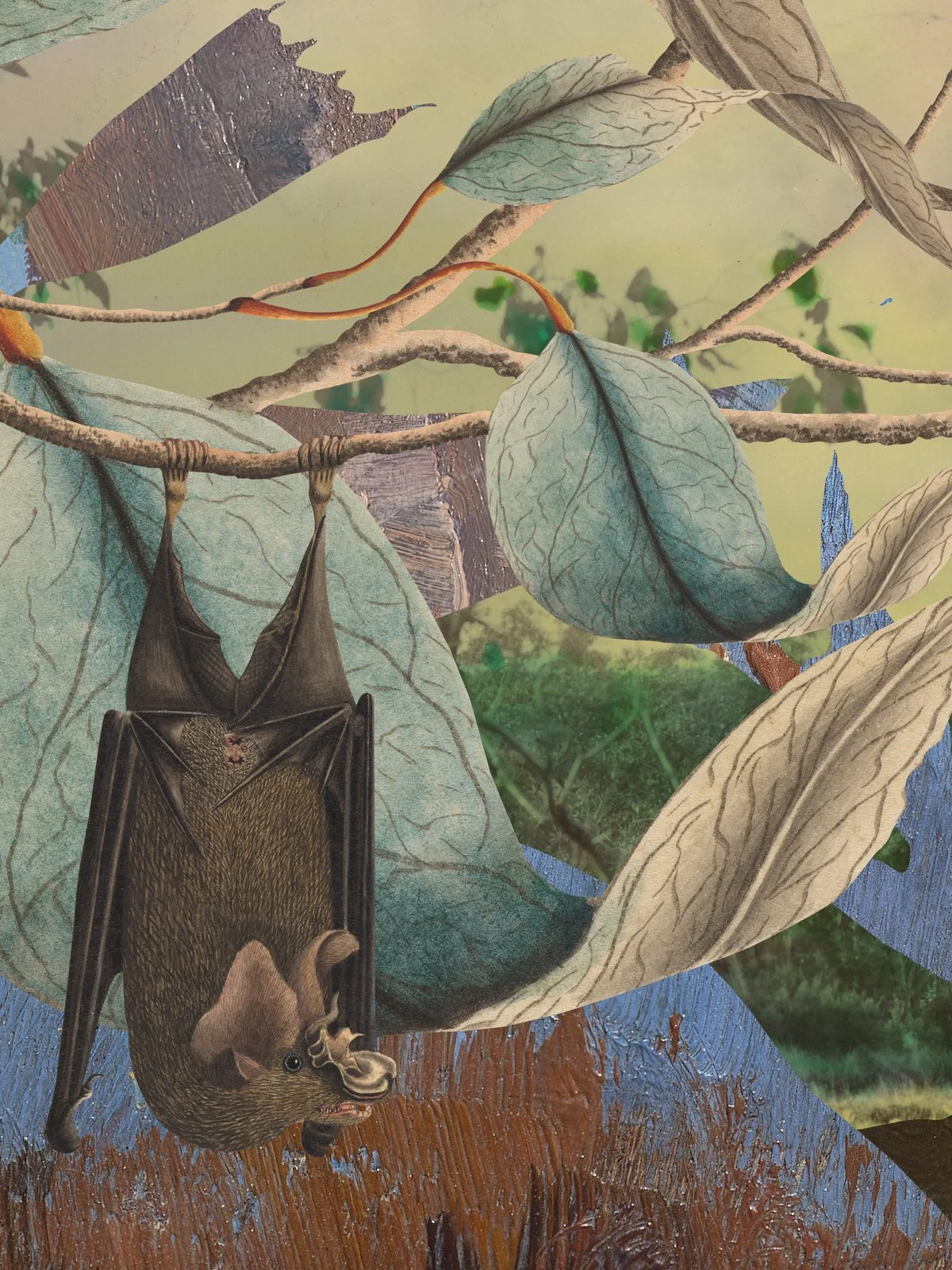






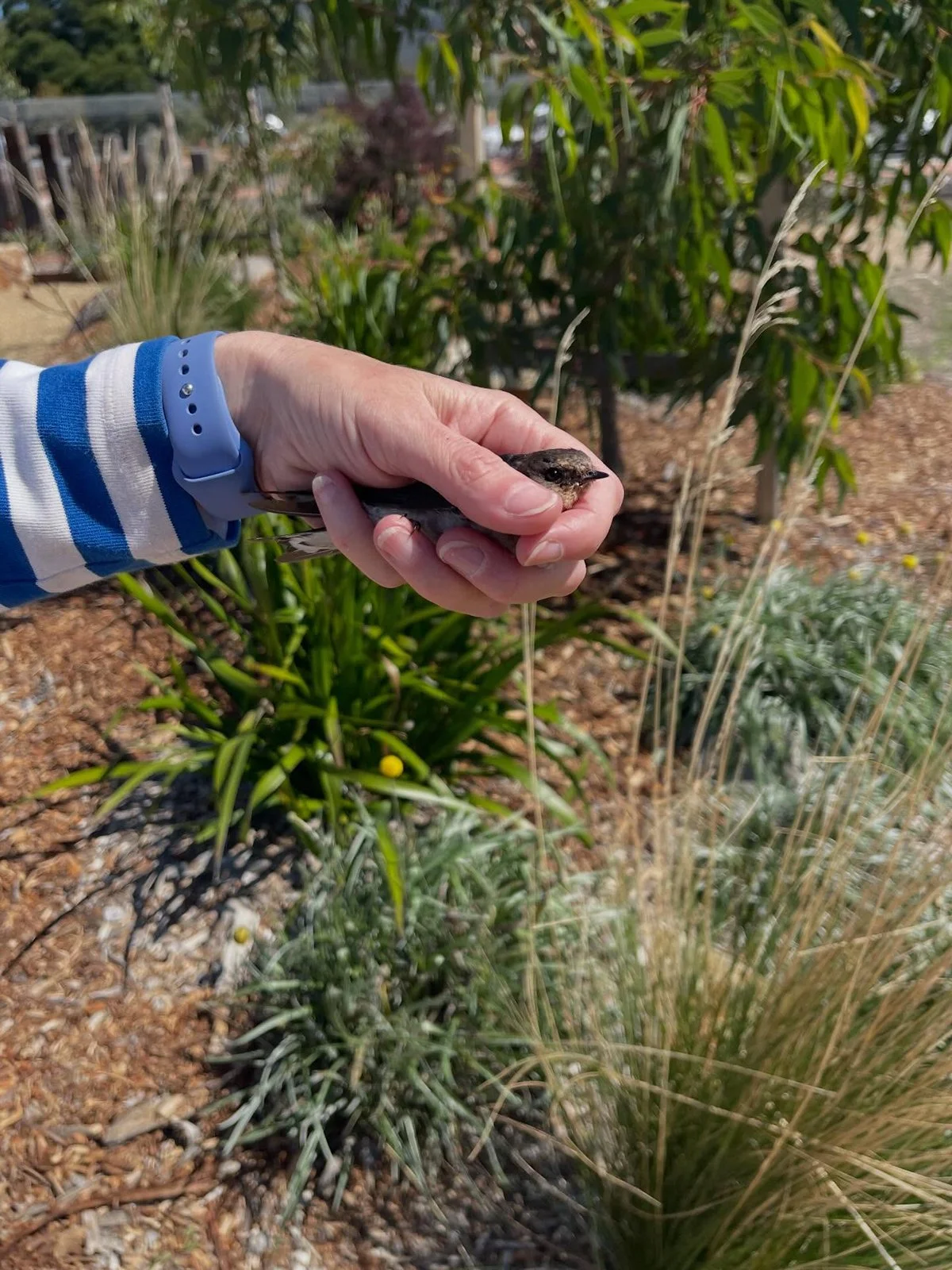


In addition to other wildlife to come into care, one, fittingly, was a juvenile ringtail named, by the family who found him in their front garden, Mushroom. Upon our return from setting up our part in a fungi-inspired and fungi-loving exhibition seemed a lovely case of synchronicity.
If you’d like to see works like Donovan and their ilk in their original glory, why not join us for a talk and zine-making workshop, as part of Archives and Special Collections Spotlight On series next Thursday.
Spotlight on: Artists’ books and zines with Gracia and Louise
Leigh Scott Room, Level 1, Baillieu Library
The University of Melbourne, Parkville
Thursday 2nd of April, 2026
12:30–2pm
Book a (free) spot!
Image credit: Gracia Haby & Louise Jennison, (detail from) Can we dream it?, 2026, 32 page concertina artists’ book, inkjet print, with hand-cut paper components, on Moenkopi Kozo 110, encased in hand-cut envelope. Printed by Arten. Bound by Gracia Haby & Louise Jennison, with hand-cut elements. Unique state.
Pause
Slower slower slower
Over grooves of yew
Over spikes of leaf
Under plates of bark
Xylem and phloem
Vanish, somewhere, gone.
But here, in me, in our enchantment, my wish to you.
The title of this post is borrowed from ‘Creatures that don’t conform’ by Lucy Jones, published on Emergence Magazine.
