A couple of questions
Answered for Genevieve Margeaux
School of Art, RMIT University
Thursday 27th August, 2026
When did you respectively discover your passion for conservation? And how did you discover you shared this value and wanted to make work about it?
Since reading Robin Wall Kimmerer describing such awakenings in her students, this has perhaps always been there for us both, and we are only recently remembering it.
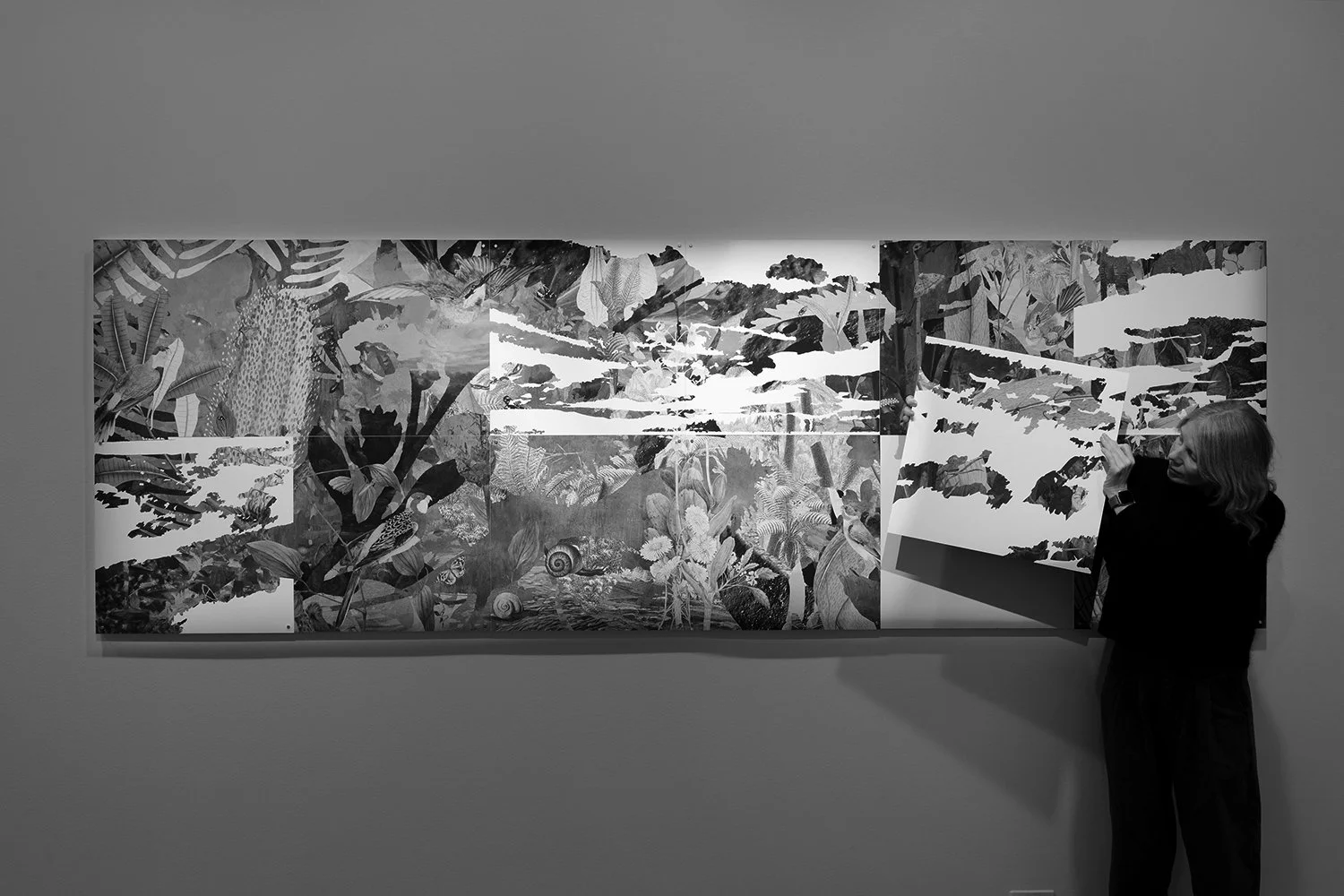
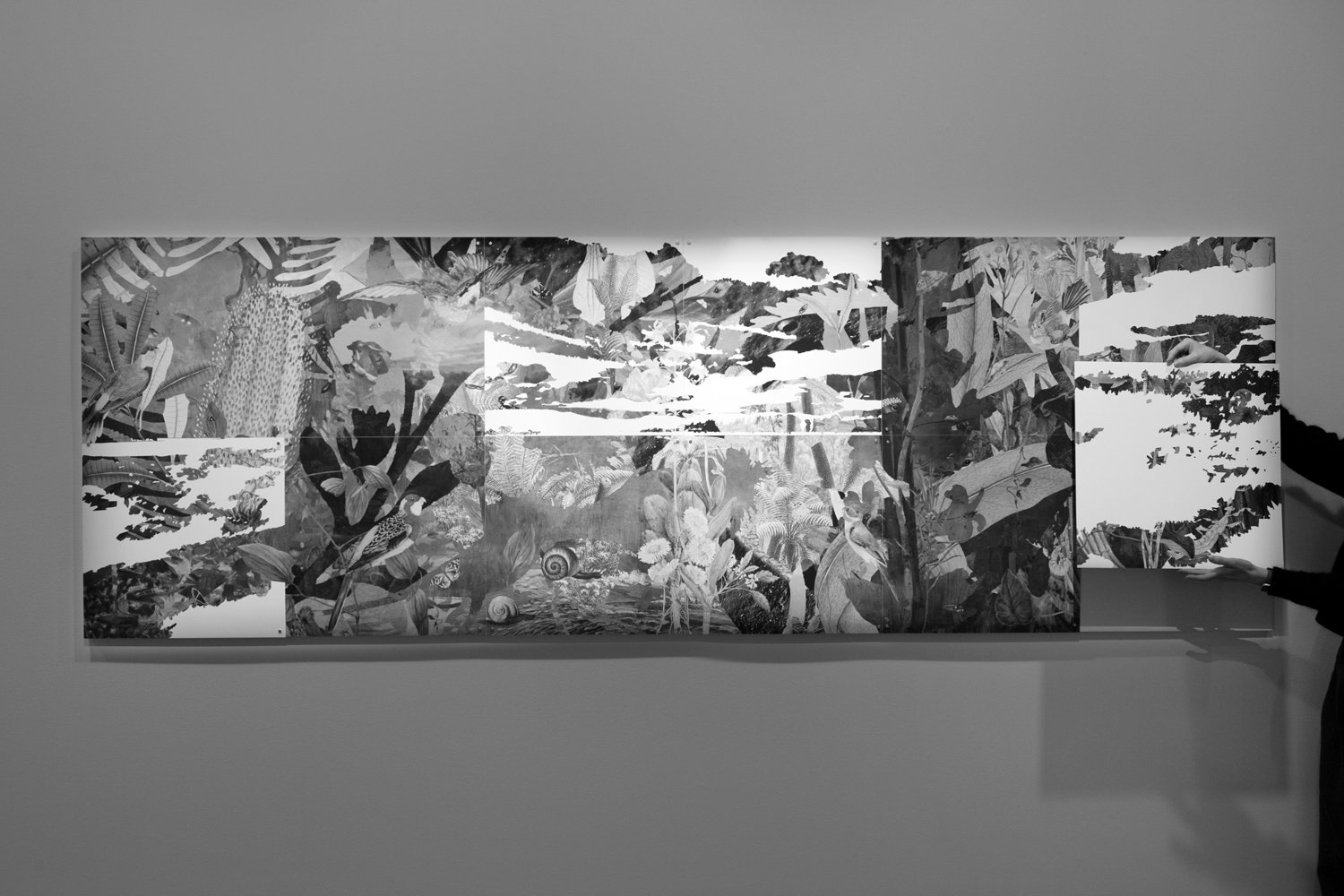
The megafires of 2019–20 brought it especially to the fore, in the sense that we looked at lots of different ways we could help (planting and weeding days, building nesting boxes) and this dovetailed into our artwork in a more direct way. We created the Hemline series in response to the megafires, and this is a series that requires you to tear open the pages and ‘take action’ as a reader. We didn’t want to feel like we were ‘taking’ the source material, and not ‘giving back’ or starting important conversations.
In seeing the world through or at least trying to see the world through another species’ eyes, new visuals emerge and a new sense of what the world can be as well. In working with animals, through our wildlife shelter, Tiny but Wild, we get to be up close to animals, but more than that we get to know each one on an individual level, and so the release, the return to habitat (which is always the desired outcome, if not always possible because of his or her injuries/condition), is a gift that ensures we’ll keep going. Both the wildlife care and rescue work and the art work, that is. They’re becoming more and more interwoven. And they’re both a portal to someplace else.
When you started out in the late 90s did you have a clear vision of the work you wanted to make — both materially and thematically? How did your work evolve?
Each project has always had a clear vision of where it was heading, in terms of the structure of the work and the feel, but the actual appearance was, then, and is, now, surprising. In part because all work has to adapt to unknown factors that arise, and because you unearth things along the way. Sometimes this will be a technical or a financial constraint, and sometimes it will be because something has caught your eye along the way and grown into the unexpected. It is the same with writing, really. You have a plan, but the writing reveals things to you along the way and you lean into the process. A fixed framework with room to swing and surprise yourself. If you are not surprised by the outcome, can the reader or viewer be?
We also try to edit a work, rather than throwing every idea at it. Keeping the focus, so the reader or viewer isn’t too bamboozled (unless, of course, that’s the aim).
Paper and animals have been the mainstay, but the conservation component (especially in regard to habitat loss, human encroachment, species extinction, and positing: what do things look like from another soul’s vantage point) has come further to the fore. It is our way to ‘give back’.
We are also actively trying to decompose the use of ‘it’ when refereeing to an animal or a tree, and, as Robin Wall Kimmerer wrote: “speaking with the grammar of animacy brings us all into [a] circle of moral consideration”. When we say ‘it’, we are placing those ‘things’ outside of our personal circle of moral consideration. But perhaps our answer is now getting a little off track…
How did you hit your stride? Was there a lot of trial and error or did it just come together?
Thank-you, that’s very nice to hear. Have we hit our stride?
We’ve always tried to make any opportunity big or small important. So whether a project is as large in scale as a mega bat with their wings fully extended or a microbat in torpor, we’ve given every project our full attention. And practice, practice, practice, rehearse, rehearse, rehearse, finesse, finesse, finesse, and then, let go, ease into it. That’s been our method. That’s our means to make it appear as though it has just come together or, indeed, always been there.
Writing things down helps us clarify an idea, stripping the piece of unnecessary components. And plenty of trial and error. An ugly Word doc is a personal must, so, too, scribbling things down, raw and rough. Not all parts of the process are beautiful, clear, and needed.
Who are some of your greatest influences?
Dance and cinema are some of our greatest loves and influences. Contemporary and classical, all kinds of dance. Something about the invitation to sit, more often than not, in the dark, and contemplate whatever it is that unfolds. There is a directness we both respond to, and the fleeting, in the moment bliss of something live, never to be repeated. Cinema’s escape too, on the heels of 47 films seen at the Melbourne International Film Festival. Linking to earlier, editing an idea, polishing one key strand, this is something we’ve borrowed from film. Which might not immediately seem so, given the layers and layers of collage pieces.
Add to that, reading broadly (fiction and non-fiction). And generally being open to anything that can impress upon your core, a new way of being, feeling. A happy hum. Being outside, in and of nature, greatest influences?! So many. Endless, for now. For ever, we hope.
What advice would you give a young person starting out in the art world and making art that is rooted in activism?
With all things, keep going. Persistence is a huge part of it, and a rewarding element as well. And perhaps, once you’ve learned a thing inside out, cast it temporarily to the side, and let it infuse into the work, so that it feels less like a school assignment, and more organic.
To paraphrase from Mary Oliver, attention without feeling is merely a report, so always making work from a deep connection is important to us.
Thanks so much for the opportunity, and hope this helps.
Cheers,
G&L
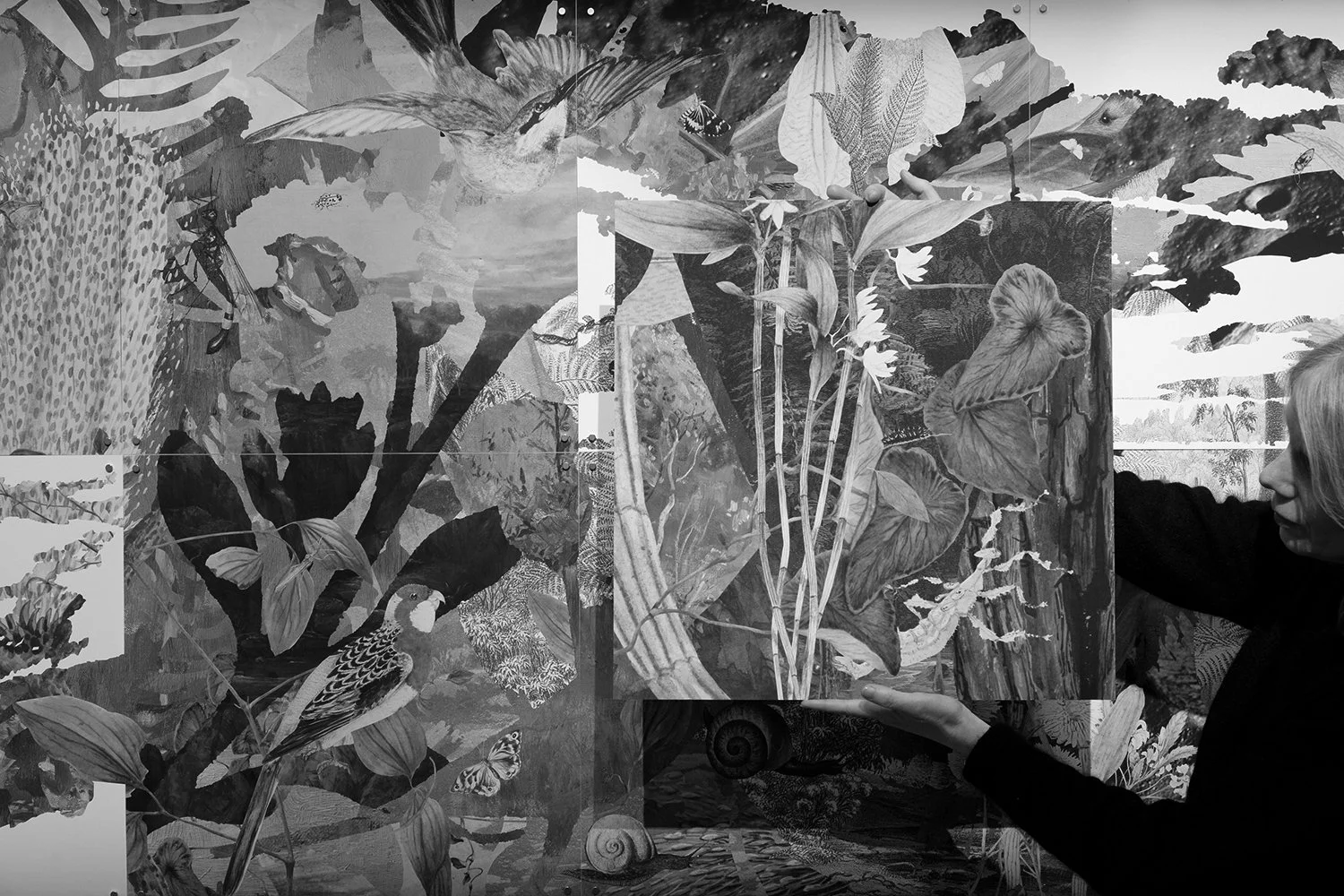
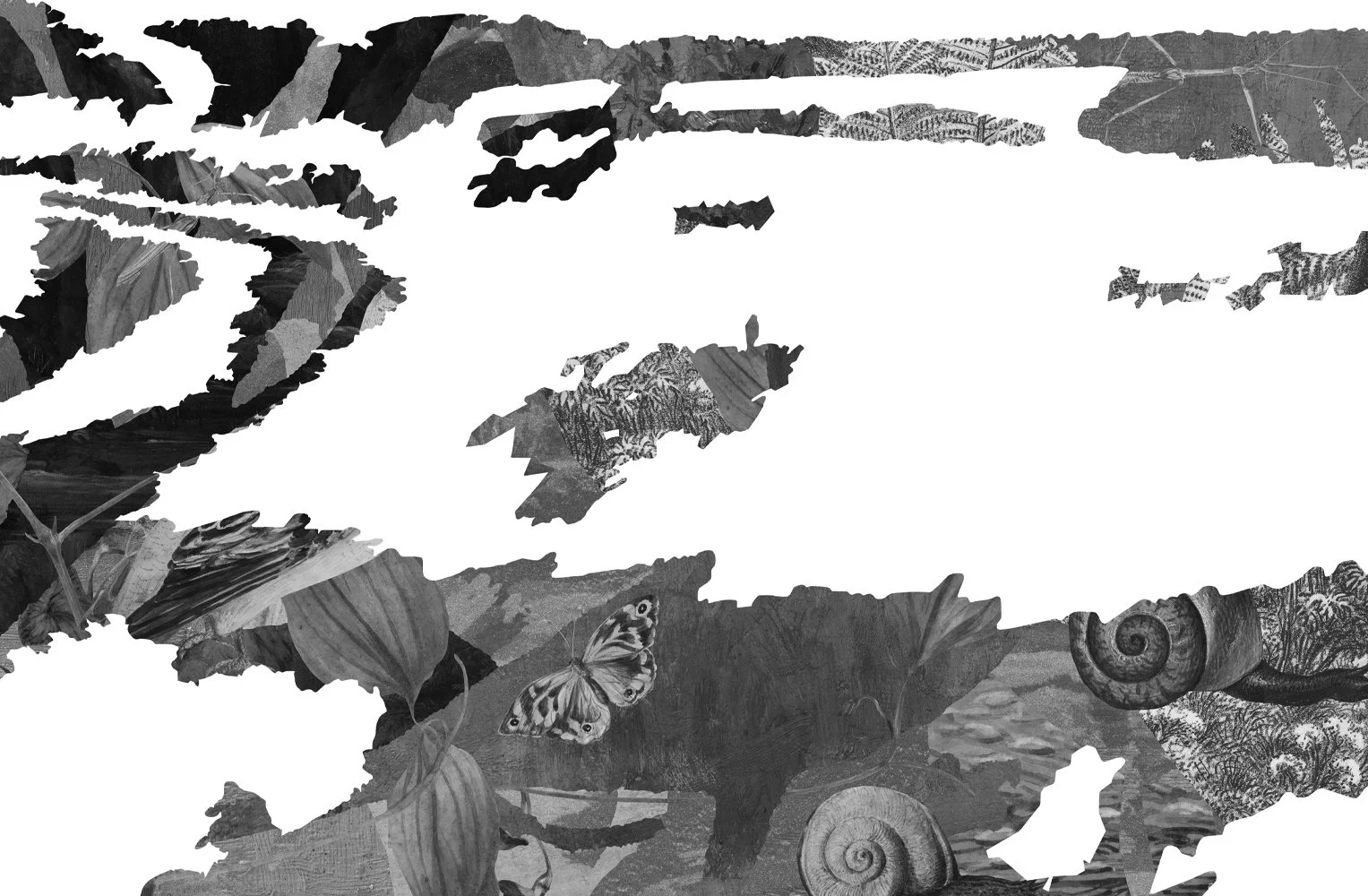
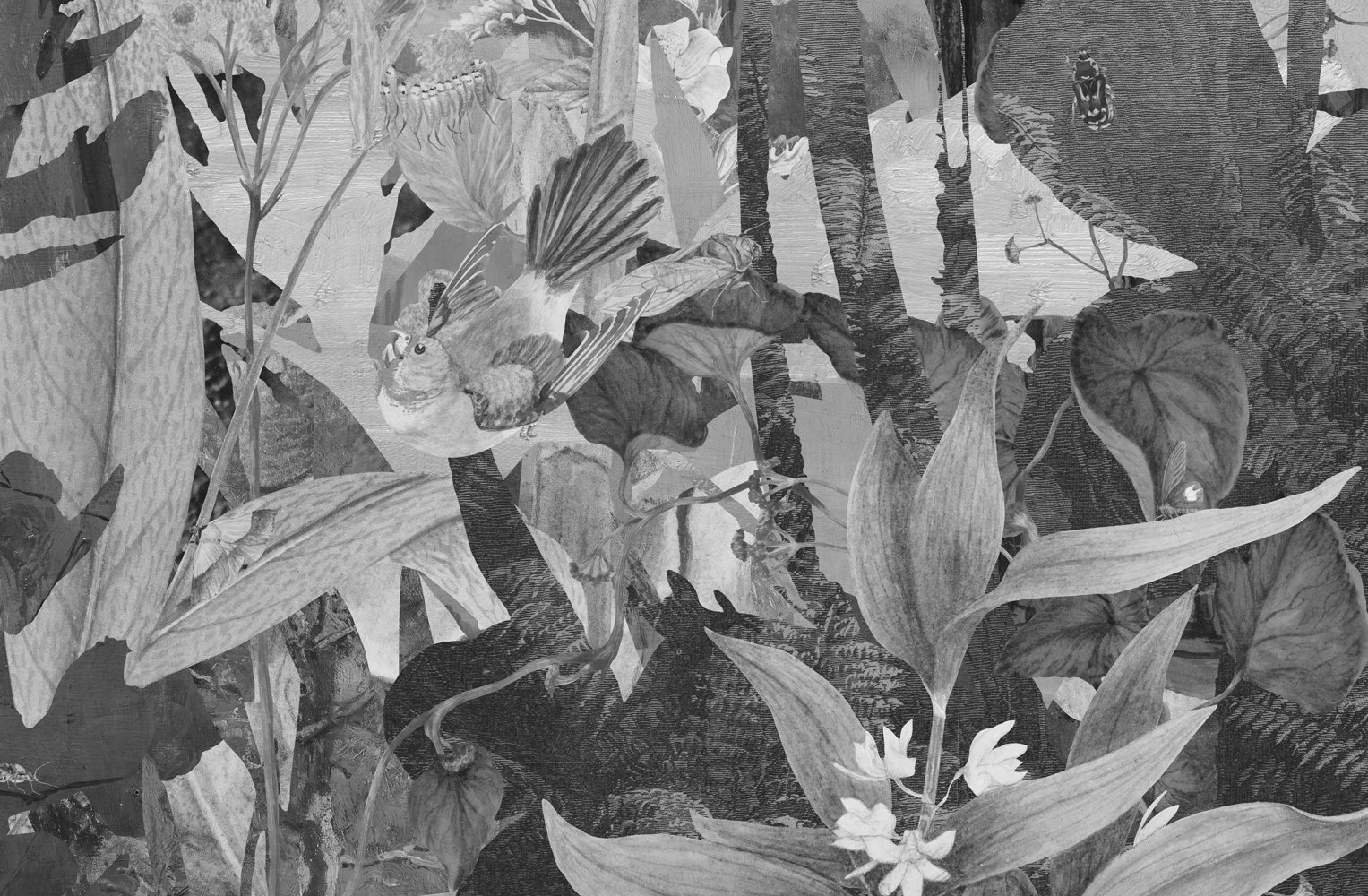
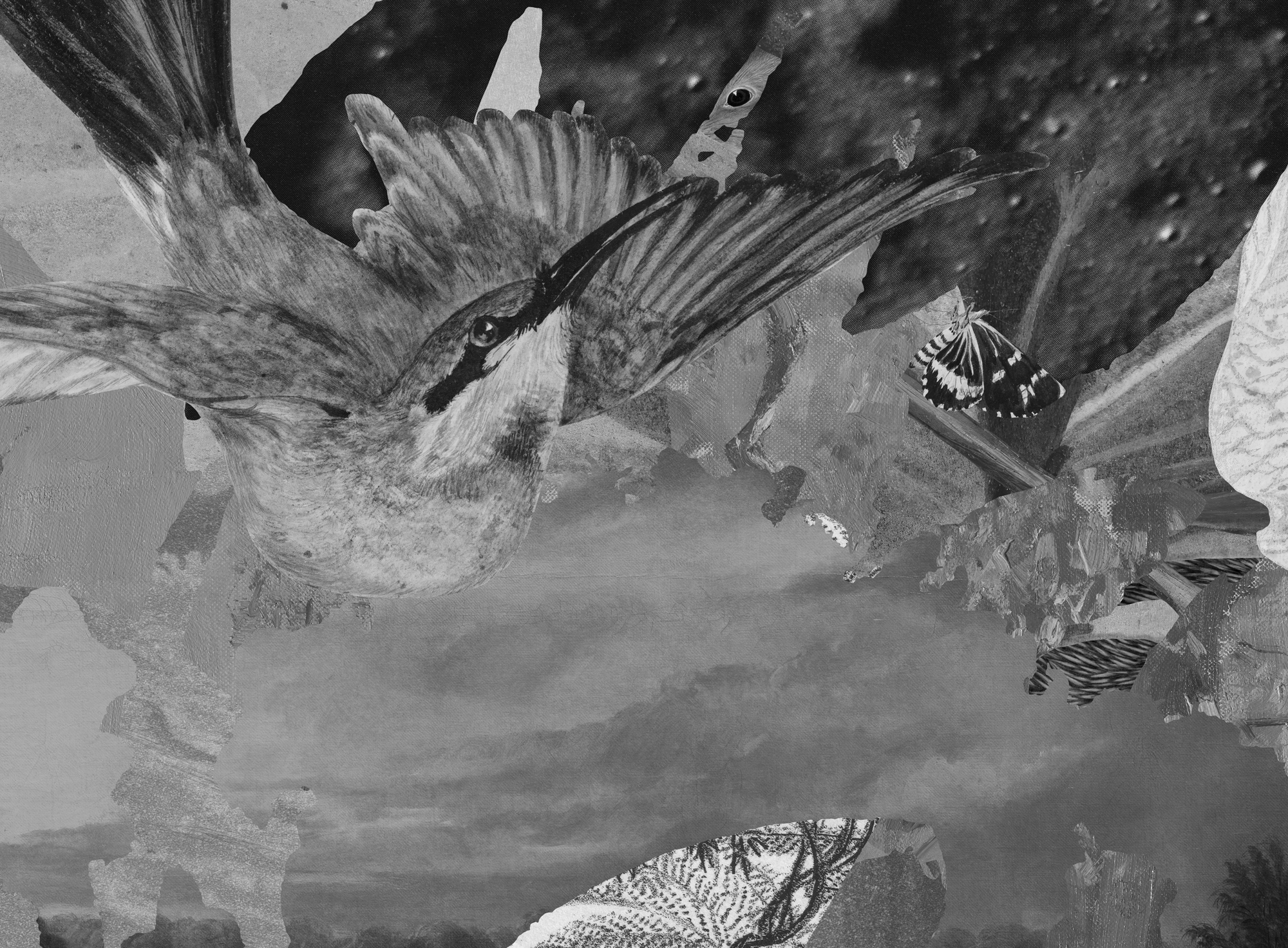
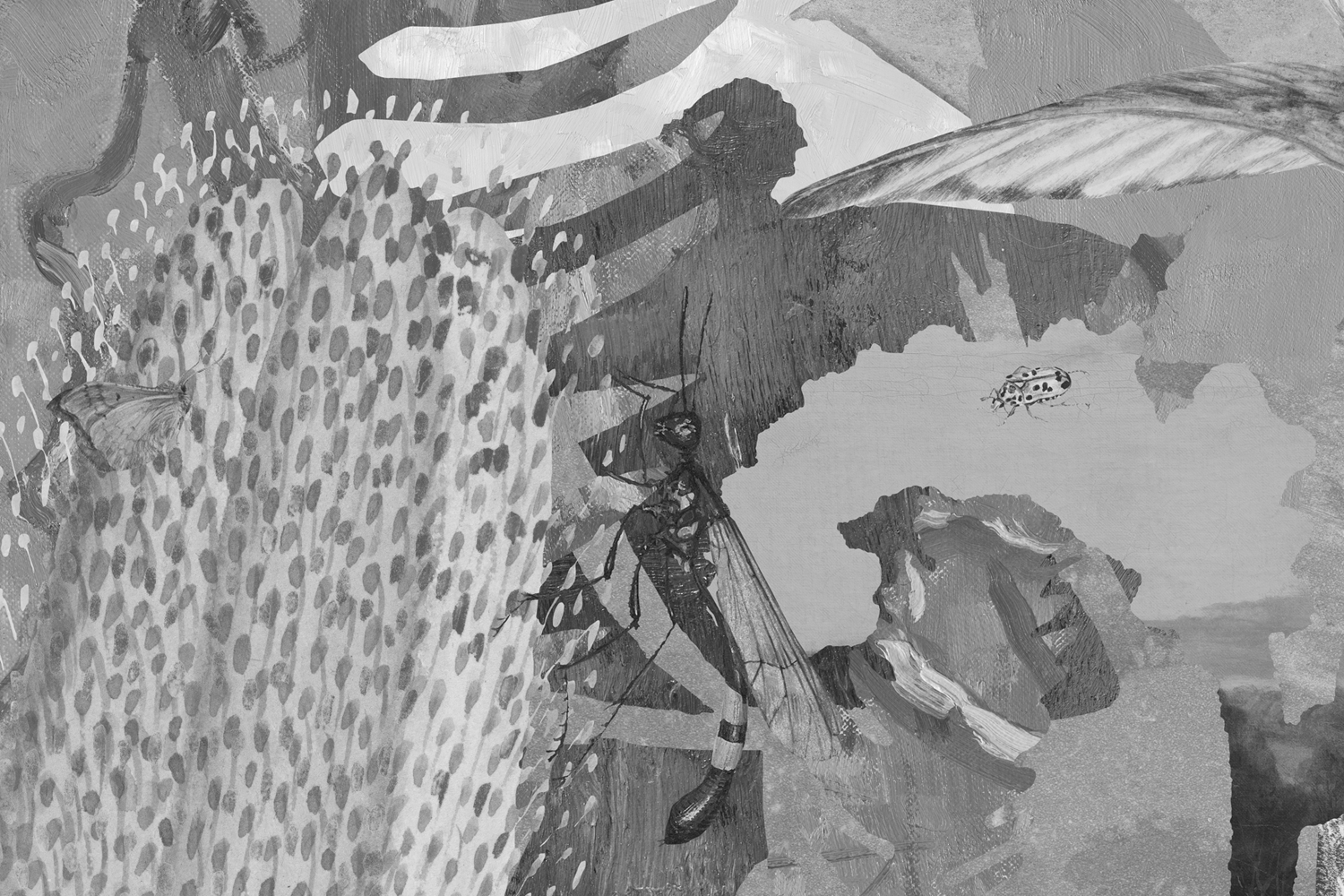
Image credit: Gracia Haby & Louise Jennison, Restoring corridors (detail), 2024, artists’ book
