A kaleidoscope of wild
Wildlife Care
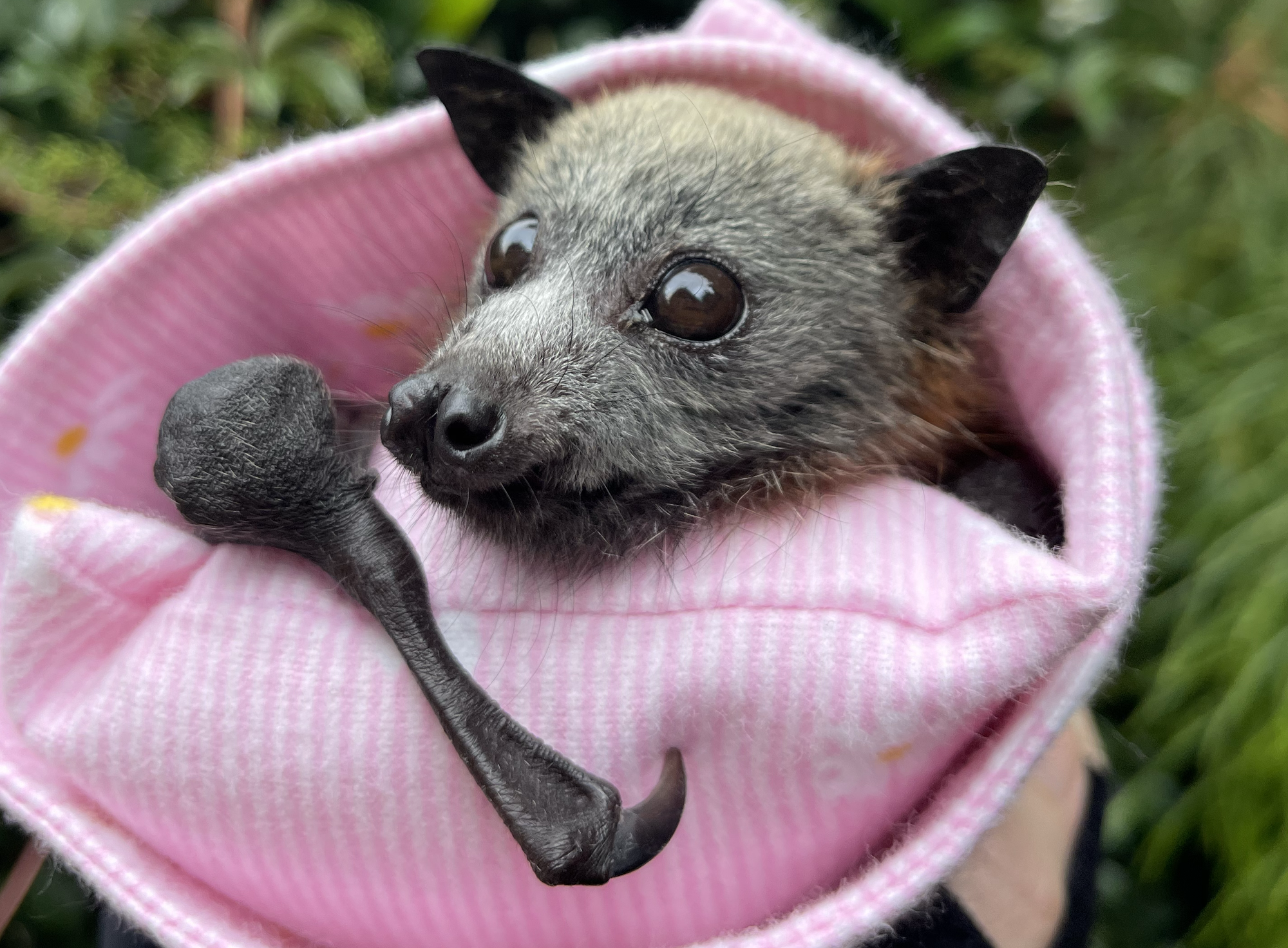
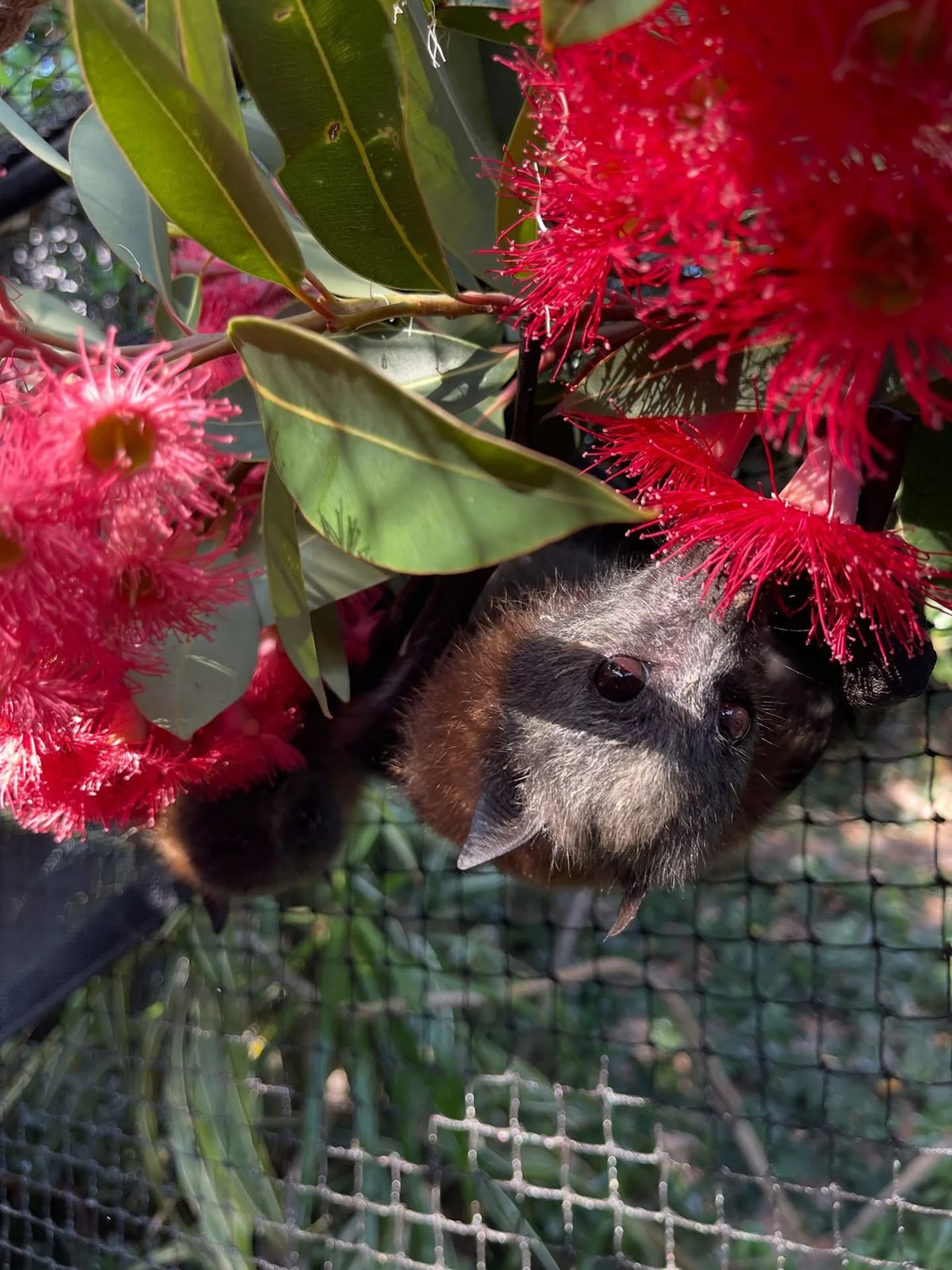
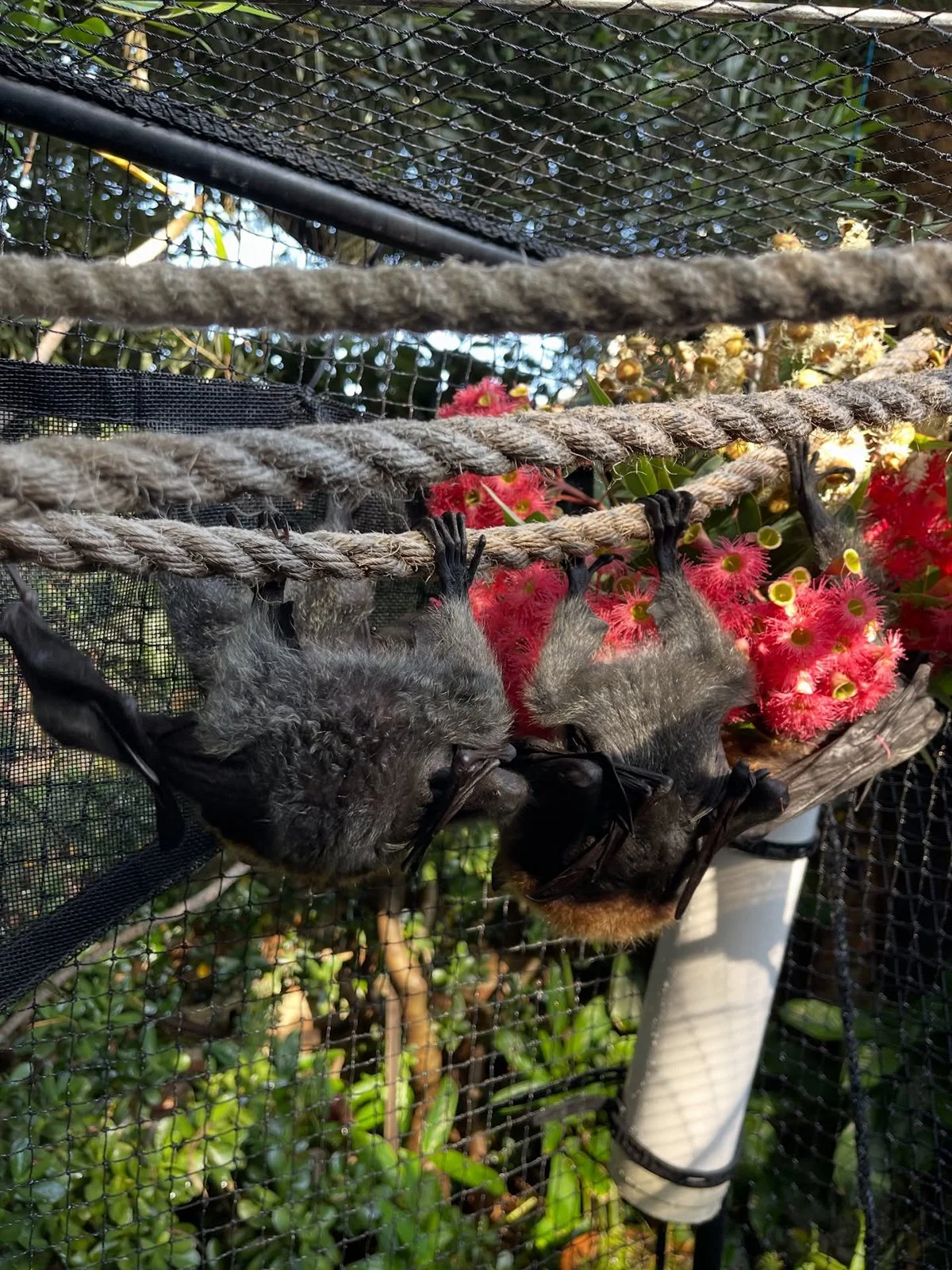
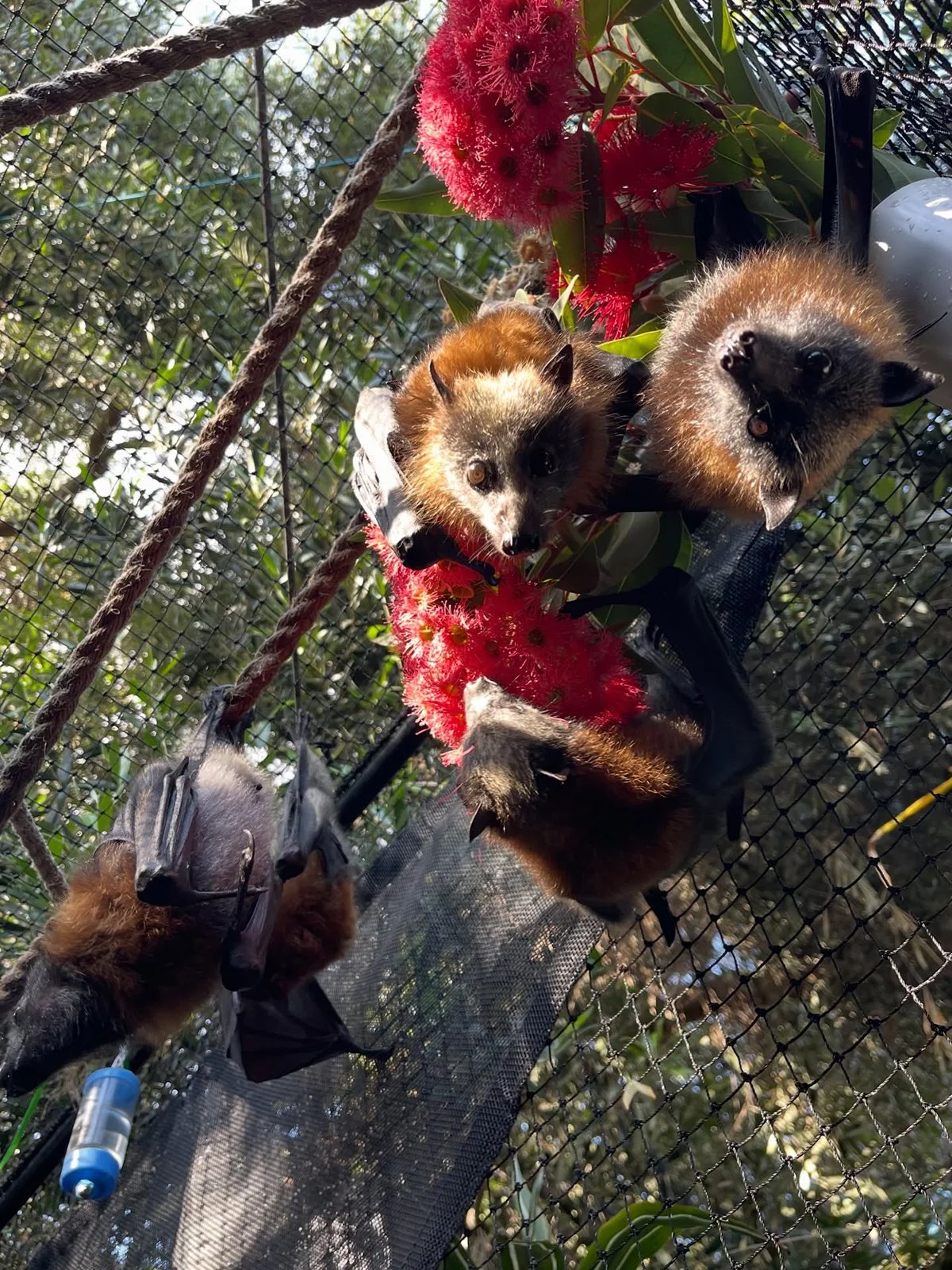
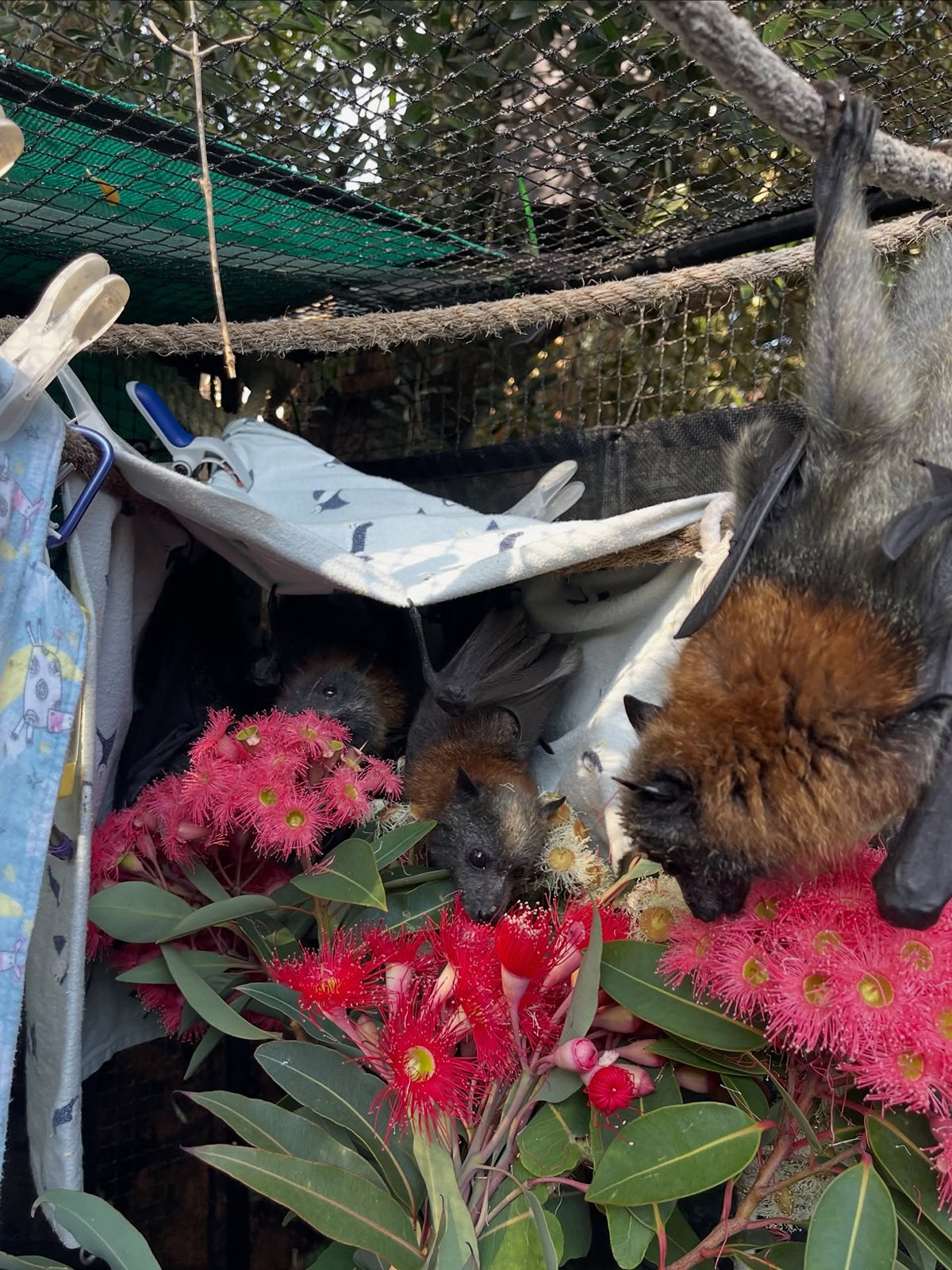
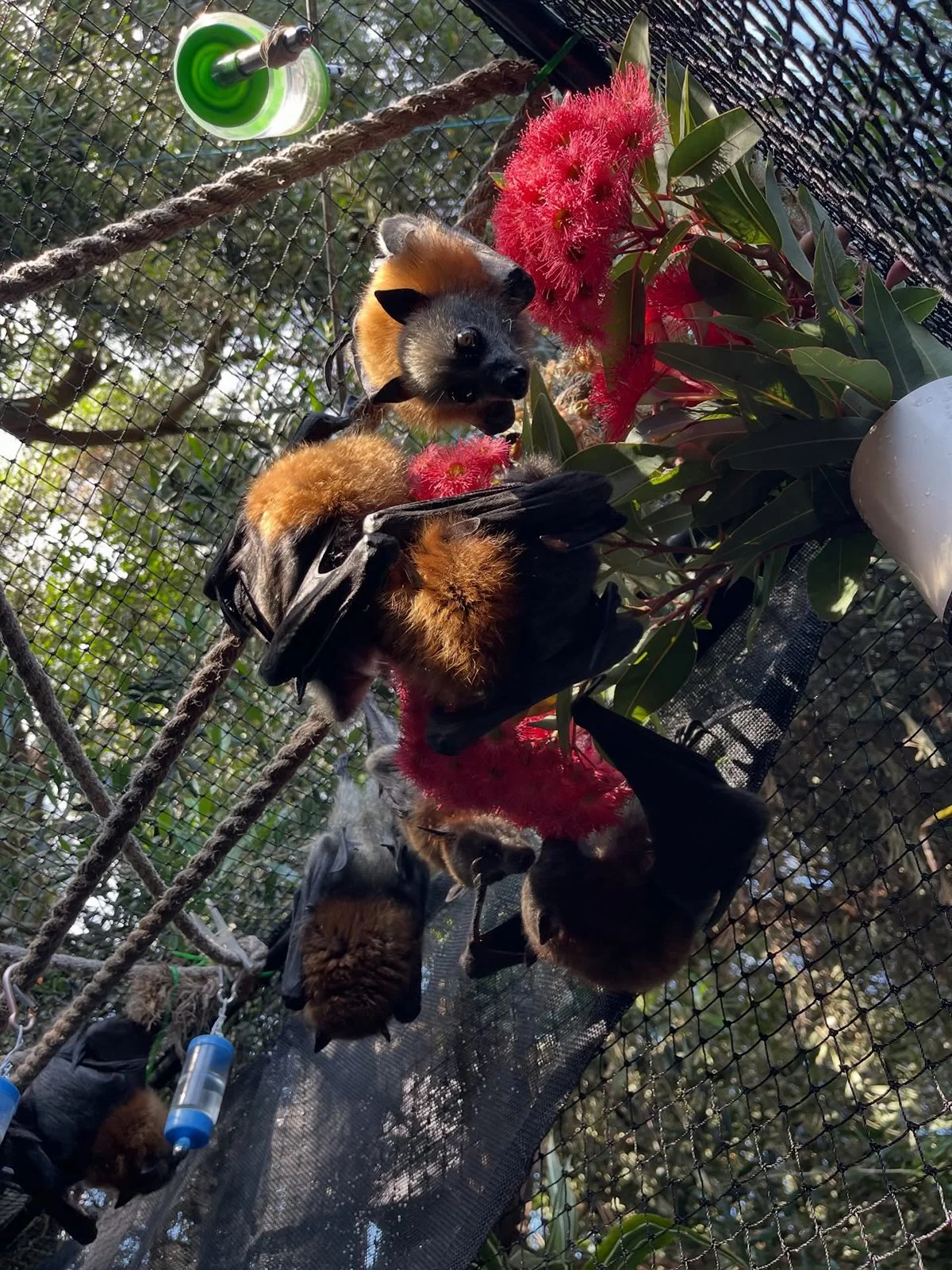
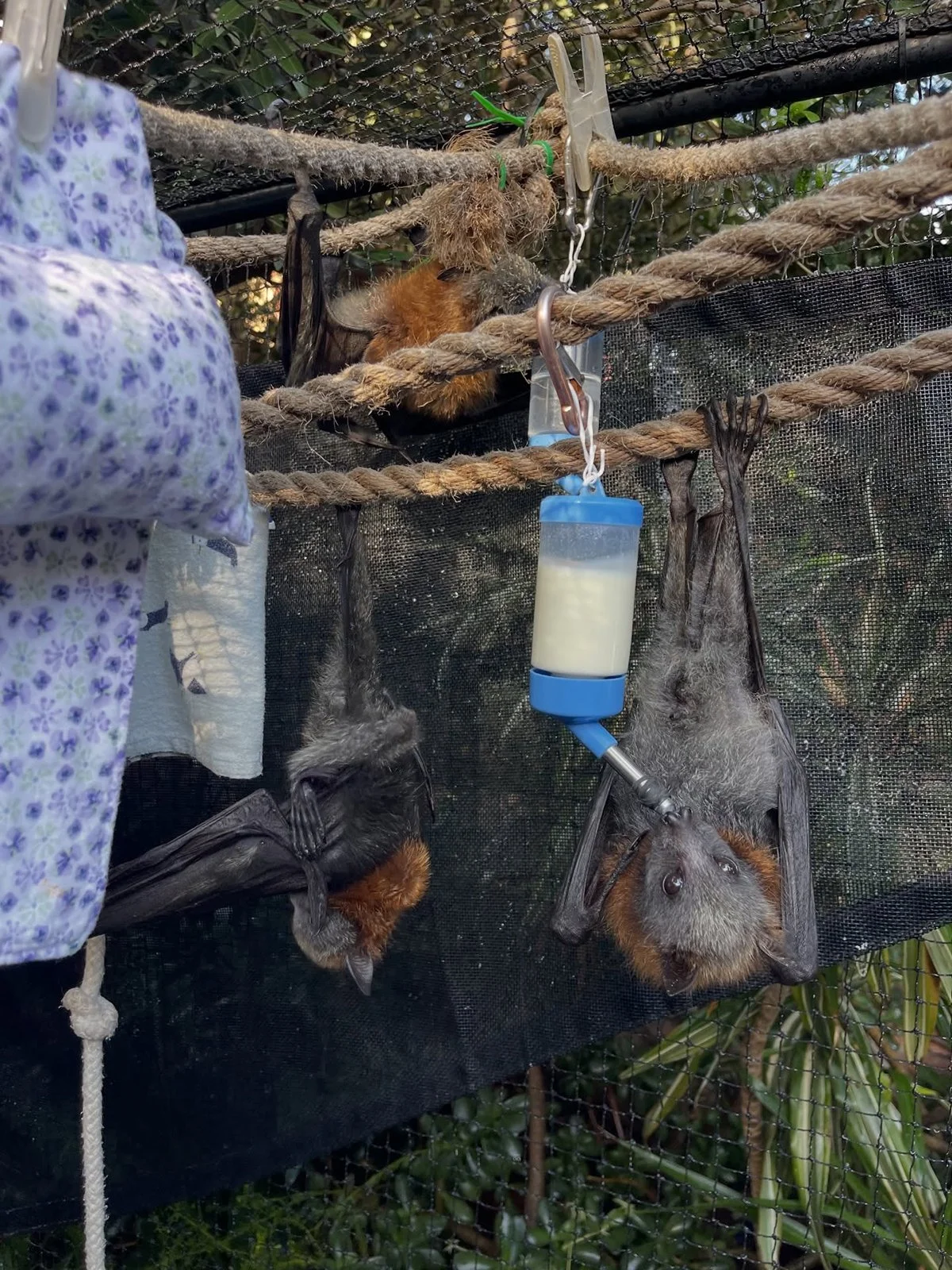
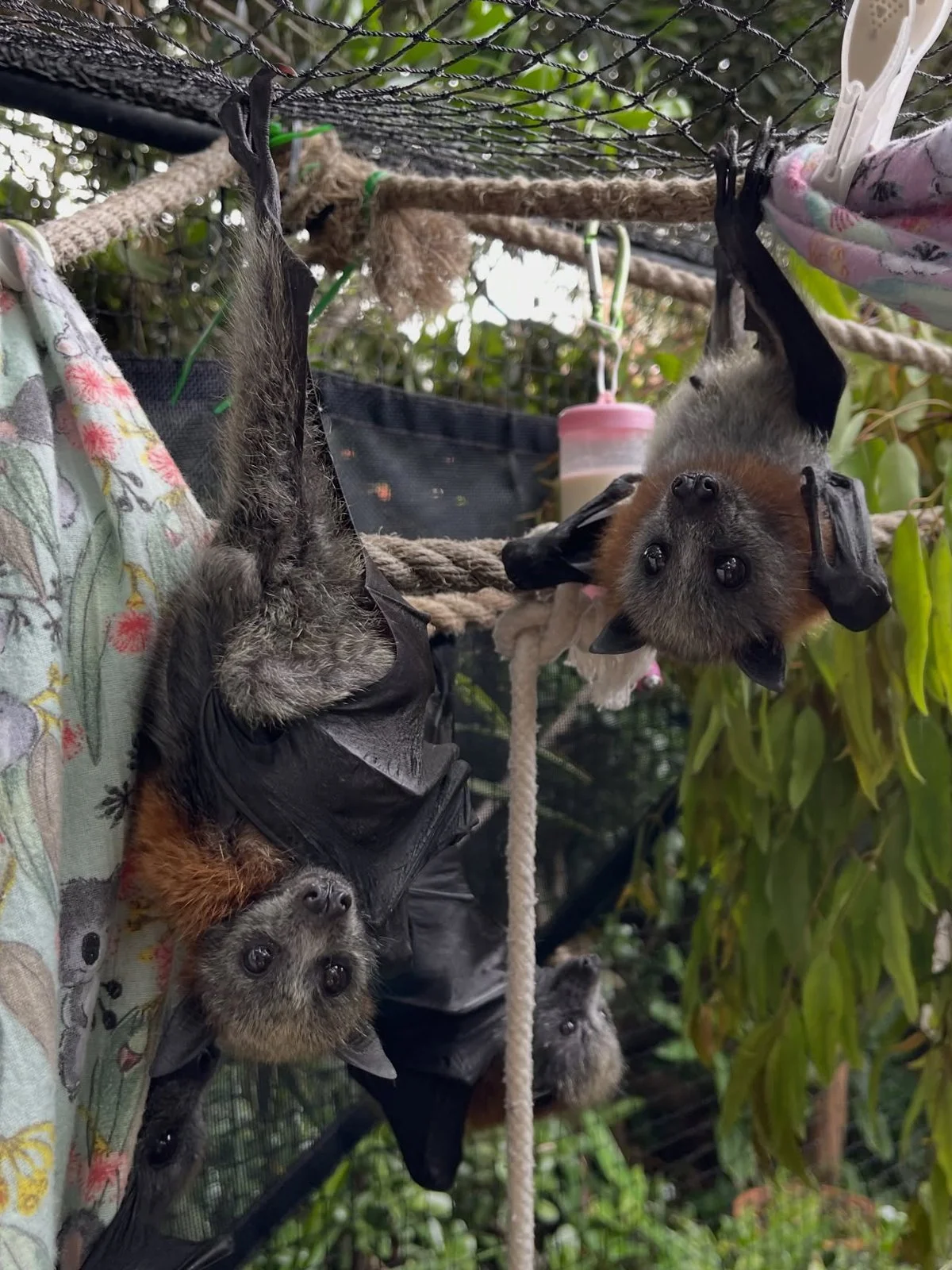
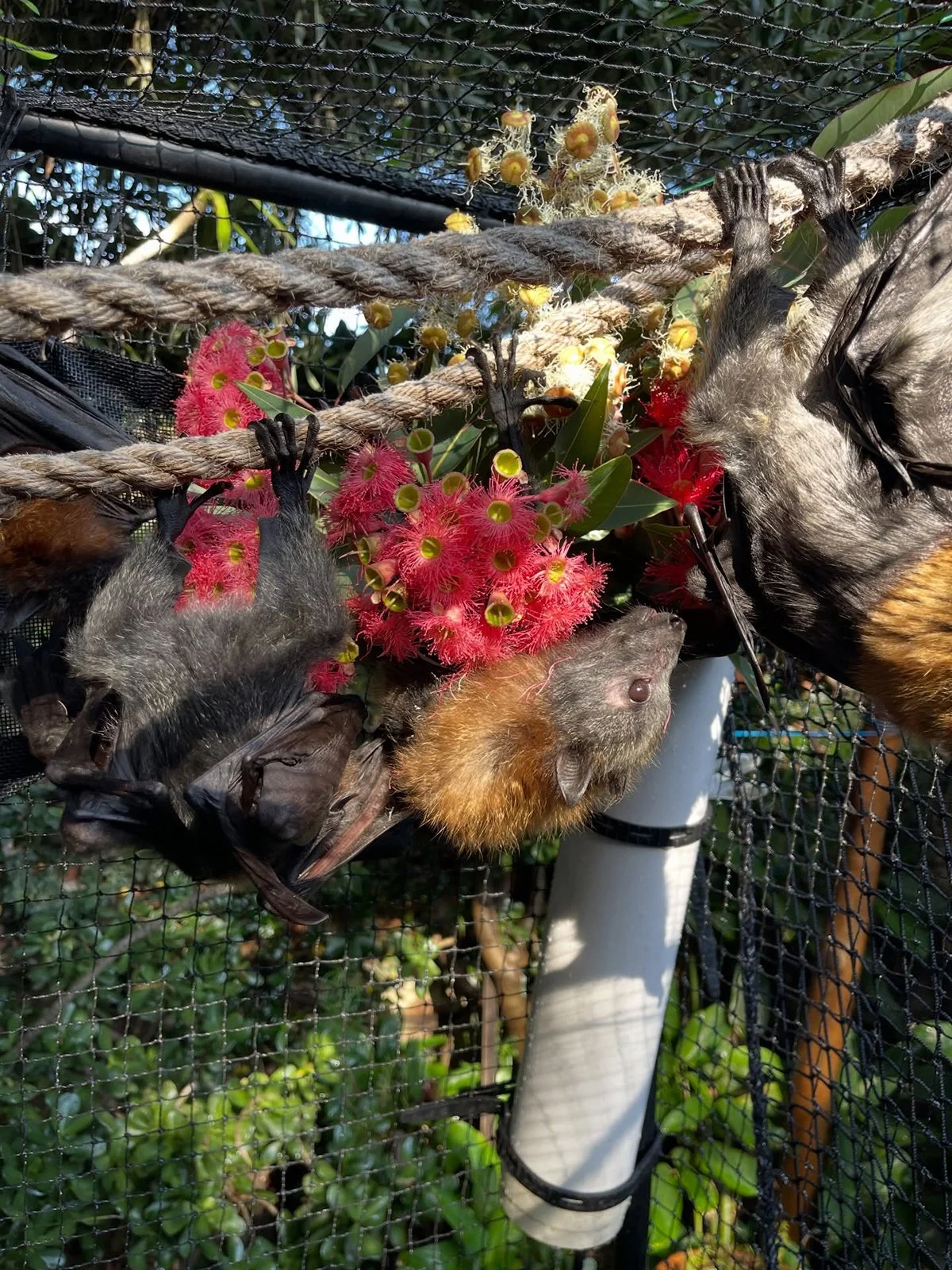
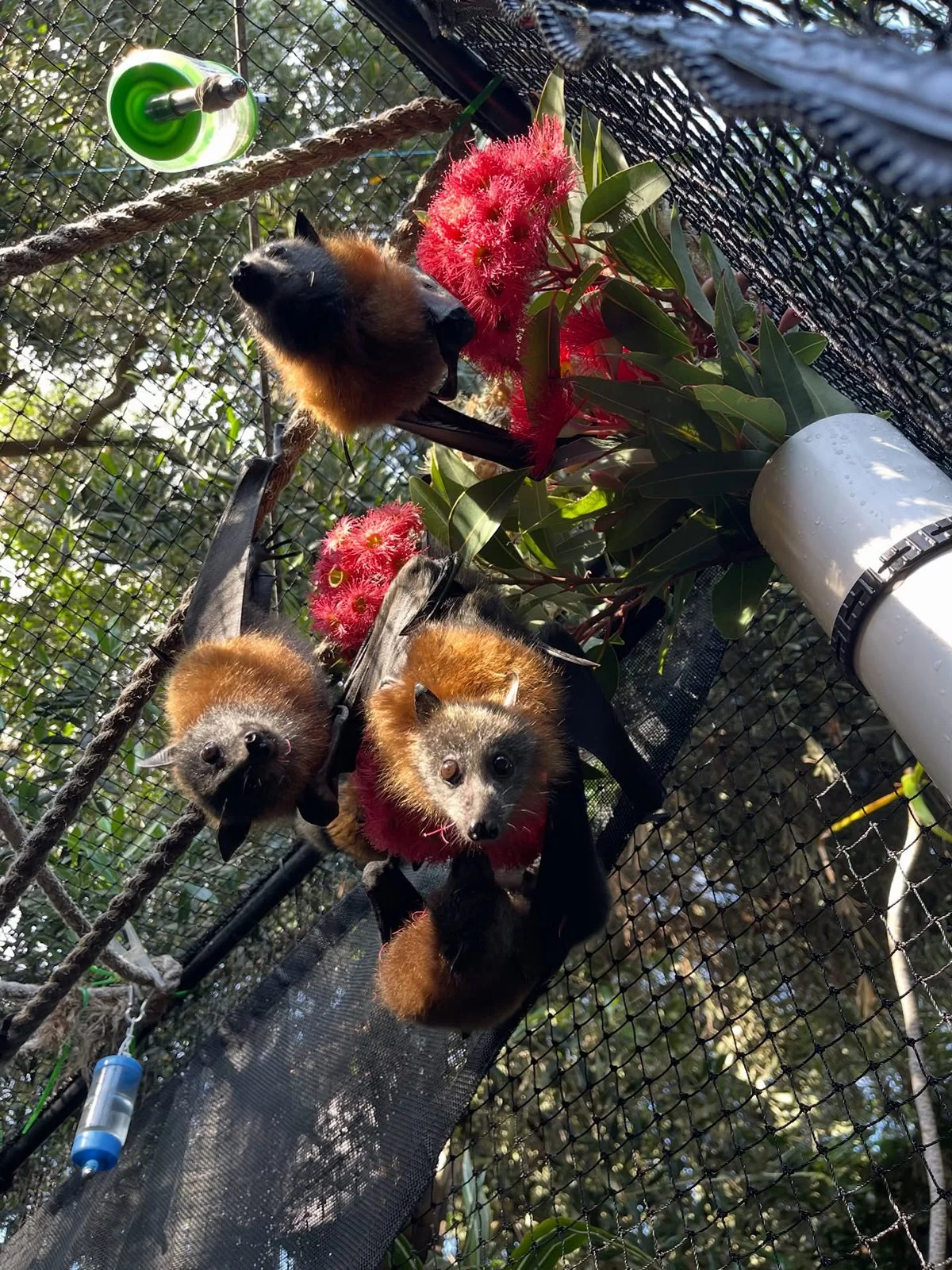
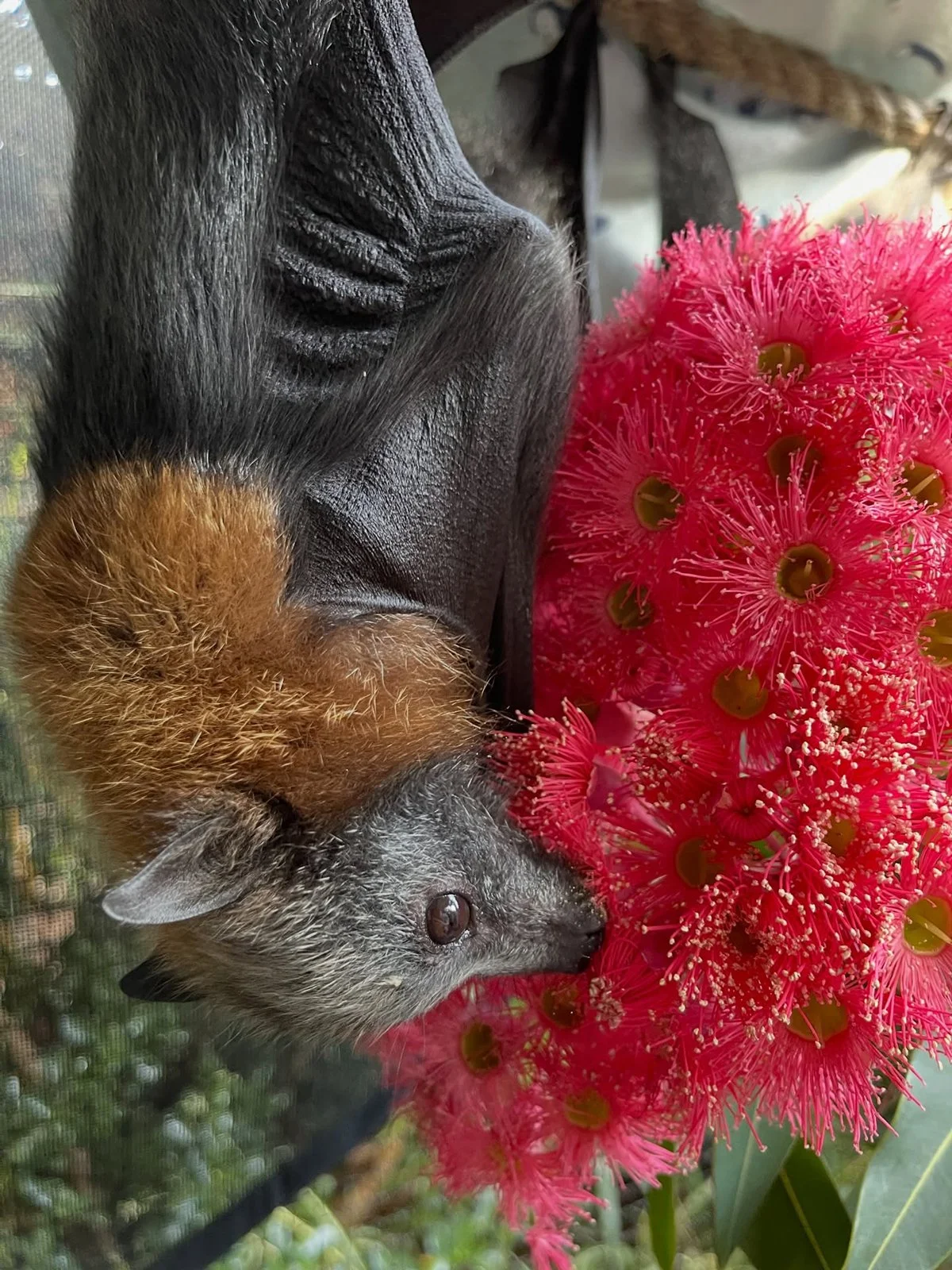
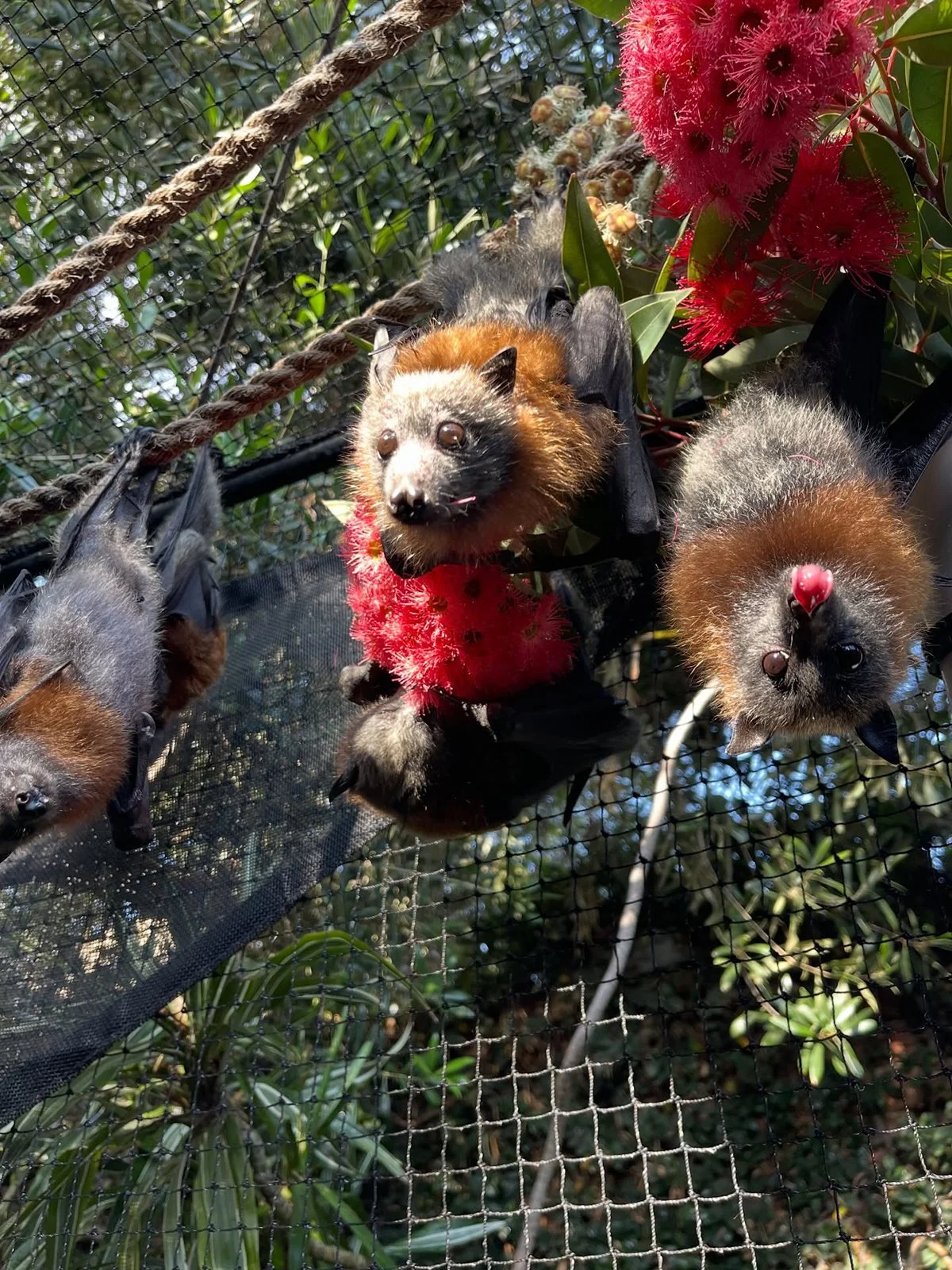
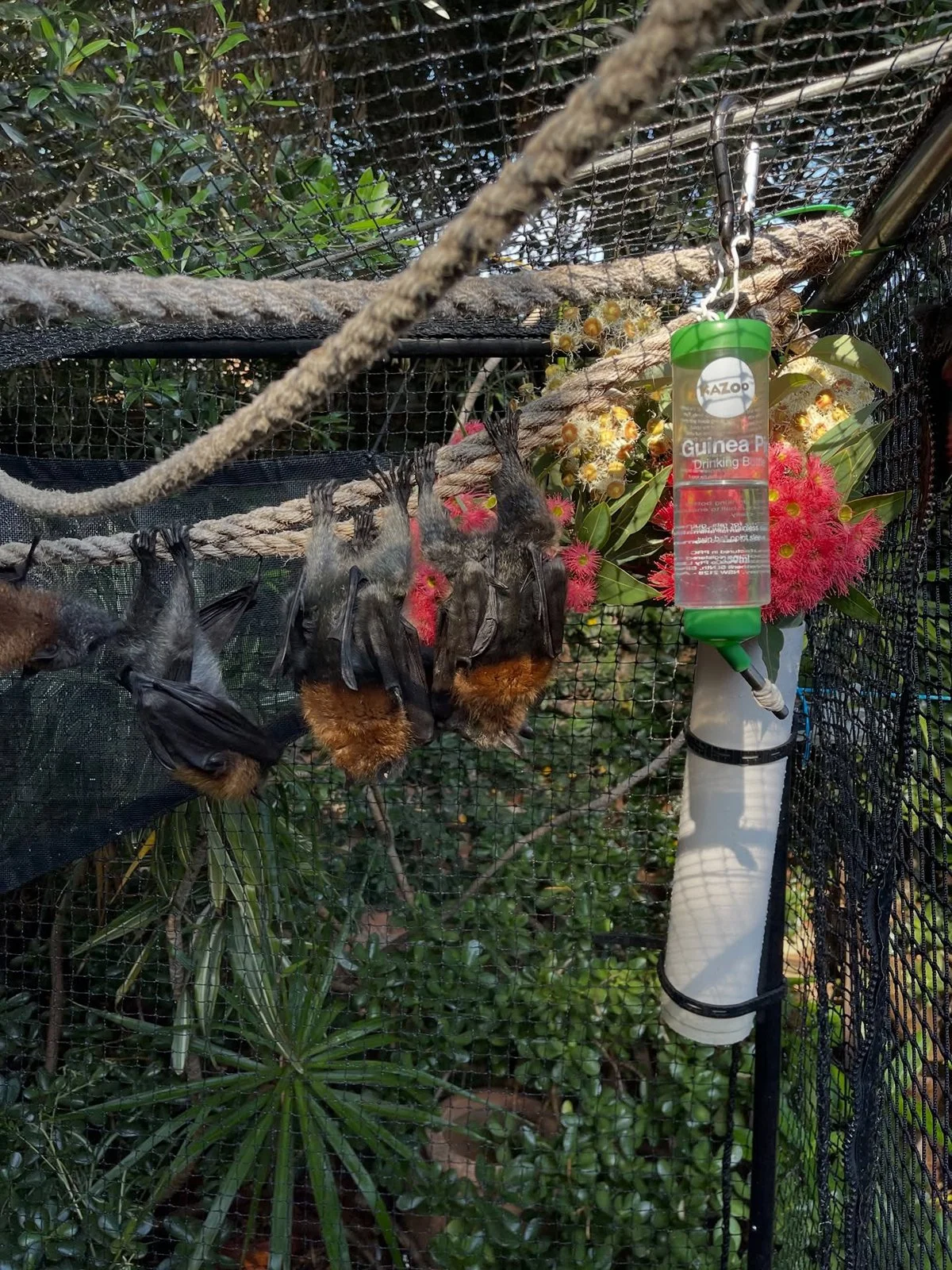
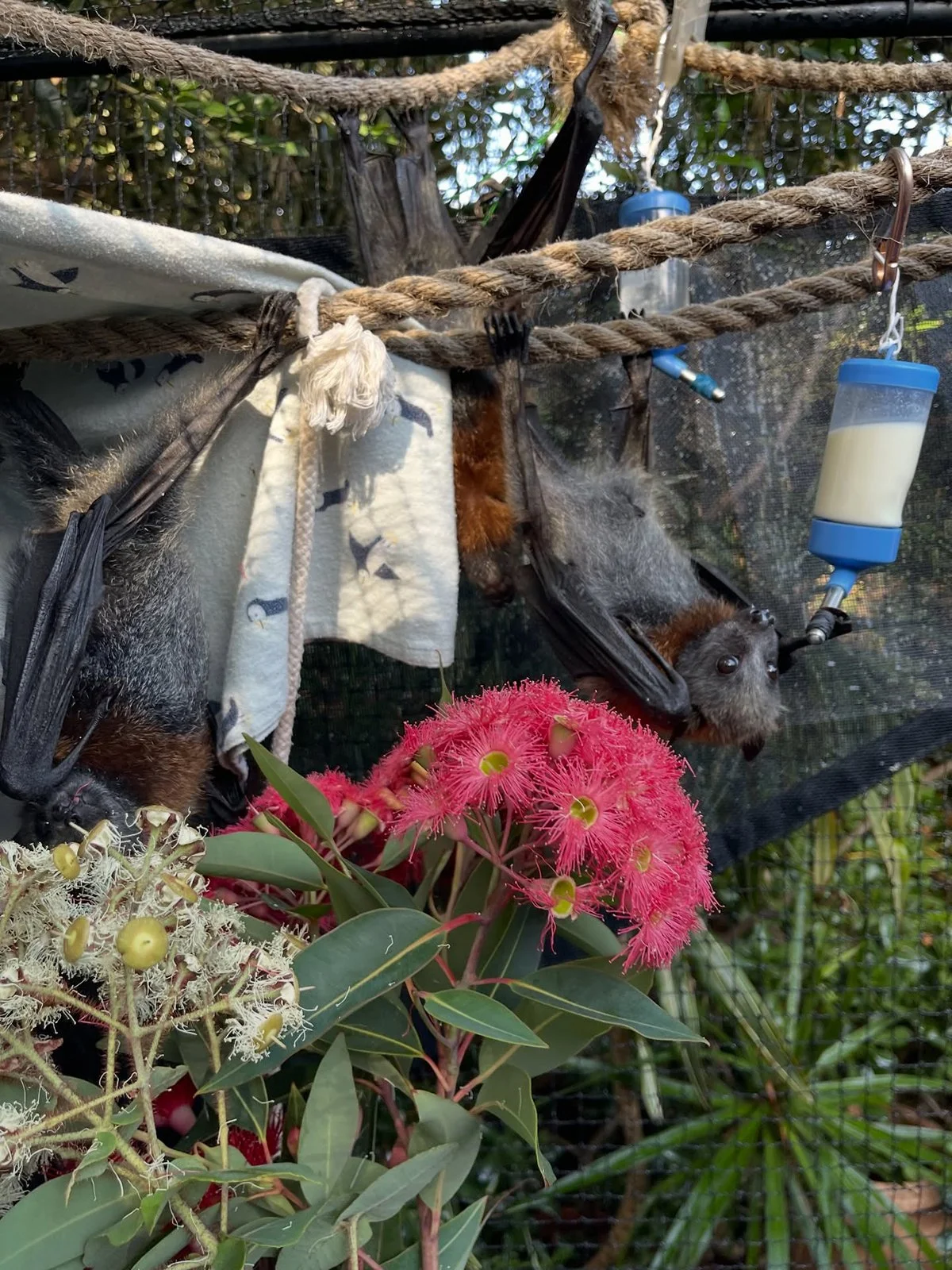
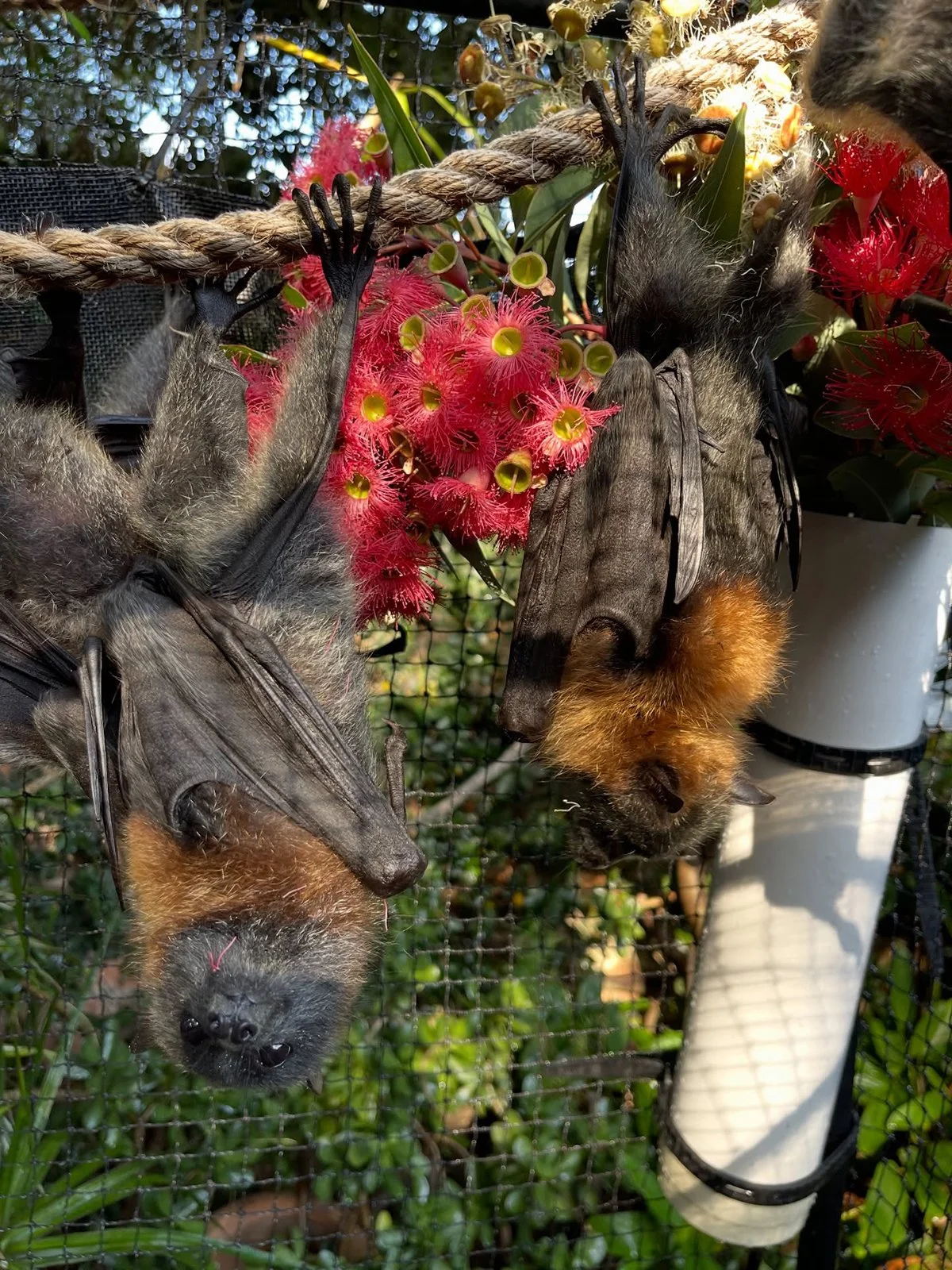
Harp C. Chord, Fennel, and Ivo Brown may have long, it feels, headed to crèche at Bat Rescue Bayside, but their places were soon filled. Mid-January saw the arrival of more pups into care, and with the aid of my parents Name Your Baby book by Lareina Rule, Apricot, Frick, and Oliver (Twist) joined the group beneath the protective boughs of the olive tree.
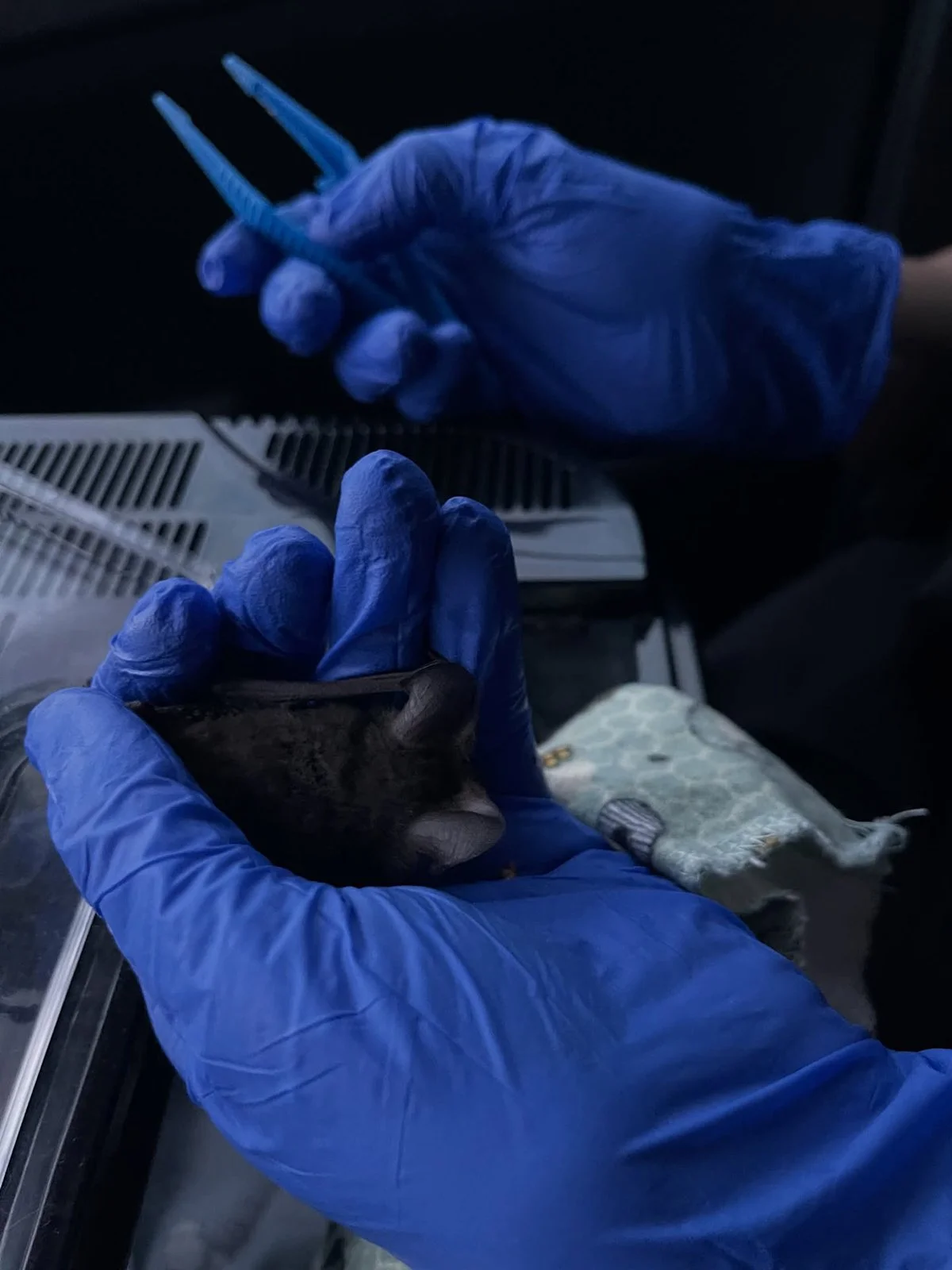
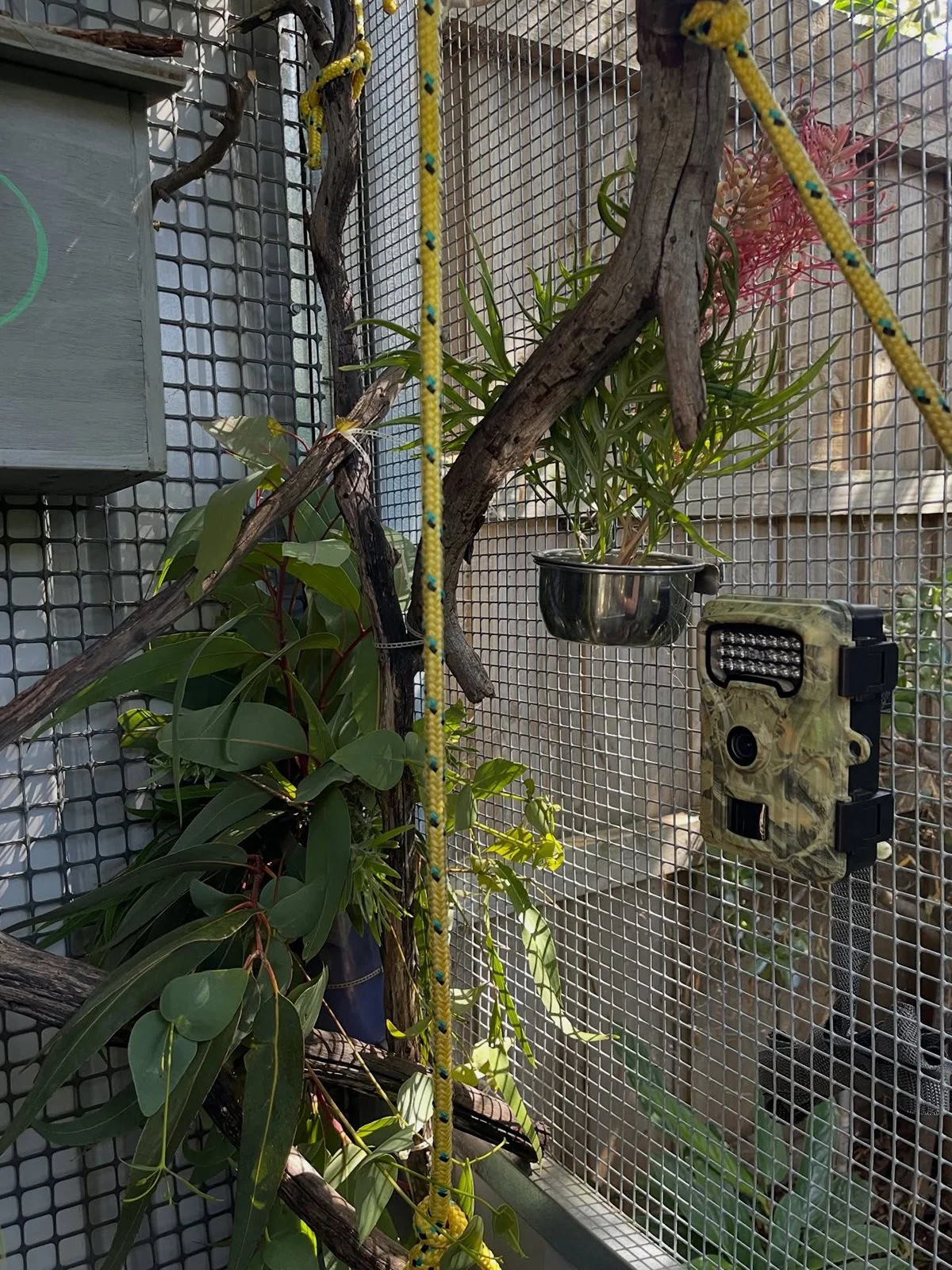
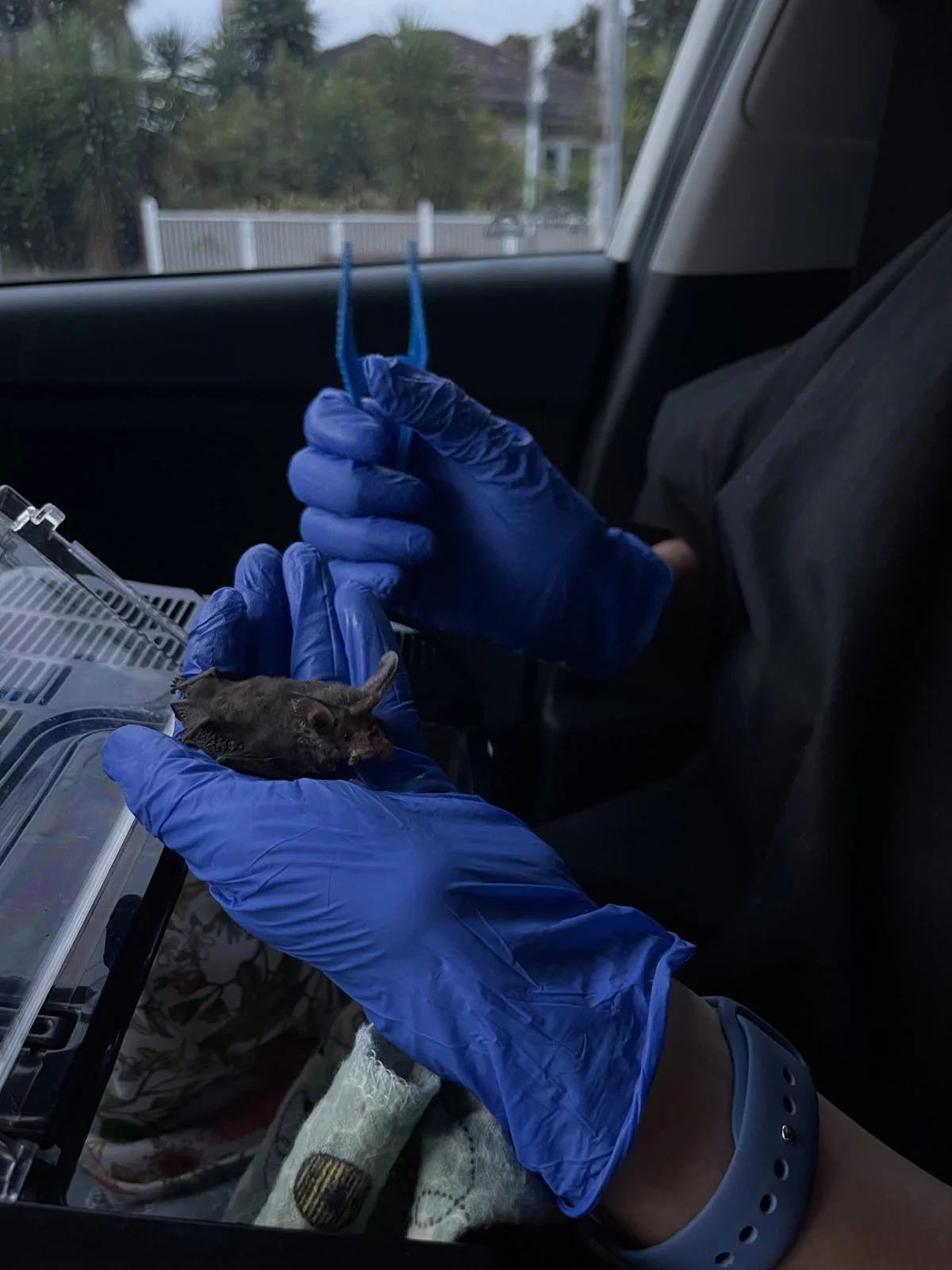
Meanwhile, joining Merlin and Euphemia in the microbat flight enclosure, we also welcomed Alice, a Lesser long-eared. Of an evening, you can hear them flitting about in their enclosure, and with their different flying styles and skills, you can hear a difference between Alice, a swift and confident adult, and Merlin, a juvenile Gould’s wattled bat still finding his wing familiarity.
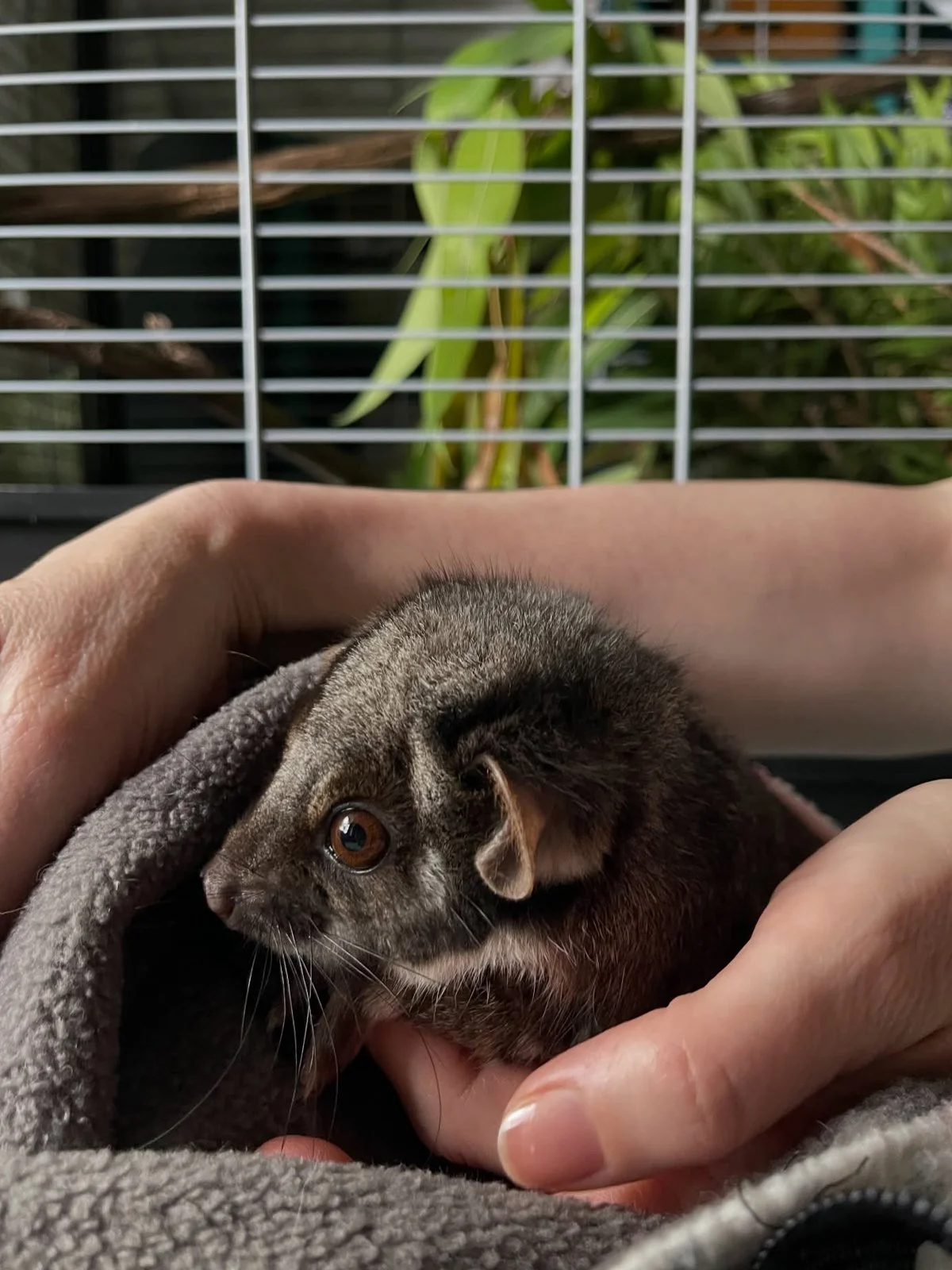
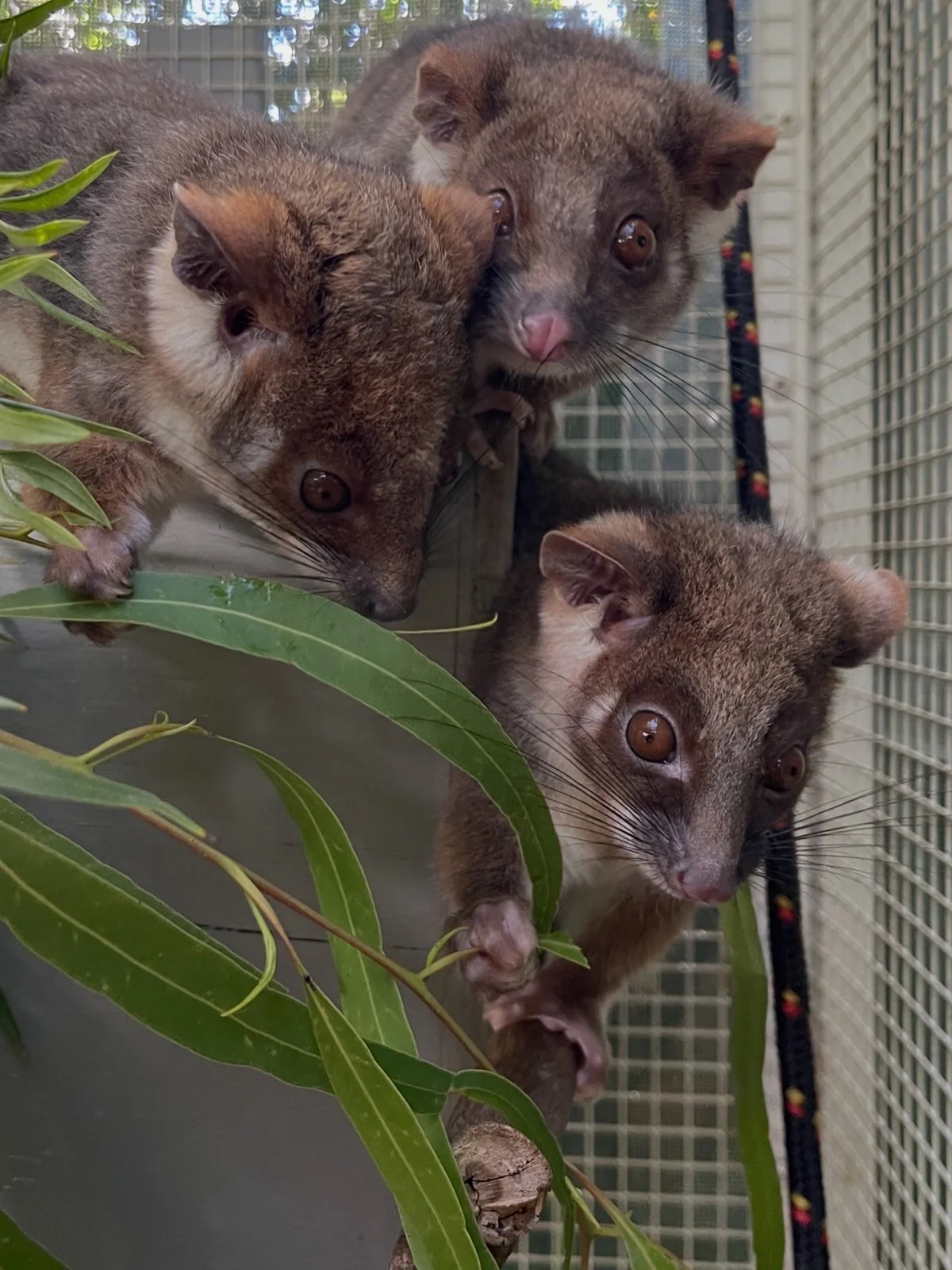
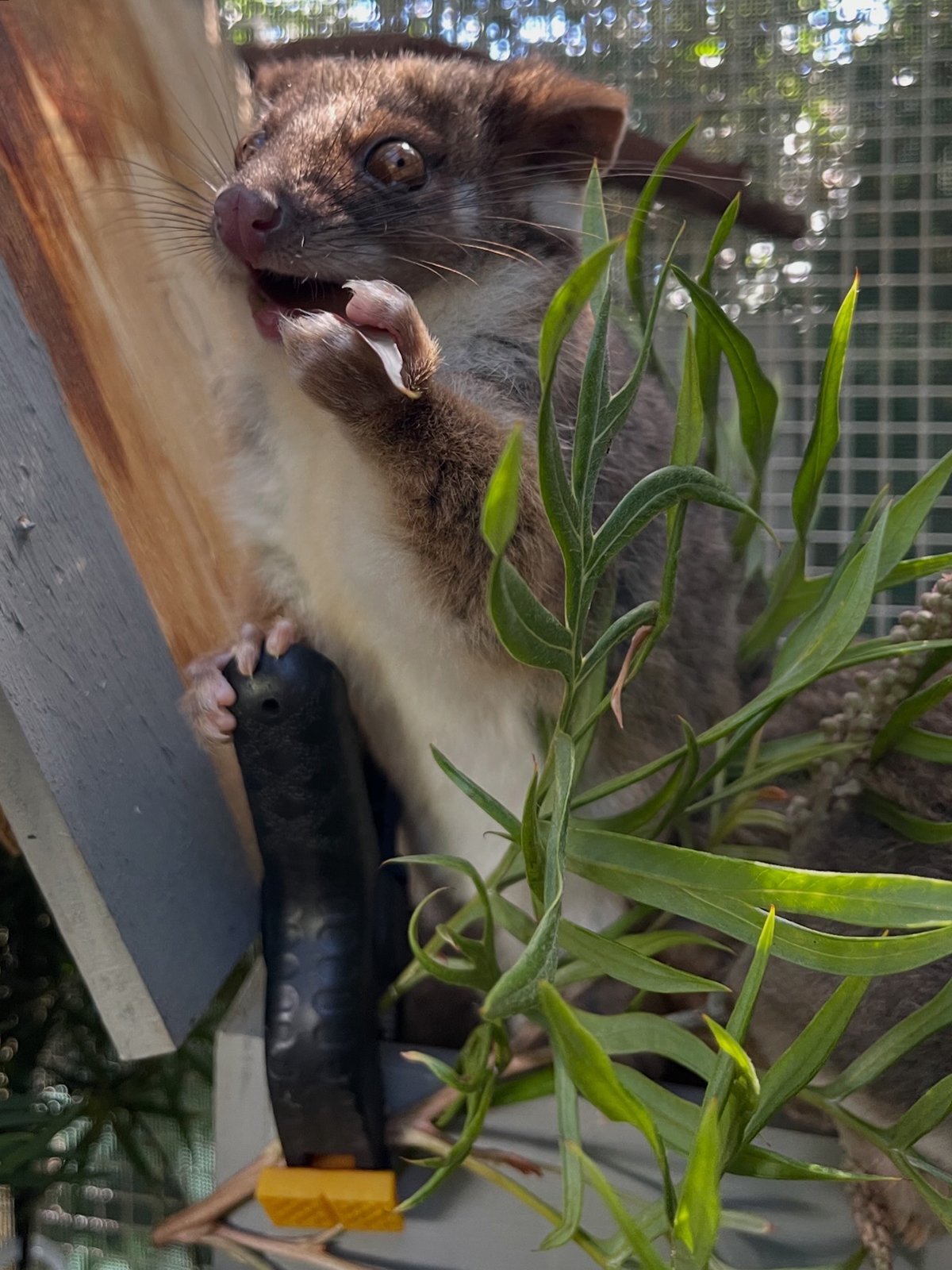
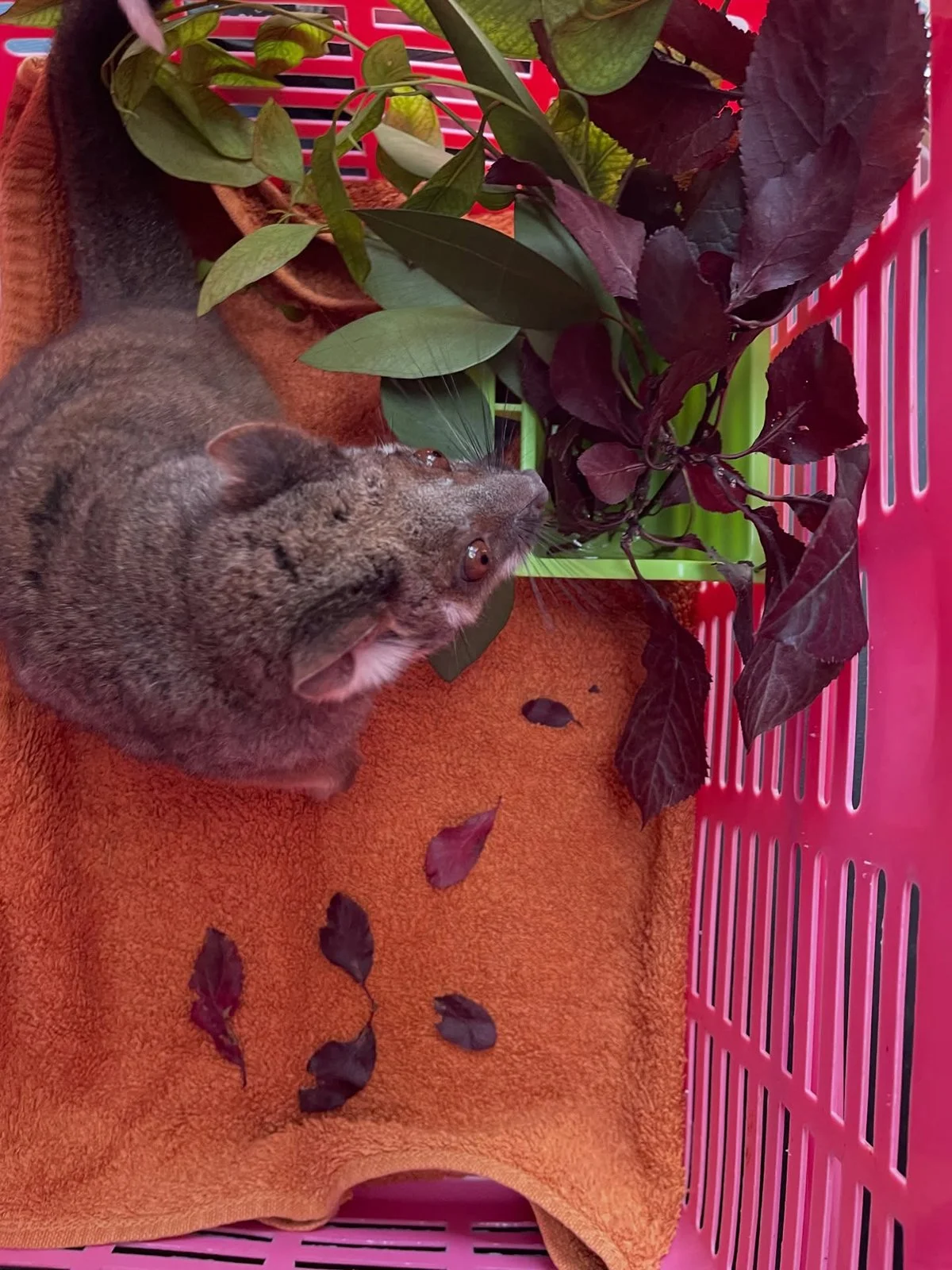
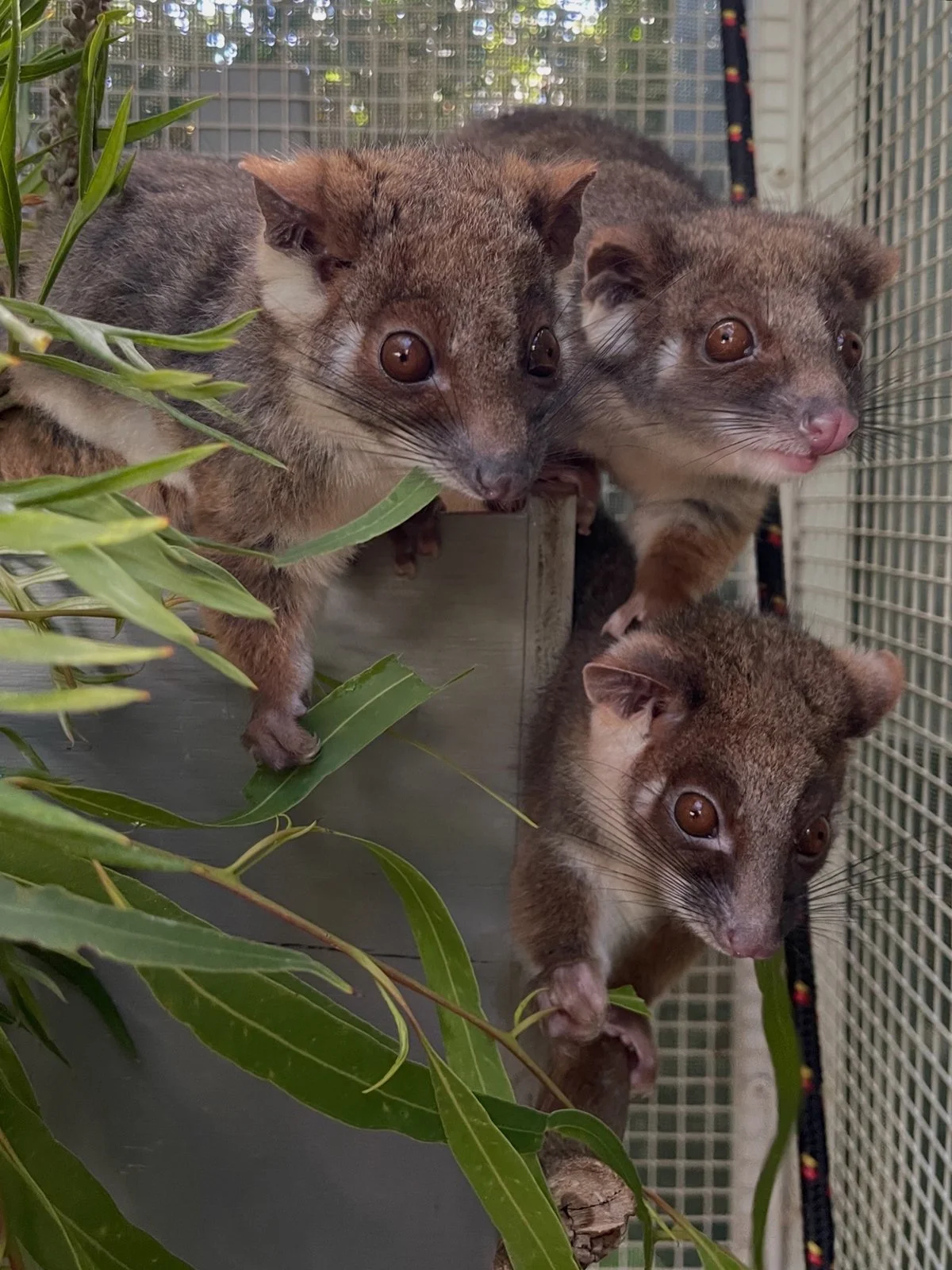
But it is not just megabats and microbats. New in short-term care with us was Calypso, an adult ringtail possum. She was found suffering from heat stress on busy Smith Street. She stayed with us for a couple of days, until she recovered, and could be returned home to her urban patch in Collingwood.
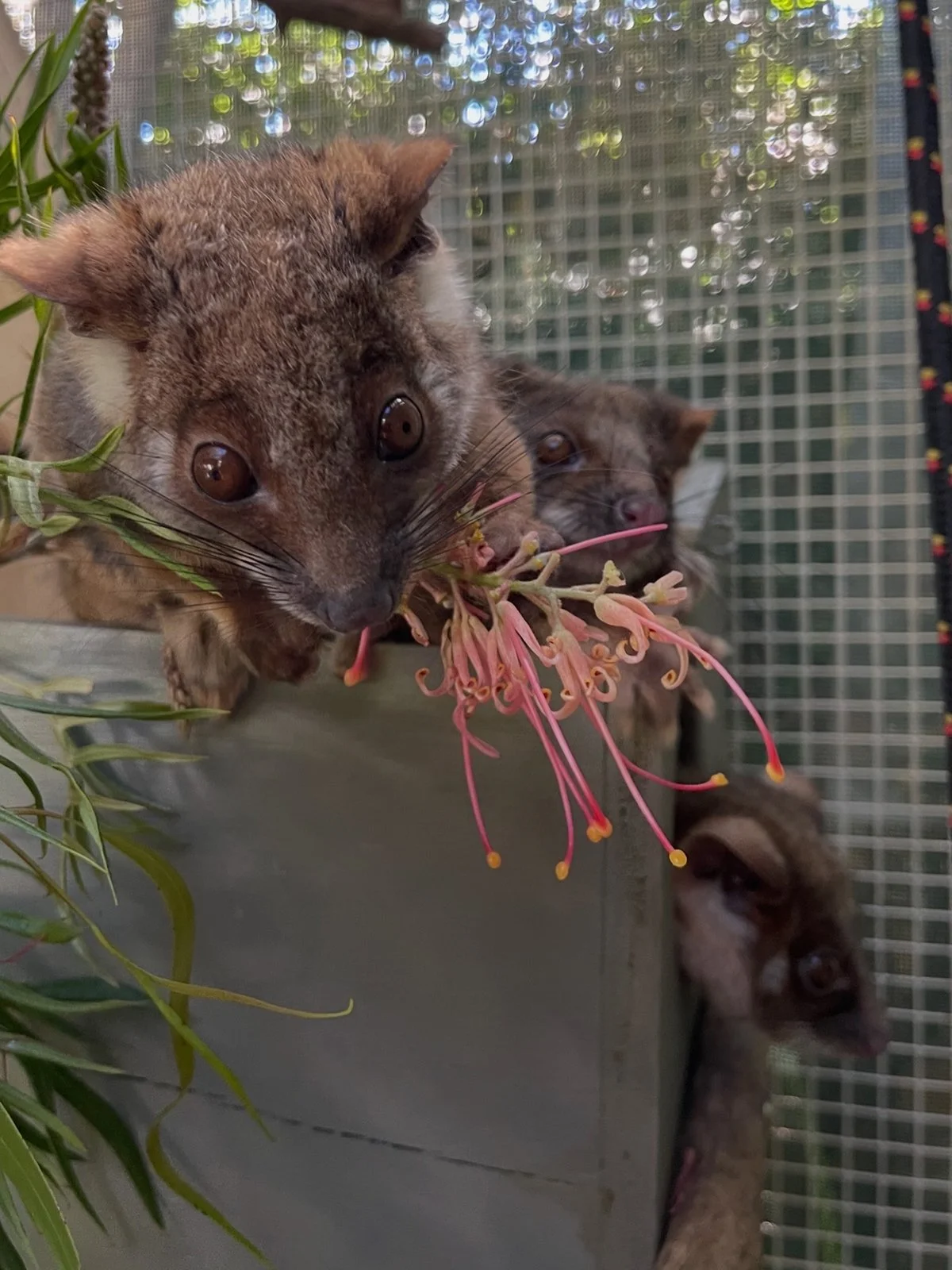
She convalesced in an enclosure for one, in the front room, and was neighboured by the Grey-headed flying fox pups, Ludwig, Petipa Pink, June, Flossie, Apricot, Frick, and Oliver Twist in the indoor pup cube. On the extreme heat days (40+°C), the ringtails, Homer, Pansy, Albertina, Humphrey, and political poss, Tashi, also came inside and waited in their respective baskets until the cool of night. Suddenly quite the full house of Tiny but Wilders, hunkering down.
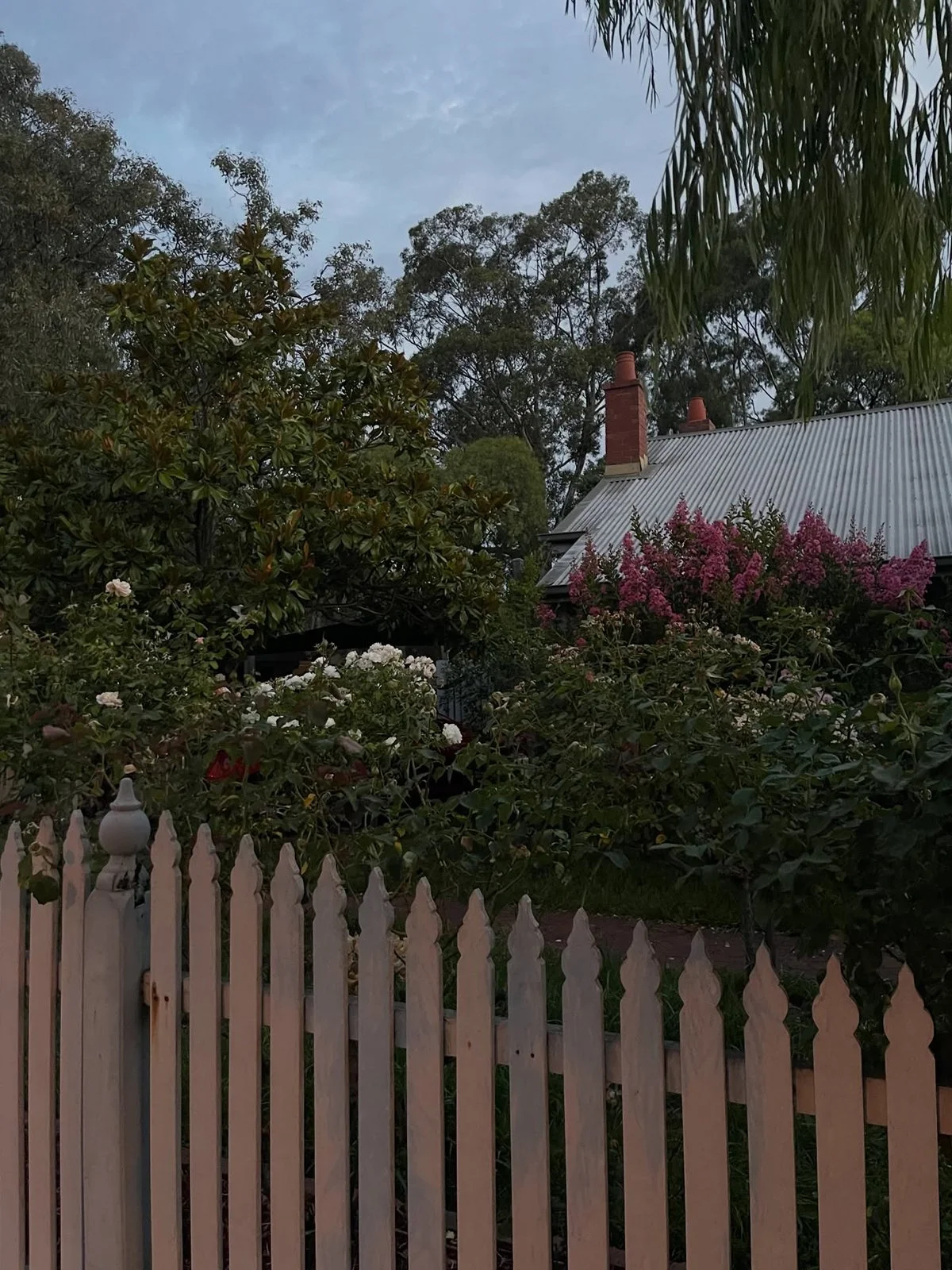
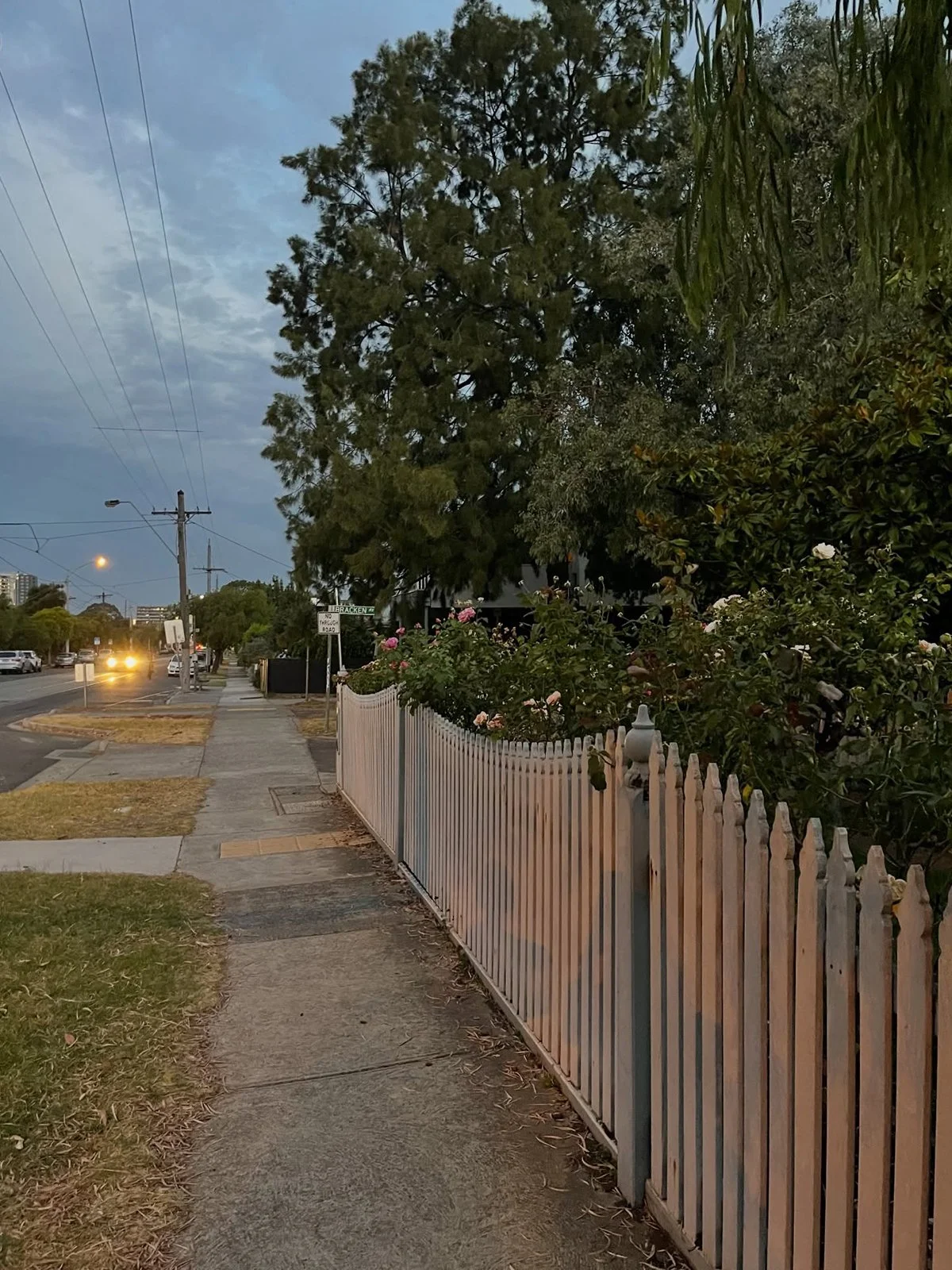
Later, we followed the overhead powerlines, from where Calypso was found for her recent release at dusk (please see below). Around the corner of Peel Street, with her giant Plane trees and open bars, we found a paper bark tea tree that had a generous canopy and had multiple points of connection to the powerline highway. From there, she could access the eucalypts in the small reserve, and find her bearings. As one of the plushest possums we’ve had the good fortune of knowing, she must be finding food somewhere. After a slow and cautious ascent, she paused on a tufty tea tree balcony, before threaded up higher at pace.
As with all releases in our local area, it is comforting to think of them back in their wildly urban digs. It colours the feel of the streets, and as we pass by Calypso’s tree, we wonder as to what she might be up to now. Finding oneself in another creature’s ‘umwelt’, in celebration of the ‘more than human’, a whole new sensory world unfurls.




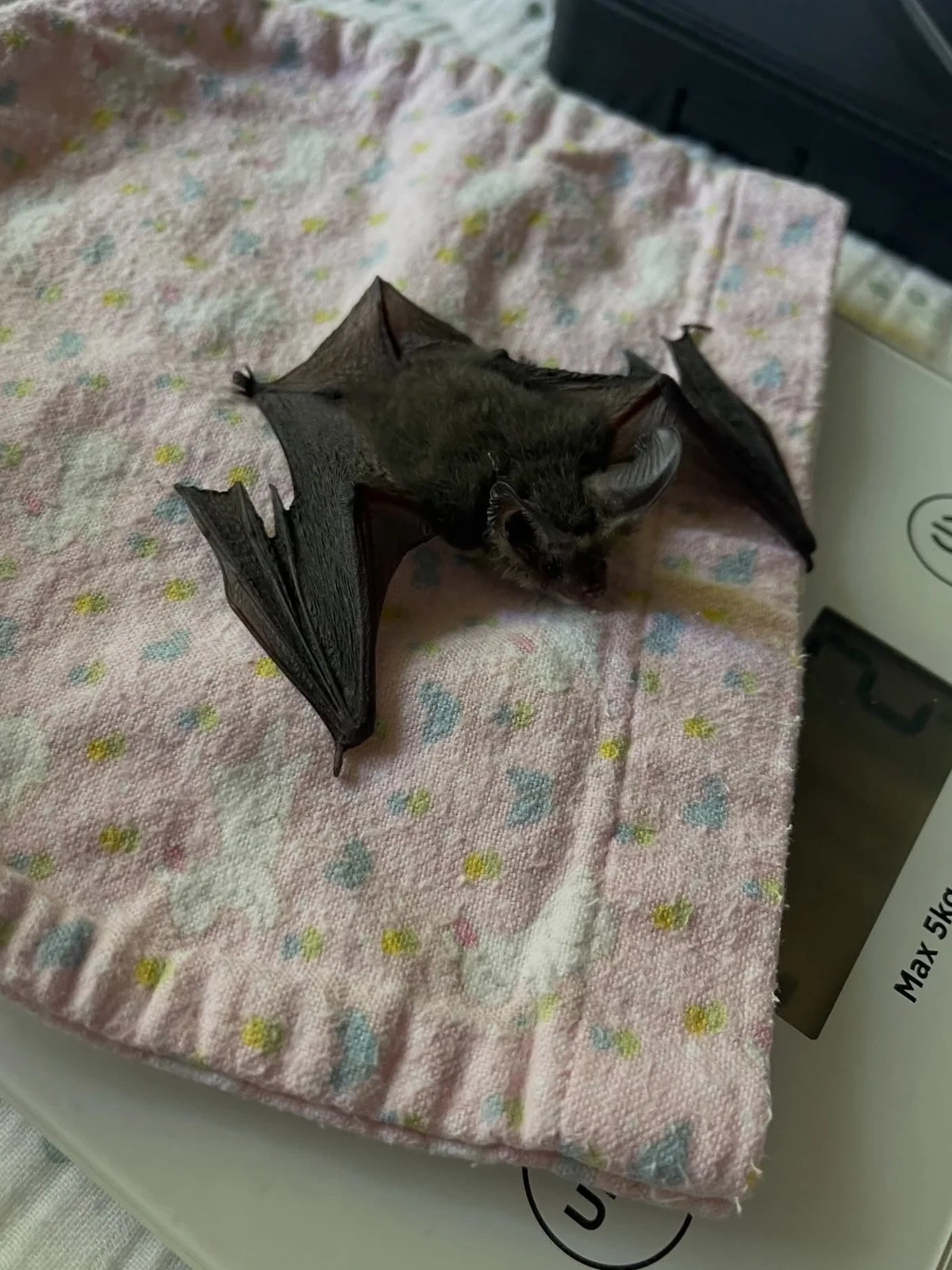




Alice the Lesser long-eared microbat, too, having now made a full recovery, last night headed home to Thornbury (please see below). She feasted before departure, and during her time with us, put on an addition two grams. She was barely out of the pouch before she flew off. It all happened so fast, in the twilight on the street where she was found. So fast I missed recording her flash of ‘home again’ brilliance. And yet it also happened as if the footage of the world were paused, as I keenly felt my two-footed presence. Weighted to the earth, I moved as if in slack-jawed, slow motion, following the directional streak of her wings. In the flight enclosure, she had flown fast, but now, outside, she was awe-inspired lightening. She transformed into a line of movement, careering homeward, leaving the two of us lumbering in her wake.
‘Go, Alice!’ sang the tortoise, but she was long since out of range.
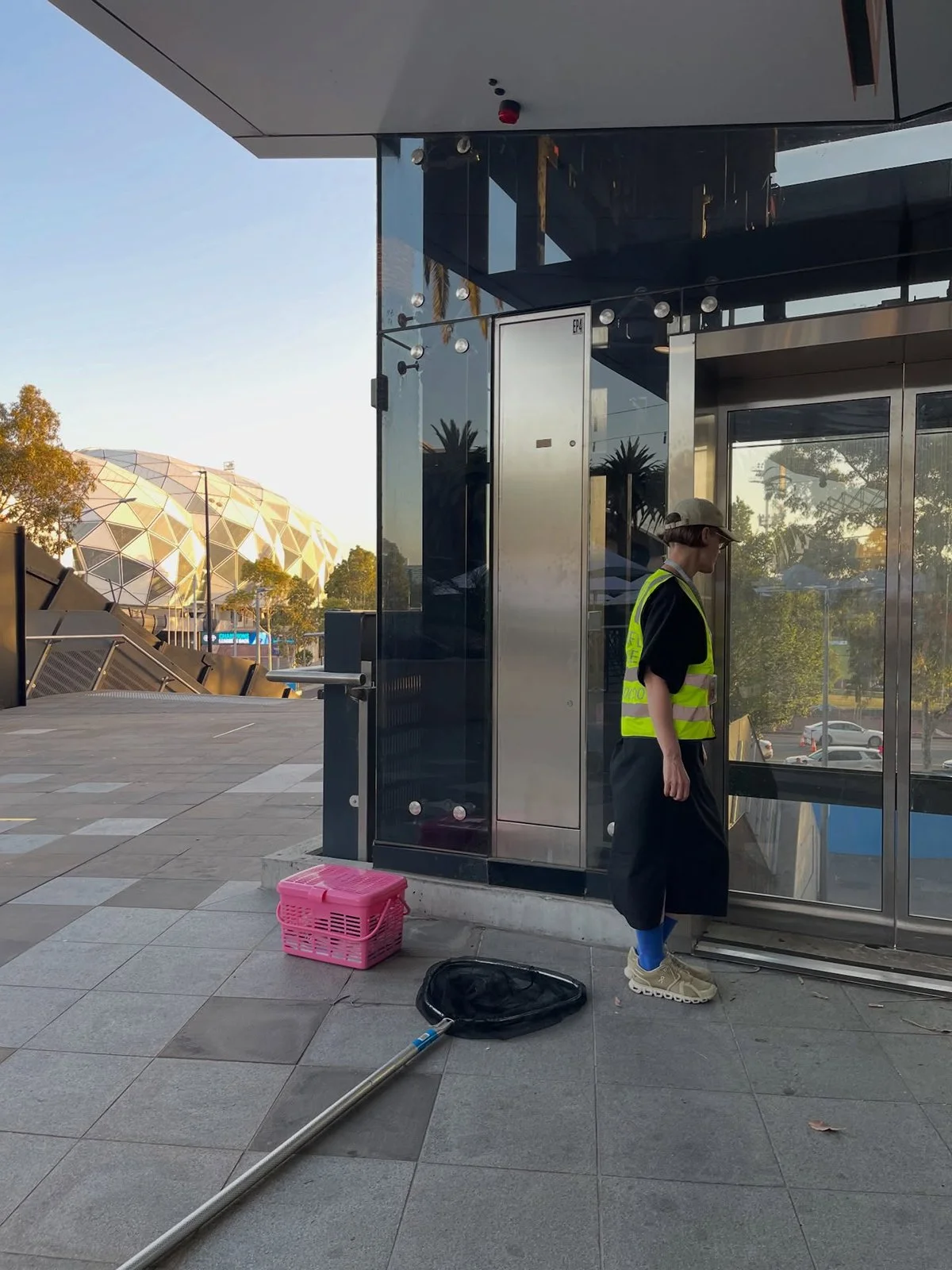

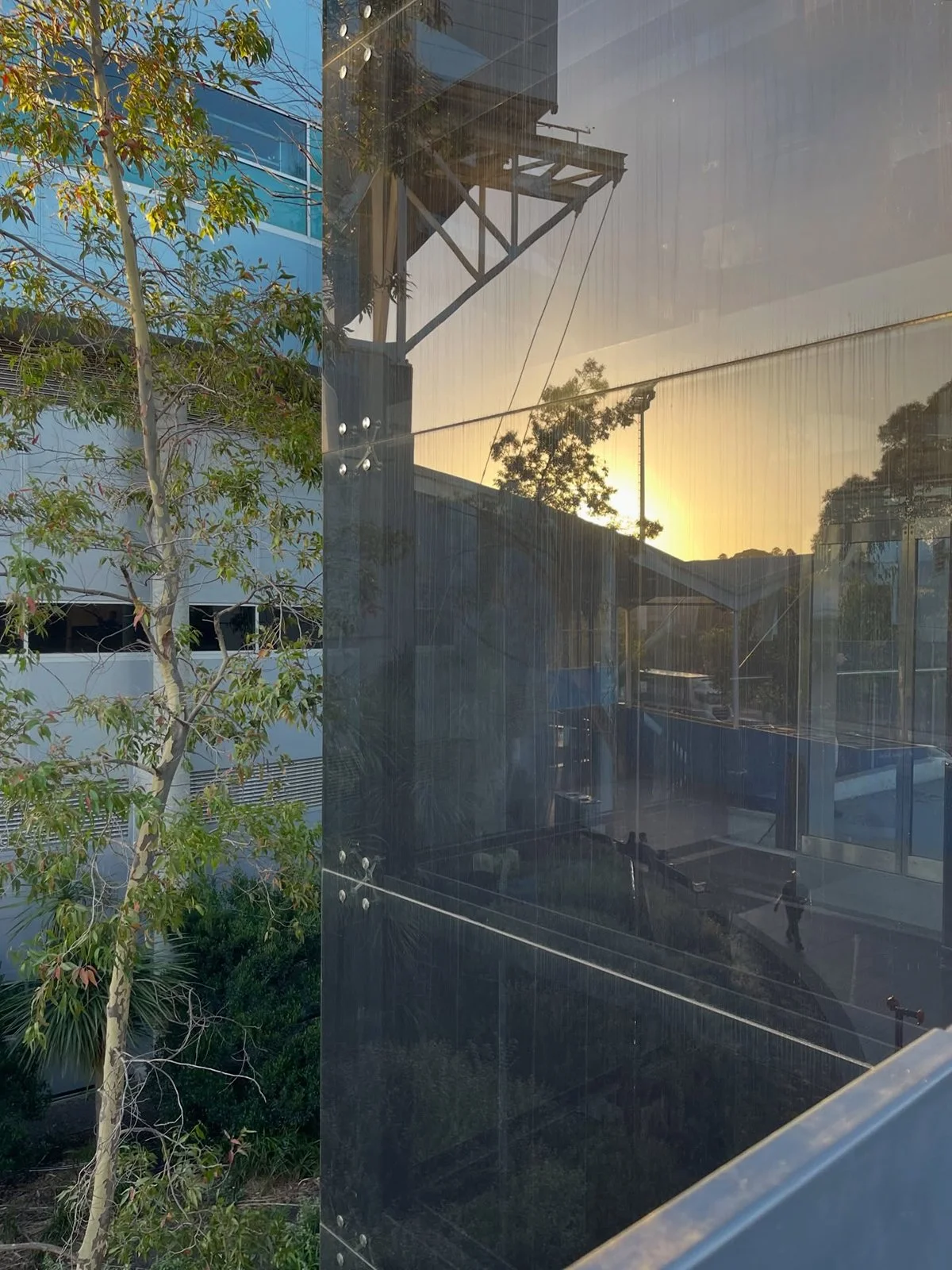
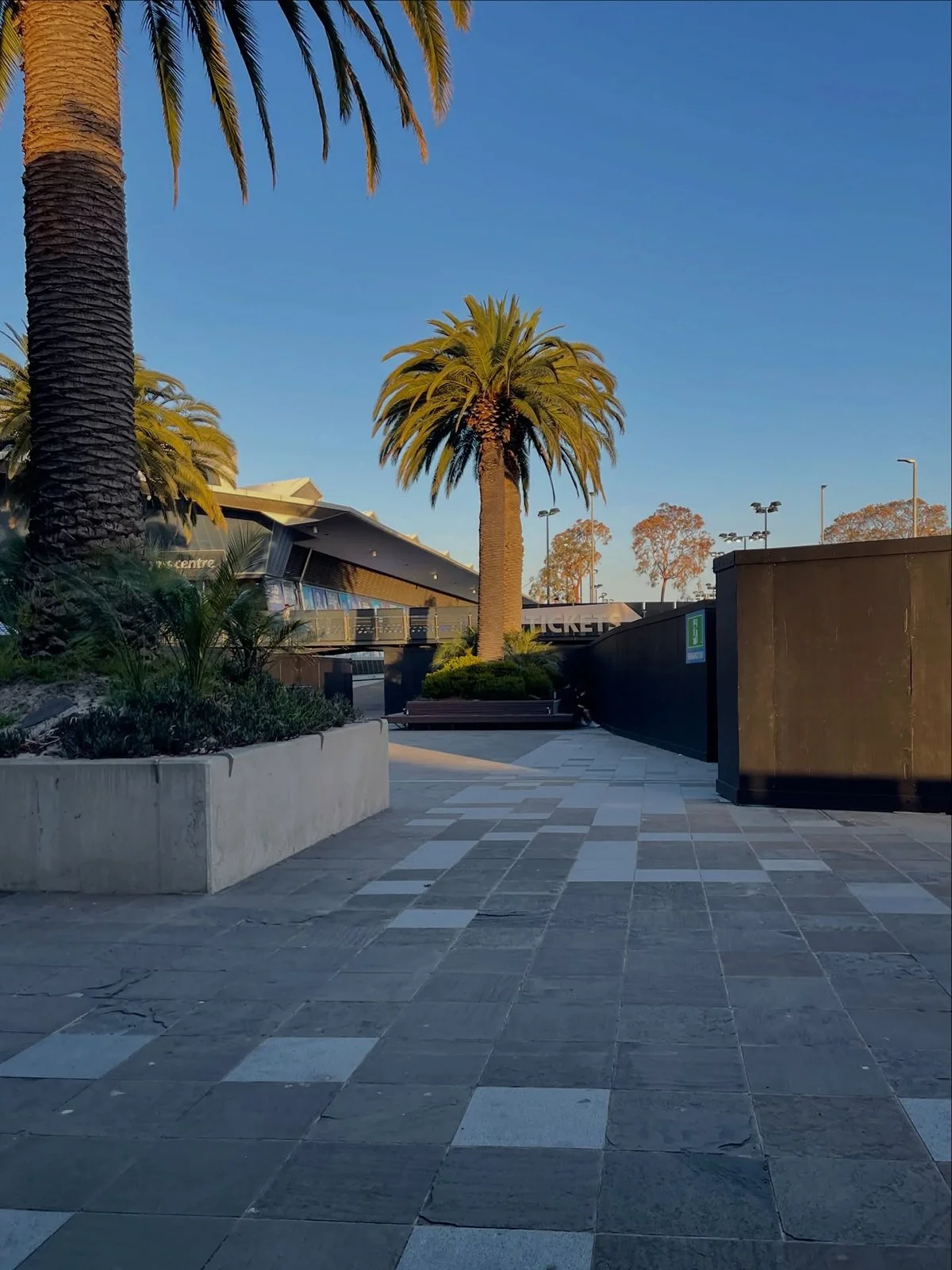
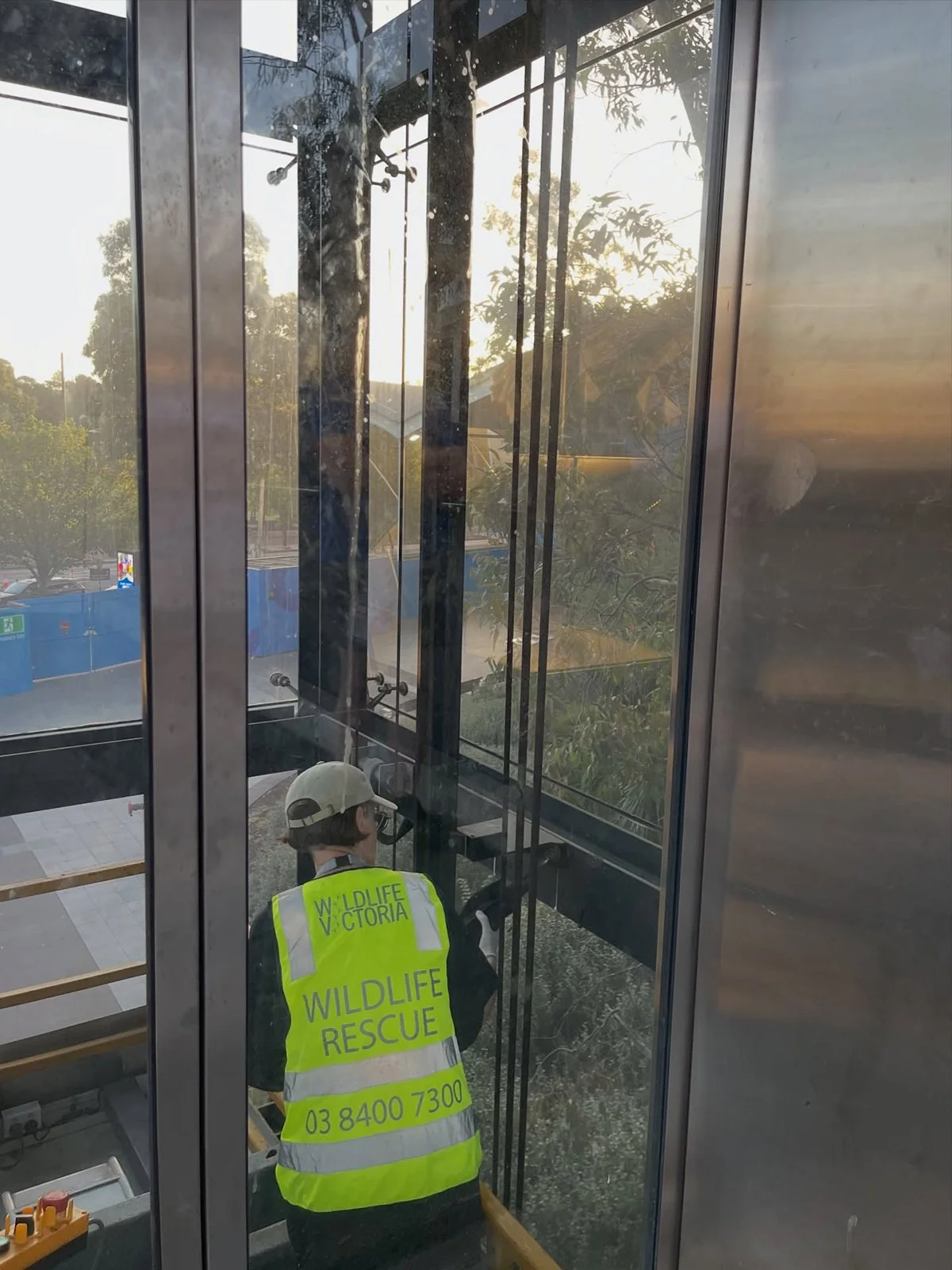
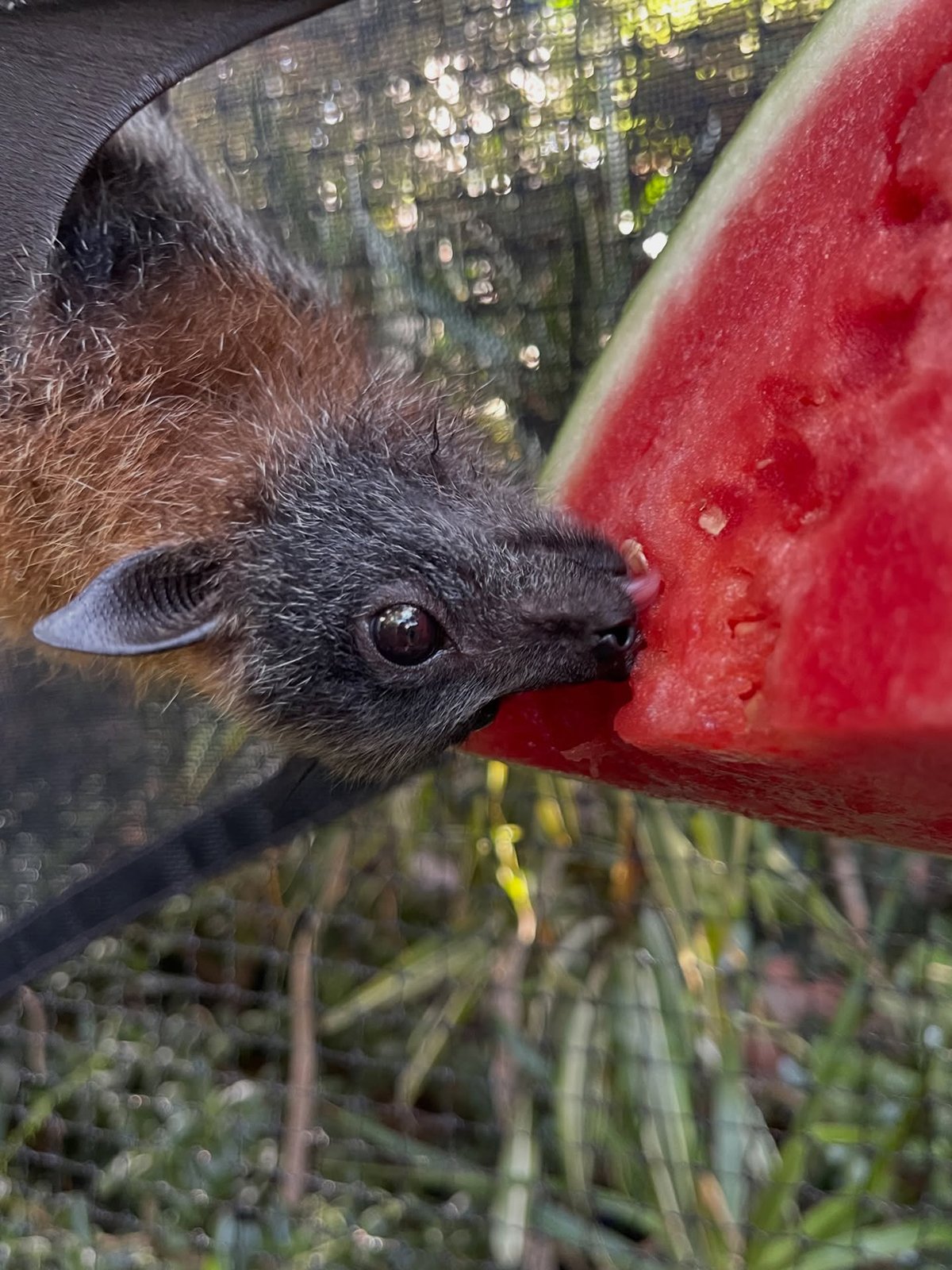
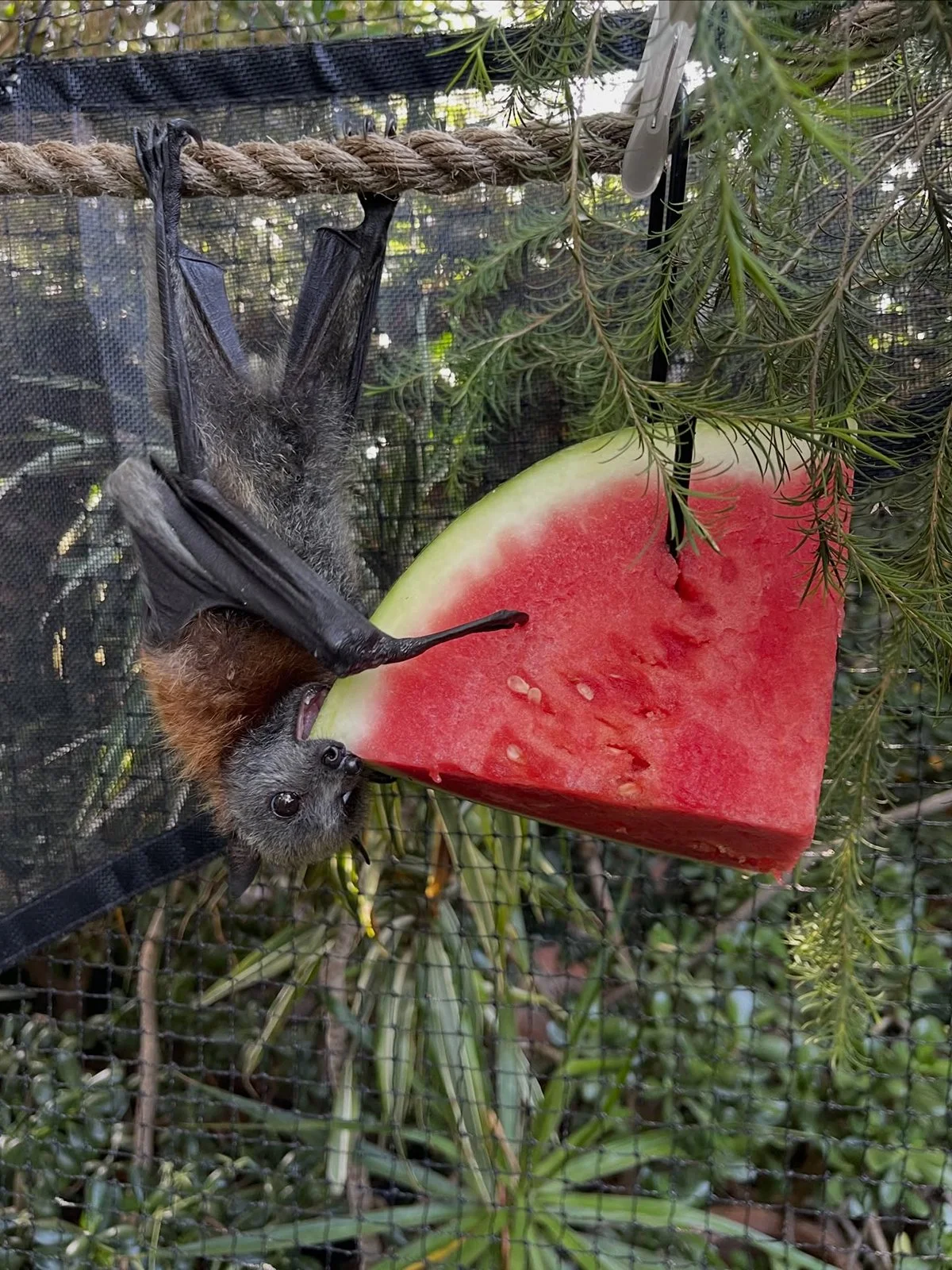
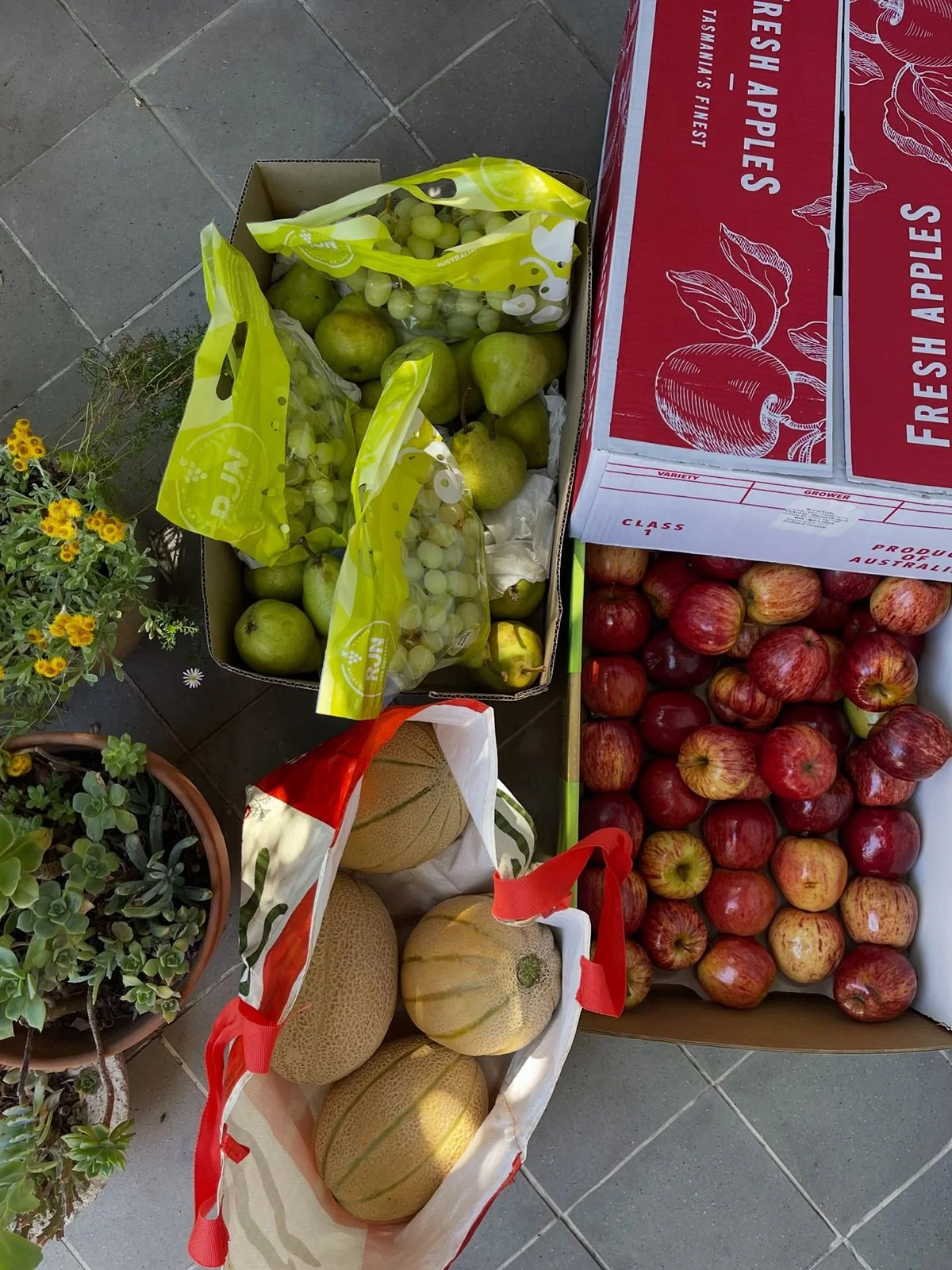
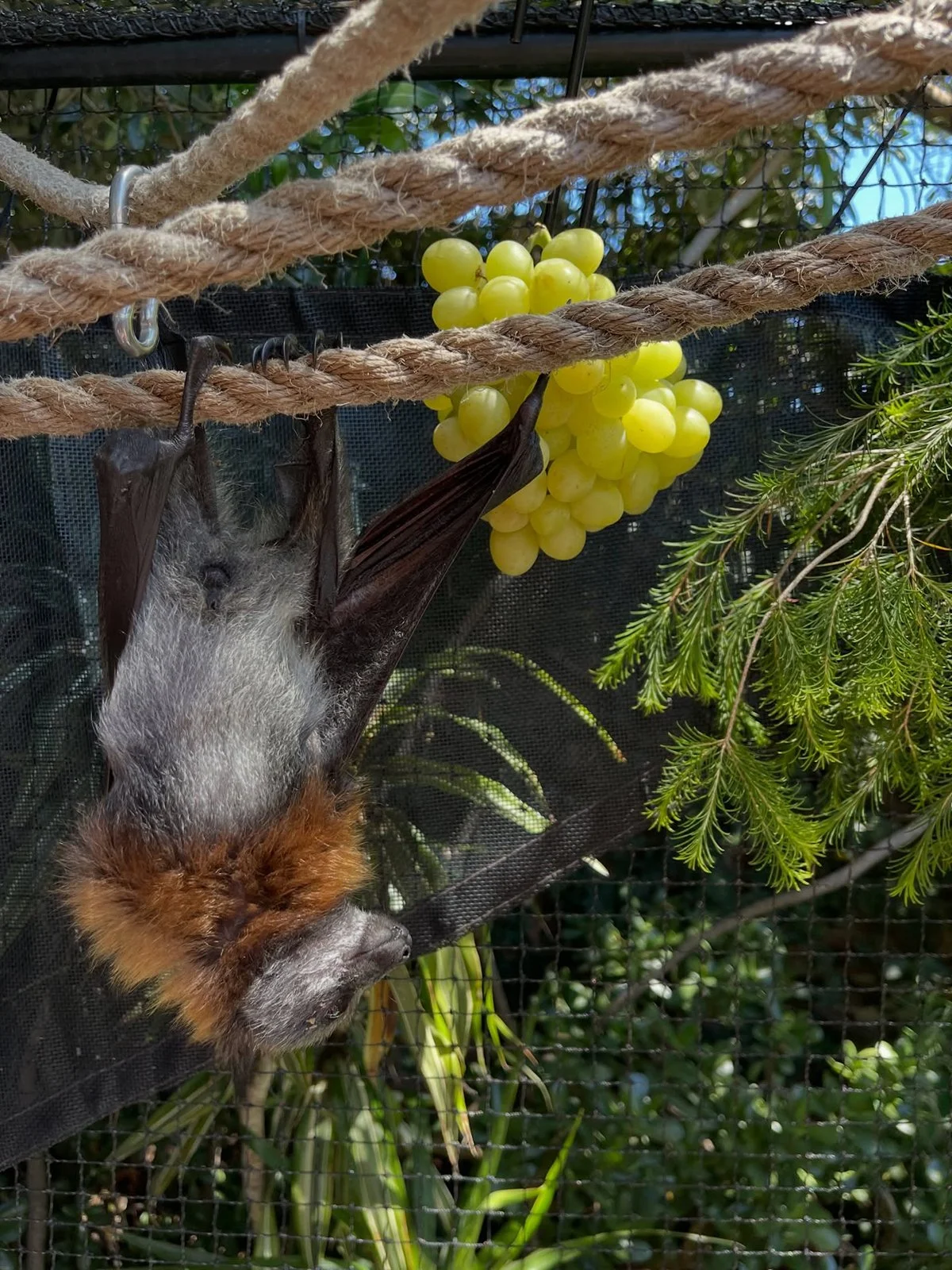
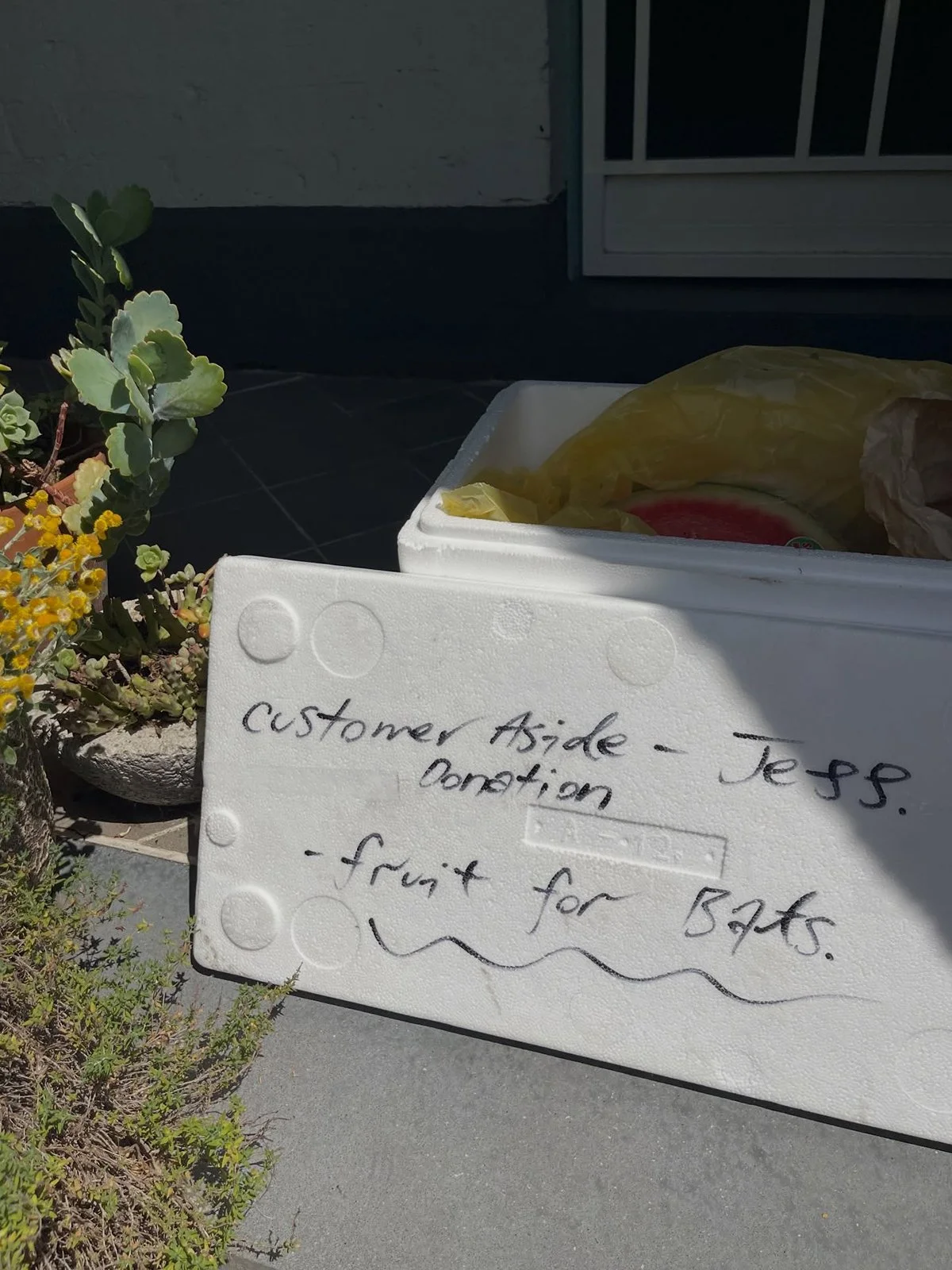
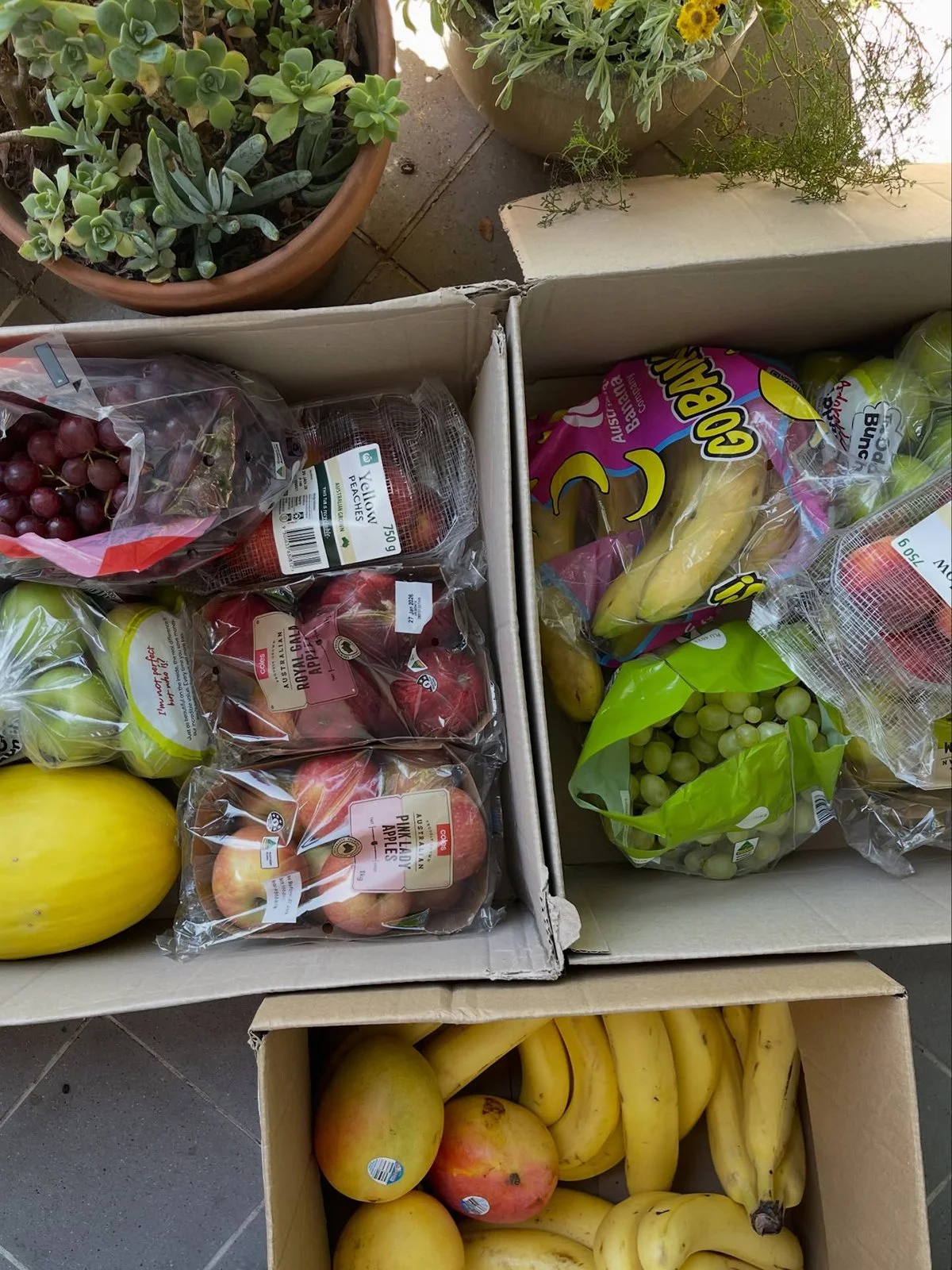
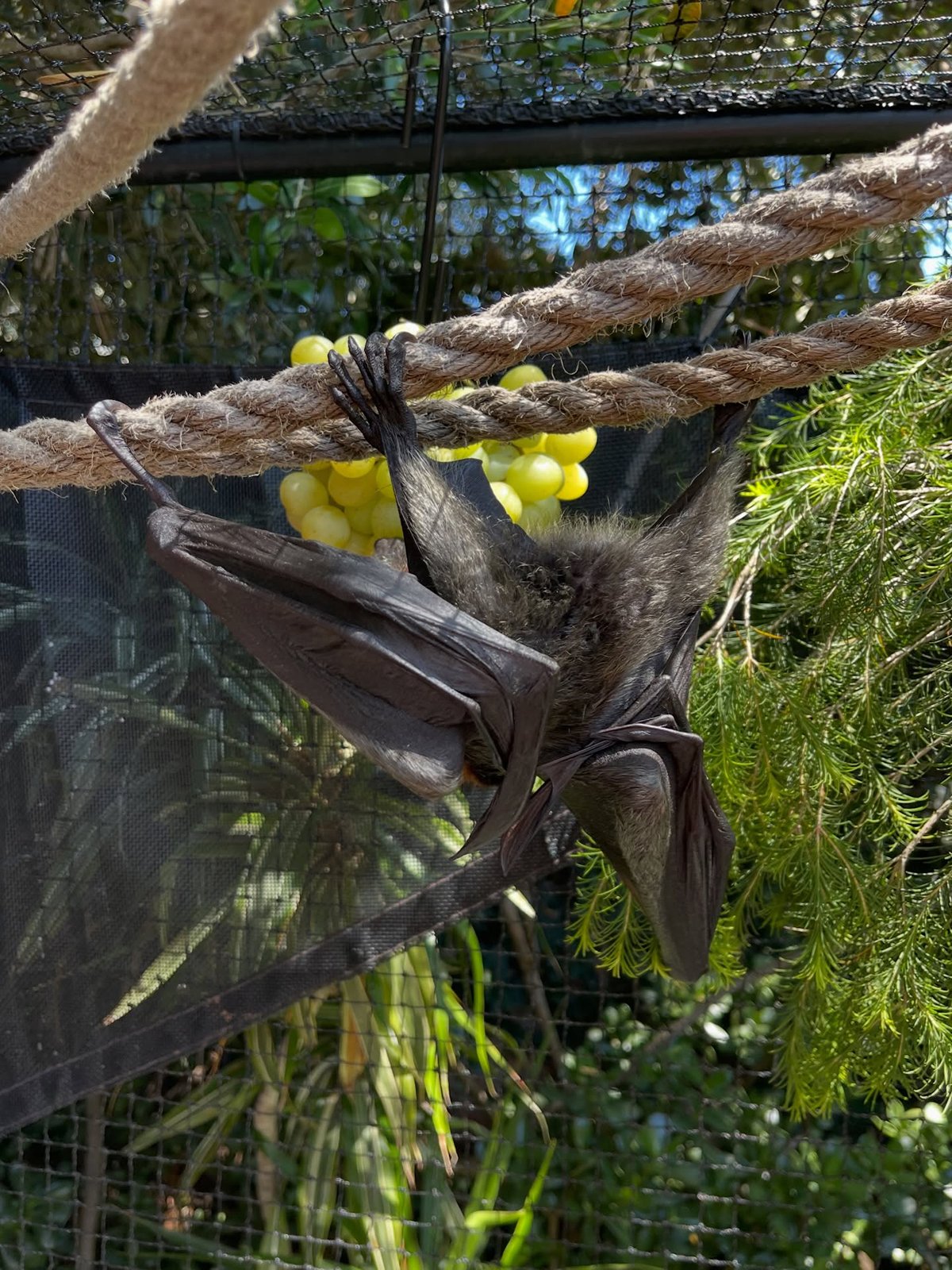
The sadness of an early evening rescue of a (deceased) Grey-headed flying fox caught in a lift shaft at the Australian Open, was counterbalanced by the kindness of strangers. Patricia and her sister delivered a picture-perfect tray of red apples, crisp, green grapes, and impossibly perfect pears and melons to our door, in response to Wildlife Victoria’s call out for fruit donations for wildlife shelters caring for Grey-headed flying foxes. Such a generous donation will help to feed the pups currently in our care.
Thank-you so very much Jodie Blackney at Bushfire Wildlife Rescue & Support and Bayside Community Emergency Relief for the delivery of an abundance of fresh fruit for the Grey-headed flying foxes in our care, and additional wildlife supplies, including a fuel voucher, to our Tiny but Wild wildlife shelter.
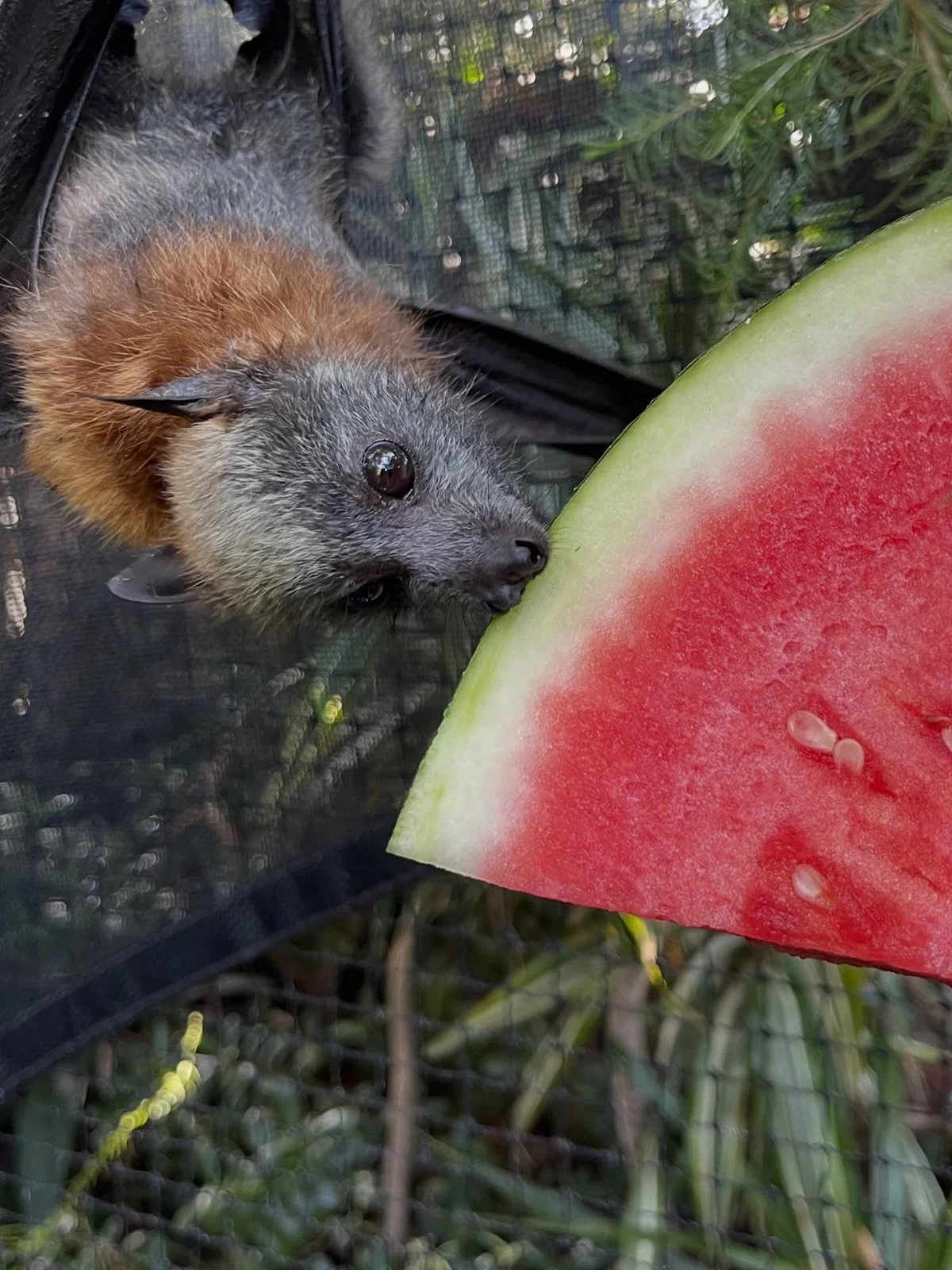
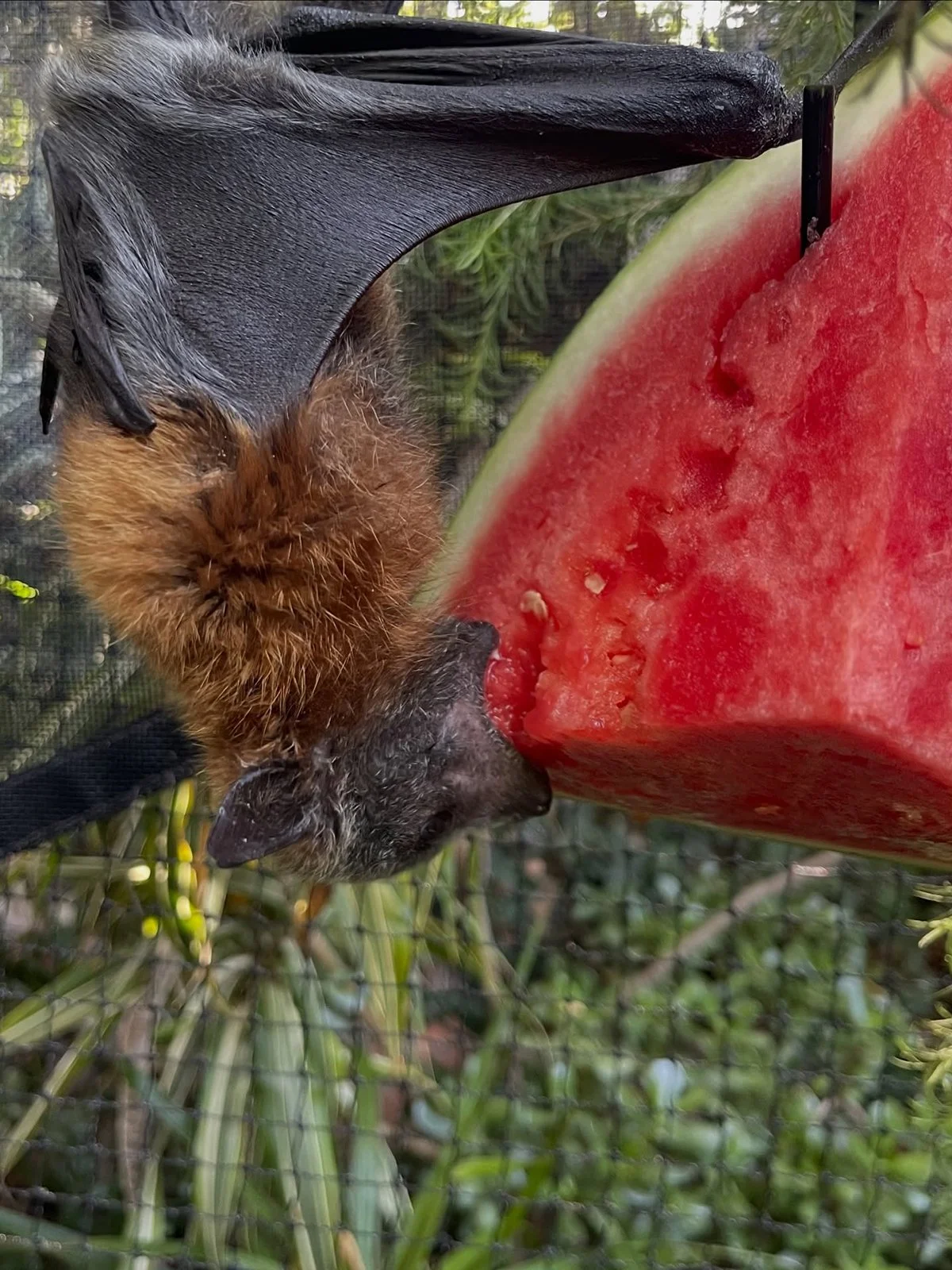
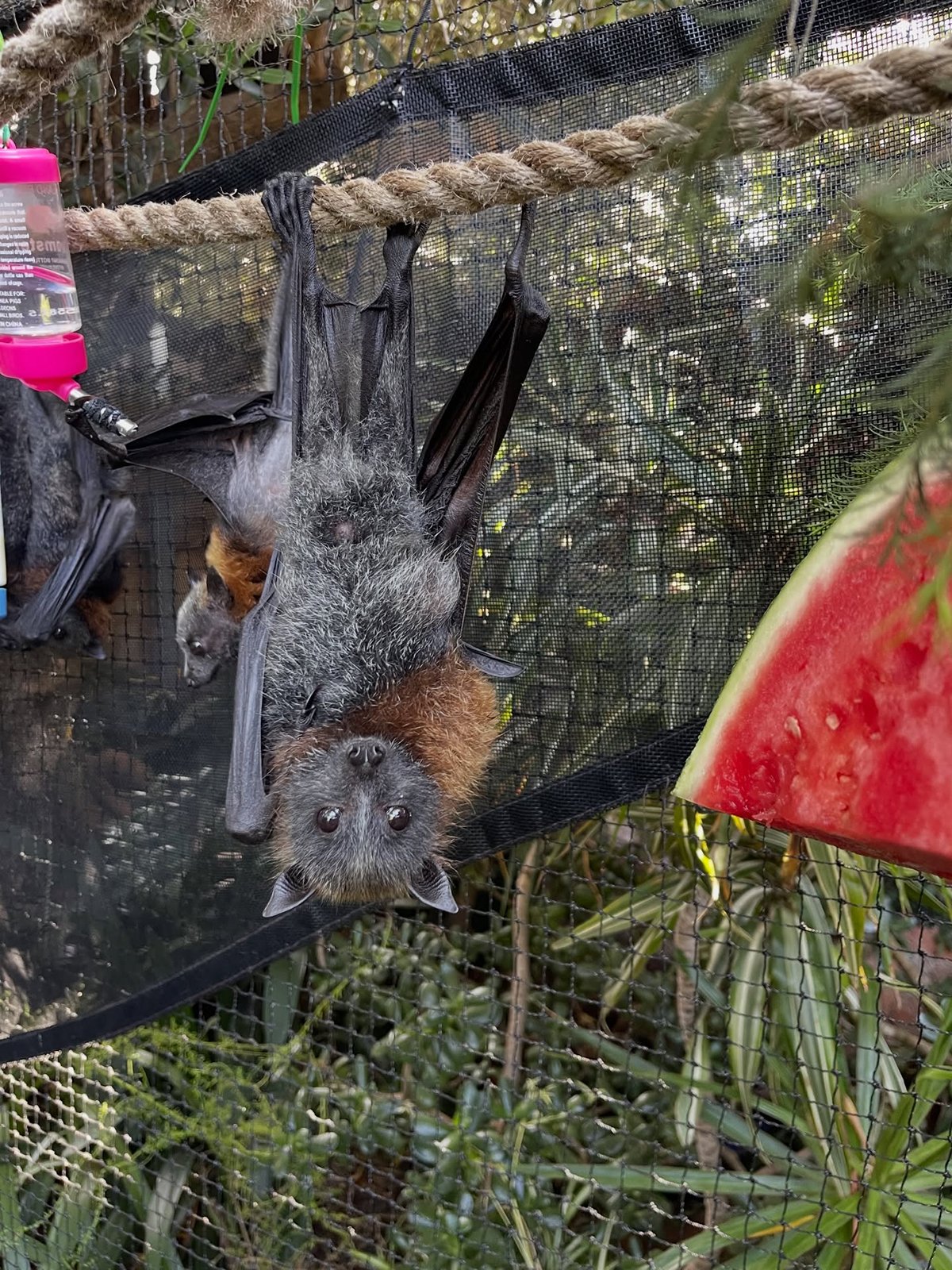
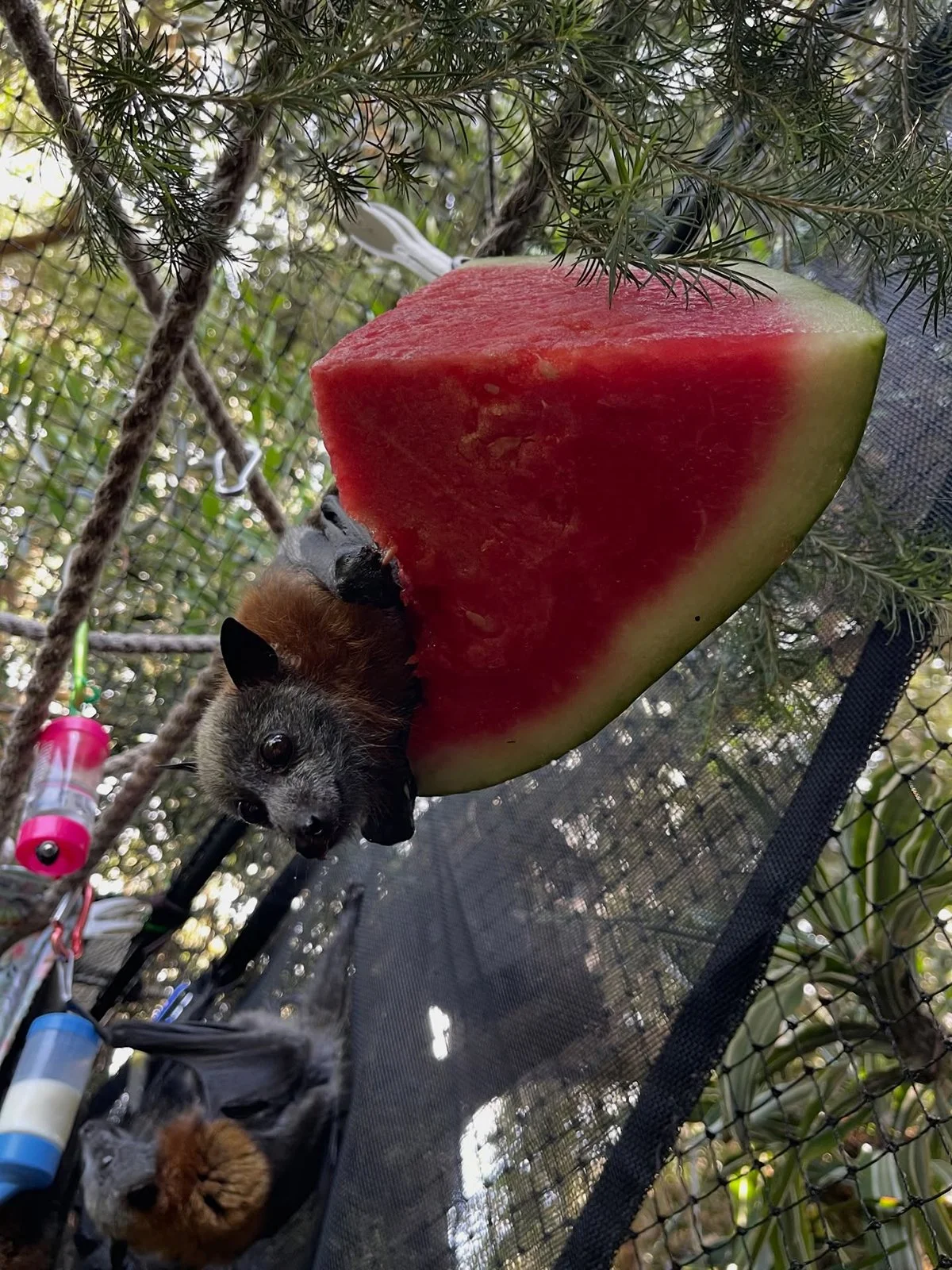
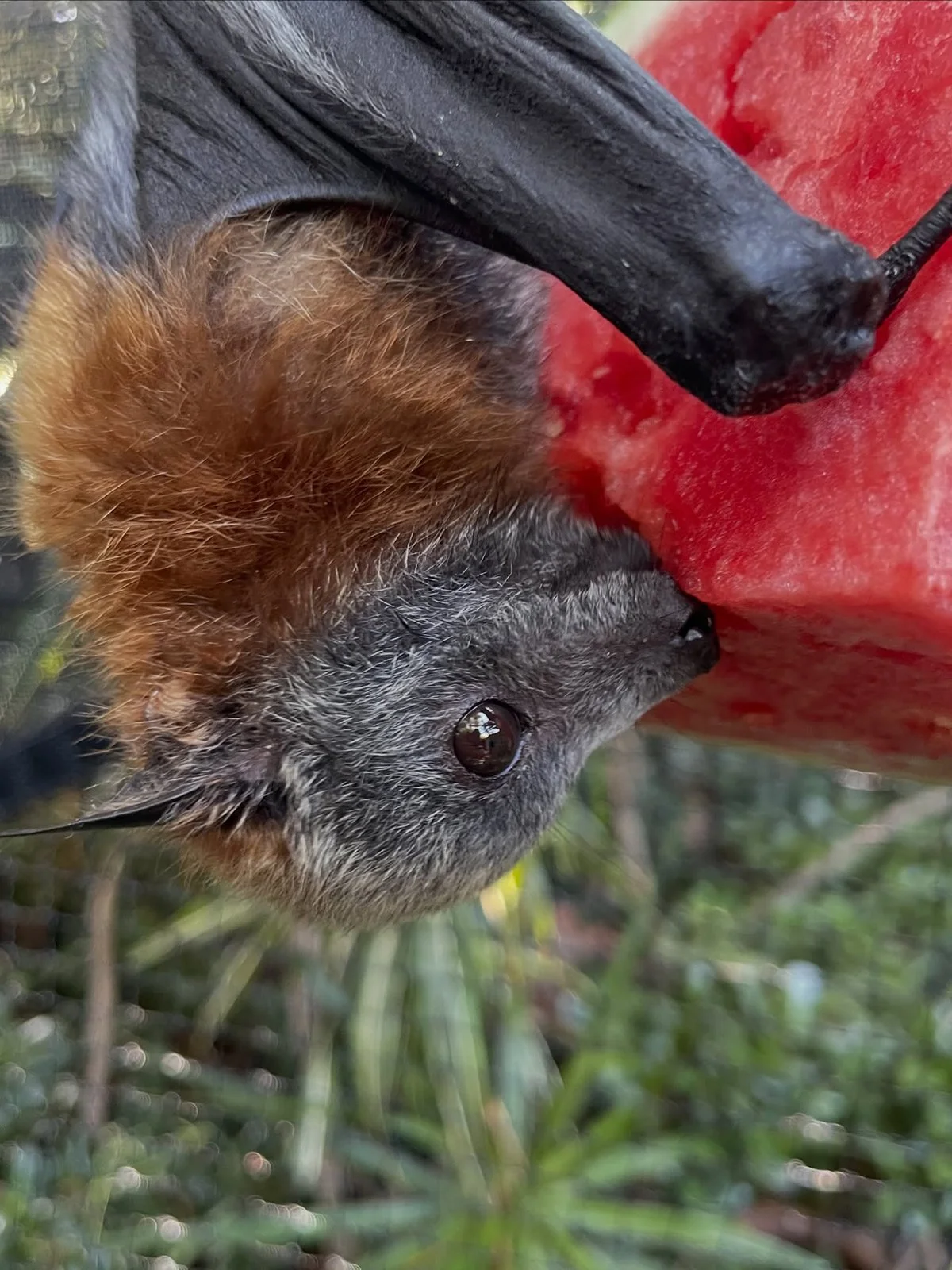
Thank-you, also, to Jess (@jwalffs, @wildlifevictoria) for fruit delivery from @rhubarbrhubarborganics and @prestonmarketau, which Petipa Pink and Oliver Twist, in particular, enjoyed; a life-size hunk of watermelon! Their eyes did bulge!
We have been overwhelmed, in the best possible sense, by your generosity. Thank-you to those of you who have also made donations online.
And thank-you, to Bunnings Collingwood, for supporting Tiny but Wild with their timely and kind gift voucher for wildlife enclosure equipment (like clamps, ropes, and downpipes to make into vases).
Since the recent heatwaves, we have taken in additional wildlife suffering from heat stress. Pup season, this summer, means on average seven-hours-per-day. From feeding from 6am, cleaning enclosures, locating and collecting fresh browse for possums to local rescues or pouch checks, chopping fruit, and repeat pup feeds up until 10pm (for the little ones), the days orientate around those in care.
Though, like the name, we are Tiny, donations for wildlife, like these, are a much-needed boost. Tiny but Wild is but the two of us, and your support makes it not only possible for us to continue this 100% volunteer work, but, more importantly, directly helps the wildlife in care.
Farewell, Calypso! Farewell, Alice! And here’s to teenagers, Euphemia (also a Nyctophilus geoffroyi) and Merlin (Chalinolobus gouldii), following suit. When they are ready.
As ever, please note: you need to be a qualified, vaccinated carer to handle megabats and microbats.
Please continue to put water out for wildlife, and create cool environments for wildlife to shelter. Call your nearest wildlife rescue if you encounter a heat-stressed animal.
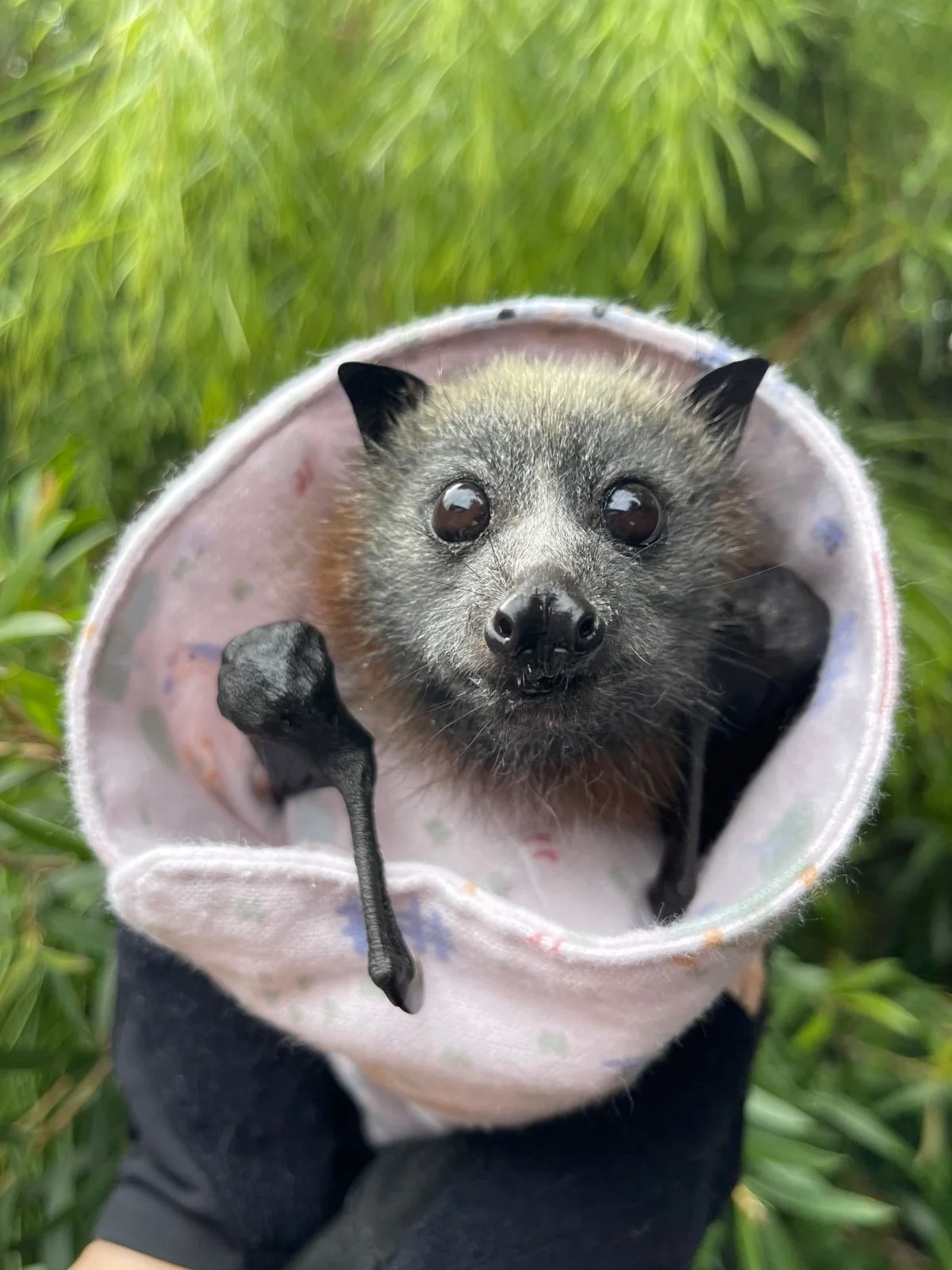
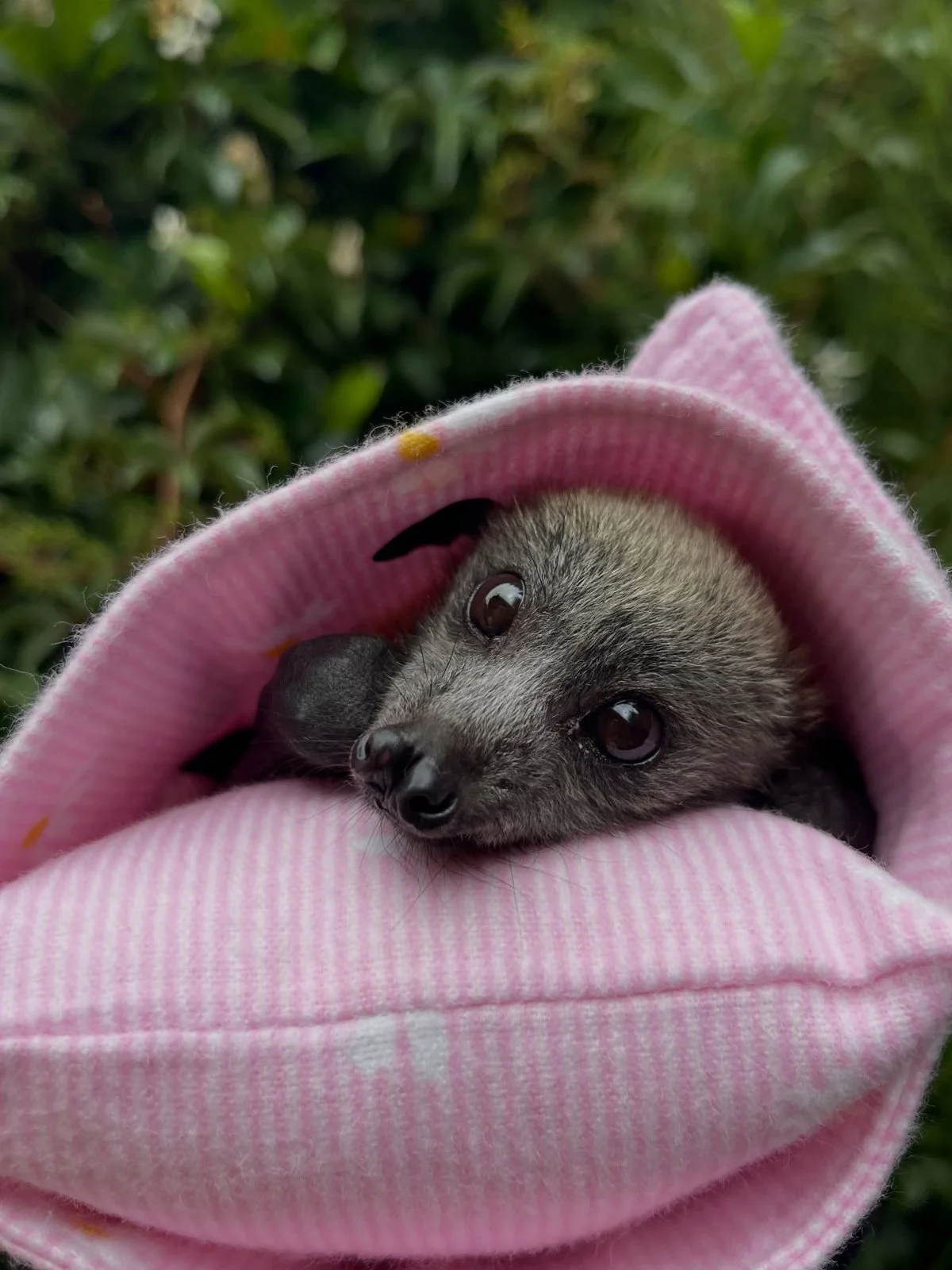
Image credit: Oliver Twist, wrapped in a mama roll made by Bev Brown, Bat Rescue Bayside, not long after coming into care at Tiny but Wild.
