Bock, bock, went the Tawny
Wildlife Care
“Suddenly I realise
That if I stepped out of my body I would break
Into blossom.”
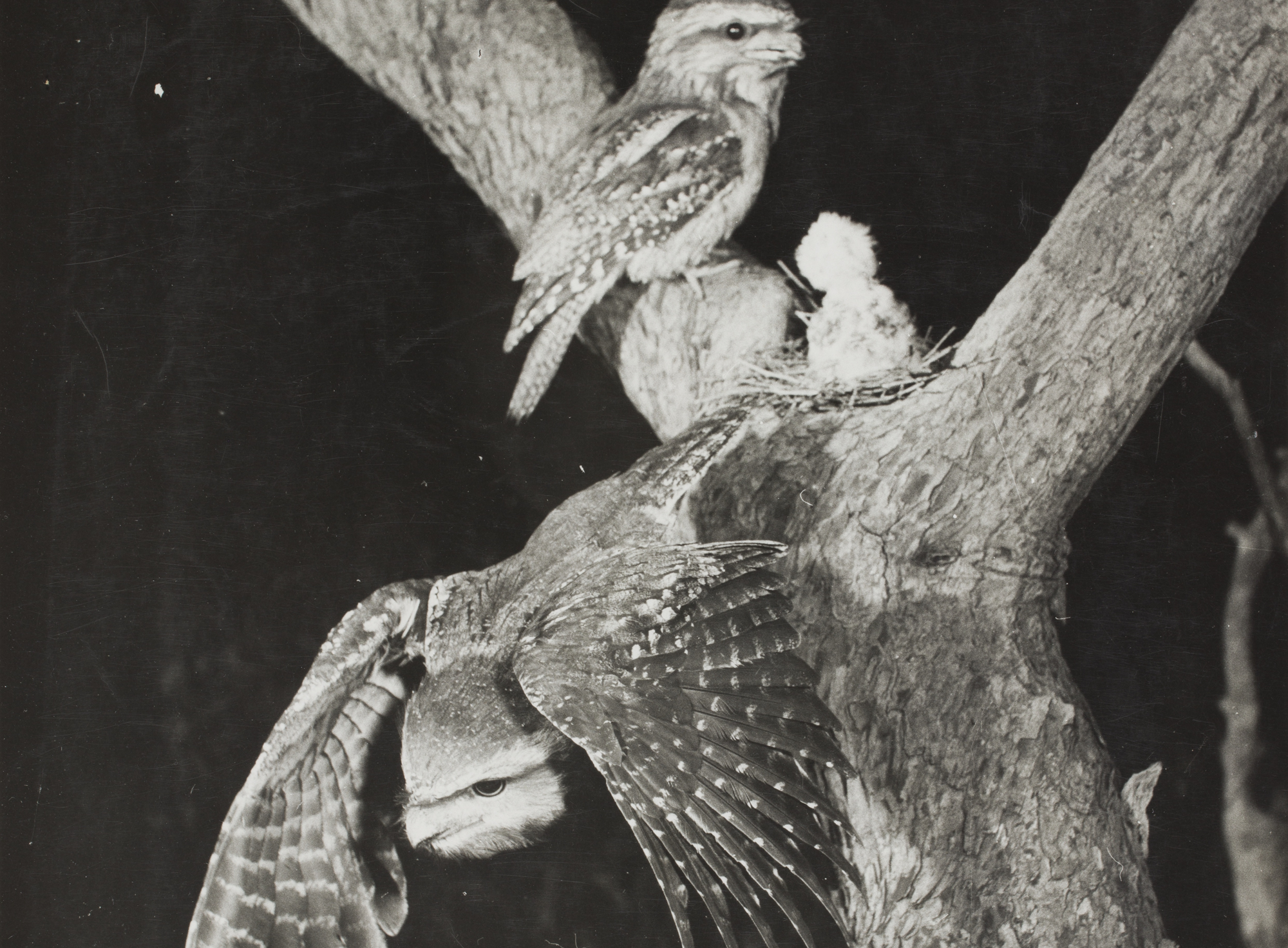
In the span of one week, over four separate wildlife care cases, we have crossed paths with four Tawny frogmouths, a native bird whose scientific name, Podargus strigoides, references, in the first part, a figure who suffers from gout (podagra in Latin means ‘gout’), and the second, owl-like in appearance (strix means ‘owl’, which with the tail, -oides means ‘in the shape of’). Because, of course, Tawny frogmouths, though nocturnal and wide-eyed, are not owls[i], and some say their walk recalls that of ‘a gouty old man’. Their open wide gape, like that of a frog. The whiskers about their beaks, movement detectors, sensing every insect.
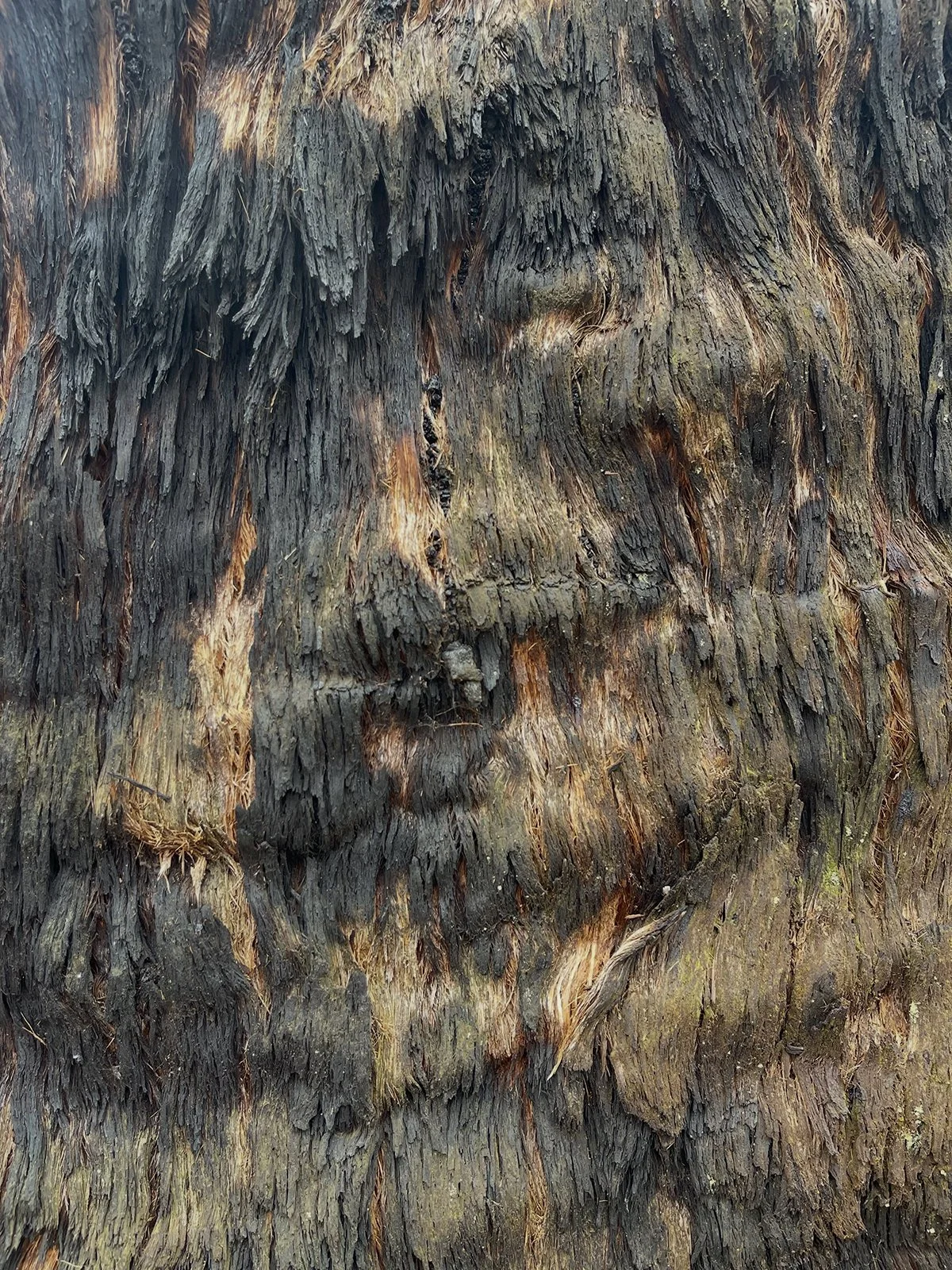
Tawny frogmouths can make themselves disappear by day, by remaining still, by making like a tree. Where a large branch meets a trunk, a pair of forever bonded tawnies will rest, back-to-back, all bases covered, a V shape hidden in plain sight. Their colouring and their stillness ensure they are hard to detect. They, like macropods and other wildlife, blend into their surroundings, because they are so intrinsically a part of their surroundings. Interlaced, in every sense. To hide. To be tree. To be true. To catch. Hunt. Feel the breeze. Receive the news. Learn the ways. Impart knowledge to their young. Observe. Read. With all parts of their body, in ways we can only imagine.
As we raise a Tawny nestling, at our home-based wildlife shelter, Tiny but Wild, we wonder about the information their parents would have passed onto them and how. From nestling to brancher, to fledgling, and finally edgeling, we can raise them until they are ready to be returned to their home where they can hopefully be reunited with their family, but while we can give them food and shelter, we cannot teach them what their parents could. We cannot teach them how and who to hunt, or how to read if a storm’s approaching. How to compact their streaked feathers to truly resemble a branch. How to spot a predator. While some knowledge is imparted, are some lessons refined only through proximity, being day by day, side by side, in a tree, scanning their surroundings? Can certain skills and awareness be picked up, once released? Having missed the distribution soak, can they catch up? Or is it merely another pathway taken, a second chance that ensures they might make it? Are tawnies raised in care merely journeying on a different kind of path?
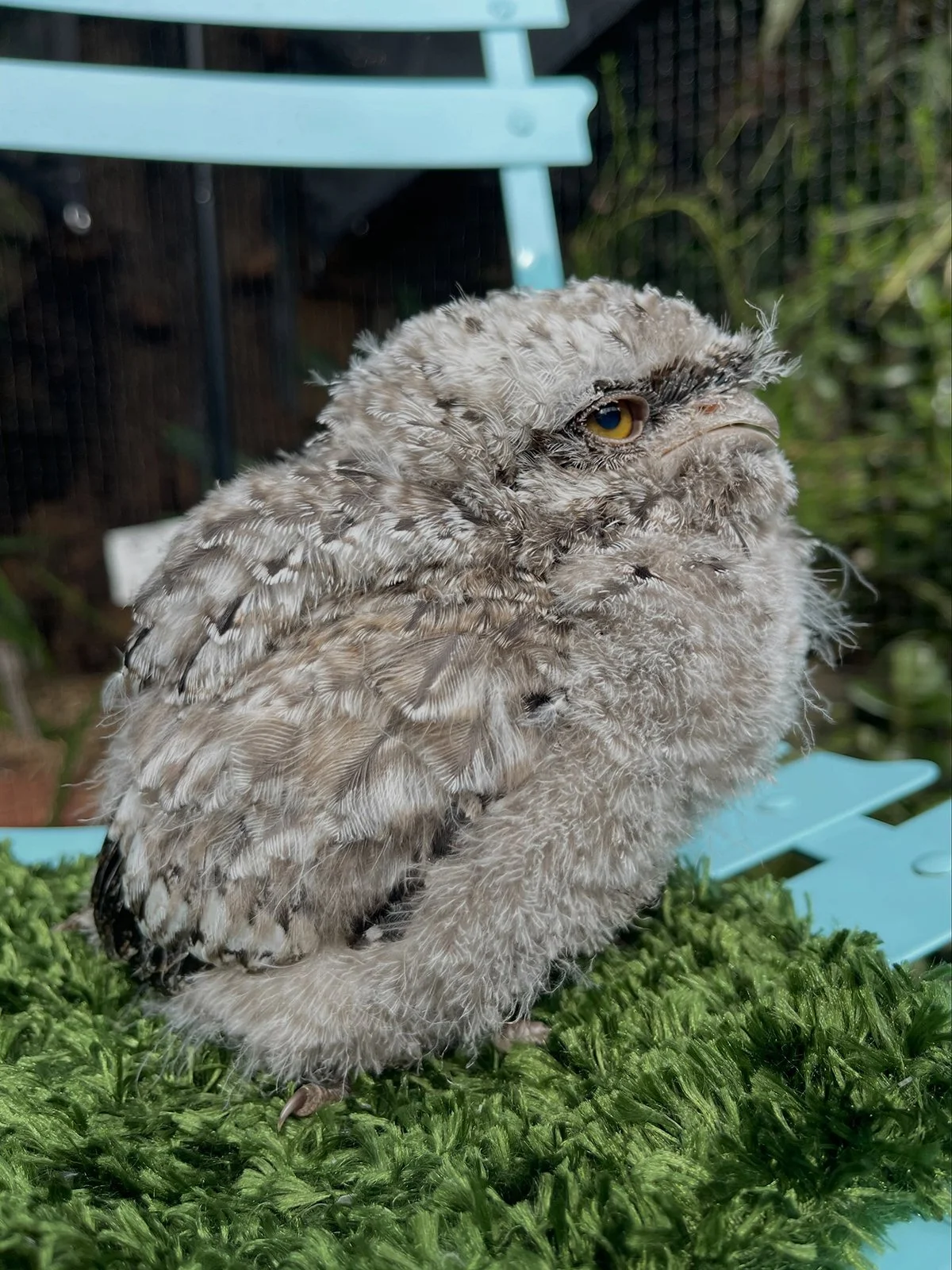
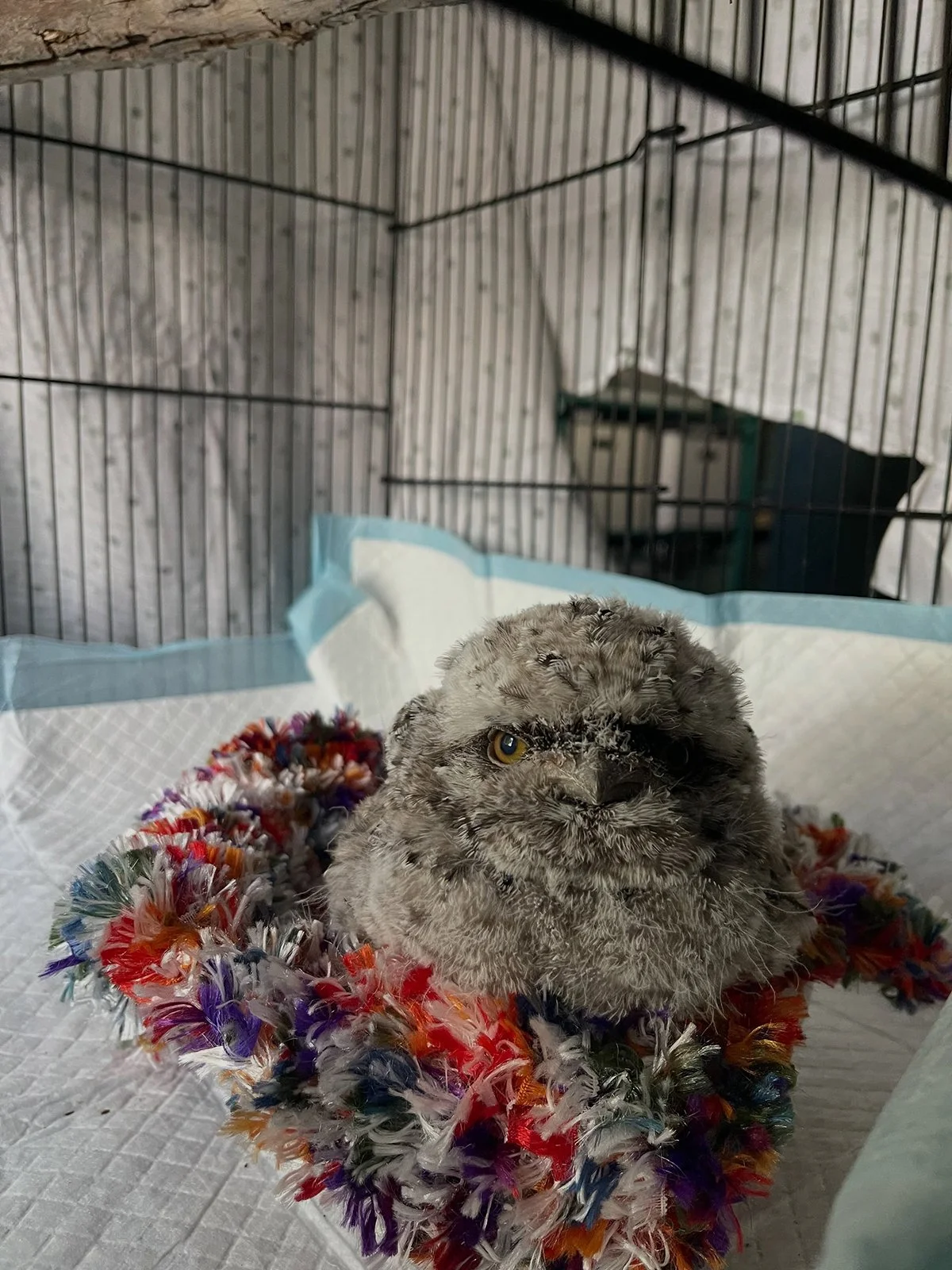
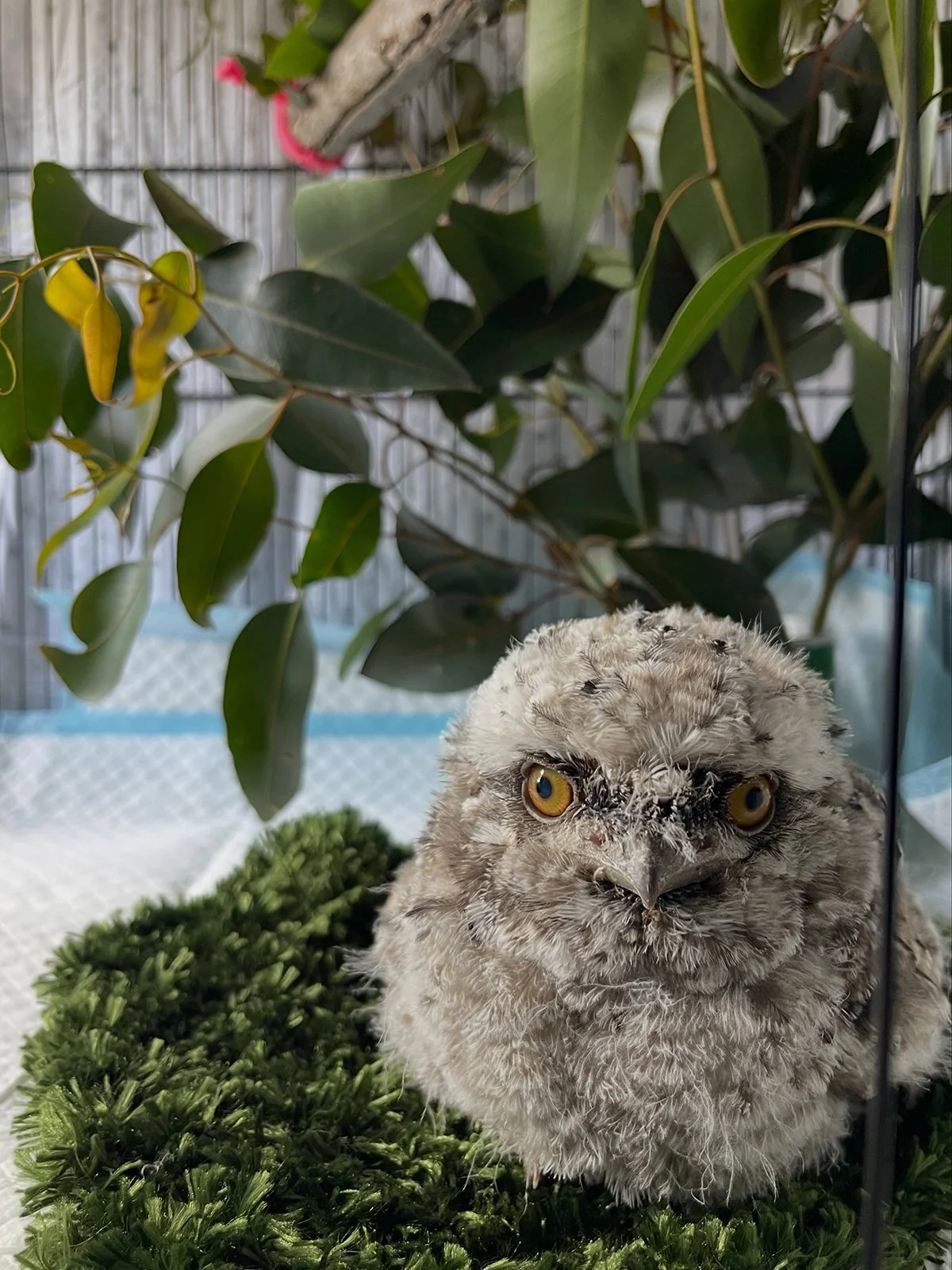
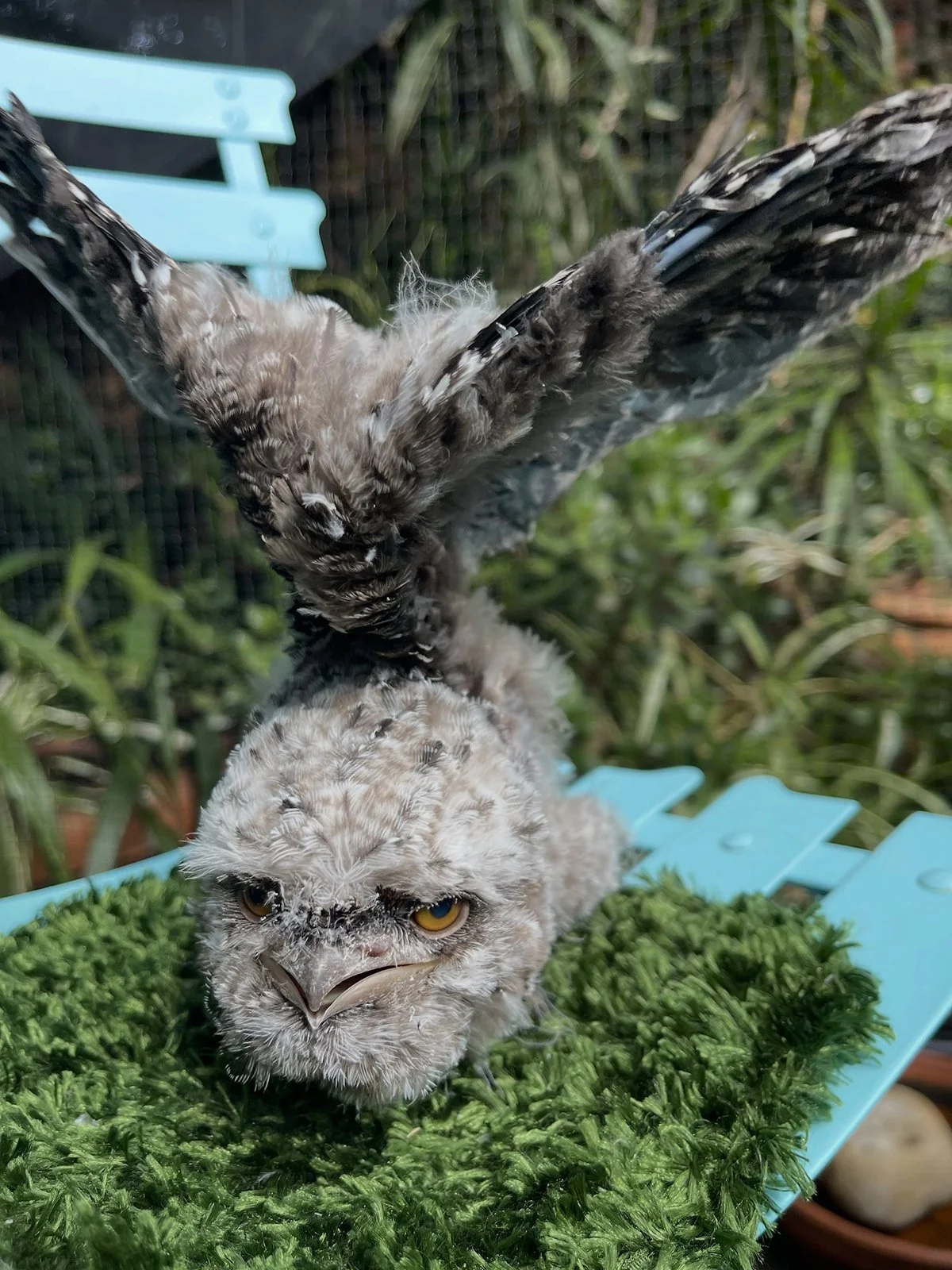
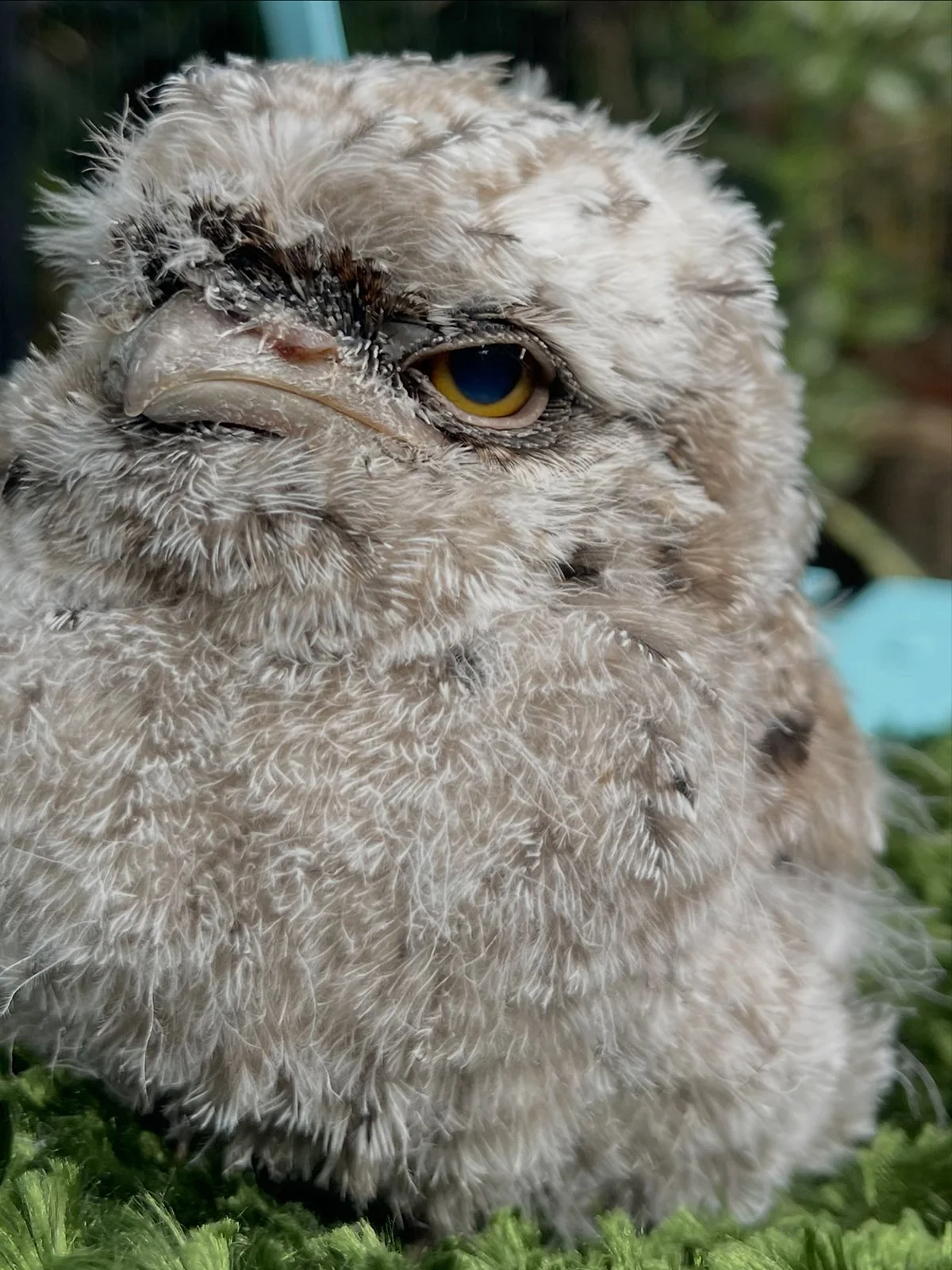
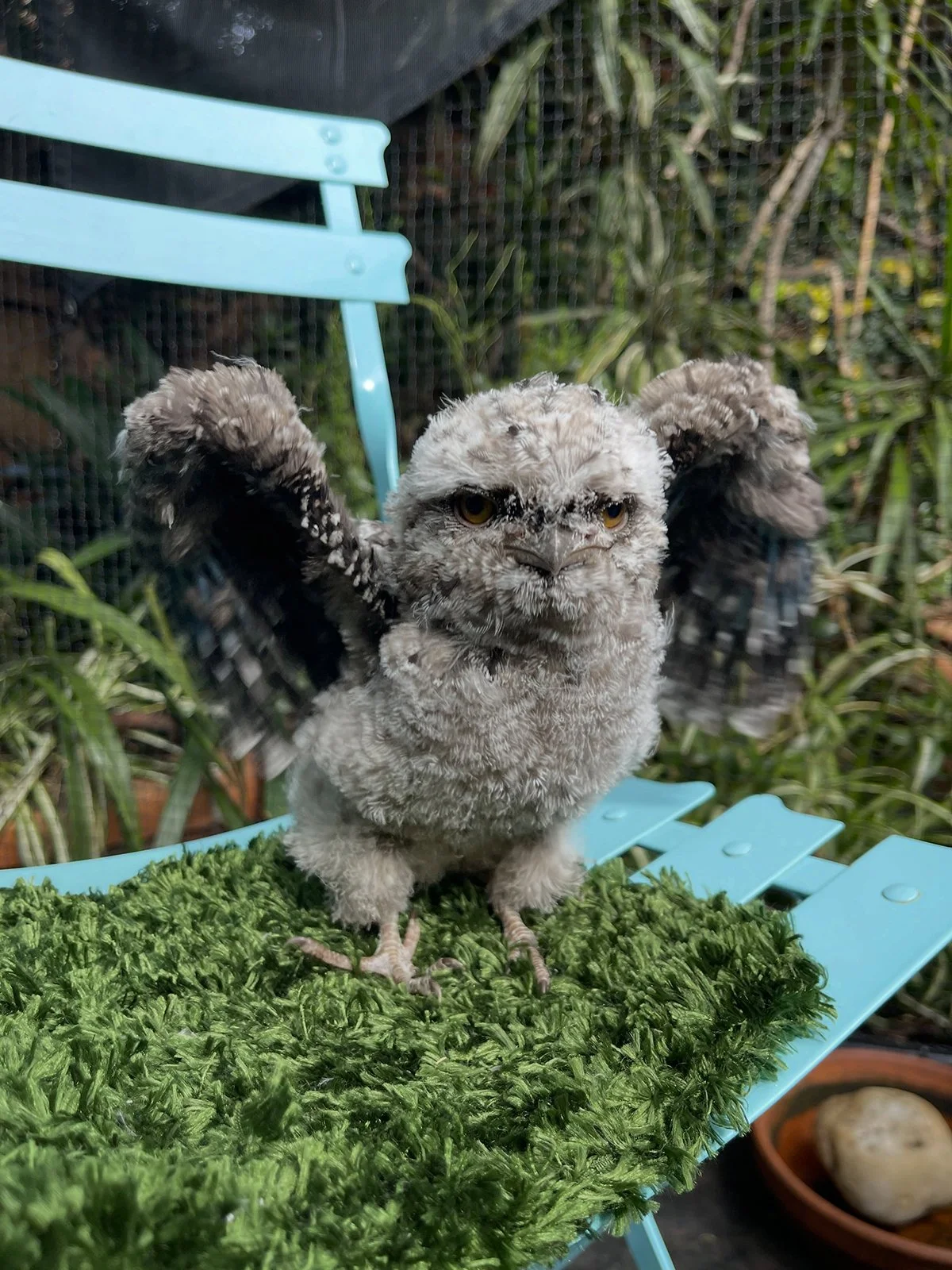
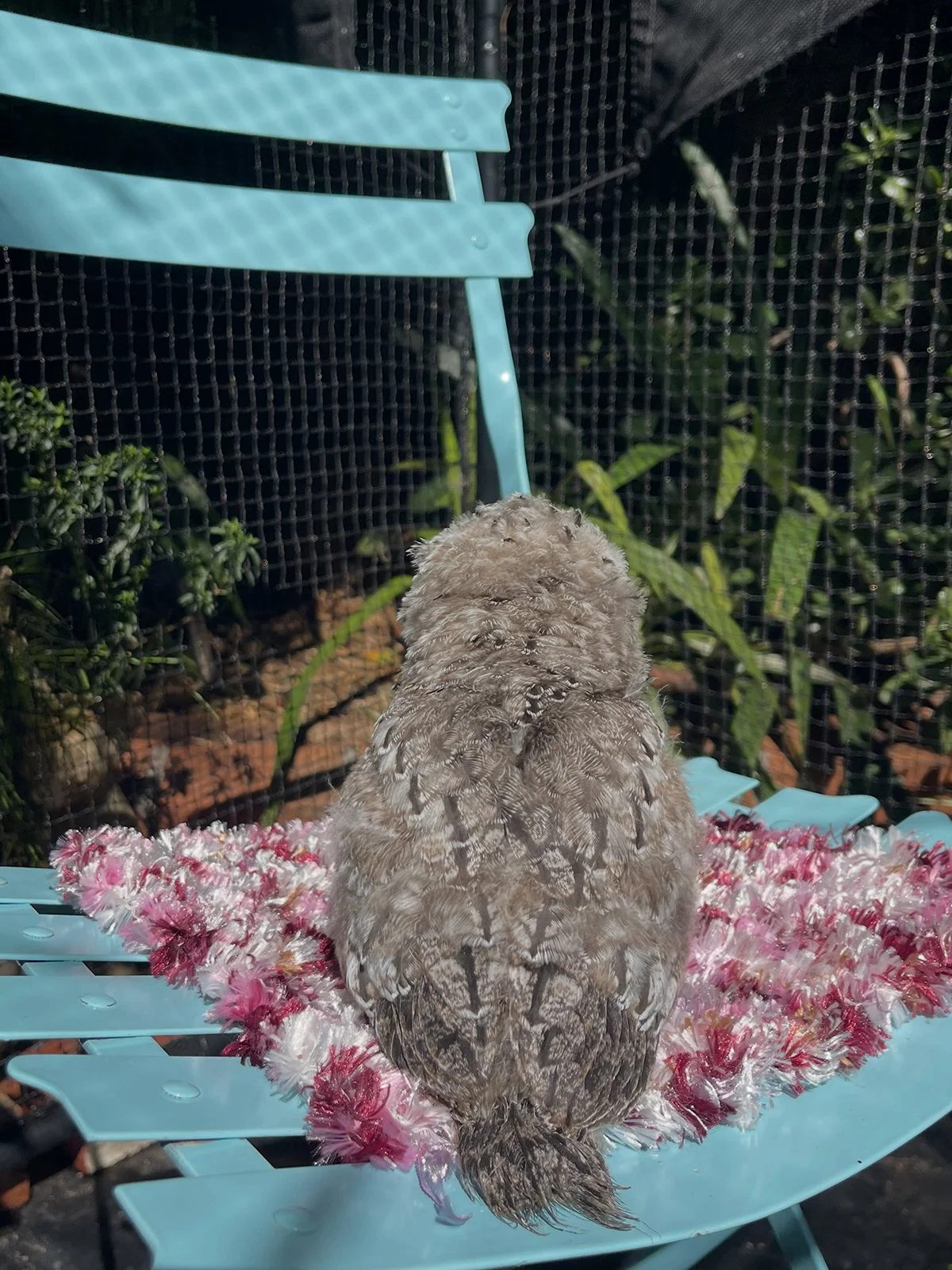
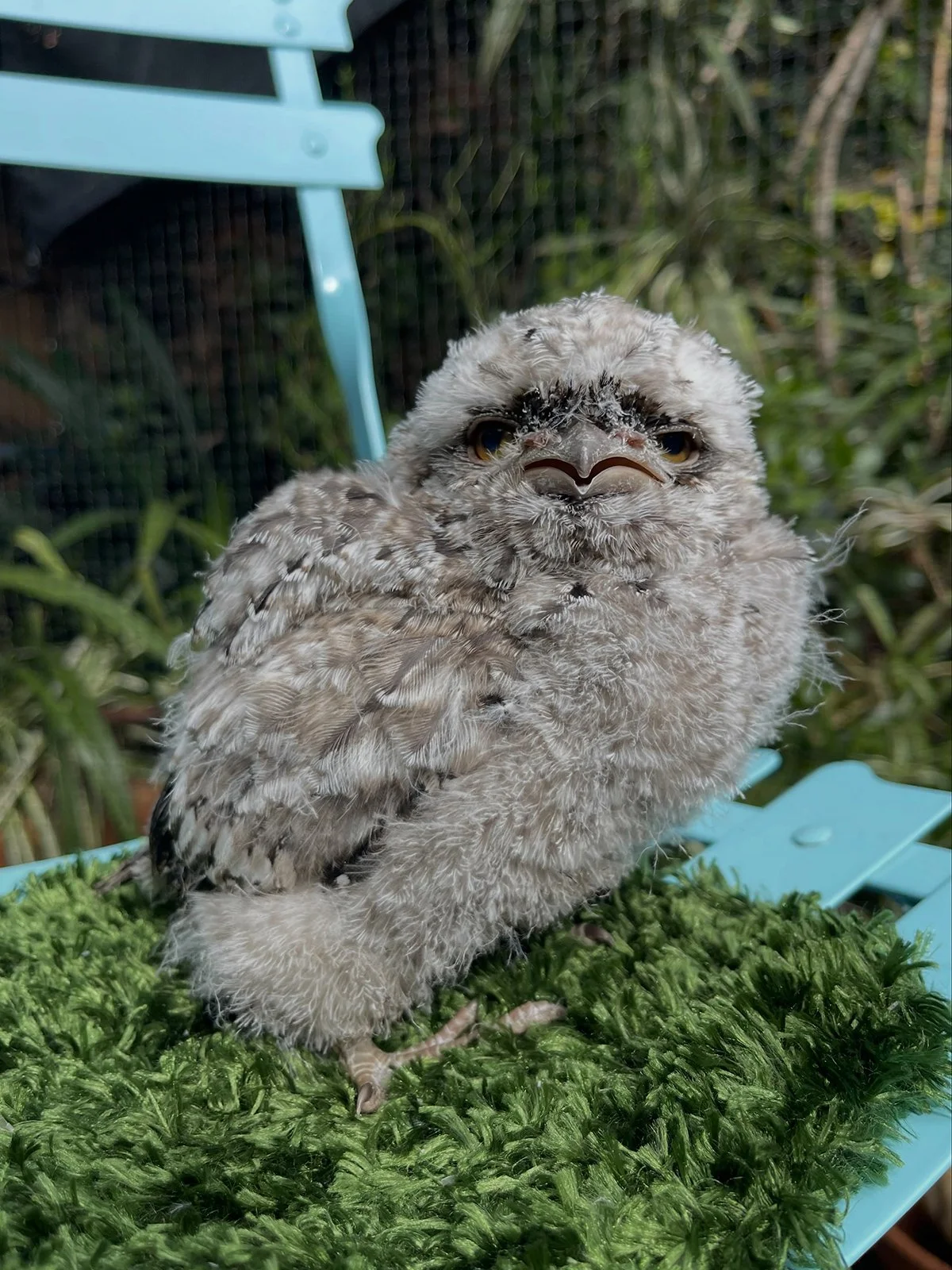
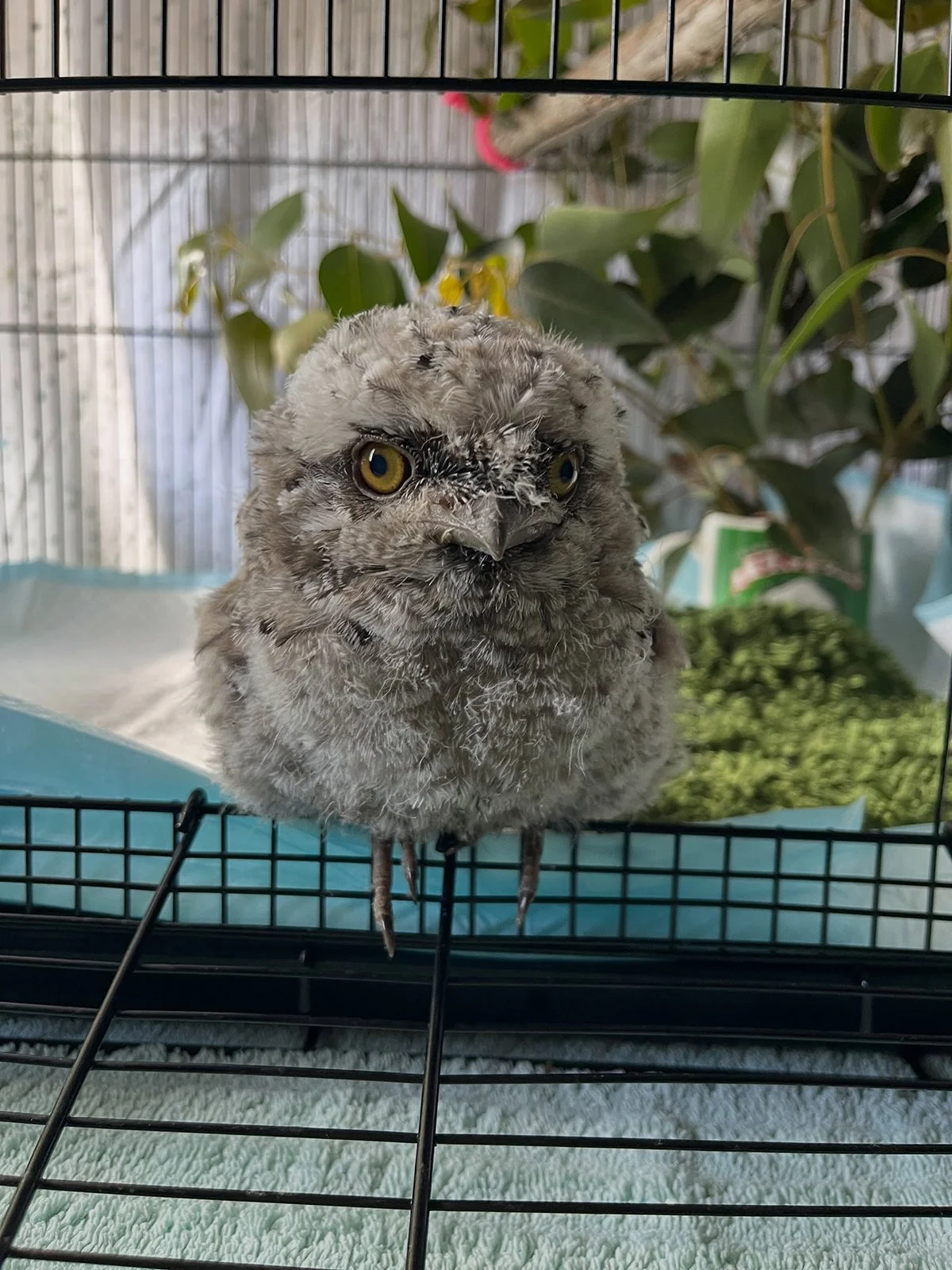
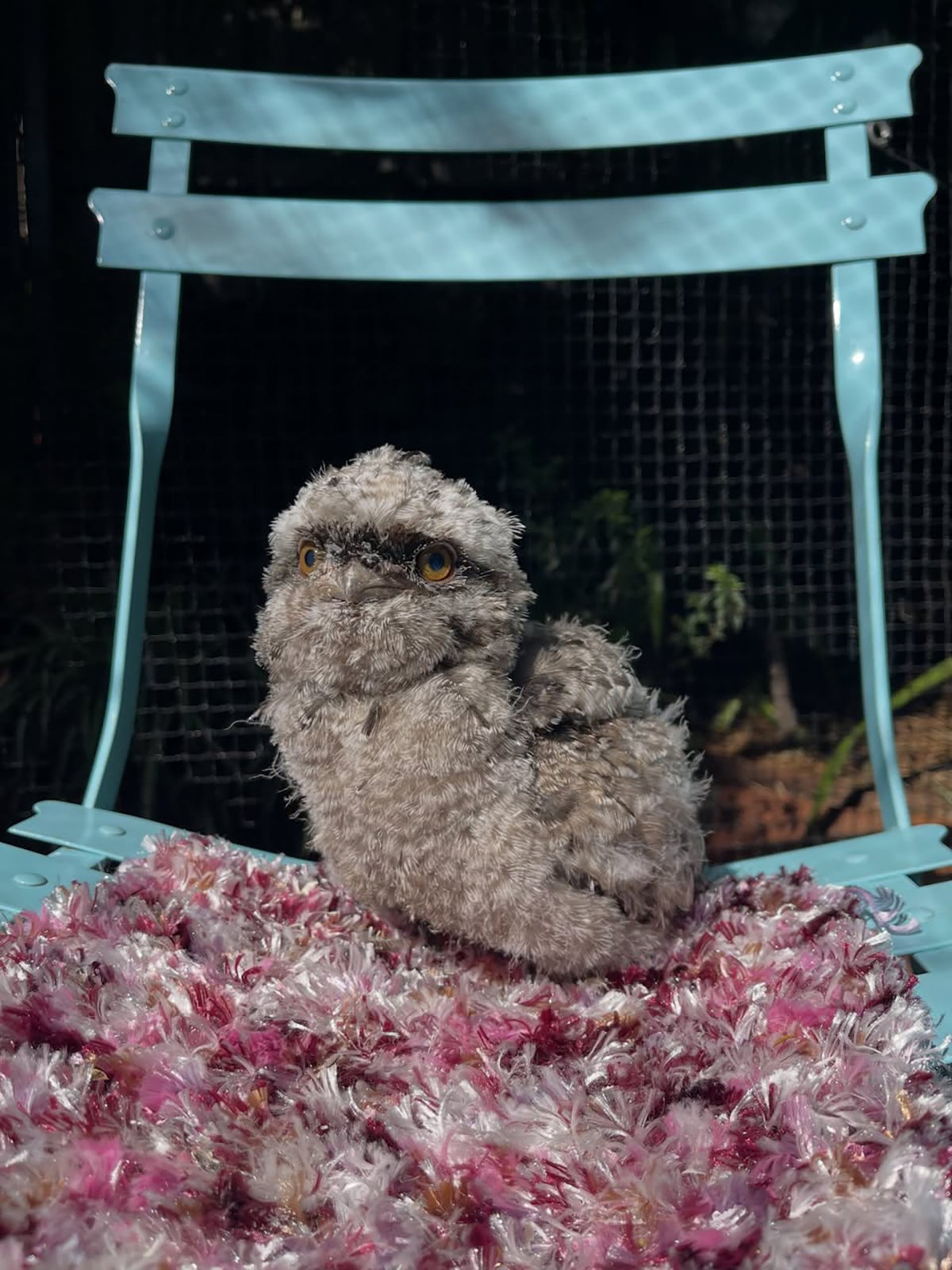
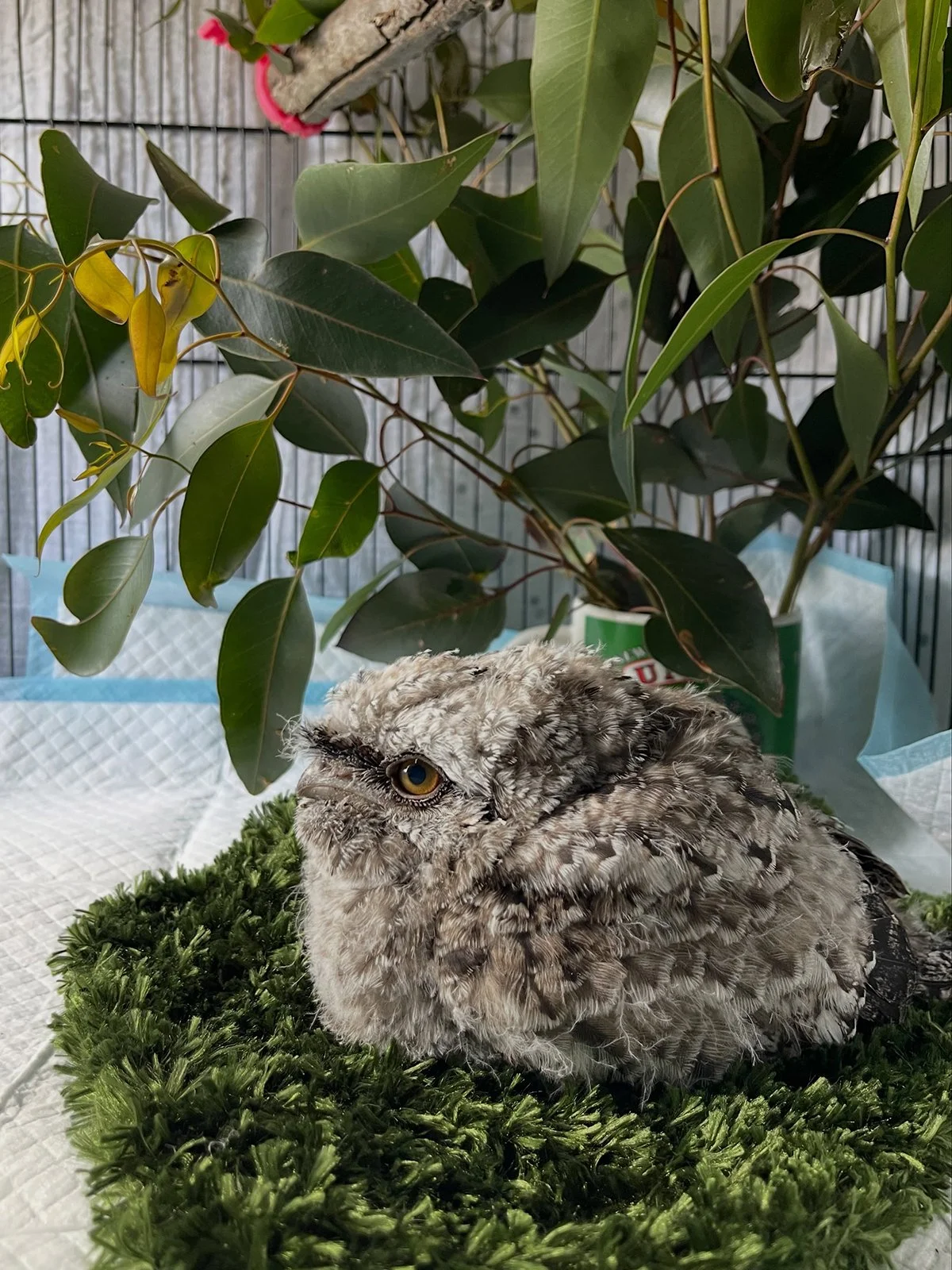
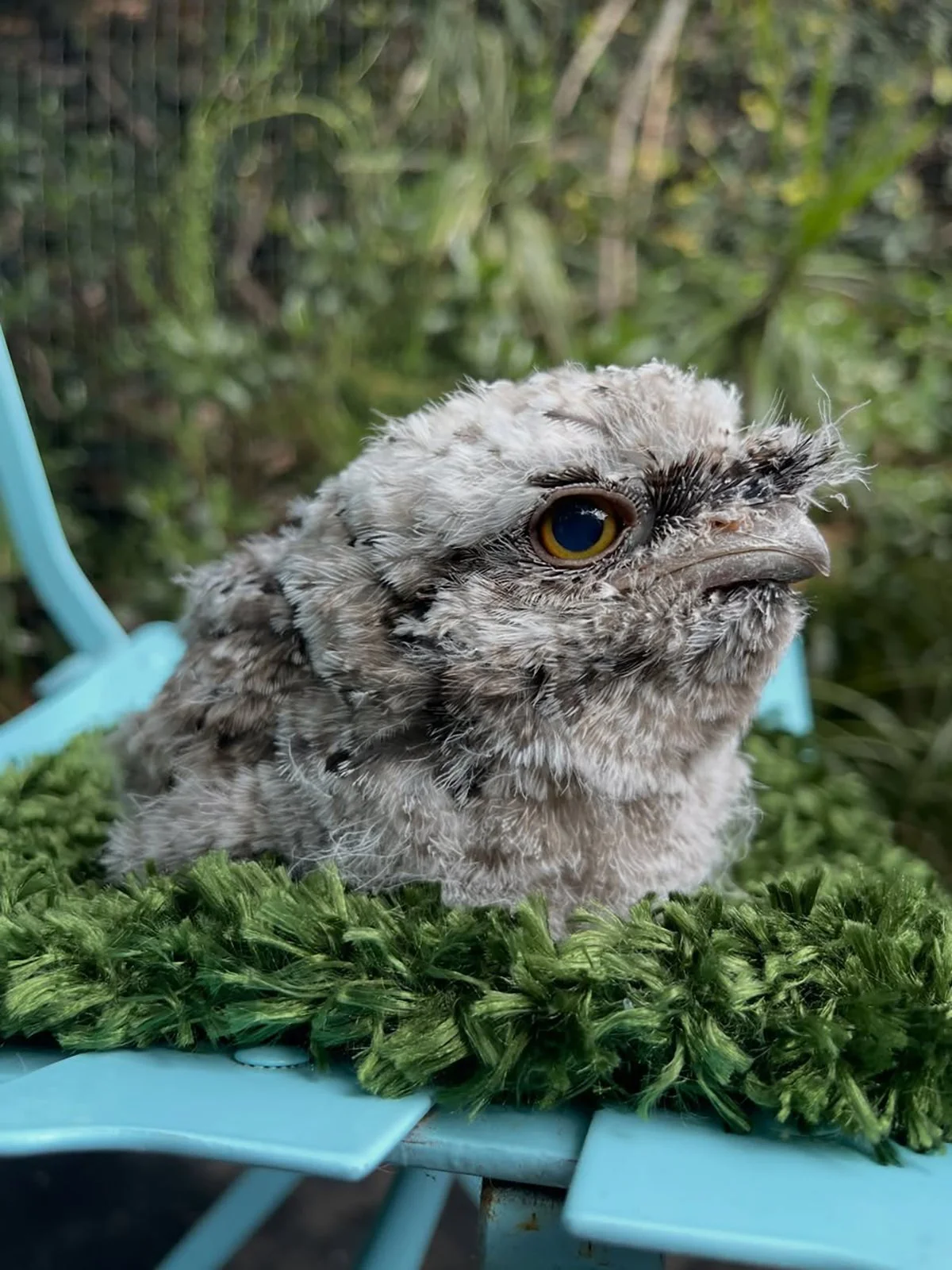
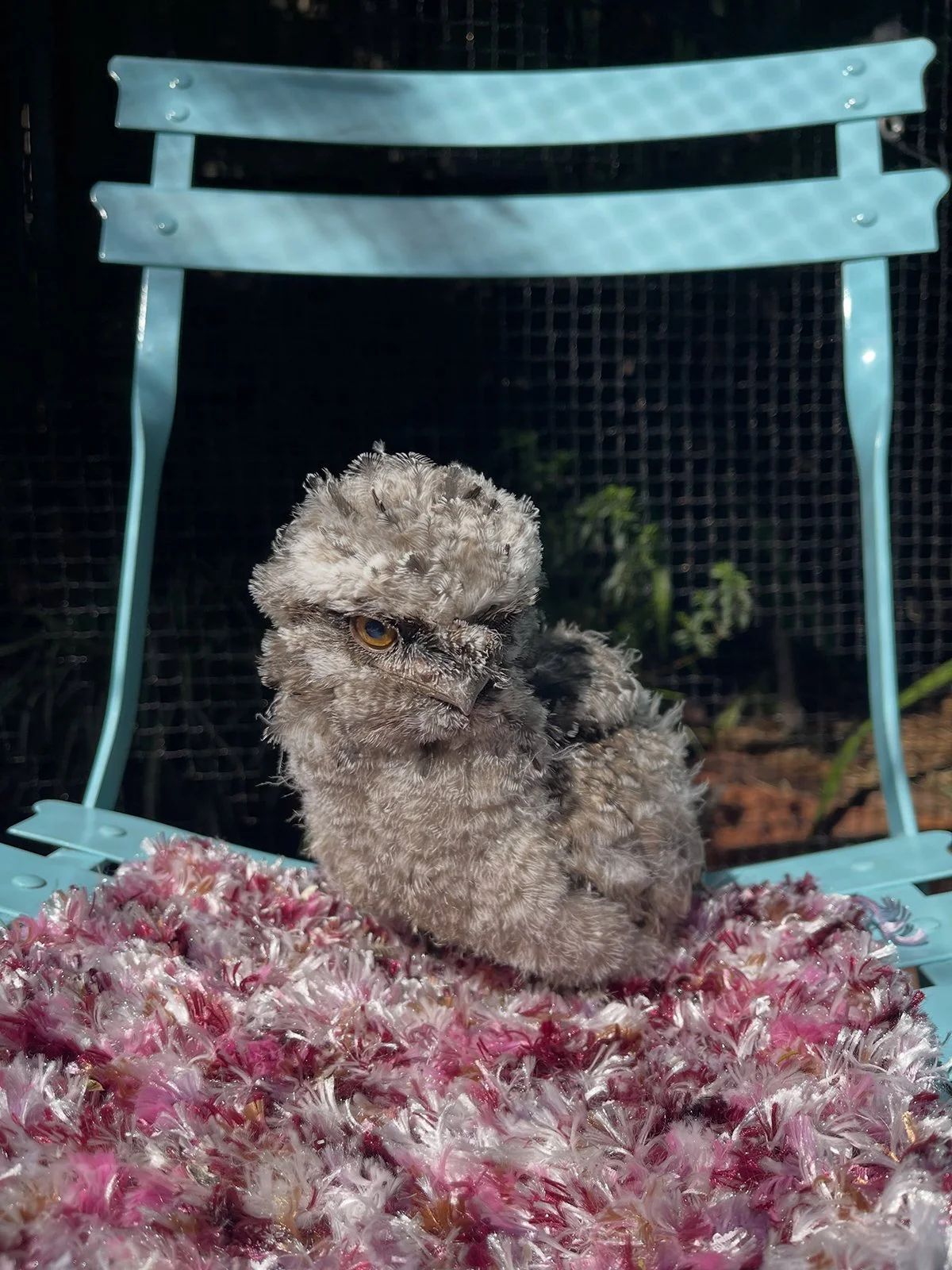
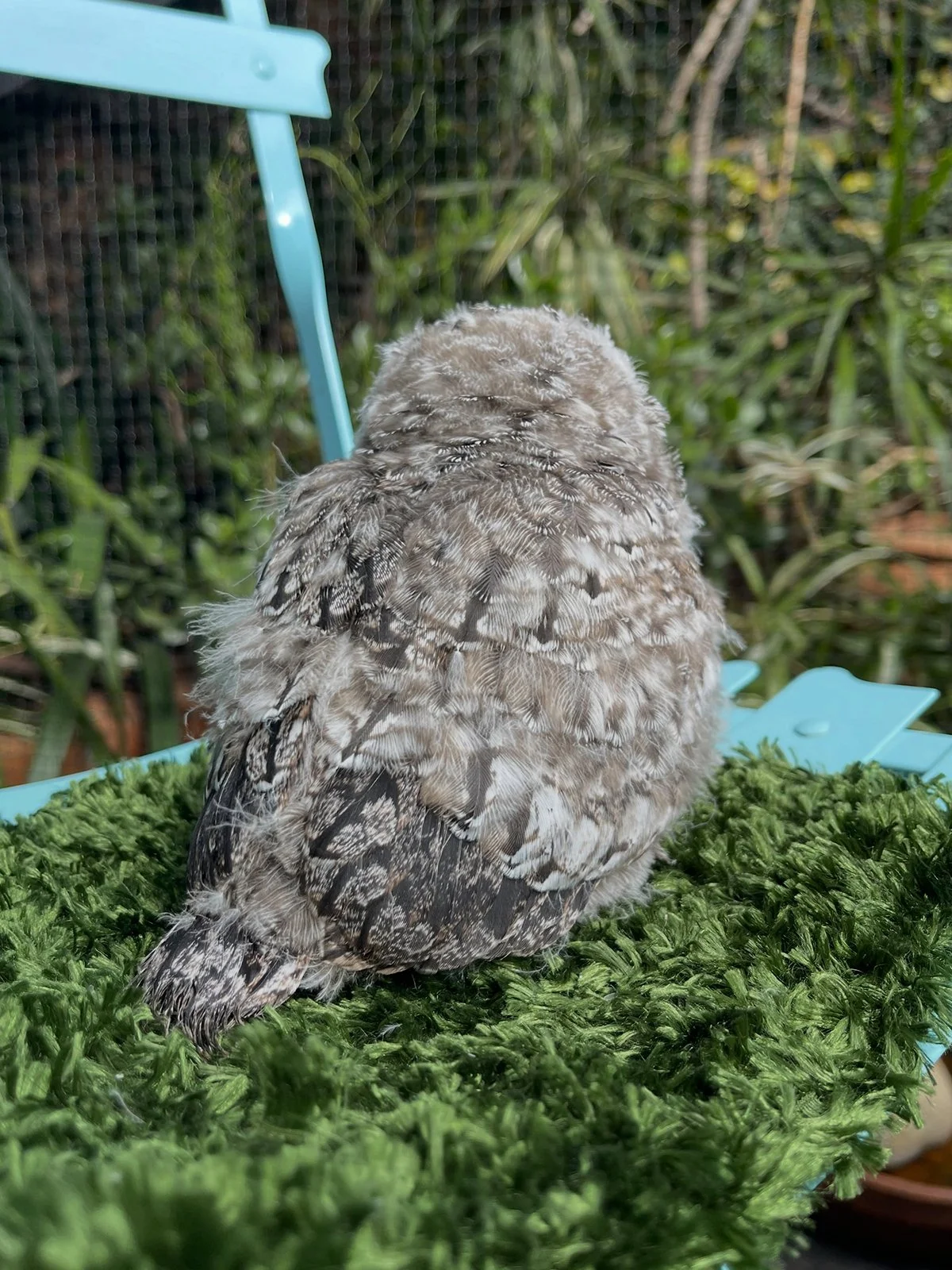
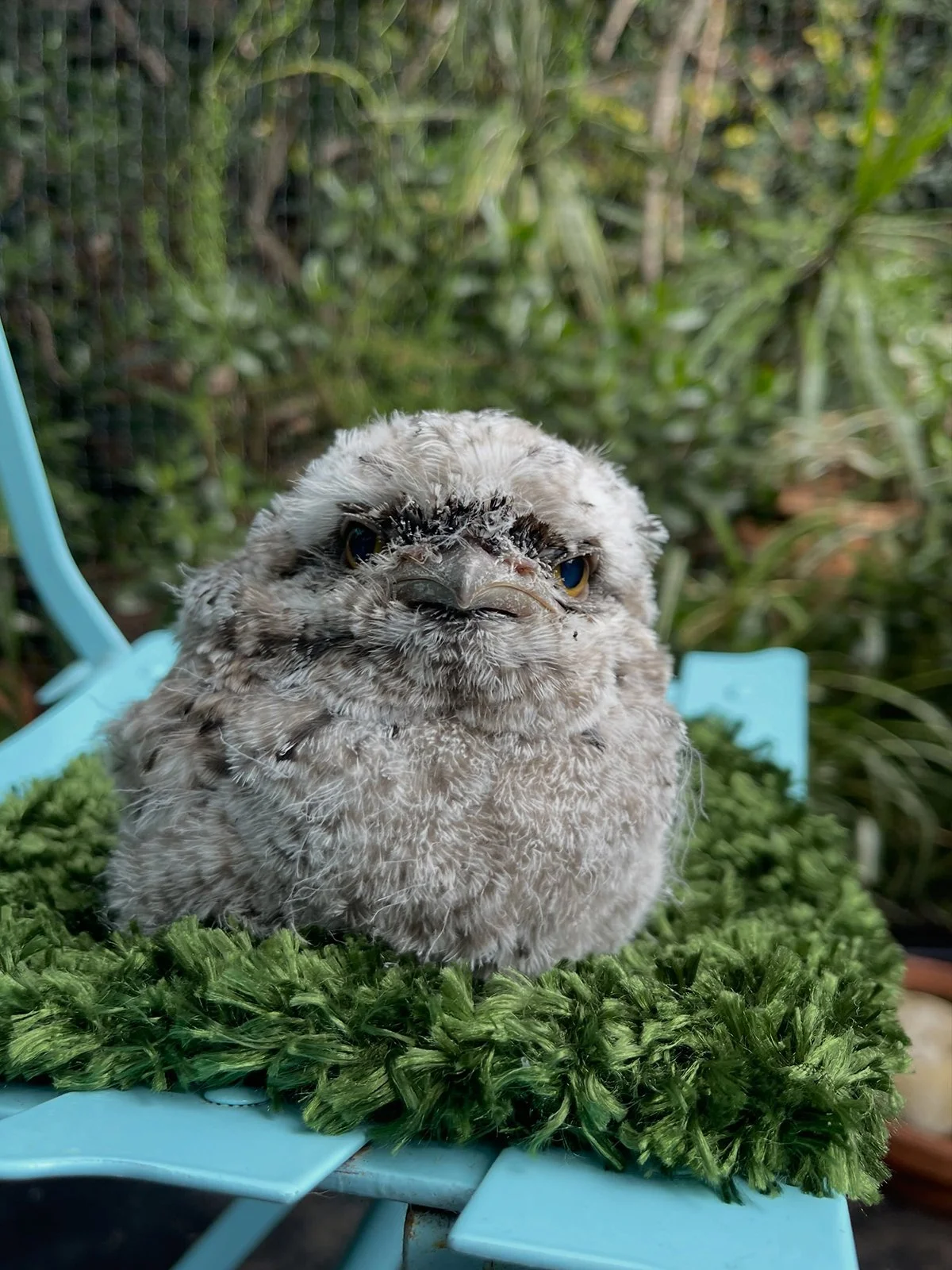
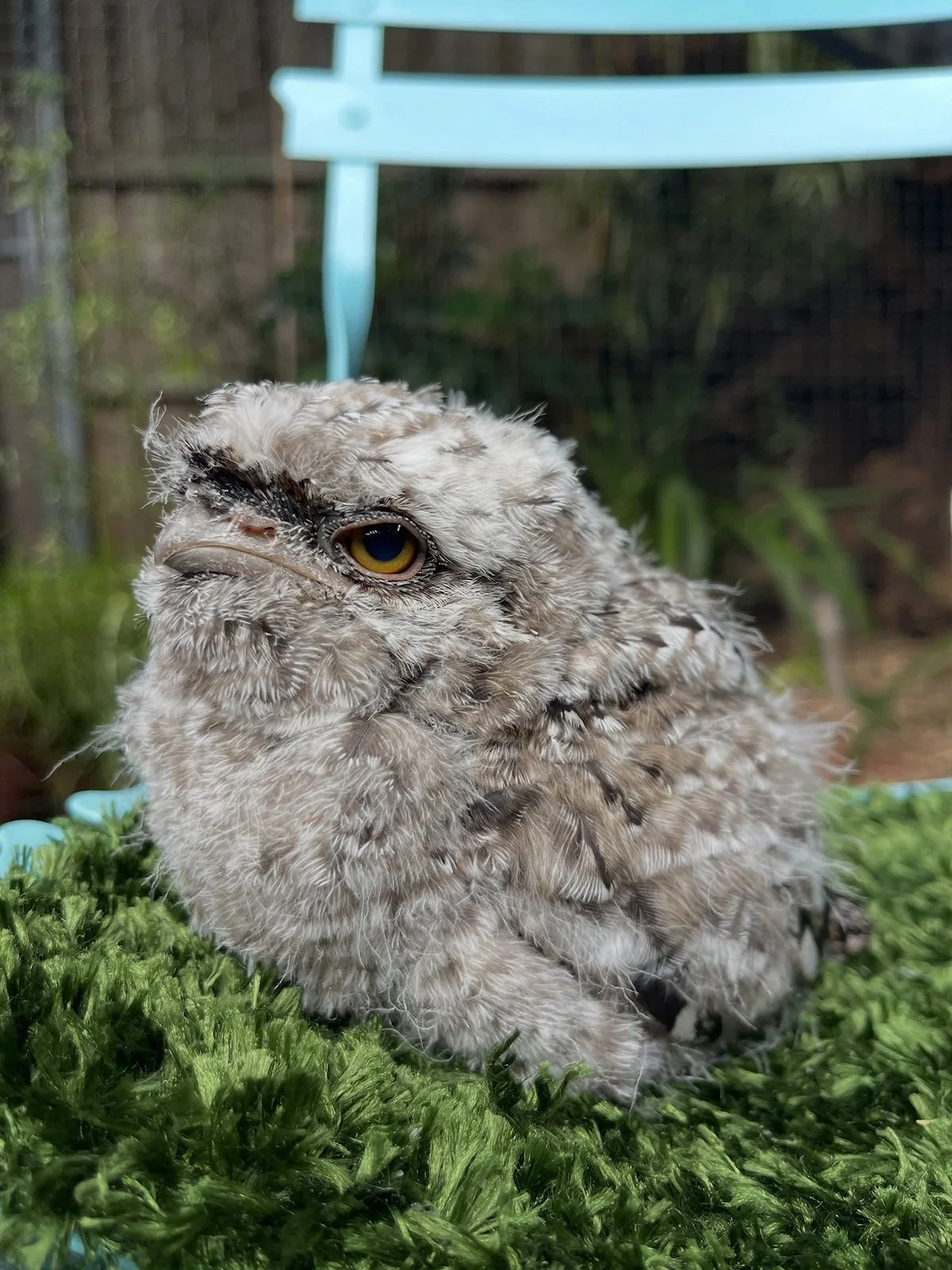
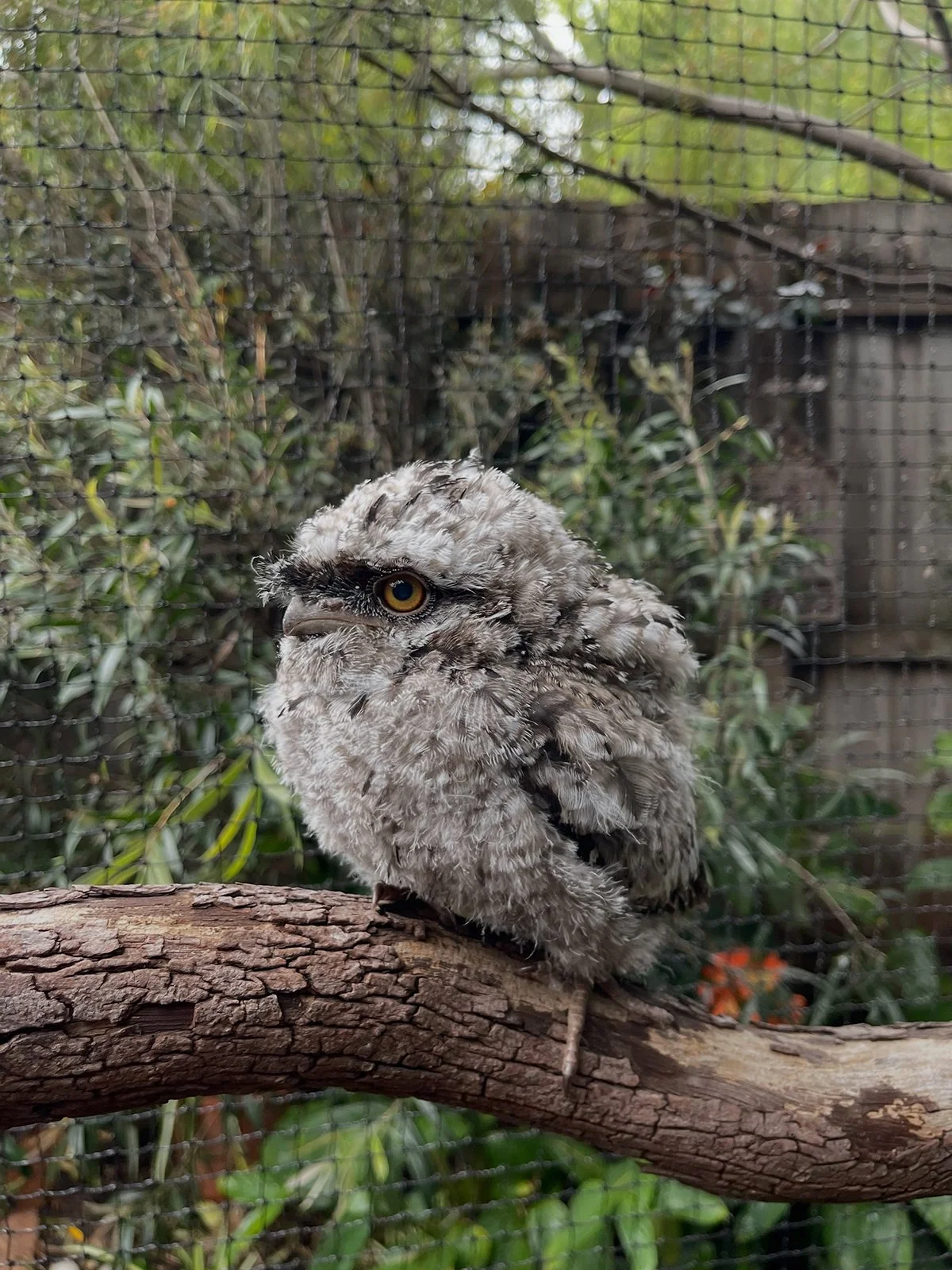
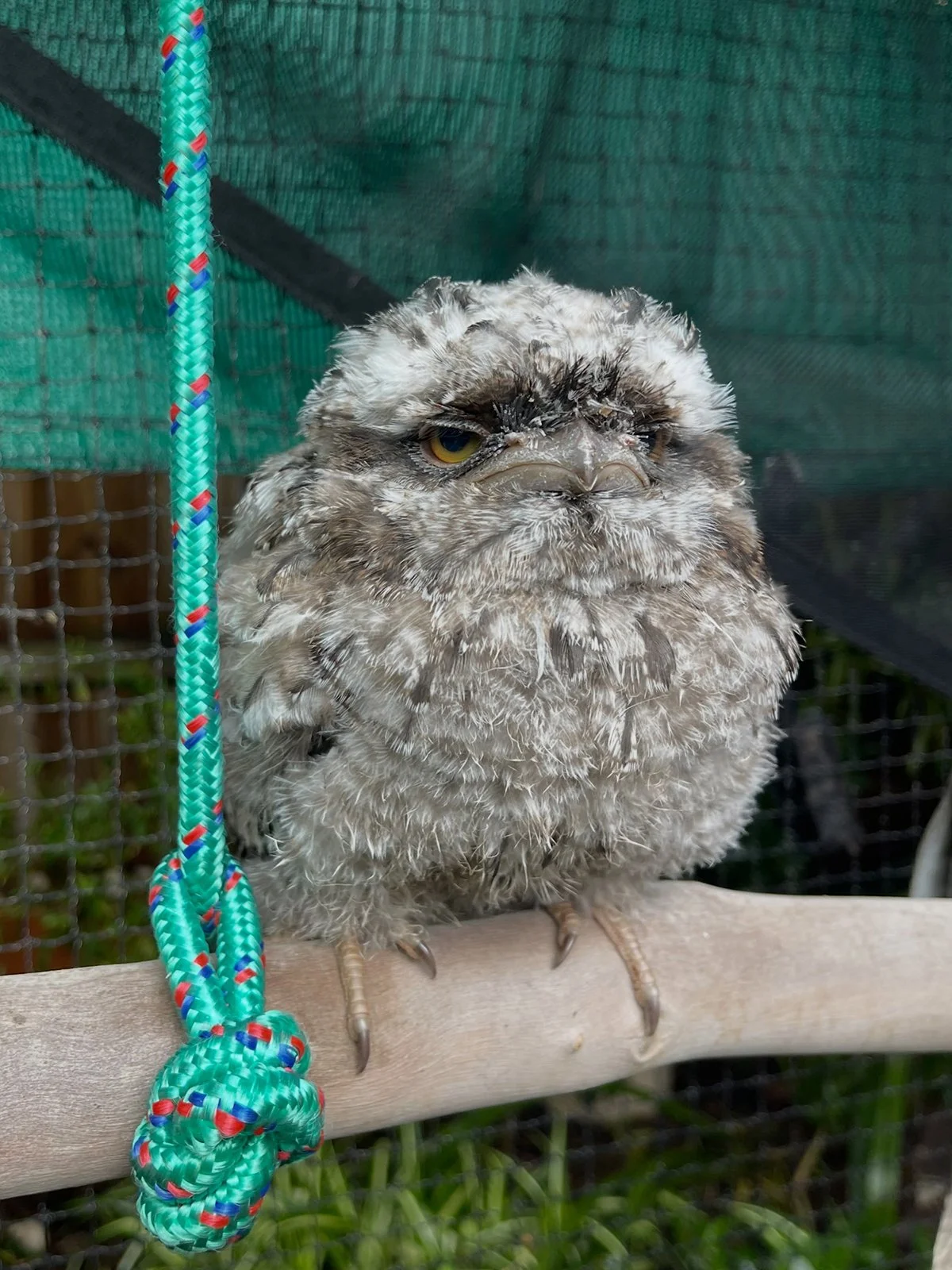
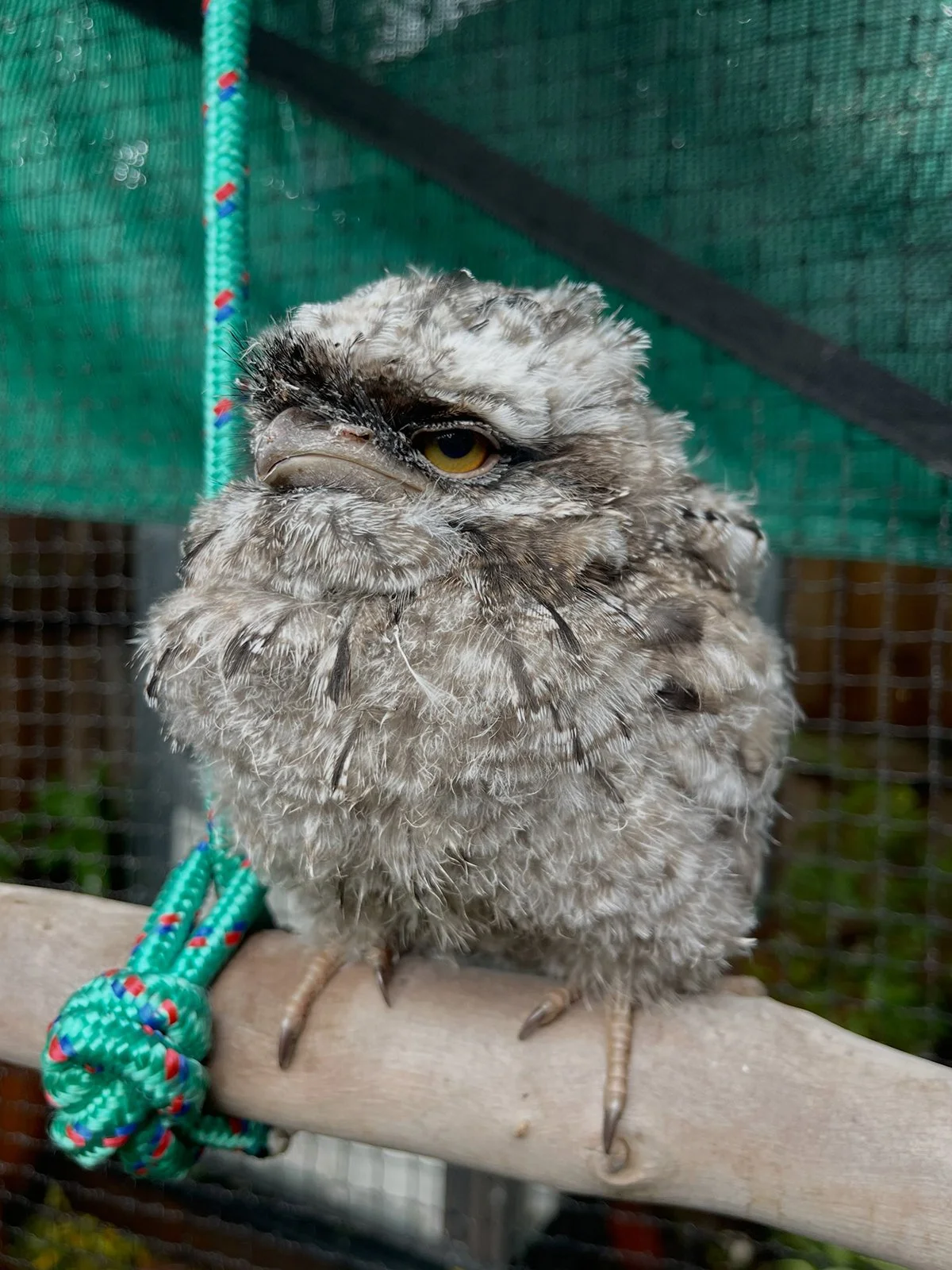
The Oxford English Dictionary (OED) describes a pixel as “a minute area of illumination on a display screen, one of many from which an image is composed”. To us, a Pixel is a beguiling area of illumination in a fluffy nest, one of many from which a family is composed. A chatty Tawny frogmouth, Pixel came into care on the 23rd of September, 2026. A chick of exquisite wispiness, they are a transformation before our very eyes.
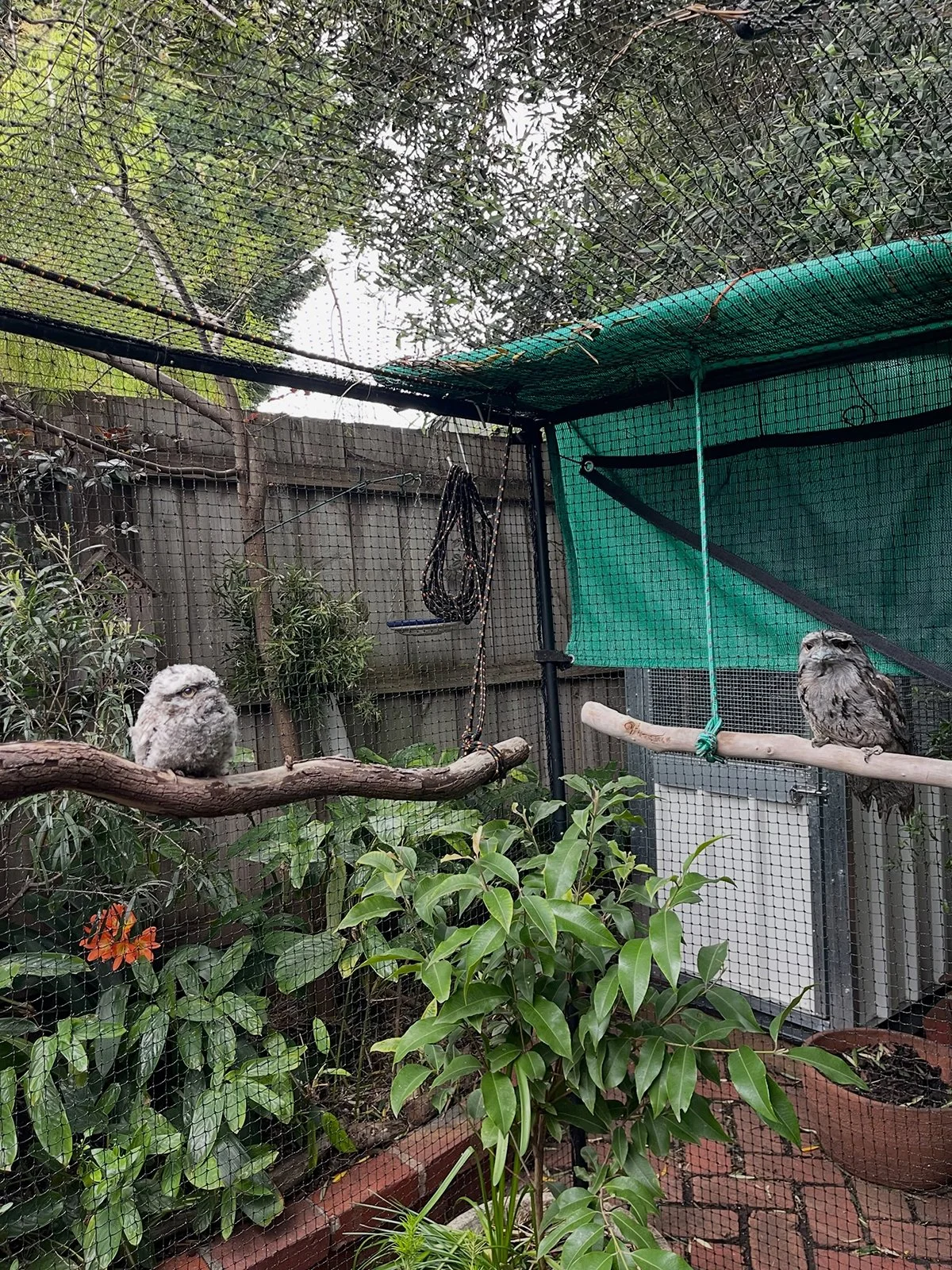
We have named him/her Pixel for the duration of their stay with us, and once they are able to fly and independently hunt for food, we’ll be able to release them home. Until then, upon a fluffy blankie, seated on a chair in the outdoor enclosure, Pixel takes in his/her surrounds, inclusive of the two of us. It continues to be a joy getting to better know them, watching those fine white wisps flutter free as the darker feathers come through[1ii].
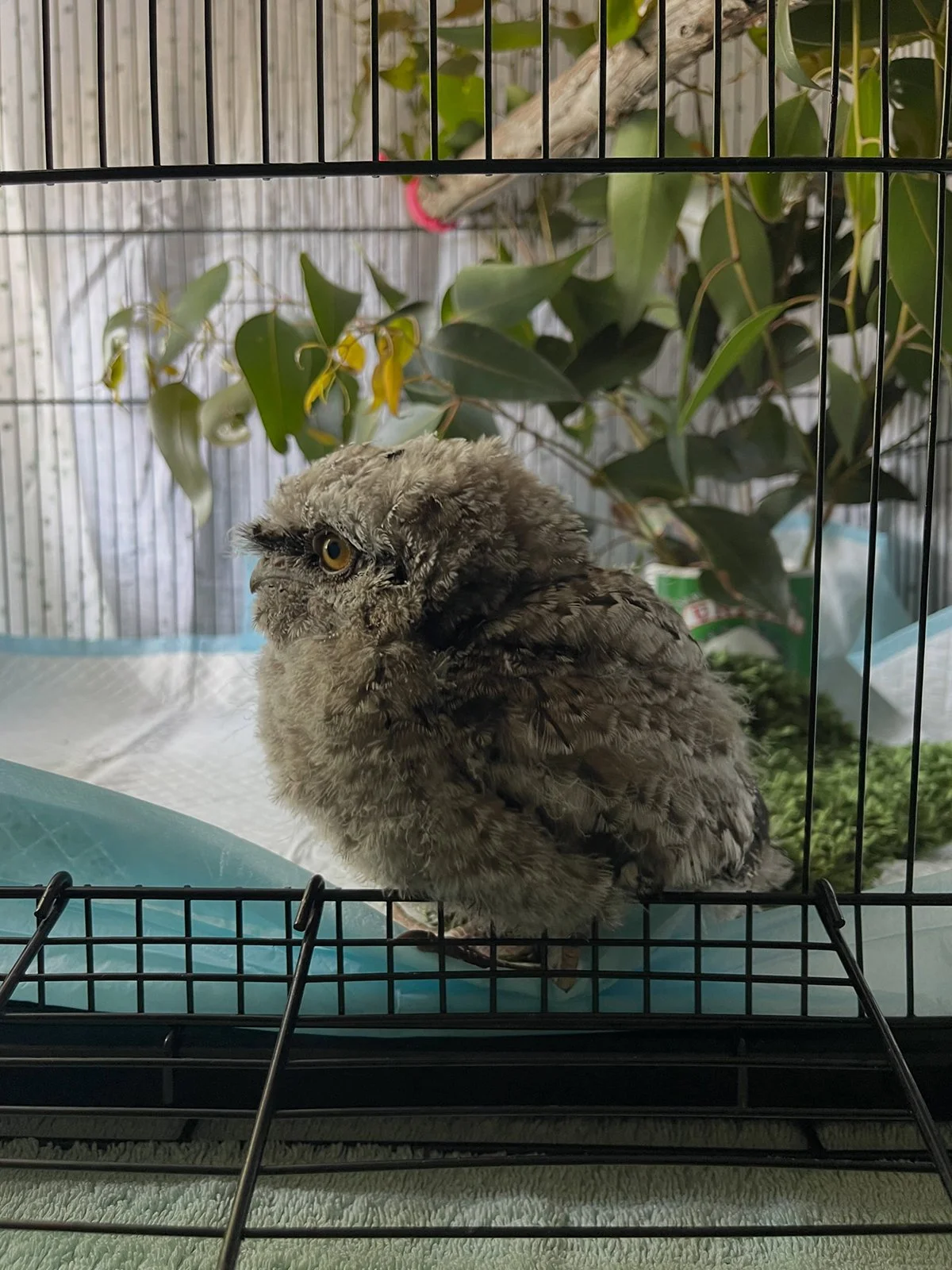
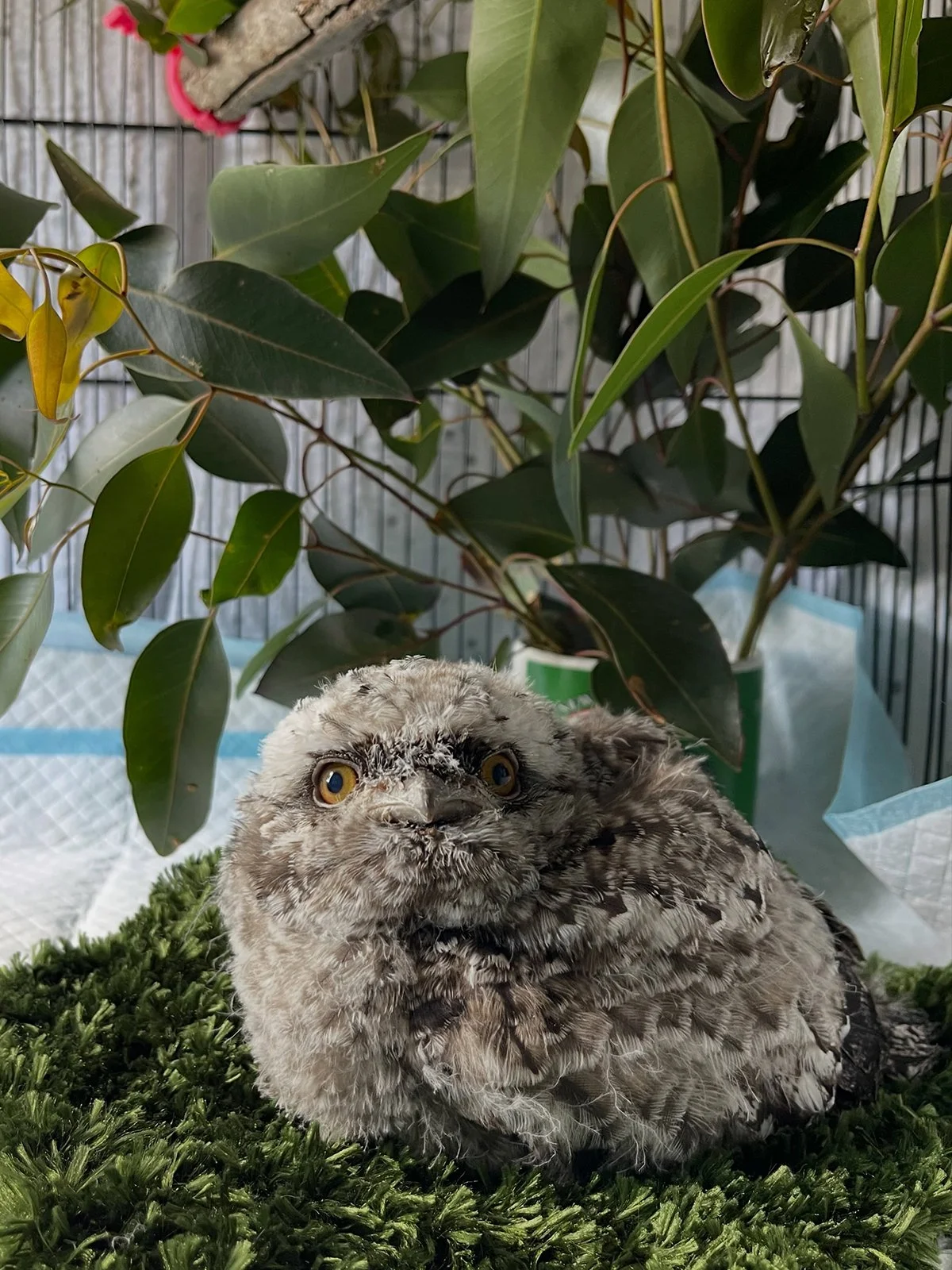
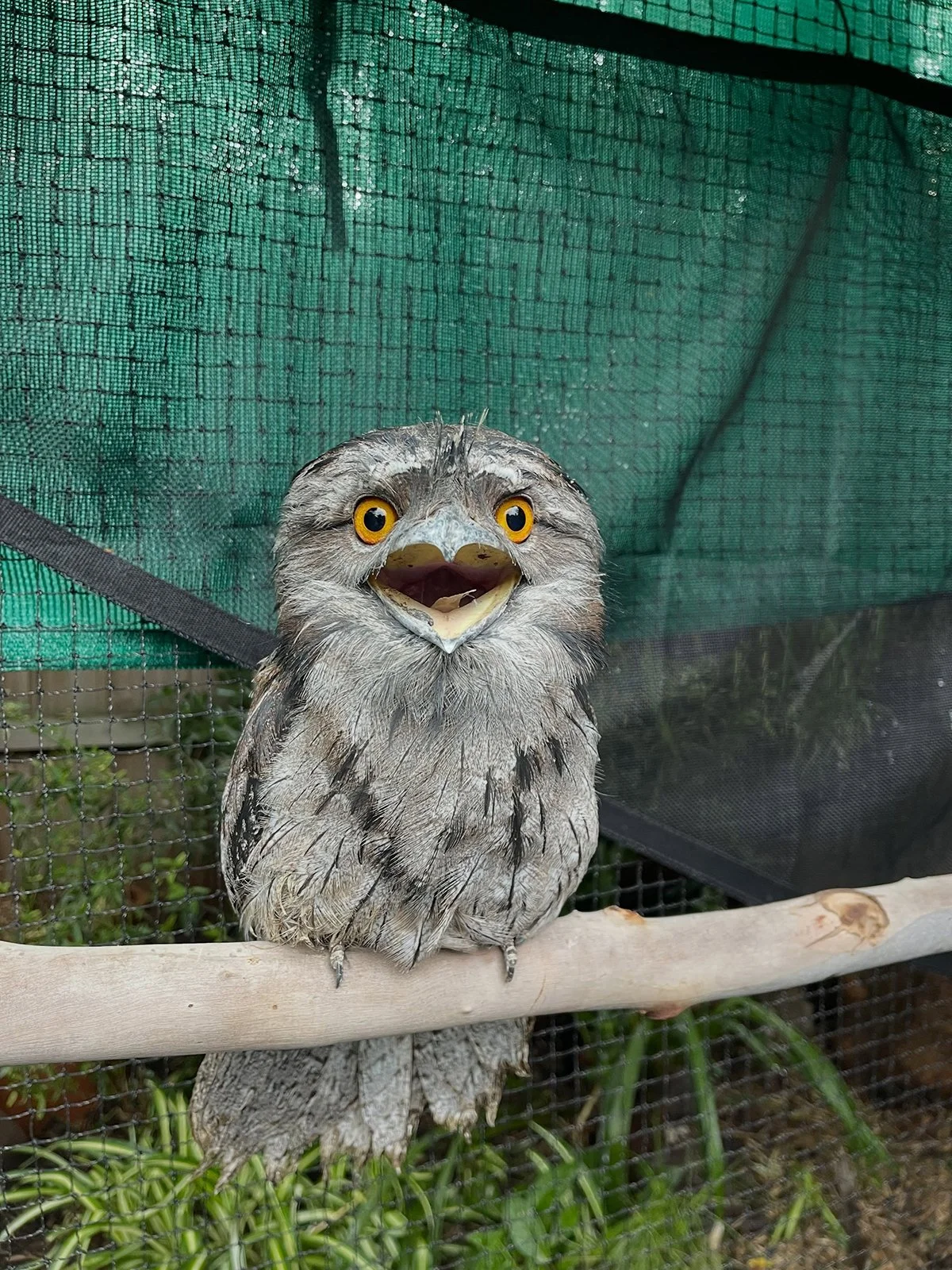
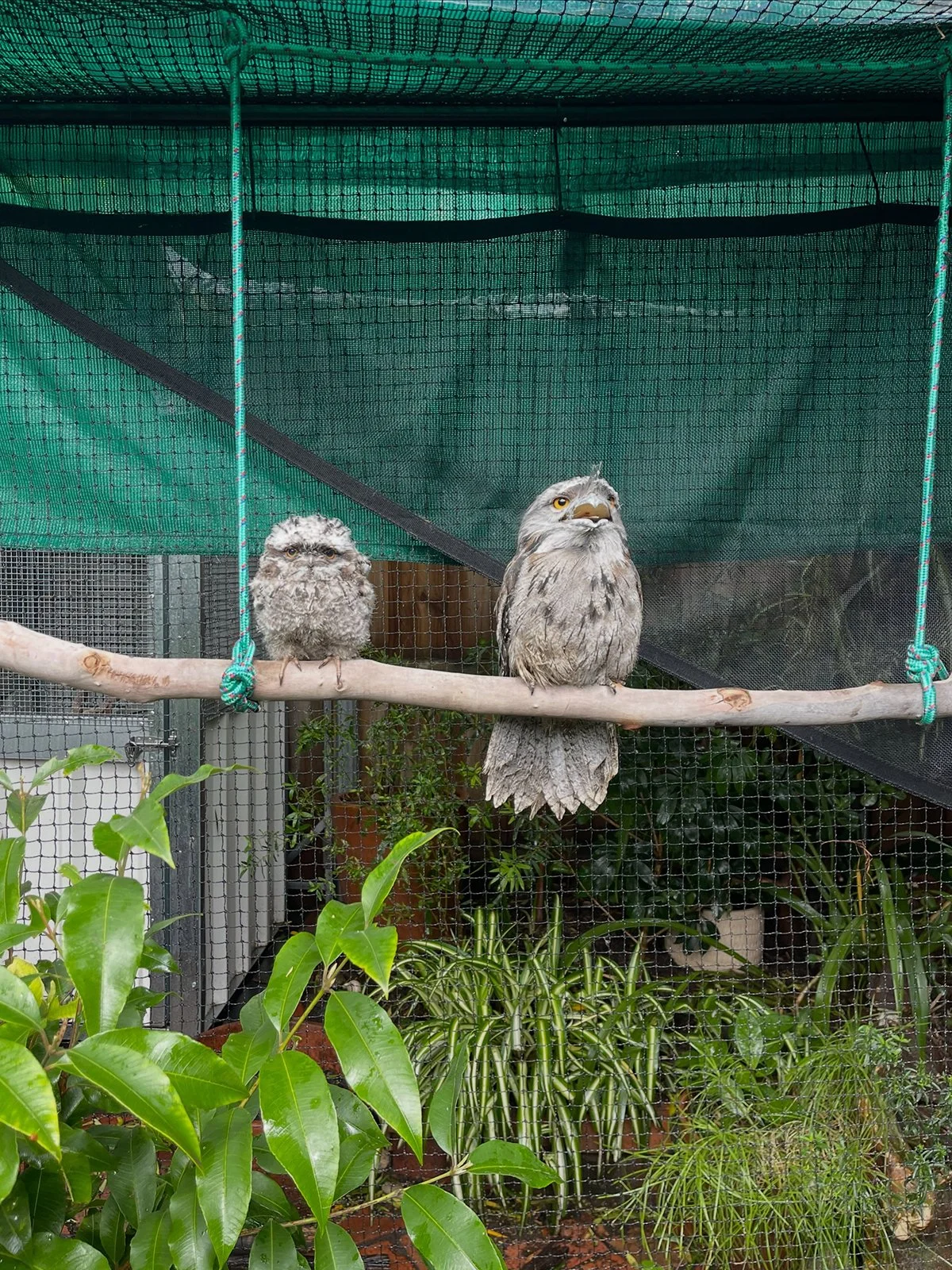
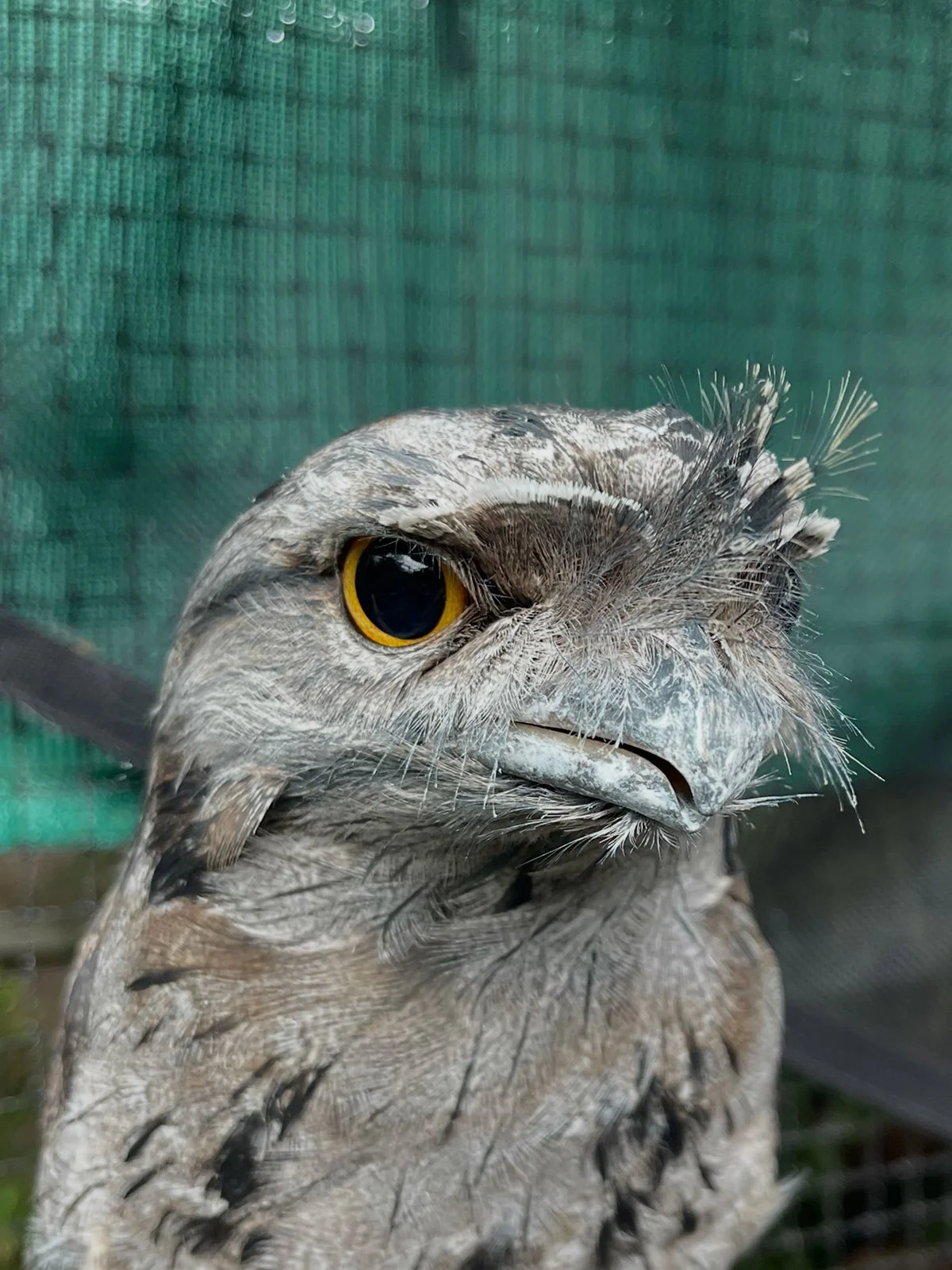
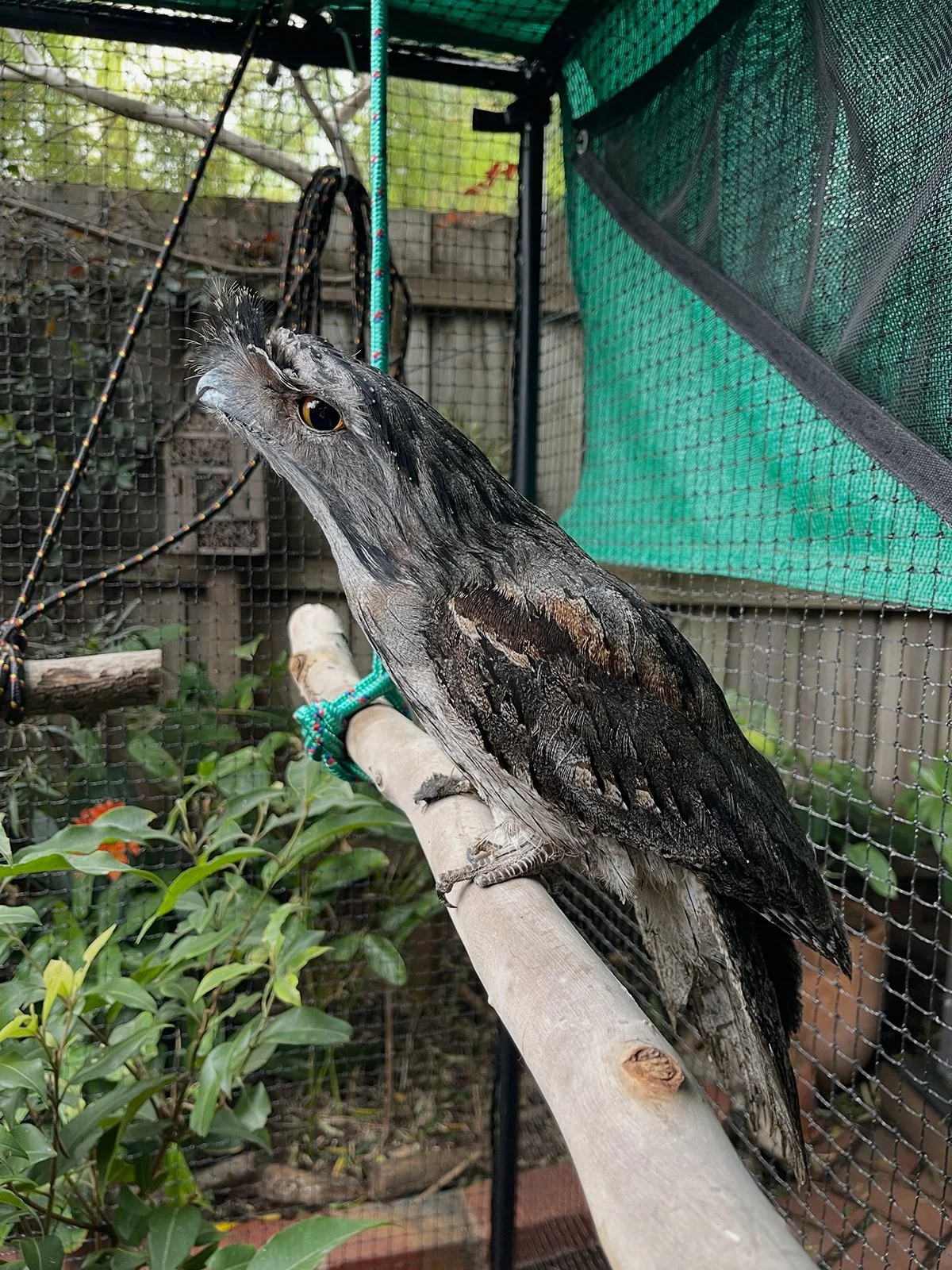
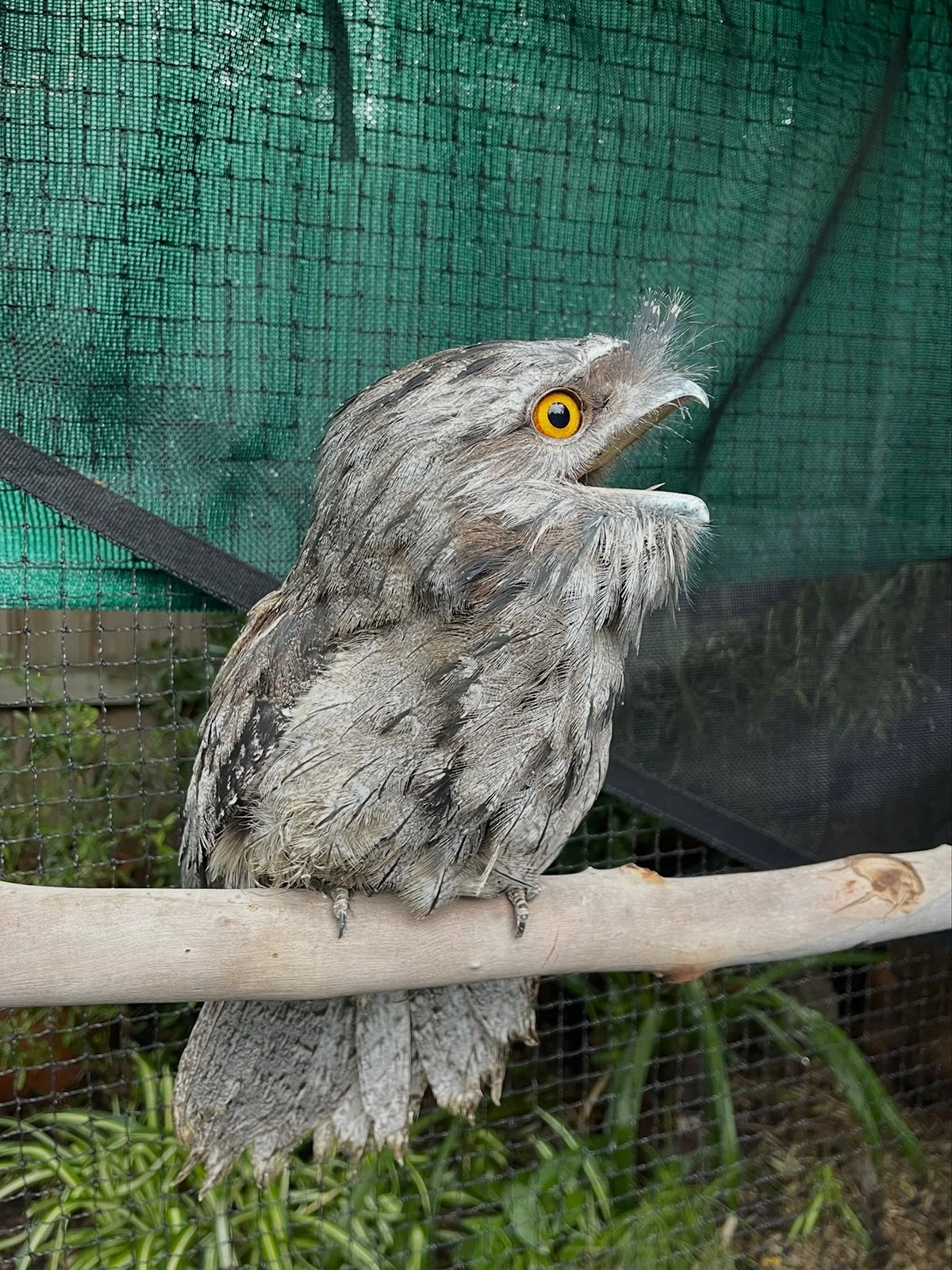
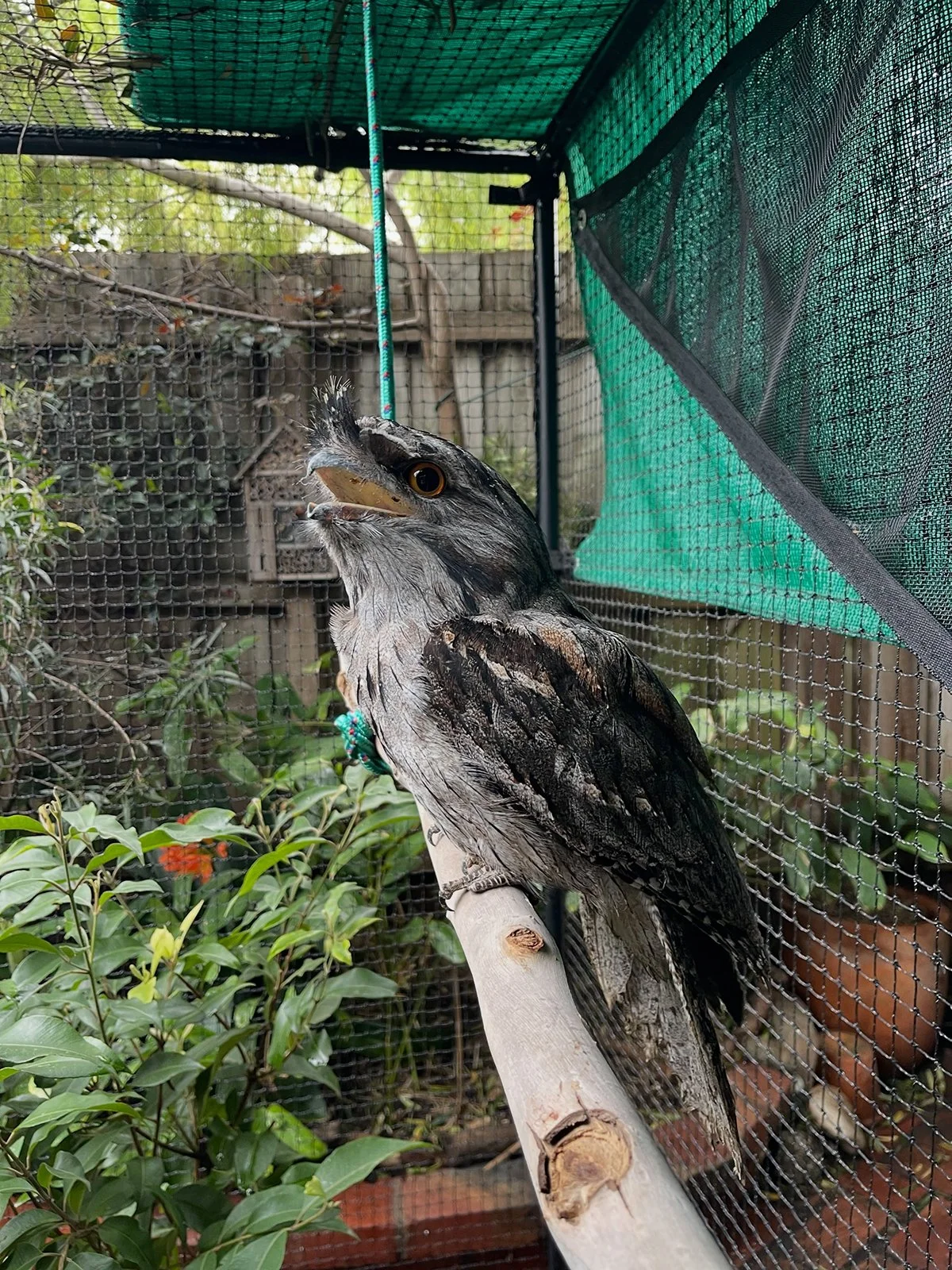
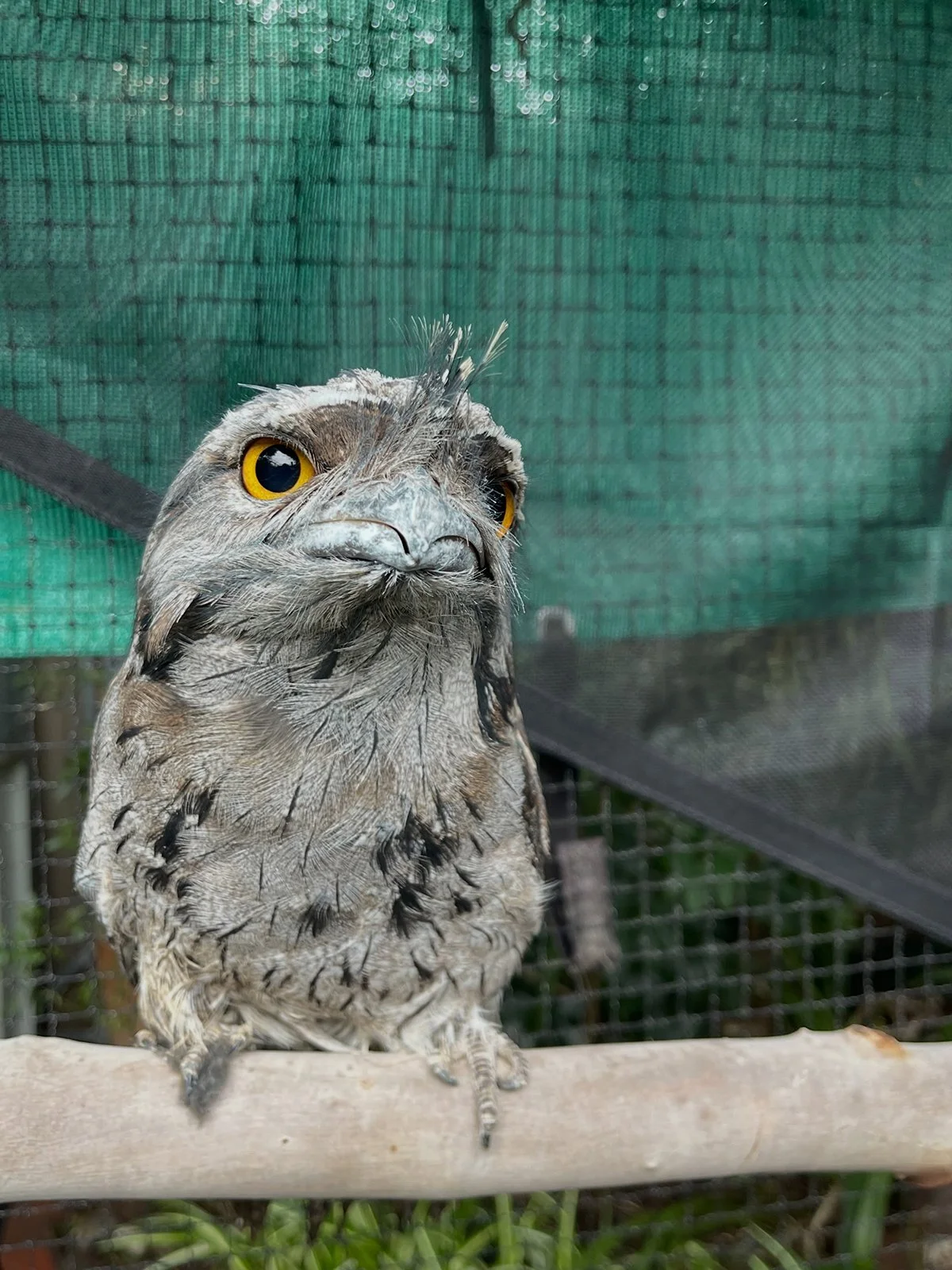
At the other end of the Tawny scale, pictured below is Cobalt Swivels, who came into care recently with concussion, and has been recuperating indoors before moving, like Pixel, to the outdoor enclosure.
Our wings are crossed that shapeshifter, branch-becomer Cobalt makes a good recovery, and is soon ready for release.
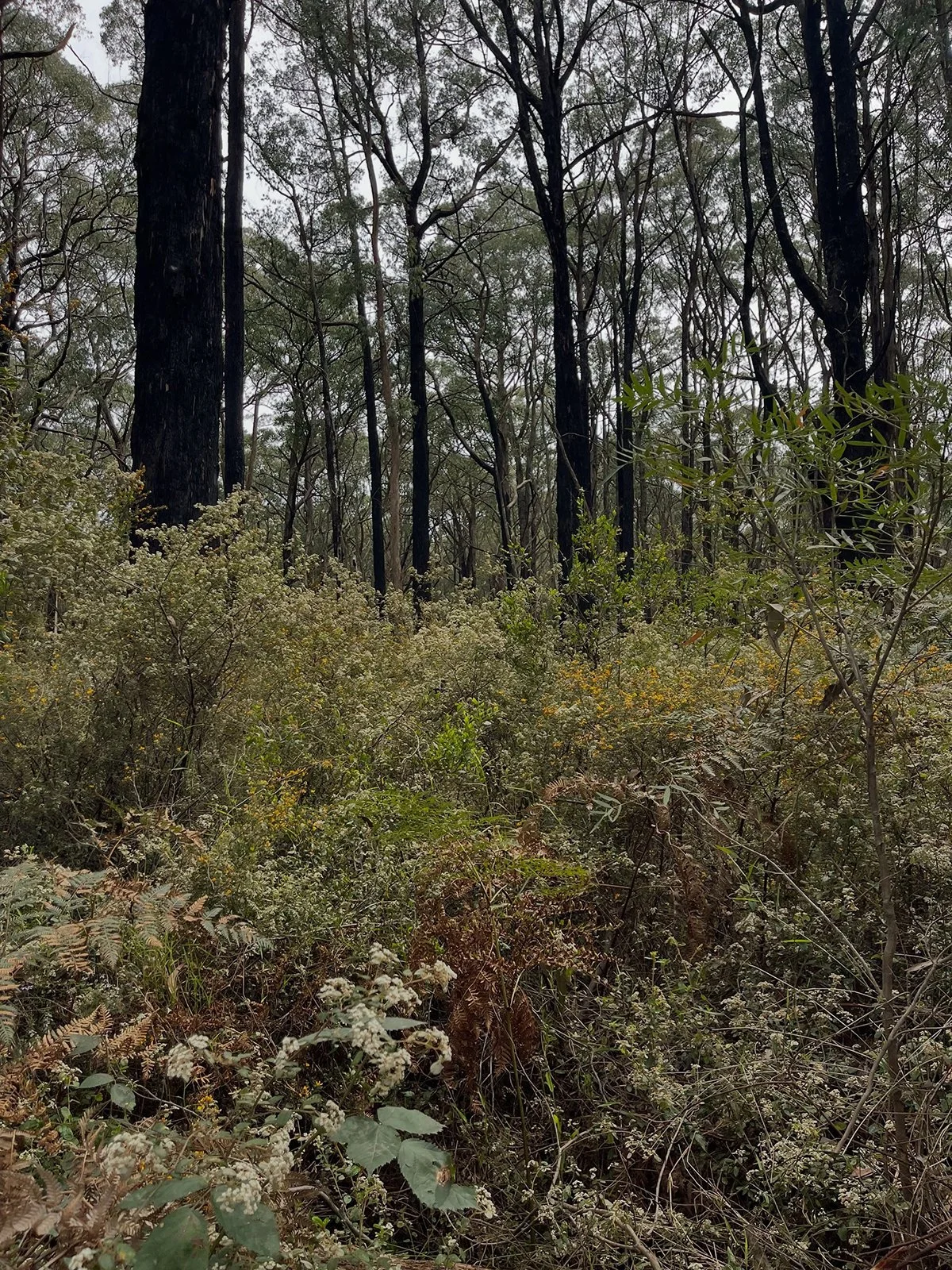
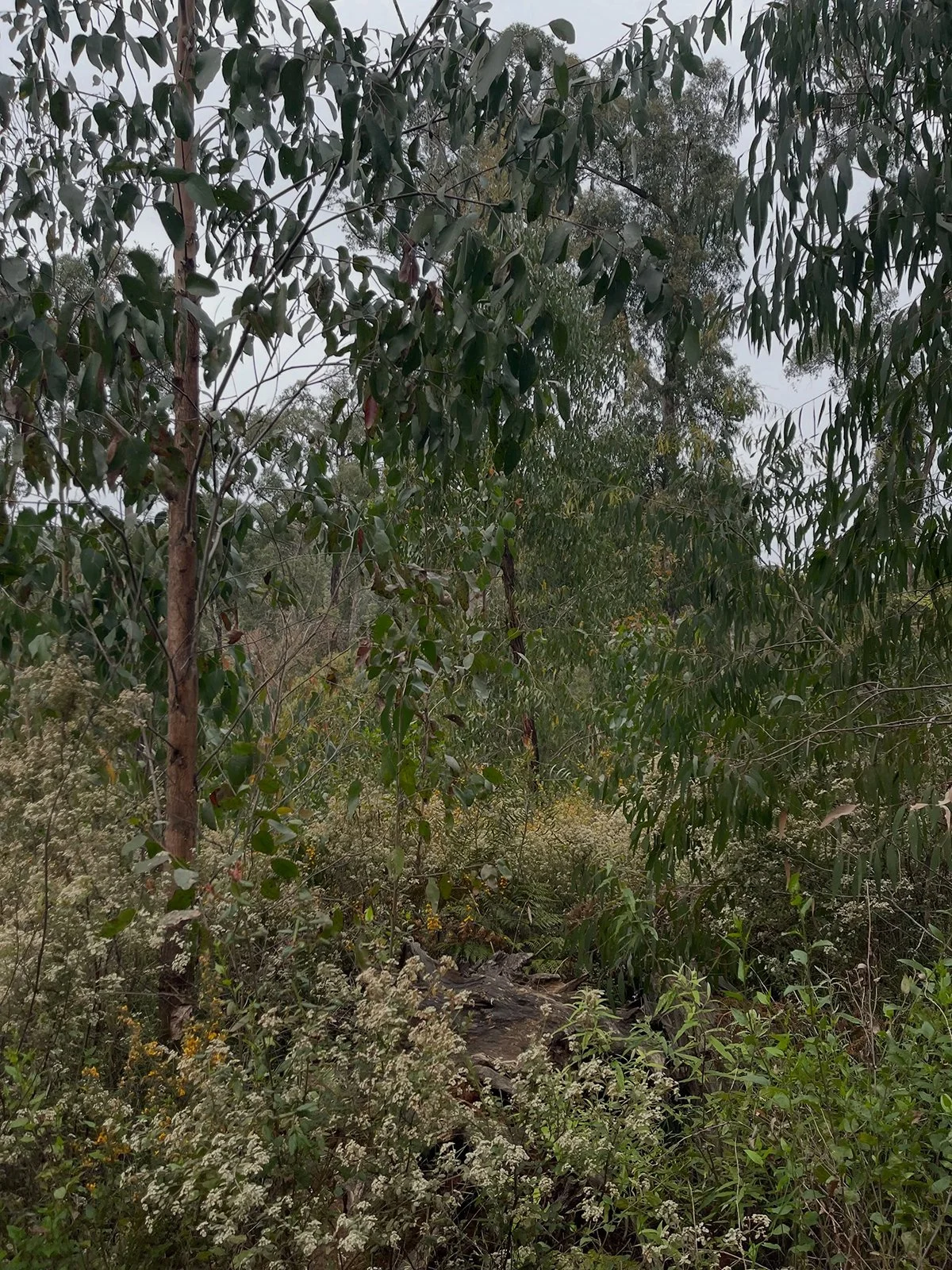
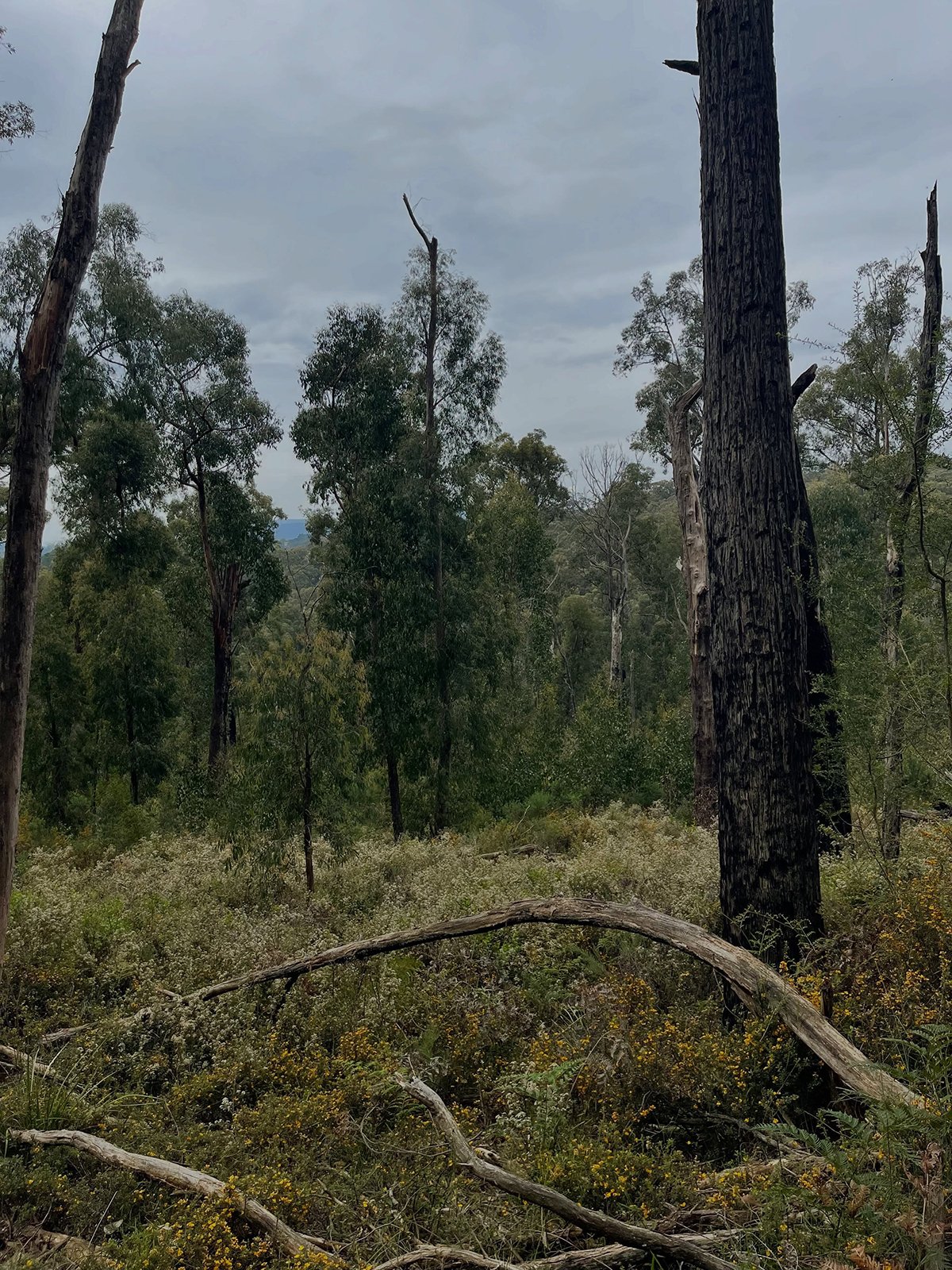
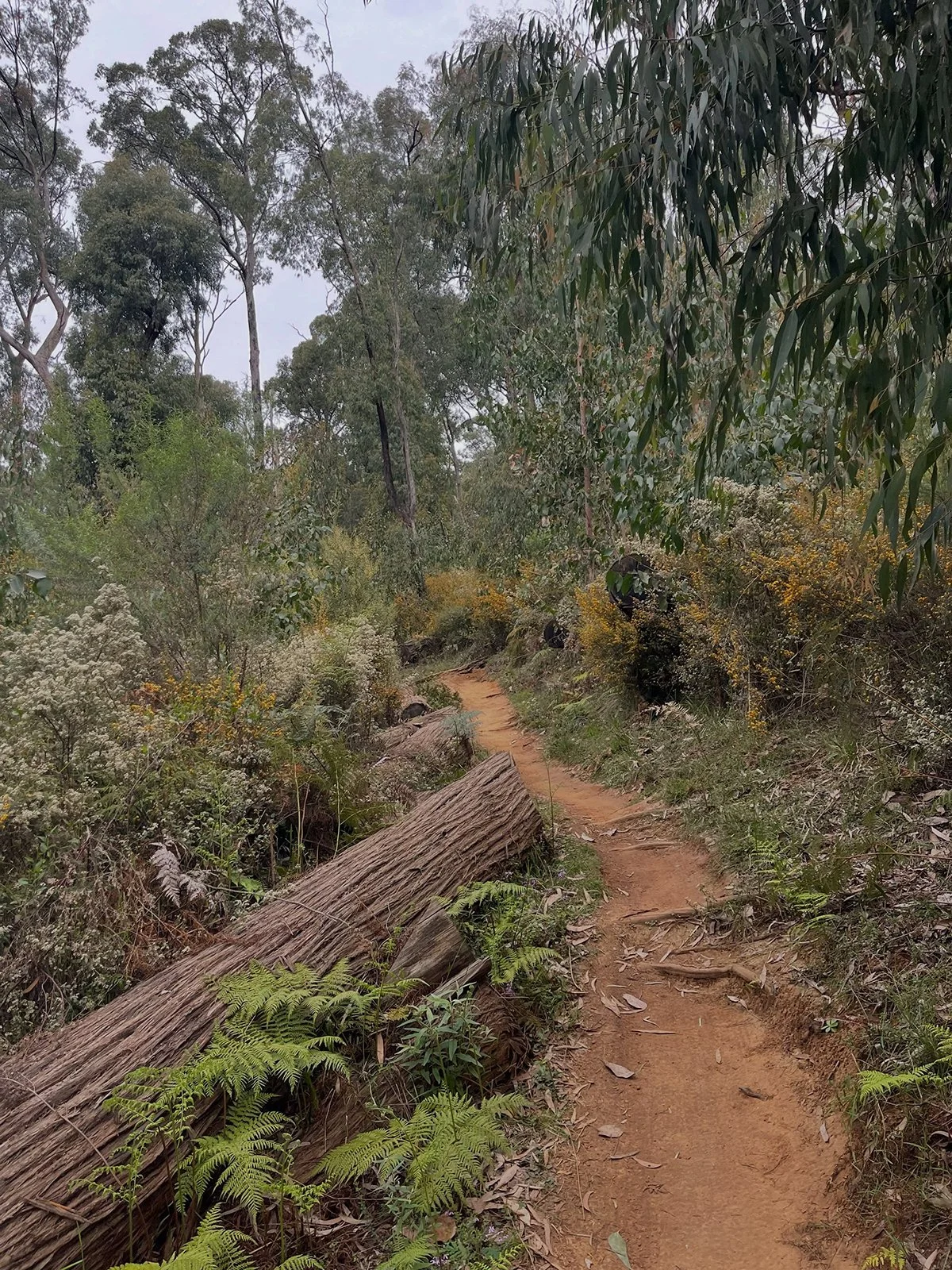
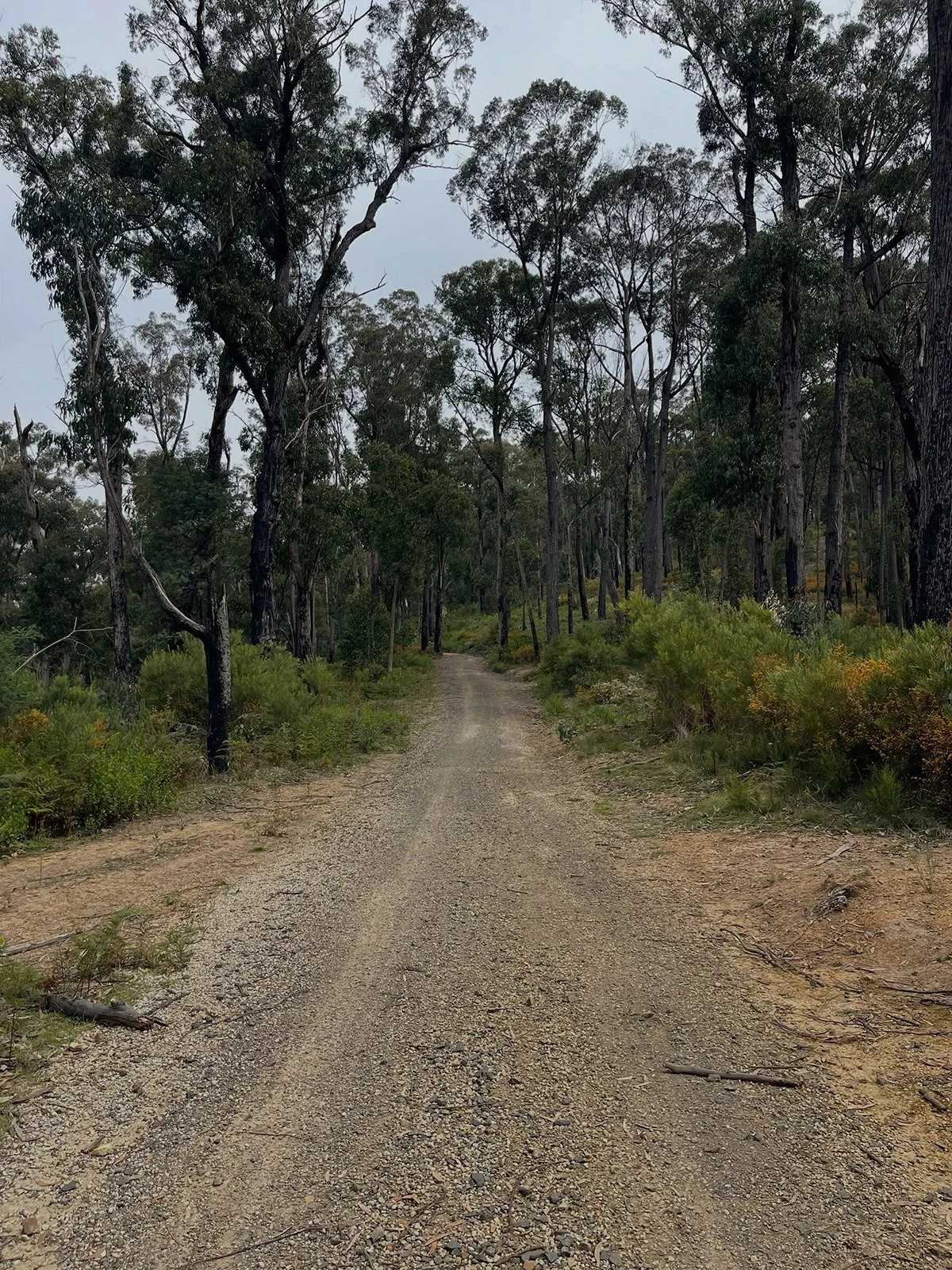
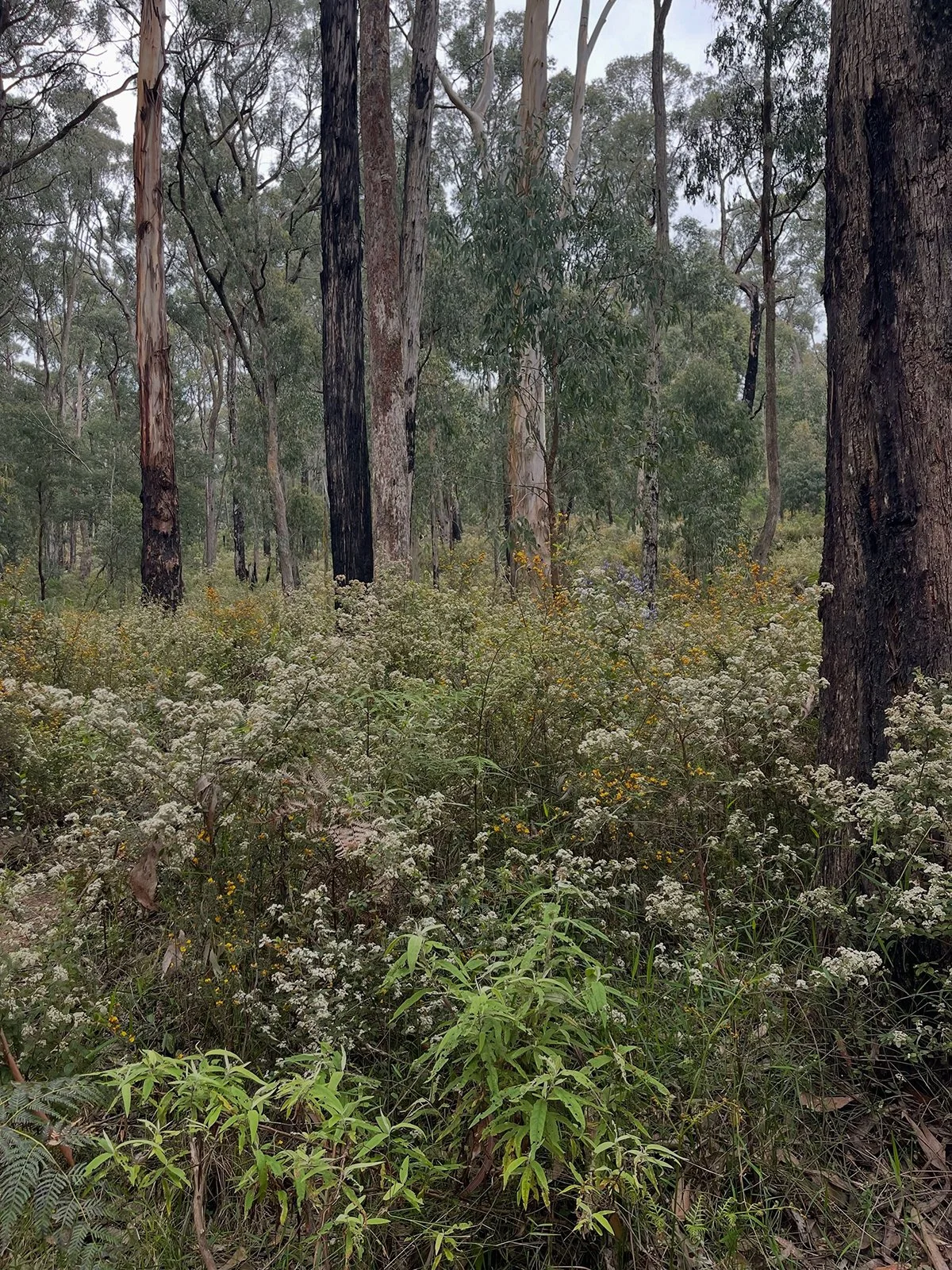
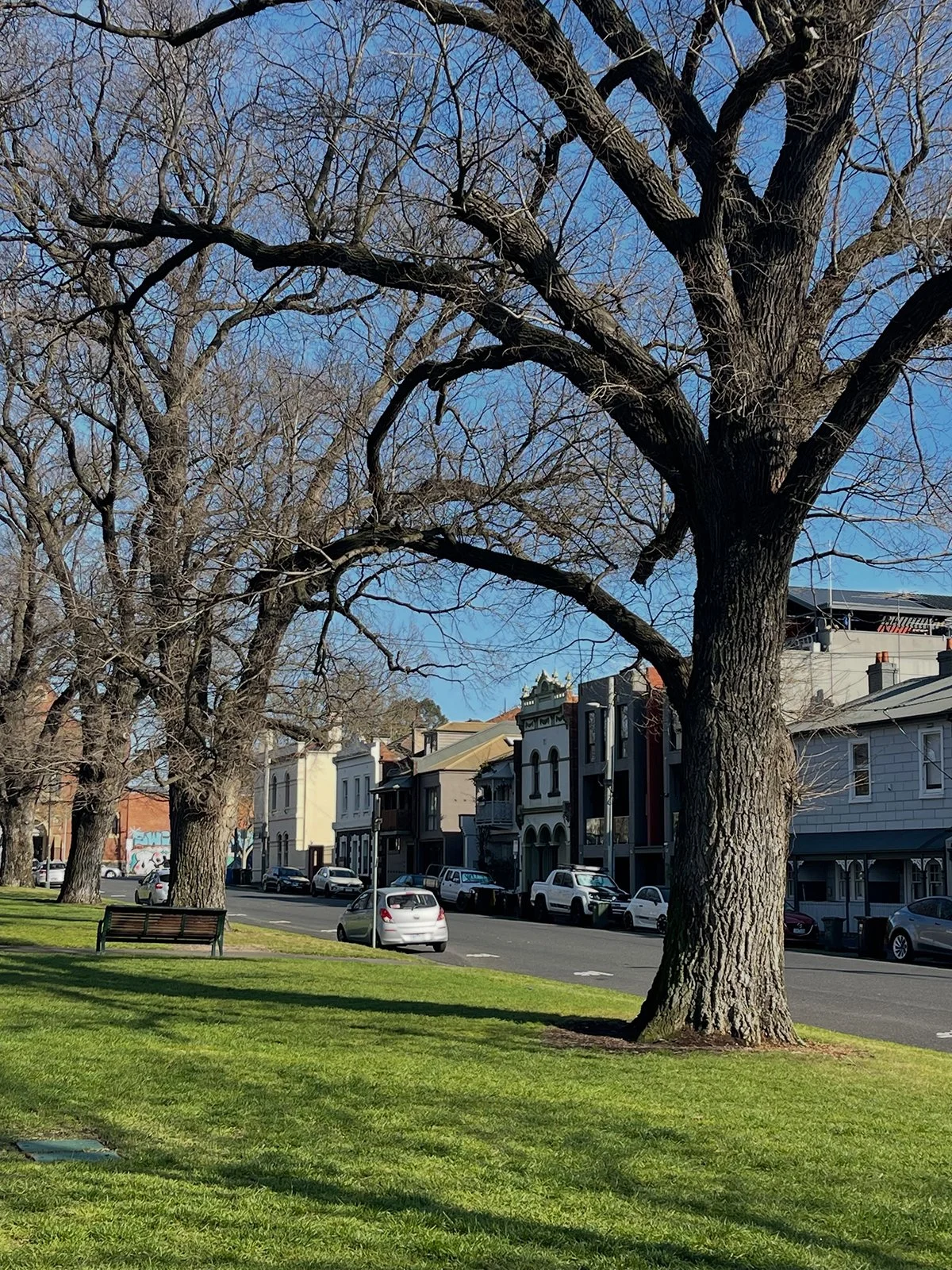
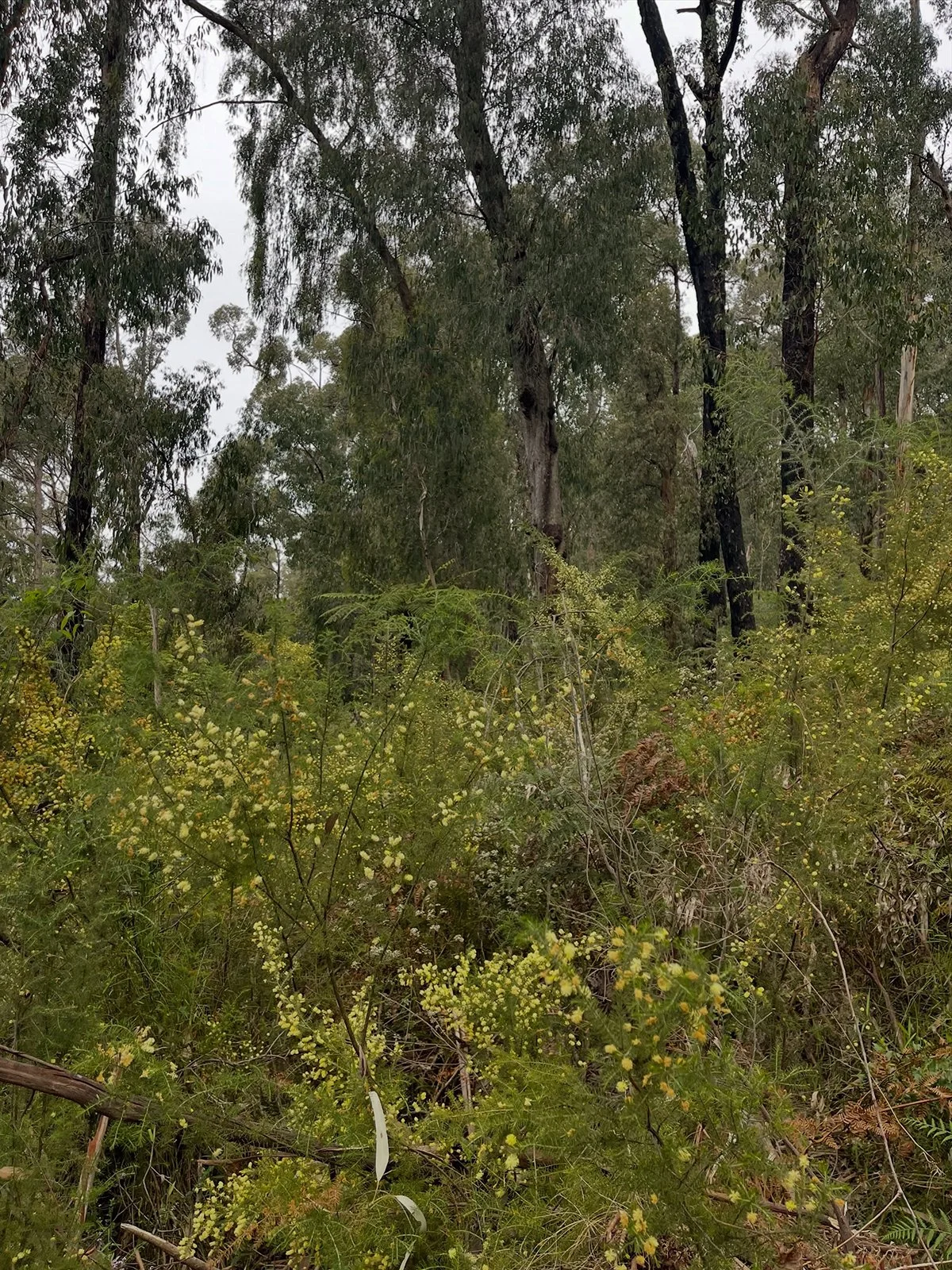
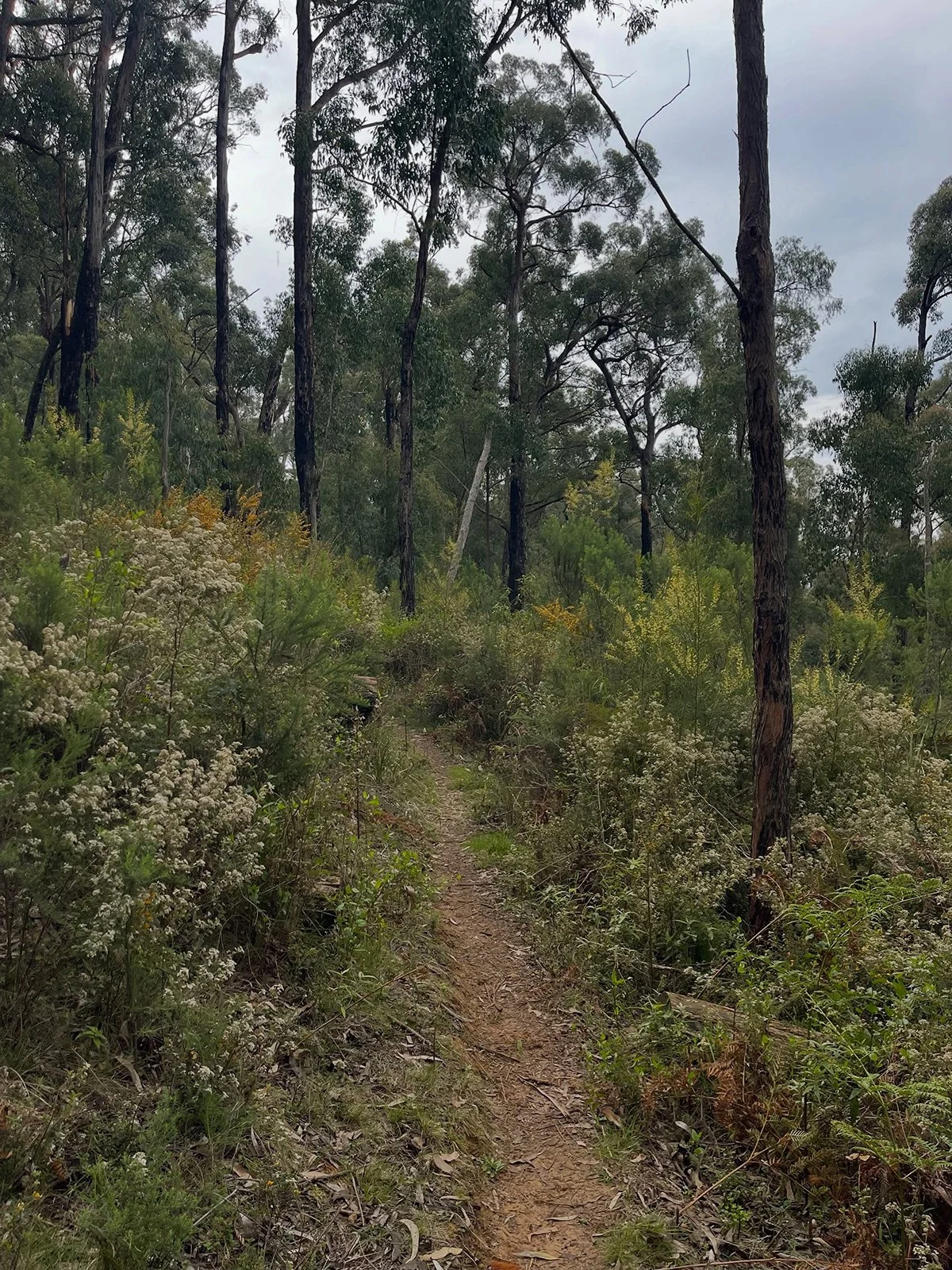
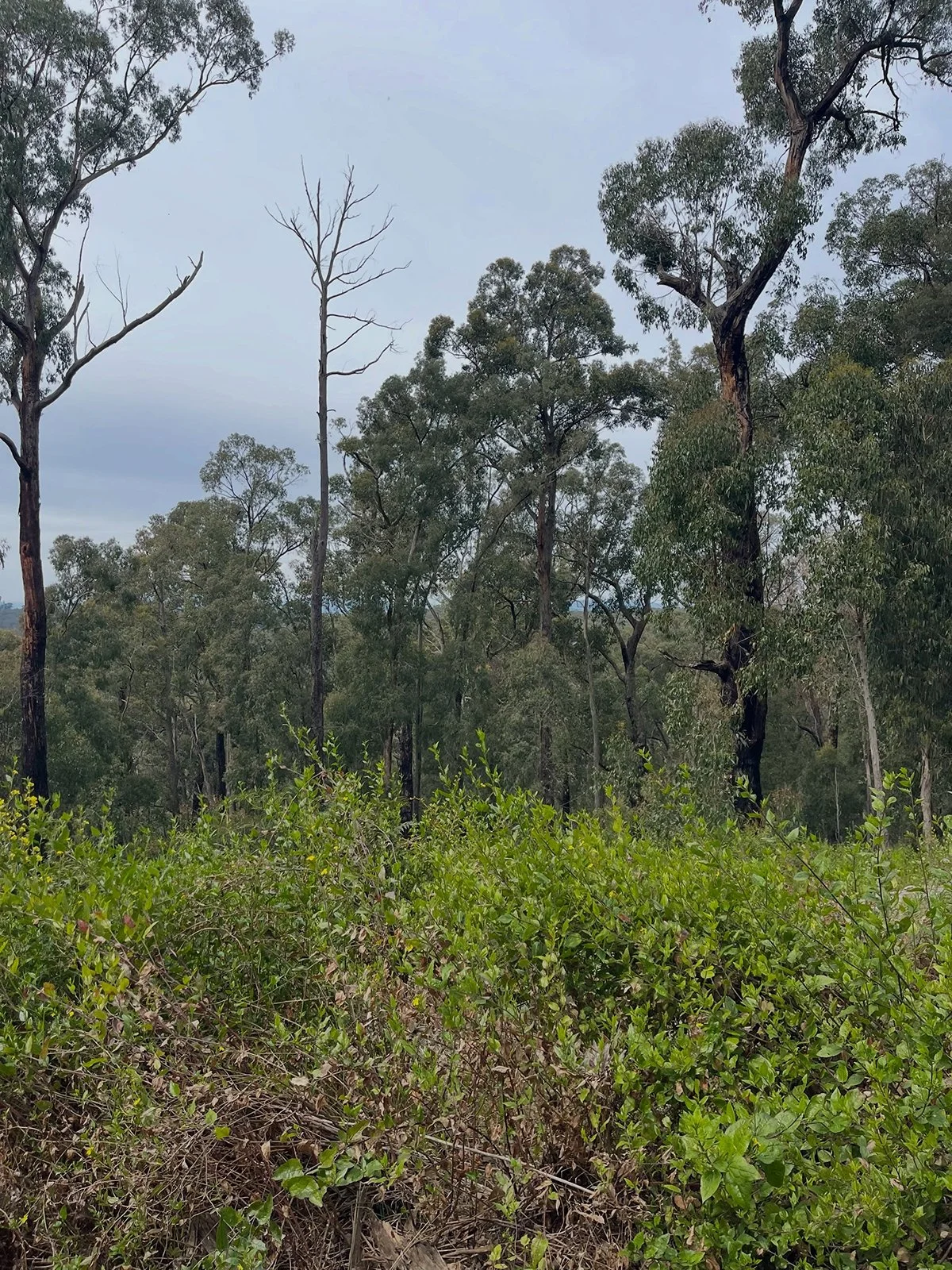
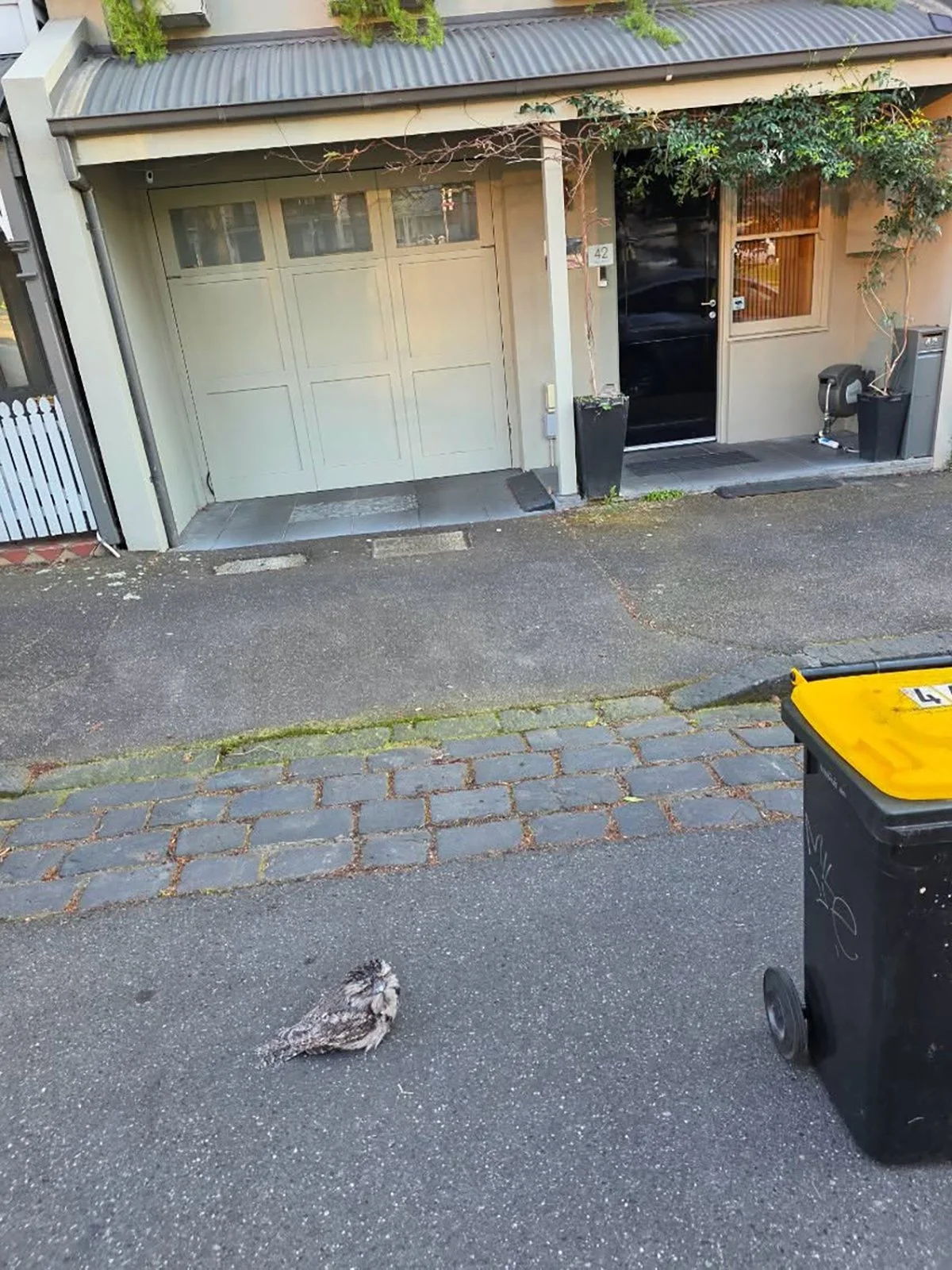
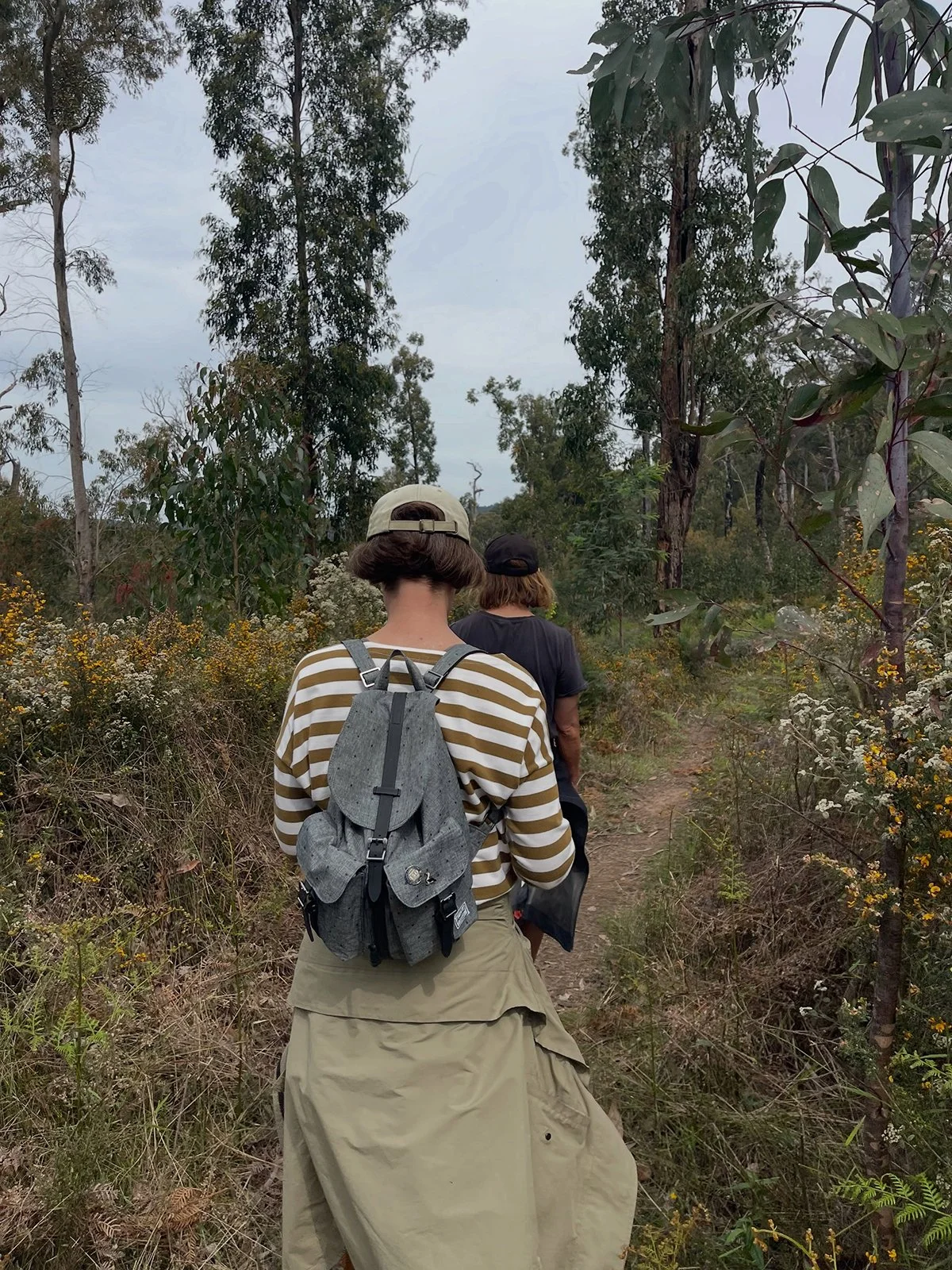
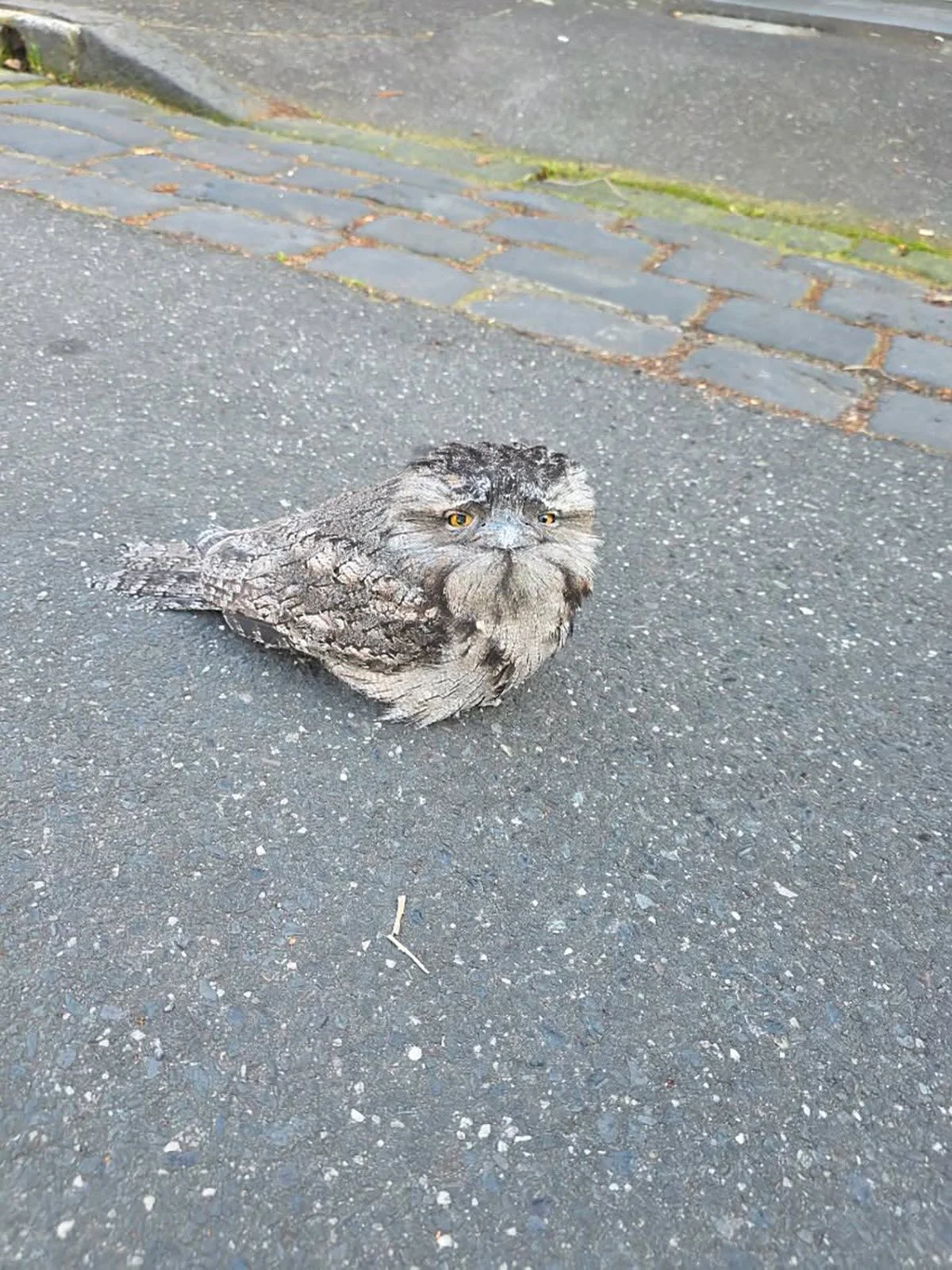
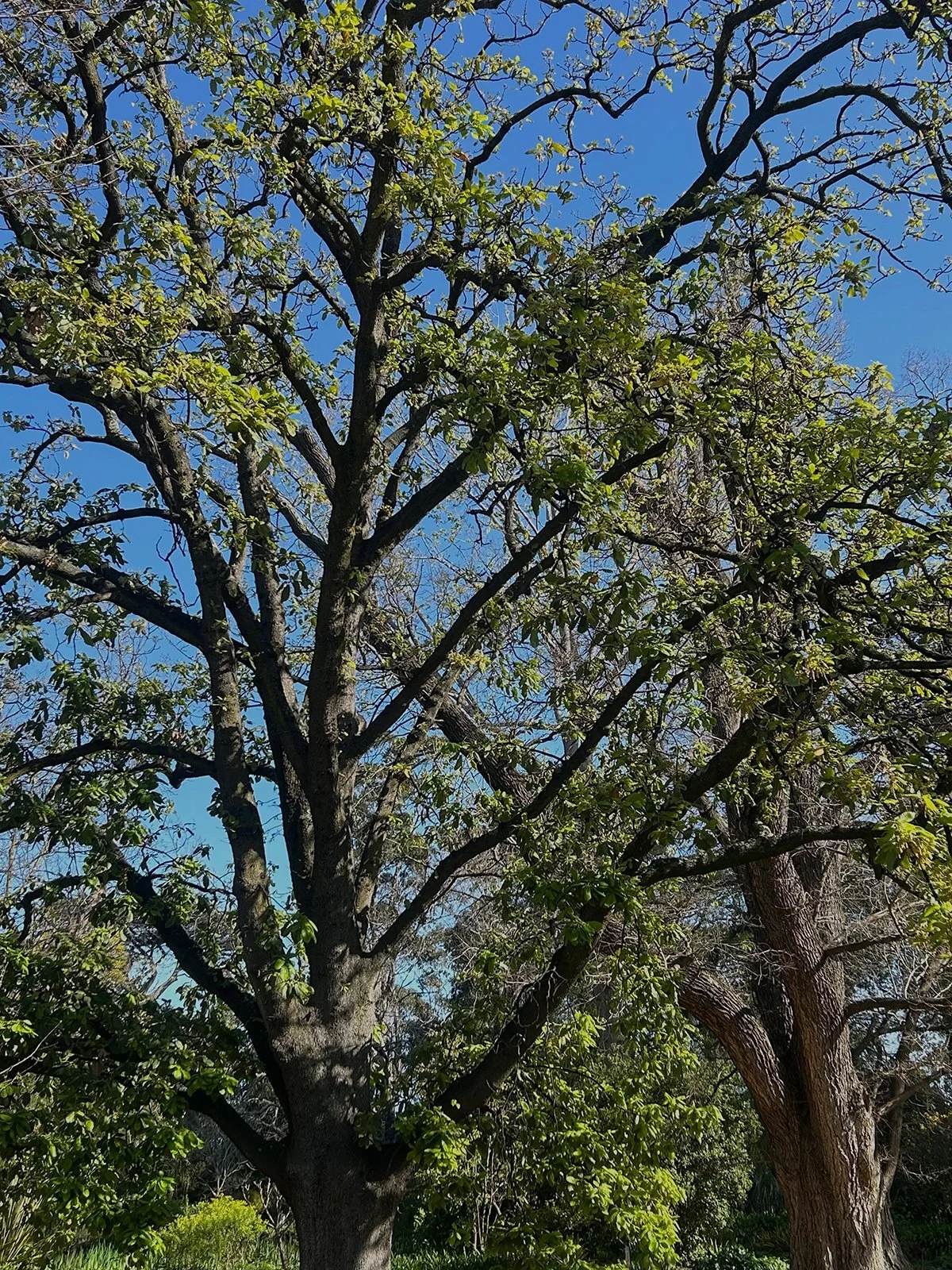
(Included in the sweep of images above and below, wildflowers sighted as we dodged mountain bike riders on track 13, Dandenong Ranges National Park, and a Tawny in Carlton, spotted as the bins were being collected, and shared with permission.)
[i] Tawny frogmouths are more closely related to Nightjars. Tawny frogmouths, Bush Heritage, https://www.bushheritage.org.au/species/tawny-frogmouth, accessed 27th September, 2026.
[ii] “The leading edges of the first primary (wing) feathers of the Tawny frogmouth are fringed to allow for silent flight.” Birdlife Australia, https://birdlife.org.au/bird-profiles/tawny-frogmouth, accessed 4th October, 2026.
Image credit: Tawny frogmouths and chick, [1957–1958] / unidentified [no.11] N.Tacon [no.12] Mr Barker or E.Lindgren [no.13]. Part of Walkabout magazine: original photographs and associated records, 1934–1974, via State Library of New South Wales.
