Leaf through; dream on
Rare Book Week
Rare Book Week 2026
July–August, 2026
A free city-wide festival celebrating the written, printed and illustrated word, presented by Rare Books Melbourne
The Melbourne Rare Book Fair 2026
Thursday 30th July to Saturday 1st August, 2026
Wilson Hall, the University of Melbourne
presented by ANZAAB with the support of the University of Melbourne
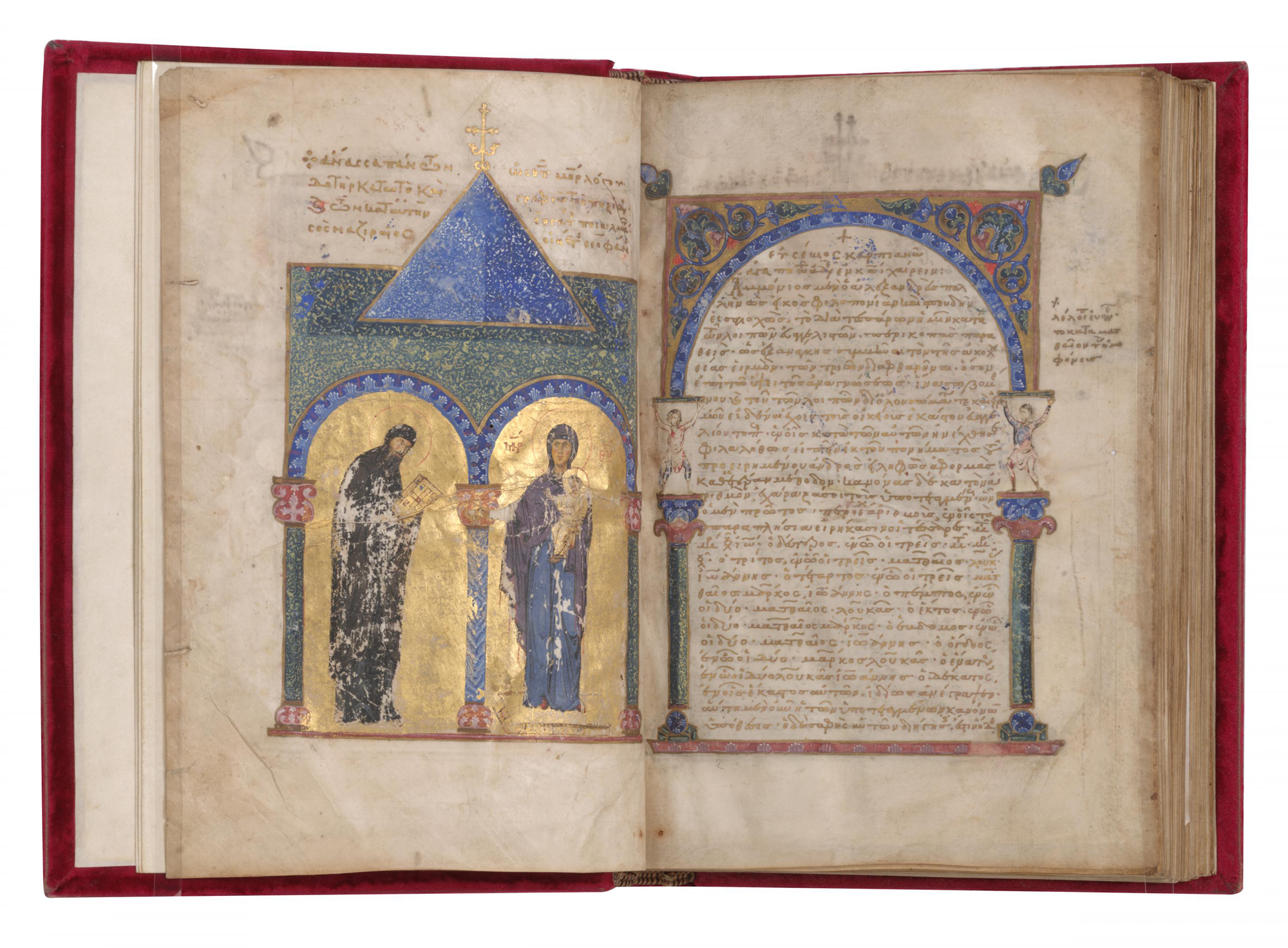
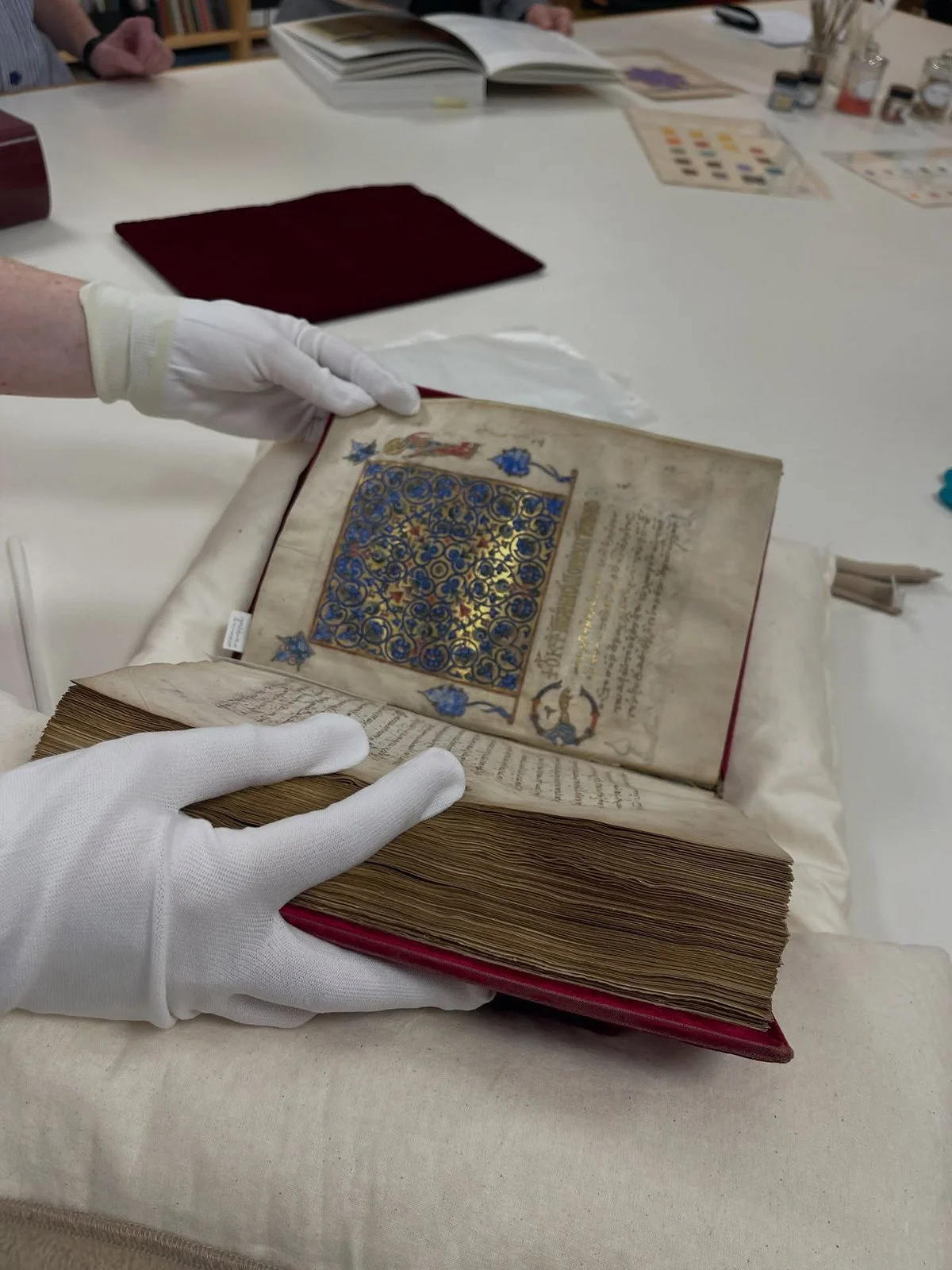
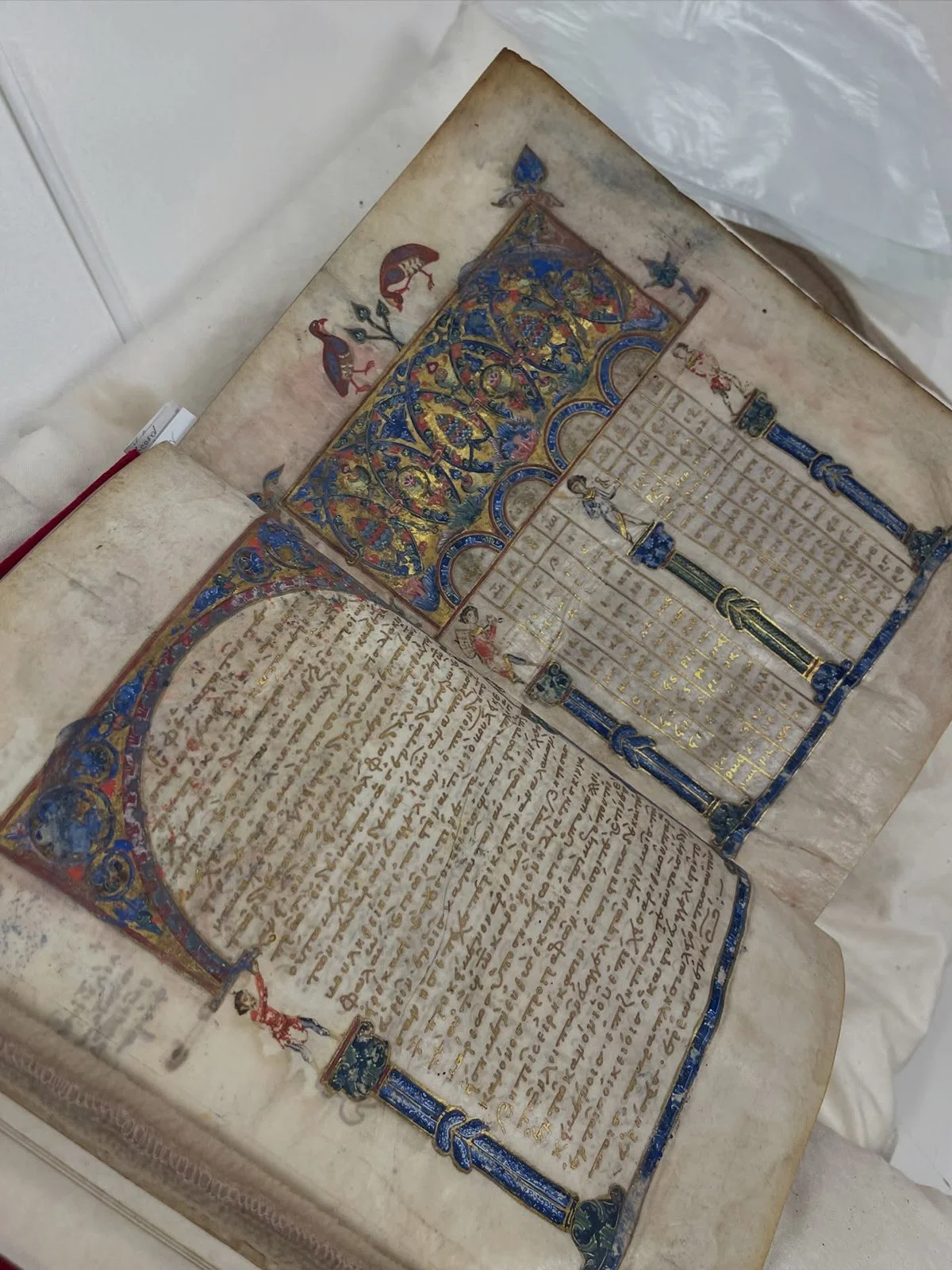
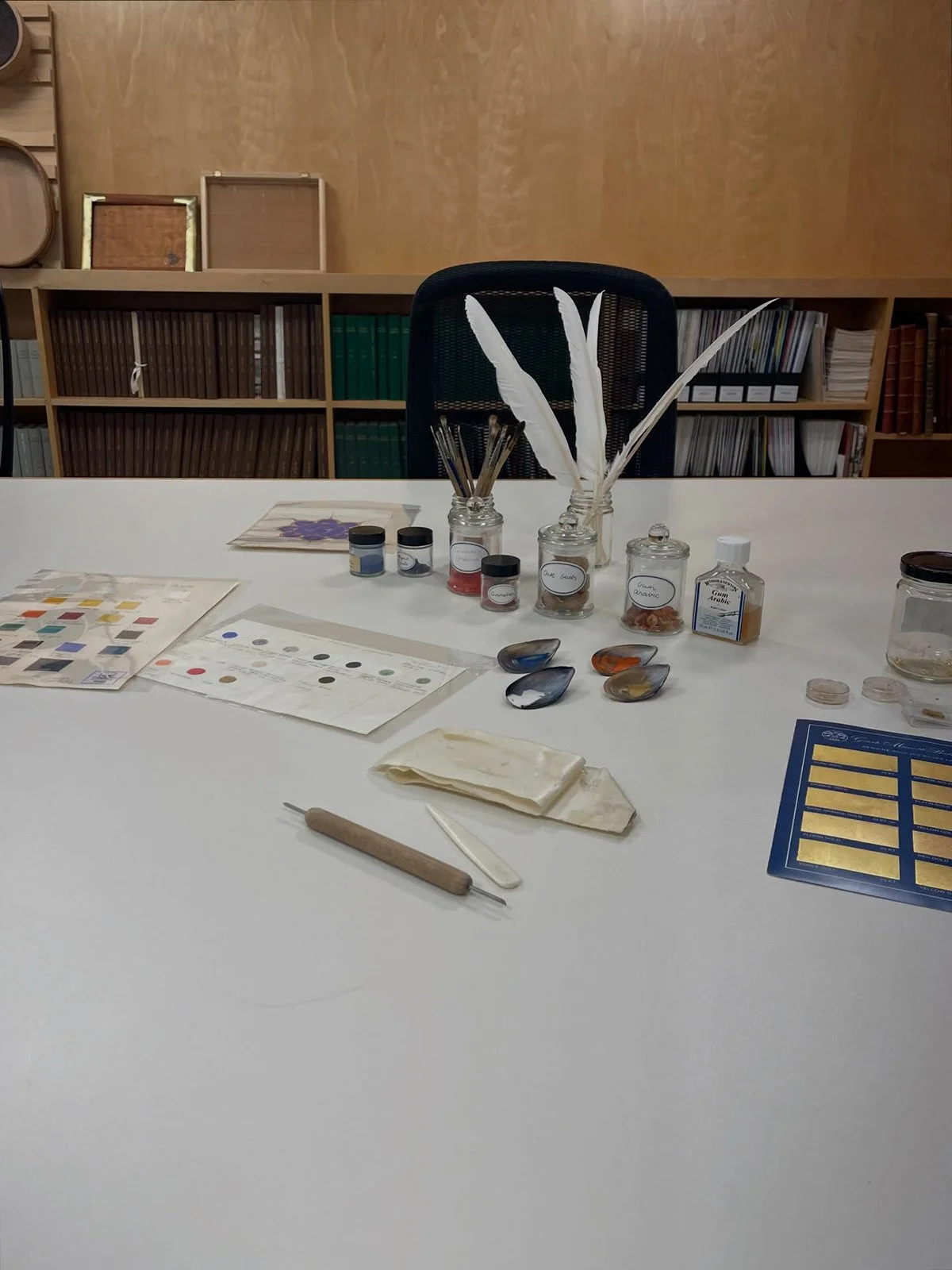
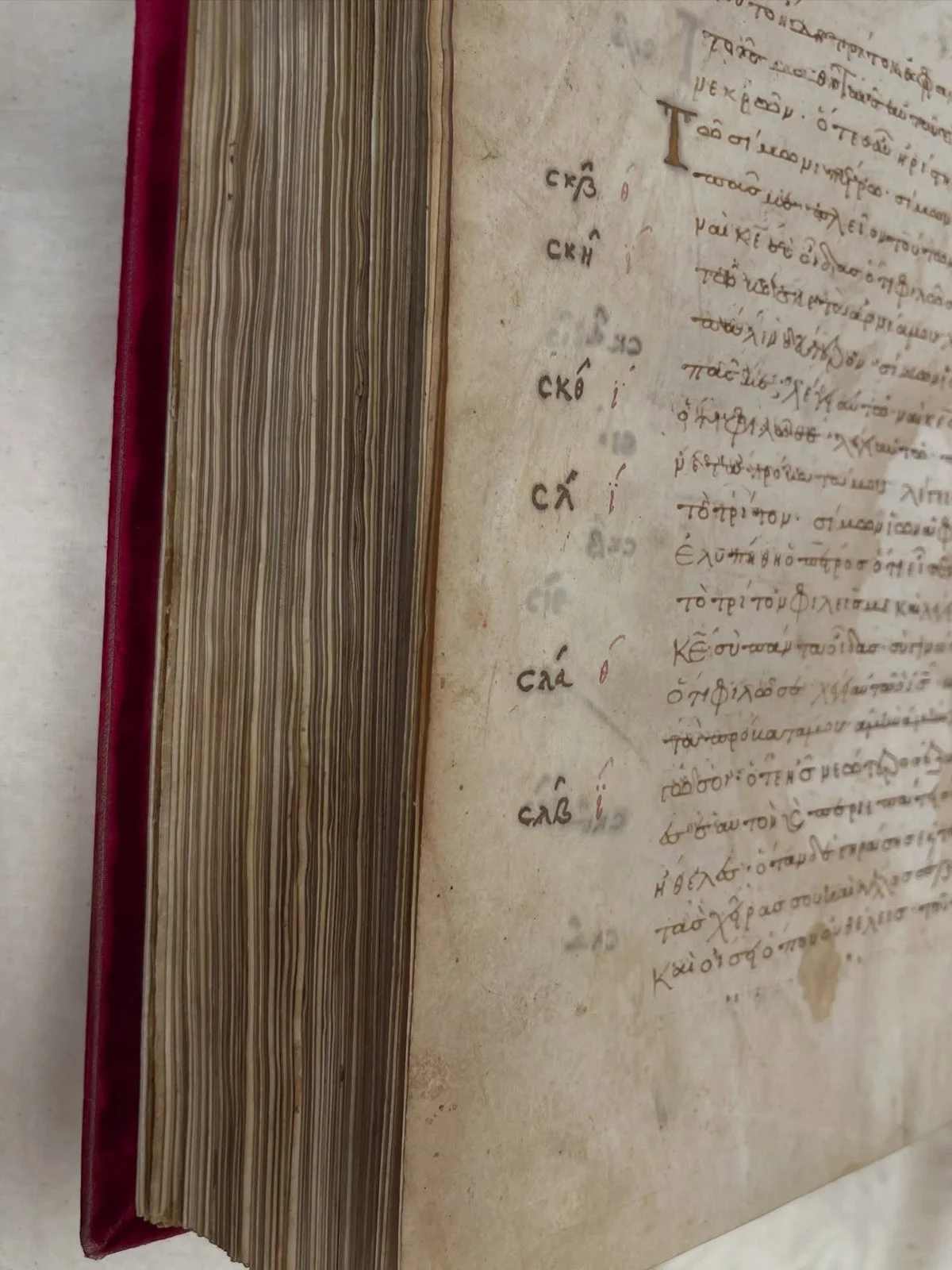
Our first Rare Book Week session had to be Earth, Insect, Beast, to see, with our own eyes the National Gallery of Victoria’s earliest illuminated manuscript, The Gospel of Theophanes, a Byzantine rendition of the Four Gospels, written in Greek (ca. 1125–1150). From the figures undertaking activities appropriate for the season (December’s man sows seeds, January’s man with a hog’s head, feasts, and February’s ol’ man warms his bones by the fire) to two red-beaked birds (one of which has been painted so as to be portrayed mid head scratch, with the underdrawing revealing the foot previously positioned alongside the other) on the first page of the Canon Tables (Canon Table 1, f.3), we loved hearing such details from Petra Kayser, Bonnie Hearn, and Ruth Shervington. We loved the two lions (Canon Table 3, f. 5v) with their tails wrapped like belts about their mid section, with their tips pointed skyward like arrows.
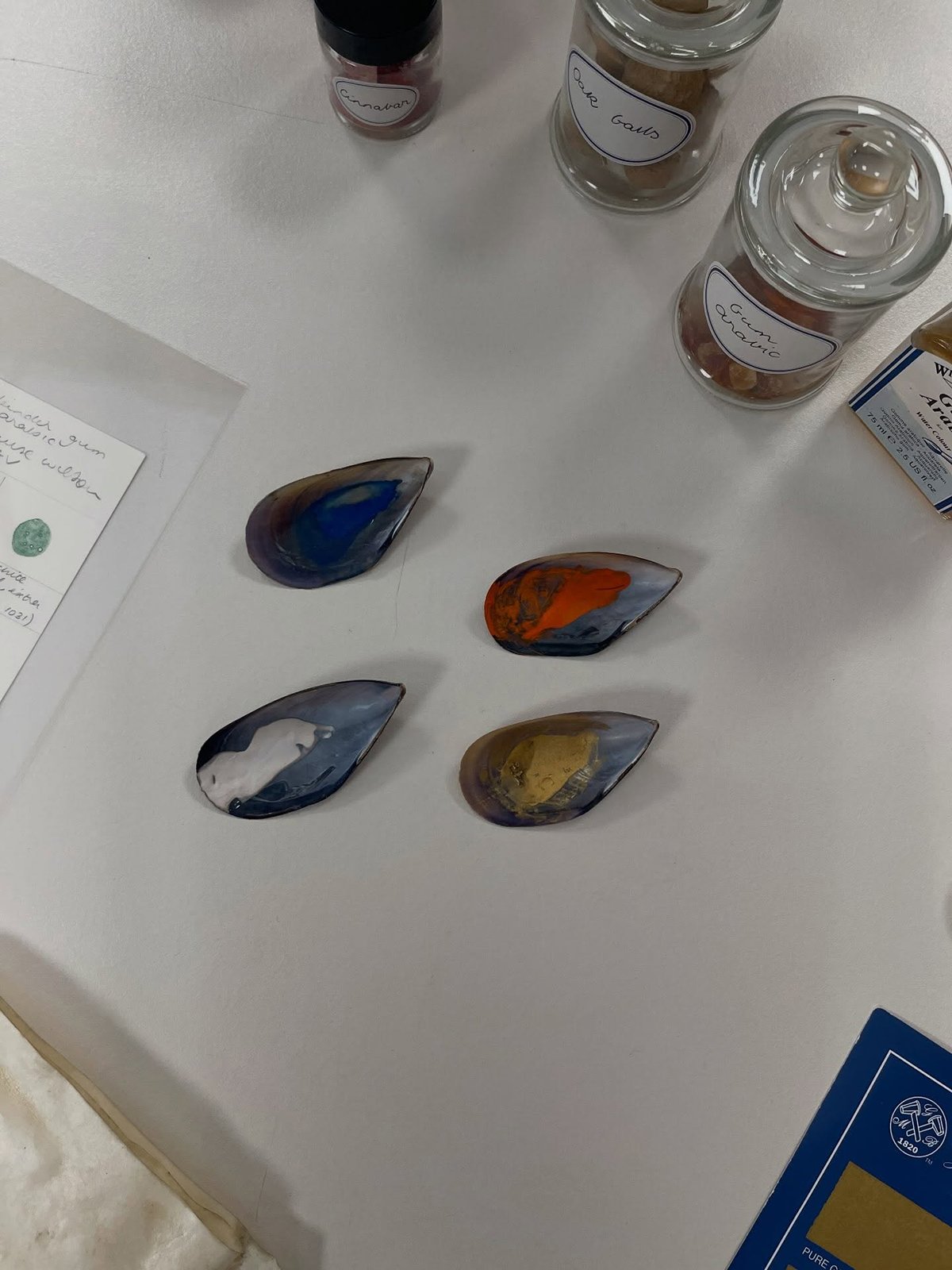
Between 40 to 60 beasts were required to make what would become the pages, some of which bear yellow spots (“Axilla — stretchy belly”) or calf hair follicles. In thinking about all the many parts of the making process, itself a series of devotional acts, from the animals for parchment to inks sourced from insects, our appreciation deepened. Suddenly the room was full of the faint outlines of the animals required in the making process.
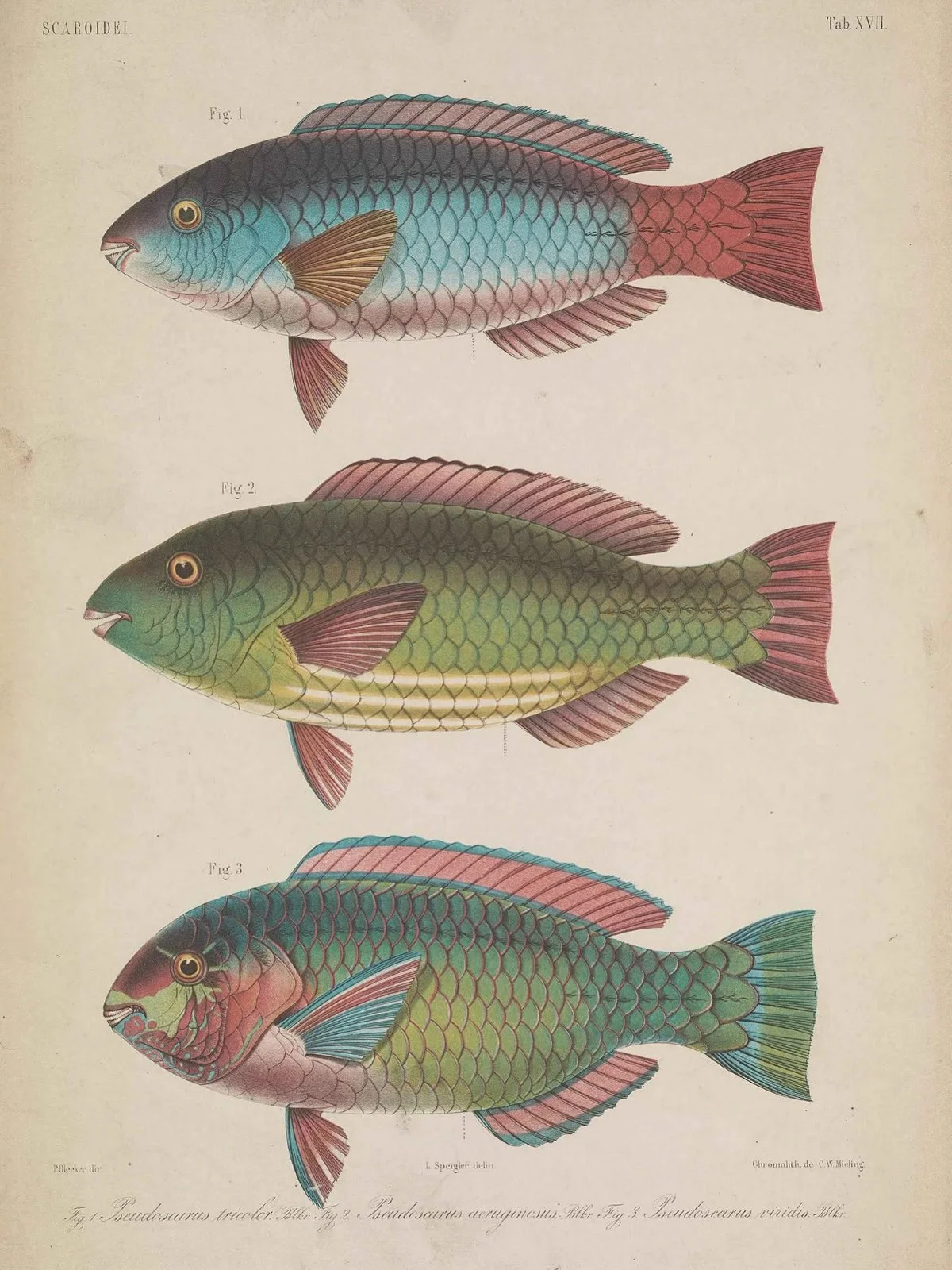
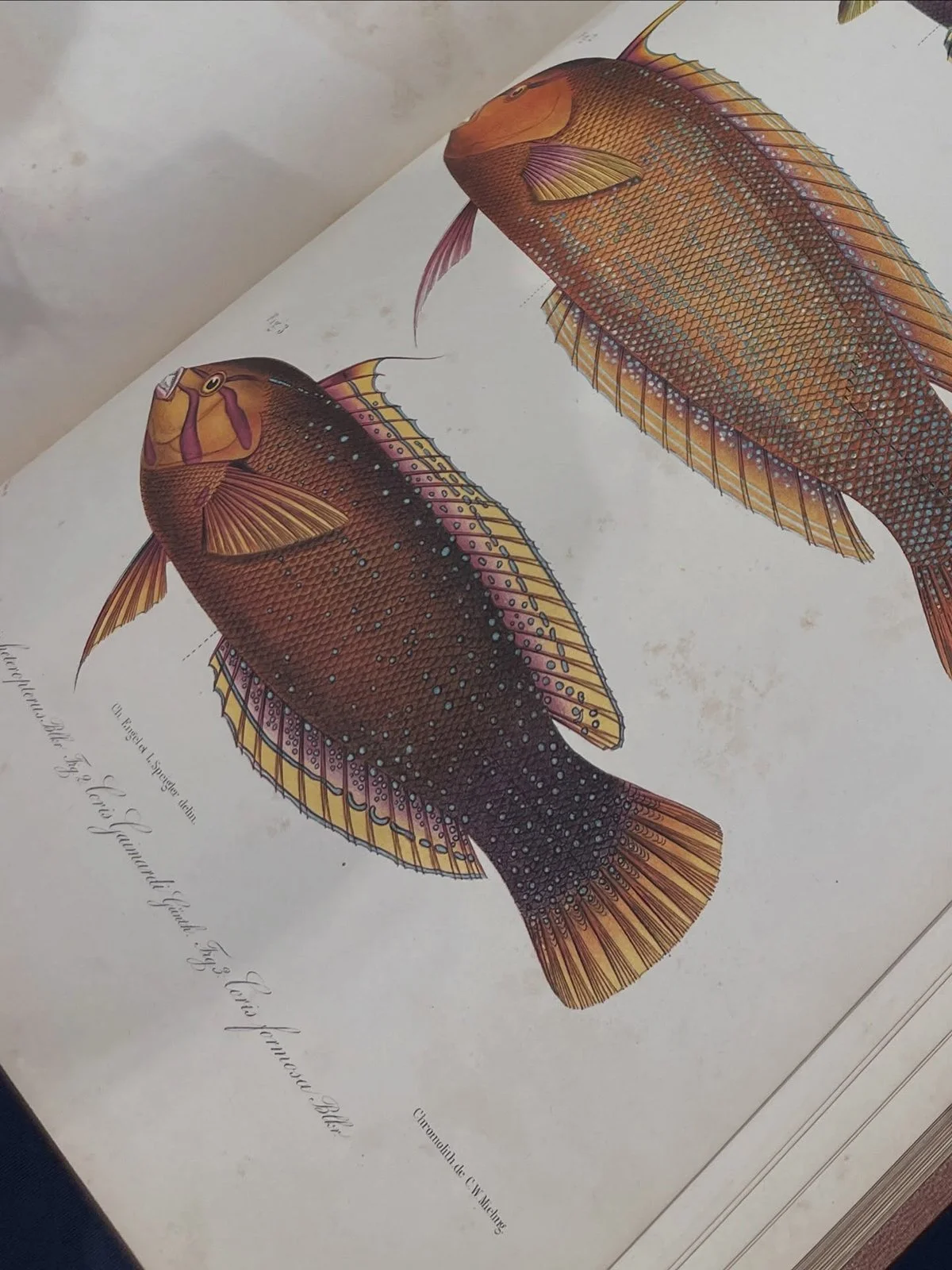
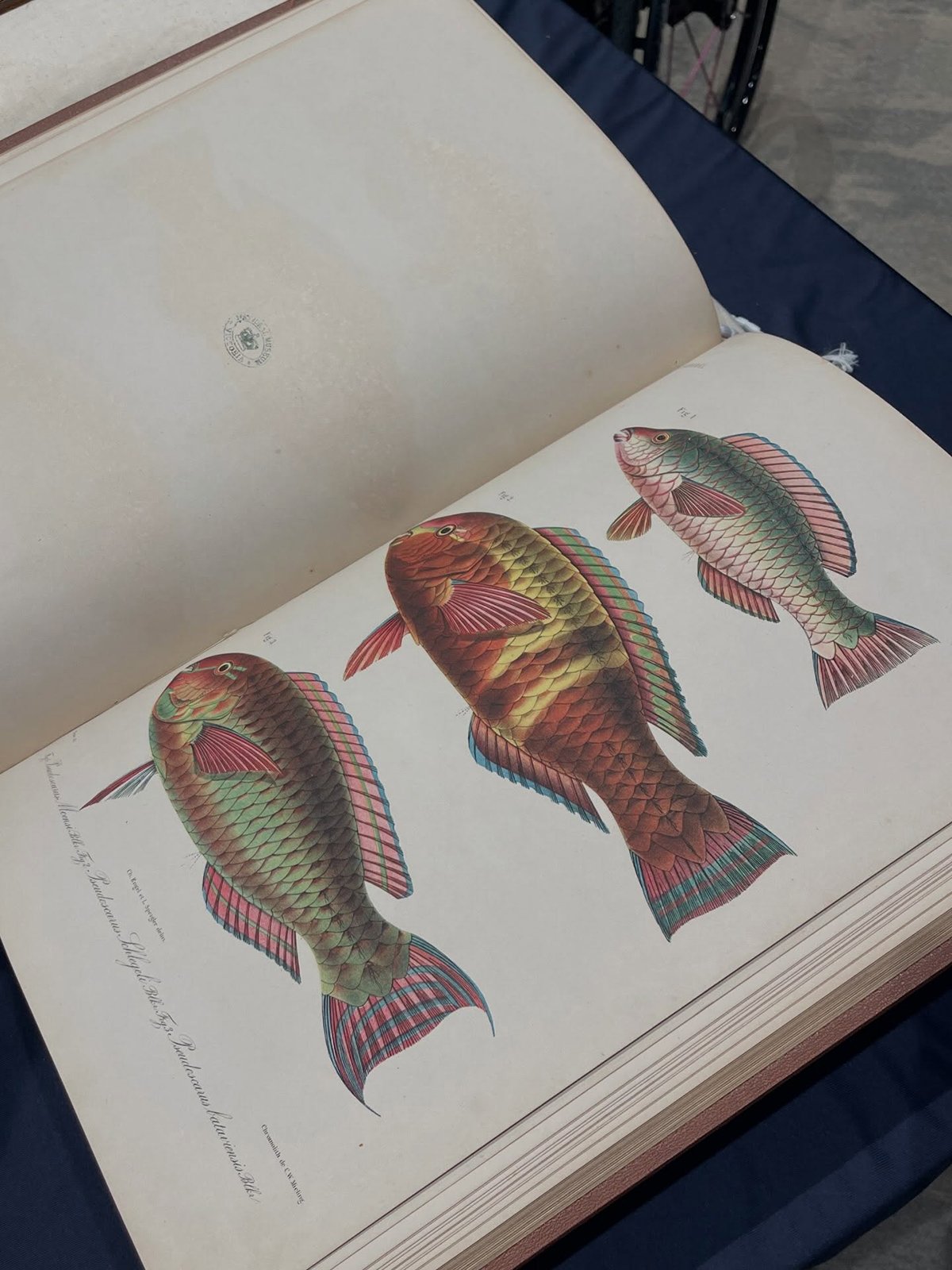
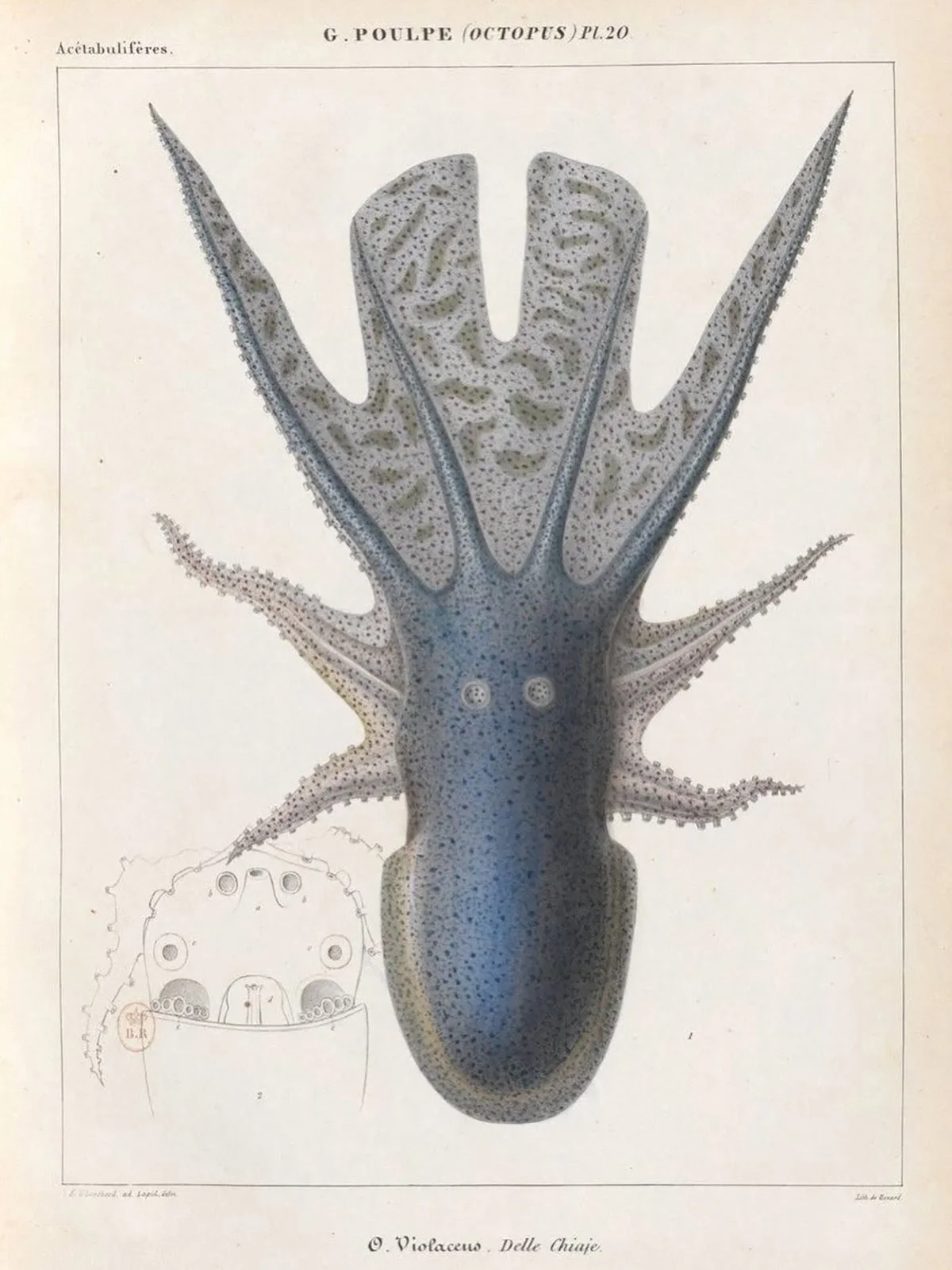
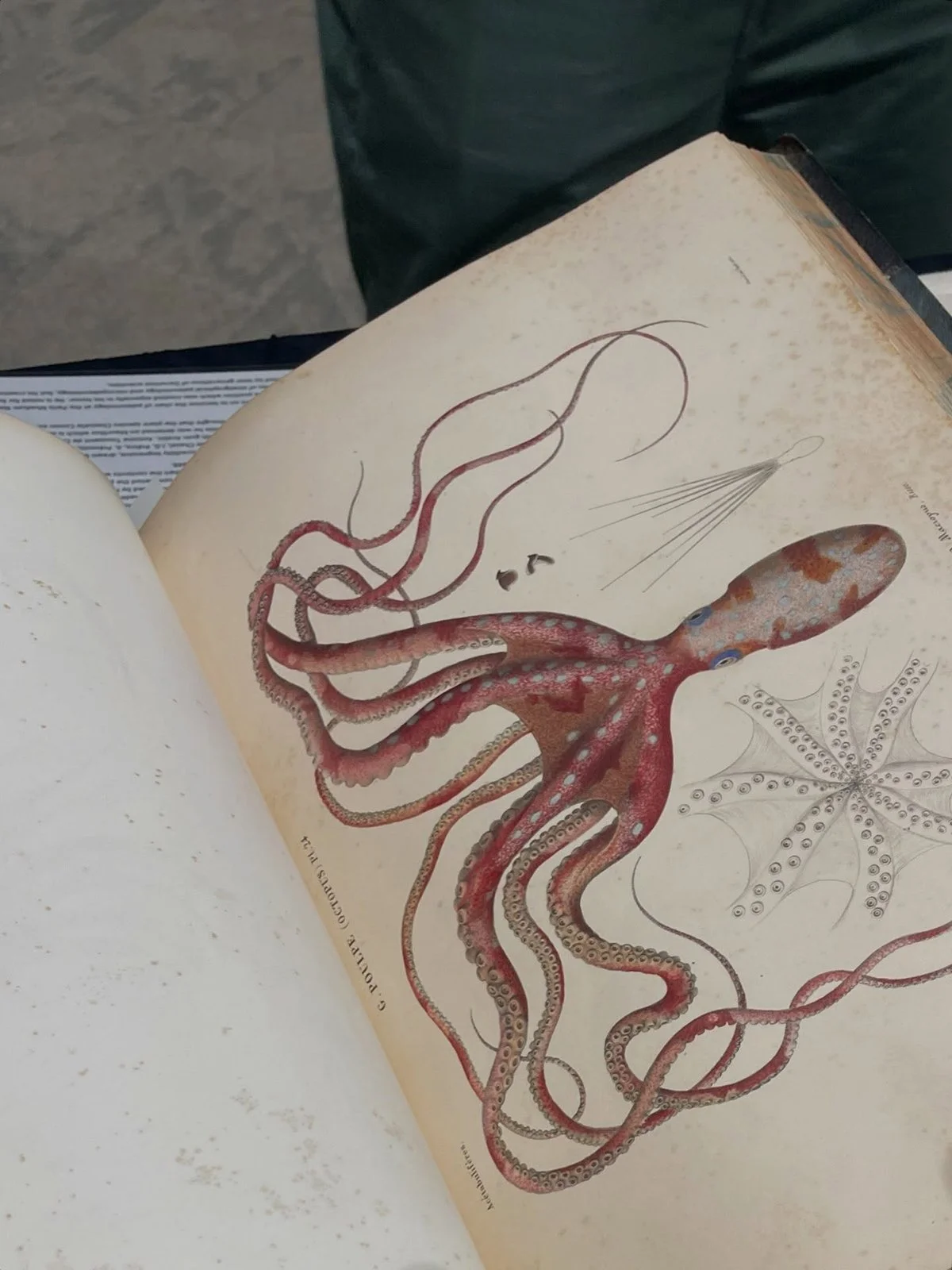
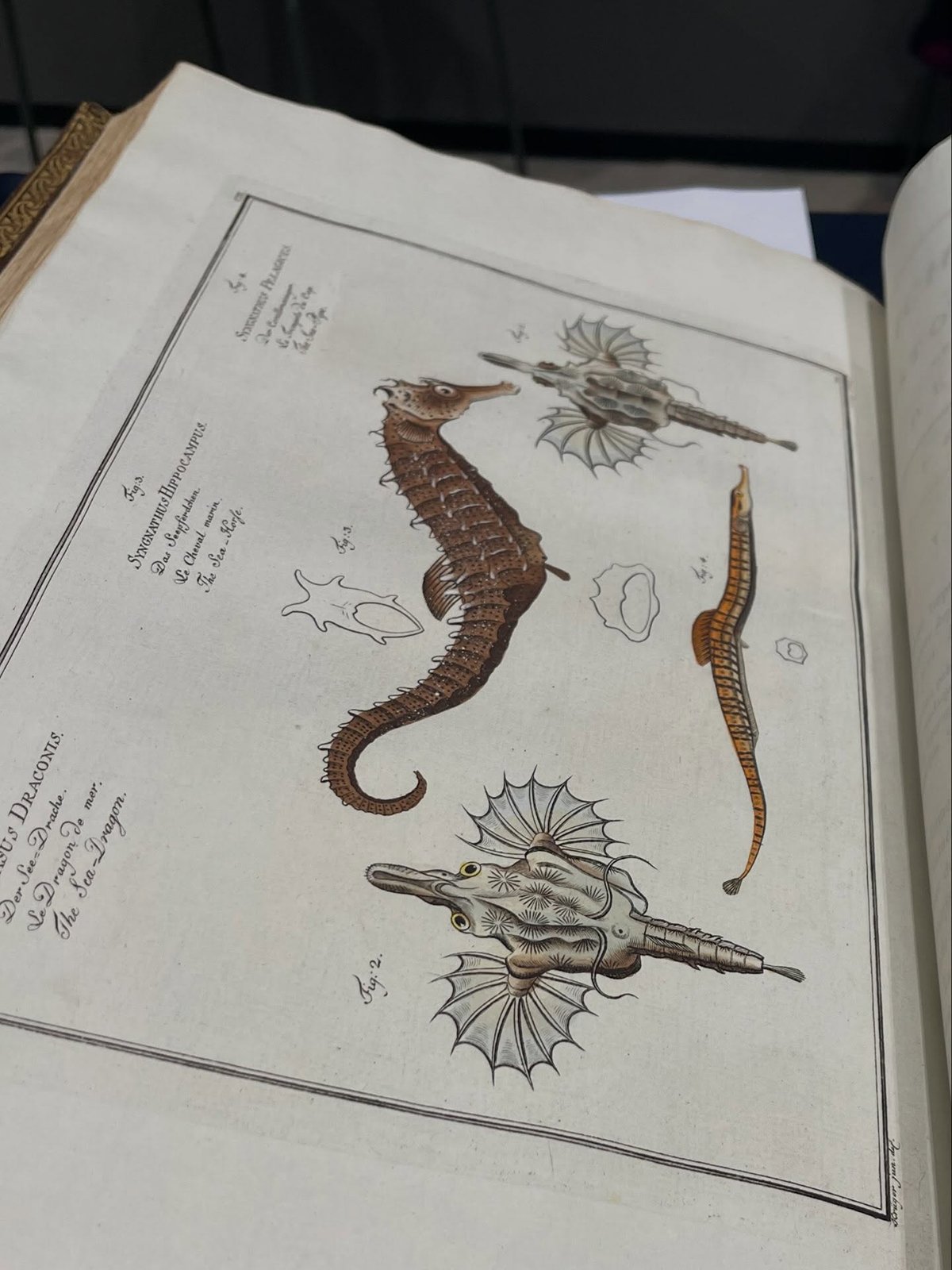
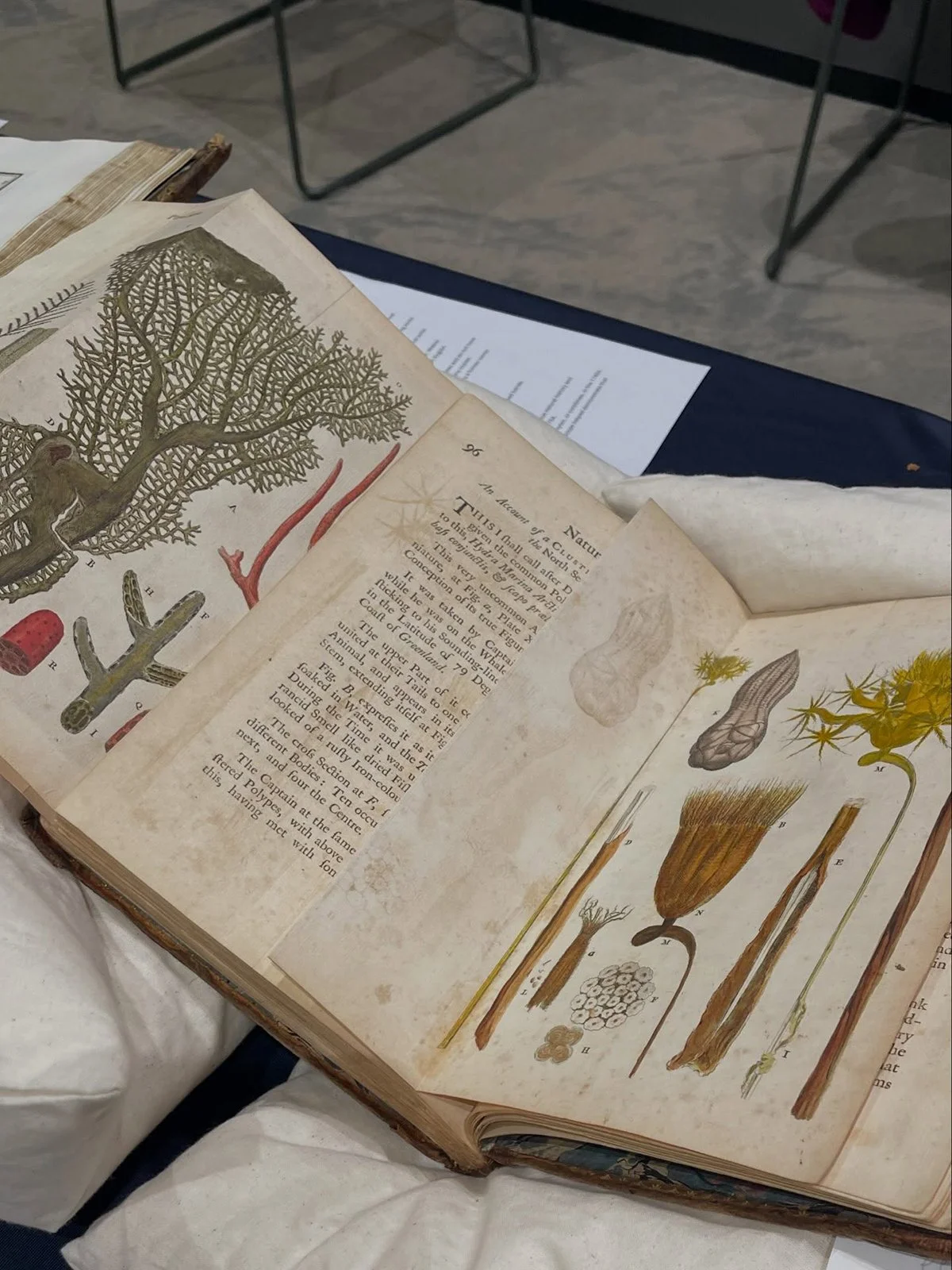
Next up. Take me under the sea, where the scaled and finned are, where those with suckers and gills not only reside, but reign. The description of specimens hauled up from the depths of home losing their colour almost immediately struck a chord. On the page, they are luminous once more. Luminous as I imagine them beneath the surface, going about their lives, finding a morsel here, a rockery there, and dodging a predator o’er there. Such books offer a glimpse to not just another period, but another realm. In the briny deep, uncurl from the letter U to fit head to tail upon the page, and dream on, once more.
Returning to dry land, let’s leaf through a first edition of Margaret Cavendish’s The Description of a New World, Called the Blazing-World, one of the earliest examples of science fiction, and invent our own language. Perhaps one that cuttlefish are fluent in.
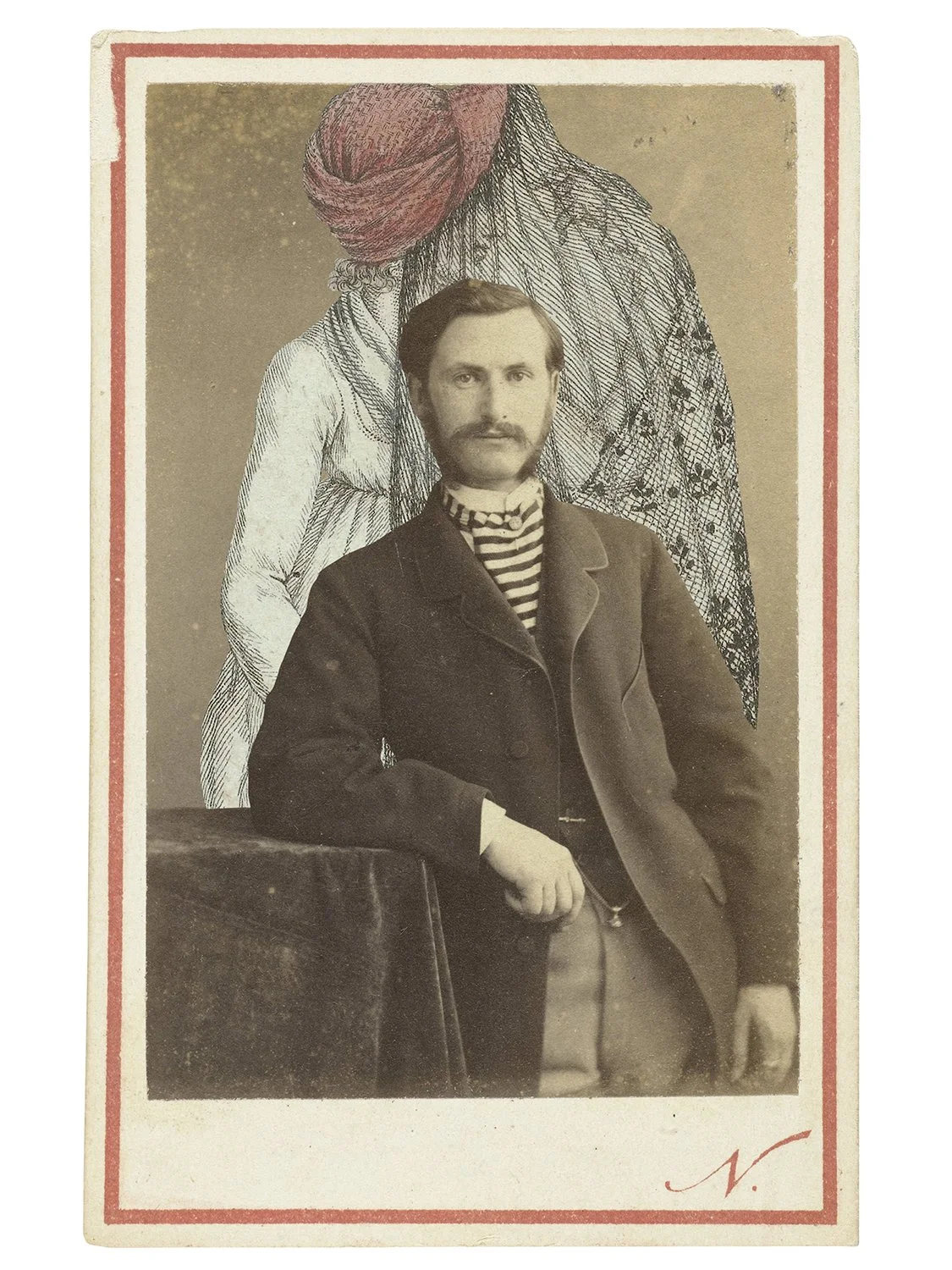
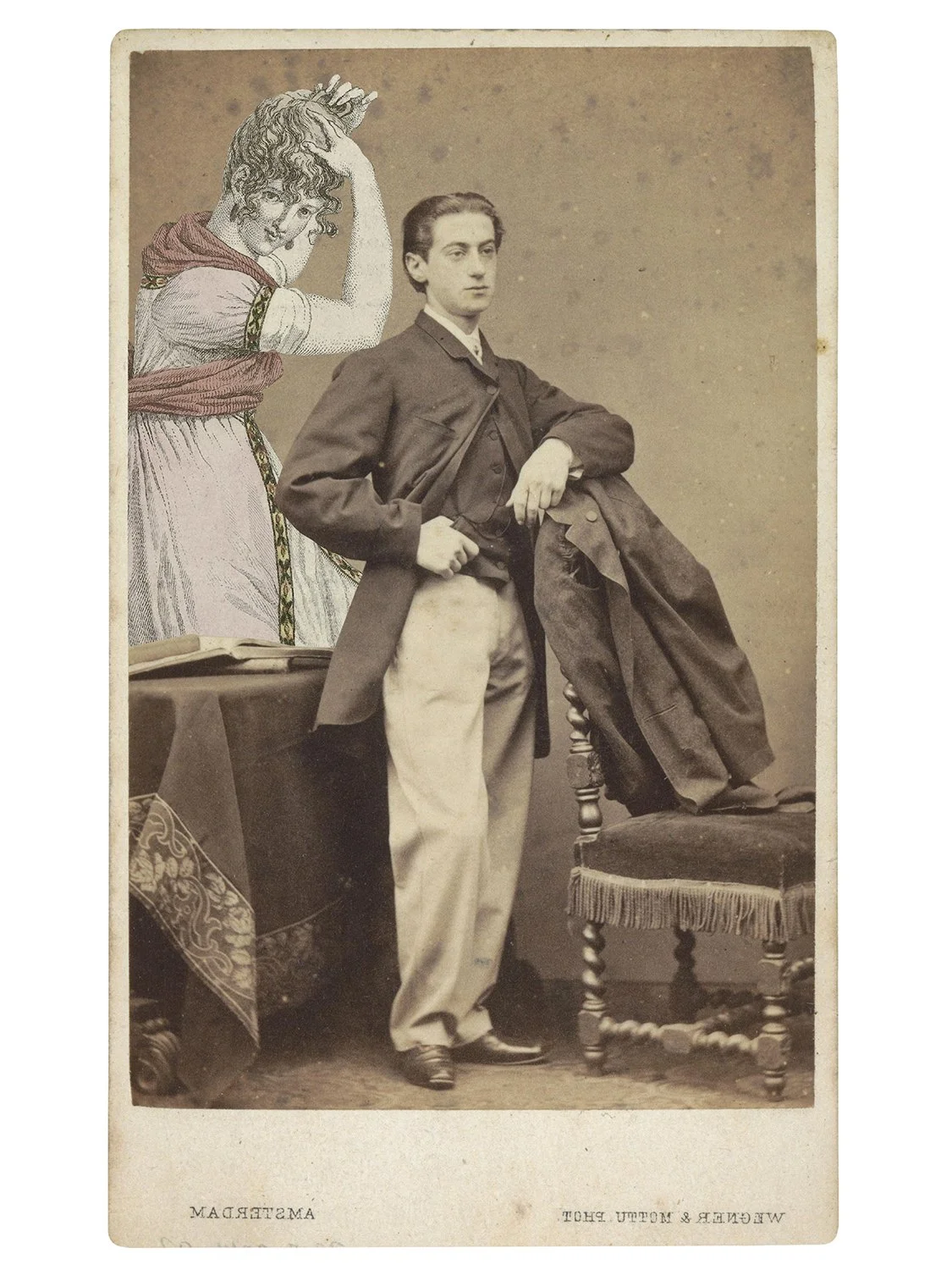
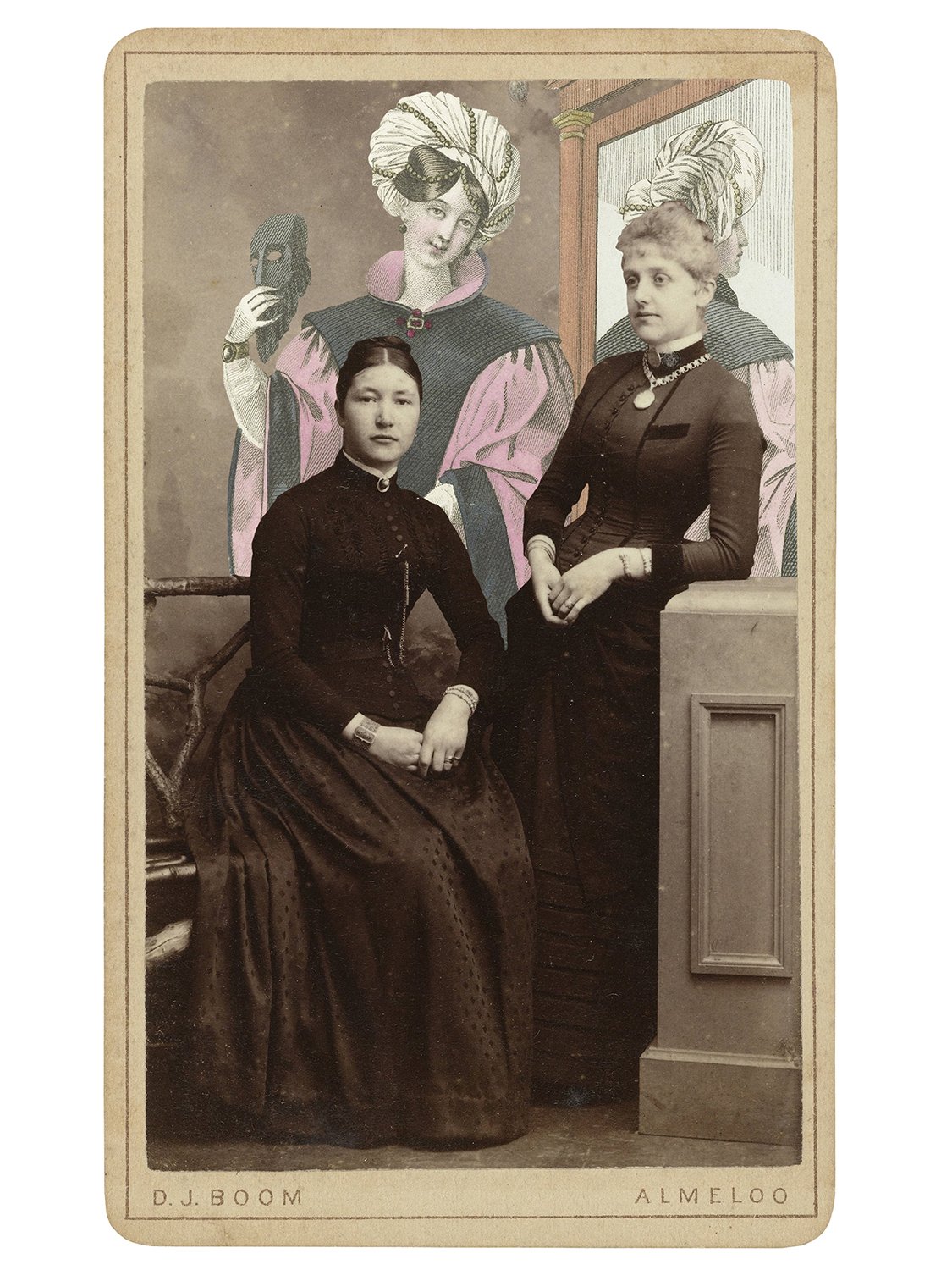
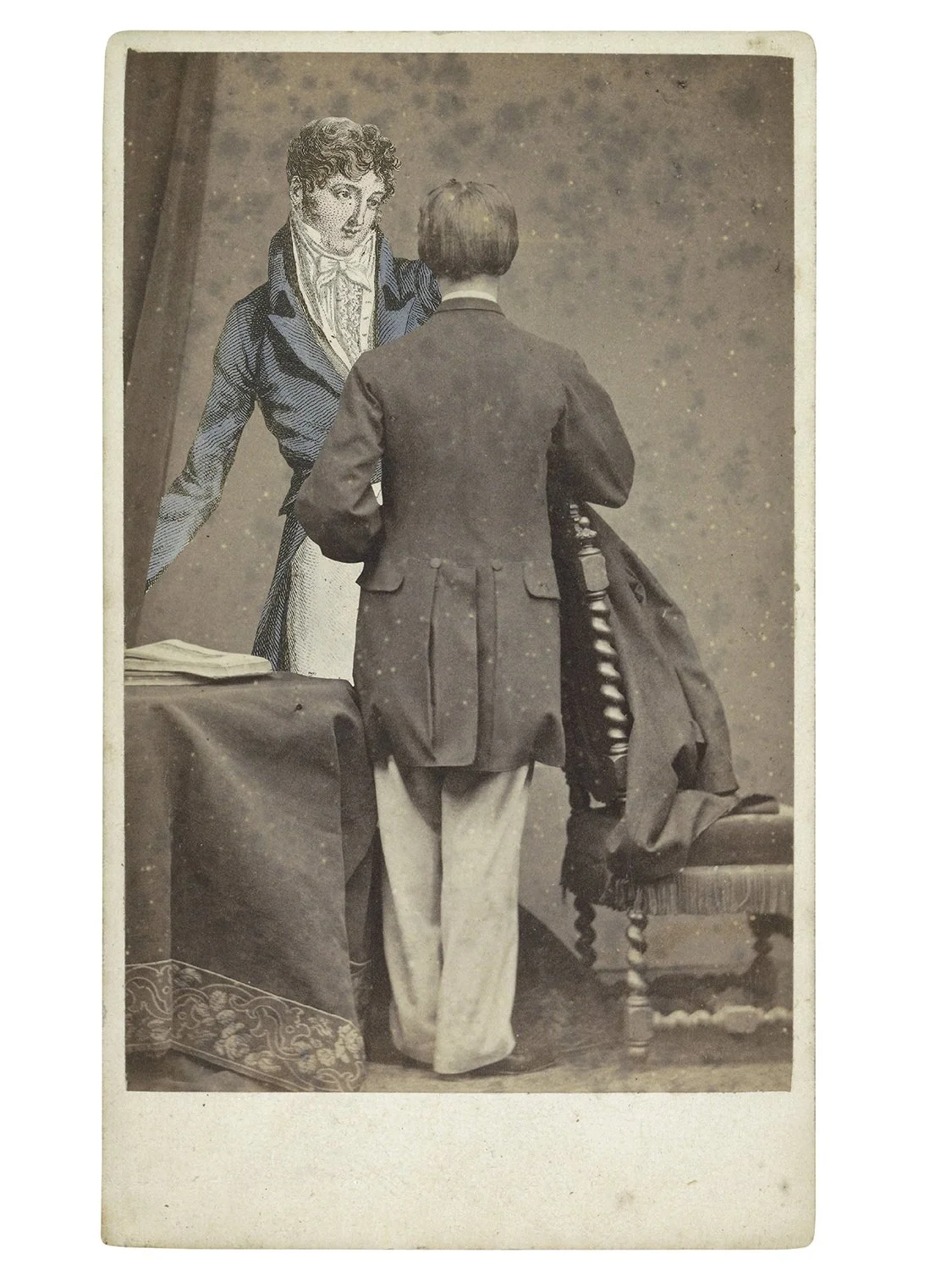
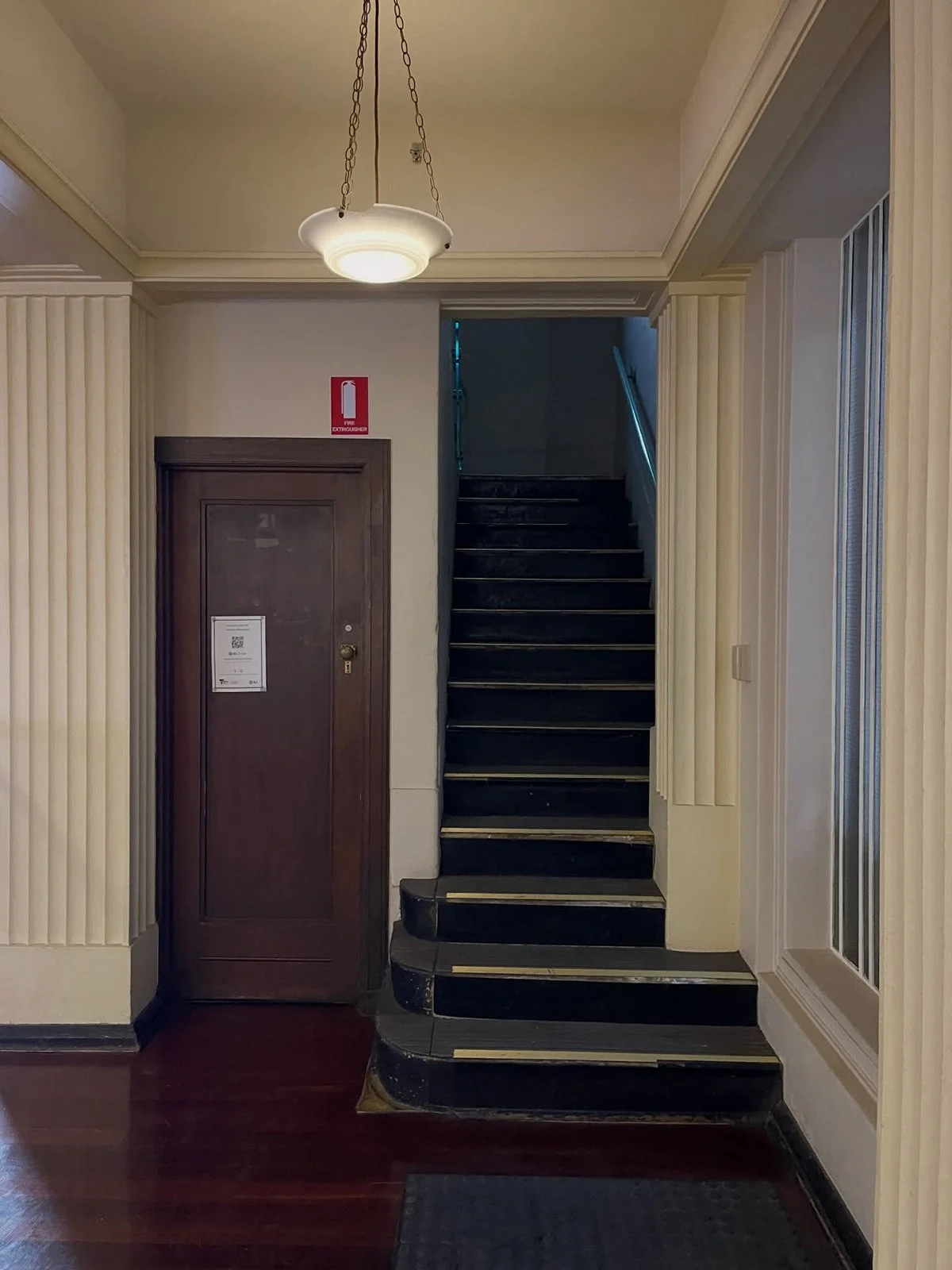
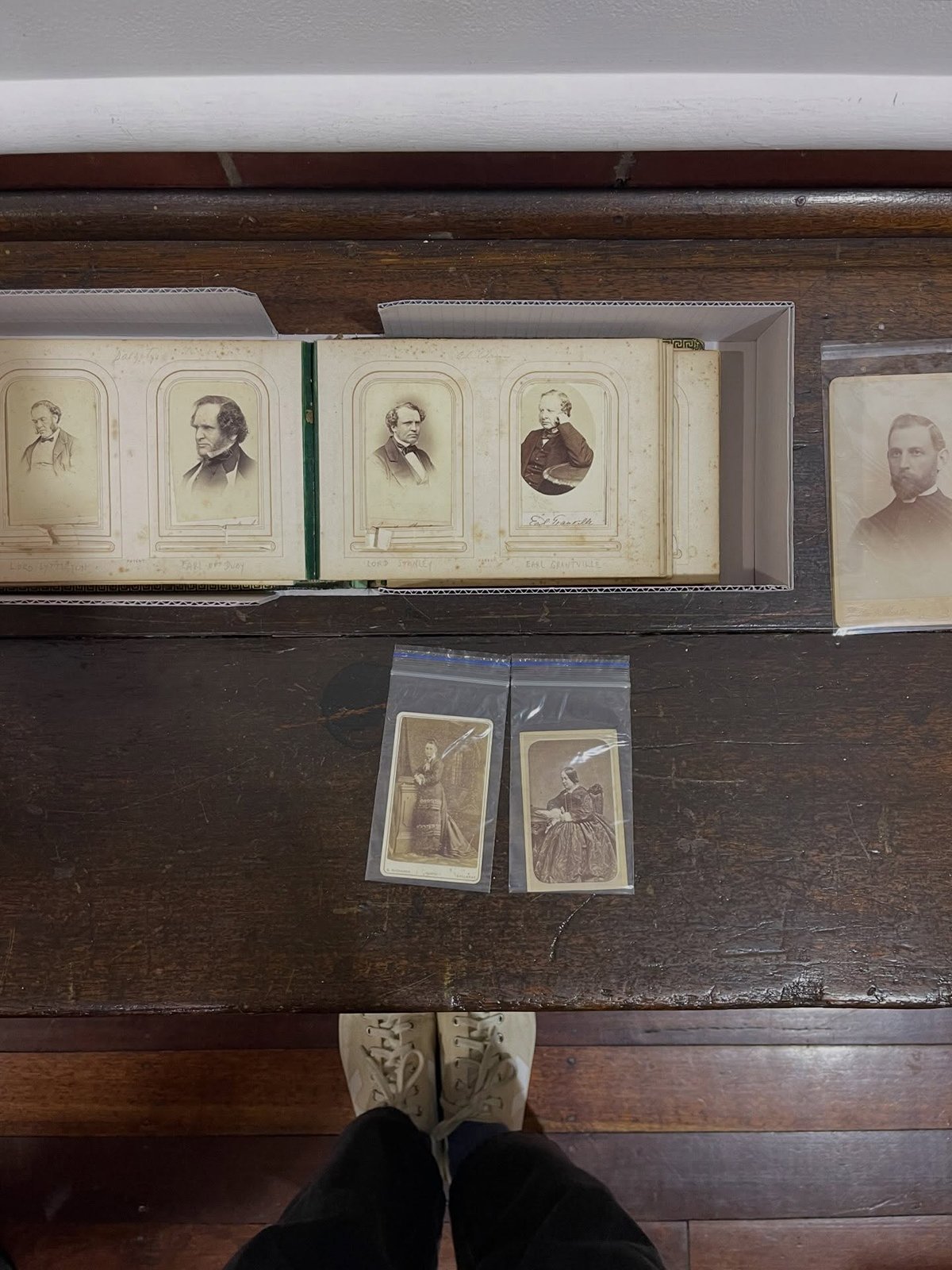
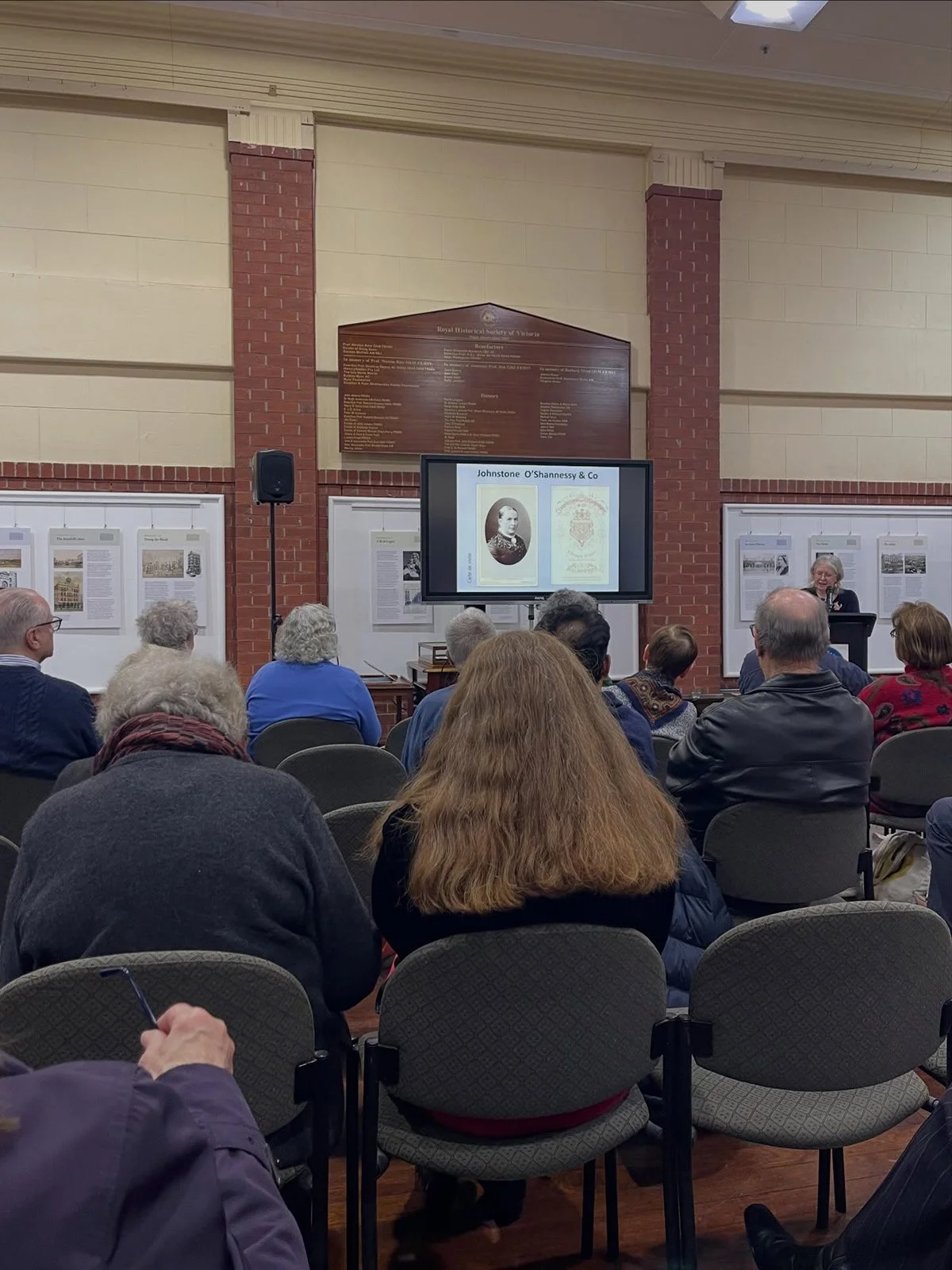
Last but not least, time for one more Rare Book Week session and, in light of our ongoing Salvaged Relatives series, it had to be Cartes de Visite, Cabinet Cards and Albums with Debra Parry at the Royal Historical Society of Victoria on A’Beckett Street, to learn of delicious particulars.
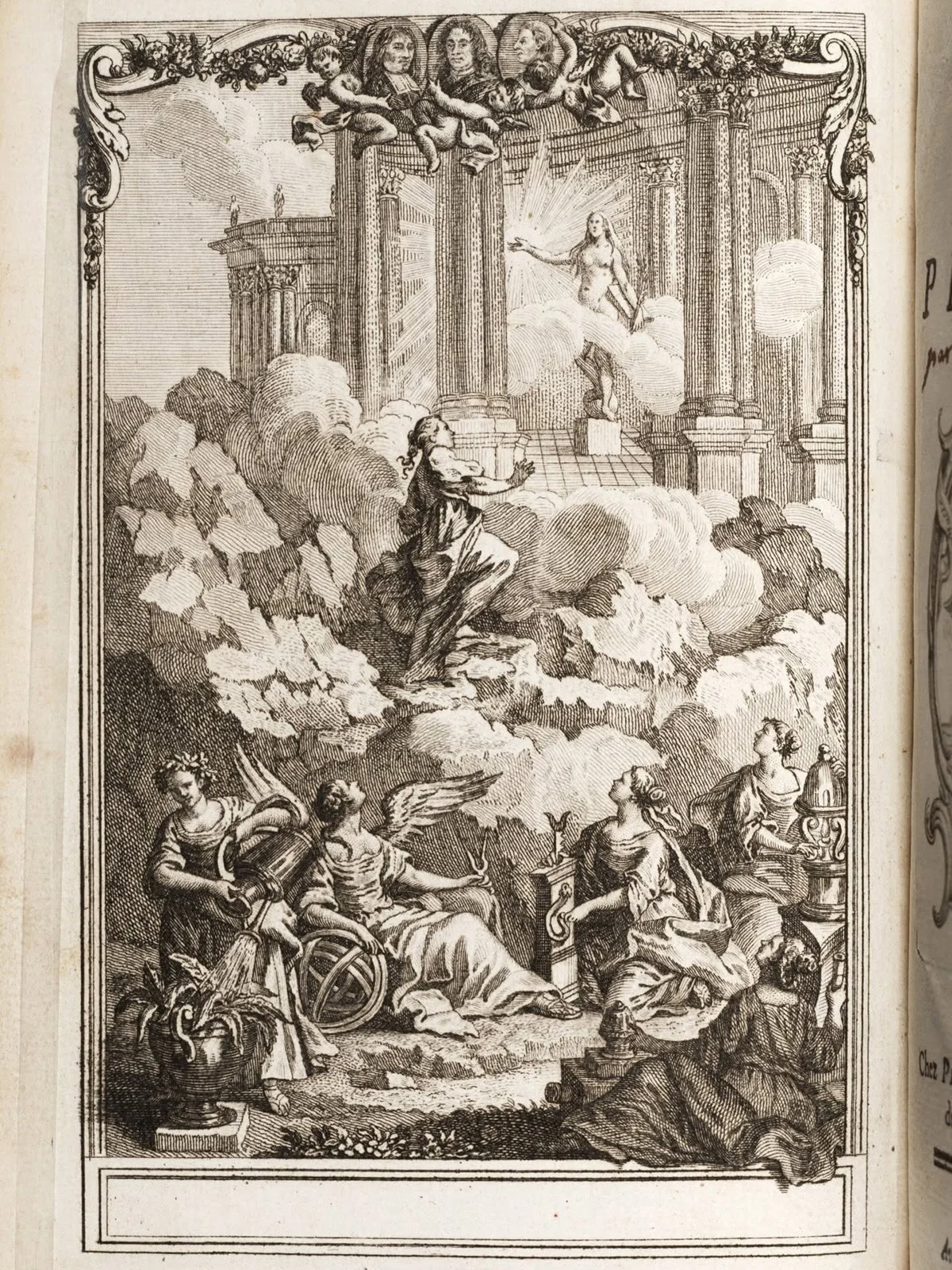
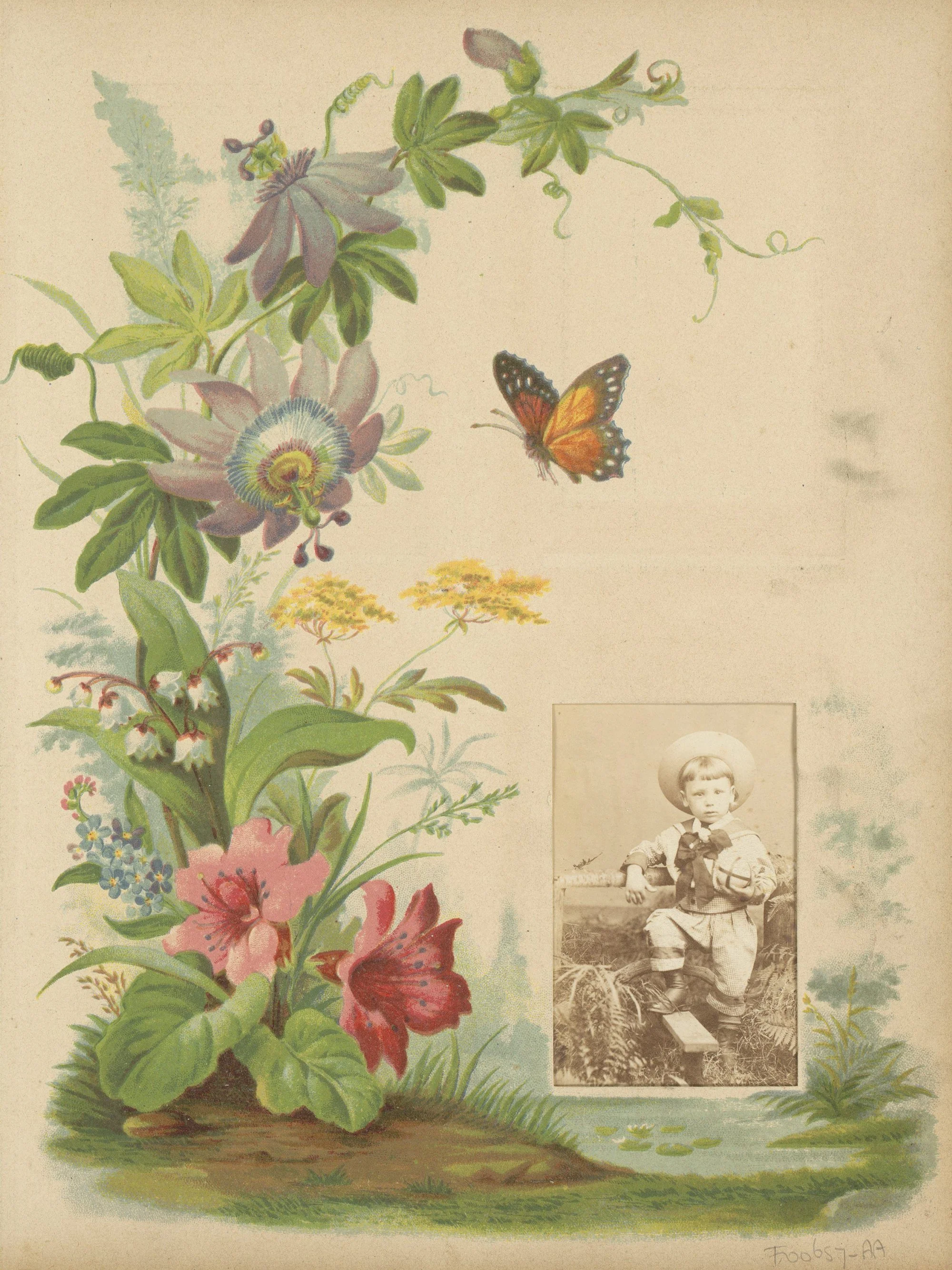
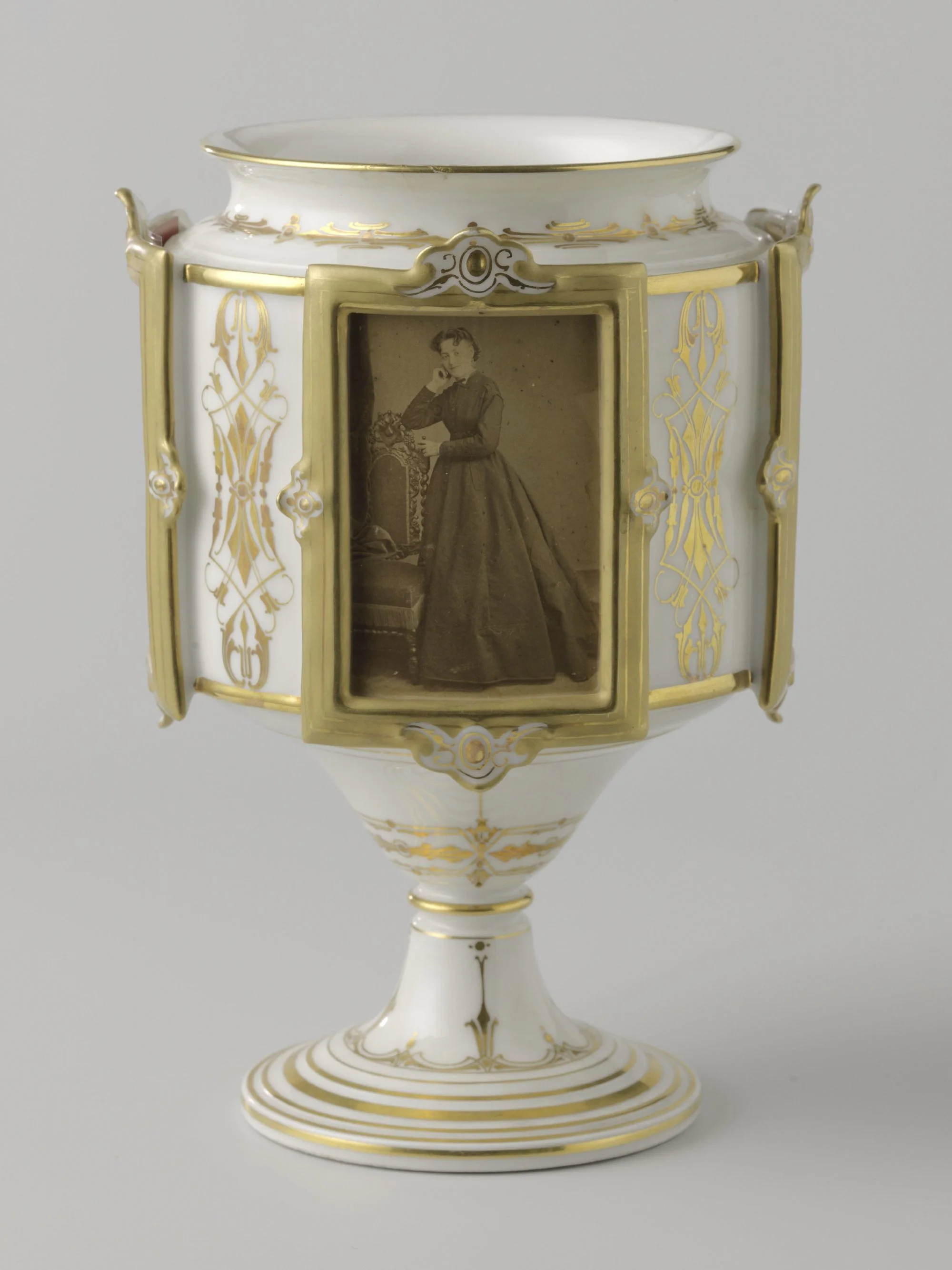
Pictured below, our photos of Histoire naturelle, générale et particulière des céphalopodes acétabulifères vivants et fossiles from 1848; Atlas ichthyologique des Indes Orientales Neerlandaises from 1862, alongside digital details of an 1877 edition via the Smithsonian Libraries and Archives; frontpiece of groundbreaking French Enlightenment physicist Émilie du Châtelet’s Institutions de physique (1740), also via the Smithsonian Libraries and Archives; and more beauty besides. Additional images include a photo album (bearing the inscription: ‘West Street,/ Erith./ E. M. Hind,/ PHOTOGRAPHER/ Negatives kept,/ COPIES CAN ALWAYS BE HAD’, London, 1850–1900) and display vase, via the Rijksmuseum.
Rare Book Week 2026 sessions
Earth, Insect, Beast: Makings of a Byzantine manuscript
Join us for a closer look at the NGV's earliest illuminated manuscript, The Gospel of Theophanes, a deluxe Byzantine rendition of the Four Gospels, written in minuscule Greek (ca. 1125–1150). During this intimate viewing Curators and Conservators will speak about the significance of this rare manuscript, and explore how it was made, with a focus on artisans' materials and techniques. Prepare for a deep dive into the world of precious earth pigments, inks sourced from insects and parchment made from beasts.
Petra Kayser, Bonnie Hearn, and Ruth Shervington
NGV International
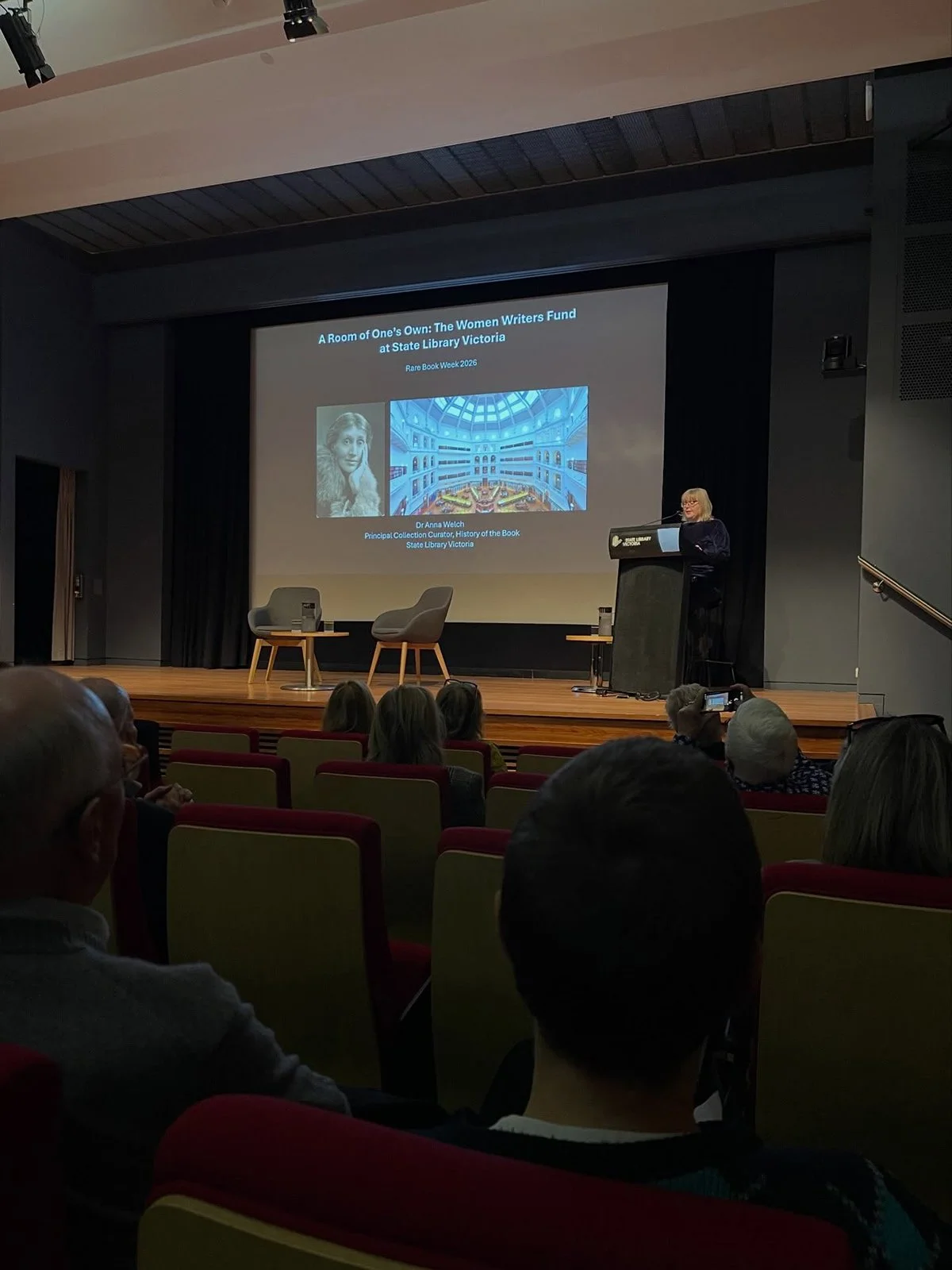
A Room of One’s Own: The Women Writers Fund at State Library Victoria
This lecture introduces the Library’s pioneering Women Writers Fund, established in 2021 with founding donations from Krystyna Campbell-Pretty AM and Helen Sykes, and subsequently also supported by the Helen Macpherson Smith Trust. The Fund enables the library to collect the voices of women who have been under-represented in the State Collection for historical reasons. After a brief exploration of the library’s collecting practice in its early decades, Dr Welch will introduce 10 highlights from the Women Writers Fund that bring its purpose alive and encourages engagement with this important collecting enterprise.
Anna Welch (@bibliovita)
State Library Victoria
The Paper Argonaut: Adventures in art, science and rare books
Spanning art, science and rare books, this panel discussion will highlight some important marine science books in Museums Victoria’s Rare Book Collection. Discover how rare books have informed scientific research, inspired artistic practice within museums, and documented ocean voyages and observation. The discussion will also highlight women’s contributions to science and the history of the Museums Victoria Library.
Melanie Mackenzie, Rhyll Plant, and Thomas A. Darragh
Melbourne Museum
Treasures from the Sea: A rare book display
Join Museums Victoria’s expert librarians and curators as they delve into the Museum’s fascinating and quirky collection of rare marine books and scientific artwork.
Shae Graham (@shaeegraham), Nina Whittaker, Hayley Webster (@vehvande), and Rebecca Carland
Melbourne Museum
Cartes de Visite, Cabinet Cards and Albums
Cartes de visite were the earliest photographs to be widely produced and sold affordably, becoming very popular in the 1860s. Toward the end of that decade larger photographs, known as cabinet cards, also became common. Cartes de visite were collected and exchanged with family and friends, and often placed into albums specially manufactured to hold them. Intended to be sumptuous, these albums were generally bound in leather, and adorned with decorative features such as gold tooling, or brass clasps. Join Debra Parry as she looks at the early beginnings of popular photography, followed by a viewing of some of these beautiful albums used to hold cartes de visite and cabinet cards.
Deborah Parry
Royal Historical Society of Victoria
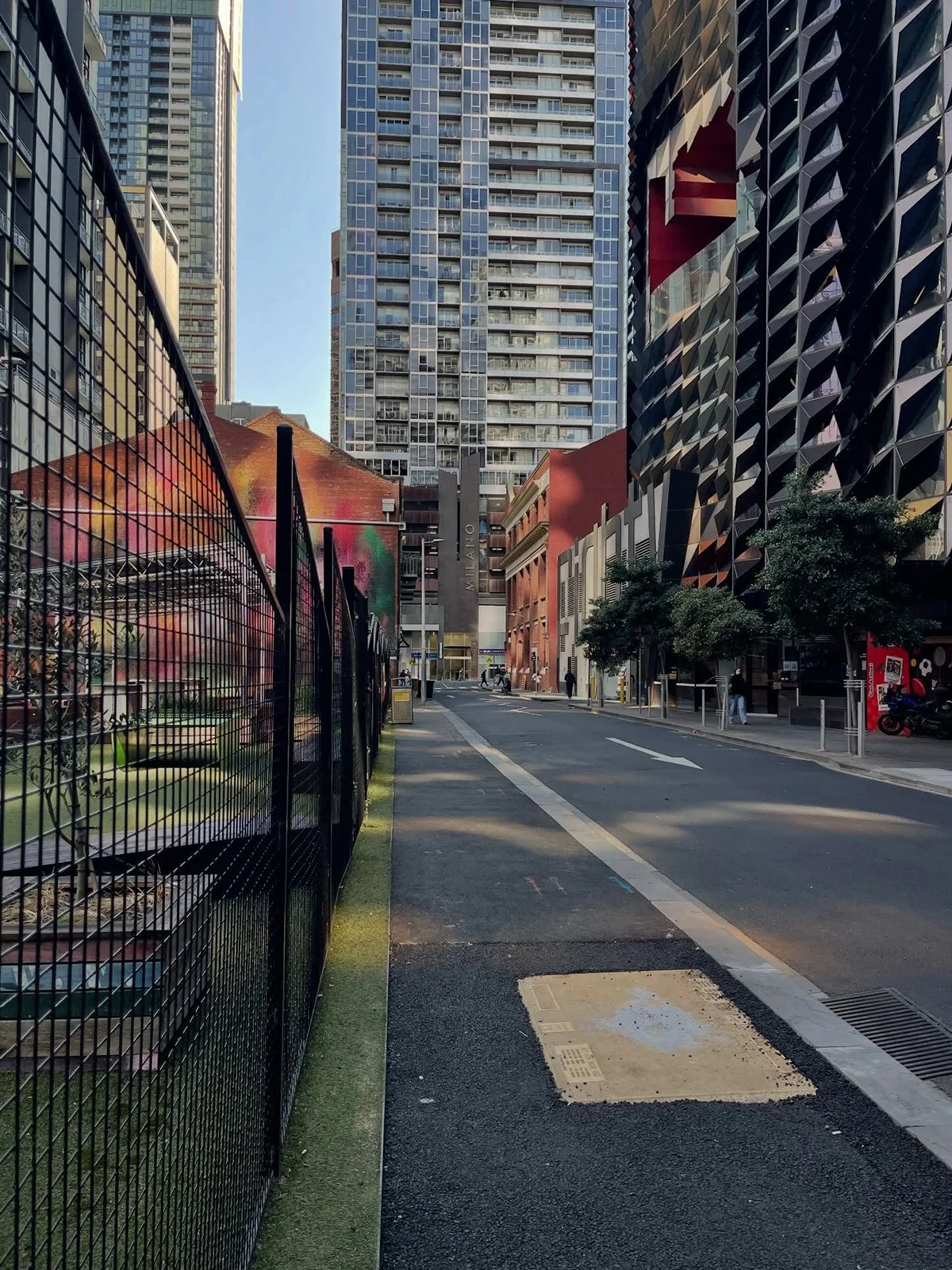
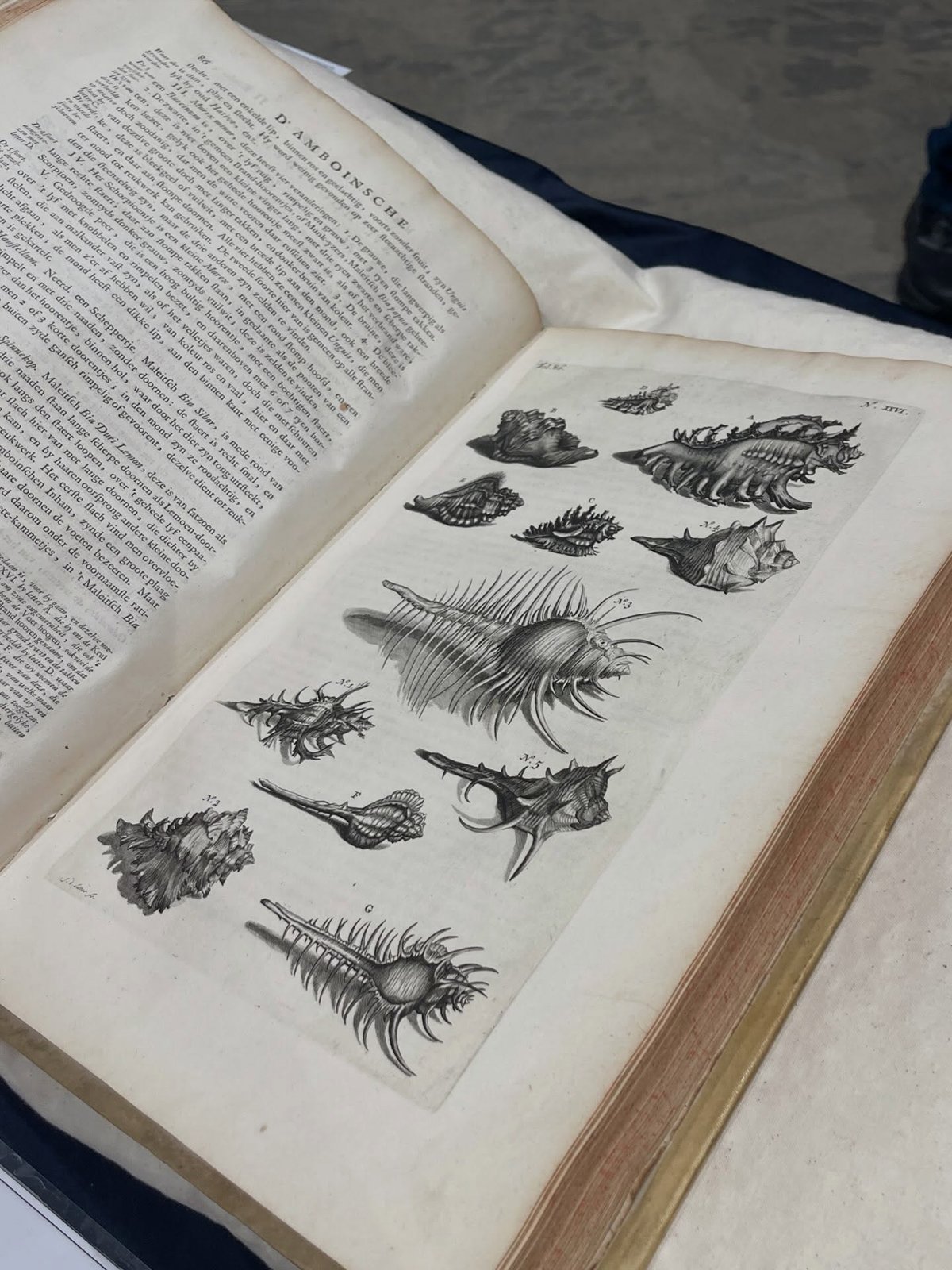
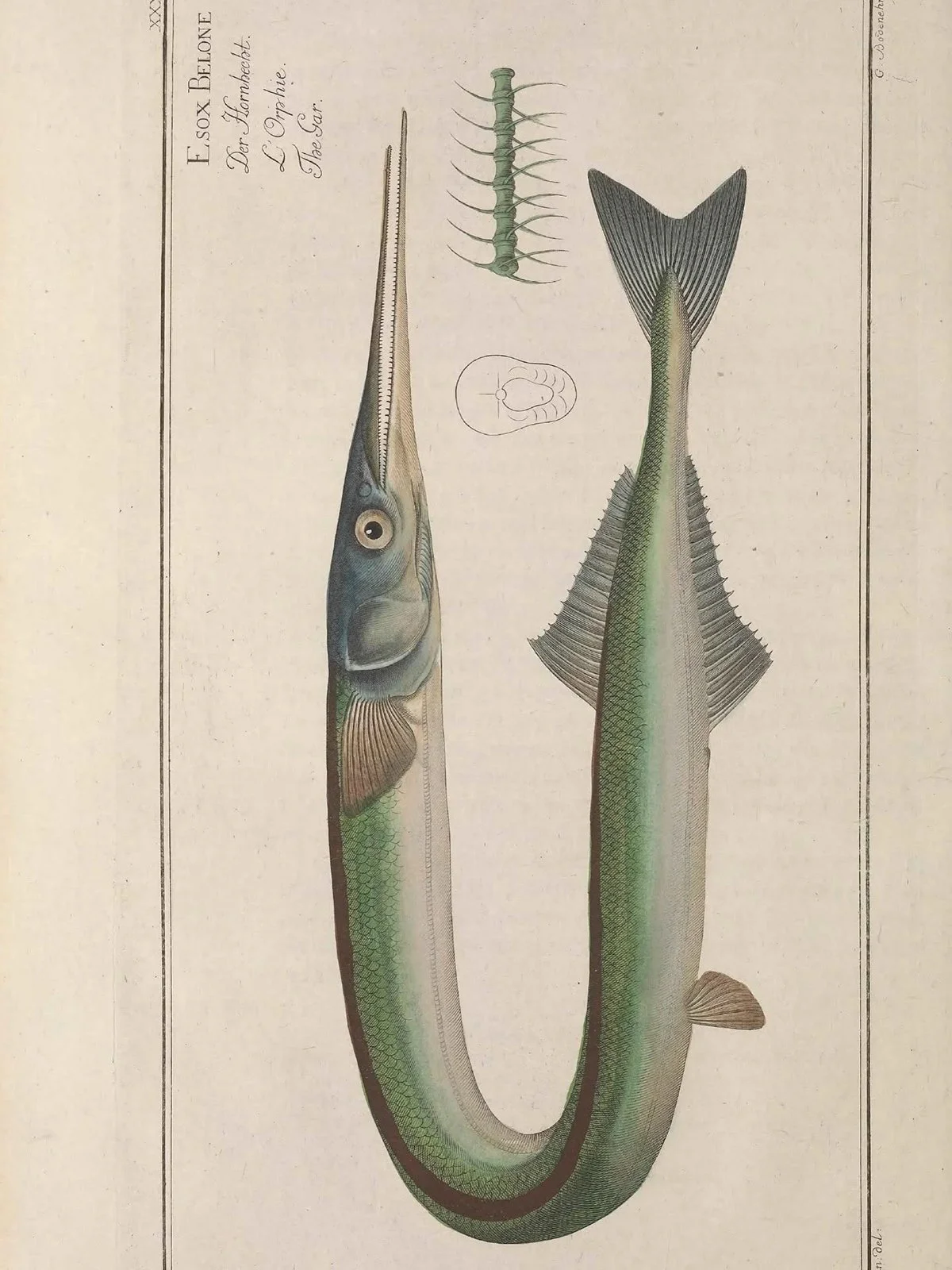
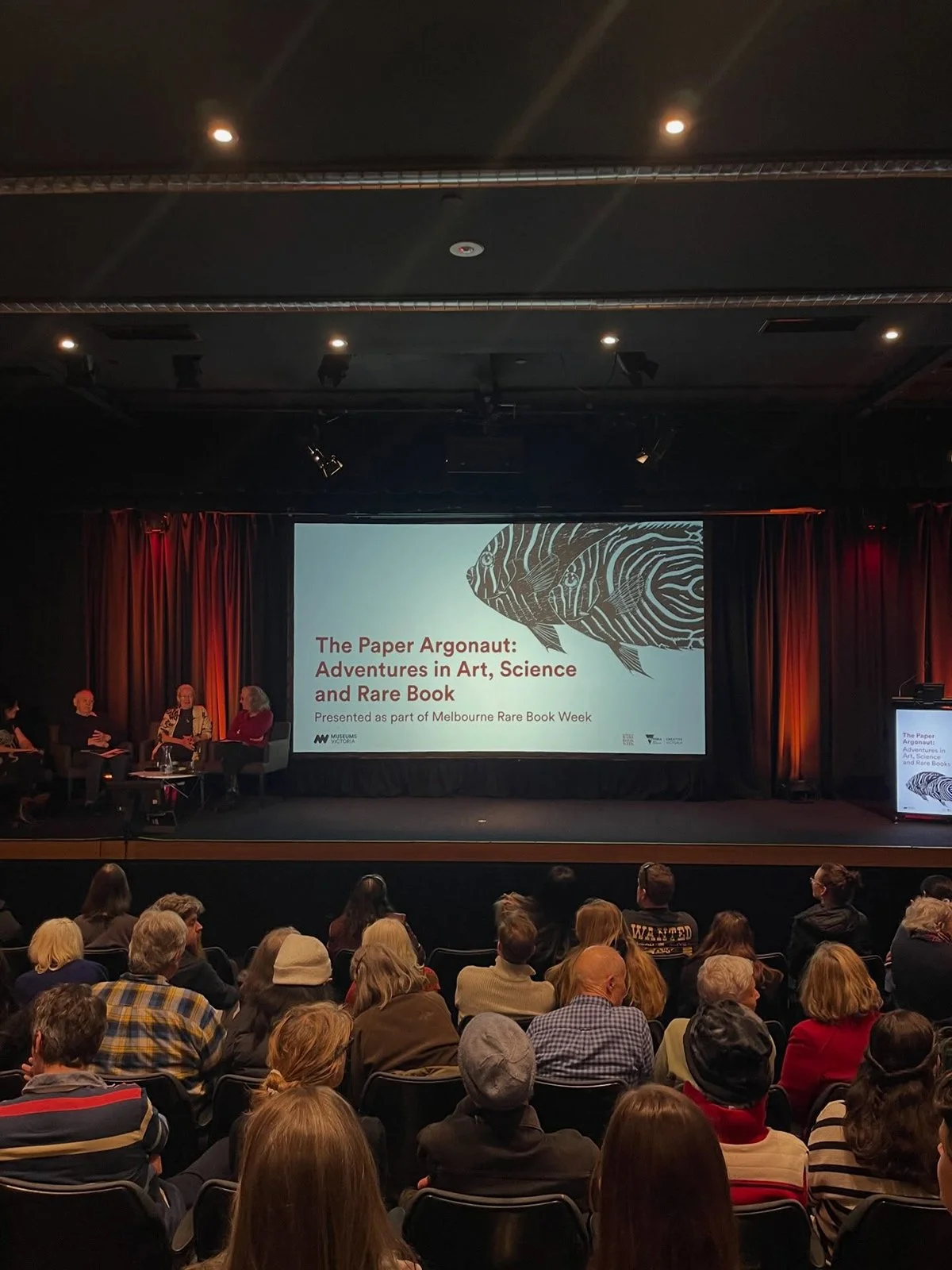
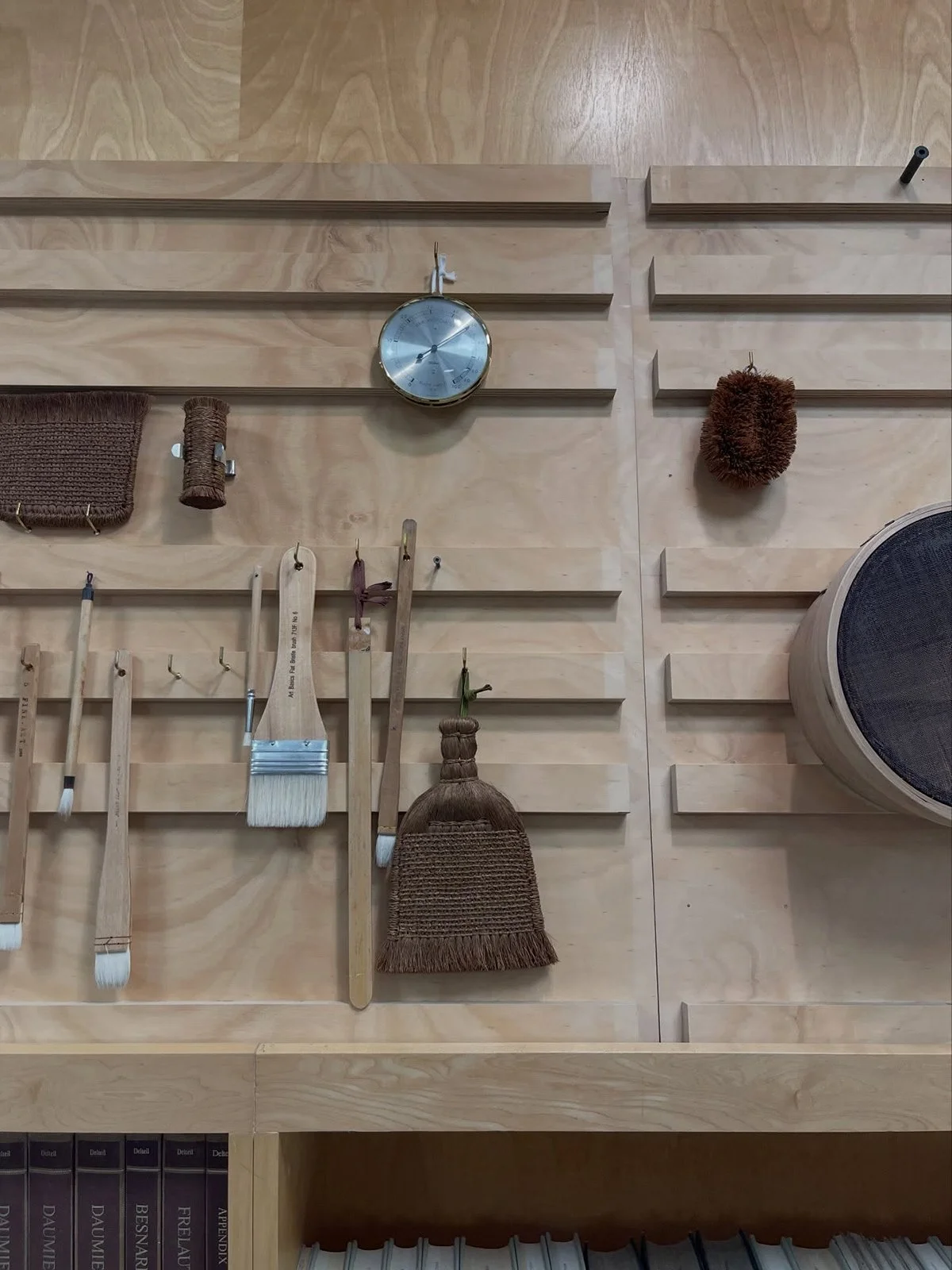
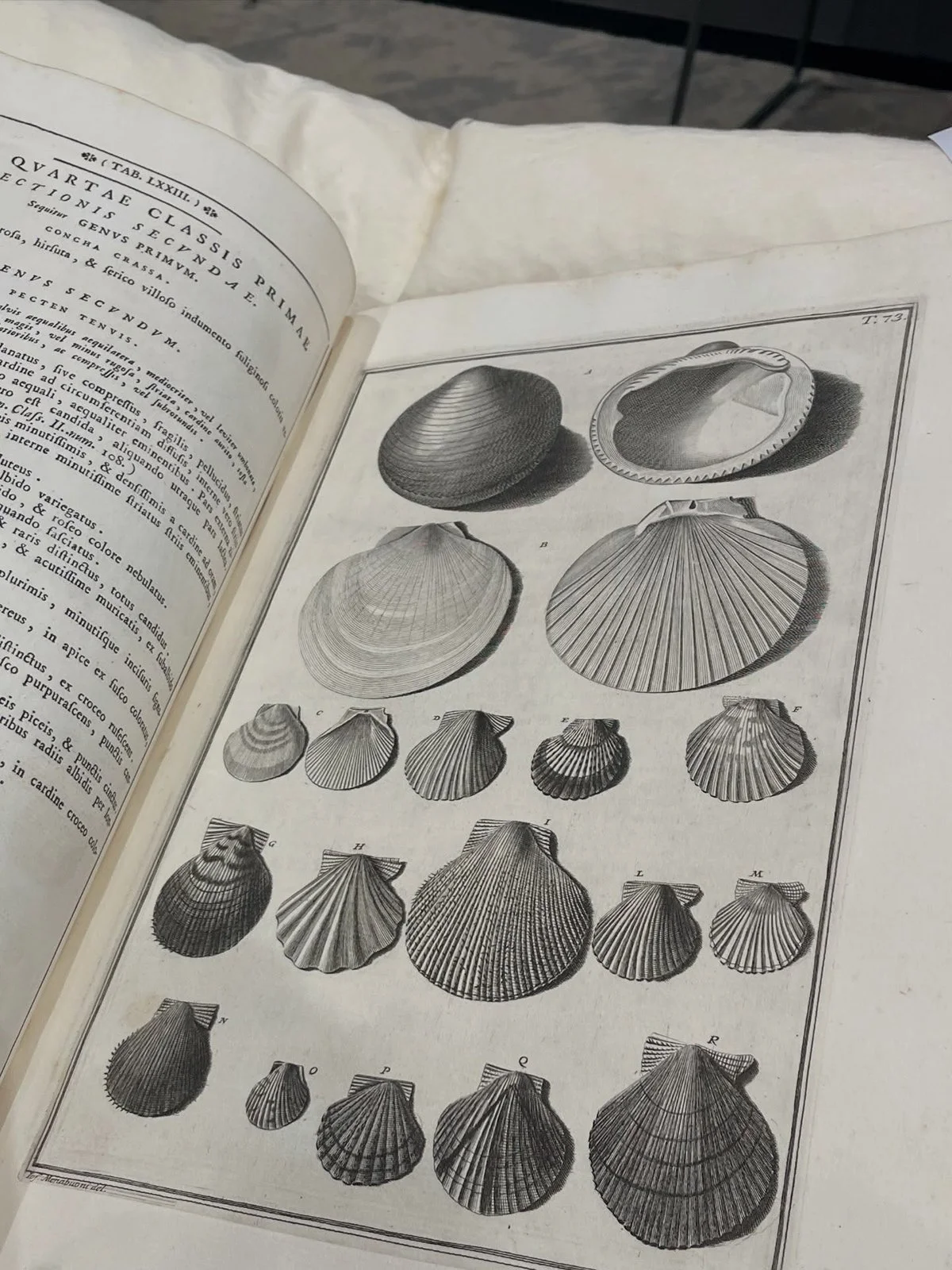
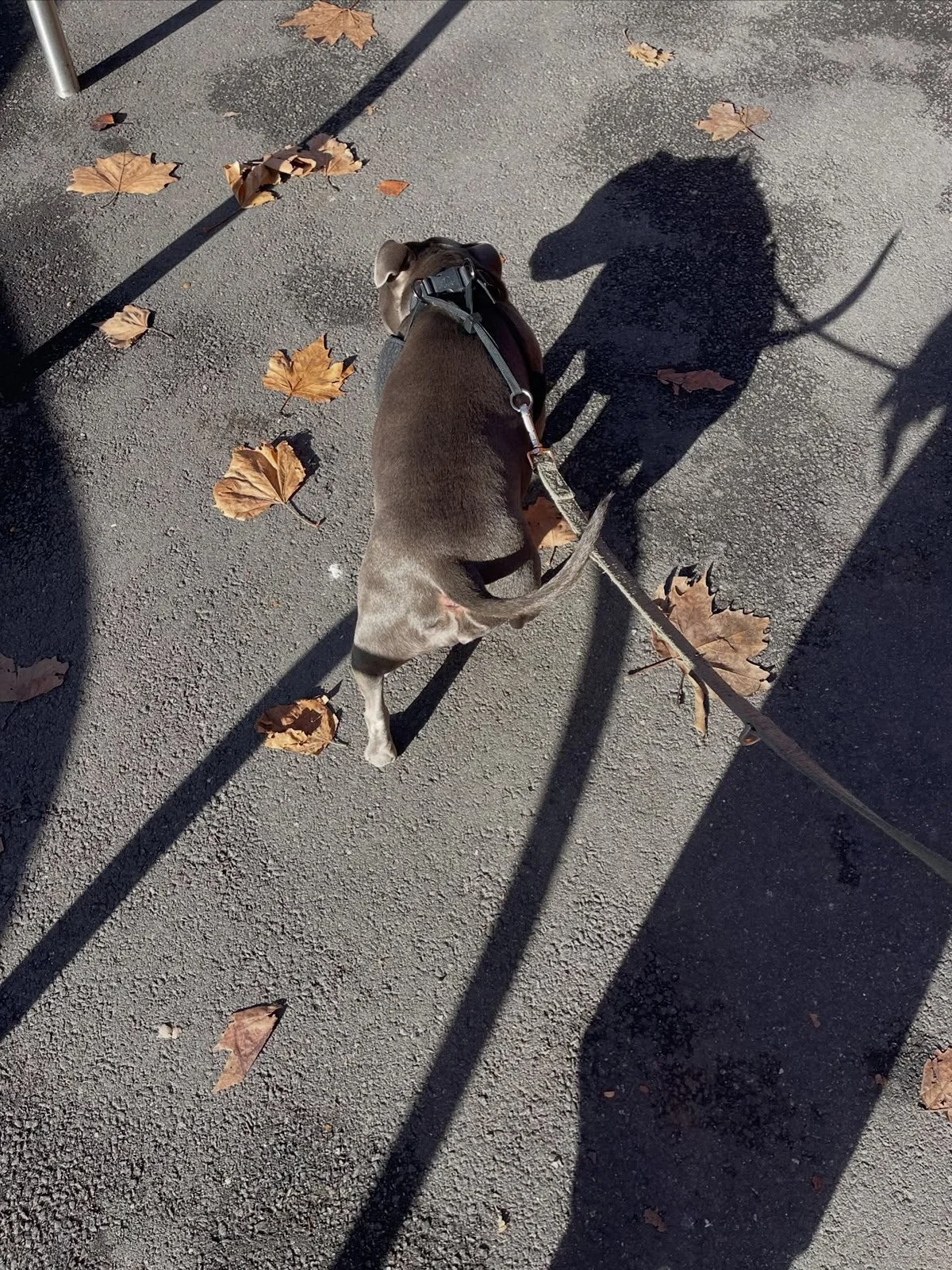
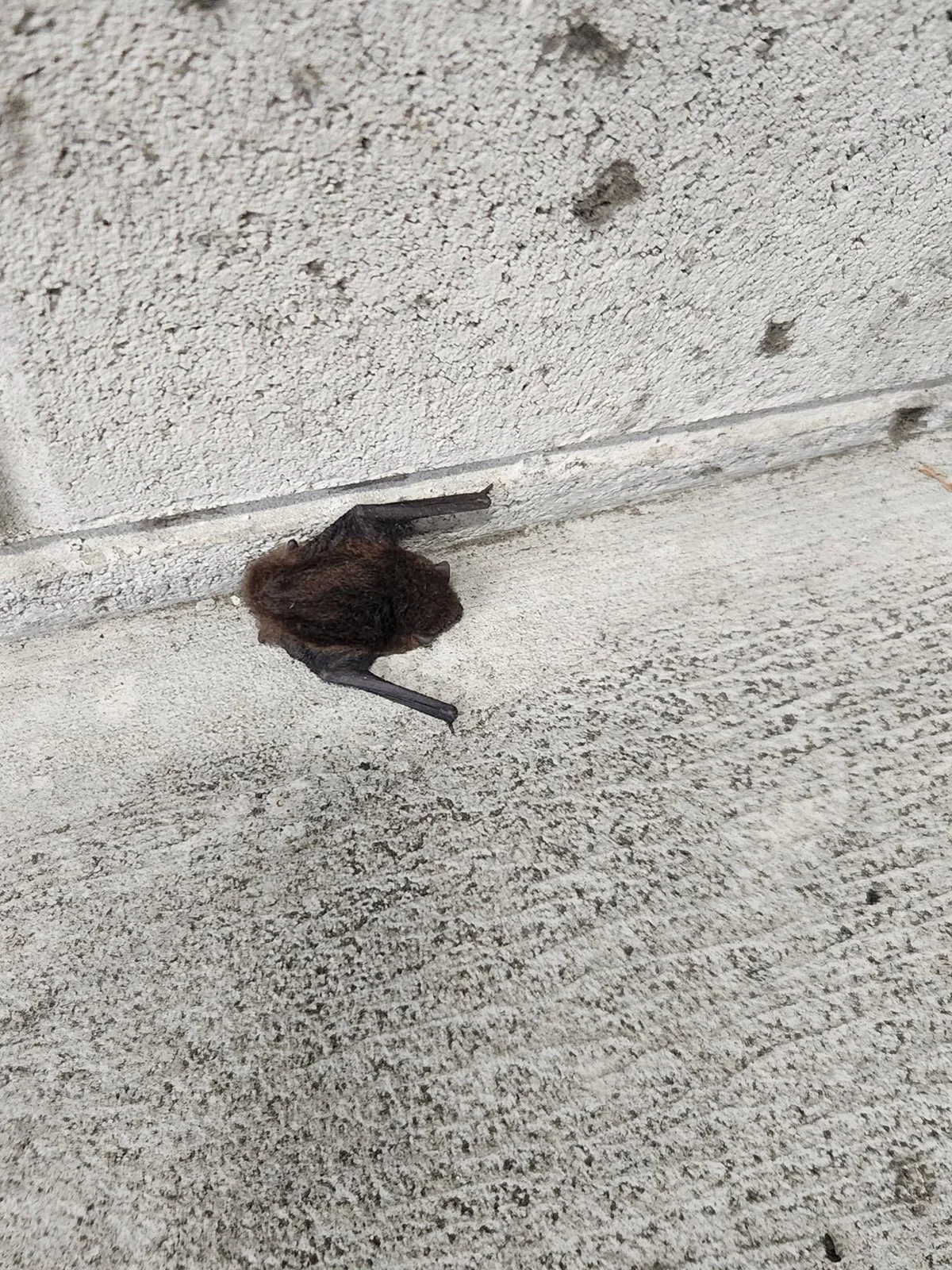
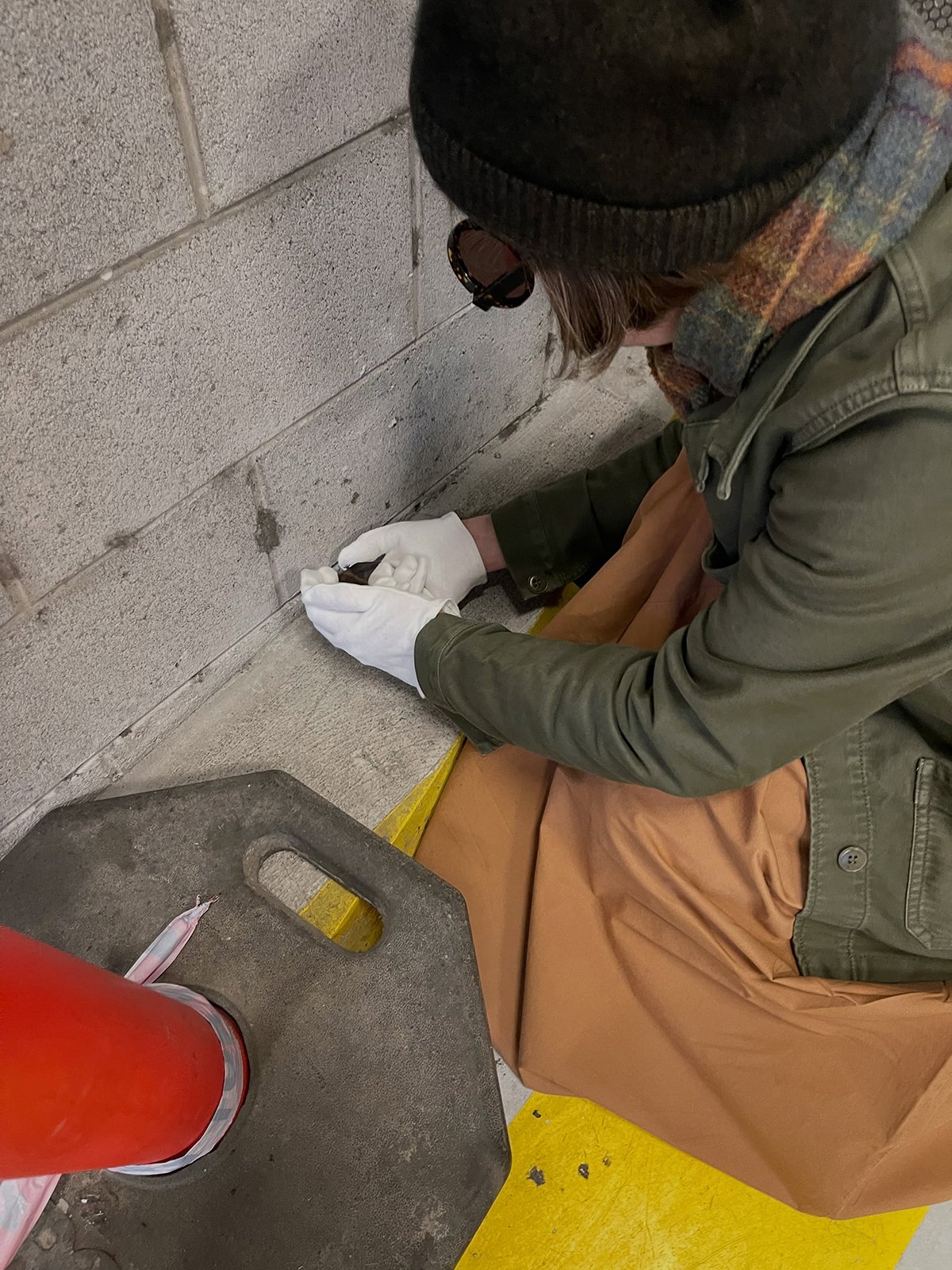
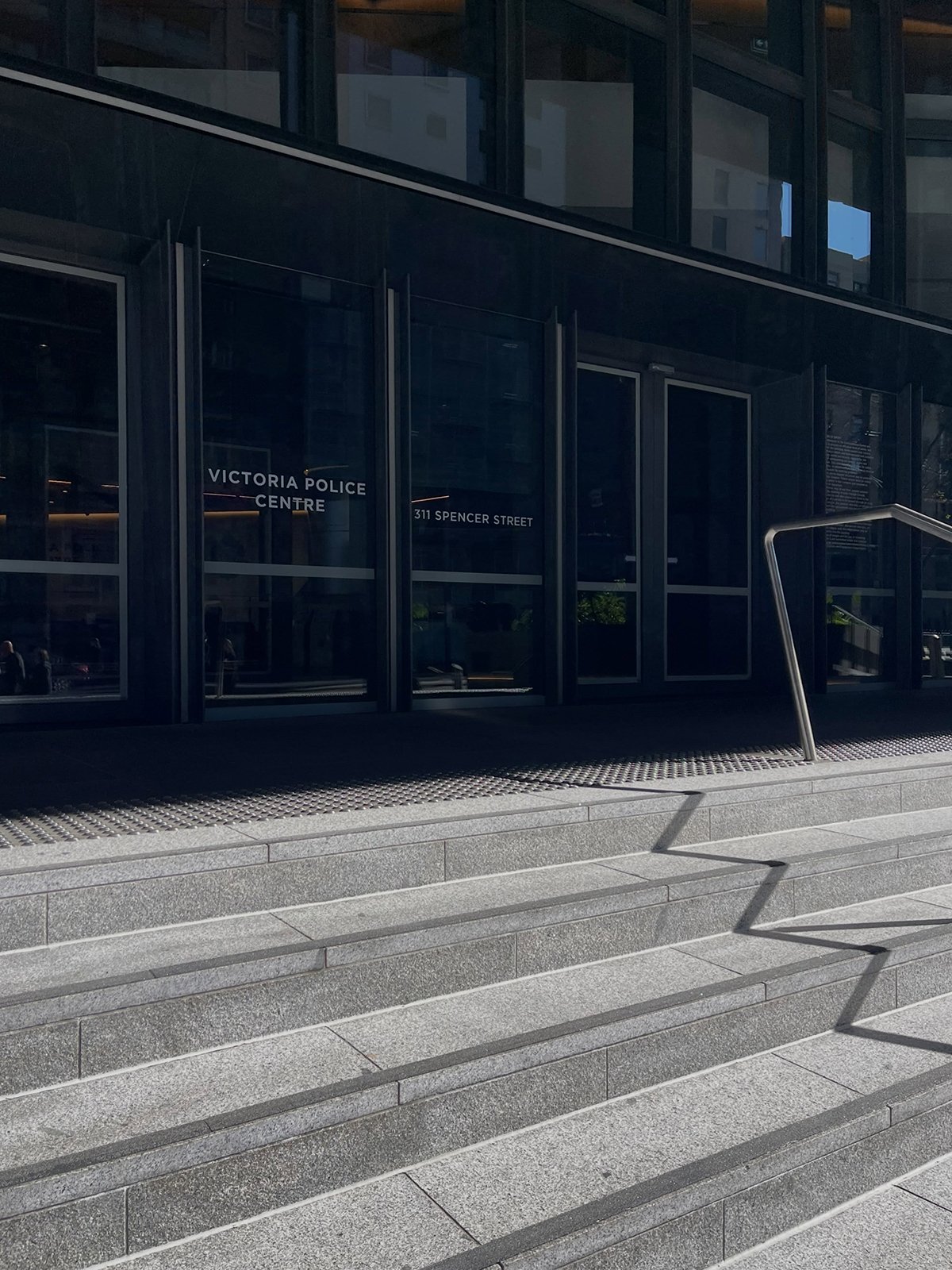
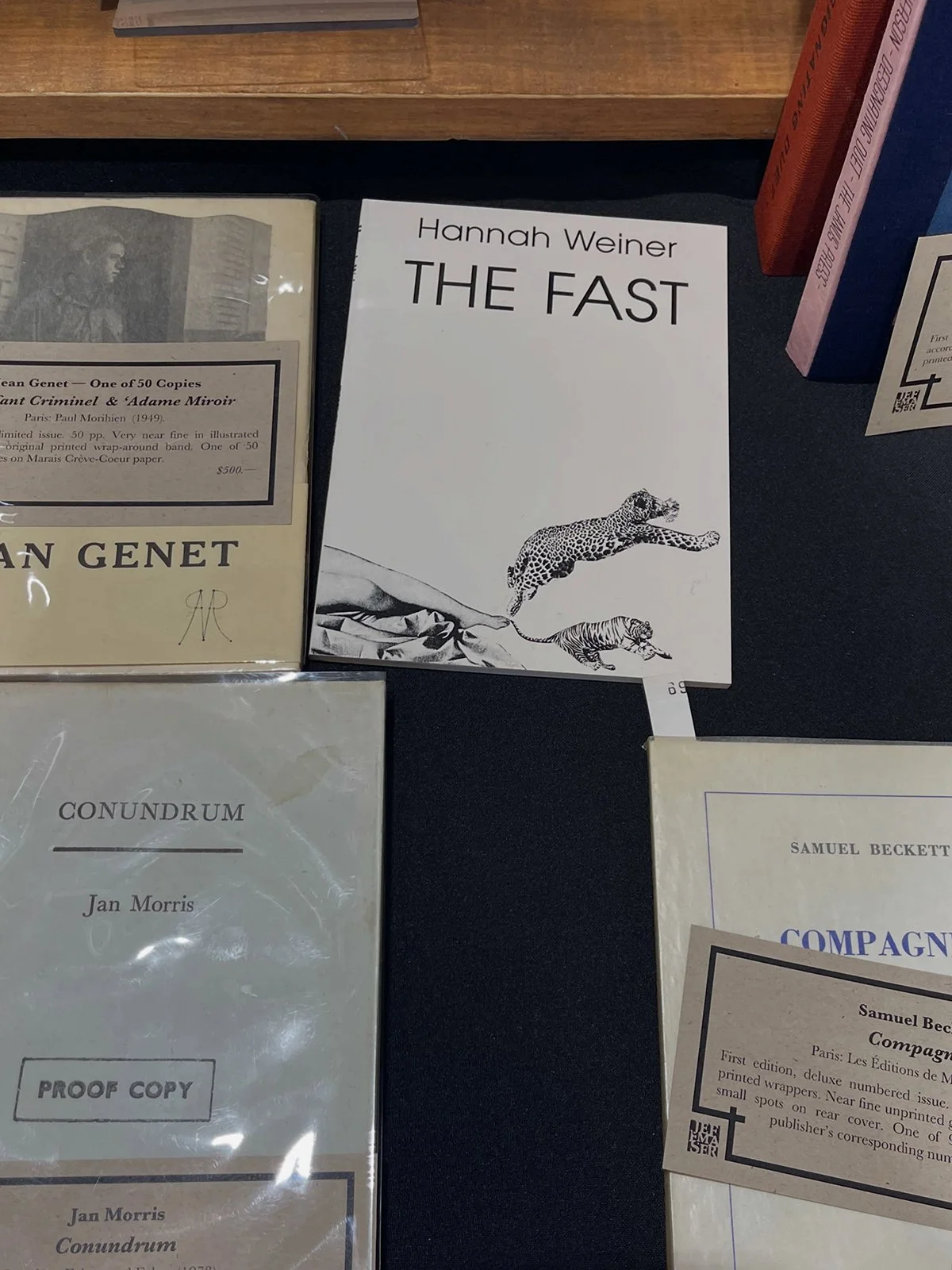
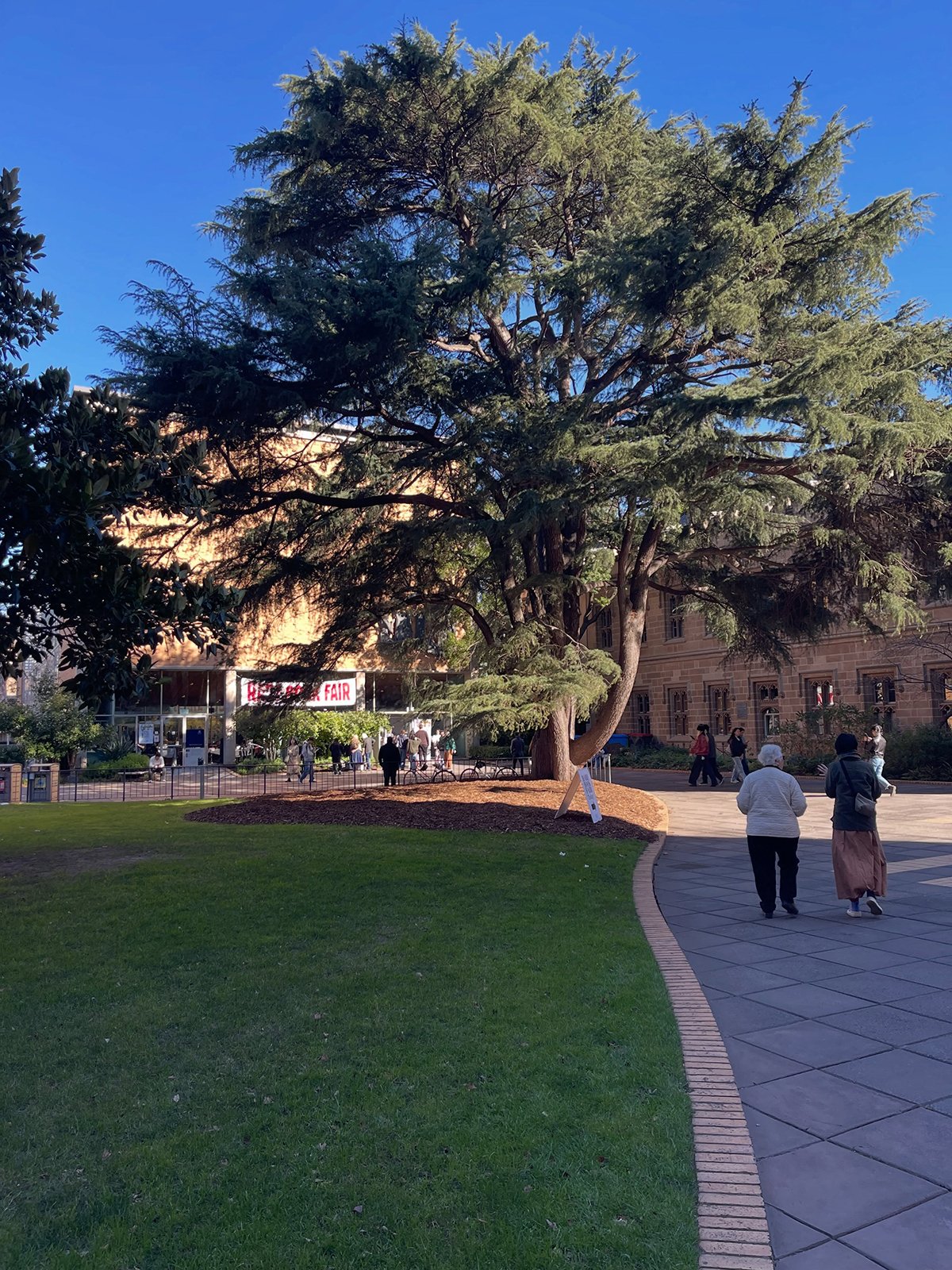
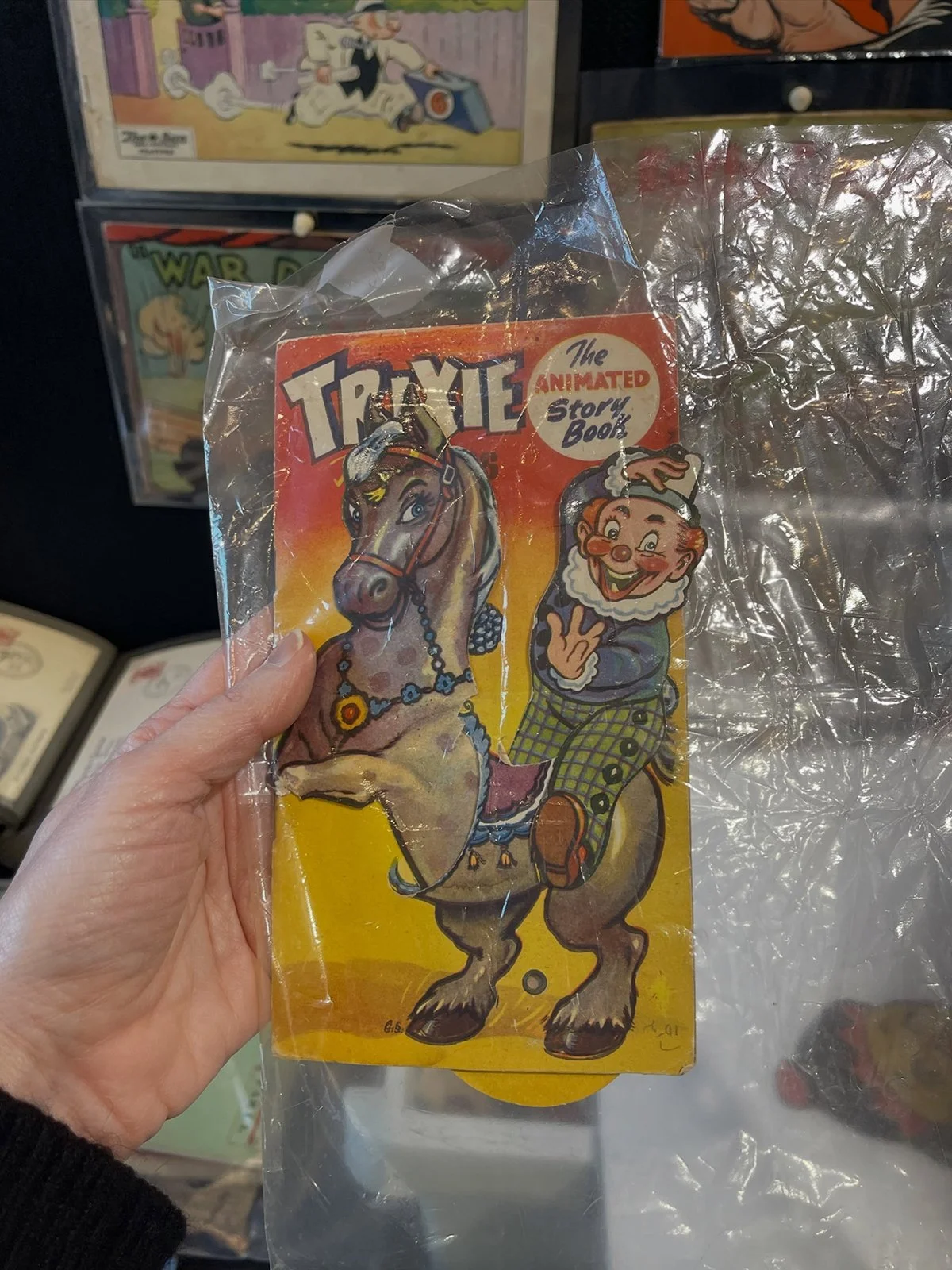
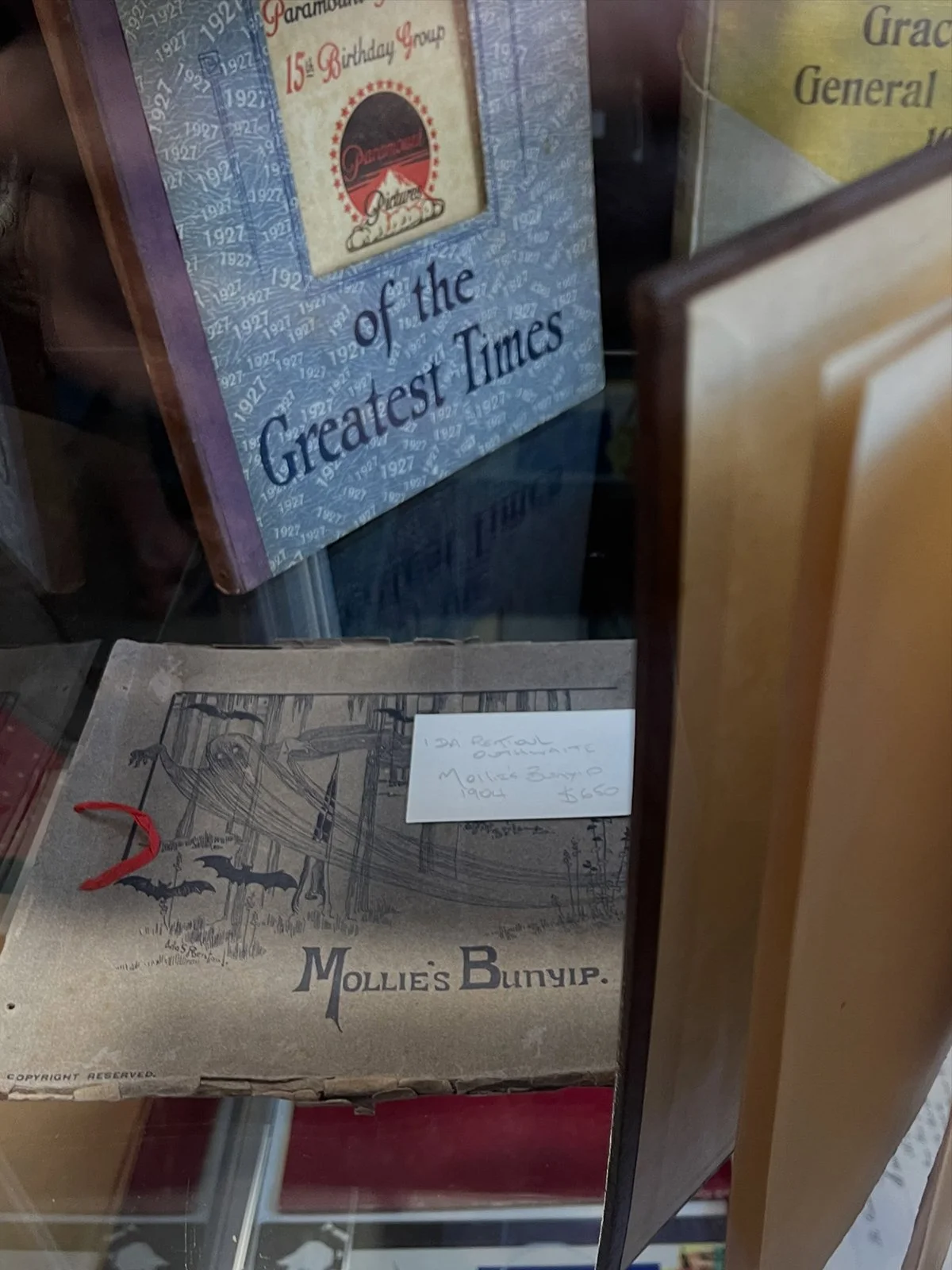
And on the last day of all things Rare Books, a Little forest microbat (Vespadelus vulturnus) fluttered into care. She was found still and cold, on the ground in a police car park at Docklands. As we later explored the Rare Book Fair, in the beauty of Wilson Hall, we looked for a fitting name among the many titles to borrow for her. We settled upon Mollie, after a 1904 edition of Mollie’s Bunyip with bats on the cover. Mollie’s Bunyip features verses by Annie Rattray Rentoul, and illustrations by her younger sister Ida Sherbourne Rentoul, later Outhwaite, and is known as Ida’s first illustrated book.
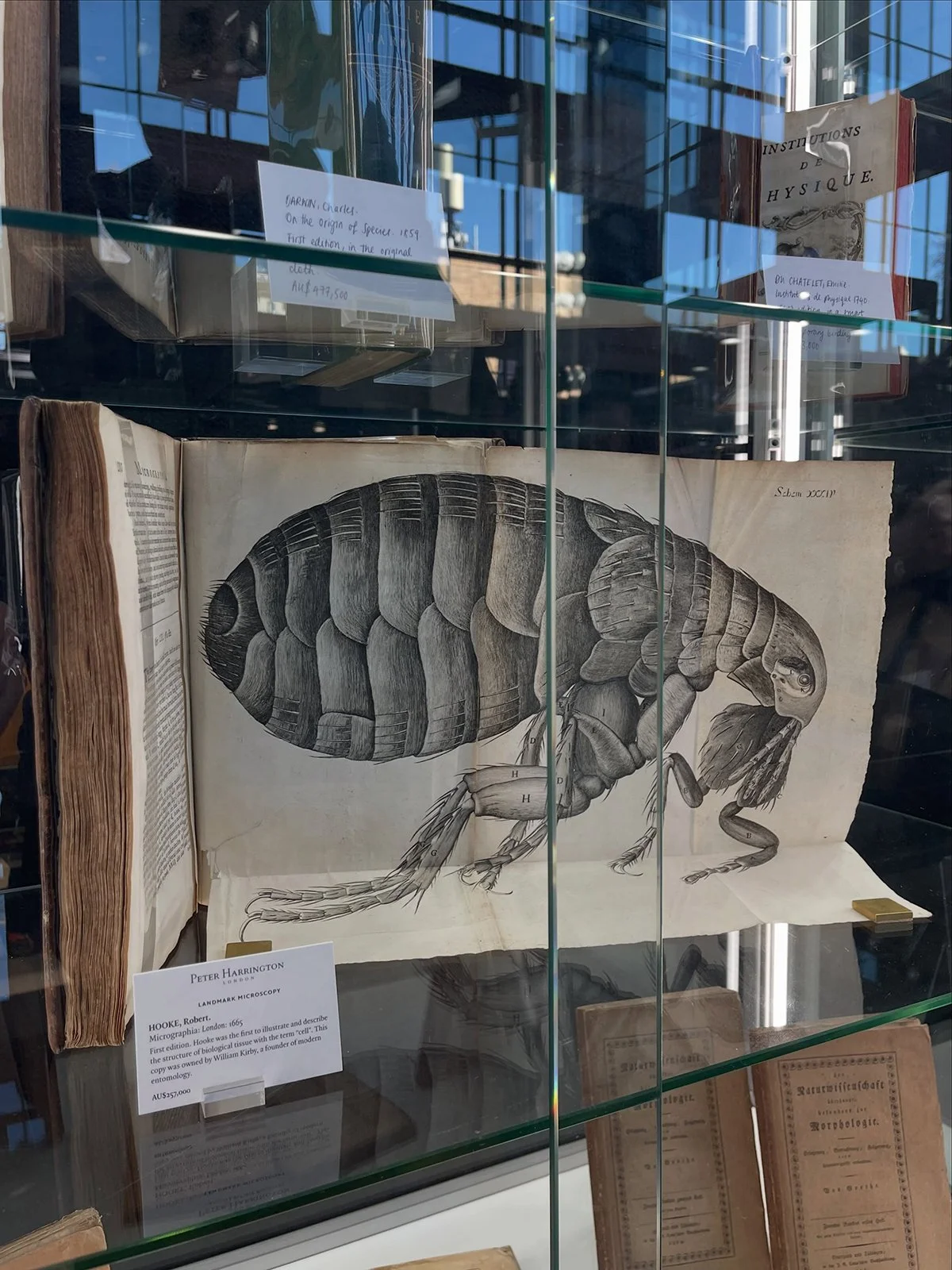
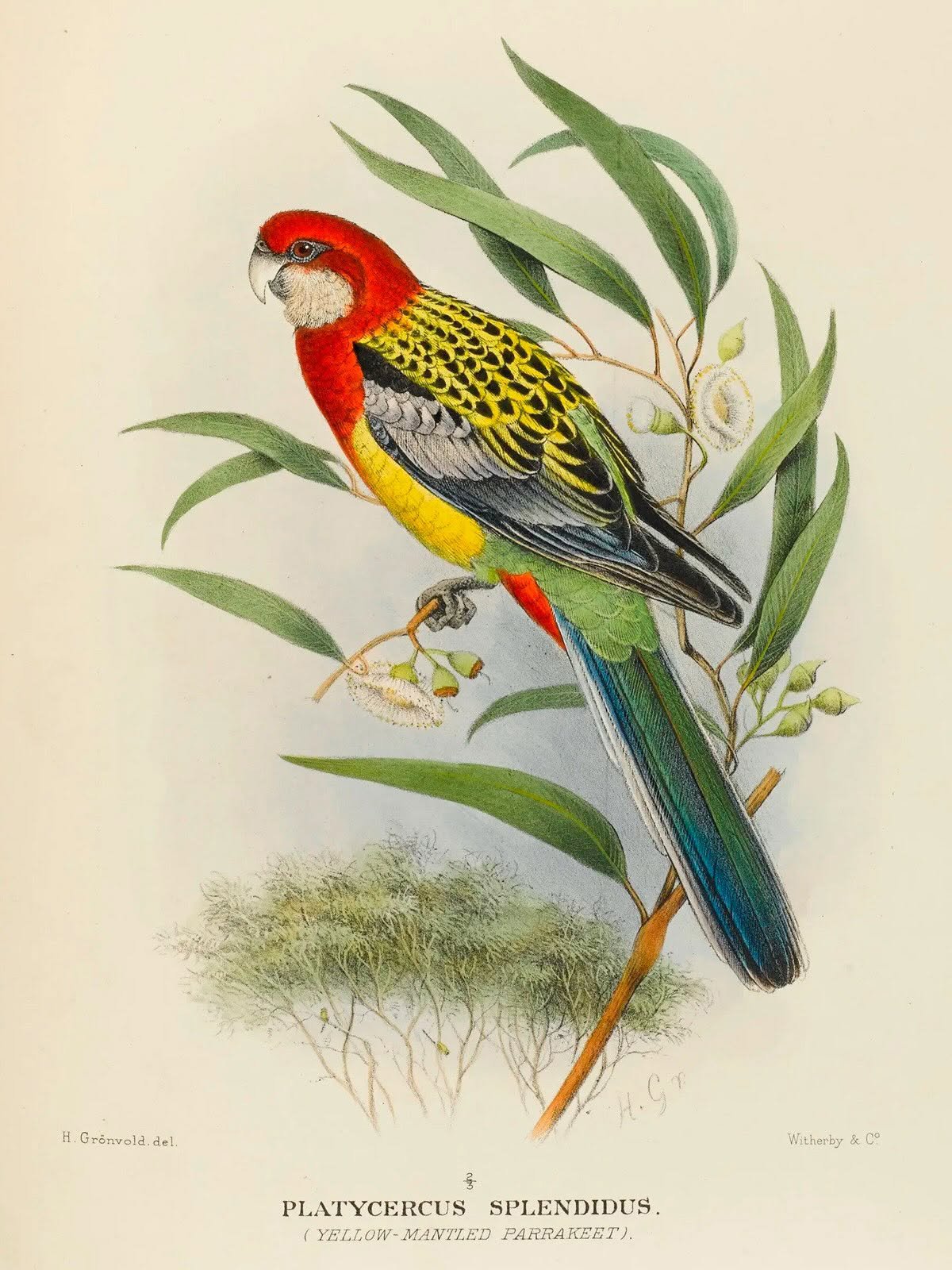
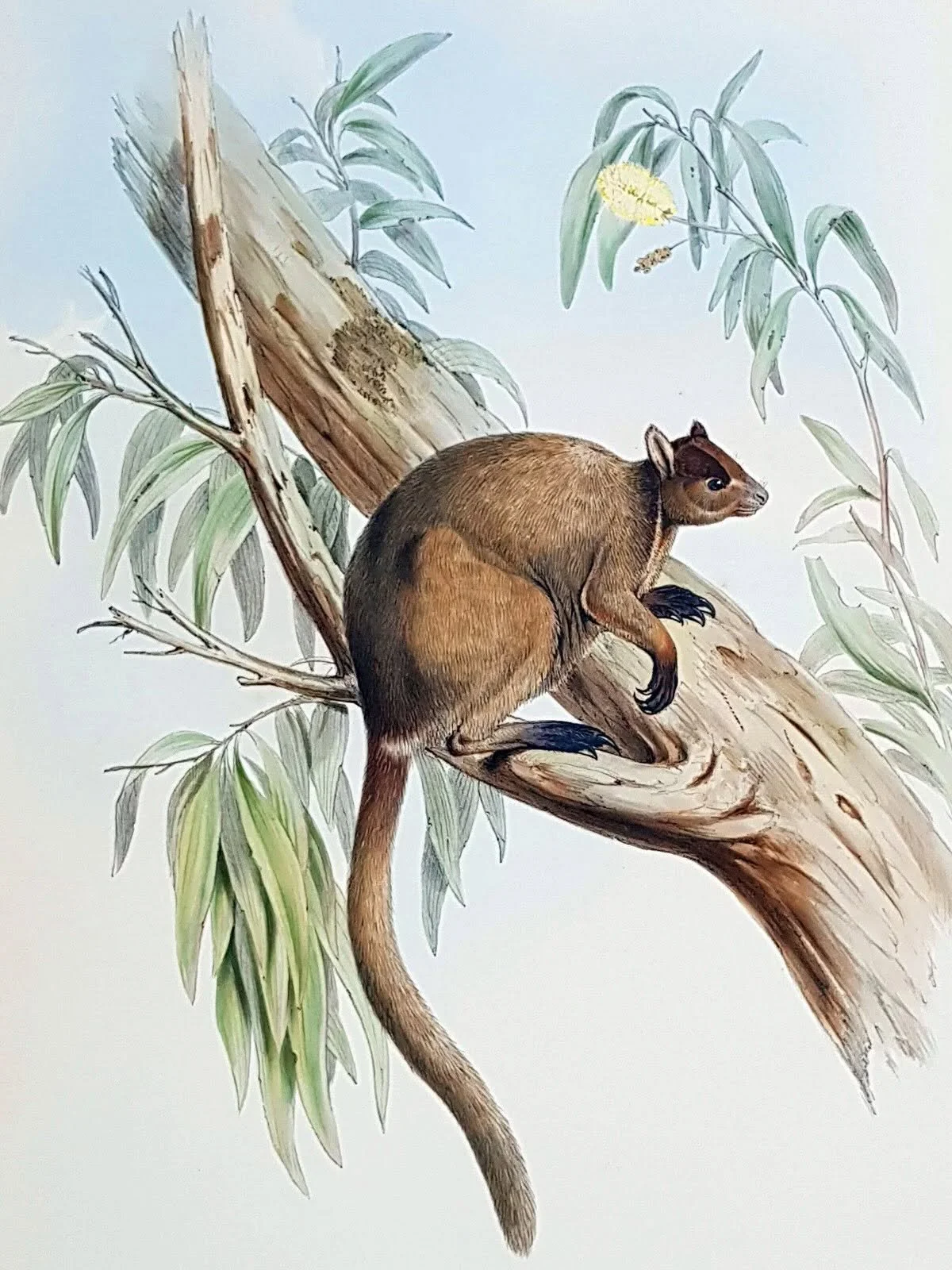
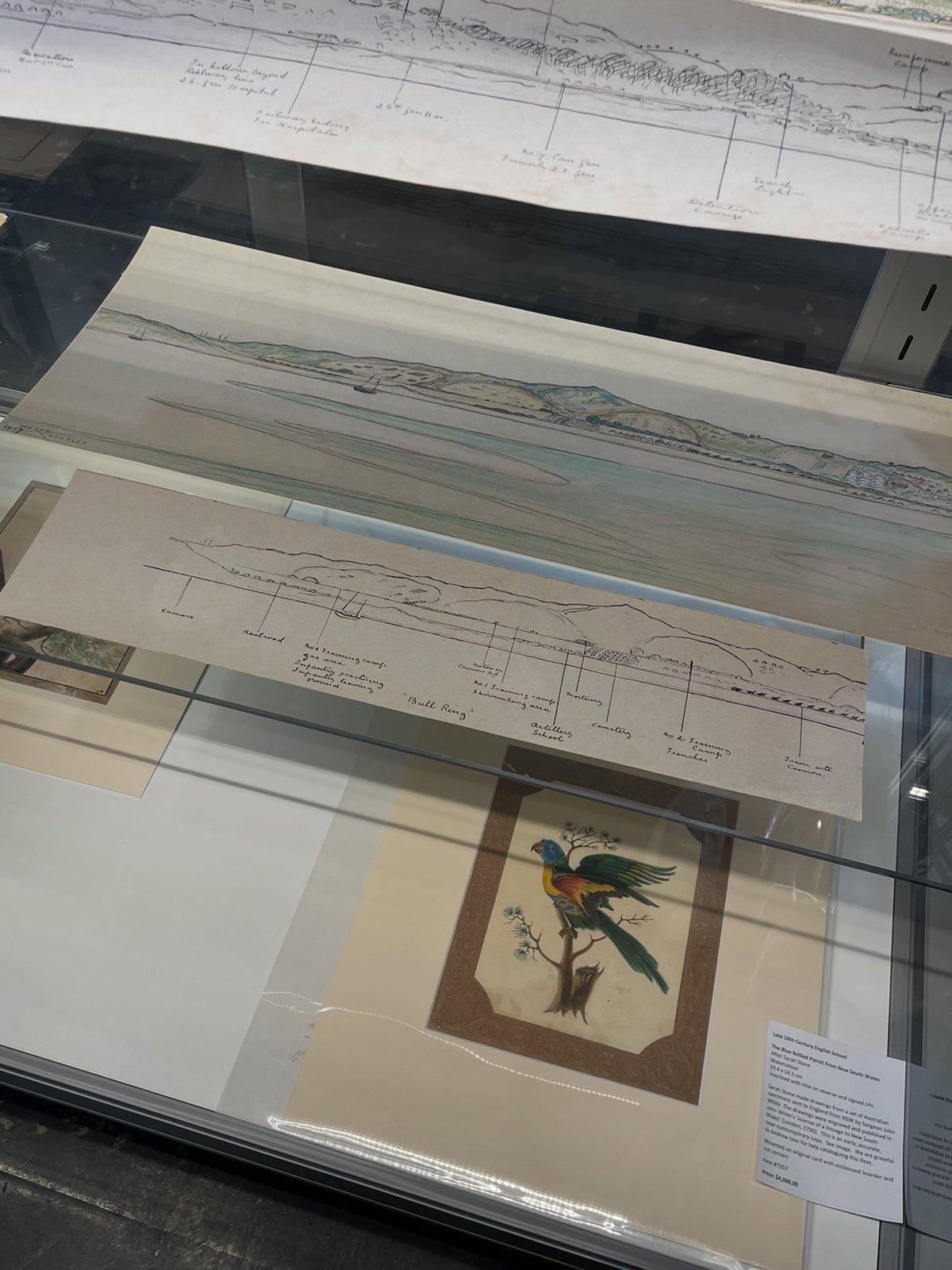
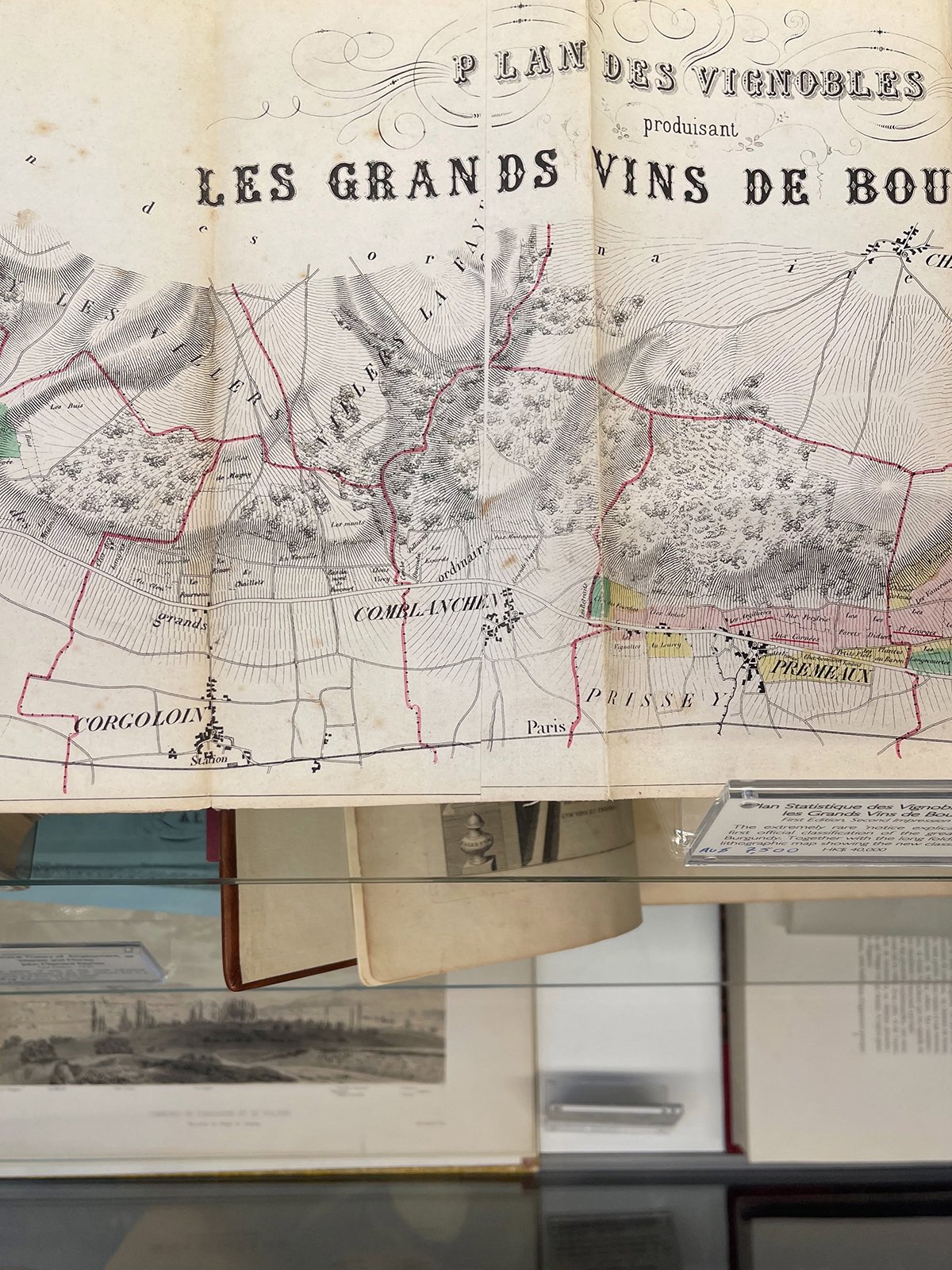
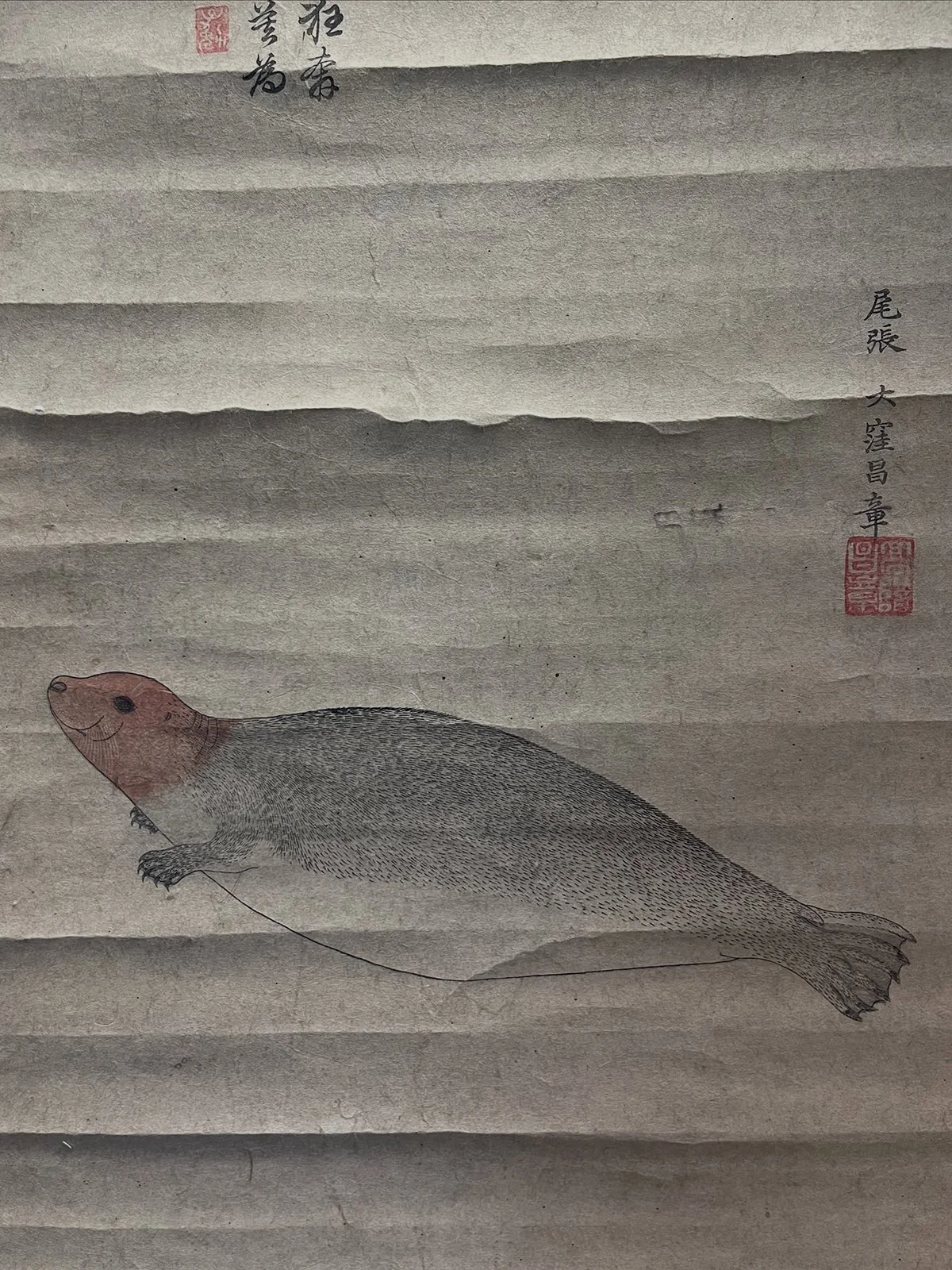
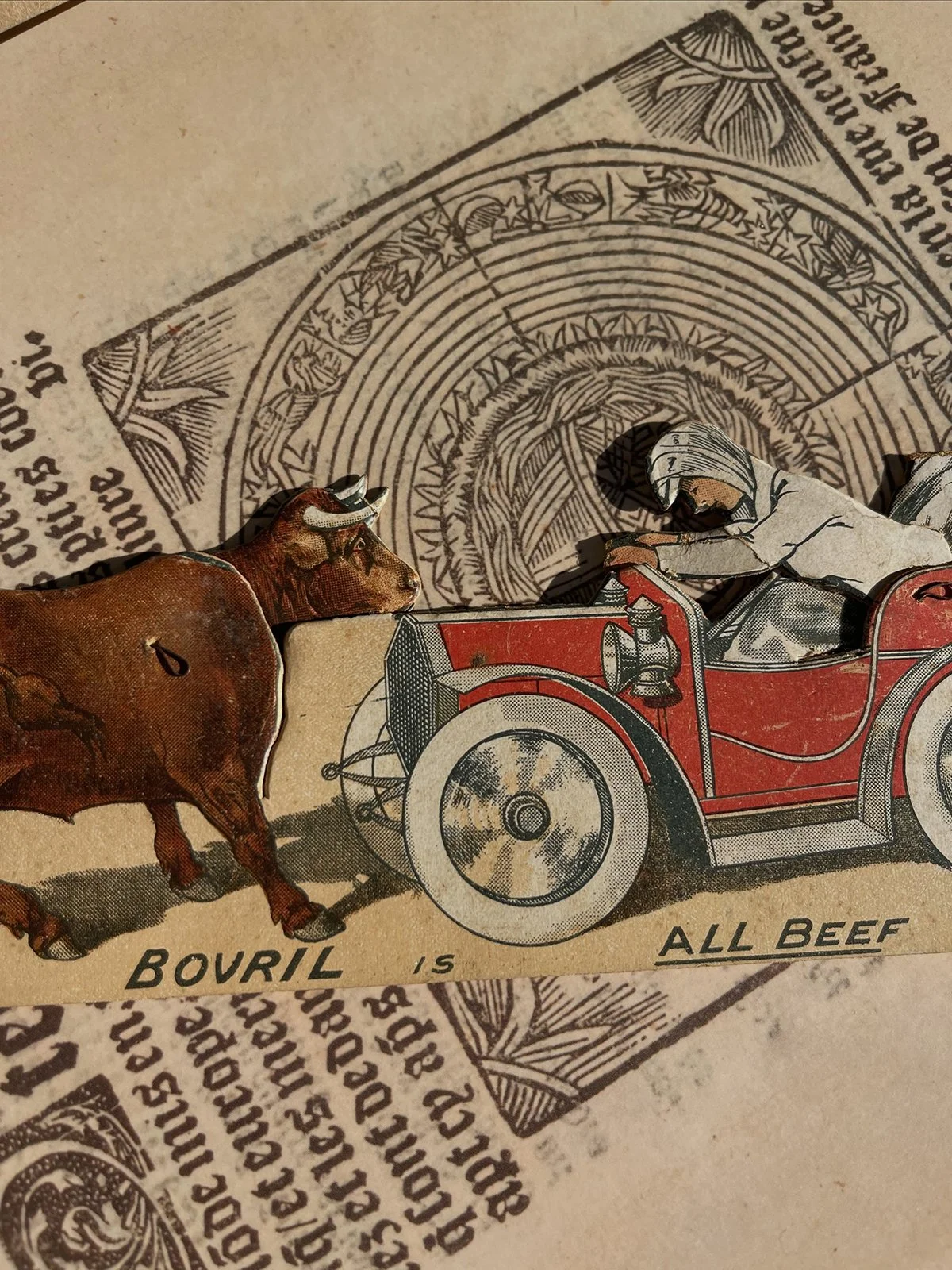
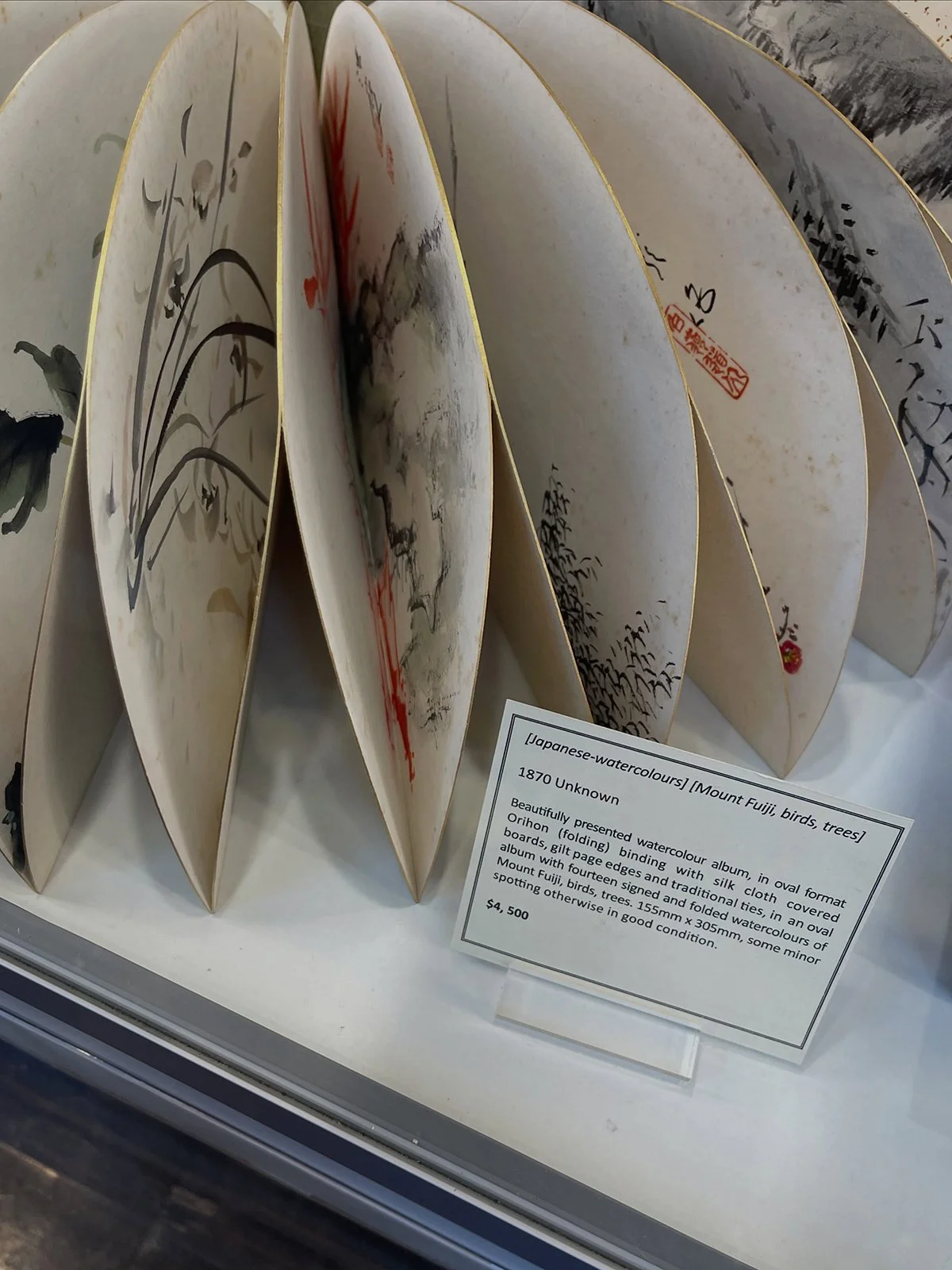
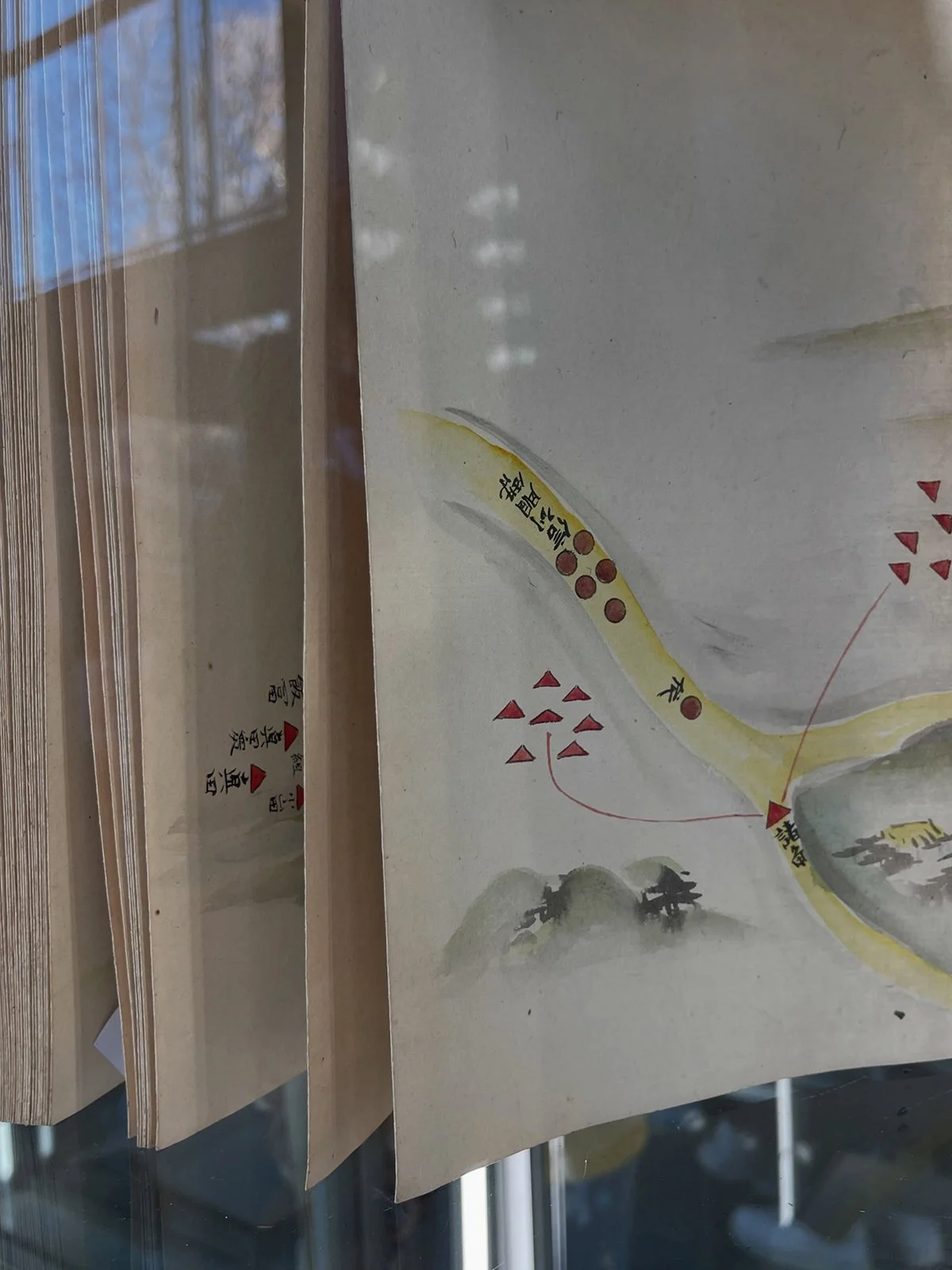
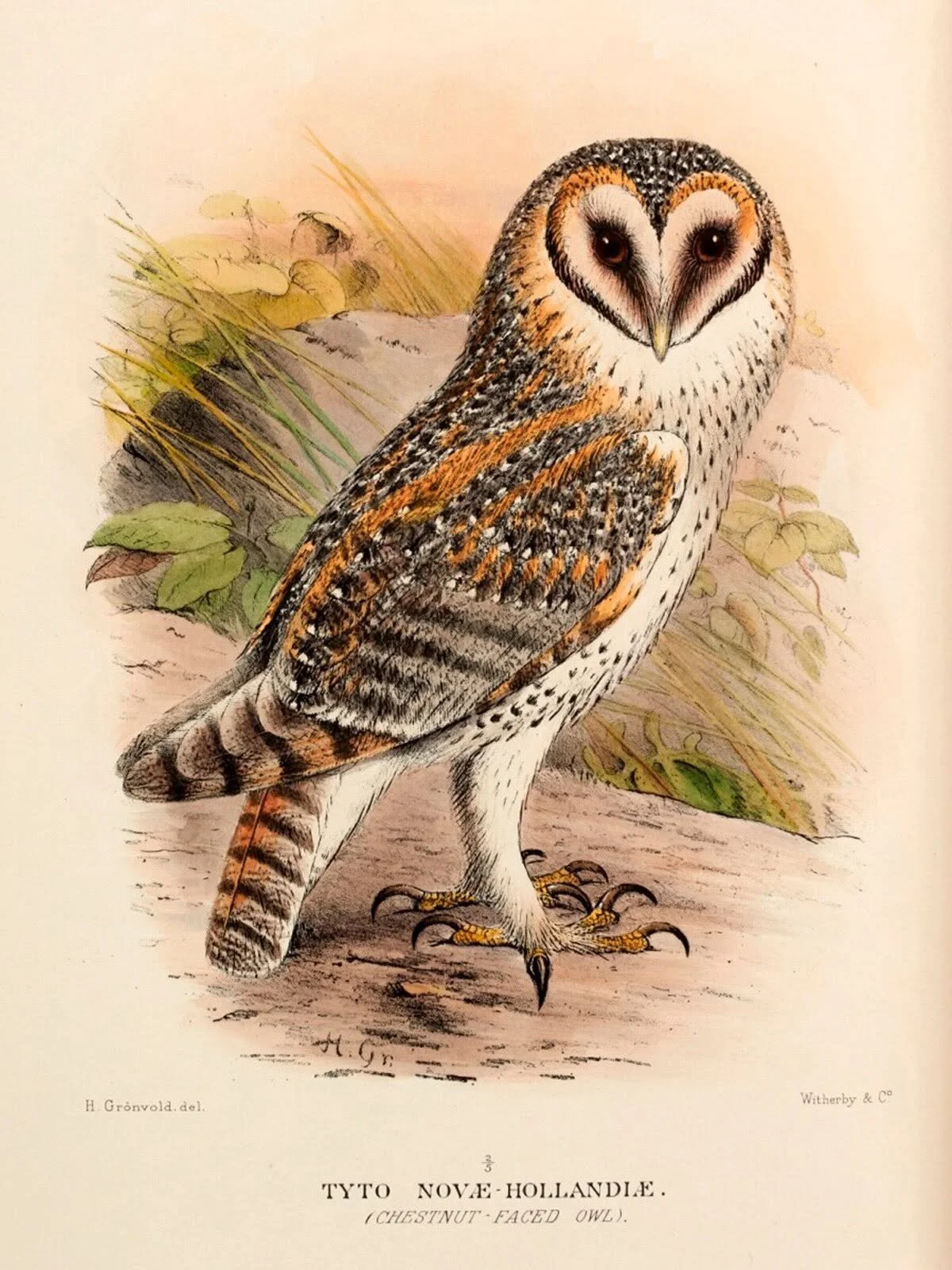
(You can see a peep of Mollie’s Bunyip below, and other wonderful treasures, like Gregory Macalister Mathews’s The Birds of Australia [with Supplements] (published between 1910 and 1925), and [Japanese-watercolours] [Mount Fuiji, birds, trees] from 1870 presented in an oval format Orion (folding) binding with silk cloth covered boards, gilt page edges and traditional ties).
Wings crossed, Mollie.
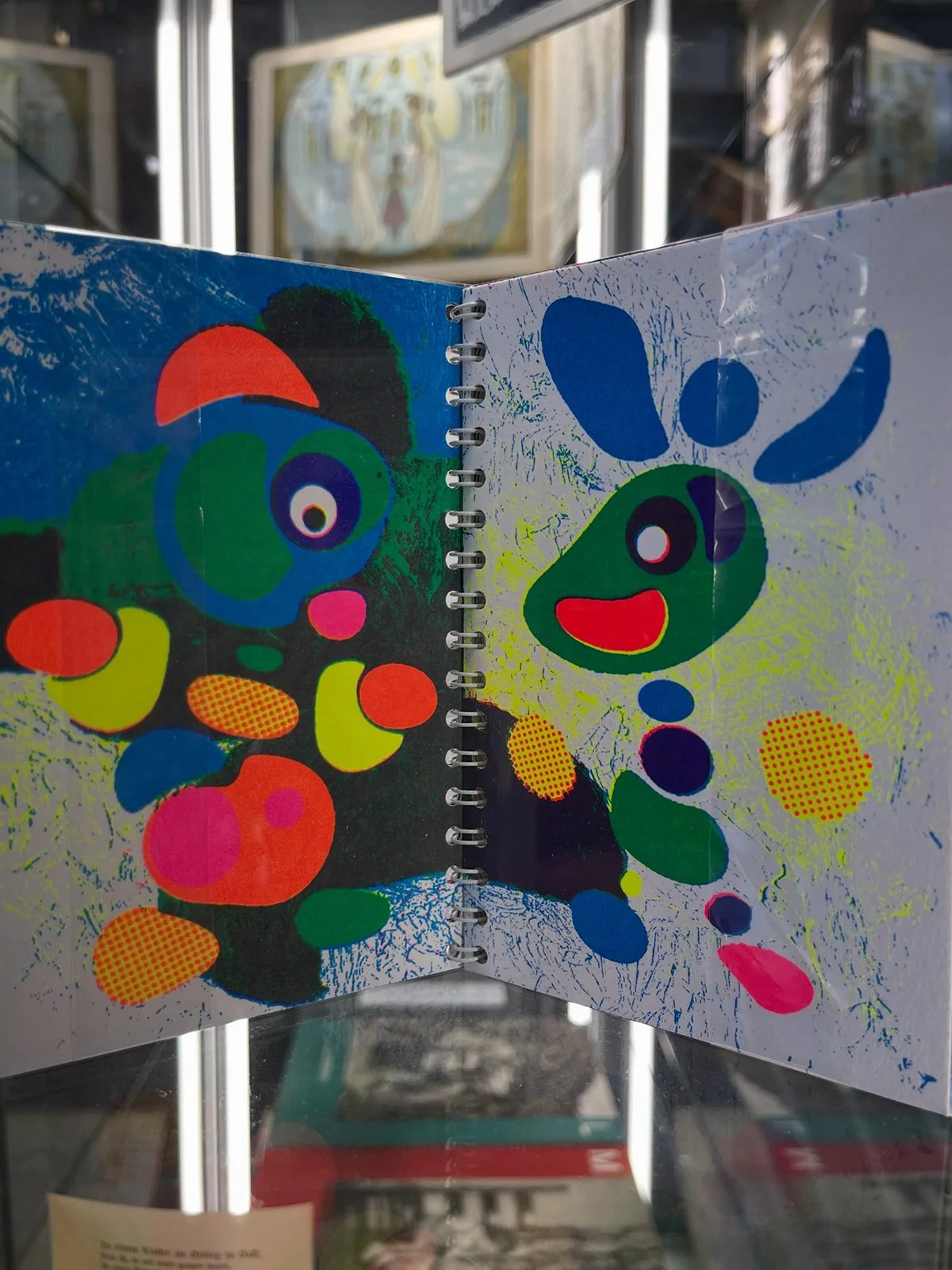
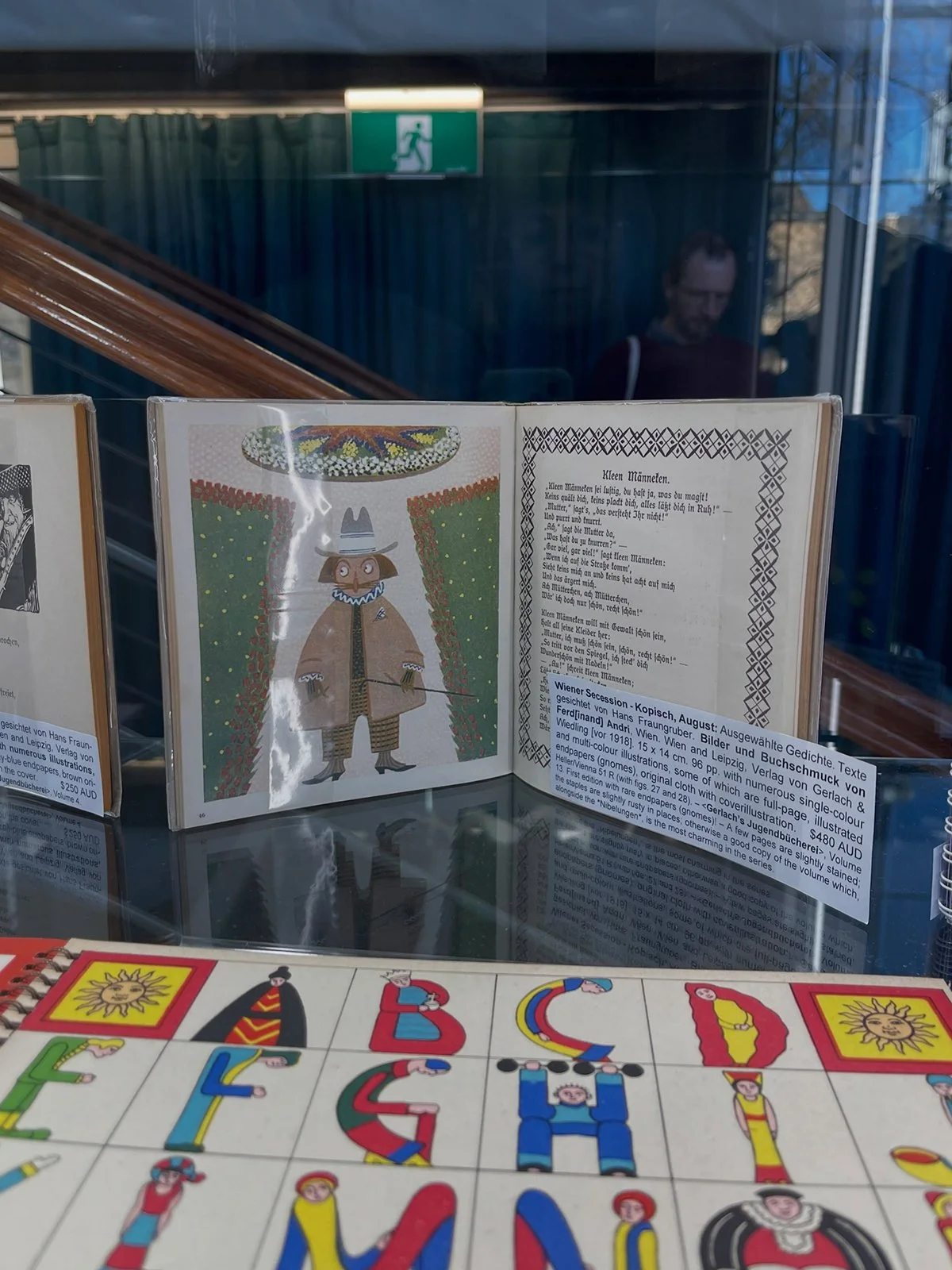
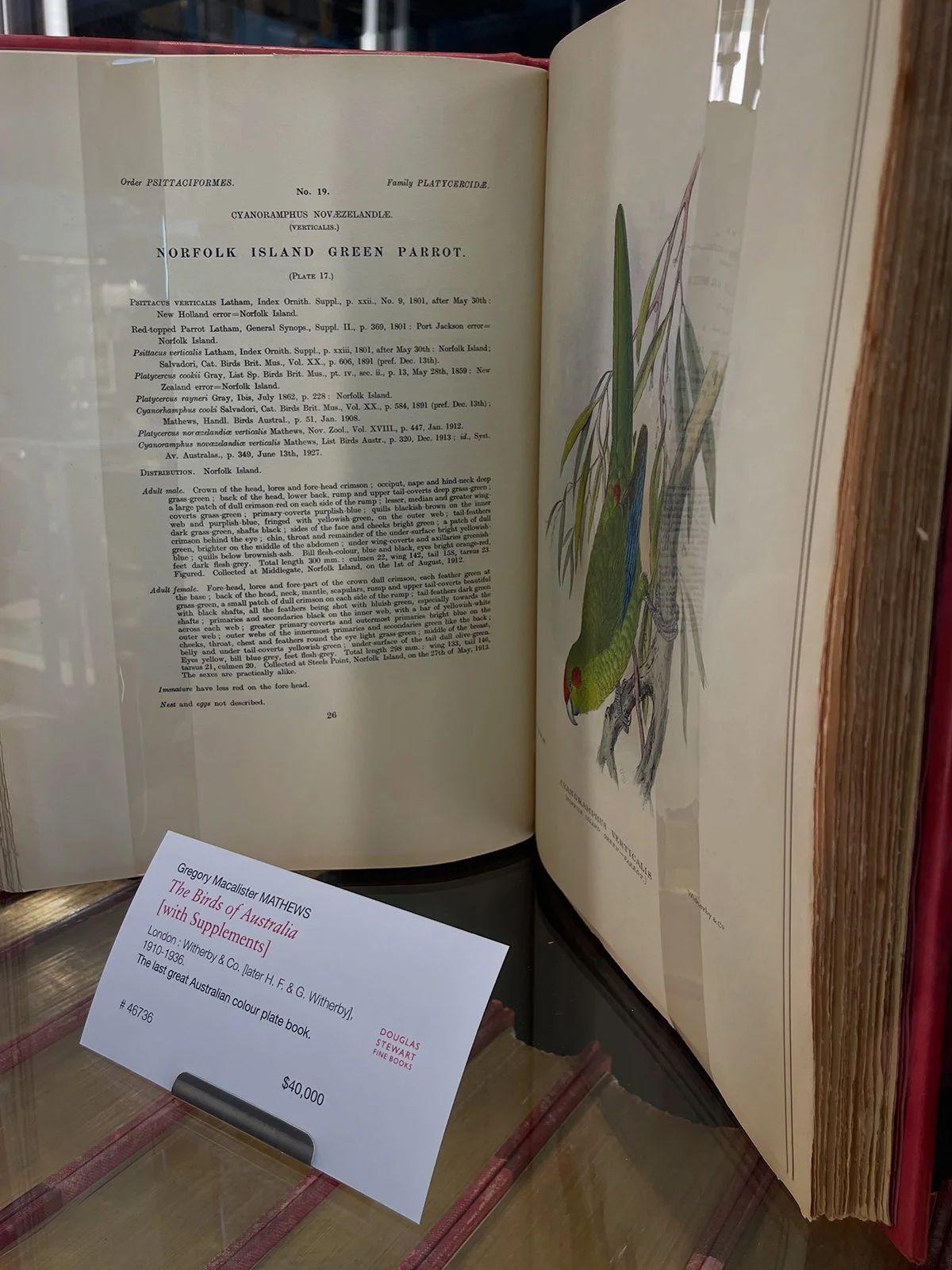
Elsewhere, on bookish note, we are delighted to be a green piece of Looking for green, pink, yellow and blue, an exhibition at the Bower Ashton Library, UWE Bristol (City Campus, Bower Ashton, Kennel Lodge Road, Bristol BS3 2JT, United Kingdom), until Tuesday the 1st of September, 2026. The exhibition is open to the public Monday through Friday, 9am–5pm. No booking needed.
An exhibition of works observing flora, woodlands, wildlife, skies, marshes, and islands — artists’ books, printed poetry and ephemera. Whether you can be out in the landscape and the sun is shining near you, or you just need to see something lovely from indoors, we have a display of inspirational works by artists, writers and poets that can hopefully lift your spirits or give better insights into the layers and textures of the world surrounding us. From daily, observational pencil studies of individual flowers, to poetic works on landscape, to collaging green spaces into being or composing image, text and sound in relation to place, there are many ways we can find to enter these spaces.
Artists and writers in this exhibition include:
Andrew Norris, Astra Papachristodoulou, Catherine Cronin, Cathey Webb, Chrystal Cherniwchan, Colin Sackett, Csilla Bíro, Elizabeth Willow, Gordon Yapp, George Gibson, Gracia Haby & Louise Jennison, Graeme Hobbs, Greg Thomas | Oo Press, Ioulia Akhmadeeva, Jane Hyslop, Jean McEwan, Jeff Rathermel, Julie Johnstone, Kurt Johannessen, Laura Crehuet Berman & Owen Bullock, Laurie Clark, Leonard McDermid, Lucy May Schofield, Marian Kilpatrick, Nancy Campbell, Nancy Gaffield & The Drift, Pirrip Press, Roelof Bakker, Sarah Nicholls, Stanley Miller, Stevie Ronnie & Tessa Bunney, Tracey Bush.
…
Gracia Haby and Louise Jennison’s Looking for green, remaining hopeful, 2024, provided the inspiration and title for this exhibition: “We search the map for big green shapes to head towards. Sometimes these irregular shapes turn out to be less green upon arrival. Sometimes they are golf courses and cultivated lawns. Sometimes they get smaller, the closer we get.
In finding the reality of the mapped green shape to be ill-fitting, we cut the scenario anew and make a more befitting visual effect upon the green screen. This series of ten analogue postcard collages, with a green area like that on a map, mirrors our own longing for green spaces to head towards, and a filmic green screen on which a potential environment more suited for a motley assortment of birds could sprout.” Read more here.
Alongside making art, Gracia Haby and Louise Jennison are “Tiny but Wild, a licensed DEECA wildlife shelter based, like our studio, in our home in North Fitzroy, Melbourne / Naarm.” Find out more and donate if you wish, here.
Book Arts
As ever, please note: you need to be a qualified, vaccinated carer to handle megabats and microbats, like Mollie.
Image credit: Theophanes, The Gospel Book of Theophanes (Tetraevangelion), (c. 1125–1150), brown and gold inks, tempera and gold leaf on parchment, modern crimson velvet binding, 24.2 × 17.4 cm (folio), via National Gallery of Victoria, Melbourne
