The end is the beginning
Sparkling winter days of late
Slow Read
Presented in partnership with Melbourne Writers Festival
Town Hall Gallery, 360 Burwood Road, Hawthorn
Wednesday 6th May – Saturday 25th July, 2026
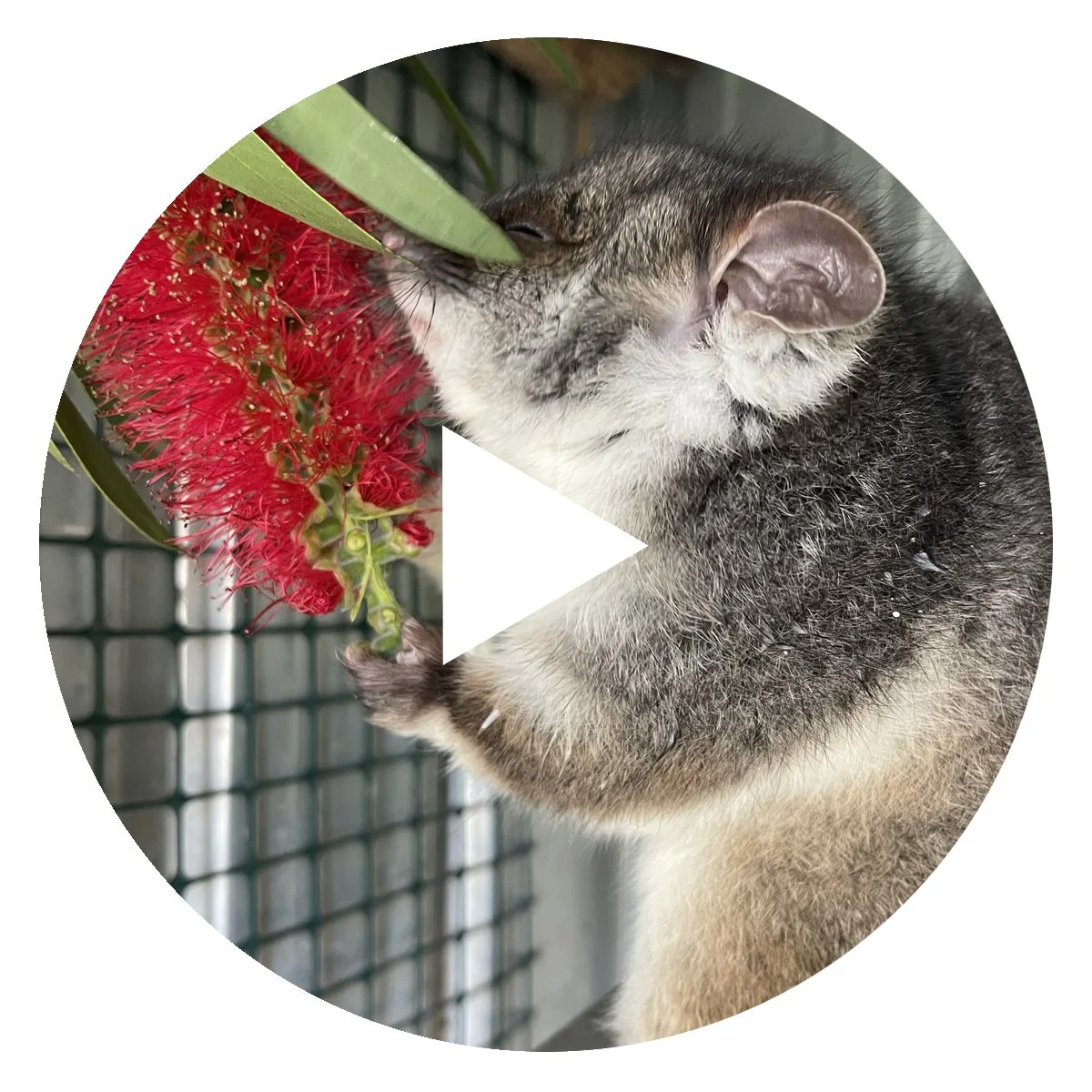
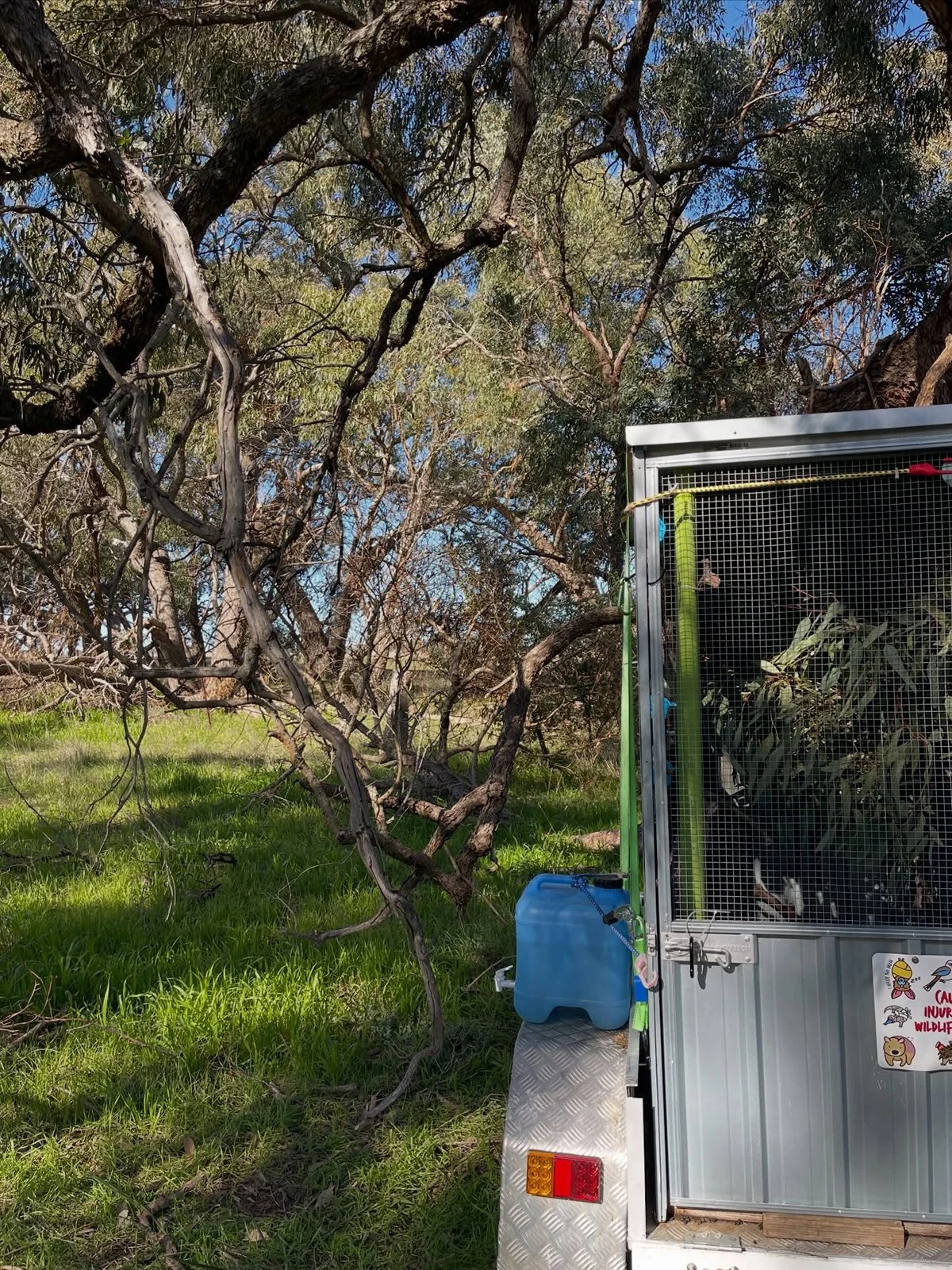
Little more is heartening than seeing, on the trail cameras positioned around the soft-release site, four ringtails, Echo, Periwinkle, Asta, and Gustave cavorting on the roof, sipping water from the weighted ceramic dish, and exploring their surrounds. The lower branches of the tree droop to the ground, providing support for the tree and the perfect transition for the adventurers. In this hug, the early quartet of ringtails are thriving. Catching sight of their silvered forms, as they leap in and out of frame, the record of the quartet’s agility is a delight. They took to the canopy with such ease.
We left a calling card of flowers both inside (Callistemon) and atop the roof (Grevillea), should they return, or, indeed, for a passing Krefft’s glider (also spotted in the footage). In our gradual pull back from the site, we’ll continue to monitor them, but they are well and truly wild, capable, and off and scampering. Go well, Echo, Periwinkle, Asta, and Gustave! In the serenity of our time amongst the possum-trees, a part of us would join them, if we could, but we’ve not the tails nor coats.
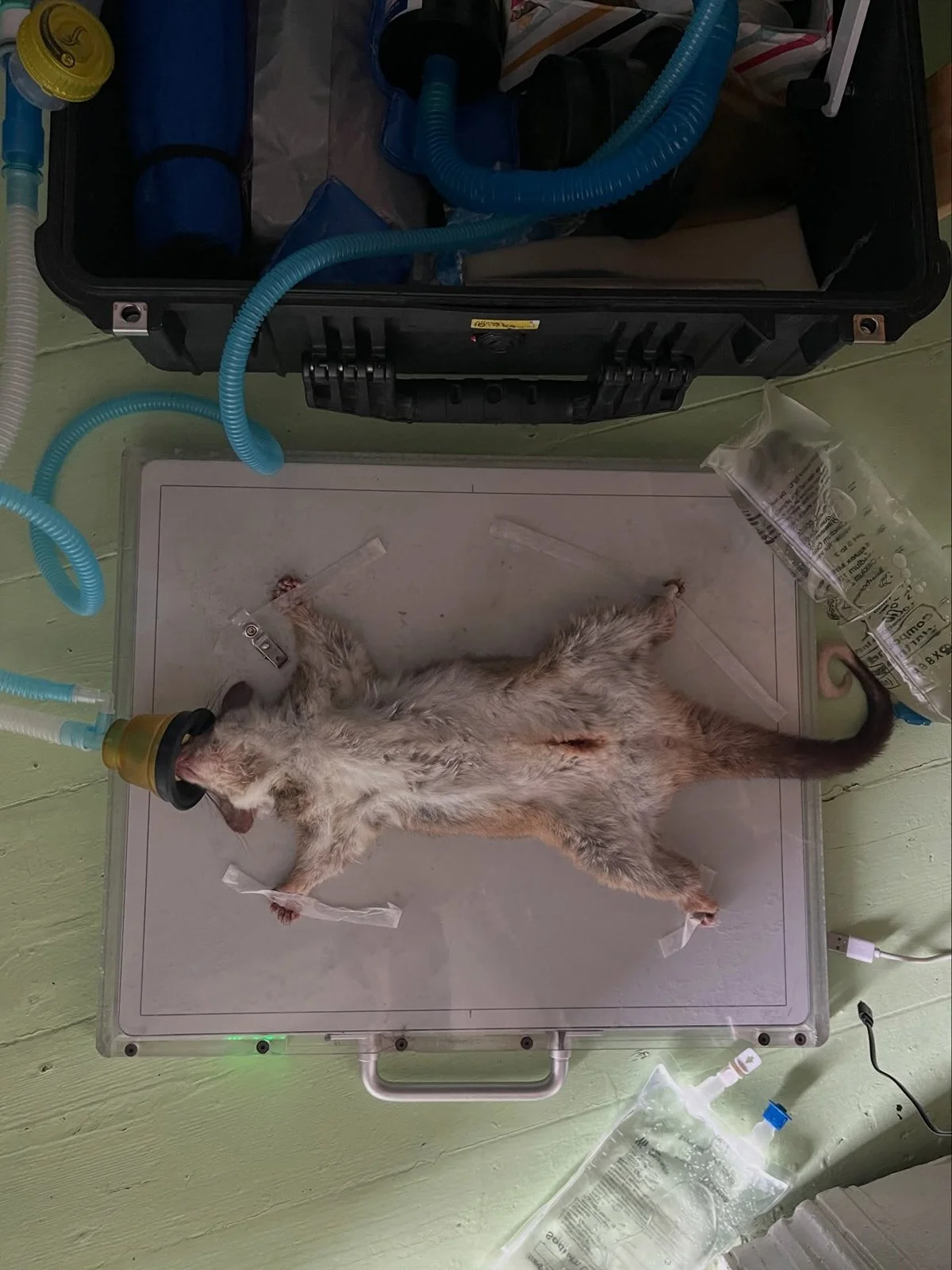
Meanwhile, at home, Coco Spinifex continues to improve, and she now uses all her limbs, tail included, with confidence. It has been remarkable to see her back legs assume their strong and agile role, and to see her dangle down from the highest branches to reach the recently harvested browse, supported by her tail. After checking in with the Wildlife Victoria vets, she’s was given the green light to move to our larger outdoor enclosure. Green light is fitting for our sparkling winter days of late, and when thinking about what our human tails might look like and how they’d operate. Would they thwack, would they be tufted, would they belie a poker face?
(Pictured below, Coco Spinifex being gently x-rayed, by @wildlifevictoria’s Travelling Vet Service, and a detail of one of the x-rays.)



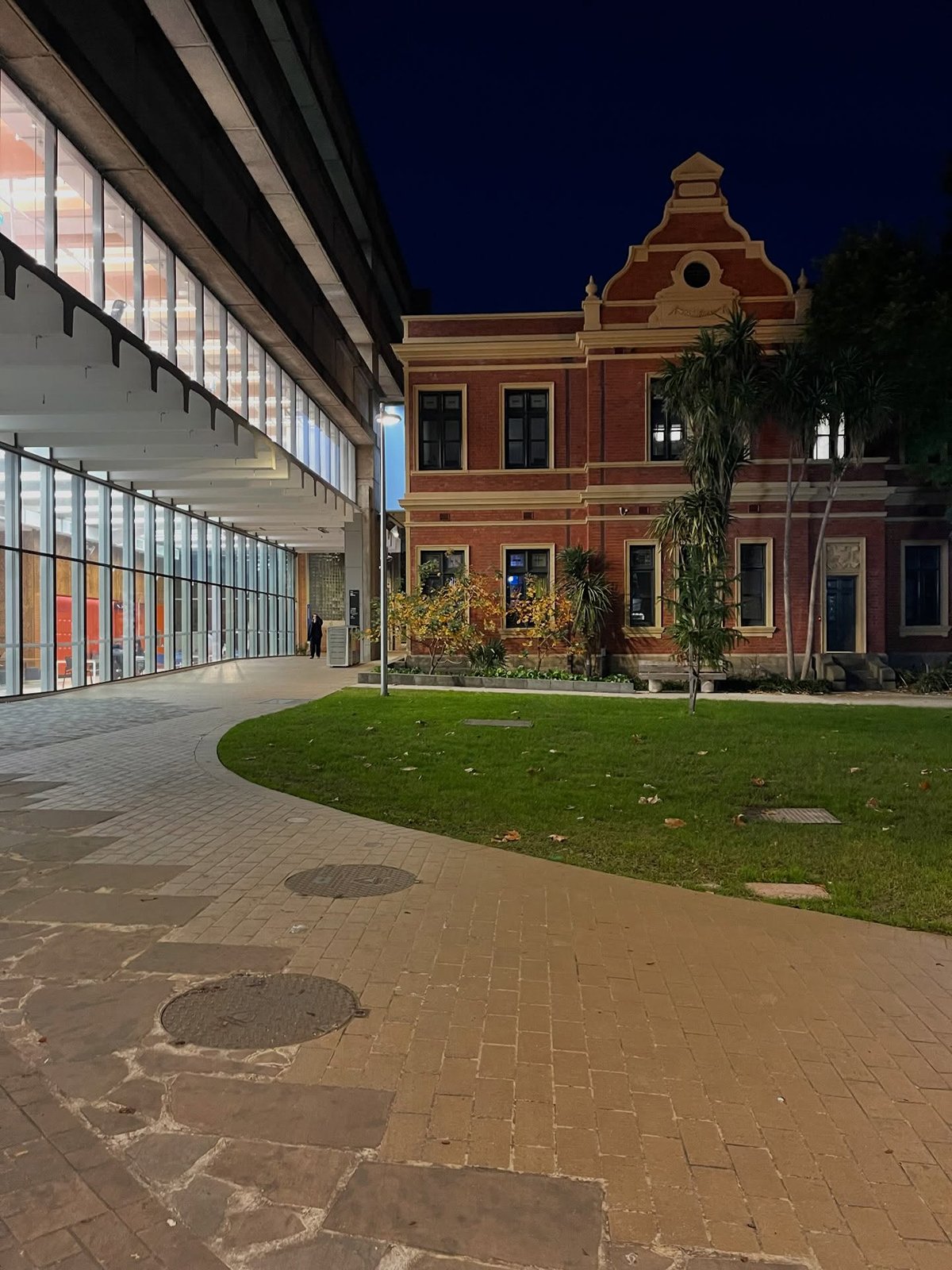
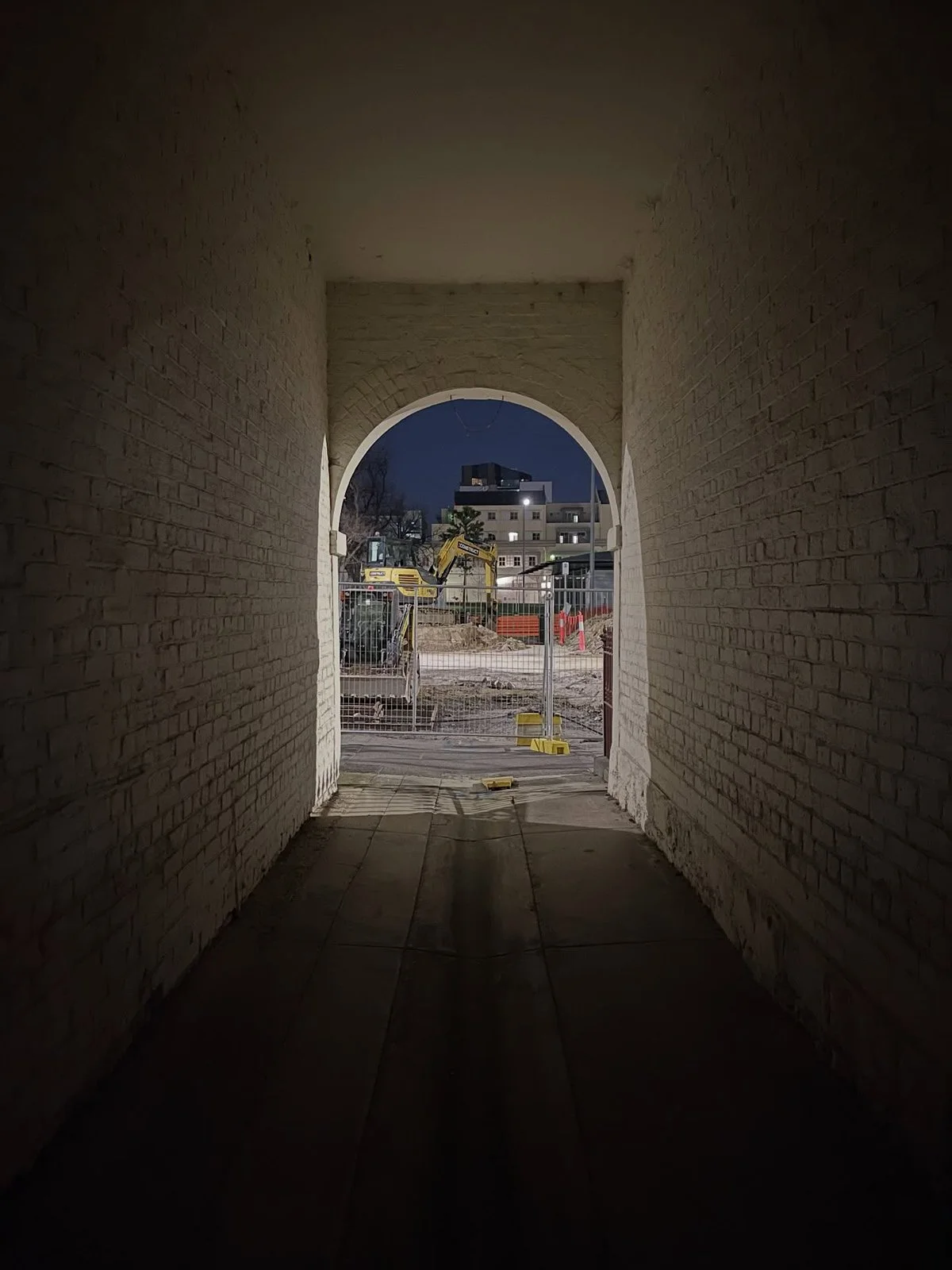


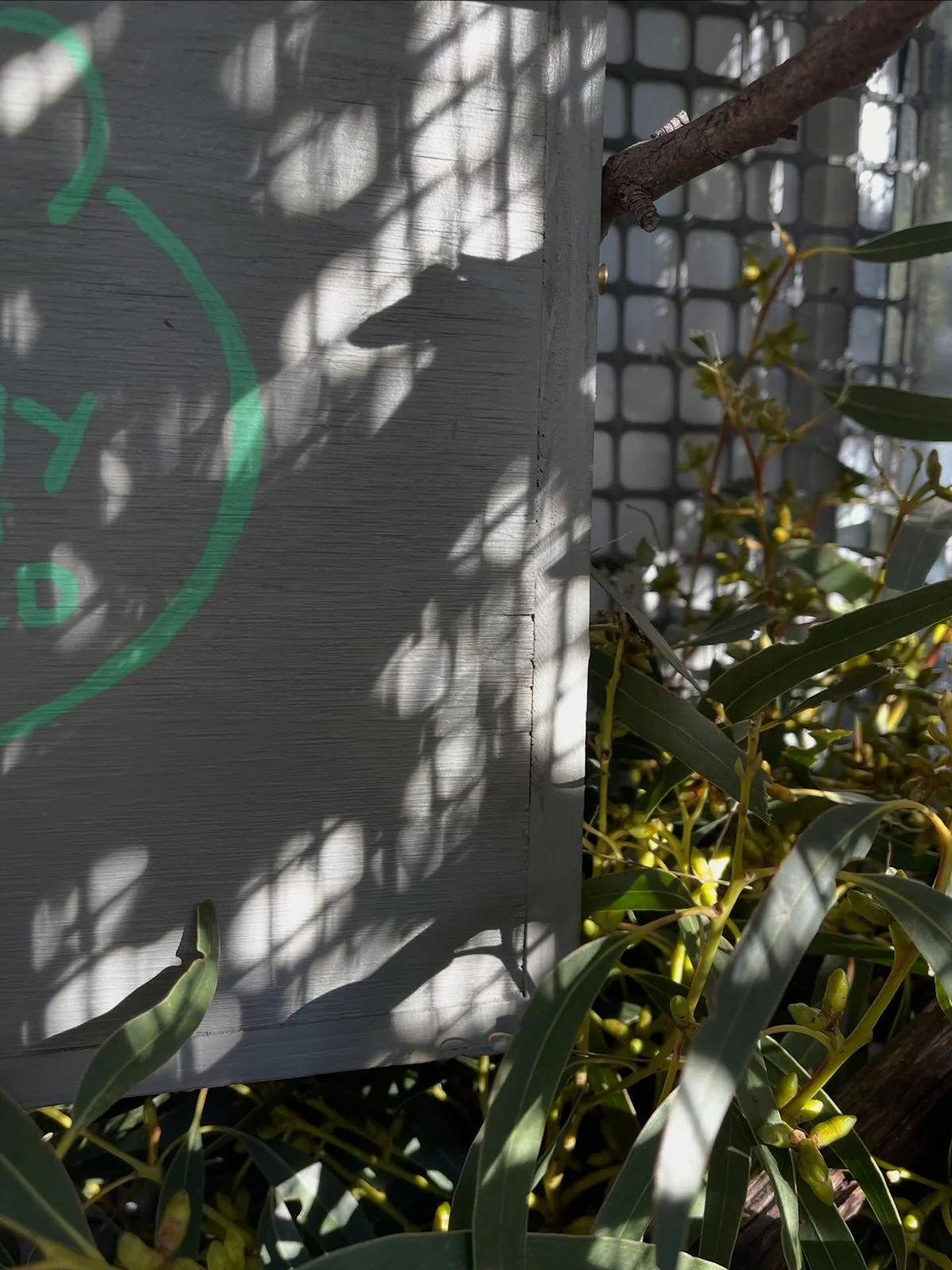


Two Gould’s wattled bats recently came into care, on the same morning, but from two different locations, Carlton and Hawthorn East. The first, a Gouldie seen flying about in an office space on campus at Melbourne University. He was named Alice, by the people who initially sighted him and called Wildlife Victoria, as when typing ‘alive’ spellcheck changed the word to ‘Alice’. We located Faculty Alice studying beneath a desk, a truffle on a plastic mat (near to a yellow bucket, in the above).
After being weighed, measured, and offered fluids, which he lapped up with gusto, he was admitted into care at Tiny but Wild for some rest before being deemed ready to return to teaching and note taking.
The second, a female Gould’s wattle bat, found on an air conditioner in a lounge room, she, too, will be ready to return home after a few nights of mealworms coated with insectivore mix, and a chance to ‘put her feet up’. While she is with us, we’re calling her Hortense of the Air Waves.
As each animal that comes into care has a chart with all their particulars recorded, from species type and number, location where found, reasons for coming into care, initial prognosis, gender, weight, treatment plan, medications administered, and so on and so forth, we also always name them. To us, it is something they quickly shake off, if it ever settled, as soon as they are released. We hope Hortense will be able to return home to the mid-century appartment block and continue coasting the currents.
Of course it was not long before Faculty Alice and Hortense of the Air Waves were joined by another Gould’s wattled bat. Our most recent Tiny but Wild arrival is Accord Ian, named after the furiously fantastical accordion playing of James Crabb in Melbourne Chamber Orchestra’s concert, Under the Canopy, at the Melbourne Recital Centre. As this little Gould’s wattled bat flew up and down the length of the corridor, this time at RMIT University campus, their wing beats evoked Struan Robertson’s Rant (also known as Cuckold Come Out of the Amrey), and it was only as they began to tire that perhaps it could be said that the ‘hallway rescue concert’ of this entrapped microbat turned to Niel Gow’s Lament for the Death of his Second Wife.
Late at night, in RMIT’s building 94, time and time again, so close, yet so far, unlike the other two, Accord Ian took a deal of patience to catch. Overhearing the kind security guard speak into their walkie talkie, with a tone of astonishment — “there was another bat at Melbourne Uni. Copy.” — remains one of the more obscure perks of wildlife volunteering. So, too, the sign on the door (“distressed bat flying in corridor; please do not enter”), with a charming drawing of a bat.
Here’s to this squeezebox microbat making a full recovery. Like those previous, he has since warmed up, been given fluids, and fed, once appropriate.
(From Jean-Philippe Rameau’s clucking chicken strings (La Poule) to the flickering light of Aaron Wyatt’s temperate rainforests, thank-you for an outstanding concert, MCO, and here’s to something of an ongoing tradition of naming wildlife after a performance. Accord Ian joins Harp C. Chord, the Grey-headed flying fox, and (Romantic) Echo, the ringtail possum.)
Faculty Alice, has since headed back to campus to reunite with his family and continue his PhD. He weighed 20 grams of all round fabulous velvety goodness at the time of release. He sniffed the air, all senses on alert, and flew off confidently, at speed. He headed for the row of trees in front of the building where he was found. We’ve no way of knowing if this is his home, place of work, or hunting ground. As we walked home, retracing our own steps, we thought of him back with his own kin.
Travel well, travel long, Faculty Alice.
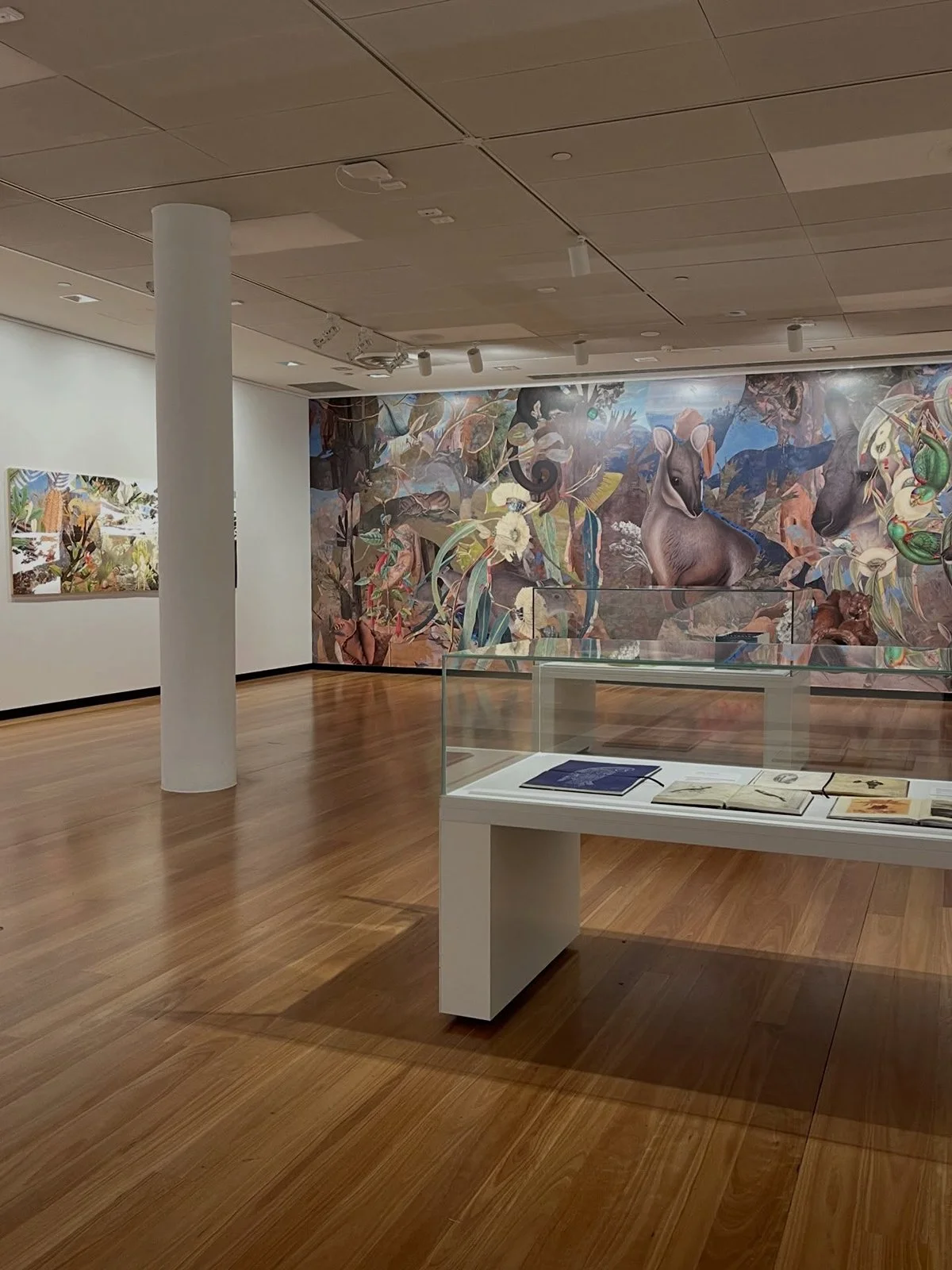
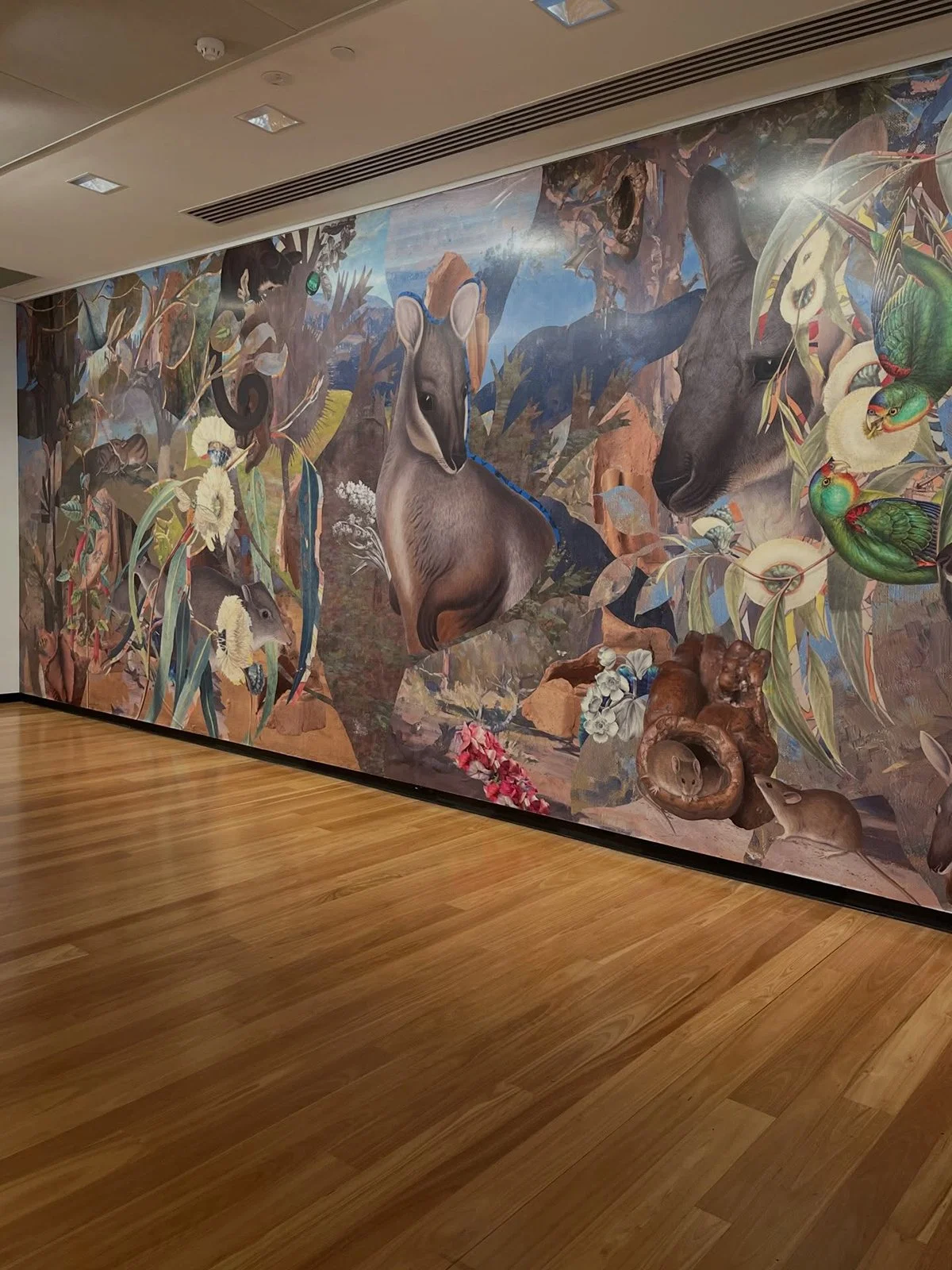
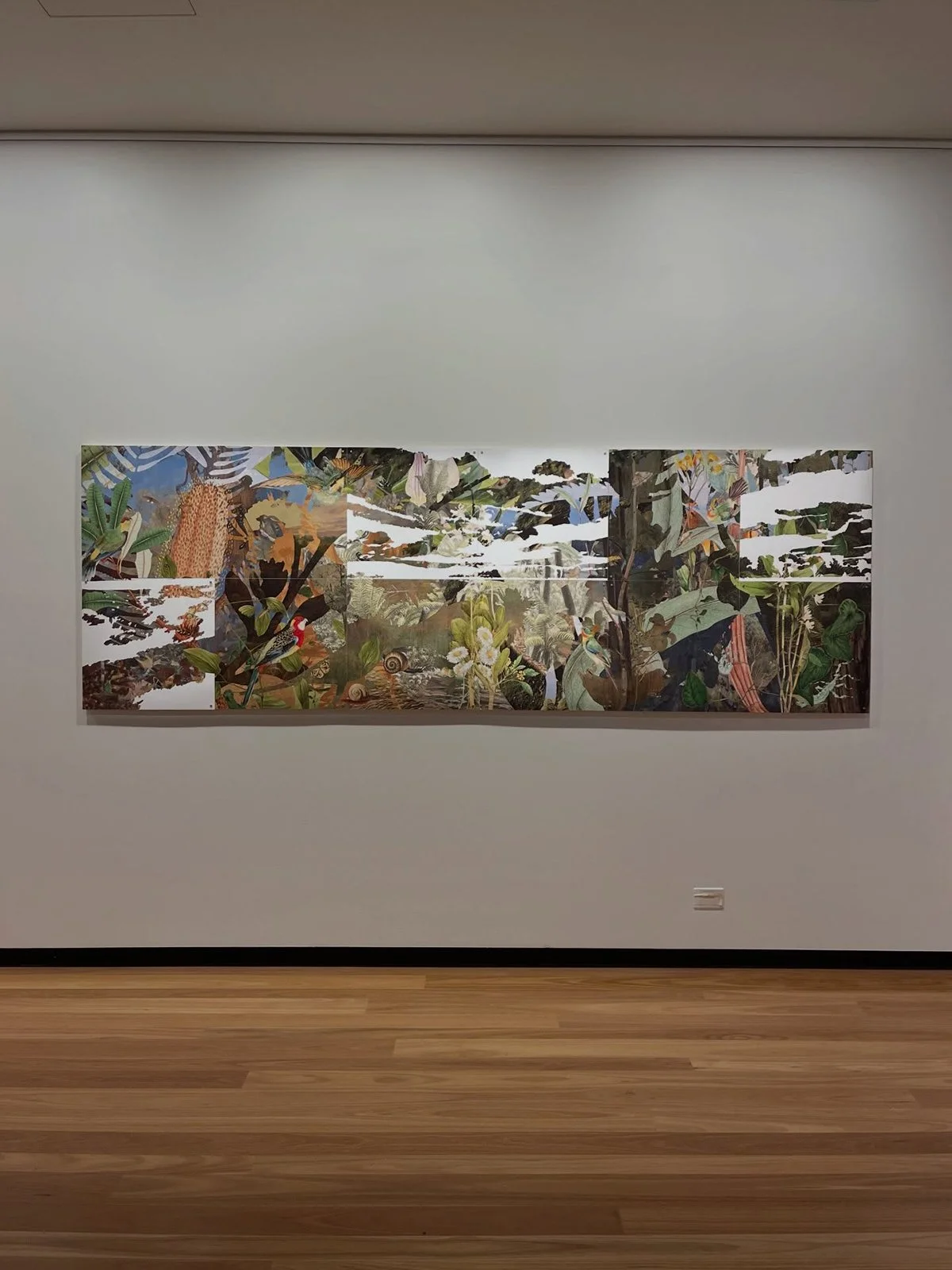
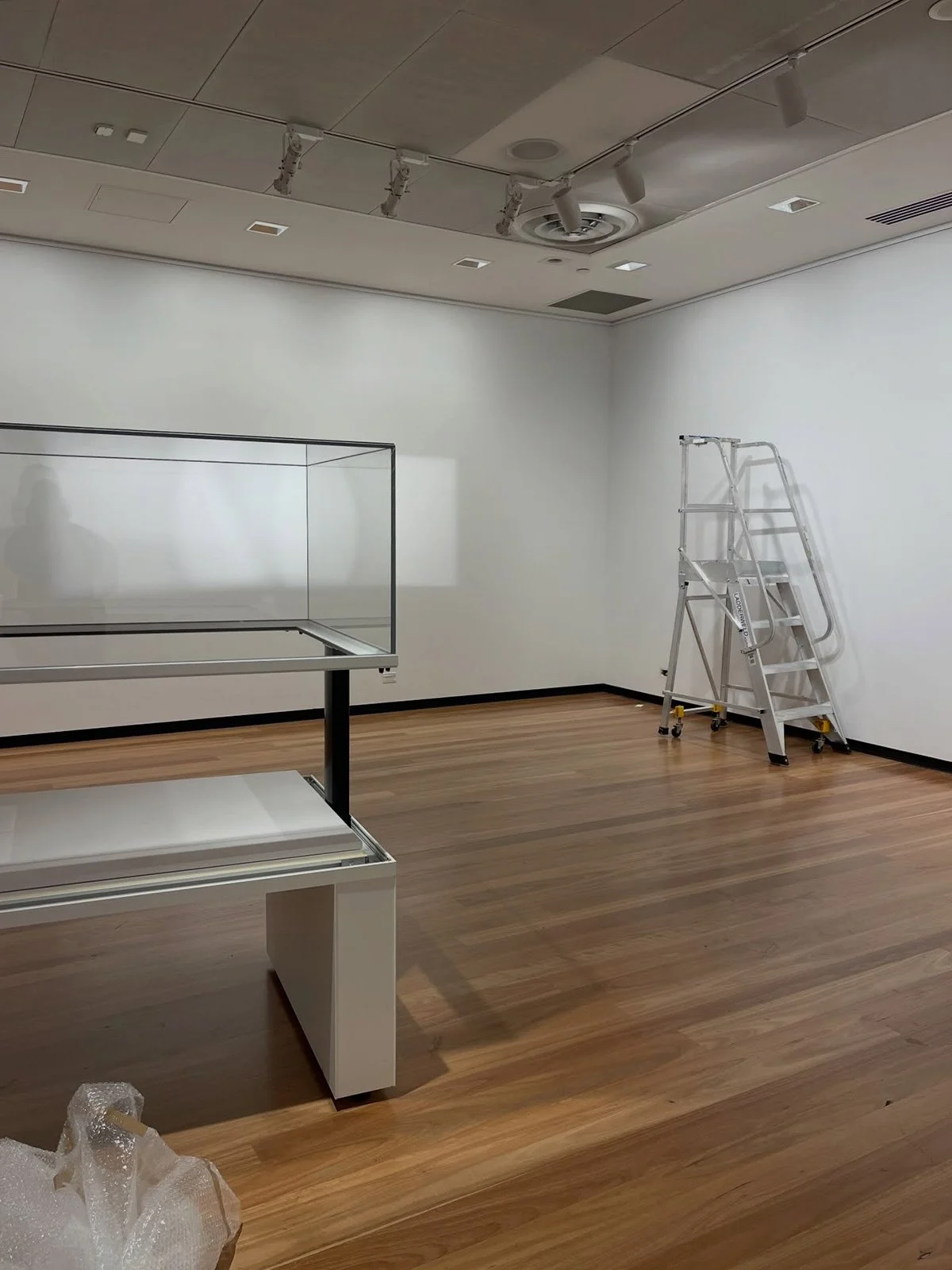
To a landscape of a different kind, though one also replete with a microbat, Slow Read has drawn to a close.
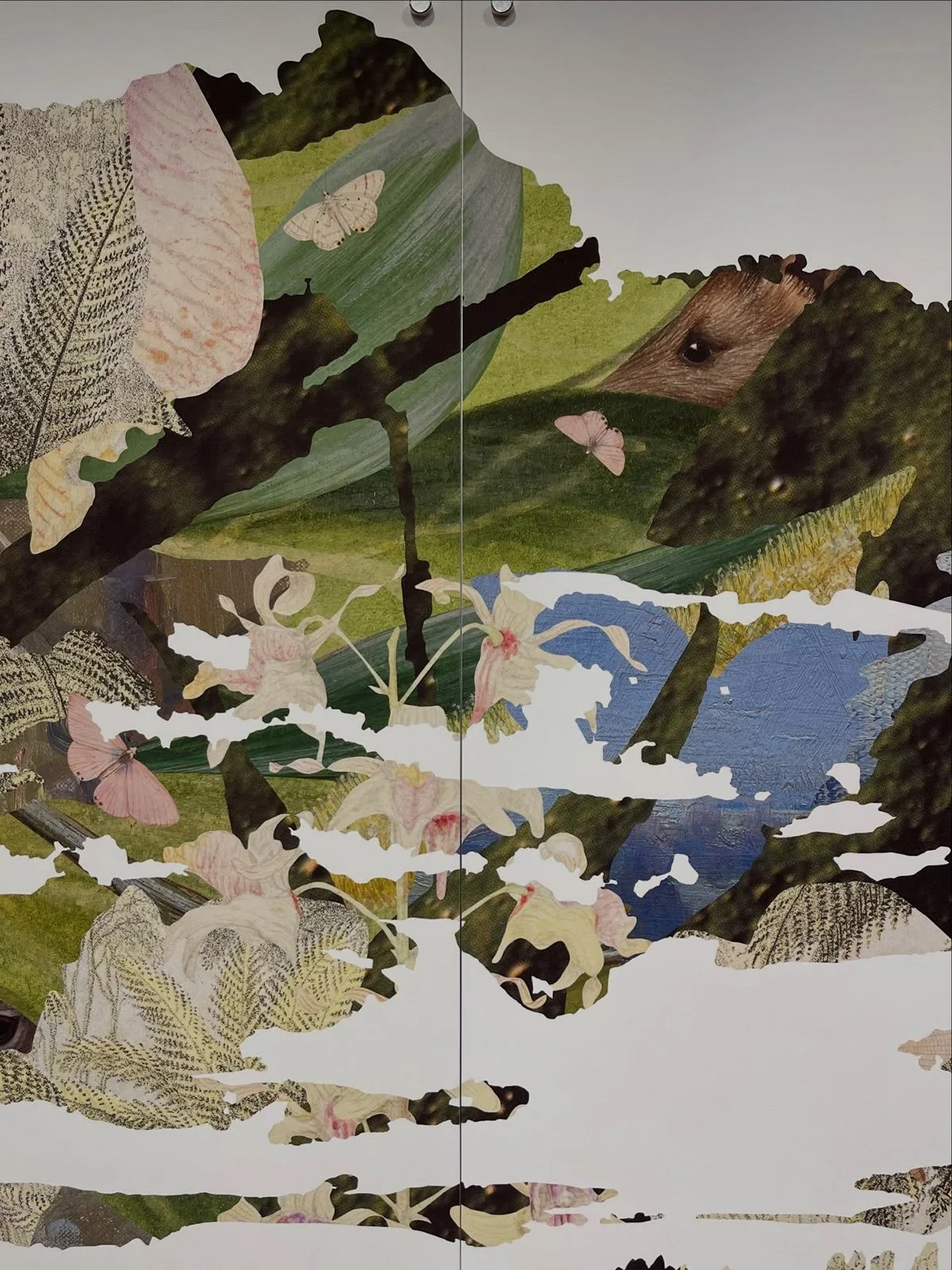
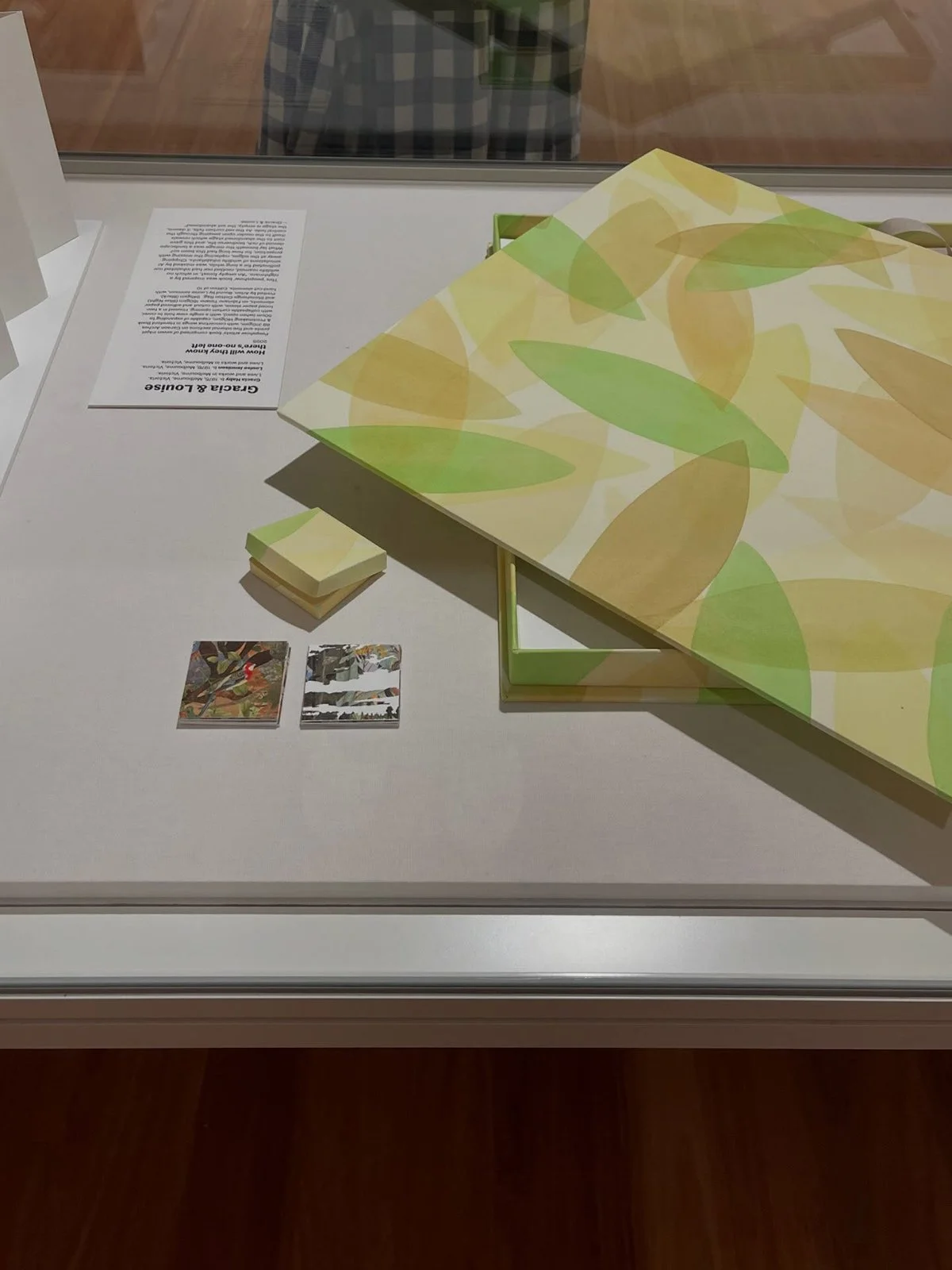
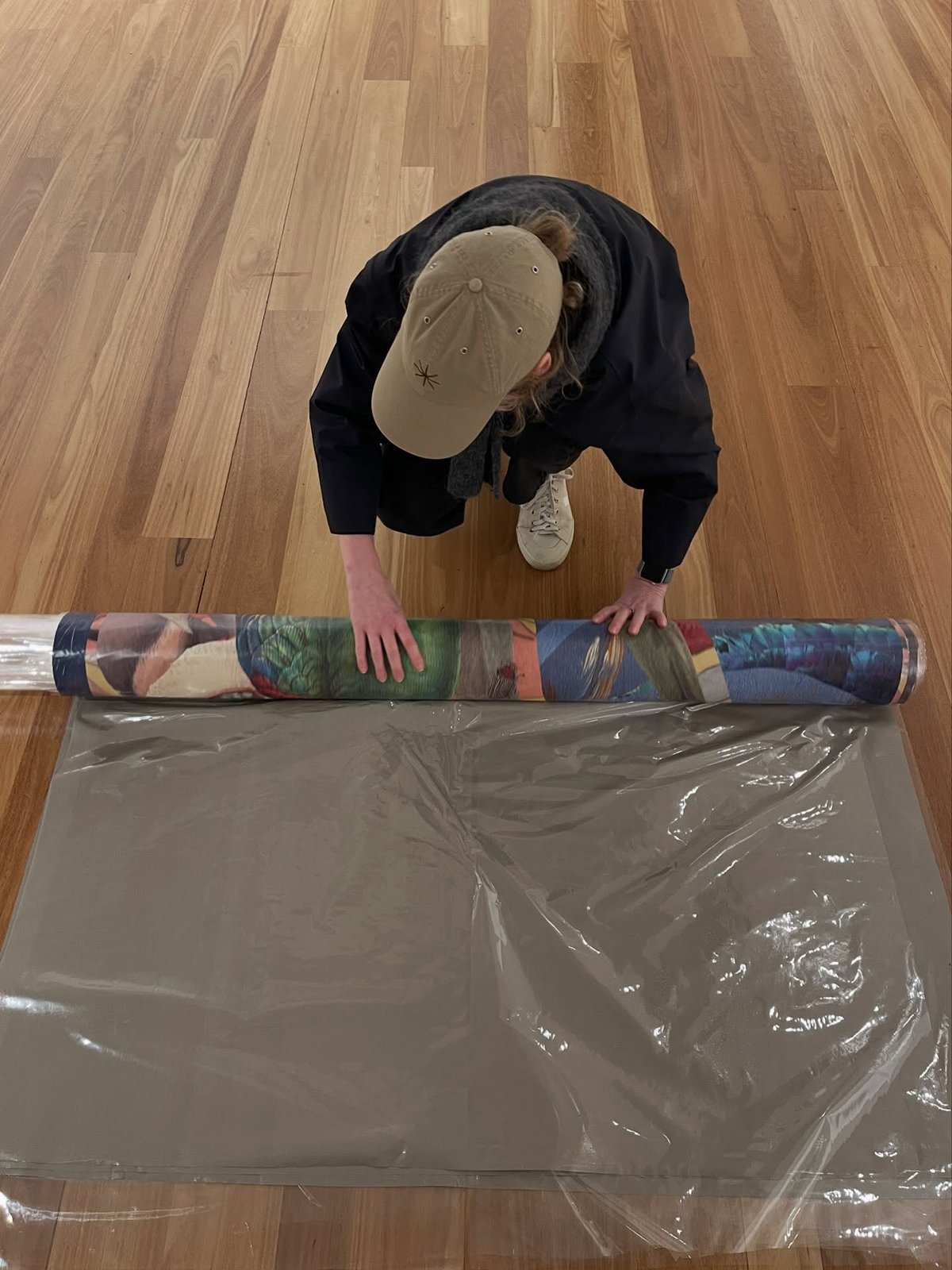
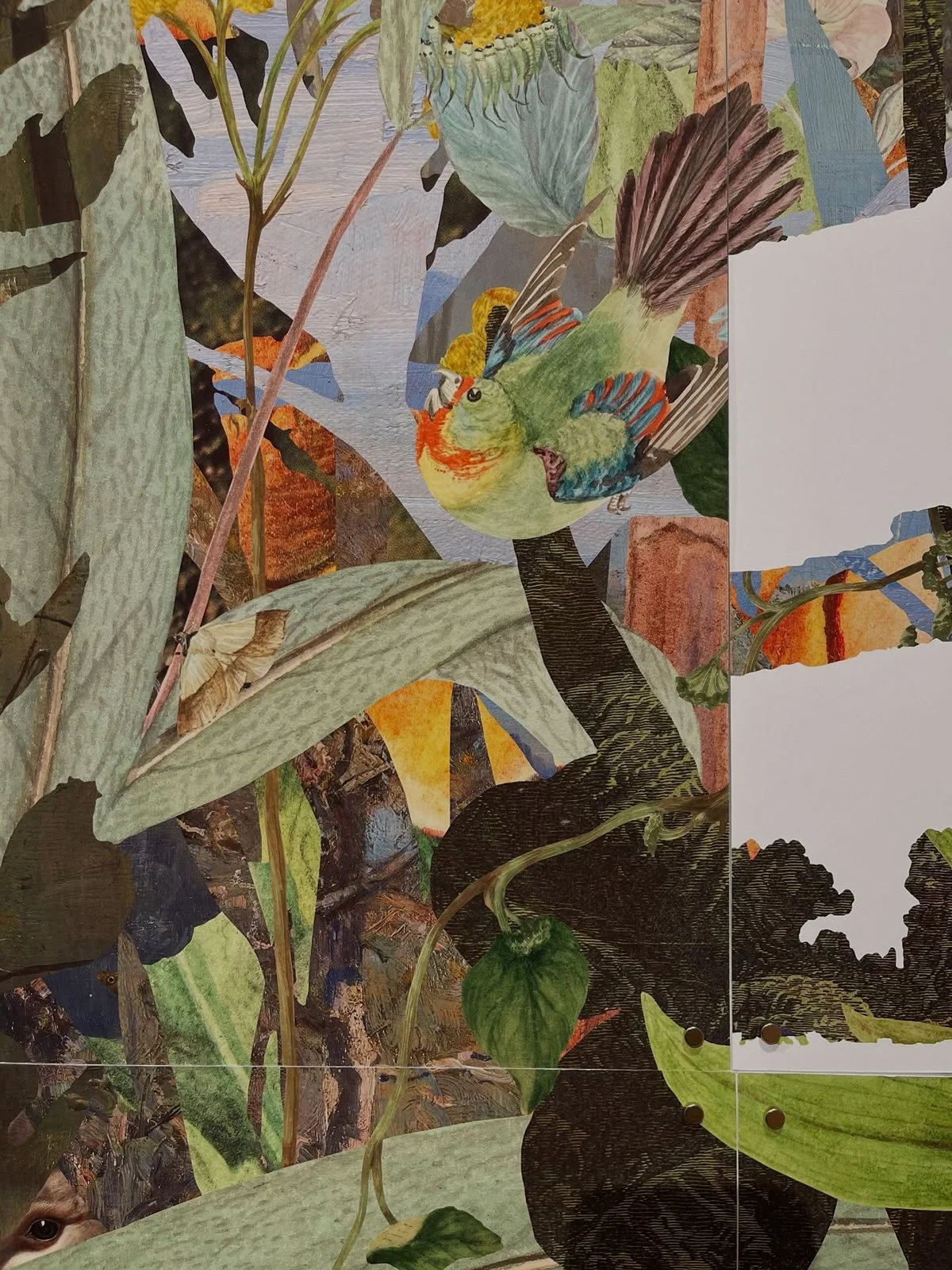
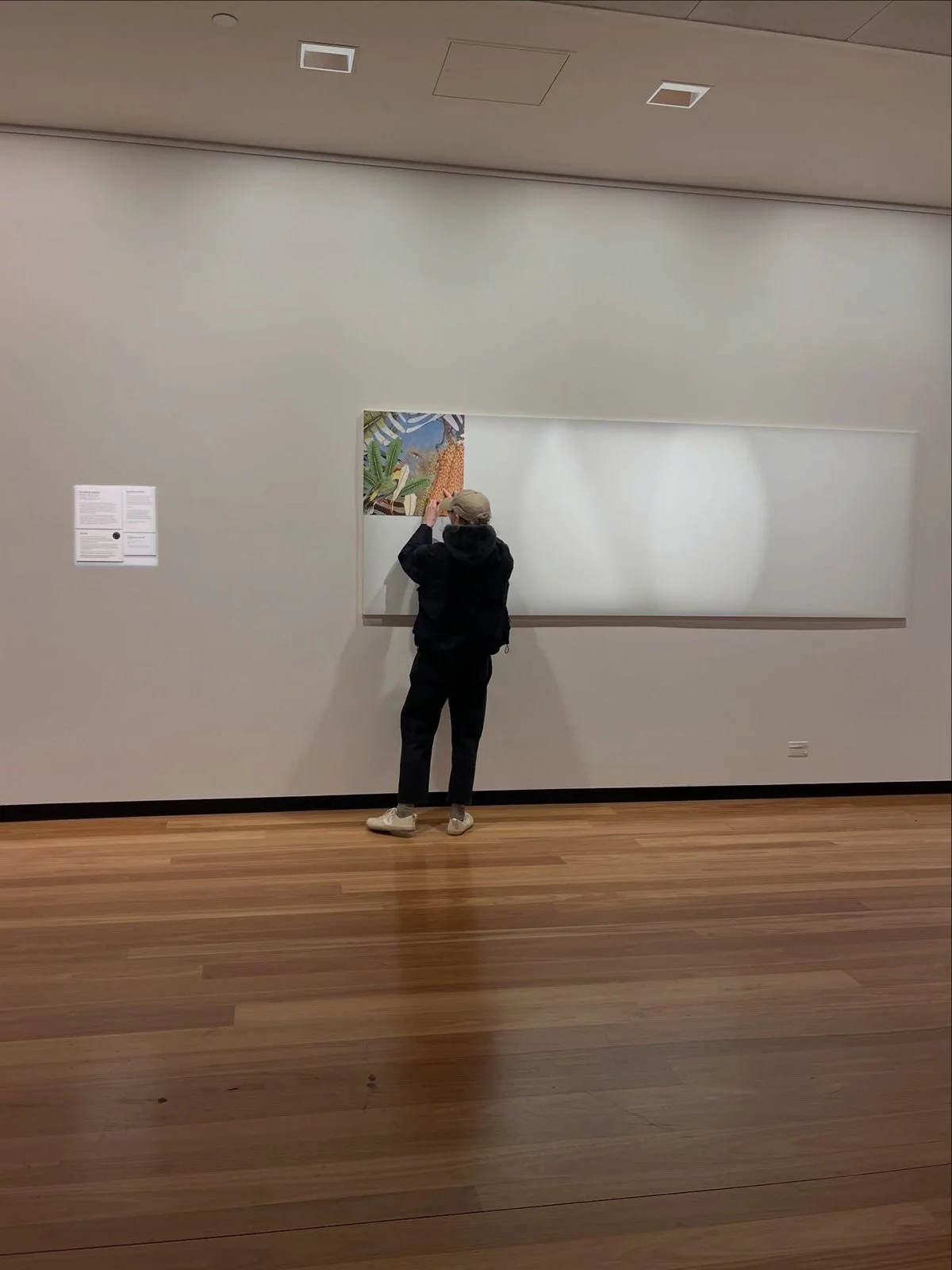
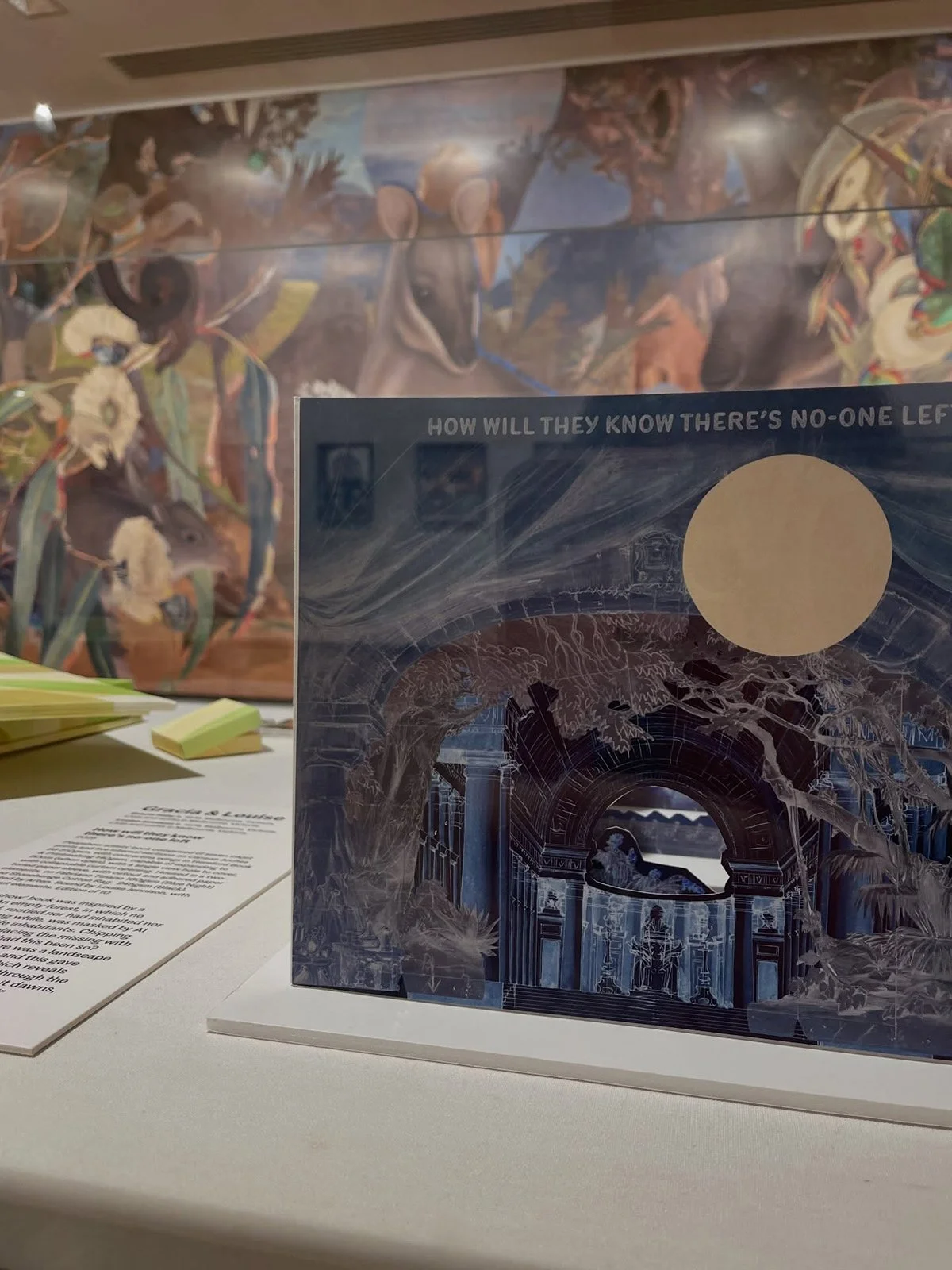
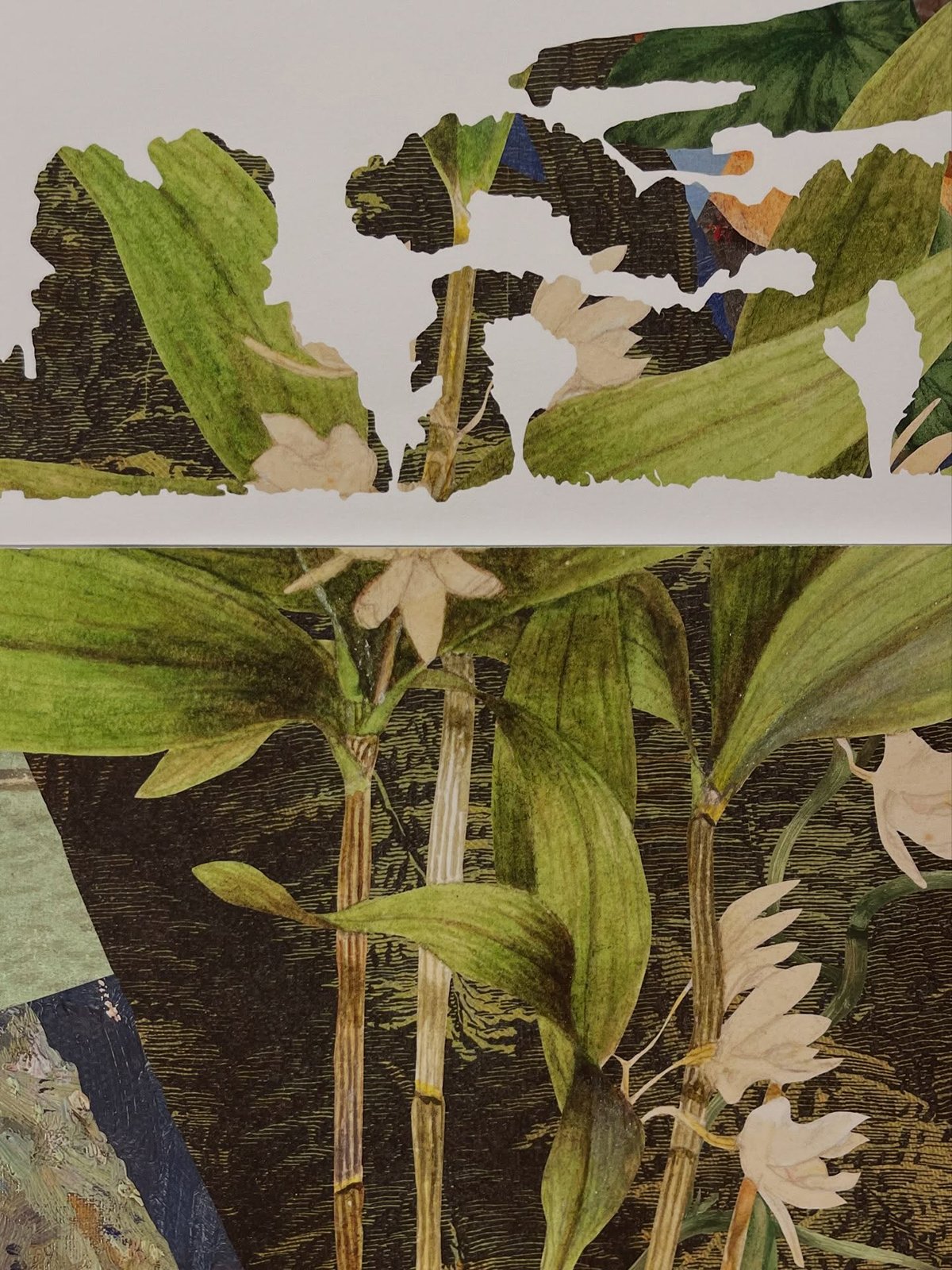
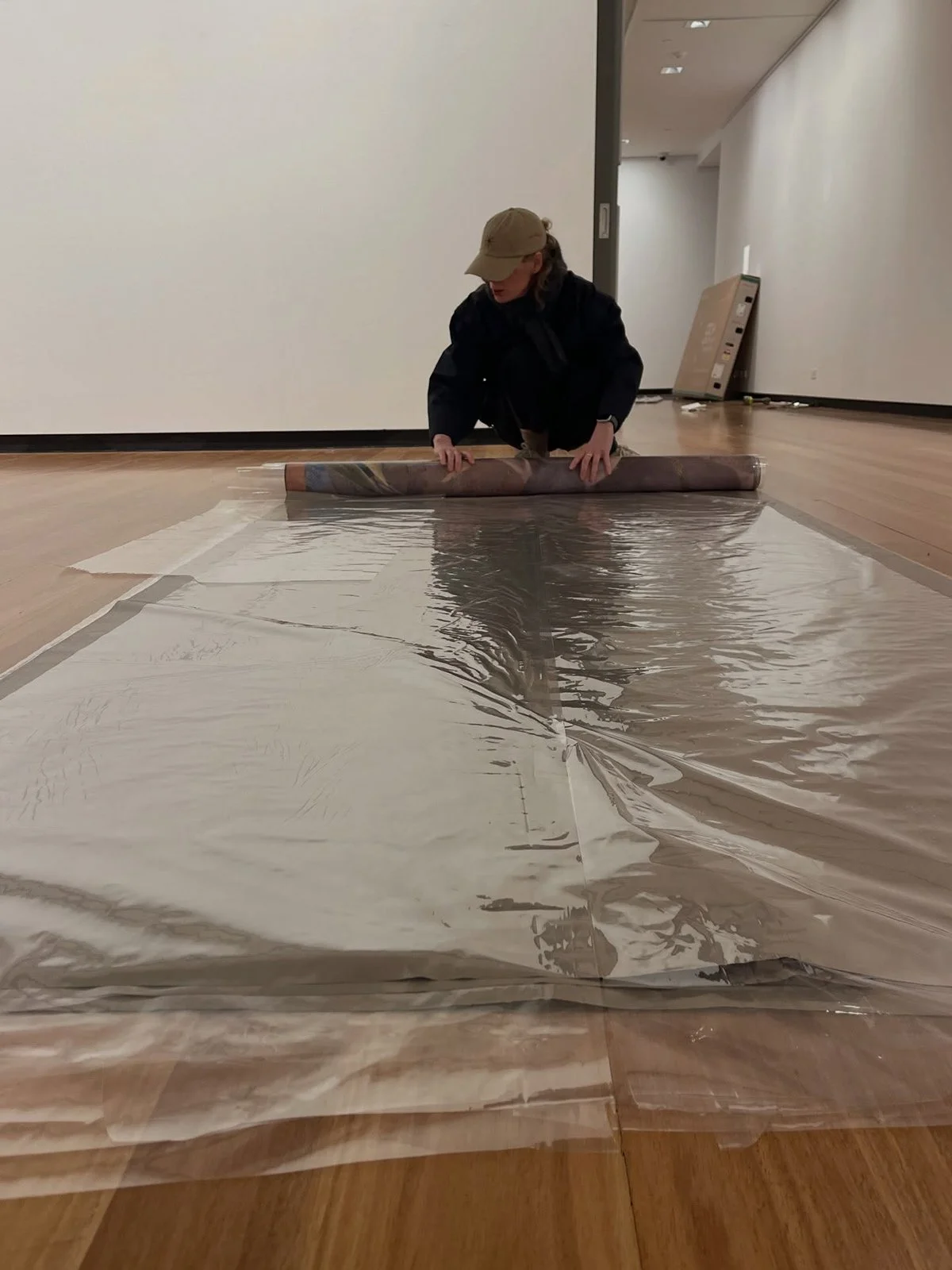
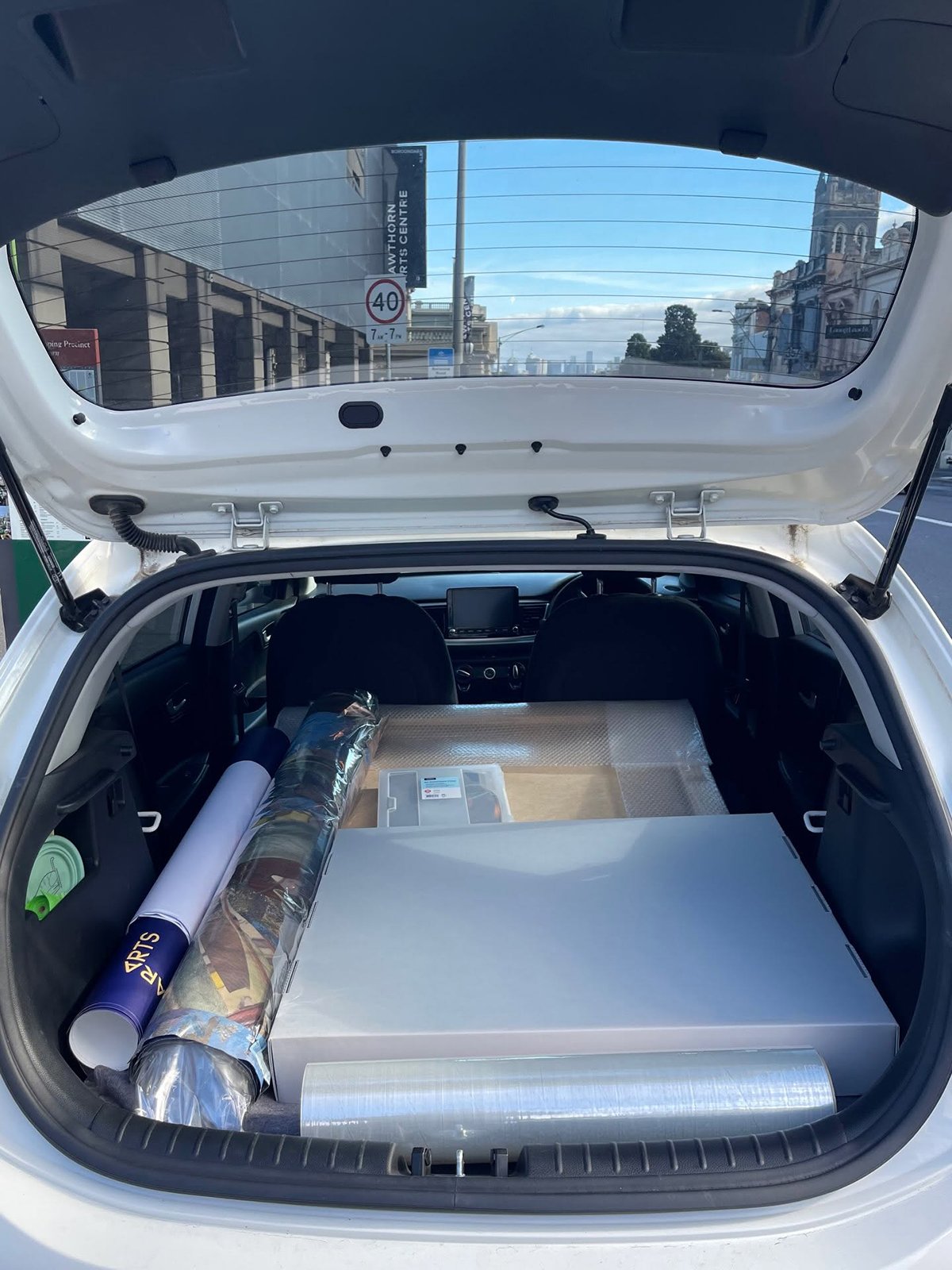
Down she came, A fleeting sense of, but, as with our collage piece, Ripples in the Open (2018–2019), we unfurled her from the wall, panel by panel. With some plastic in between, to serve as makeshift backing, we made a material sandwich (or lasagna or pastry) on the gallery floor. In the spirit of It came like light out of the walls (2018–2019), we’ll use some of the sections in a series of large collages or, depending upon how many (unwrinkled) pieces we end up with, make a large, unique state artists’ book. Other pieces might end up mounted on paper as decorative wrapping for our new print and mountain zine, soon to land in our online store. In time. We’ll see.
Ends are beginnings. Sometimes.
As ever, please note: you need to be a qualified, vaccinated carer to handle megabats and microbats, like the above trio of handsome Gould’s wattled bats (Chalinolobus gouldii).
Image credit: Fabric Covering with Pattern of Water Lilies, c. 1911–1915, via the Rijksmuseum, a sample of which features in our collage A fleeting sense of (extended).
